

In this THREAD I will explain “FVG”
1. How are FVG formed
2. How to trade using FVG
3. Liquidity and FVGs
4. Trade examples using FVG
5. TP and SL
🧵(1/8)
1. How are FVG formed
2. How to trade using FVG
3. Liquidity and FVGs
4. Trade examples using FVG
5. TP and SL
🧵(1/8)
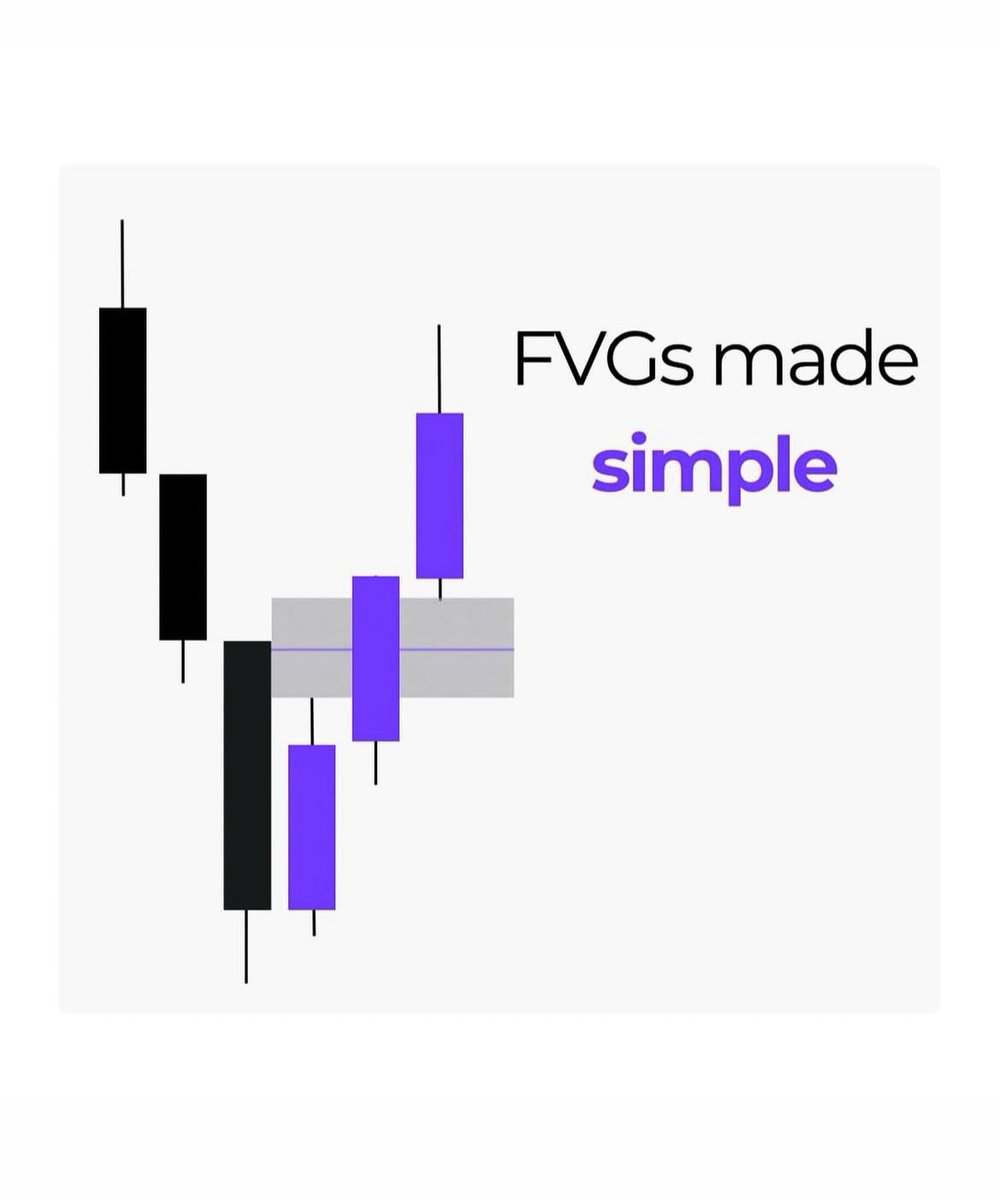
1. How are FVG formed
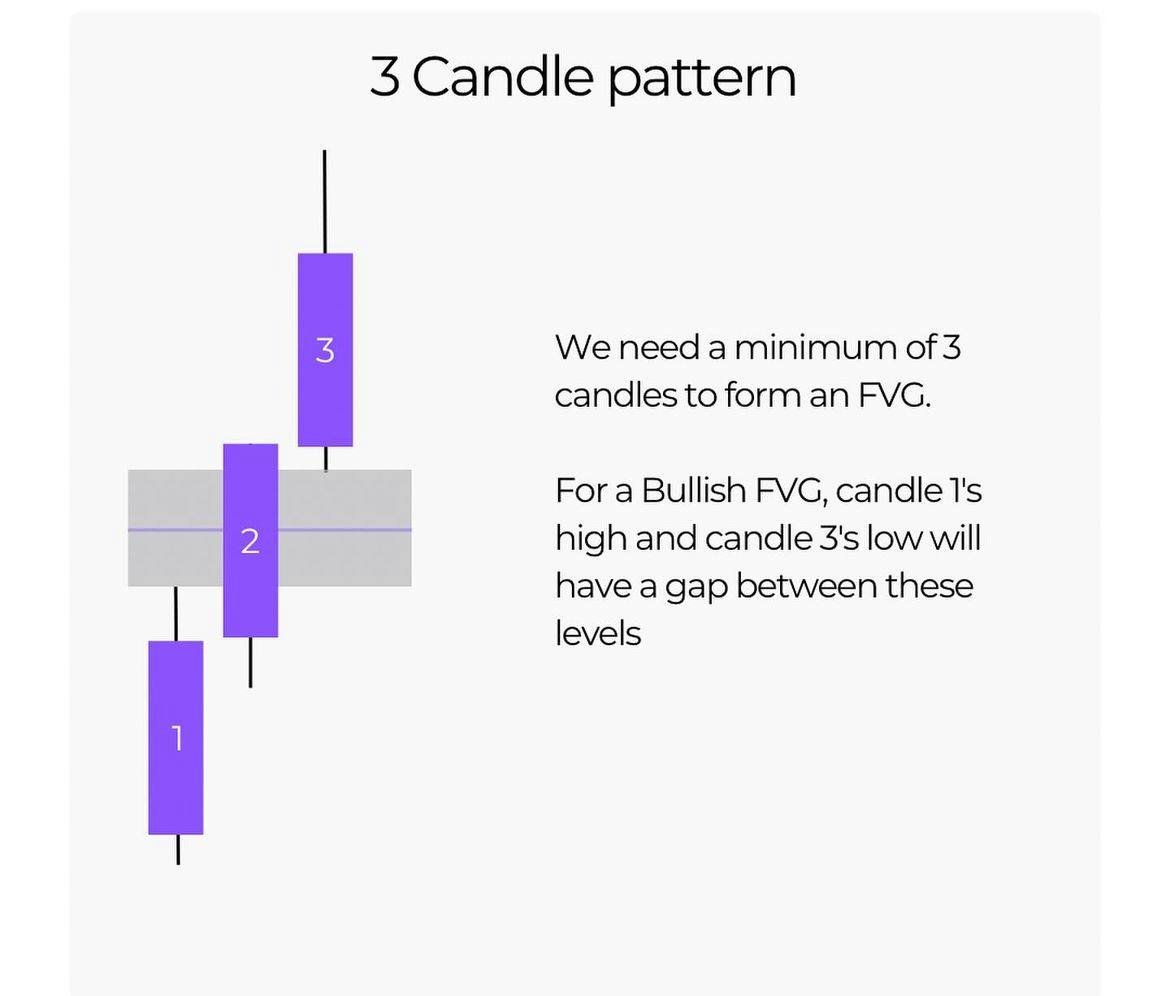
To form a FVG we need a minimum of 3 candles.
For a BULLISH FVG:
The HIGH of the 1st candle and the LOW of the 3rd candle will have a GAP between those levels.
Identify always FVG in HTF for more confluence.
To form a FVG we need a minimum of 3 candles.
For a BULLISH FVG:
The HIGH of the 1st candle and the LOW of the 3rd candle will have a GAP between those levels.
Identify always FVG in HTF for more confluence.
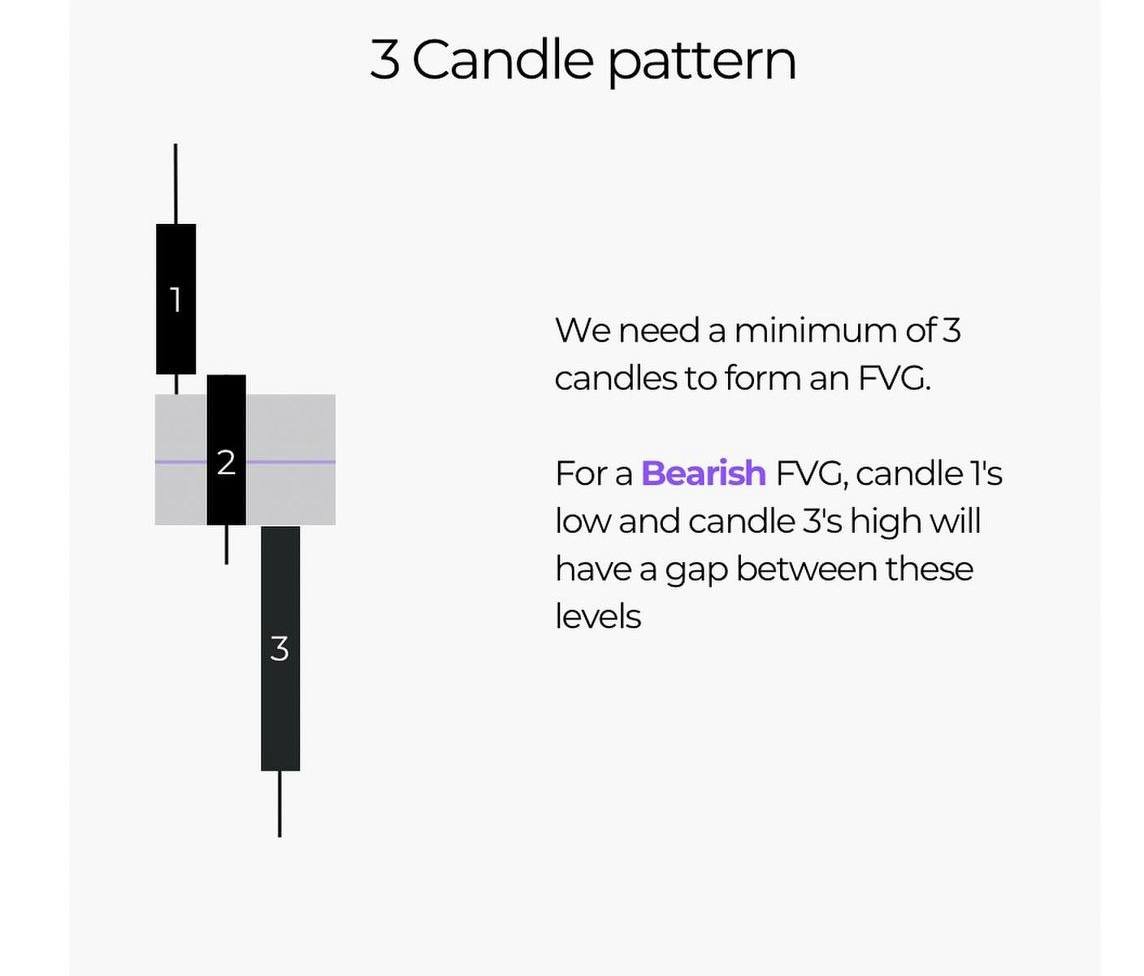
1.1 How are FVG formed
To form a BEARISH FVG we also need a minimum of 3 candles.
For a BEARISH FVG:
The LOW of the 1ST candle and the HIGH of the 3rd candle will have a GAP between these levels.
The GAP between levels is the FVG.
To form a BEARISH FVG we also need a minimum of 3 candles.
For a BEARISH FVG:
The LOW of the 1ST candle and the HIGH of the 3rd candle will have a GAP between these levels.
The GAP between levels is the FVG.
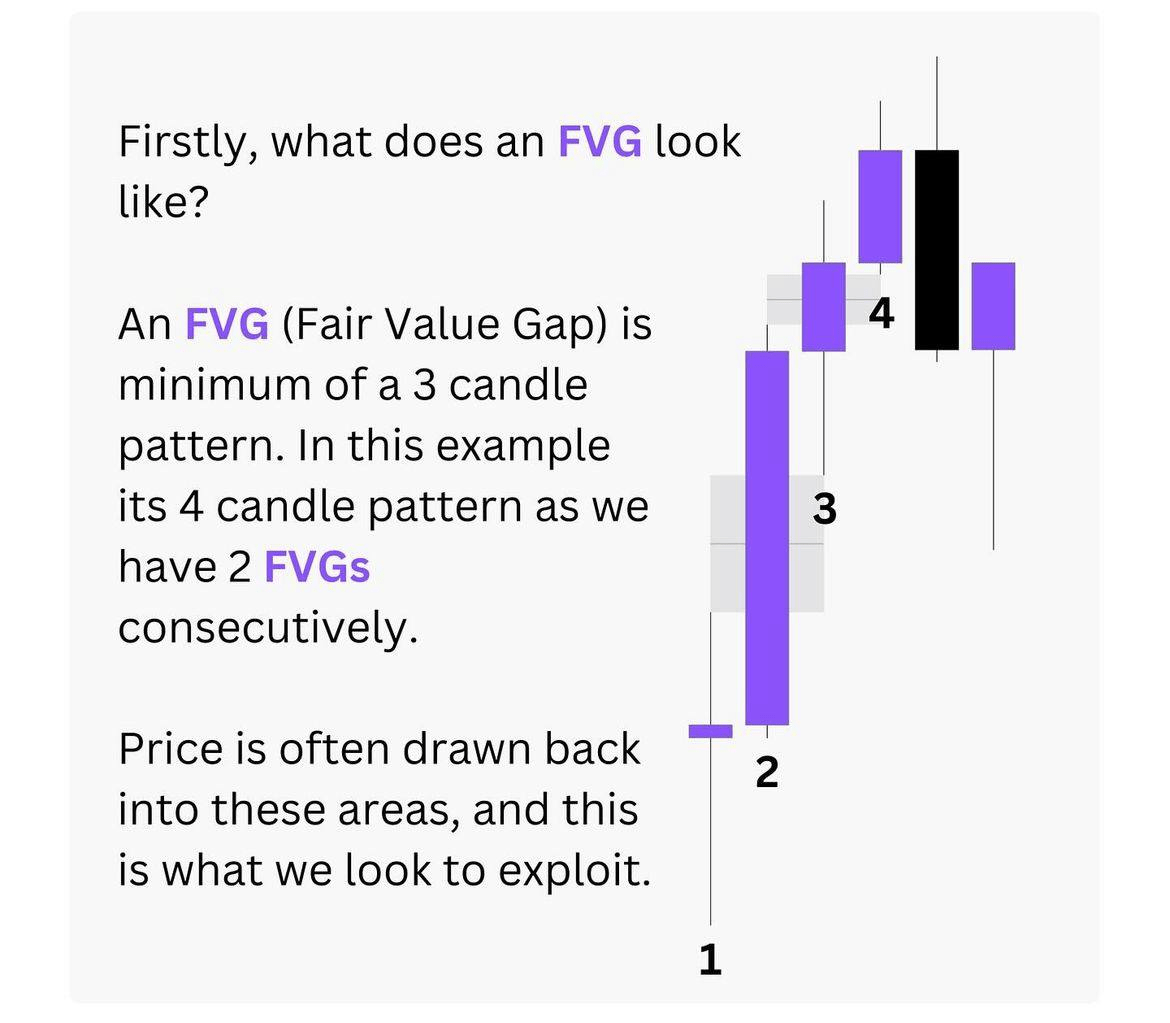
2. How to trade using FVG
Price is often drawn back/pushed to FVG's, as they are often Resistance and Support.
- Identify FVG's in the Price Action you are watching
- Use FVG's as SL and TP
- Use FVG's as areas of Liquidity
Price is often drawn back/pushed to FVG's, as they are often Resistance and Support.
- Identify FVG's in the Price Action you are watching
- Use FVG's as SL and TP
- Use FVG's as areas of Liquidity
3. Liquidity and FVG's
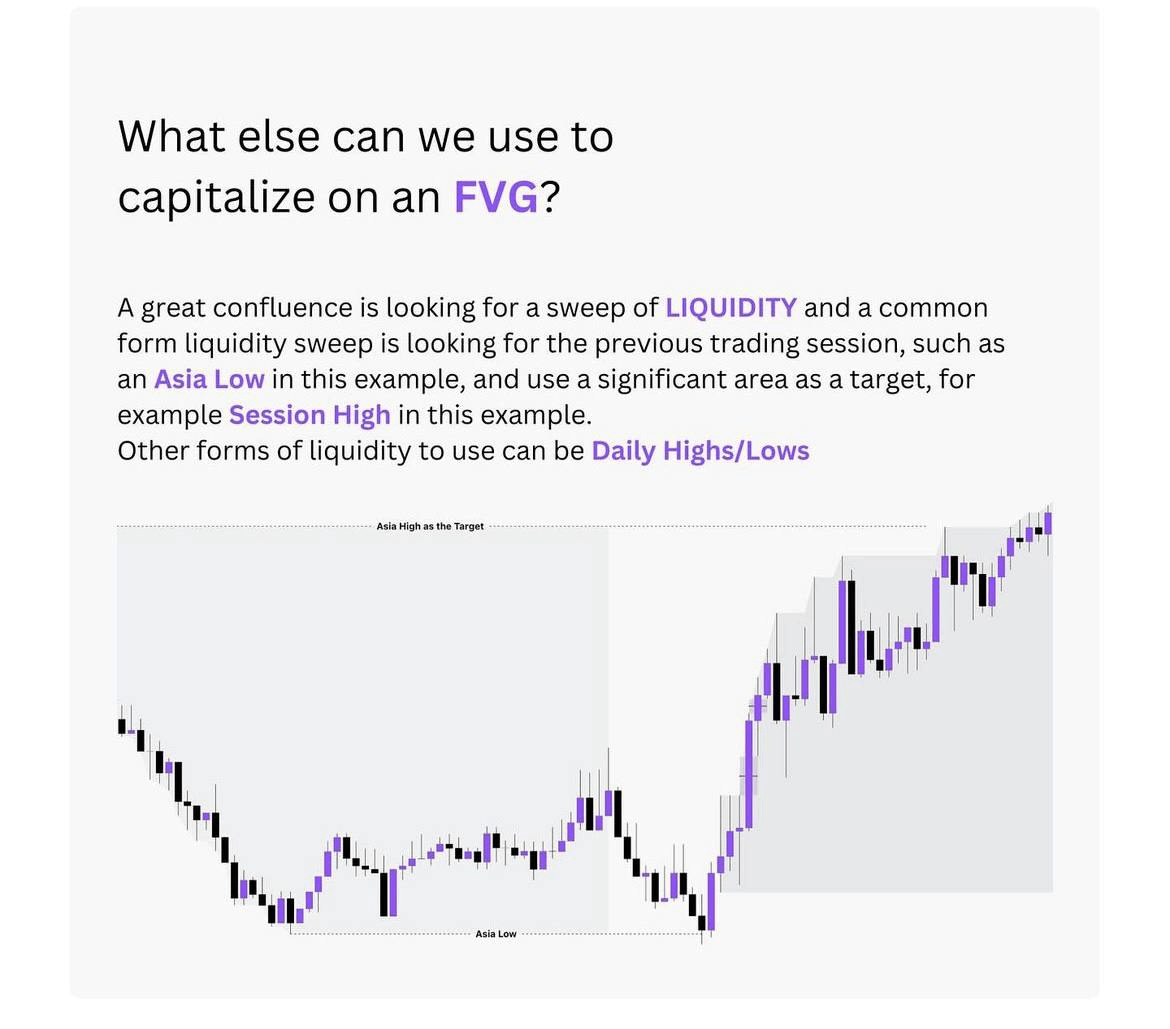
Price always looks for Swept's of Liquidity for a new trend.
Price here reaches Asian Low and bounces to TP at Asian Highs.
Daily Highs and Lows are other form of Liquidity.
Use FVG's as AREAS OF LIQUIDITY
Price always looks for Swept's of Liquidity for a new trend.
Price here reaches Asian Low and bounces to TP at Asian Highs.
Daily Highs and Lows are other form of Liquidity.
Use FVG's as AREAS OF LIQUIDITY
4. Trade example using FVG
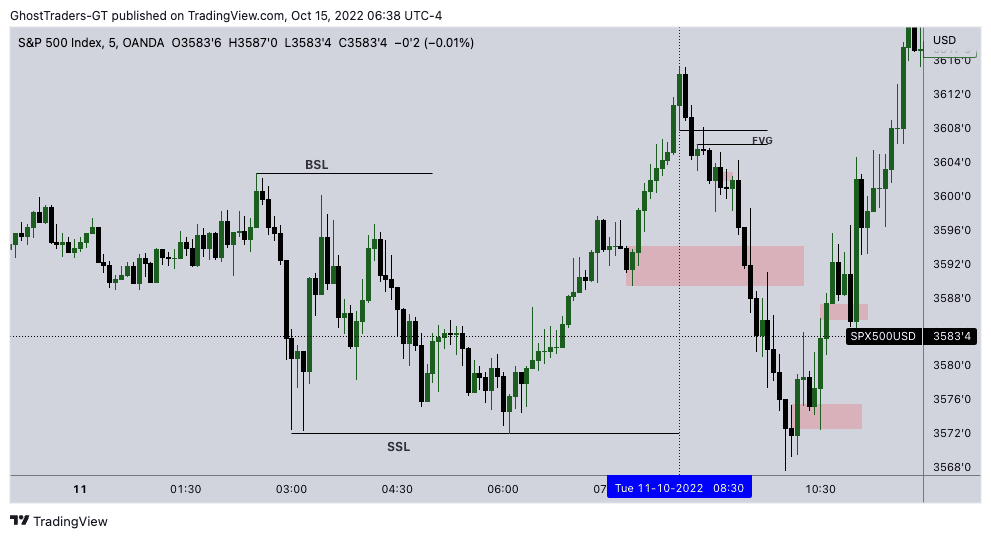
Price will always look for Support and Resistance since they are pools of Liquidity.
Therefore, Price will look for GAPS between the candles, those GAPS are FVG's.
Use them on your favour.
Price will always look for Support and Resistance since they are pools of Liquidity.
Therefore, Price will look for GAPS between the candles, those GAPS are FVG's.
Use them on your favour.
5. TP and SL
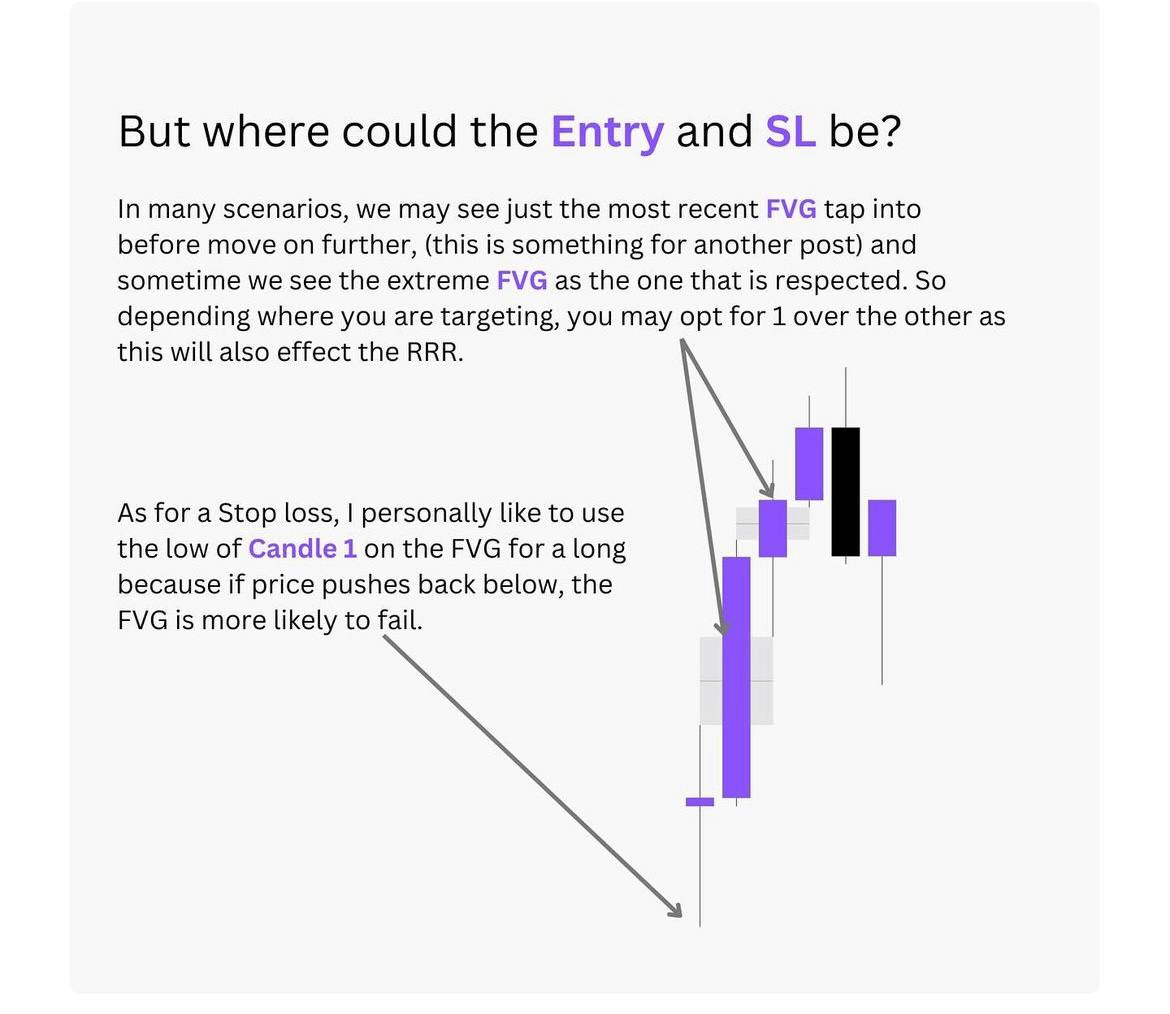
In a BULLISH FVG, the Take Profit and Stop Loss will be placed here:
- SL: Low of the 1st Candle. If this Low is lost, structure is lost
- TP: High of the 3rd Candle
In a BULLISH FVG, the Take Profit and Stop Loss will be placed here:
- SL: Low of the 1st Candle. If this Low is lost, structure is lost
- TP: High of the 3rd Candle
5.1 TP and SL
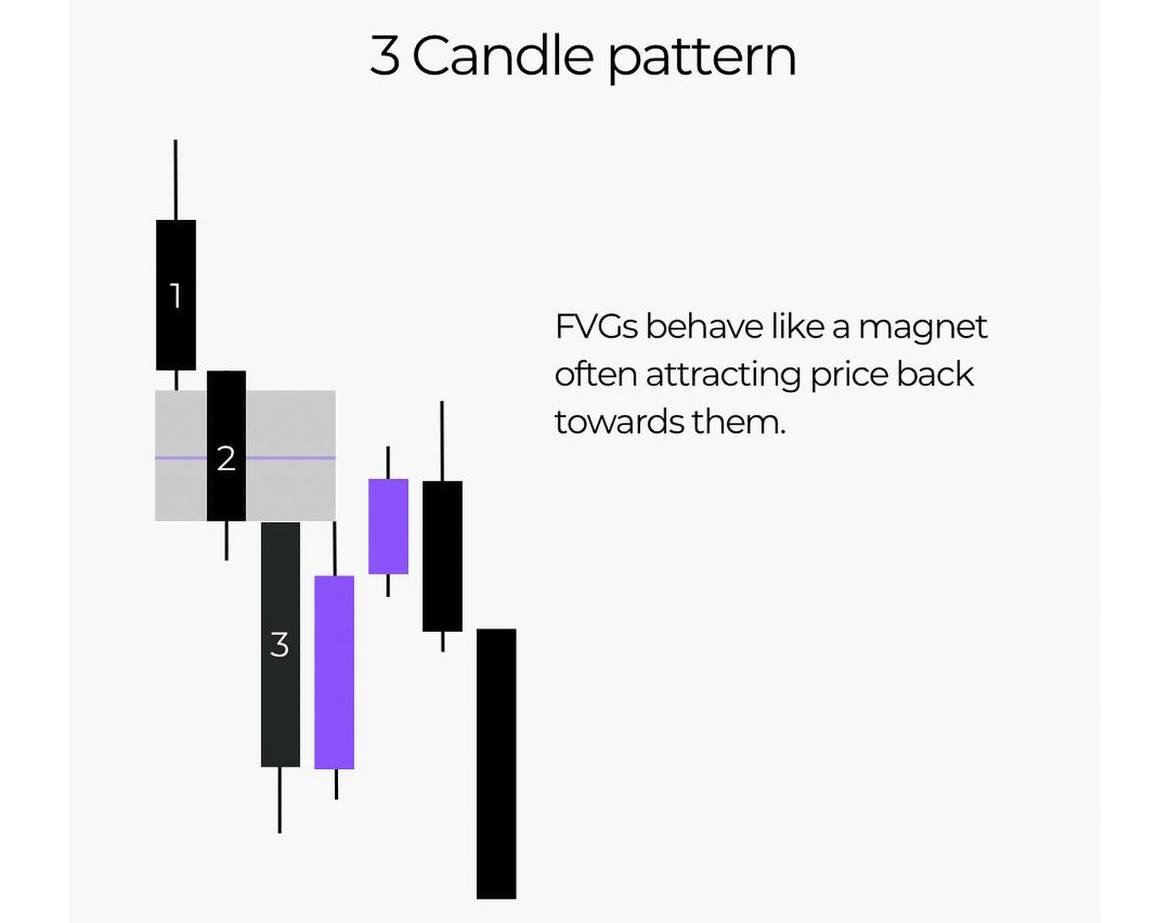
In this BEARISH FVG you can see:
- Price is retracing, but before dumping, goes straight to the FVG
- Price doesn't dump without a valid retest
- FVG's are like a magnet for the price action. Price will reach towards them for a reaction
In this BEARISH FVG you can see:
- Price is retracing, but before dumping, goes straight to the FVG
- Price doesn't dump without a valid retest
- FVG's are like a magnet for the price action. Price will reach towards them for a reaction
Loading suggestions...