
Why do the badges of the England and Spain football teams look the way they do?
It's a story that involves the Holy Roman Empire, a purple lion, Hercules, and the possible origins of the dollar sign...
It's a story that involves the Holy Roman Empire, a purple lion, Hercules, and the possible origins of the dollar sign...

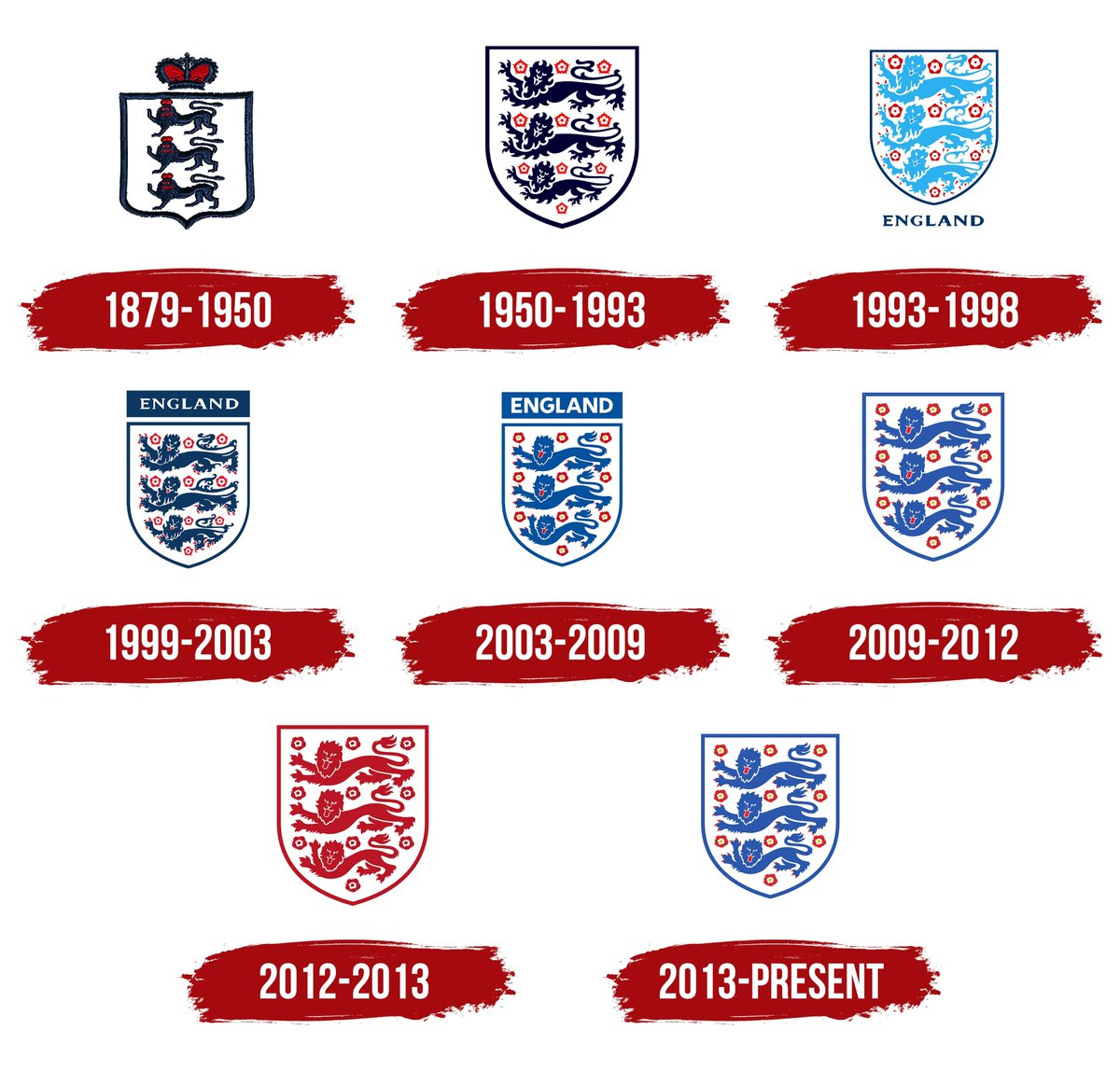
When England first played an international match in 1872 — the first international game in history, against Scotland — they simply wore three lions as a crest.
The ten roses were added in 1949, one for each region of the Football Association.
(That first game was a 0-0 draw).
The ten roses were added in 1949, one for each region of the Football Association.
(That first game was a 0-0 draw).
Why three lions?
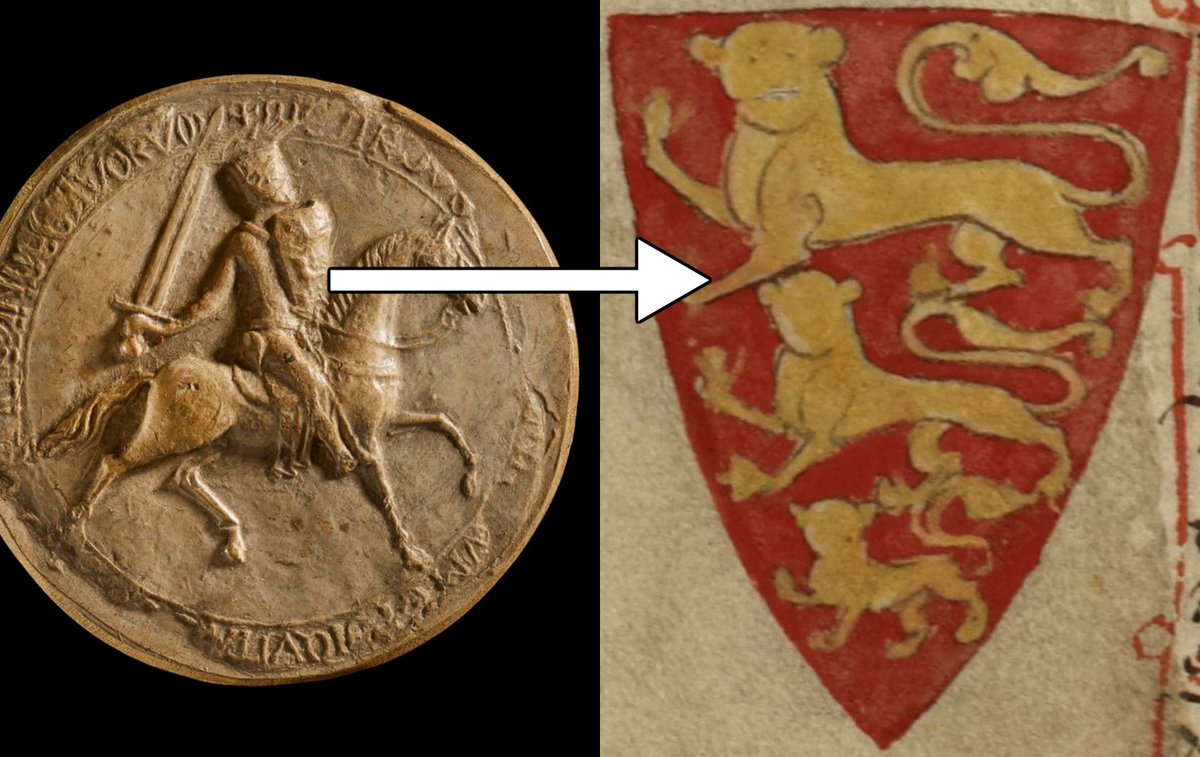
Well, they have been a symbol of England for about 800 years — since 1198, to be precise, when King Richard I adopted them as his symbol.
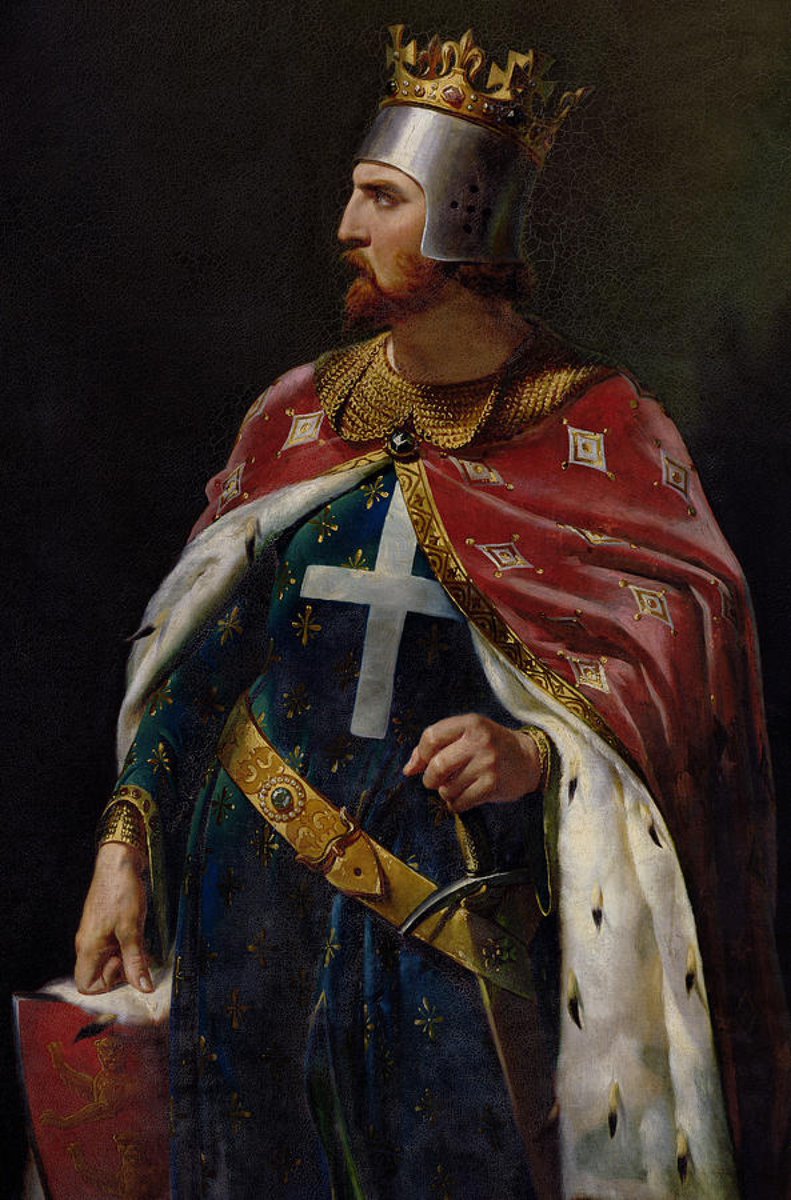
He ruled from 1189 to 1199 and has long been a romanticised hero, as in this 1841 painting by Merry-Joseph Blondel.
Well, they have been a symbol of England for about 800 years — since 1198, to be precise, when King Richard I adopted them as his symbol.
He ruled from 1189 to 1199 and has long been a romanticised hero, as in this 1841 painting by Merry-Joseph Blondel.
Lions have symbolised strength for thousands of years, all around the world — even in England, where there are no lions.
Richard became known as "the Lionheart" because of his bravery in war; he had been leading armies into battle since the age of 16.
Richard became known as "the Lionheart" because of his bravery in war; he had been leading armies into battle since the age of 16.
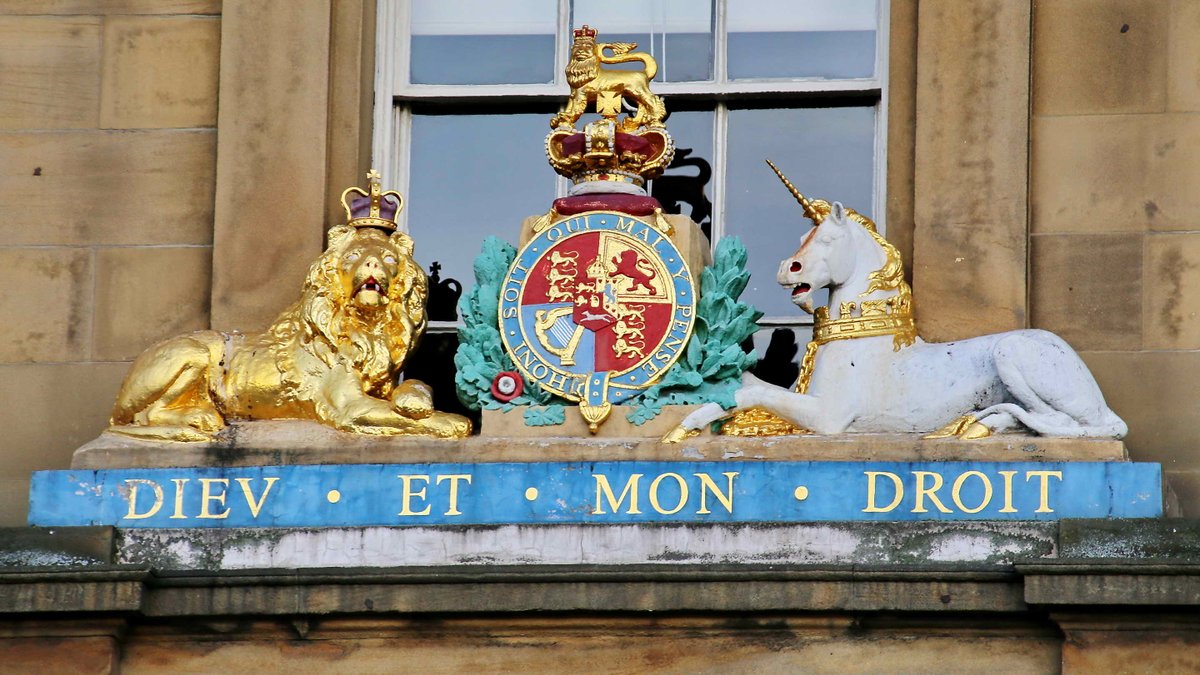
It's also worth mentioning that Richard the Lionheart's personal motto was "Dieu et mon droit", meaning "God and my right".
This has since become the motto of the British monarchy and is featured on the coat of arms of the United Kingdom.
This has since become the motto of the British monarchy and is featured on the coat of arms of the United Kingdom.
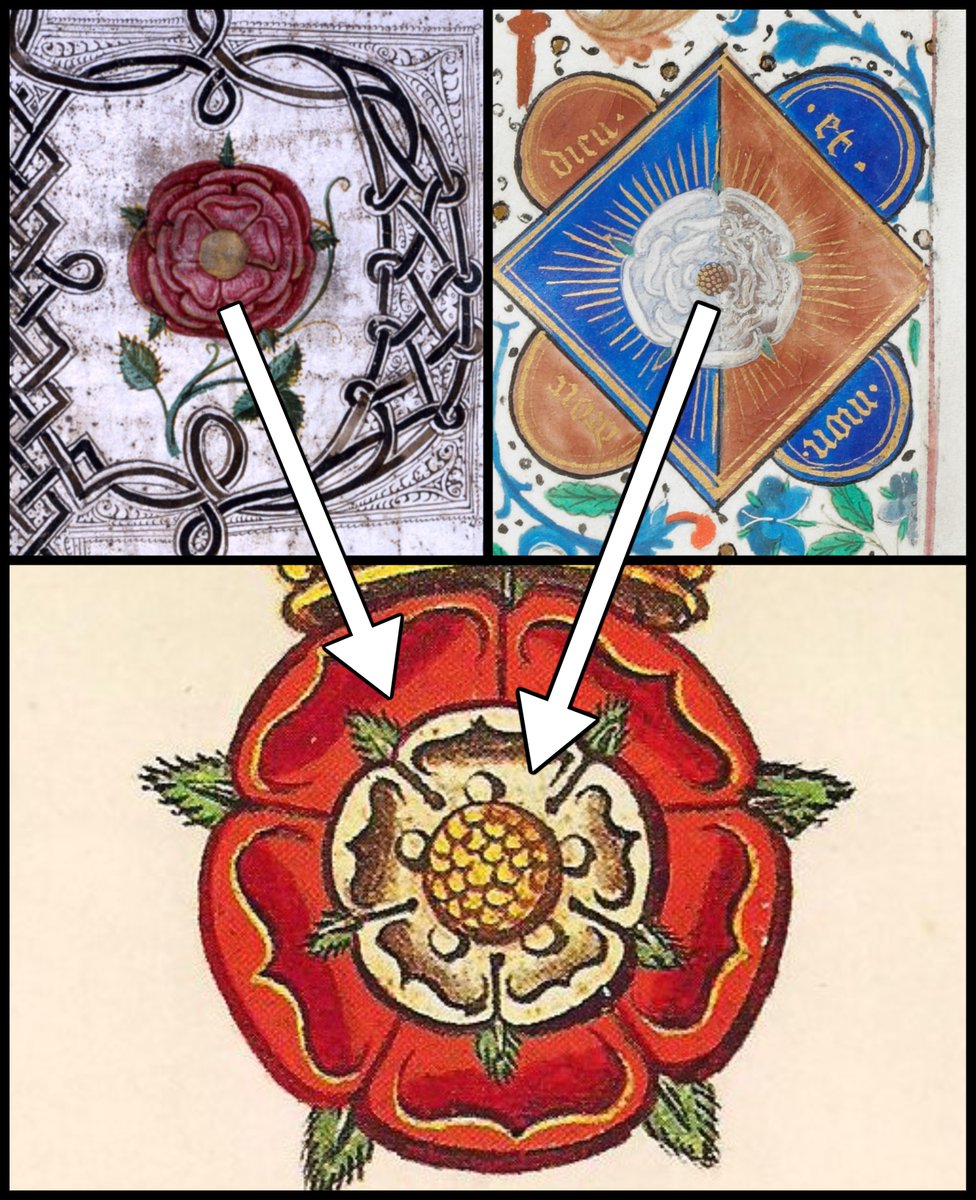
Those ten roses, meanwhile, are Tudor Roses — red on the outside, white at the centre.
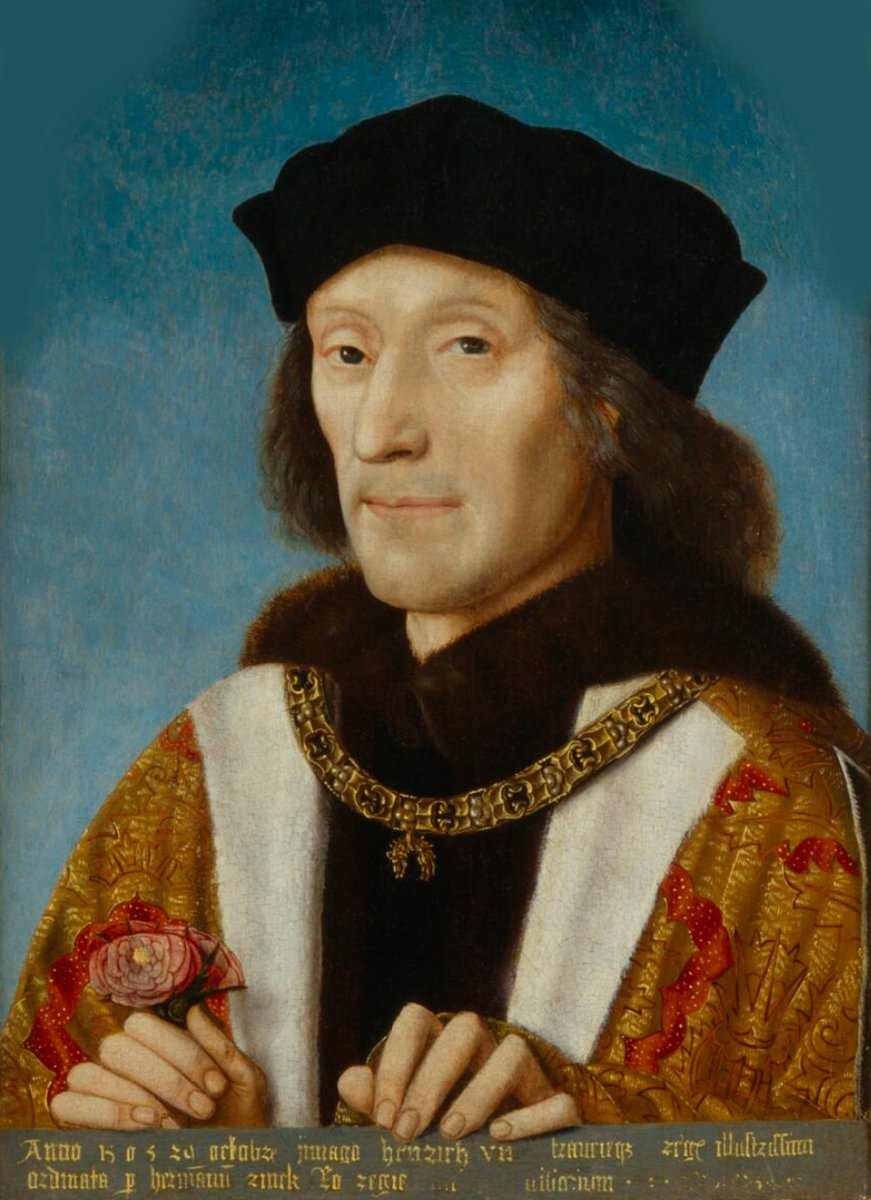
This symbol was created by King Henry VII in 1486 (pictured below holding a red rose) after he had defeated Richard III at the Battle of Bosworth Field, which ended the Wars of the Roses.
This symbol was created by King Henry VII in 1486 (pictured below holding a red rose) after he had defeated Richard III at the Battle of Bosworth Field, which ended the Wars of the Roses.
The White Rose was a symbol of the House of York, and the Red Rose was a symbol of the House of Lancaster.
Henry VII married Elizabeth of York, and so the combined roses represented a unification of England and the end of its civil wars.
Henry VII married Elizabeth of York, and so the combined roses represented a unification of England and the end of its civil wars.
What about the Spanish football badge?
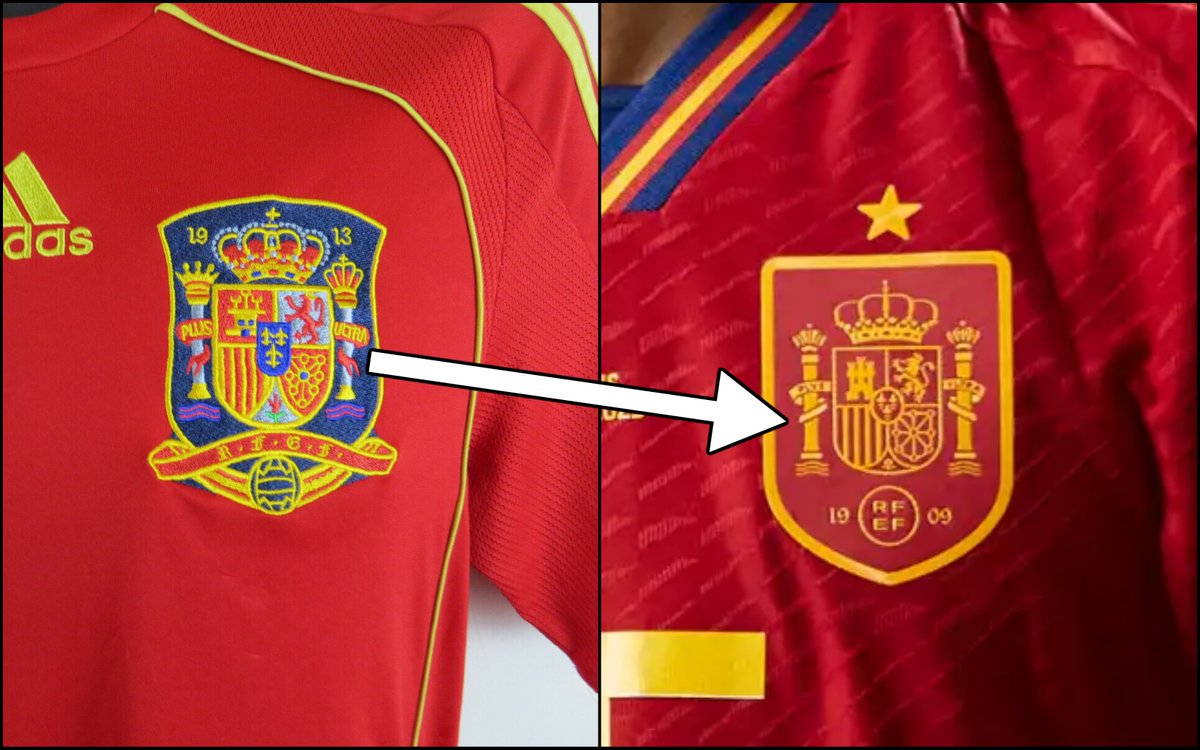
It is essentially just the Spanish national coat of arms combined with the date of the founding of the first Spanish football association — 1909.
R.F.E.F. are the initials of the second Spanish football association, founded in 1913.
It is essentially just the Spanish national coat of arms combined with the date of the founding of the first Spanish football association — 1909.
R.F.E.F. are the initials of the second Spanish football association, founded in 1913.
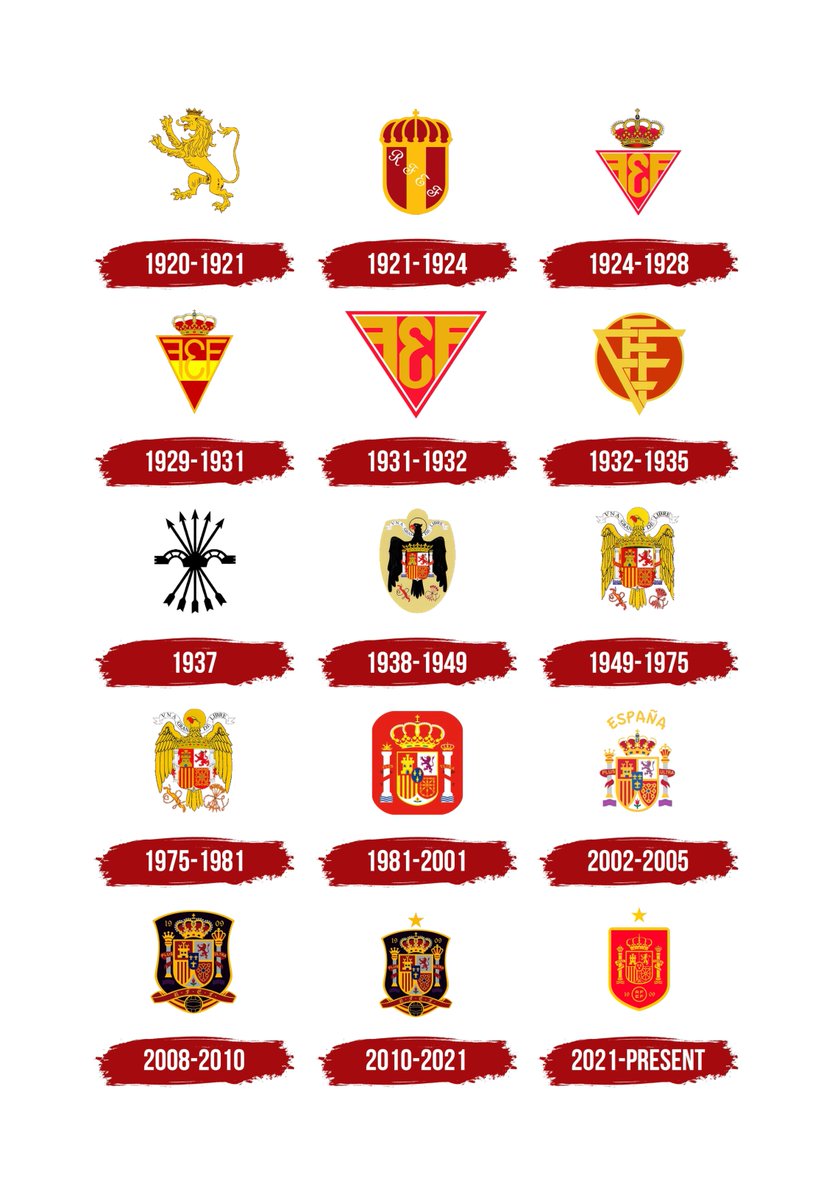
The Spanish coat of arms dates back centuries and has an incredibly complicated history — because of the complicated political history of Spain.
The present version was only adopted in 1981, six years after the end of Franco's rule, along with the current Spanish flag itself.
The present version was only adopted in 1981, six years after the end of Franco's rule, along with the current Spanish flag itself.
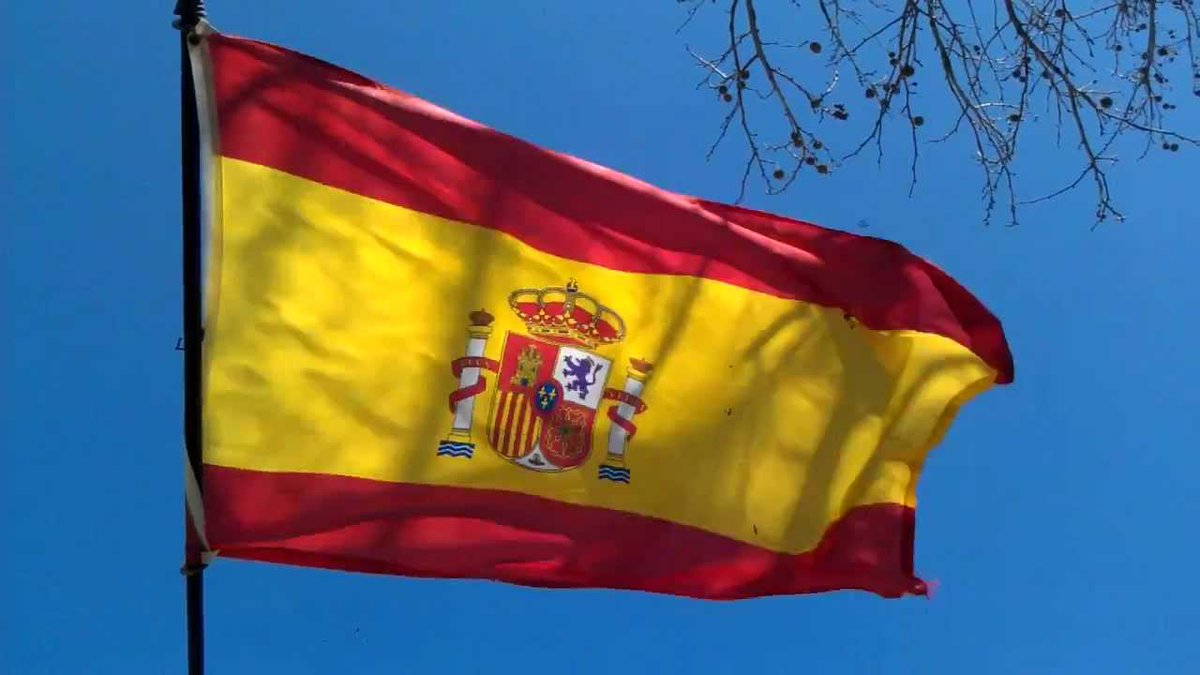
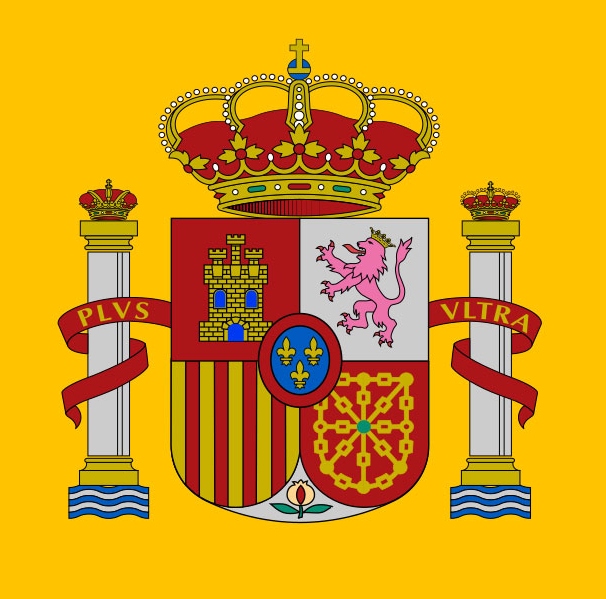
Each part of the crest represents one of the Medieval kingdoms that united to form Spain — which are, clockwise from top left, Castile, León, Navarre, and Aragon.
The small flower at the bottom is for Granada, and the fleurs-de-lis in the centre represents the House of Bourbon.
The small flower at the bottom is for Granada, and the fleurs-de-lis in the centre represents the House of Bourbon.
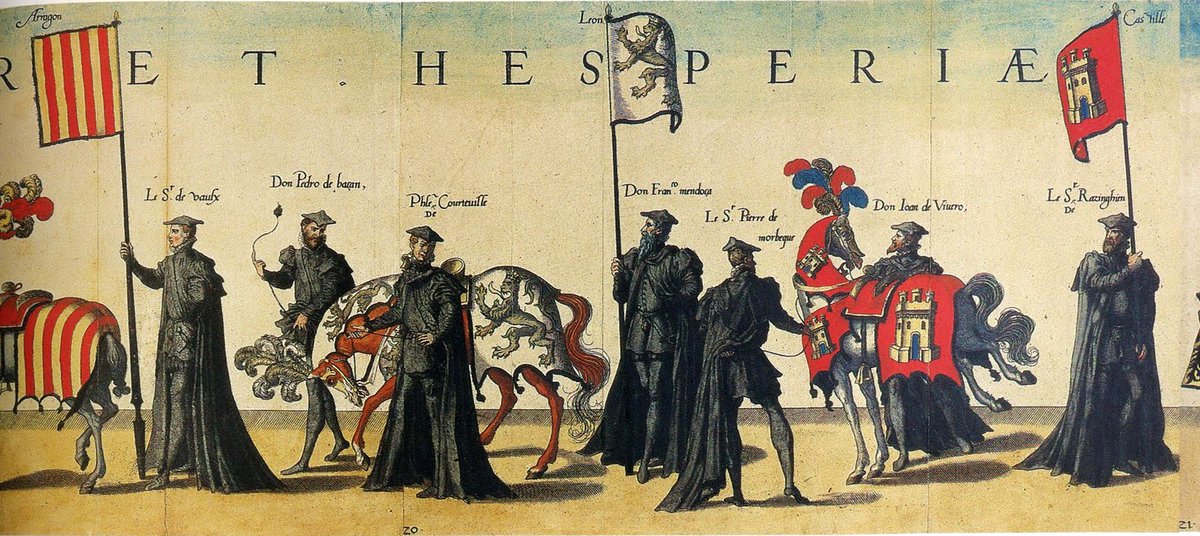
The Kingdom of León is particularly interesting in this case, because it is represented by a lion — like England.
The lion has been a symbol of León since the 12th century, under King Alfonso VII — the same century it became a symbol of England.
The lion has been a symbol of León since the 12th century, under King Alfonso VII — the same century it became a symbol of England.
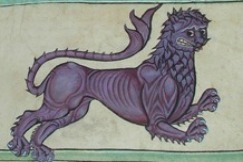
Although one crucial difference is that the lion of León is usually purple.
Historically purple has been a rare colour in heraldry — because it could only be made by using a specific species of snail, the Murex.
It was the most expensive colour of all, and reserved for royalty.
Historically purple has been a rare colour in heraldry — because it could only be made by using a specific species of snail, the Murex.
It was the most expensive colour of all, and reserved for royalty.
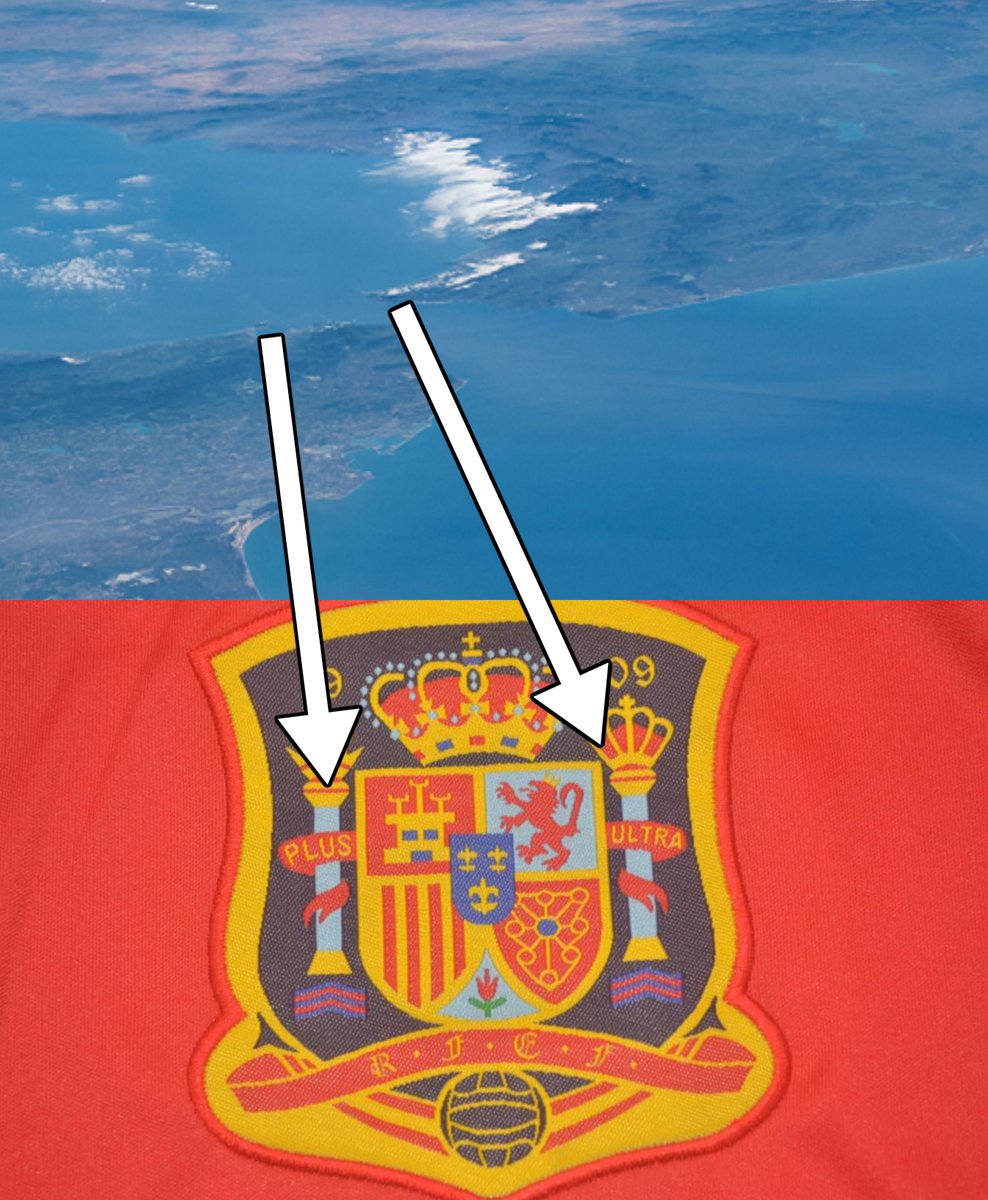
What about those two columns on either side of the shield?
They are the "Pillars of Hercules", a symbol representing the two sides of the entrance to the Strait of Gibraltar, between Spain and Morocco.
In ancient times they signified the edge of the known world.
They are the "Pillars of Hercules", a symbol representing the two sides of the entrance to the Strait of Gibraltar, between Spain and Morocco.
In ancient times they signified the edge of the known world.
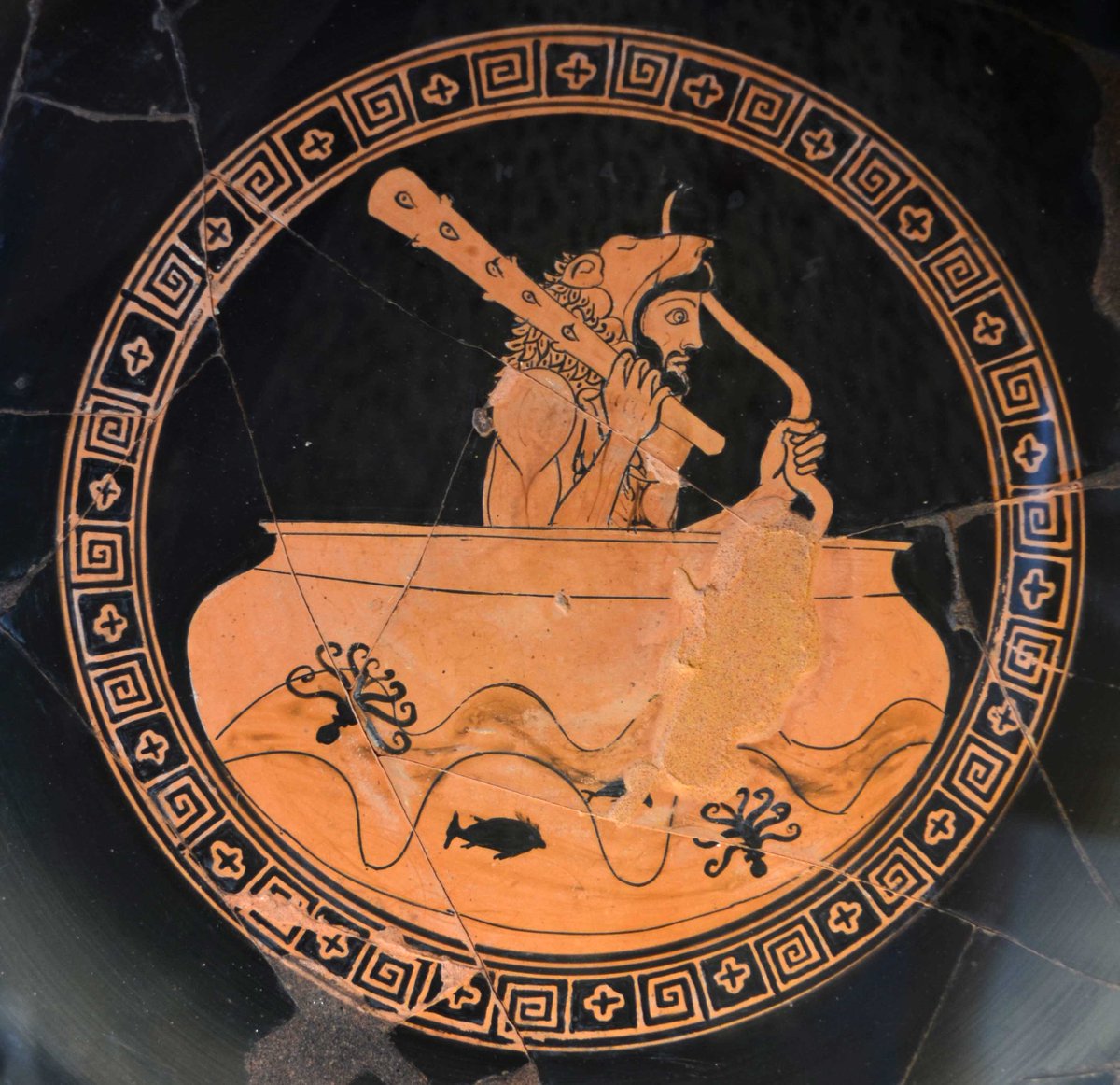
According to Greek myth, the tenth of Hercules' Twelve Labours was retrieving the magical cows of a giant called Geryon, who lived on an island in the far west.
He sailed there — beyond the pillars — in a bowl given to him by the sun god Helios, hence their name.
He sailed there — beyond the pillars — in a bowl given to him by the sun god Helios, hence their name.
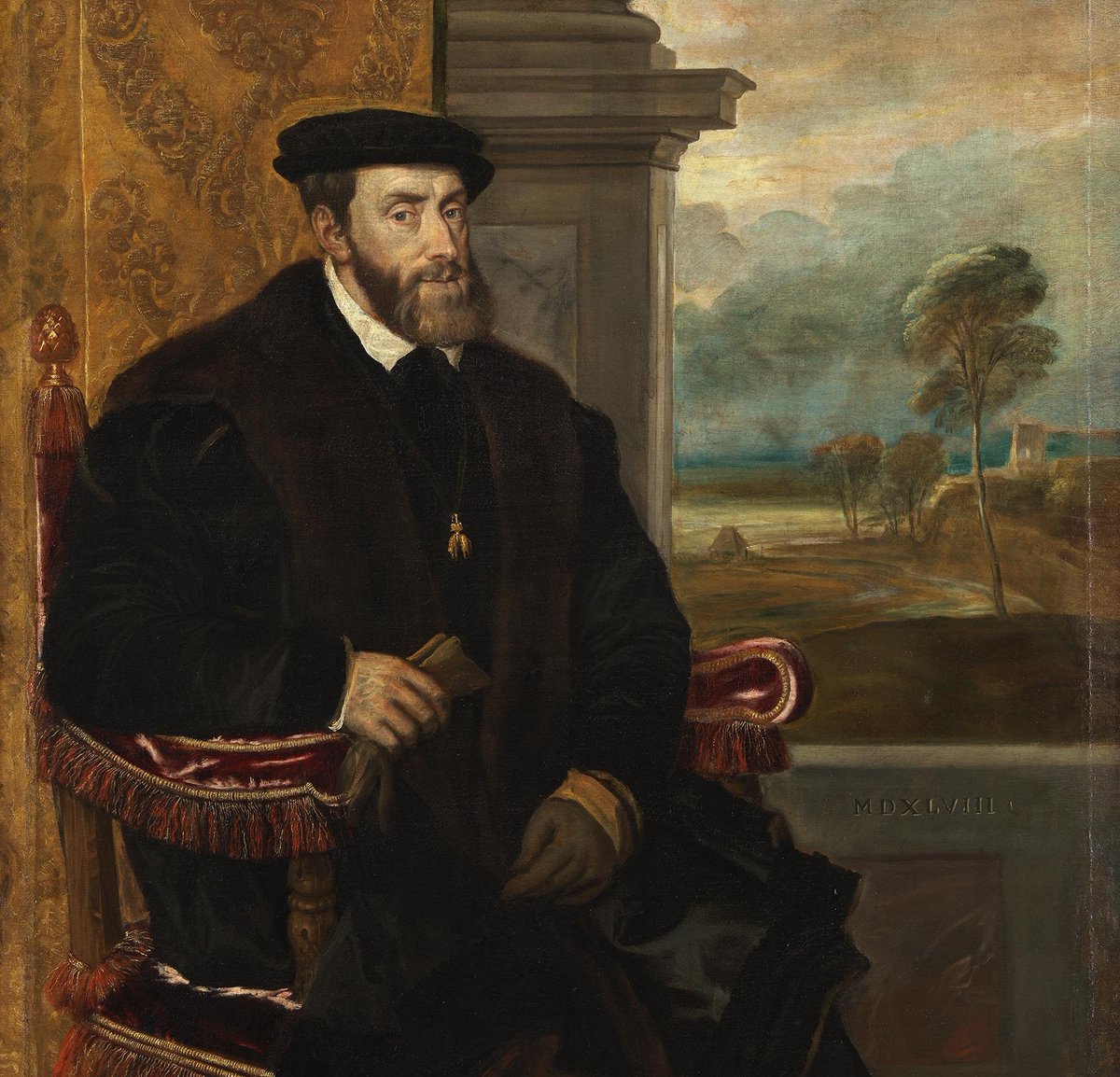
A version of the Pillars of Hercules was adopted as a symbol by Holy Roman Emperor Charles V, who was also King of Spain.
Upon them were written the words "Plus Ultra", meaning "Further Beyond", which has become Spain's national motto — and is also on the football badge.
Upon them were written the words "Plus Ultra", meaning "Further Beyond", which has become Spain's national motto — and is also on the football badge.
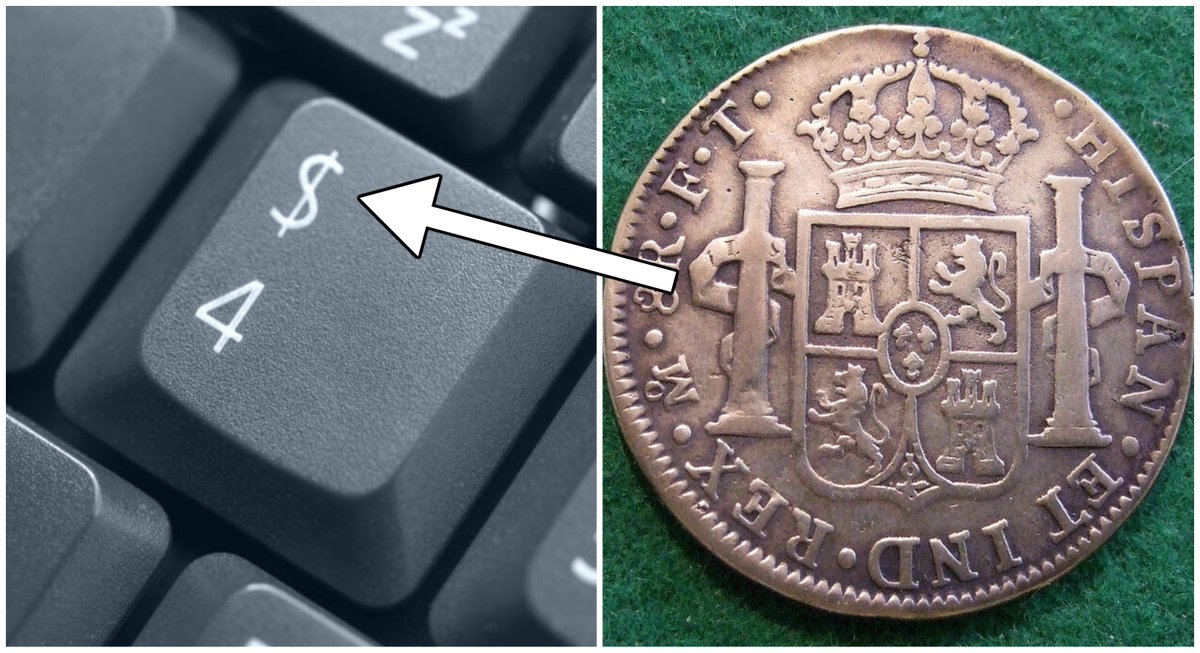
One theory also suggests the dollar sign comes from these Spanish Pillars of Hercules.
Why? Because, during the 17th and 18th centuries, the most common coin in circulation in the Americas featured those pillars.
Did that ribbon wrapped around a column become $? Maybe.
Why? Because, during the 17th and 18th centuries, the most common coin in circulation in the Americas featured those pillars.
Did that ribbon wrapped around a column become $? Maybe.
In any case, the most recent iteration of the Spanish football crest is duochrome, and so the colours of the various flags and symbols that make it up — including the purple lion — have been flattened.
A shame, perhaps, given its rich history and what those colours represent.
A shame, perhaps, given its rich history and what those colours represent.
And that is the history of the England and Spain national football team badges.
Could Richard I have known that his personal symbol would become the name of a football anthem?
Could Charles V have guessed that his motto would adorn the shirt of the future Spanish football team?
Could Richard I have known that his personal symbol would become the name of a football anthem?
Could Charles V have guessed that his motto would adorn the shirt of the future Spanish football team?
Well, football was around in those days — albeit in a form very different to the modern game, which only emerged in the 19th century.
Still, it's funny to note that various forms of football have been banned in the past for being too rowdy, including by Richard II in 1389.
Still, it's funny to note that various forms of football have been banned in the past for being too rowdy, including by Richard II in 1389.
But that's history, always filled with delightful breadcrumb trails of coincidence.
Symbols in particular have rich stories, and via the simplest of things — two football badges — a fabulous tale unfolds, leading us from the 21st century back to the Middle Ages and beyond.
Symbols in particular have rich stories, and via the simplest of things — two football badges — a fabulous tale unfolds, leading us from the 21st century back to the Middle Ages and beyond.

Loading suggestions...