

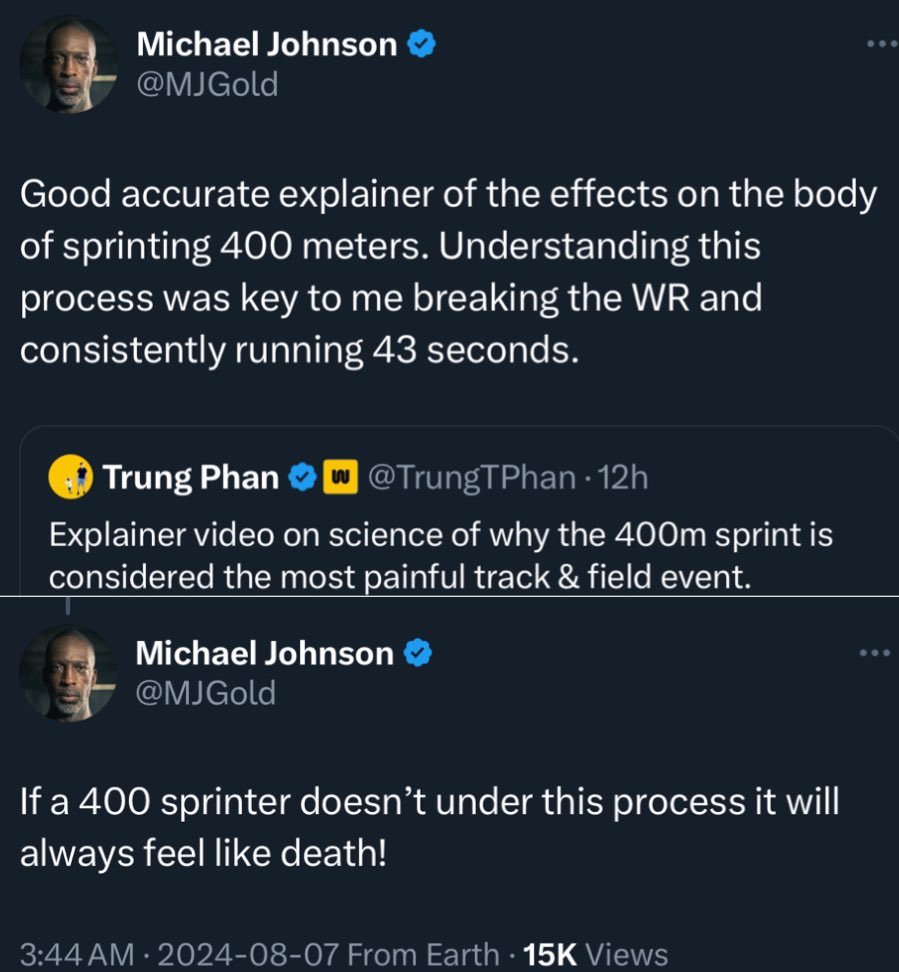
Explainer video on science of why the 400m sprint is considered the most painful track & field event.
And why “no person on the planet can run the 400m all out from start to finish".
The race pushes the way the body creates energy to the limit:
▫️0-50 meters: ATP-CP (energy system for very short and explosive movements; used up after 5-10 seconds)
▫️50-200 meters: Anaerobic glycolysis (burns glucose without oxygen, leading to lactic acid buildup and muscle fatigue)
▫️200-300 meters: Aerobic energy (uses oxygen to break down glucose, but cannot keep up with the demand)
▫️300-400 meters: Anaerobic energy reserves tapped while aerobic energy is too slow to fill the gaps (lactic acid buildup is going HAM)
Track athletes can pace for longer distances and shorter ones are just over quicker (obvs).
The Olympic record is a blazing 43:03, set by South African runner Wayde van Niekerk in 2016 (and 2024 Final race is tomorrow).
***
Full video from Outperform: youtu.be
And why “no person on the planet can run the 400m all out from start to finish".
The race pushes the way the body creates energy to the limit:
▫️0-50 meters: ATP-CP (energy system for very short and explosive movements; used up after 5-10 seconds)
▫️50-200 meters: Anaerobic glycolysis (burns glucose without oxygen, leading to lactic acid buildup and muscle fatigue)
▫️200-300 meters: Aerobic energy (uses oxygen to break down glucose, but cannot keep up with the demand)
▫️300-400 meters: Anaerobic energy reserves tapped while aerobic energy is too slow to fill the gaps (lactic acid buildup is going HAM)
Track athletes can pace for longer distances and shorter ones are just over quicker (obvs).
The Olympic record is a blazing 43:03, set by South African runner Wayde van Niekerk in 2016 (and 2024 Final race is tomorrow).
***
Full video from Outperform: youtu.be


The 400m is also tough because you don’t get the benefit of an absolute baller like Bottle Klaus keeping hydrated
Track legend Michael Johnson — who held the 400m Olympics record for 20 years prior to Wayde’s run — with notes on the 400m explainer vid:
Loading suggestions...