

Today was a very big day in the ongoing war. Israel’s strategy is suddenly clear and has been vindicated. It was in Israel’s interest to delay the inevitable reckoning with Hezbollah as long as possible, since for Hezbollah, yesterday was always the best day to attack Israel.
For every day that passes since October 7, Israel is freer to focus north and better prepared for the battle, while Hezbollah is being attrited much faster than Israel and cannot rebuild or resupply as fast as Israel. Every day, the balance of power tips towards Israel. This is what we saw last night. (1/11)
For every day that passes since October 7, Israel is freer to focus north and better prepared for the battle, while Hezbollah is being attrited much faster than Israel and cannot rebuild or resupply as fast as Israel. Every day, the balance of power tips towards Israel. This is what we saw last night. (1/11)

While Hamas is bleeding out in Gaza, hermetically cut off from resupply, completely surrounded, and even losing the support of their brainwashed population, they are being presented by Israel with the choices of “free the hostages and die next year” or “don’t free them and die this year.”
Israel has presented them with a dilemma, not a problem—both ways they die, individually and as an organization.
Their plan was to force Israel to its knees by attacking, forcing Israel to respond, then presenting dead baby photos to the world via their media and disinformation proxies has failed. (2/11)
Israel has presented them with a dilemma, not a problem—both ways they die, individually and as an organization.
Their plan was to force Israel to its knees by attacking, forcing Israel to respond, then presenting dead baby photos to the world via their media and disinformation proxies has failed. (2/11)

This was meant to bring international pressure on Israel to force humiliating capitulation, allowing Hamas to rebuild as Arab national heroes. They also wanted to break the Abraham Accords and damage Israel economically and demographically. None of this worked because their initial attack was too successful.
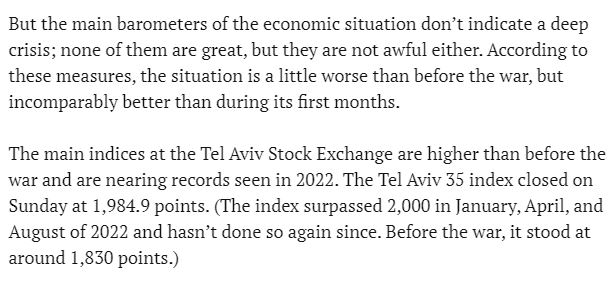
The economic damage has been fairly negligible (the Shekel is stable, the tax take is stable, the currency reserves are at $220 billion, GDP is back to the pre-war level approx), and undoubtedly their inspiration of antisemitism in the West will drive still more Jews to Israel. (3/11)
The economic damage has been fairly negligible (the Shekel is stable, the tax take is stable, the currency reserves are at $220 billion, GDP is back to the pre-war level approx), and undoubtedly their inspiration of antisemitism in the West will drive still more Jews to Israel. (3/11)
The Abraham Accords deepened, the international blowback was minimal (Norway, Ireland, South Africa—who cares?), and all the work they have done for 30 years in building up their homeland into a vast terror fortress, staffed by 10,000s of UNRWA brainwashed zombies, has been for naught.
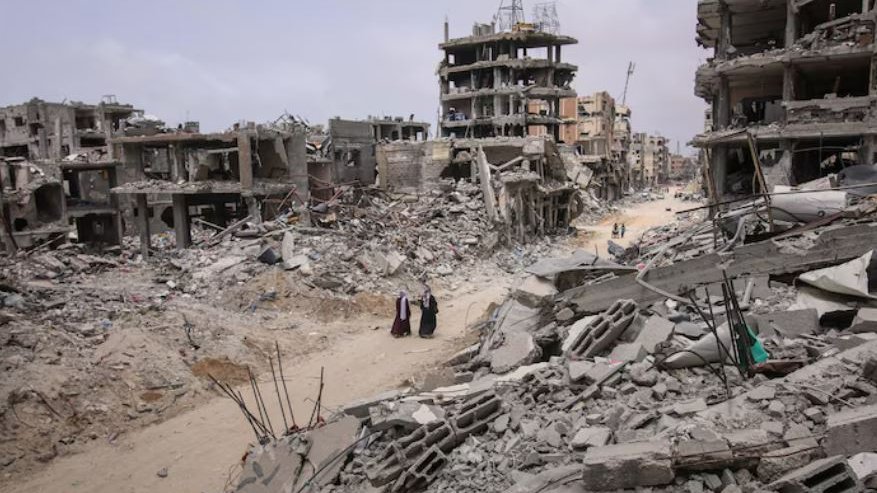
Most of those zombies are now dead, with many more disabled or captured, most of their fortifications are gone, and the people they led to disaster hate them even more than they hate the Zionists. But most of all, they have “red-pilled” every living Israeli, including the youth who will lead Israel into the 22nd century. (4/11)
Most of those zombies are now dead, with many more disabled or captured, most of their fortifications are gone, and the people they led to disaster hate them even more than they hate the Zionists. But most of all, they have “red-pilled” every living Israeli, including the youth who will lead Israel into the 22nd century. (4/11)

Nearly all of them have been personally affected in some way. Israel has emerged a lot less “soft.” From now on, until the last of the Nova survivors exit the scene in 80 years, the Israelis will play hardball. They will never be allowed to rebuild and rearm: They better save those bullets for special occasions, since their stores need to last them until 2100.
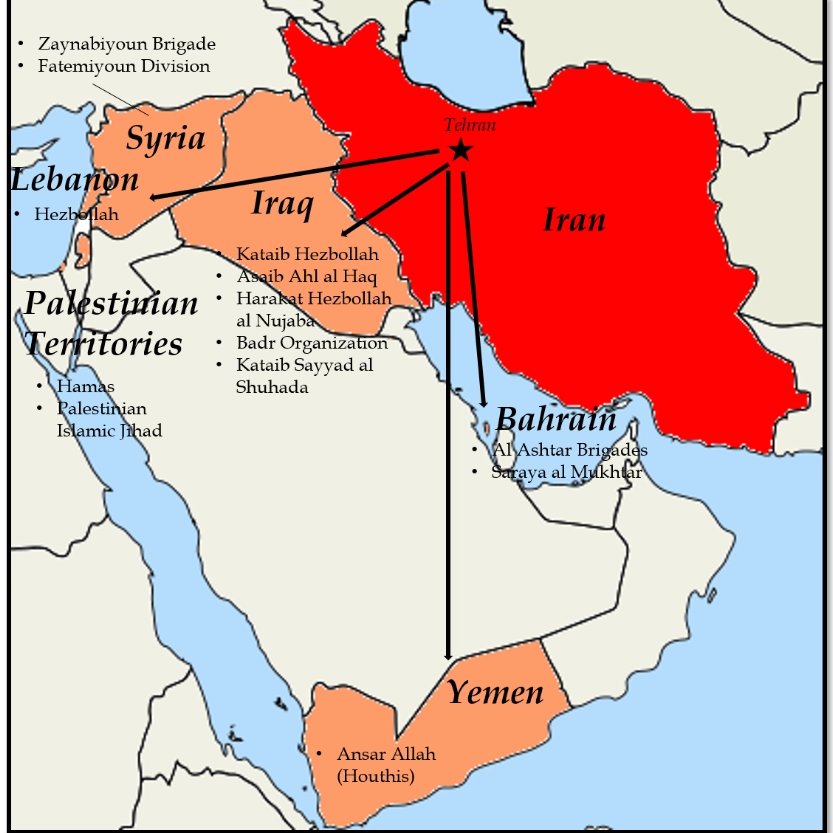
When Hamas surprised them by starting the war on October 7, Hezbollah, and their backers in Iran faced another dilemma (remember the military adage: “always present your enemy with dilemmas, not problems”). Hezbollah’s purpose was not to destroy Israel—but to protect Iran. (5/11)
When Hamas surprised them by starting the war on October 7, Hezbollah, and their backers in Iran faced another dilemma (remember the military adage: “always present your enemy with dilemmas, not problems”). Hezbollah’s purpose was not to destroy Israel—but to protect Iran. (5/11)
What damage could Hezbollah’s reported 100,000 missiles do? The vast majority of these are simple rockets with small warheads, of the type Hamas has. On October 7, the first time Israel’s Iron Dome was overwhelmed as c. 5,000 rockets were fired, about 20 people were killed by rockets.
To kill one Israeli, you need to fire 250 rockets. The warheads are not huge, Israeli buildings are heavy on concrete, and people are well-trained at taking shelter. In the best-case scenario, their rockets might kill a few hundred Israelis and damage property, but Israel will ultimately be fine. (6/11)
To kill one Israeli, you need to fire 250 rockets. The warheads are not huge, Israeli buildings are heavy on concrete, and people are well-trained at taking shelter. In the best-case scenario, their rockets might kill a few hundred Israelis and damage property, but Israel will ultimately be fine. (6/11)
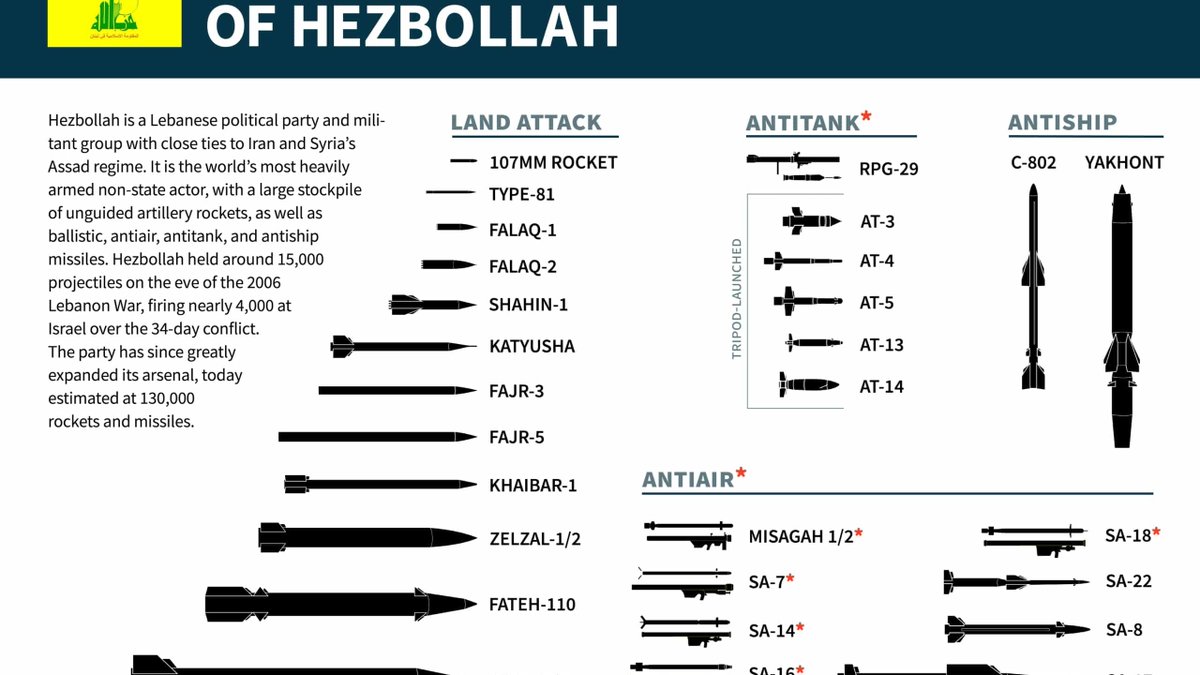
Since the “accurate” munitions Hezbollah possesses are all dependent on GPS guidance, a facility that Israel can jam at will, their accuracy is not very useful. Hezbollah knows that once it fires its arsenal, it will be pummeled into dust quickly, and as time progresses, it will become increasingly difficult to act.
Attacking Hezbollah from the air is much easier for Israel since the population is sparse and rural, and most have already left. If they start an all-out war, they will cause some damage but be defeated, perhaps completely. If they don’t attack, Hamas will be pummeled, and they will stand alone against Israel, ultimately getting smashed at Israel’s convenience. (7/11)
Attacking Hezbollah from the air is much easier for Israel since the population is sparse and rural, and most have already left. If they start an all-out war, they will cause some damage but be defeated, perhaps completely. If they don’t attack, Hamas will be pummeled, and they will stand alone against Israel, ultimately getting smashed at Israel’s convenience. (7/11)

A dilemma with two bad solutions—hence Nasrallah’s regular speeches saying nothing. Hezbollah wasn’t built to destroy Israel, merely to menace it and deter Israel from attacking Iran’s nuclear assets, which are being built to destroy Israel. Iran cannot defend against Israel with their outdated planes and air defenses.
They armed Hamas for the same reason—they were both meant to be guns pointed at Israel’s temples—but Hamas didn’t see it that way and actually wanted to fight, not just be a deterrent for Iran. So Hamas destroyed themselves, and only Hezbollah remains, making its sustainment much more critical for Iran. (8/11)
They armed Hamas for the same reason—they were both meant to be guns pointed at Israel’s temples—but Hamas didn’t see it that way and actually wanted to fight, not just be a deterrent for Iran. So Hamas destroyed themselves, and only Hezbollah remains, making its sustainment much more critical for Iran. (8/11)
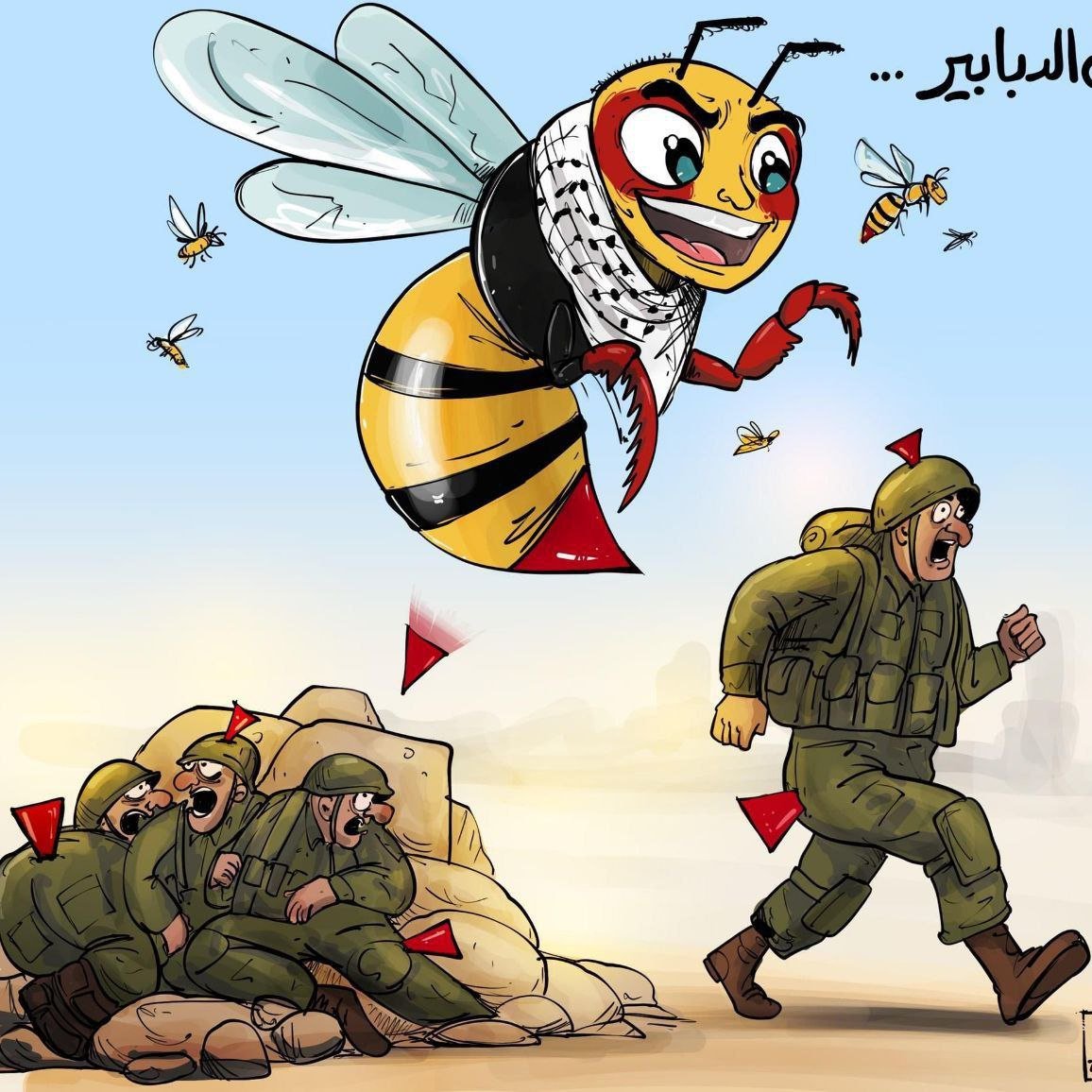
Now we see how Israel’s strategy has played out. Israel knows all the above, and knows that Iran knows it too. Hezbollah does not pose a strategic challenge to Israel. It can sting Israel badly, but like a wasp, it will then die. When Hamas and Hezbollah have expended their stingers, the hungry bear can focus on the near defenseless hive—Iran.
What Israel has been doing in the north for 10 months now is attriting Hezbollah, surveilling it, building detailed centimeter-level 3D lidar maps of every inch of its heartlands. Humans and AI have analyzed every olive tree, every field, and every mosque to identify weapon storage locations. (9/11)
What Israel has been doing in the north for 10 months now is attriting Hezbollah, surveilling it, building detailed centimeter-level 3D lidar maps of every inch of its heartlands. Humans and AI have analyzed every olive tree, every field, and every mosque to identify weapon storage locations. (9/11)
When Hezbollah fires a rocket, Israel can often reverse the surveillance footage to trace the truck’s origin. In Lebanon, unlike Gaza, the population is ethnically and religiously diverse. Many Lebanese hate Hezbollah more than they hate Israel, making Israel’s human intelligence much stronger.
Israel neglected the Gaza threat because it correctly noted that Hezbollah was more dangerous. The benefit is that Israel is now much better prepared to deal with Hezbollah. Last night, when Hezbollah prepared its long-promised strike, Israel was able to minimize damage because there were no surprises. (10/11)
Israel neglected the Gaza threat because it correctly noted that Hezbollah was more dangerous. The benefit is that Israel is now much better prepared to deal with Hezbollah. Last night, when Hezbollah prepared its long-promised strike, Israel was able to minimize damage because there were no surprises. (10/11)
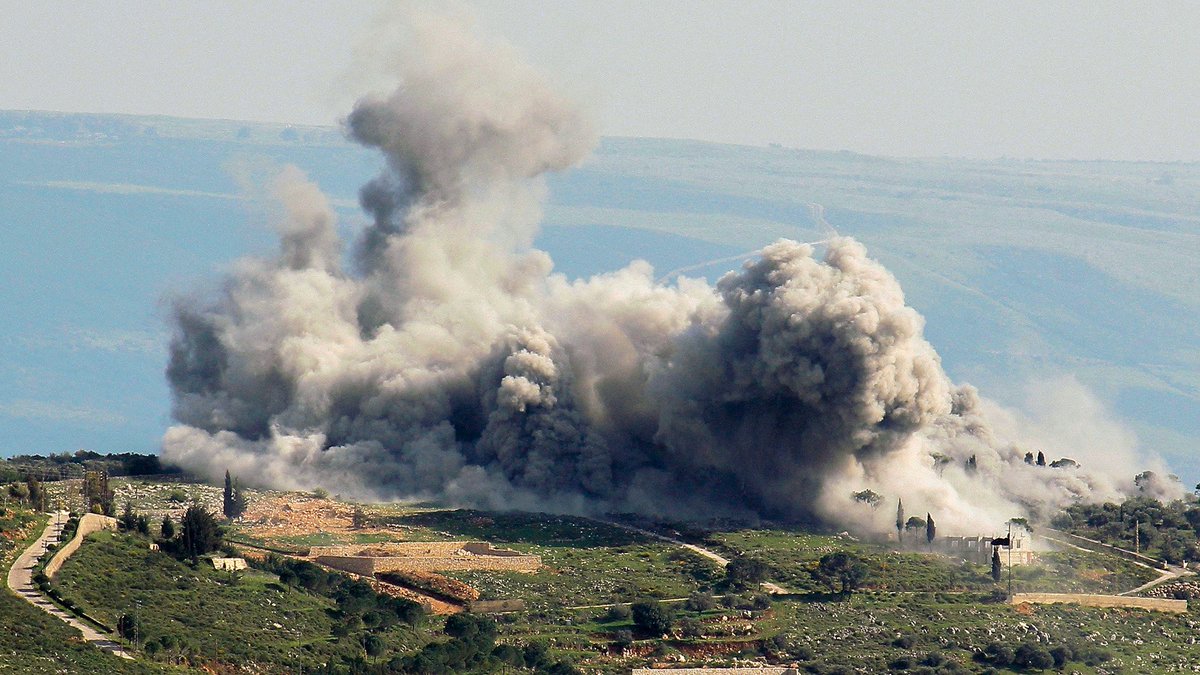
Israel knew where the rockets were before the men tasked with firing them did. South Lebanon is a mess of villages set among hills, with narrow roads, largely depopulated. The population there is not interested in being human shields for Iran and can leave north to avoid war—a privilege Gazans were uniquely forbidden from doing.
Hezbollah needs to stand and fight in the open, in a mostly rural setting, with permanent Israeli surveillance, air superiority, and pinpoint munitions waiting to attack them. This is not Gaza, where they can hide behind civilians in warrens of tight streets. So they will lose if they fight. (11/11)
Hezbollah needs to stand and fight in the open, in a mostly rural setting, with permanent Israeli surveillance, air superiority, and pinpoint munitions waiting to attack them. This is not Gaza, where they can hide behind civilians in warrens of tight streets. So they will lose if they fight. (11/11)
Funny moment:
x.com
x.com
Look at this:
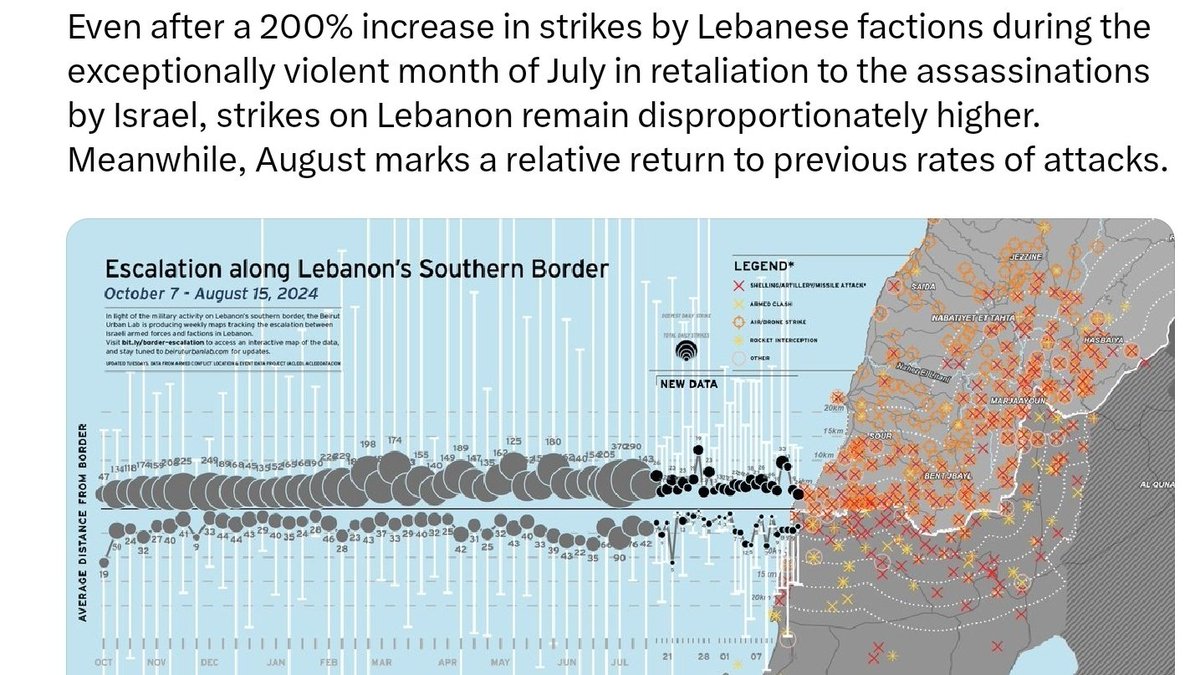
Some pro-Hezbollah org put out these numbers, presumable to portray Israel as the aggressor. Laughable, but whatever.
This is *exactly* my main point re. Hezbollah above. It's disconcerting that this isn't obvious to all analysts.
If big Israel, with essentially unlimited resupply and resources, is attriting little Hezbollah (with very limited ability to resupply along routes that are heavily monitored and attakced daily) at 4x the rate they are being attrited (it is much higher since Hezb are mostly blowing up empty civilian homes), what do we expect to be the result of a "war of attrition"?
Clearly, Hezbollah will get slowly crushed as the power imbalance between them and Israel inevitably extrapolates mathematically. This is not rocket science, ironically, since they put all their hopes in rocket science but for nought.
They can't win a war of conquest against the IDF with their 30,000 men—they would need more like a million men to try that. And when you do the math, you see they also can't win a war of attrition. Which is as intented since the plan was for them to merely hold Israel at arm's length from Iran—so what if Lebanon gets wrecked?
Has Nasrallah always known he was just a pawn? Or is he finding out now, as he tries to decide how to end it—boiled like a crab, or in a blaze of glory?
Some pro-Hezbollah org put out these numbers, presumable to portray Israel as the aggressor. Laughable, but whatever.
This is *exactly* my main point re. Hezbollah above. It's disconcerting that this isn't obvious to all analysts.
If big Israel, with essentially unlimited resupply and resources, is attriting little Hezbollah (with very limited ability to resupply along routes that are heavily monitored and attakced daily) at 4x the rate they are being attrited (it is much higher since Hezb are mostly blowing up empty civilian homes), what do we expect to be the result of a "war of attrition"?
Clearly, Hezbollah will get slowly crushed as the power imbalance between them and Israel inevitably extrapolates mathematically. This is not rocket science, ironically, since they put all their hopes in rocket science but for nought.
They can't win a war of conquest against the IDF with their 30,000 men—they would need more like a million men to try that. And when you do the math, you see they also can't win a war of attrition. Which is as intented since the plan was for them to merely hold Israel at arm's length from Iran—so what if Lebanon gets wrecked?
Has Nasrallah always known he was just a pawn? Or is he finding out now, as he tries to decide how to end it—boiled like a crab, or in a blaze of glory?
Loading suggestions...