
1) Thanks to Aabhas for starting the discussion on such an interesting topic. Many people have tagged me to this thread requesting my comments on this issue. I will start off with a few issues I have
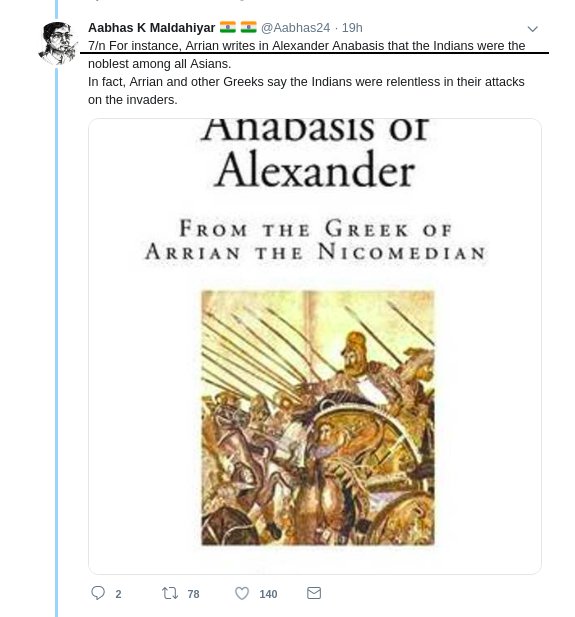
2)This is a false attribution. This very book “Anabasis of Alexander” by Arrian (trans. by EJ Chinnock) can be accessed online. Nowhere in the whole book does the author Arrian write anything close to the claim “Indians are the noblest among all Asians” ia800205.us.archive.org
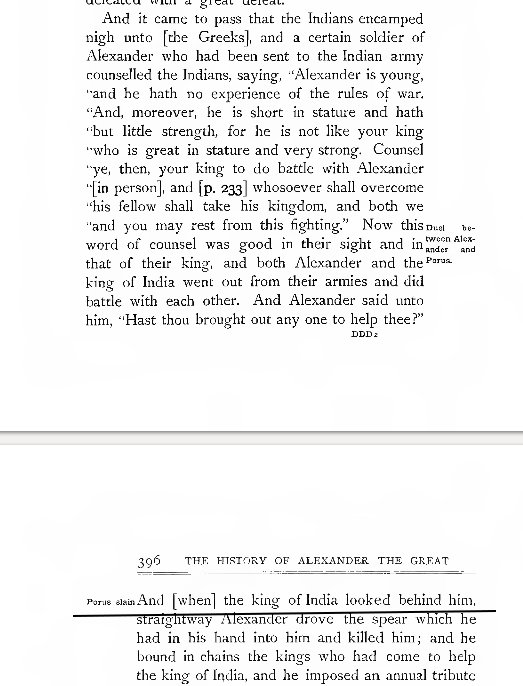
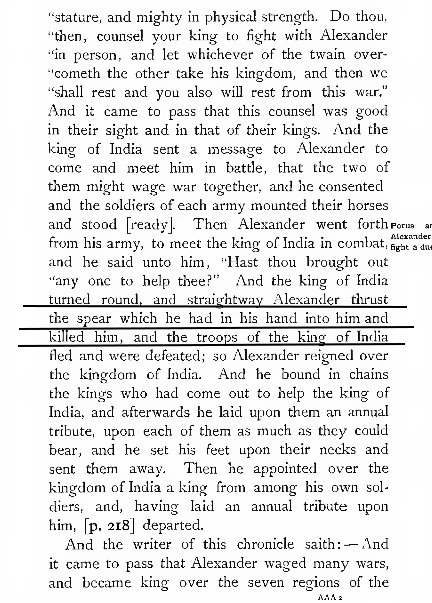
3)This is a false quote. Neither in this book nor in his any other book does Budge make any such claim that “Alexander requested Puru to stop fighting, Puru spared the life of Alexander and they sign peace treaty”. I have seen this false quote on numerous random online websites
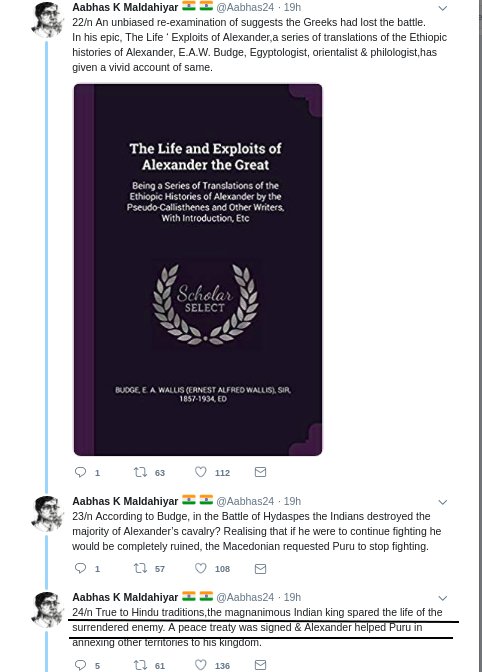
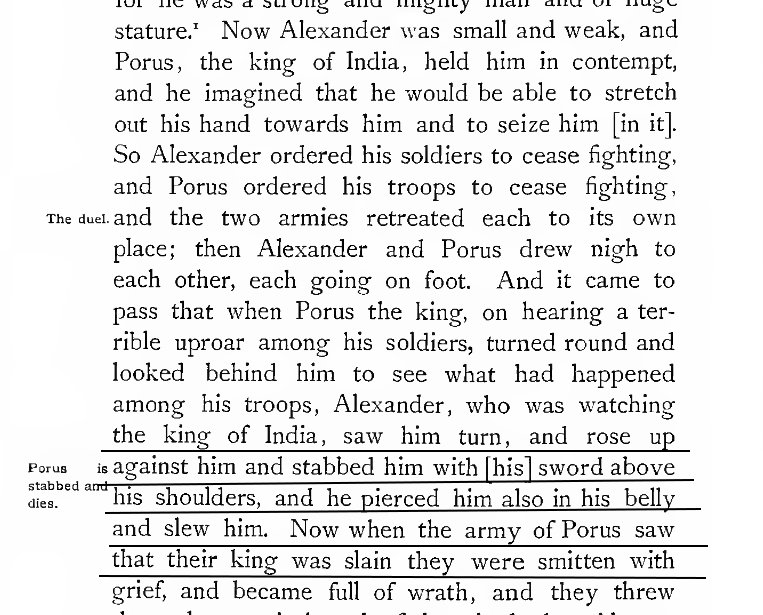
4) In fact, in all the accounts translated by Budge including the Ethiopian versions of Pseudo-Callisthenes, Al-Makin and Abu Shaker, Alexander actually kills porus and becomes “king of India”.
The book can be accessed here.
archive.org
The book can be accessed here.
archive.org
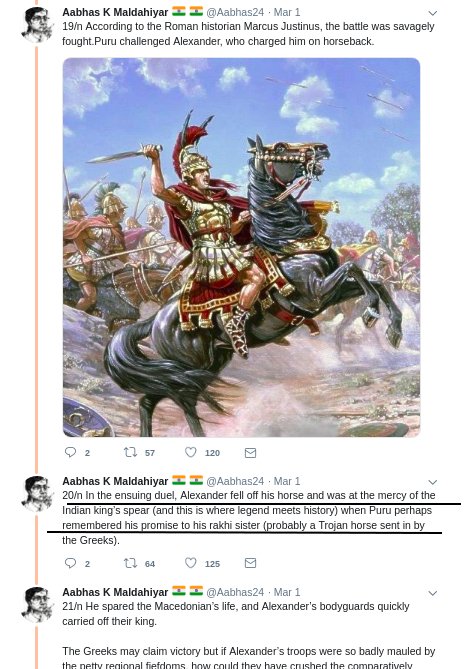
5) To be clear, Marcus Justinus nowhere says “Alexander was at the mercy of Indian king’s spear” and “Indian king spared Alexander’s life”. The “Rakhi sister” is a also very curious case. There is no mention of this “Rakhi sister” in any source predating late 19th century.
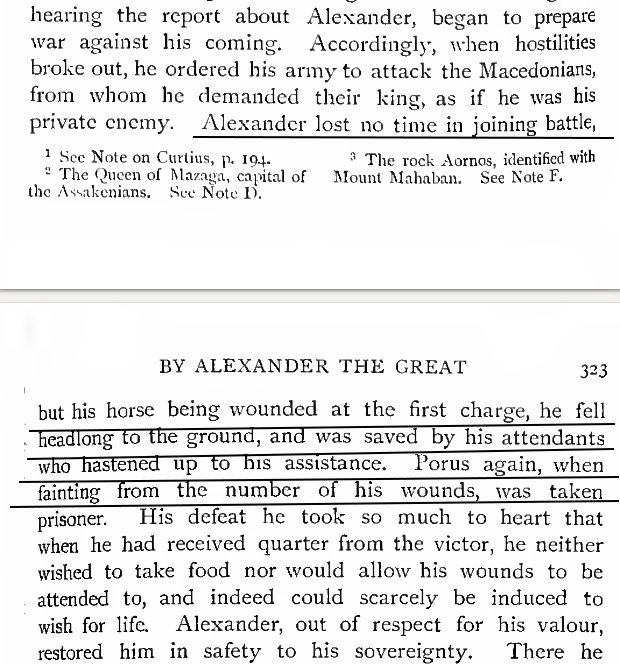
6) Here is an English translation of Marcus Justinus’ account by Mccrindle. Justinus does mention that Alexander fell off his horseback and was saved his troops. But he does not say that “Alexander was at the mercy of Indian king’s spear” etc . He also says Porus was defeated.
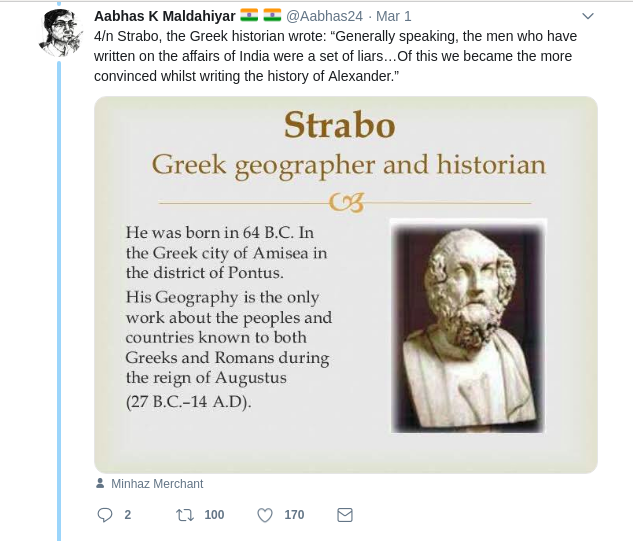
7) Now to the main point of our thread. Is it possible that Greek historians were lying when they narrated the batttle? Yes, I agree with Aabhas. It is totally possible that Greek historians were sophisticated liar. Consider the case of Alexander’s favourite horse Bucephalus
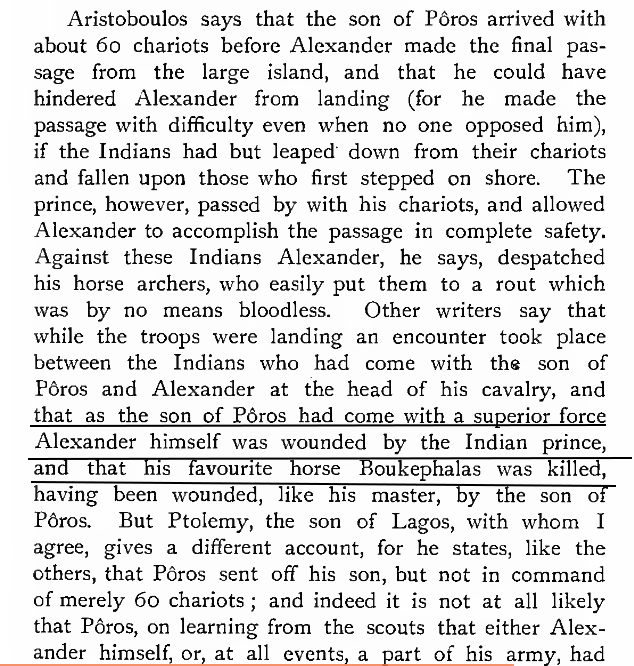
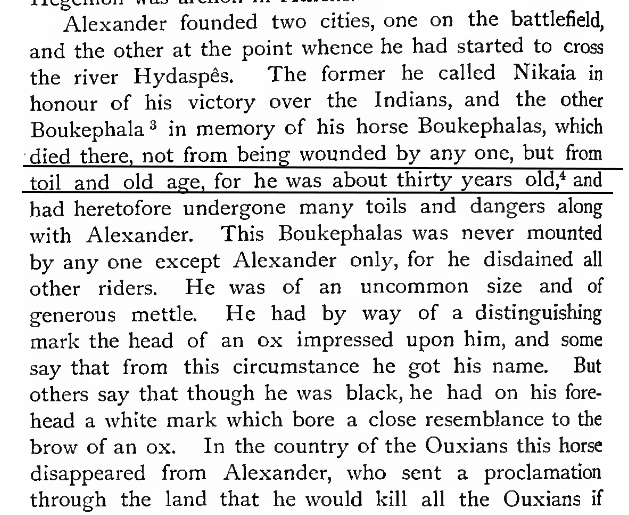
8) At one place in the account, Arrian says Bucephalus was killed by the son of Porus. Yet, at another place, he says it died due to old age. Which one of these accounts is true? Did Alex's horse die of old age? Or was it killed by son of Porus. If one is true, other isn't.
9) According to Onesicritus, Taxilan Brahman Dandamis was all praise for Alexander.According to Megasthenes, he resented Alexander but had to obey the latter's wishes.Which one of these accounts is true? Our sources are Greek, and there is no independent source to confirm or deny
10) There is no contemporary Indian source which explicitly refers to Alexander or his campaigns. If we assume that Greeks lied about their Indian campaigns, it means they were also lying when they claimed Chandragupta Maurya defeated them and conquered North-Western territories
11)What we know for sure is that following Alexander's campaign, there was proliferation of Greek art, script and language in North Western India. Many local kings imitated the Greek coins, issued inscriptions in Greek, adopted Greek art and even built their houses in Greek style
12) Yes, it is possible that Alexander-porus contest was not as one sided as Greek historians would like us to believe, but we simply do not have any evidence to confirm or deny their accounts. I know my opinion isn't popular but I hope my contribution to the issue was relevant.
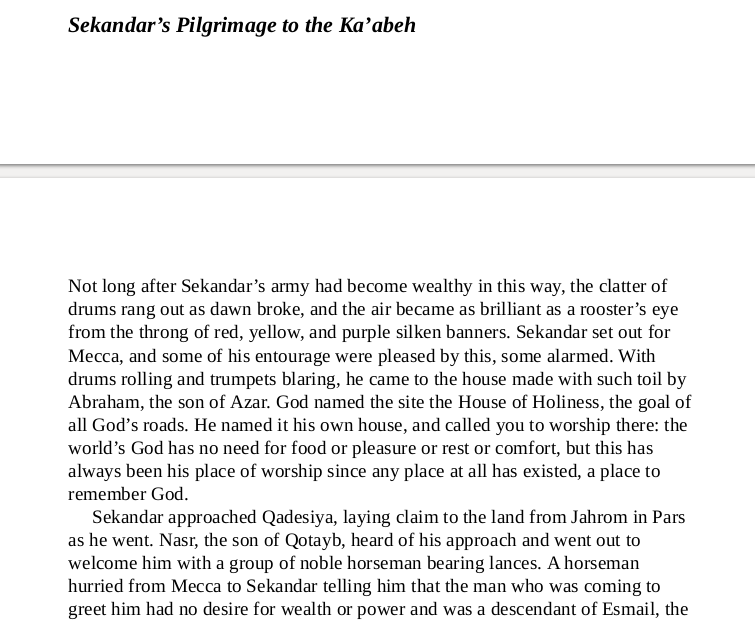
13) This story of Alexander killing Porus seems to have been very popular in medieval Persia and India, for the killing of Fur the king of Sind (Porus) by Sikandar(Alexander) is narrated in Persian National Epic Shahnameh (c.11th century) which was widely circulated in India
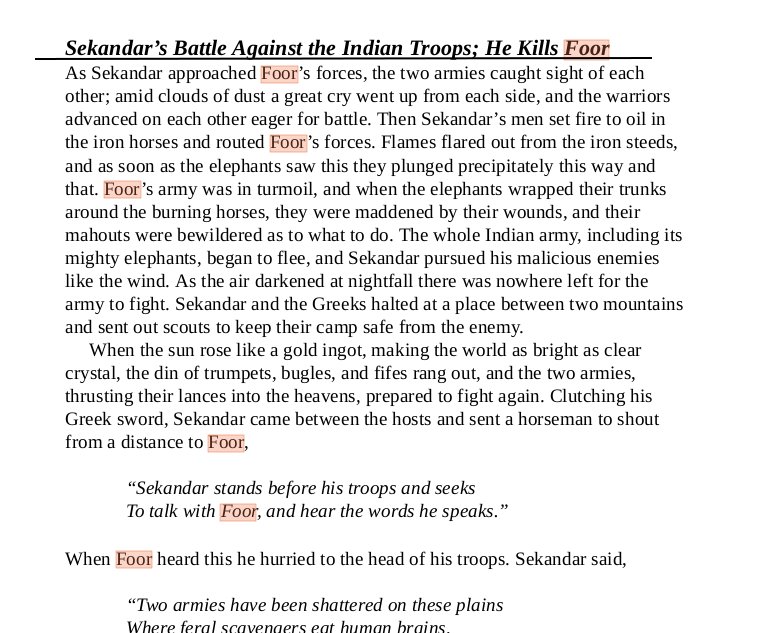
14)However account to Shahnameh, Alexander("Sikandar") was a Muslim who even visited Mecca. He was supposedly a "descendant of Ismail". Similarly, in Christian accounts like Pseudo Callisthenes, Alexander was glorified as a devout Christian King who met apostles in heaven
14) All these fictious, pesudo historical narratives of Alexander are generally known as "Alexander romance". They cannot be taken at face value. According to Arrian, Alexander left all his Indian possessions("7 countries and 2000 cities") in control of Porus when he left
15) When Porus (Puru) gave battle to Alexander on the banks of Jhelum, he was ruler of only a small kingdom. When Alexander left, he made Porus king of all Indian territories including Assakenoi in Hindukush, Baziga,Taxila, Sakala (sialkot), Abhisara, Malla and Shudraka
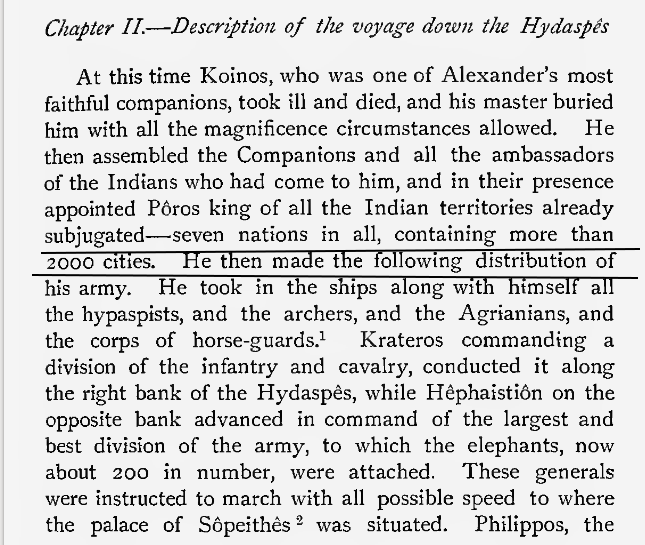
15) Porus(Puru) fought Alexander in the battle of Hydaspes(Jhelum). The outcome was favourable to Porus . He was originally a ruler of a petty territory on banks of Jhelum. But he became the ruler of entire territory from Hindukush to Sindh following Alexander's campaign.
16)Why did Alexander bestow such a favour upon Porus?Why did he spare Porus' life and make him the king of such a large territory?Greek historians would have us believe Alexander was impressed by bravery.Those who know Alexander from other accounts will find this incredible
17) The Assankenoi(Kamboja) of Hindukush showed exceptional bravery. They did not capitulate to Alexander like Ambhi or Abhisara. They resisted him in their small forts. But Alexander did not bestow them any favours. He violated peace treaty, slaughtered them and took their women
18) Alexander slaughtered an entire town of Brahmins in Multan just because they gave refuge to a few Malla fugitives who had been defeated by Alex. One would find it hard to believe such a bloodthirsty person as Alexander bestowed favours upon an opponent impressed by bravery.
19) But that is just an observation.There is definitely something more to why Alexander bestowed favours upon Porus, which I do not pretend to know. Nor would I make assumptions which are bound to fail anyway. With that, I conclude this thread
Loading suggestions...