
Health
Dentistry
smoking
Dental Health
Gingival Enlargement
Periodontal Diseases
Systemic Diseases
Hormonal States
Nutritional Deficiency

Gingival Enlargement
#dental_by_hadeel
#dental_by_hadeel

🔴Gingival enlargement refers to excessive growth of the gums, and may also be known as gingival hyperplasia or hypertrophy
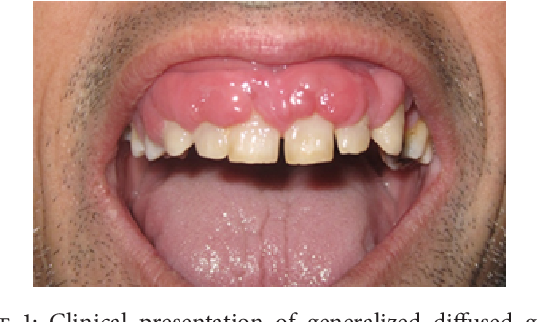
🔴What are possible causes??
1. Poor dental hygiene
2. Smoking, mouth breathing and overcrowded teeth
3. Systemic diseases
4. Hormonal states: pregnancy, puberty
5. Nutritional deficiency: scurvy (vitamin C deficiency)
1. Poor dental hygiene
2. Smoking, mouth breathing and overcrowded teeth
3. Systemic diseases
4. Hormonal states: pregnancy, puberty
5. Nutritional deficiency: scurvy (vitamin C deficiency)
6. Medications
7. Genetic conditions, often present at birth (all rare conditions)
8. Blood conditions such as acute leukaemia
7. Genetic conditions, often present at birth (all rare conditions)
8. Blood conditions such as acute leukaemia
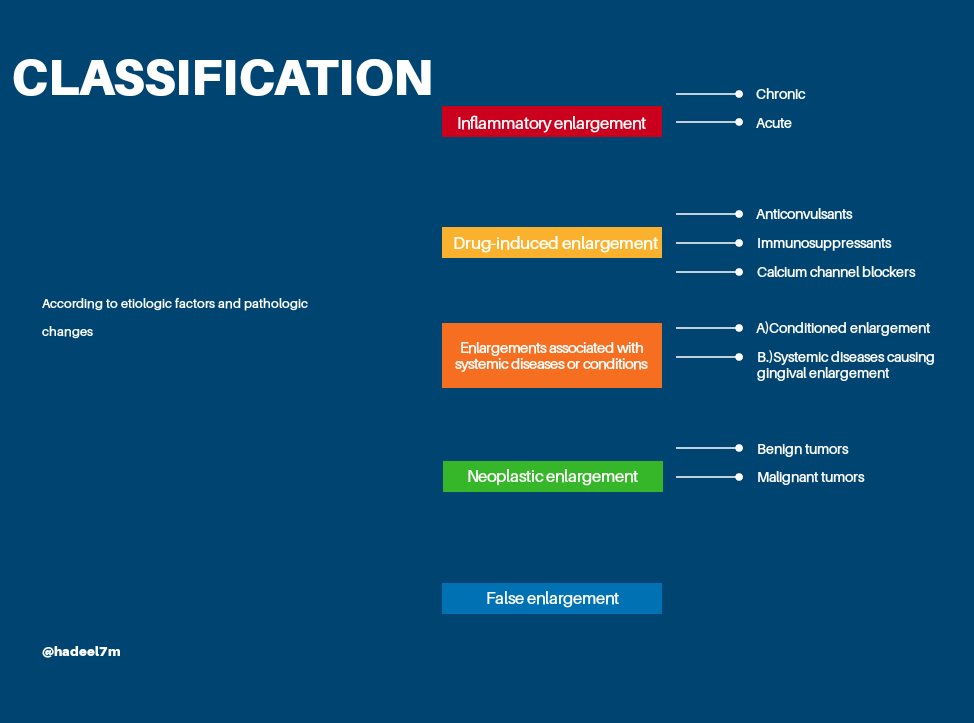
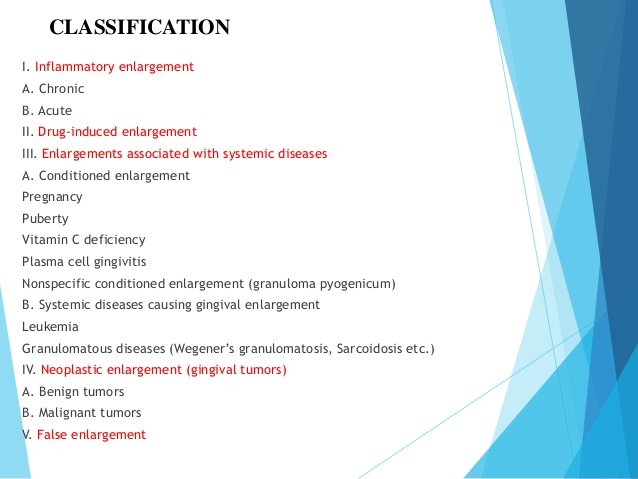
🔴CLASSIFICATION
1. According to etiologic factors and pathologic changes
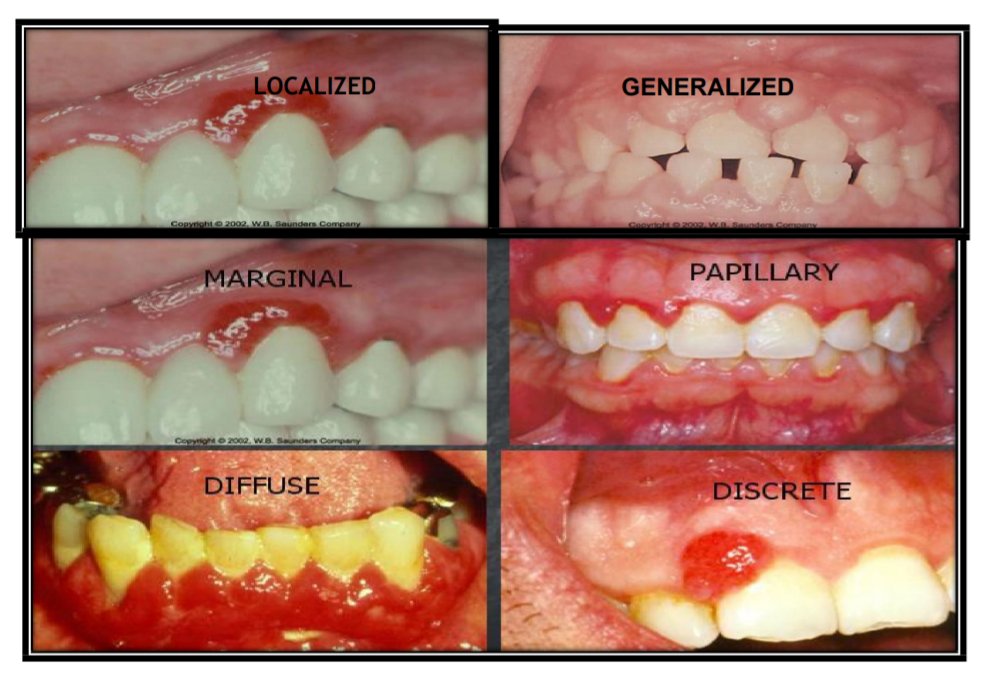
2. According To Location And Distribution
1. According to etiologic factors and pathologic changes
2. According To Location And Distribution
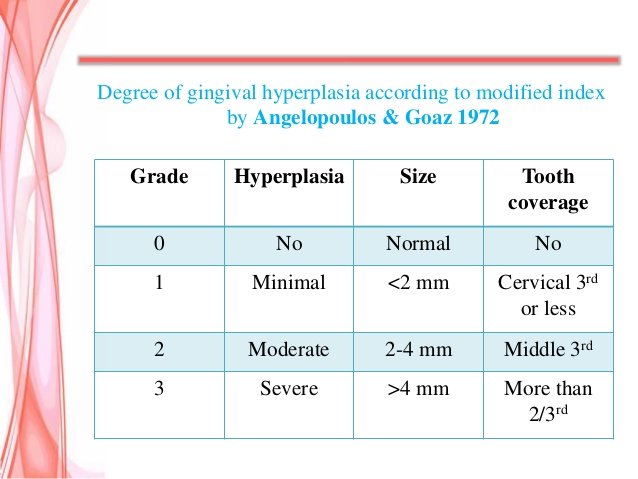
🔴Degree Of Gingival Enlargement

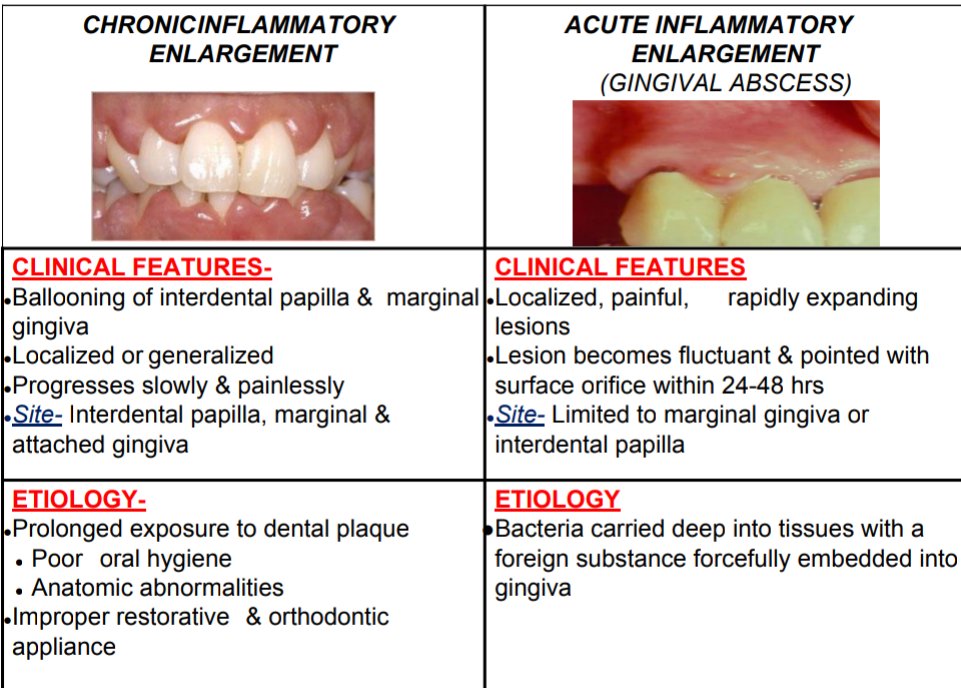
🔴TYPES OF GINGIVAL INFLAMMATORY ENLARGEMENT
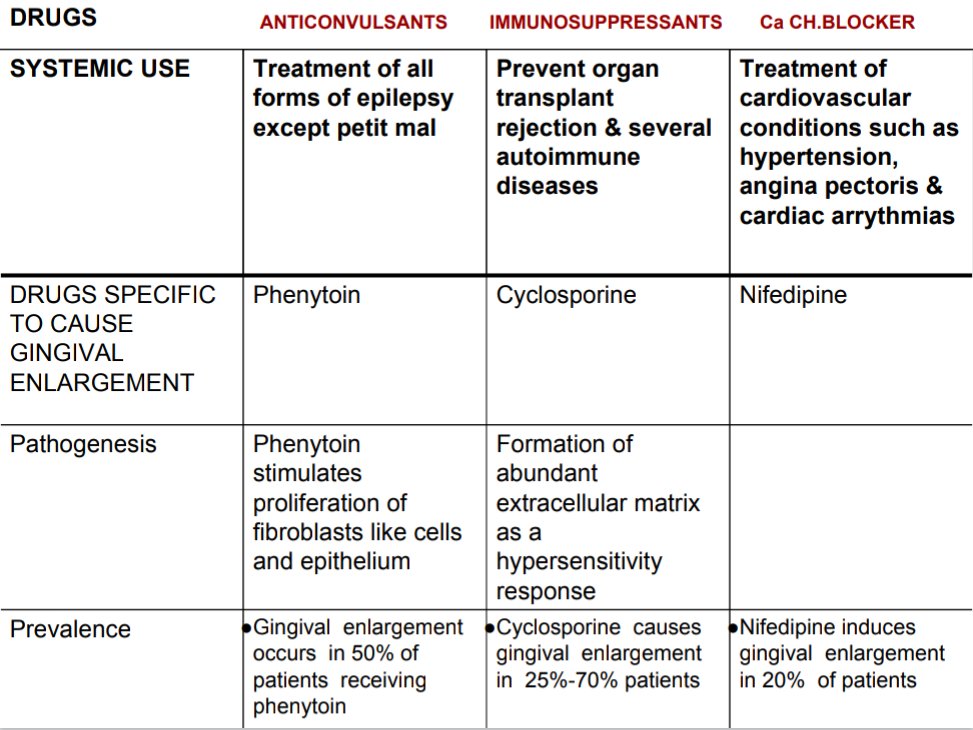
🔴Drug-induced gingival enlargement
▪Anticonvulsants
▪Immunosuppressants
▪Calcium channel blockers
▪Anticonvulsants
▪Immunosuppressants
▪Calcium channel blockers
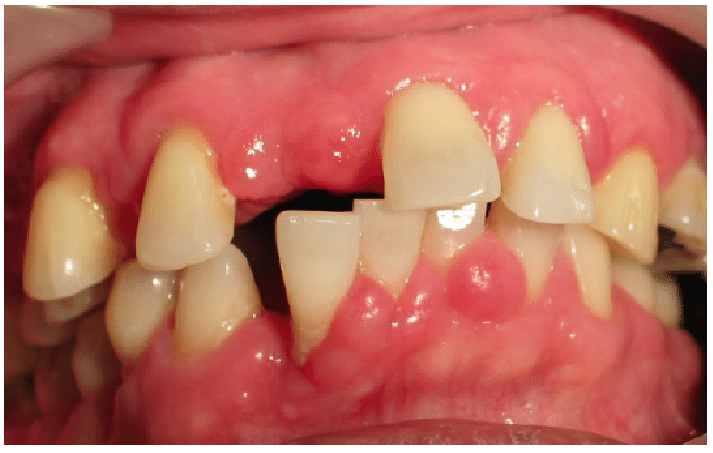
🔺Clinical features
1. Painless, beadlike enlargement of the interdental papilla and extends to facial and lingual gingival margins
2. Maxillary & mandibular anterior regions
1. Painless, beadlike enlargement of the interdental papilla and extends to facial and lingual gingival margins
2. Maxillary & mandibular anterior regions
3. When uncomplicated by inflammation is mulberry shaped, firm,pale pink, and resilient , with a minutely lobulated surface and no tendency to bleed
4. Project from beneath the gingival margin
4. Project from beneath the gingival margin
🔴Diagnosis
The diagnosis of drug-induced gingival
overgrowth is mainly based on :
• Clinical appearance
• Medical history
• Histopathological features
The diagnosis of drug-induced gingival
overgrowth is mainly based on :
• Clinical appearance
• Medical history
• Histopathological features
🔴what are the symptoms ?
• Discomfort
• Interfere with speech or chewing
• Halitosis (bad odour to the breath)
• Look unsightly
• Discomfort
• Interfere with speech or chewing
• Halitosis (bad odour to the breath)
• Look unsightly
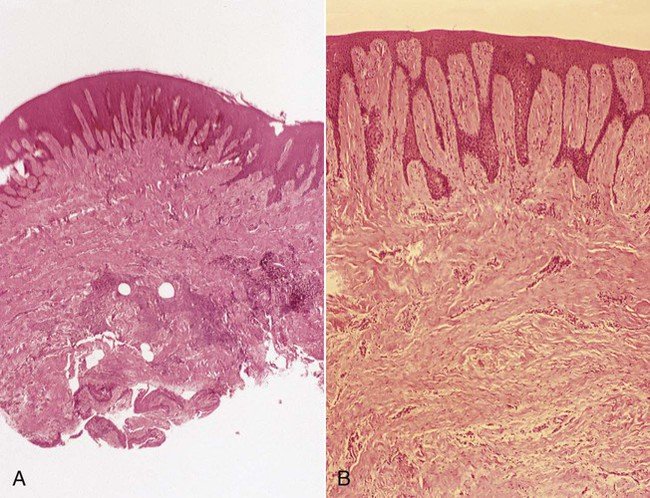
🔴Histopathology
• Pronounced hyperplasia of connective tissue &
epithelium
• Acanthosis of epithelium
• Elongated rete pegs
• Increased fibroblast, collagen,new blood vessels
• Abundant amorphous ground substance.
• Pronounced hyperplasia of connective tissue &
epithelium
• Acanthosis of epithelium
• Elongated rete pegs
• Increased fibroblast, collagen,new blood vessels
• Abundant amorphous ground substance.
🔴IDIOPATHIC GINGIVAL ENLARGEMENT
-Affects the attached gingiva as well as the gingival margin and interdental papilla
-Involvement is limited to the either jaw
-Enlarged gingiva is pink, firm and almost leathery in consistency
-Characterstic minutely pebbled surface
-Affects the attached gingiva as well as the gingival margin and interdental papilla
-Involvement is limited to the either jaw
-Enlarged gingiva is pink, firm and almost leathery in consistency
-Characterstic minutely pebbled surface

🔴ENLARGEMENTS ASSOCIATED
WITH SYSTEMIC DISEASES
1. Magnification of an existing inflammation initiated by dental plaque(conditioned enlargement)
2. Manifestation of the systemic disease independently of the inflammatory status of the gingiva.
WITH SYSTEMIC DISEASES
1. Magnification of an existing inflammation initiated by dental plaque(conditioned enlargement)
2. Manifestation of the systemic disease independently of the inflammatory status of the gingiva.
🔺CONDITIONED ENLARGEMENT
1. HORMONAL
2. Vit.C DEFICIENCY
3. ALLERGIC
1. HORMONAL
2. Vit.C DEFICIENCY
3. ALLERGIC
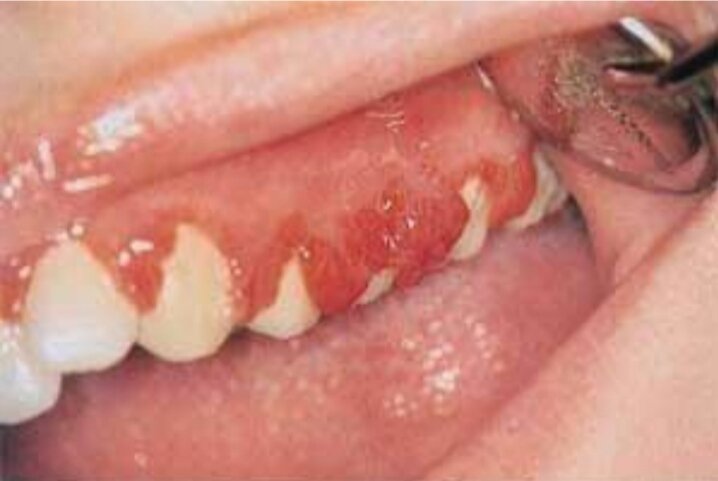
⭐ HORMONAL
CLINICAL FEATURES
1. Generalized
2. Prominent interproximally
3. Bright red or magenta
4. Soft and friable & has smooth & shiny surface
5. Bleeds spontaneously
CLINICAL FEATURES
1. Generalized
2. Prominent interproximally
3. Bright red or magenta
4. Soft and friable & has smooth & shiny surface
5. Bleeds spontaneously
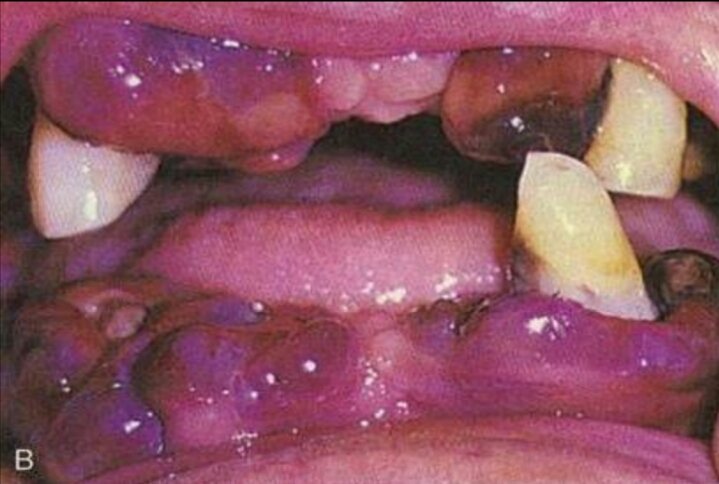
⭐ Vit.C DEFICIENCY
CLINICAL FEATURES
1. Marginal
2. Bluish red
3. Soft & friable & smooth & shiny surface
4. Spontaneous bleeding
5. Surface necrosis with pseudomembrane formation
CLINICAL FEATURES
1. Marginal
2. Bluish red
3. Soft & friable & smooth & shiny surface
4. Spontaneous bleeding
5. Surface necrosis with pseudomembrane formation
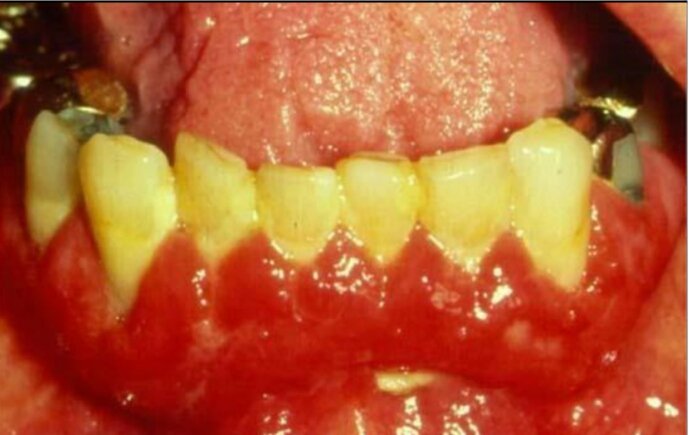
⭐ ALLERGIC
CLINICAL FEATURES
1. Frequent in women & young adults
2. Located on oral aspect
of attached gingiva & therefore differs from plaque induced gingivitis.
CLINICAL FEATURES
1. Frequent in women & young adults
2. Located on oral aspect
of attached gingiva & therefore differs from plaque induced gingivitis.
🔴NON SPECIFIC CONDITIONED ENLARGEMENT (PYOGENIC GRANULOMA)
● Female are affected more than male
● Common age of occurrence is 11-40 yrs
● Its size ranges from 0.9- 2 cm.
● Asymptomatic, may be papular or nodular Polypoid mass.
● Female are affected more than male
● Common age of occurrence is 11-40 yrs
● Its size ranges from 0.9- 2 cm.
● Asymptomatic, may be papular or nodular Polypoid mass.
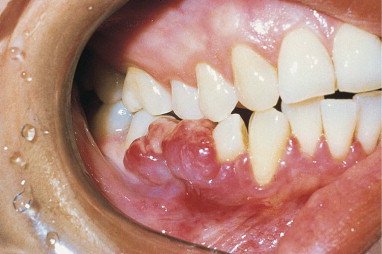
● It may become mature and becomes less vascular and more collagenous gradually converting into a fibrous epulis.
● Lesions are elevated pedunculated or sessile masses with smooth lobulated or even warty.
● Lesions are elevated pedunculated or sessile masses with smooth lobulated or even warty.
● Surface is commonly ulcerated and shows tendency to hemorrhage upon slightest pressure or trauma
● Variegated red and white pattern
● Variegated red and white pattern
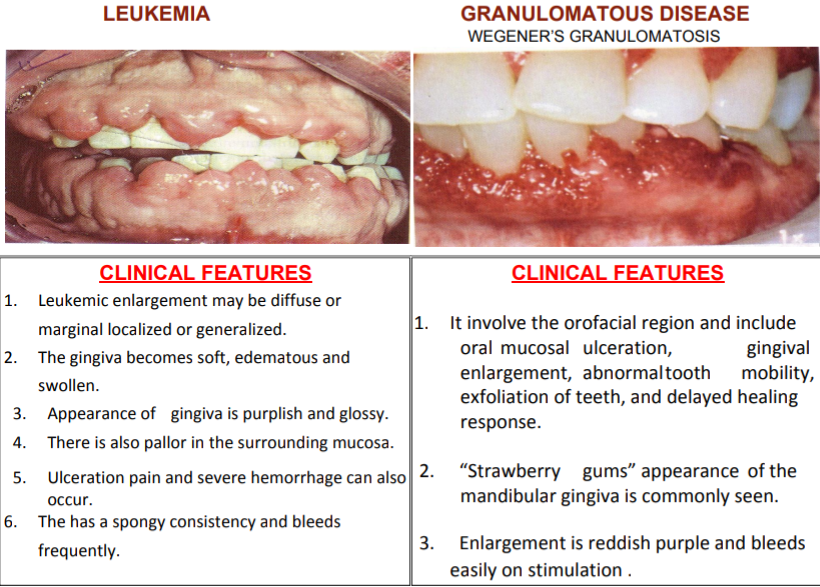
🔴SYSTEMIC DISEASES CAUSING GINGIVAL ENLARGEMENT
1. LEUKEMIA
2. GRANULOMATOUS DISEASE
(WEGENER’S GRANULOMATOSIS)
1. LEUKEMIA
2. GRANULOMATOUS DISEASE
(WEGENER’S GRANULOMATOSIS)
🔴NEOPLASTIC ENLARGEMENT
(GINGIVAL TUMORS)
⭐BENIGN
- Fibroma
- Papilloma
- Peripheral giant cell granuloma
- Central giant cell granuloma
- Leukoplakia
- Gingival cyst
⭐MALIGNANT
- Carcinoma
- Malignant melanoma
(GINGIVAL TUMORS)
⭐BENIGN
- Fibroma
- Papilloma
- Peripheral giant cell granuloma
- Central giant cell granuloma
- Leukoplakia
- Gingival cyst
⭐MALIGNANT
- Carcinoma
- Malignant melanoma
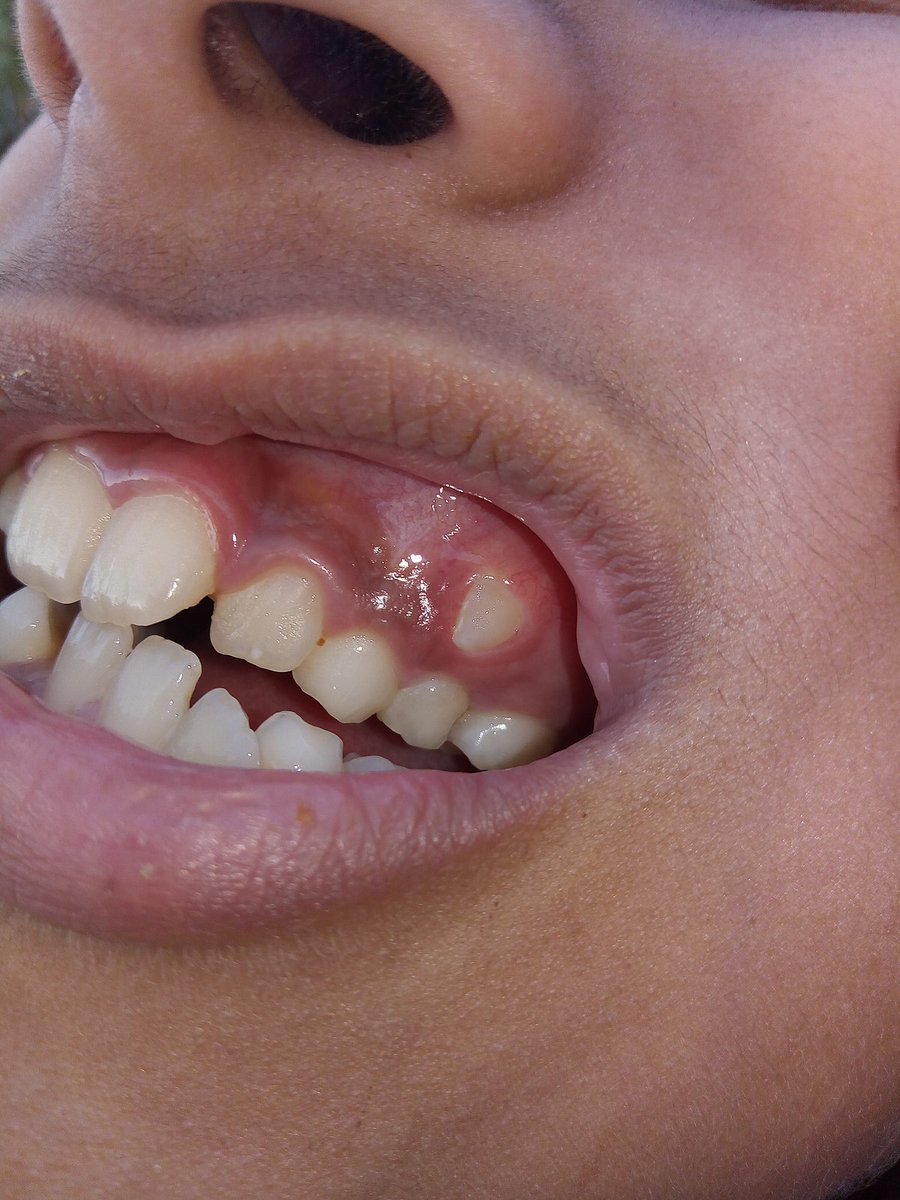
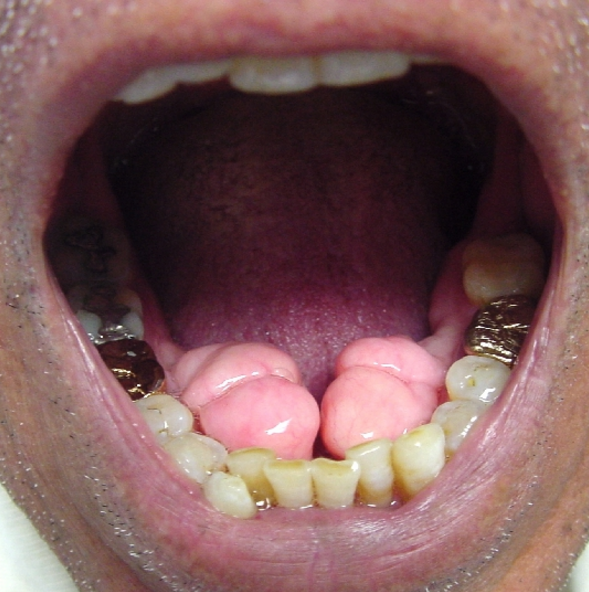
🔴FALSE ENLARGEMENT
1. UNDERLYING OSSEOUS LESION (like: tori, exostoses,paget’s disease,
fibrous dysplasia, cherubism, central
giant cell granuloma, ameloblastoma,
osteoma and osteosarcoma)
2. UNDERLYING DENTAL TISSUES (During various stages of eruption)
1. UNDERLYING OSSEOUS LESION (like: tori, exostoses,paget’s disease,
fibrous dysplasia, cherubism, central
giant cell granuloma, ameloblastoma,
osteoma and osteosarcoma)
2. UNDERLYING DENTAL TISSUES (During various stages of eruption)
Loading suggestions...