

The 50-foot-long, seven-ton Spinosaurus had a long sail on its back, an elongated snout, and—now we've confirmed—a tail that resembles a bony paddle. The newfound fossil stretches our understanding of how and where dinosaurs lived. on.natgeo.com
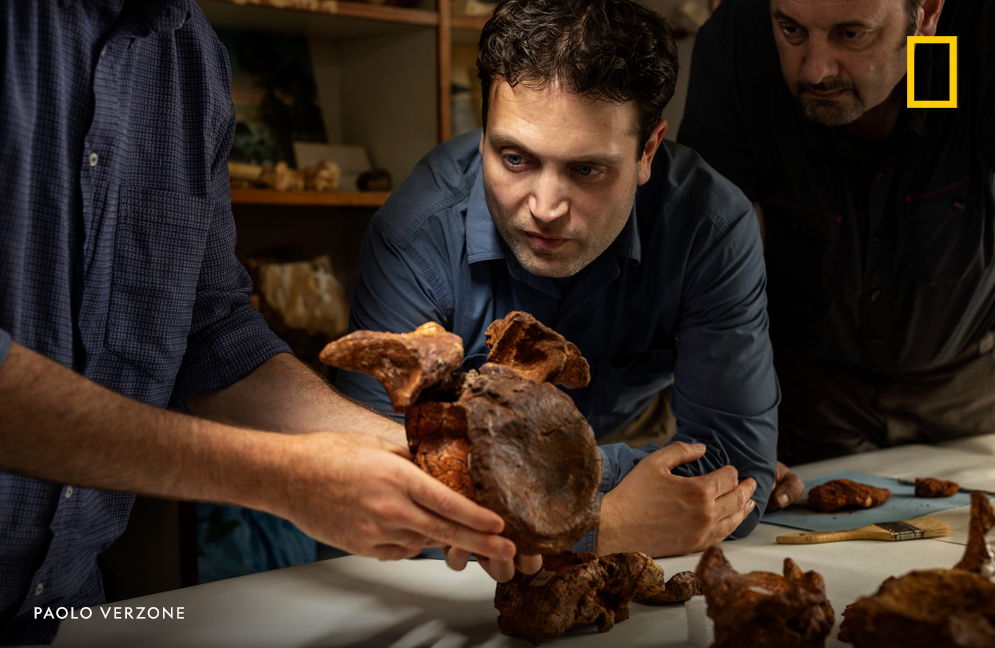
Team members Simone Maganuco, @NatGeo Explorer Nizar Ibrahim, and Cristiano Dal Sasso examine one of the Spinosaurus tail vertebrae. "To study a fossil animal is, to me, a sort of creation," says Dal Sasso, a paleontologist. "You have to resurrect an animal from fragments."
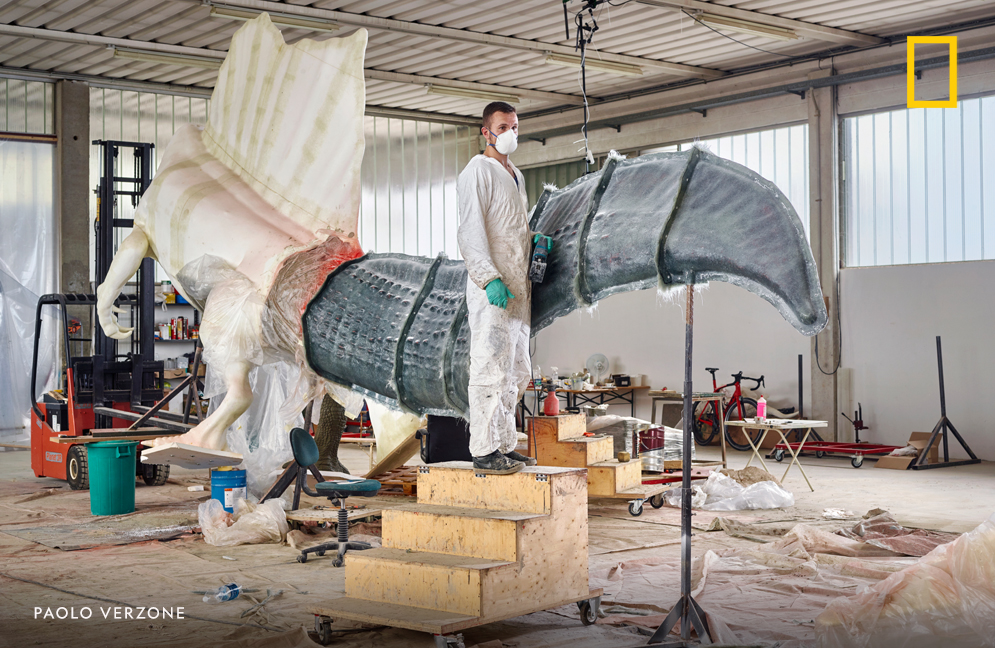
With new bones come new models: Guzun Ion of DI. MA. Dino Makers, a museum sculpture firm in Fossalta di Piave, Italy, molds an updated version of the tail for a life-size Spinosaurus sculpture.
The first ideas of how Spinosaurus looked were informed by a limited fossil record and a narrow understanding of dinosaurs in general. Further finds have led us to the aquatic predator we now see. nationalgeographic.com
Spinosaurus has made history as the first known swimming dinosaur. In our story—with exclusive photos—we detail how a newfound fossil tail is changing what we know about dinosaurs. For more historic stories like this, subscribe to National Geographic: nationalgeographic.com

Loading suggestions...