

Day 2: Welcome back! @DrSafaneh here.
1/Let's talk about the Imperialist narrative around Qajar women and the idea that "Iranian women need to be saved." Christian missionaries seem to have benefited from invoking an image of Qajar women as passive recipient of injustice.
1/Let's talk about the Imperialist narrative around Qajar women and the idea that "Iranian women need to be saved." Christian missionaries seem to have benefited from invoking an image of Qajar women as passive recipient of injustice.
2/In the nineteenth century, most Europeans who traveled to Iran and other Middle Eastern countries were diplomats and representatives of their respective governments or churches. Some were adventurers and antique experts who came in hopes of finding hidden gems.
3/The women who came to Iran, were often missionaries, or wives and companions of diplomats.
4/The European discourse on “Oriental despotism" has a long history.
5/But, it was in the 19th c. with the growth of imperialist projects and new stakes in the wealth of the East, that Europeans displayed a new level of concern over oriental despotism, mobilizing the well-being and liberation of Muslim women as justification for this focus.
6/A notable example was Lord Cromer, the British diplomat and colonial administrator in Egypt during the 1870s. He argued that “Islam as a social system has been a complete failure,” because “first and foremost, [it] keeps women in a position of marked inferiority”.
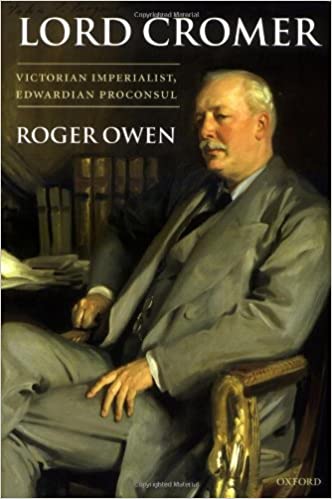
7/And stated that the “Christian [man] respects women … the Moslem despises women”. Interestingly, at home in Britain, Lord Cromer was the founder and president of the “The National League for Opposing Woman Suffrage."
![7/And stated that the “Christian [man] respects women … the Moslem despises women”. Interestingly,...](https://pbs.twimg.com/media/EYZNF-mUcAAw7L8.jpg)
8/But such interpretations of Muslim women’s lives were not exclusive to Western men on colonial missions. Many European women shared the desire to present Persian women as passive recipient of the injustice that was bestowed upon them.
9/And whether these women were in Persia as upper-class travelers and temporary residents, or as religious missionaries, they blamed Persian women's passiveness on the religion of Islam.
10/For instance, in "Persian Women and Their Creed," CMS Missionary Mary Bird writes, “There is no word for home in the Persian language, because it has not been required; the Moslems have none of the associations and tender memories which that word awakens in us.”
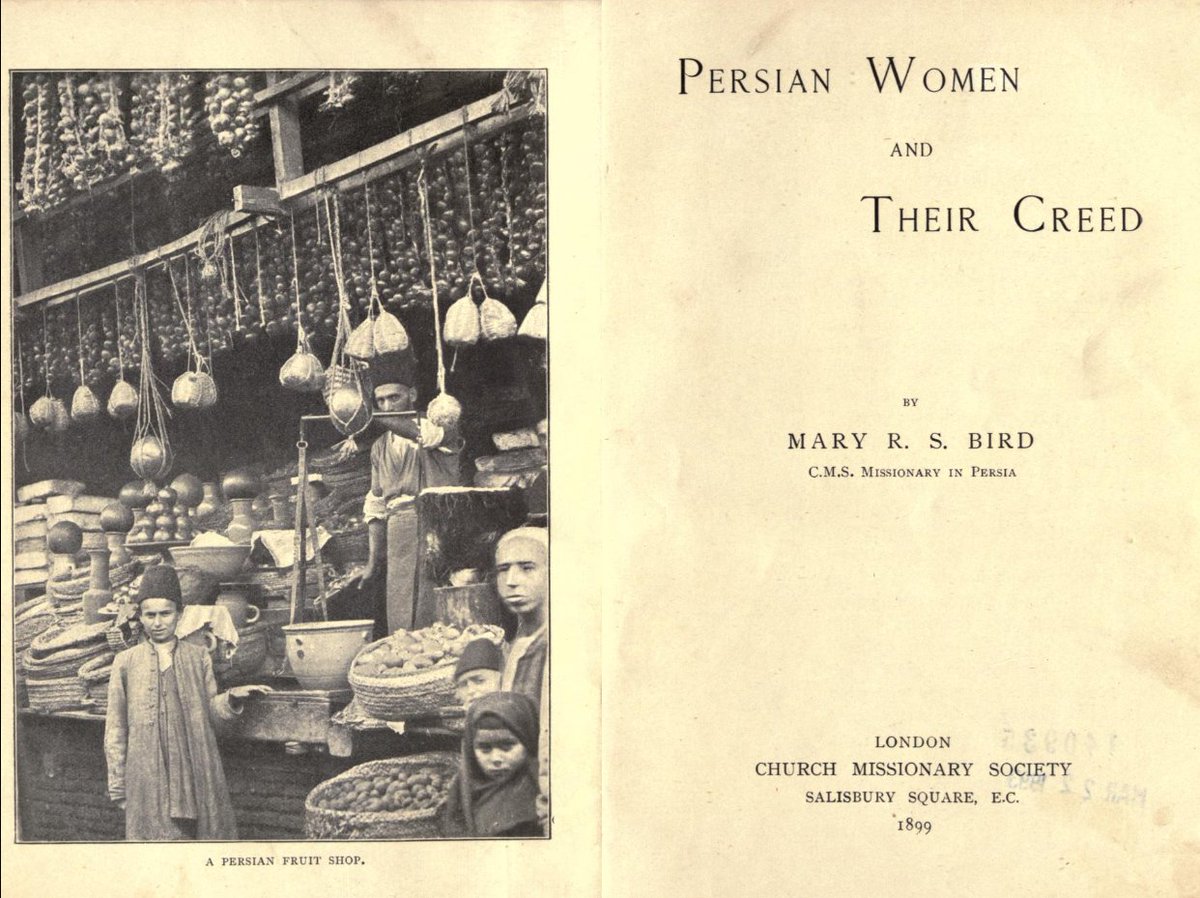
11/She describes Christianity as a light in the “aimless, hopeless, sad lives those Moslem women lead”
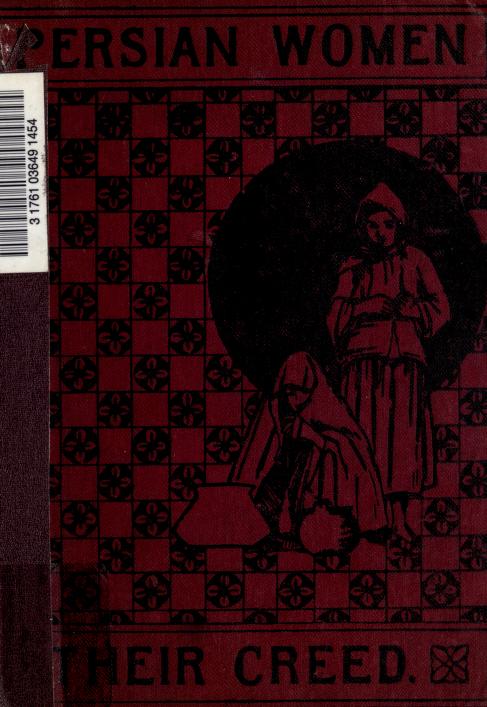
12/When they observe Iranian women's agency against religious and institutional constraints (ex. through nationalist movements), they downplay the significance of it. For instance, in a letter to the Lucknow Conference, Annie Van Sommer-a Presbyterian missionary in Iran, writes:
13/"Wickedness is much increased, while the decline of faith and observance of Islam only leaves the people with no restraining motive. The problem of the Missionary is the same old difficult one, how to bring the Gospel to impenitent hearts."
14/Other times, they try to claim credit for Iran's women's movements, implying that their own missionary schools are responsible for igniting protests and driving reforms. Van Sommer, quotes another Missionary Miss G.Y Holliday:
15/“one of our school boys, in a public meeting, boldly advocated the removal of the veil, and the equal education of men and women. He is a young man of some importance, having a government position. The veil will not soon pass, but there is a noticeable carelessness in its use”
16/That is it for now, I will be back later to tweet about two upper-class British women's memoirs of living and travelling in Iran./~smn
Loading suggestions...