

Day 4: Hello everyone! @DrSafaneh here with a new thread on Pahlavi era narratives about Iranian women. The Pahlavi era involves the rule of two kings: Reza Shah who rose to power after a coup that eventually ousted the last Qajar king (Ahmad Shah), & his son Mohammad Reza Shah.
1/The Pahlavi approach to women advocated for the modernization and Westernization of women (implying that they were previously backward and uncivilized), while still expecting them to be domesticated and holding on to patriarchal values.
2/In propagating an image of modernized Iranian women, the official Pahlavi narrative undermined women's achievements in the previous era and successfully ended an independent women's movement that had started during the late Qajar era.
3/When Reza Shah came to power in 1925 his aim was to create a modern nationalist state. He pursued many reforms in the country, but of those reforms the ones pertaining to women were the most controversial.
4/These reforms involved changes in marriage and divorce laws, expansion in educational opportunities for women, and prohibition of the veil (Kashf-e-Hejab).
5/Despite Reza Shah's repressive measures on the hijab, his policies on women were popular among reformist men and women in their early years, perhaps because they were hoping that the new Shah would achieve the reforms that the Constitutional Revolution couldn't.
6/For example, if like me, you had your primary education in post 1979 revolution Iran, you can perhaps remember this picture of poet Parvin Etesami with a headscarf.
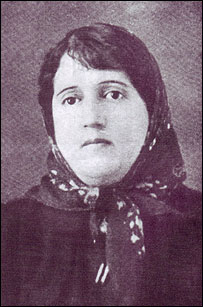
7/Parvin Etesami was one of a handful of female poets who was given some space in our school books, and this picture of her implied her support for the hijab.
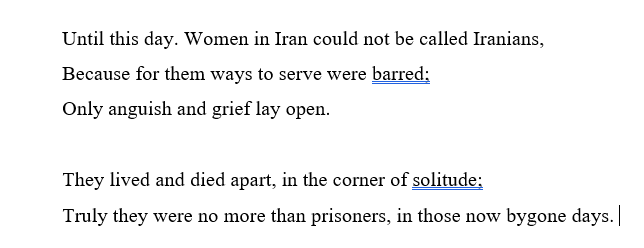
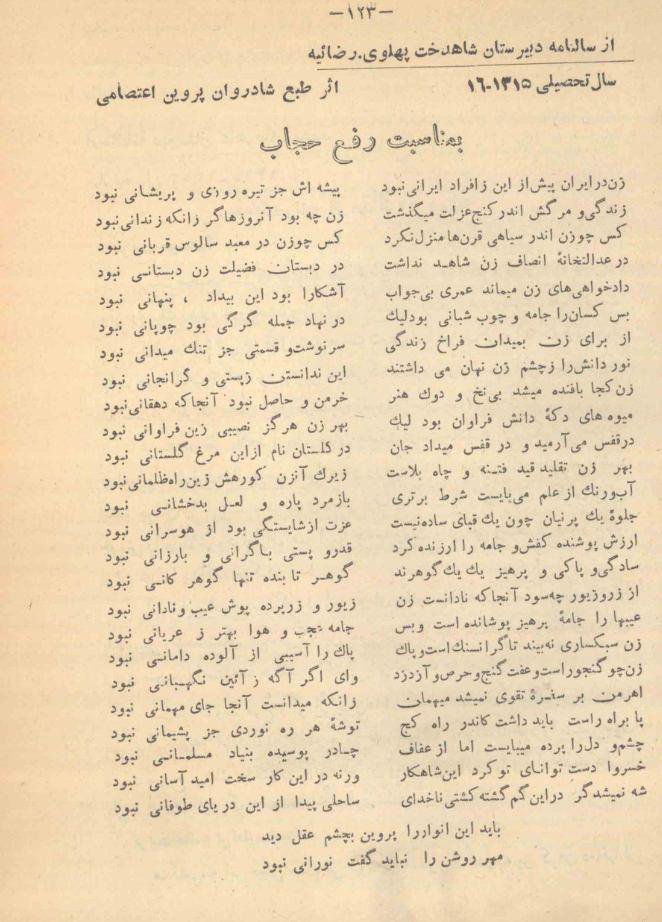
8/But in fact Etesami was a supporter of Reza Shah's Kashfe Hejab edict. Here is her poem on the topic (never shown to the post-revolution generation of course!) in Persian with the first few lines translated to English:
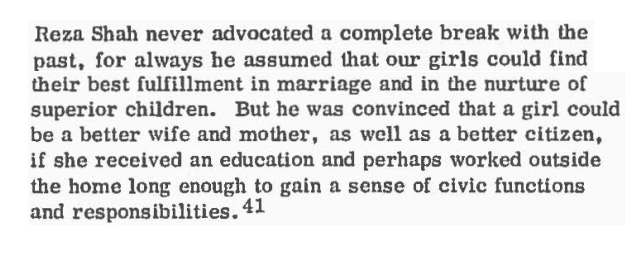
9/But Reza Shah never meant for women to have equal rights as men, and held on to certain patriarchal values. In his book "Mission for my Country," Mohammad Reza Shah best describes his father's approach to women's emancipation:
10/During his early years in power, Reza Shah was more tolerant of alternative points of view opposing his own. So, independent women's organizations which had been formed prior to his rule faced no major impediments.
11/As years went by, Reza Shah became more dictatorial. Independent women's organizations and their demands were too radical for him. He ordered the Majlis to make many of these organisations illegal and prosecuted their founders.
12/Meanwhile new women's organizations were established with orders from Reza Shah and received government funding.
13/Kanoon Banovan (Ladies' Centre) for instance, received considerable funding from the ministry of culture & their meetings were held in the presence of the Shah's daughters, Ashraf and Shams Pahlavi.
14/The repressiveness of Reza Shah's hijab ban was significant. It benefited a small number of women who wanted to avoid the veil. But for the majority of urban women the ban resulted in confinement and an increasingly restrictive lifestyle.
15/Not only did they lose their access to modern education, if any girls’ schools existed in their towns, but they also lost access to public spaces (ex. street, bazaar), choosing (or forced by male guardians) to stay out of public rather than go out without the veil.
16/Kashf-e Hijab law was forceful and short-lived. When Reza Shah left the country in 1941, the enforcement of the law quickly waned. But the cultural legacy of it remained.
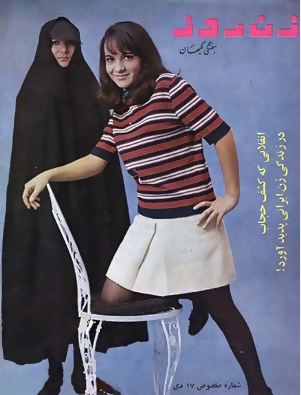
17/During Mohammad Reza Shah's reign the date of the hijab ban was celebrated every year officially symbolizing the date of "women's liberation."
18/Here is how a section from a graphic book about the life and achievements of Mohammad Reza Shah, published for children in 1976 describes Reza Shah’s Hijab ban:
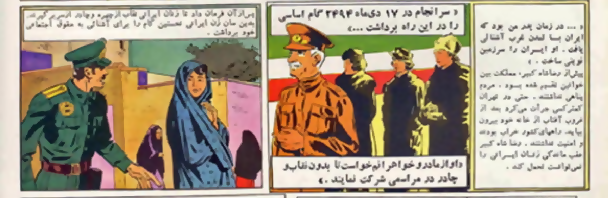
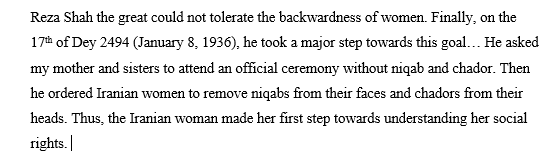
19/In imposing the removal of Islamic hijab (and later celebrating the date of this imposition), the hijab-less women became a symbol of transition from primitive to civilized, reinforcing the narrative of Iranian women of the previous era as backwards and uncivilized.
20/That is it for today, I will be back tomorrow with the Islamic Republic narrative on Iranian women./ ~smn
Loading suggestions...