

2/Day 4 on #bookhistory. You will have to listen to me talk about Cairo tomorrow then.
Disclaimer: I will look at book trade in Istanbul and Aleppo mostly from a British (@BodCons) and Irish (@TCDResearchColl) perspective.
First, let's talk about infrastructure!
~tw 1/14
Disclaimer: I will look at book trade in Istanbul and Aleppo mostly from a British (@BodCons) and Irish (@TCDResearchColl) perspective.
First, let's talk about infrastructure!
~tw 1/14
I posted this a while ago and it's rather crude but sufficient for talking about connectedness and INFRASTRUCTURE.
We need to consider so many things to capture this right though. We might not finish today.
Our story begins in Britain. ~tw 2/14
We need to consider so many things to capture this right though. We might not finish today.
Our story begins in Britain. ~tw 2/14
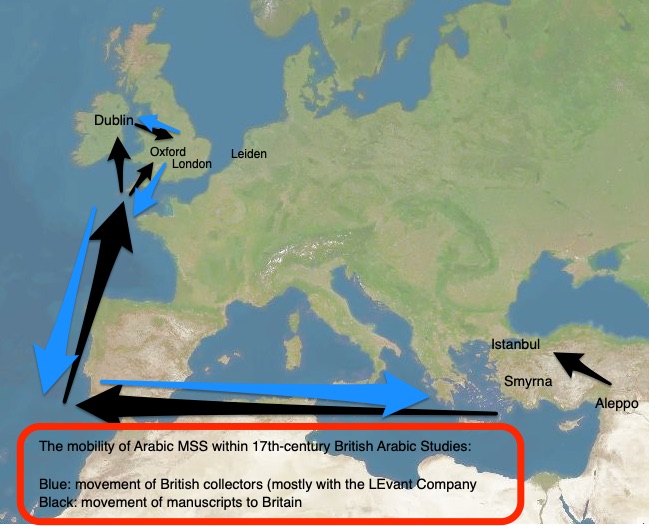
Britain, because that's where the pull-factors were. @bodleianlibs opened in 1602 with 1 Arabic MS. By 1714, they had ~500. Cambridge saw a similar increase.
@bodleianlibs benefitted from MS donations and made its own purchases. Oxonians had influence with the court and church.
@bodleianlibs benefitted from MS donations and made its own purchases. Oxonians had influence with the court and church.
Through this influence they made demands from the British Levant Company (BLC), the East India Company's older, little and less ferocious sister institution. We'll get back to the BLC as transregional infrastructure.
Remember: money, influence, means of access/transport
~tw4/14
Remember: money, influence, means of access/transport
~tw4/14
Why Arabic MSS though? Well, Europe saw a lot of religious strife and war during the 17th century. Ottoman subjects were seen as potential allies or converts. After those wars were settled, interest in Arabic vanished after 1700 for almost a century. ~tw 5/14
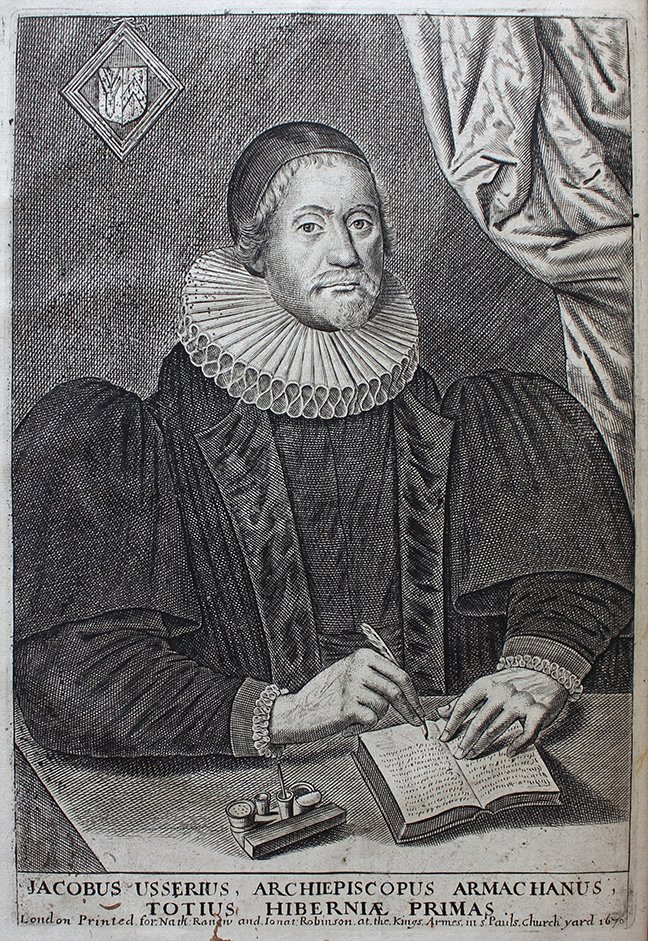
Whereas in the early 1600s, men like Archbishop James Ussher 👇were interested in biblical materials, the scope of investigation widened mid-century to include Muslim topics: history, dating/astronomy, law, hadith.
~tw 6/14
~tw 6/14
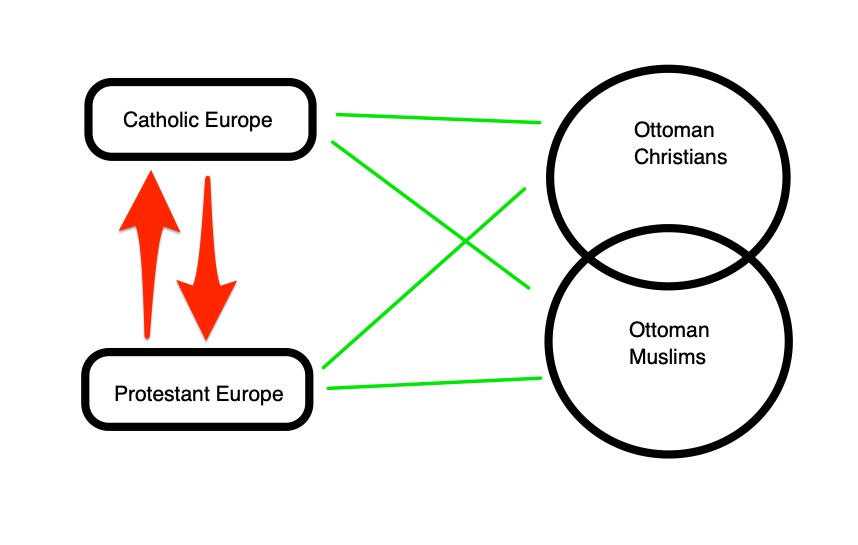
Access to Arabic texts and manuscripts was a question of pride. The largest collections were in the hands of Catholics and they had made great progress in printing Arabic as well.
This is why Arabic Studies were funded by the Crown and influential patrons. ~tw 7/14
This is why Arabic Studies were funded by the Crown and influential patrons. ~tw 7/14
Cambridge's "Master of Jesus" John Worthington puts it succinctly:
"If Christians would more knowingly and pertinently deal with Jews and Mahometans, they should be acquainted with Mishnaioth and the Alcoran"
imo, by Christians, he means British Protestants.
~tw 8/14
"If Christians would more knowingly and pertinently deal with Jews and Mahometans, they should be acquainted with Mishnaioth and the Alcoran"
imo, by Christians, he means British Protestants.
~tw 8/14
Some MSS were bought from European collections, and there was interaction with German and Dutch Orientalists throughout.
Yet, a much larger share was acquired in the Ottoman Empire. This is where we have to talk about the BLC.
~tw 9/14
Yet, a much larger share was acquired in the Ottoman Empire. This is where we have to talk about the BLC.
~tw 9/14
Following the Capitulation ~1580 (only completely revoked in 1914), the BLC established consulates and trading posts in Istanbul, Izmir, Aleppo.
It provided Britain with goods but also information. One merchant, Thomas Davies, wrote Ussher frequently about wars/revolts (1620s)
It provided Britain with goods but also information. One merchant, Thomas Davies, wrote Ussher frequently about wars/revolts (1620s)
Already Bodley asked the BLC to acquire MSS. Archbishop William Laud demanded by "royal letter" that each ship bring back 1 MS.
Things really kicked off when Laud sent Oxonians to buy MSS. Edward Pococke acquired 270, Robert Huntingdon 320 Arabic MSS for themselves ~tw 11/14
Things really kicked off when Laud sent Oxonians to buy MSS. Edward Pococke acquired 270, Robert Huntingdon 320 Arabic MSS for themselves ~tw 11/14
and more for others. This would not have been possible without the BLC. The BLC offered transport for MSS and letters, it provided local knowledge and networks. And it gave the collectors employment as chaplains. Infrastructure!
~tw
12/14
tcd.ie
~tw
12/14
tcd.ie
Huntingdon's correspondence shows the real reach of the networks he built while a chaplain (1671-81). He traveled widely in Syria (Baalbek, Tripoli, Damascus) and Egypt (at least twice, Alexandria, Cairo, Memphis, Sakkara). He then became Provost of @tcddublin (1683-92).~tw 13/14
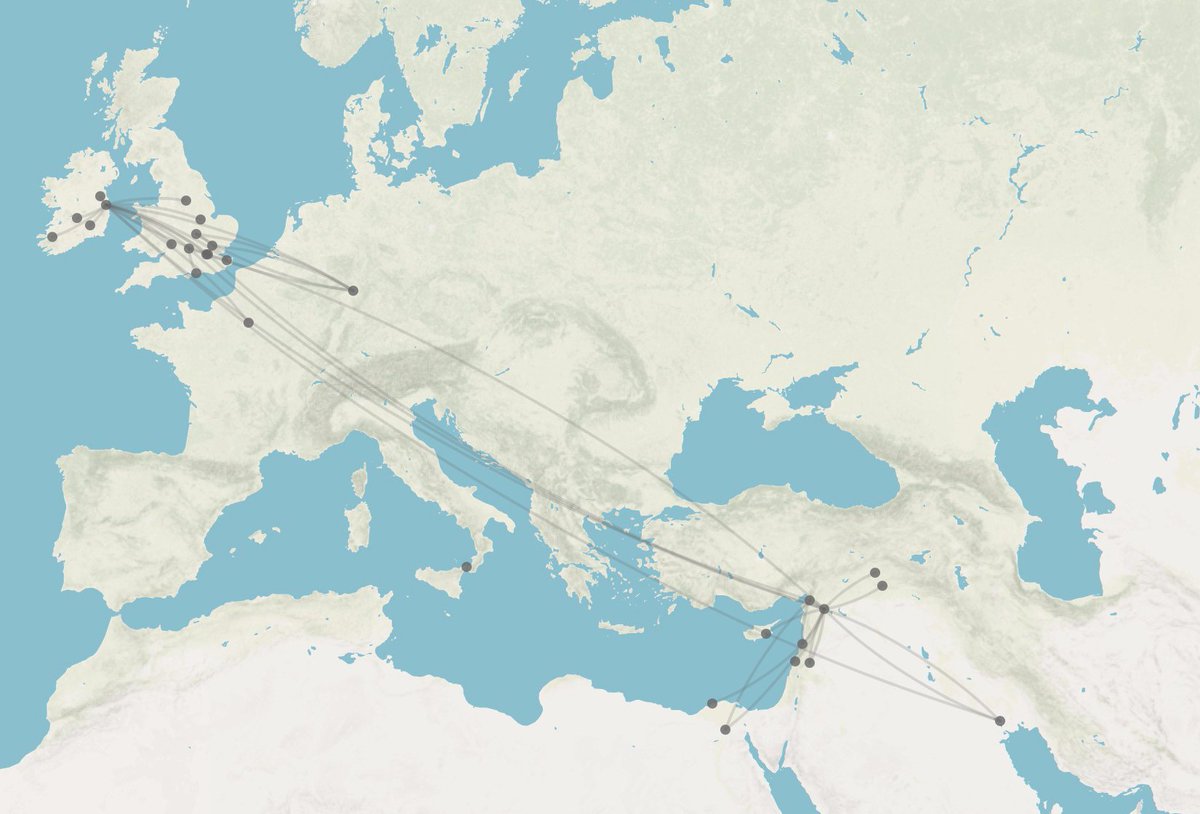
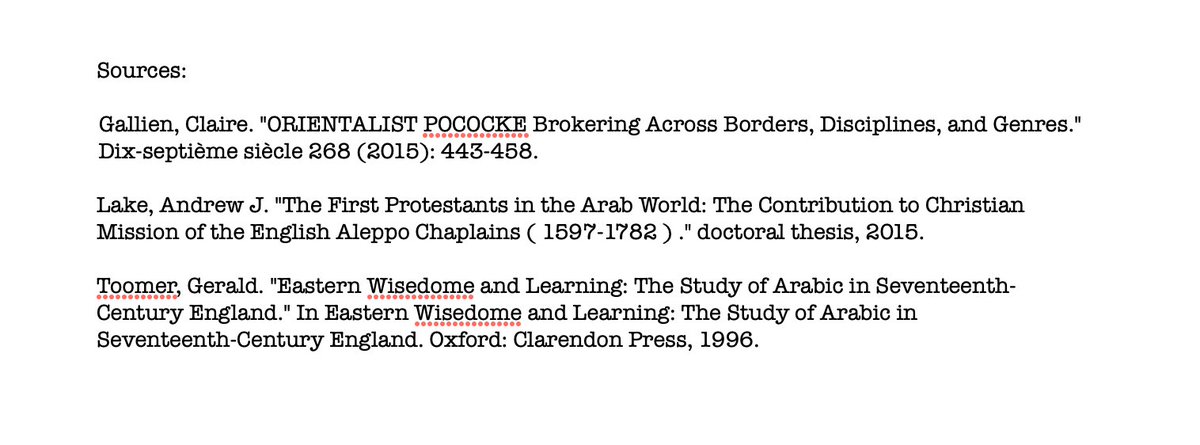
My sources: Lake is important for the Aleppo connection; Gallien highlights the impact of local teachers, collectors, copyists on Pococke. Toomer provides an overview (also for the European connections).
Tomorrow we will see why Aleppo and Istanbul.
~tw 14/14
Tomorrow we will see why Aleppo and Istanbul.
~tw 14/14
Loading suggestions...