

Let’s look at another famous ‘mystery animal’ image. This time the 'de Loys ape' photo of 1920(ish), taken in the Catatumbo River basin of #Venezuela. You surely know the photo already. But do you know its complicated backstory? Join me as we explore it in this loooong thread…
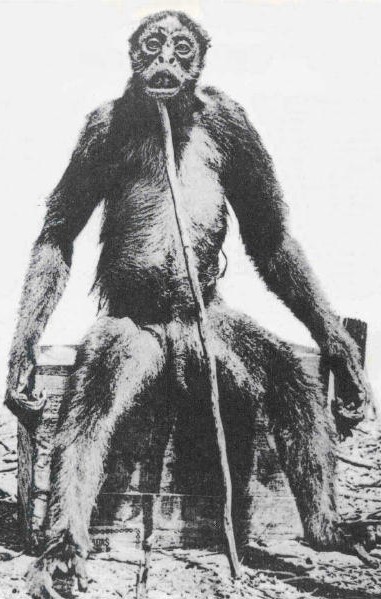
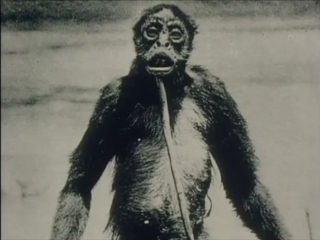
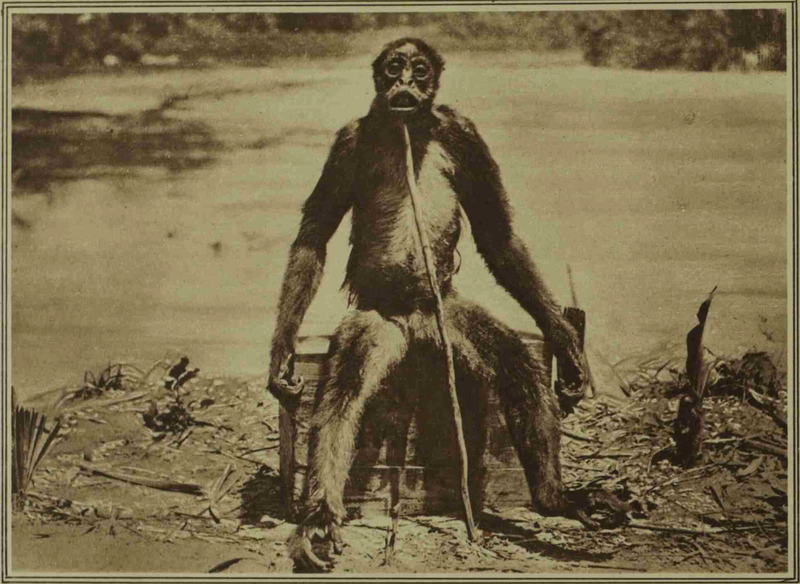
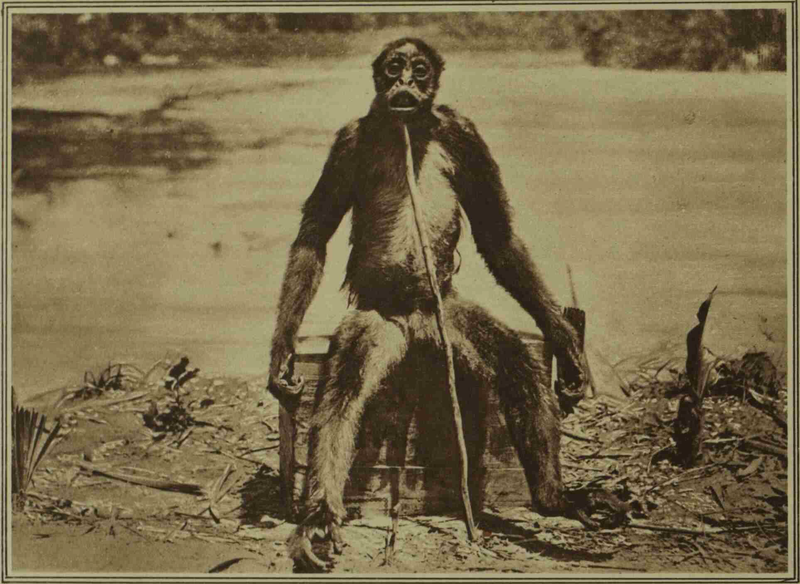
The photo shows a large, hairy primate, sat on a wooden box, a stick propping it up beneath the chin. The version shared most often is cropped, so you only see what looks like bare ground or the river behind the animal. #cryptozoology
The uncropped version shows the opposite river bank and some hacked-down plants surrounding the animal.... #primates #monkeys #mysteries
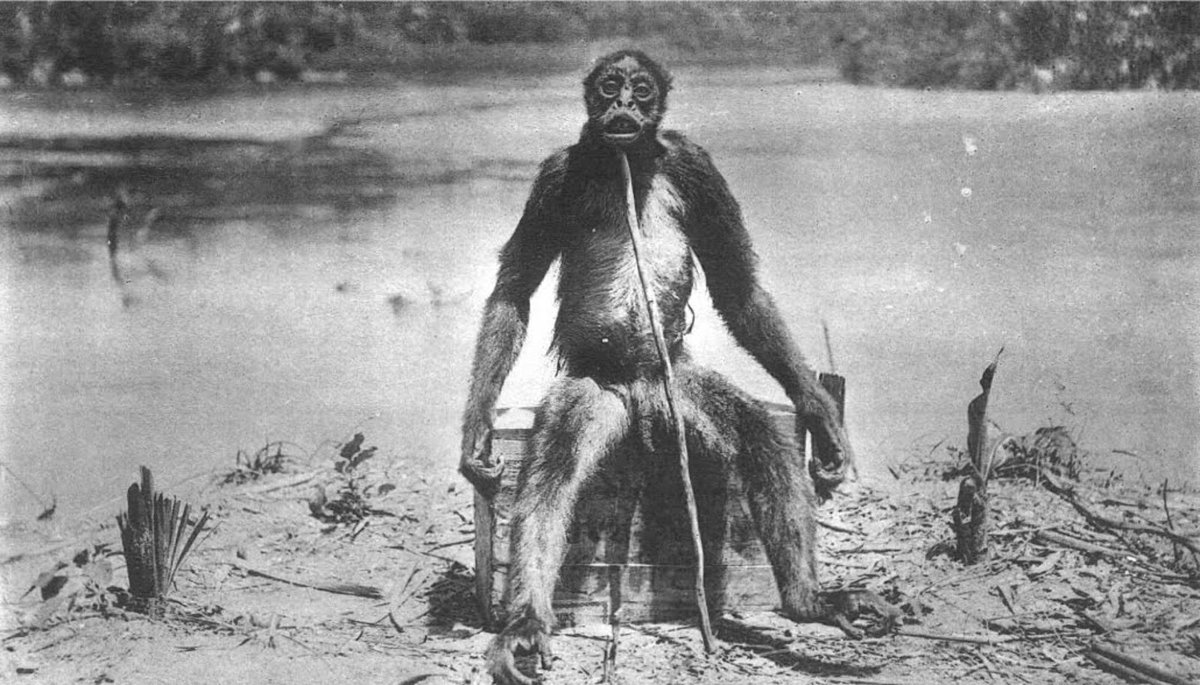
This photo always scared the hell out of me as a kid, so much so that I’d avoid looking at it in certain books. I know I’m not alone here: it seems to be widely regarded as quite scary...
The photo was taken on the Colombian-Venezuelan border, near a tributary of the Tarra River, by Swiss geologist François de Loys. It’s usually dated to 1920, but a study of where de Loys and his team where during their expedition has shown that it was likely taken in 1917 or 18.
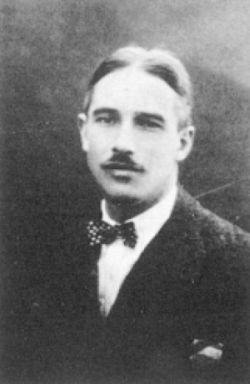
The story is that de Loys and his party encountered a mated pair of these animals (initially mistaken for bears) which behaved aggressively, breaking branches and flinging faeces. The team went to shoot the male but he dodged and they killed his mate. The male ran away.
The ‘ape’ was large (1.5 m tall – or was she? Hold that thought – and over 50kg), had no tail, and had a human-like tooth count of 32 (rather than the 36 typical of American monkeys)...
.... de Loys and his colleagues supposedly recognised this animal as something new, sat it up on a wooden crate (used for transporting petrol) and took a photo. They seemingly never thought to take one with a person for scale (though read on).
A few anatomical features are worth mentioning. Pale circles ring the eyes, the forehead is pale, and the nostrils are directed sideways and forwards as per the ‘platyrrhine’ condition of American monkeys.
A swathe of sunlight running diagonally across the chest and onto the legs obscure the animal’s original pigmentation somewhat, but it you look carefully it clearly has a darkish chest and belly (this is relevant to its real identity, read on).
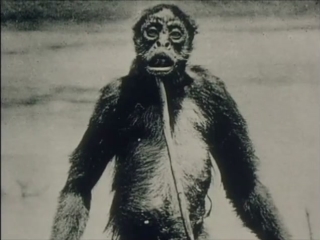
We see that the ‘ape’ has long, hook-shaped hands lacking a large or obvious thumb. The feet are also hook-shaped and with a long distance between the hallux and the other toes.
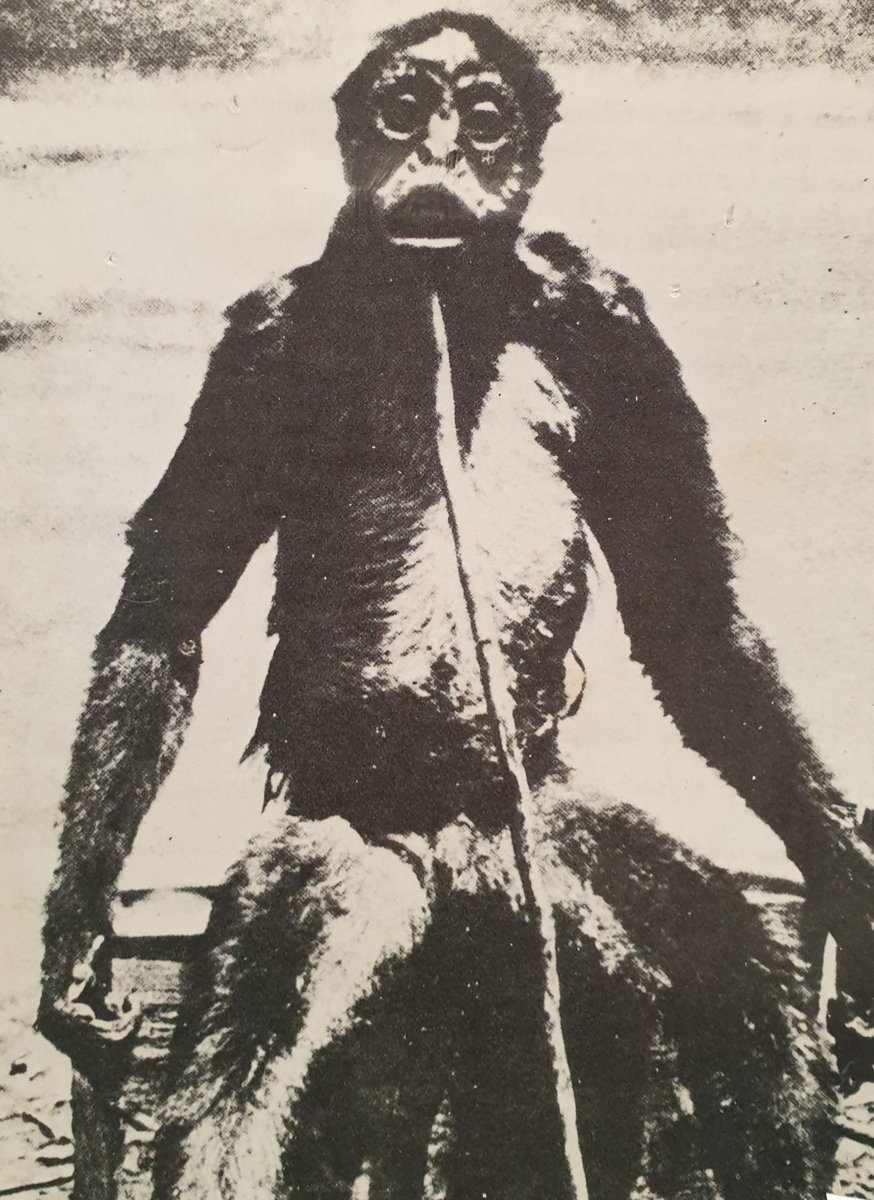
Between the legs, there’s a long, rugose organ that looks something like a penis, but it looks even more like the very large clitoris present in spider monkeys.
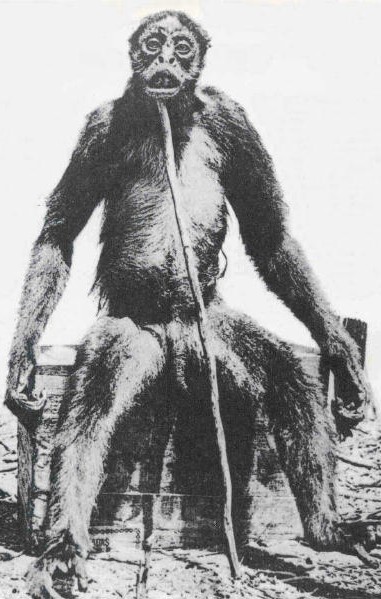
Incidentally, some versions of the photo (including the retouched 1929 version published in L’Illustration magazine) deliberately black out the better part of the clitoris so it’s concealed from view.
On returning home, de Loys published a brief article in 1921, but not until March 1929 did it receive longer attention…
The ‘conventional’ story (the one told by de Loys, most famously in the Illustrated London News of June 15th 1929) on what happened during the expedition is a sad, desperate tale. De Loys and his team did not have a good time in the jungle...
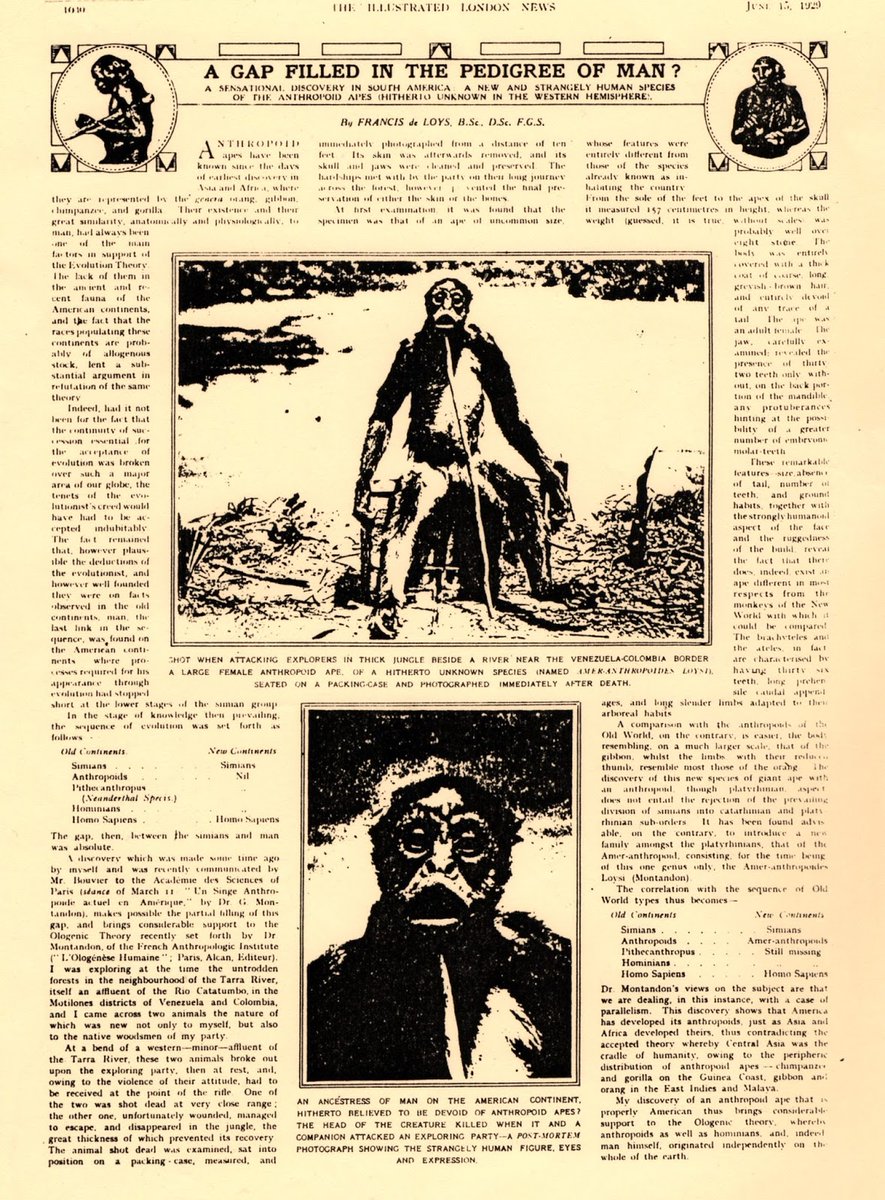
... They were ill-fated, were in aggressive conflict with local Indians, and only four of the original 20 expedition members survived.
They lost various of their belongings (perhaps including additional photos of the creature) and weren’t able to retain the animal’s carcass. They did try to keep its skin and skull. Buuut…
The skin was apparently lost in a boating accident. Supposedly, the skull was retained and then used as a salt container… which caused it to deteriorate and eventually fall to pieces. By the time they arrived back home, they had no physical remains of the animal.
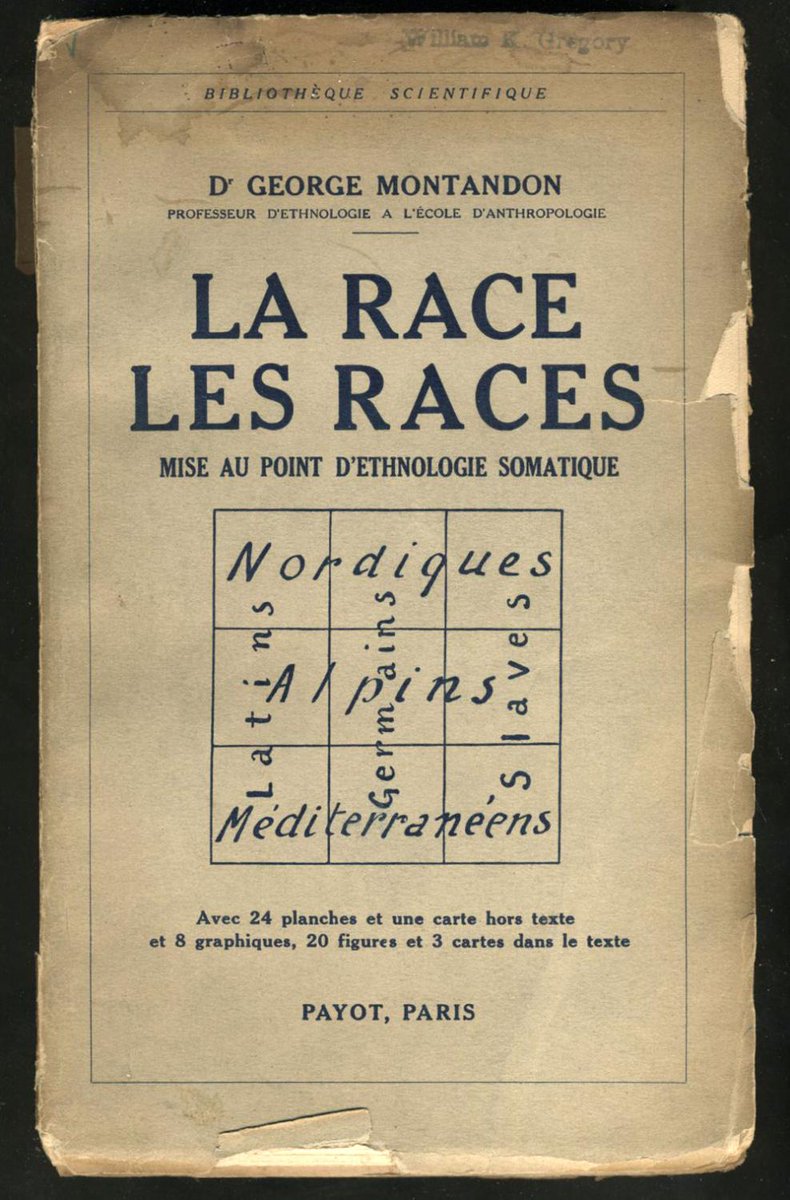
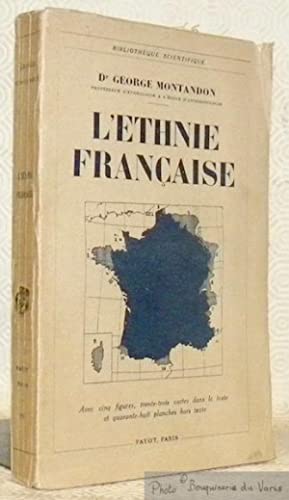
De Loys’ story was of great interest to Swiss-French medical doctor, explorer and anthropologist George Montandon (1879-1944). Montandon is an… 'interesting' character, little of which was documented (in English-language sources) until recently...
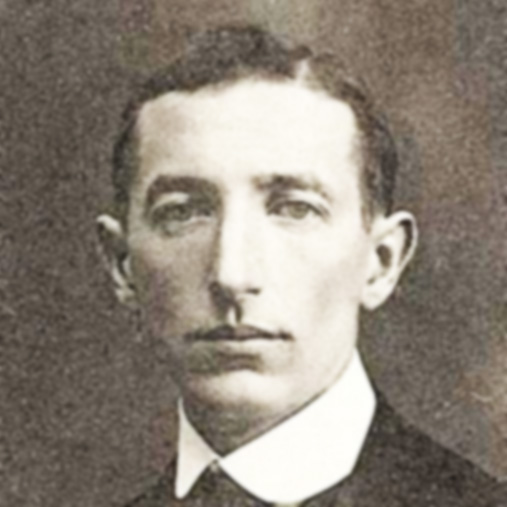
Of importance to us here is that Montandon was one of the founders of the so-called scientific racism which emerged after WWI. We’ll be coming back to that.
A point on nomenclature: the name for the animal should be written ‘de Loys’ ape’ or ‘de Loys’s ape’ (as in, the ape belonging to de Loys). But most authors have NOT followed that convention, instead writing ‘de Loys ape’. I’m going to follow the last of those options. Ok…
In March 1929, Montandon published a paper on de Loys ape in the respected journal Comptes Rendu, wherein he described it as a new species. Montandon said that the giant clitoris _could_ mean that it was a new species of spider monkey (Ateles), but...
... that the lack of a tail and low dental count meant that it was more likely something new, so he dubbed it Ameranthropoides loysi, meaning (roughly) ‘Loys’ American ape form’.

Actually, Montandon named it ‘Amer-anthropoides’ but hyphens are today disallowed from generic names, so we now ignore the way he wrote it. It was deemed distinct enough for a new family too, the Ameranthropoidae (technically, it was probably supposed to be Ameranthropoididae)...
Montandon immediately deemed it relevant to the evolutionary model he favoured for humanity, termed hologenesis. We’ll come back to this.
In his Comptes Rendu article, Montandon said that the size of the animal was obvious from the box. This was a standard crate used for transporting petrol, known to be 45 cm (or 18 in) tall… but hold that thought.

Montandon did a LOT of popularisation of his proposal, in fact publishing SIX articles on de Loys ape in 1929 alone, ranging from technical papers to popular magazine pieces.
This was a phenomenal claim, and it got a lot of attention. The story was initially circulated in France and had a mostly positive reception there, in part because Édouard Bourdelle, chair of zoology at the national museum, published a positive take on the creature…
Bourdelle likened the creature to another one, said to have been captured in the Belgian Congo and taken to the USA, said to be 1.5 m tall and 54 kg. These figures are about exactly the same as those later given for de Loys ape by Montandon...
.... and it’s likely that this is where Montandon got them from. Indeed, Montandon commented on this Congolese case in one of his 1929 articles, saying that this African animal was likely a hybrid between a monkey (a guenon) and a human, and...
... he also – on this occasion – endorsed this view for de Loys ape too, saying that it could be a hybrid between an indigenous woman and a spider monkey. His views on the creature were clearly vague and prone to change, and also shot through with racism.
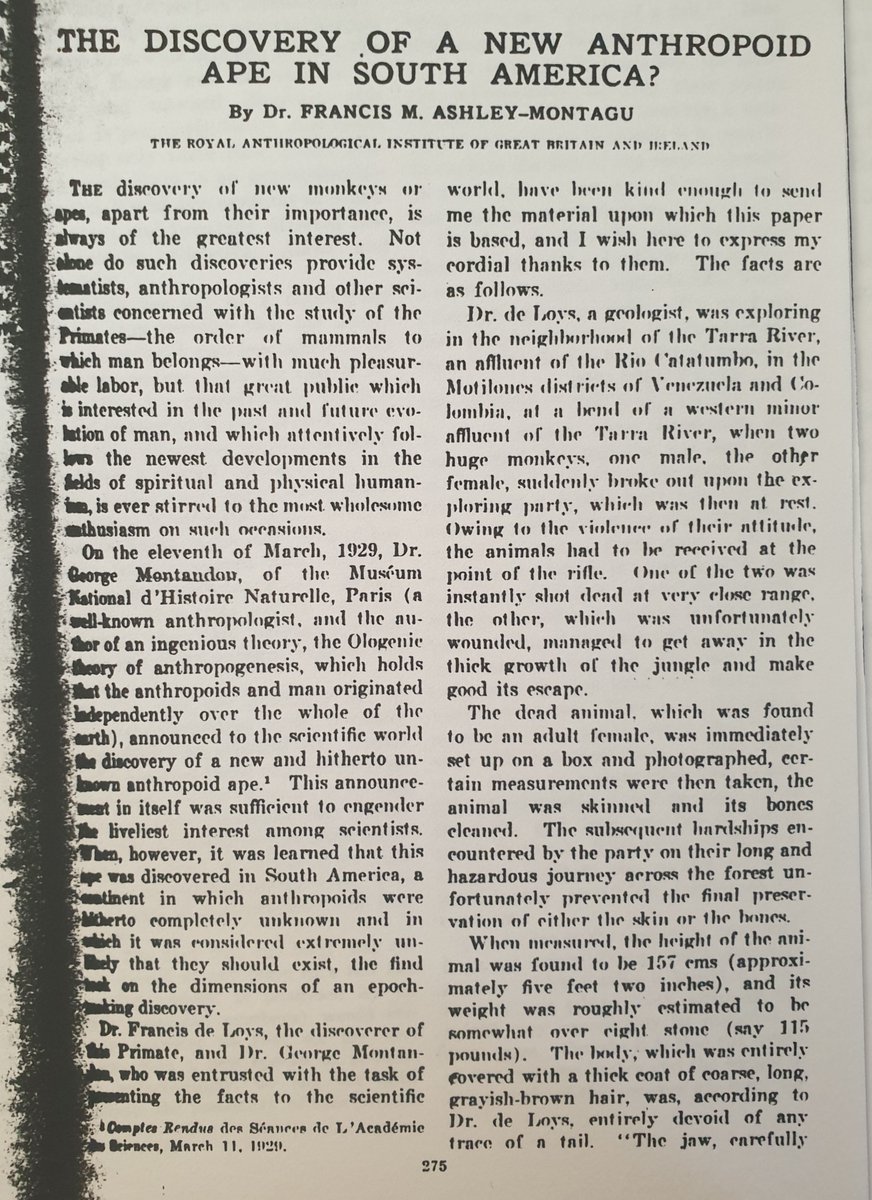
In the UK, Francis Montagu also seemed positive toward Montandon’s proposal, and German and Spanish authors also became receptive to the idea.
However, suspicion and scepticism soon arose. Sir Arthur Keith (knighted in 1921) argued in an article of August 1929 that the creature was surely a spider monkey, and that any claims about it being an ape could only be a mistake.

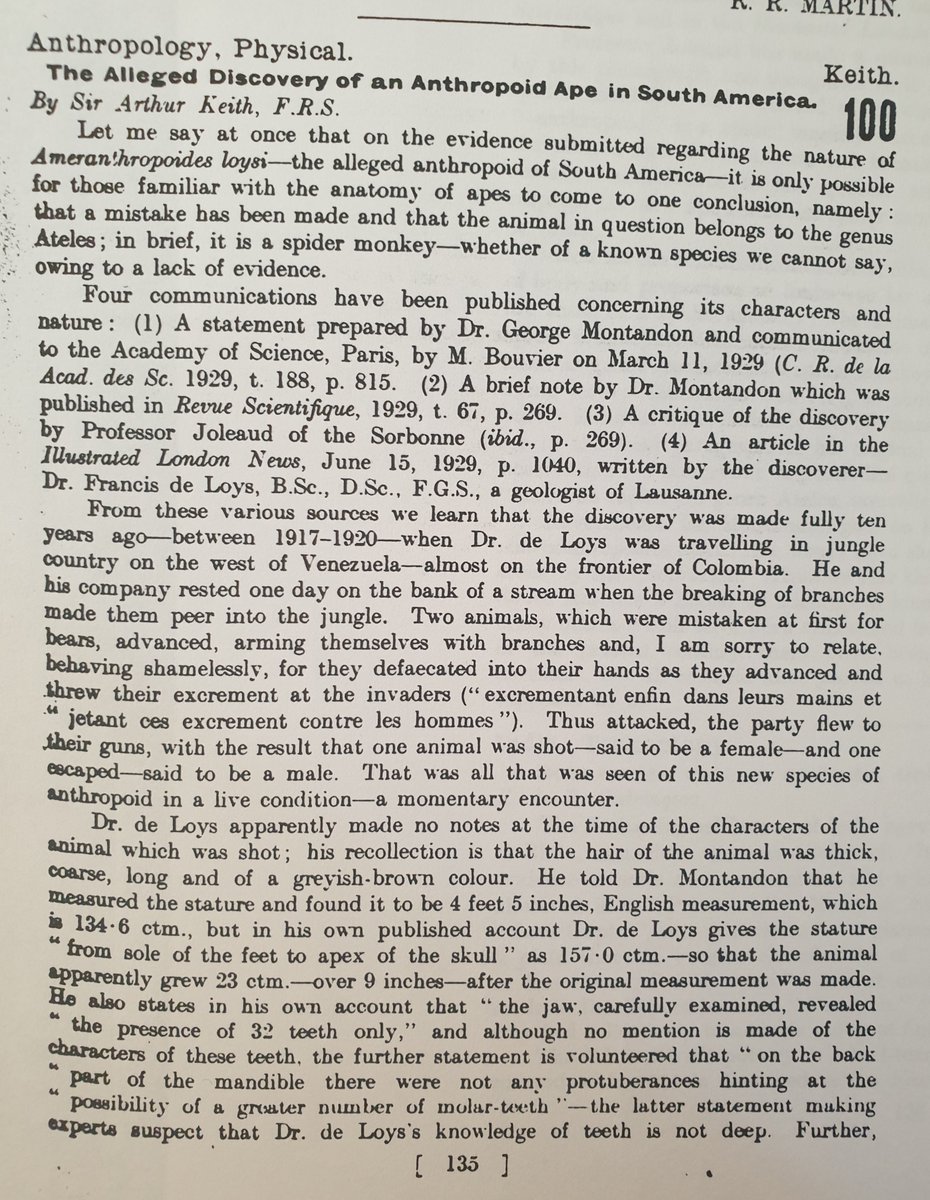
Keith further noted inconsistency about the animal’s size. Both de Loys and Montandon had initially said that it was 4ft 5in (134.6cm), but later changed this to 157cm, a notable discrepancy. And in a 1930 article, Montandon gave the height as 123cm.
A curious aside on the case comes from Hans Weinert’s argument of 1930 that de Loys ape should not have been named Ameranthropoides (since this name – especially when written ‘Amer-anthropoides’ – supposedly evoked comparison with Anthropoides, a genus of crane), but...
... Megalateles instead. This new name basically means ‘giant spider monkey’.
Montandon was aware of this and agreed with it, and in 1943 argued that Megalateles should formally replace Ameranthropoides to avoid misinterpretation.
In reality: no such renaming is allowed under the official naming names for animals, nor is the potential of misinterpretation relevant to the name an organism has (witness the fossil whale Basilosaurus).
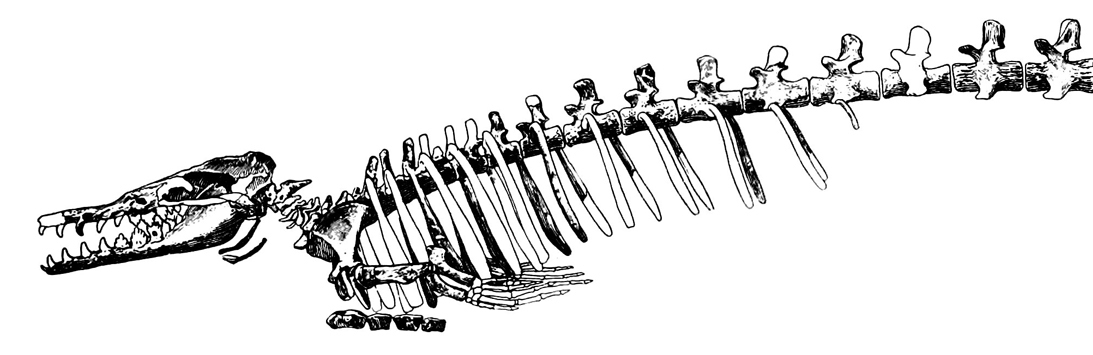
The fact that Montandon was happy to accept and promote this attempt at re-naming might show that he wasn’t all that committed to the idea of de Loys ape being anything other than a spider monkey when challenged.
Surely, if you were convinced that you had something new (a South American hominid or pre-hominid), you’d stick to your guns, right?
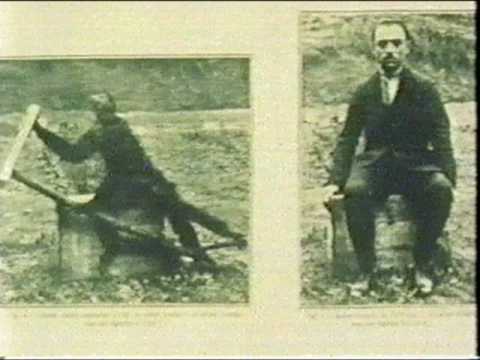
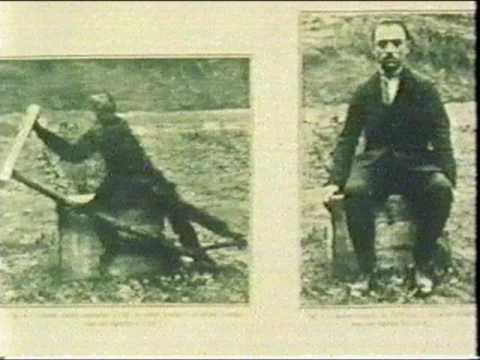
Remember the box the ‘ape’ is sat on? Montandon argued that the box was 18in tall and published photos of spider monkeys and a man sat on the same sort of box in order to verify the creature’s height...
The photos do make the ‘ape’ look much larger than the spider monkey in the comparative photos. But…
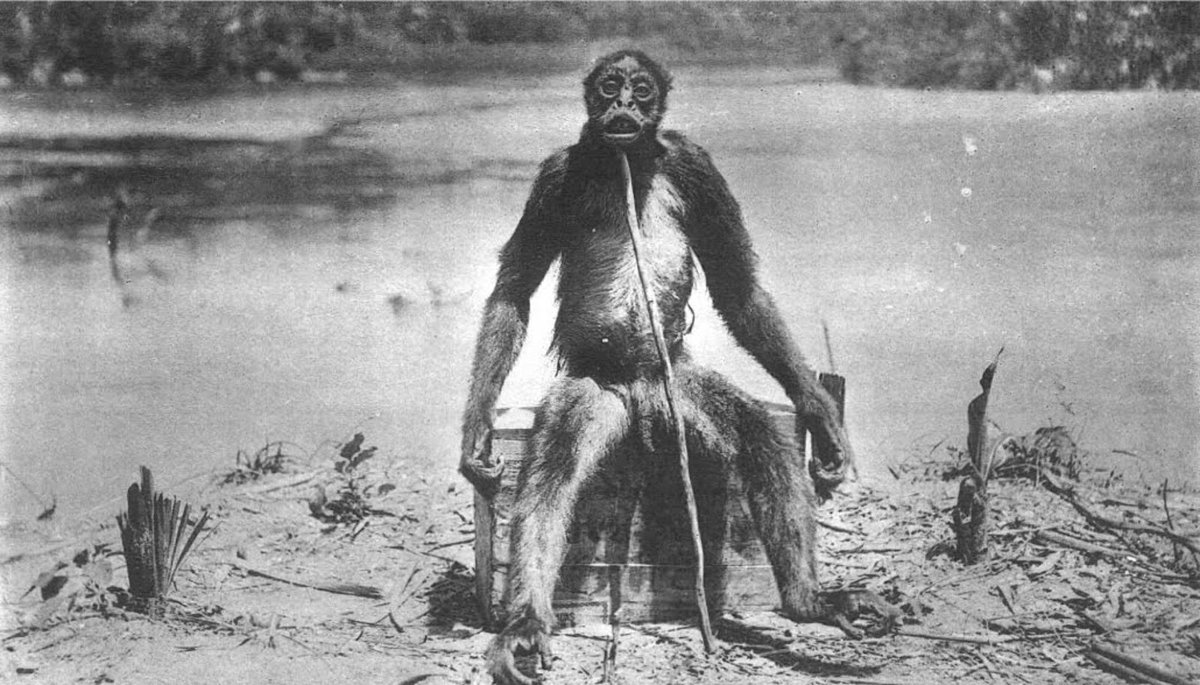
Eminent primatologist W C Osman Hill argued that the box in de Loys’ photo appeared to be broken, since the stencilling is cut off when it shouldn’t be and one of the wooden slats from the box had been used as a prop to support the animal’s left hand.
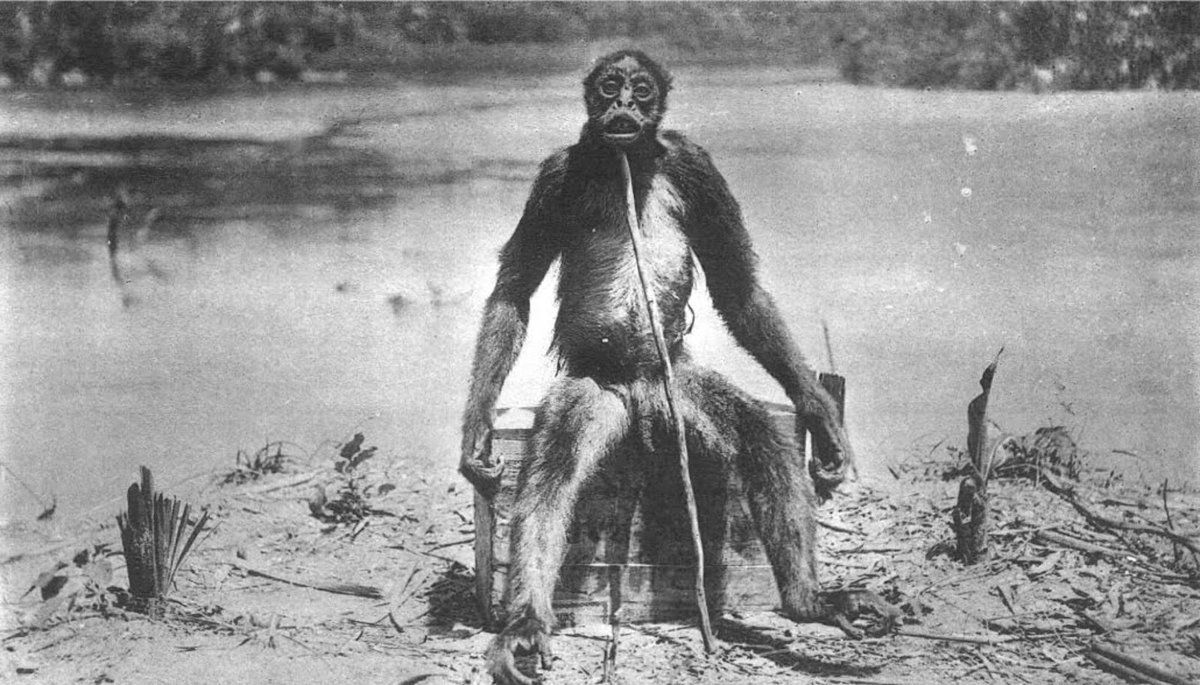
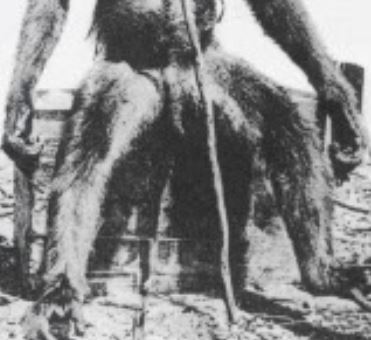
This is clearly the case when you compare de Loys’ photo with the comparative ones made by Montandon: the box in the de Loys photo has been artificially shortened.
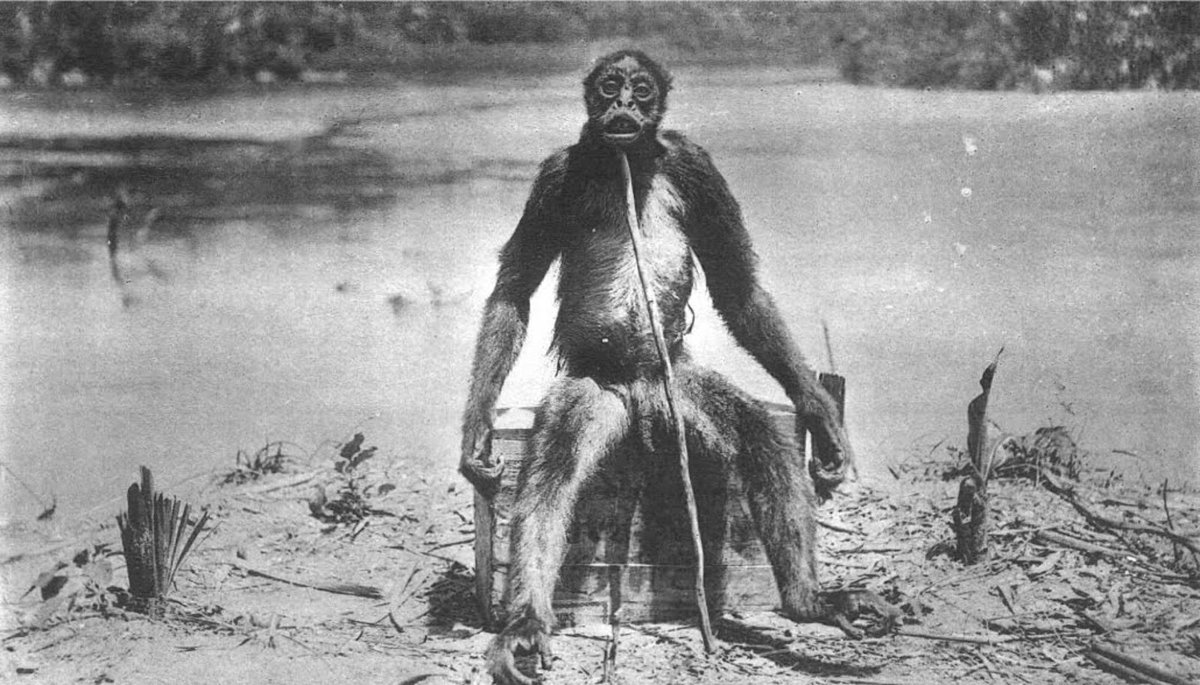
Indeed, in a 1936 article, American geologist James Durlacher shared a photo of a dead spider monkey (killed in the same region as de Loys ape was) sat erect (and holding an egg in one hand).

Montandon, of course, continued to support the distinct status of Ameranthropoides in 1930.
The result of these pronouncements is that the 1930s and 40s saw the case as one that could only be resolved via the discovery of another specimen. As documented by Bernardo Urbani and Ángel Viloria in their 2008 book (more on this later)...
.... some authors who explored the region said that de Loys ape could only be a spider monkey.
Rather than disappearing from the literature or being forgotten, it’s impressive how often de Loys ape was mentioned post-1929, including by a great many zoologists known for other things.
Some – like Mikhail Nestourkh in the Soviet Union – declared it a hoax and decried Montandon’s hologenesis as inadmissible. Others (like French explorer Roger de Courteville) thought it might indeed prove relevant to human ancestry, or that it could be a new monkey species...
Courteville, a civil engineer who crossed South America by car and (on another occasion) by canoe, claimed in his 1951 book Avec Les Indiens Inconnus de l’Amazonie that he encountered a large ‘ape’ in the same area as de Loys, and he included an illustration of it. It's crude.

Courteville regarded this as a sort of ‘missing link’, a living form of Pithecanthropus.
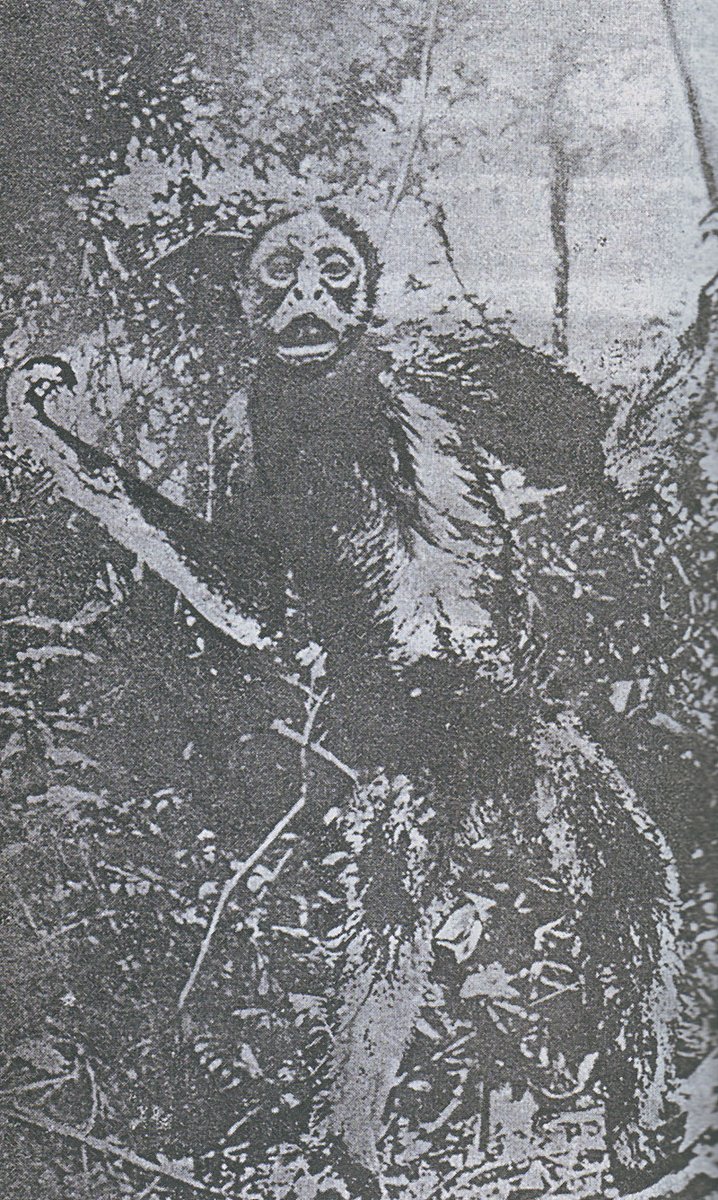
Courteville also said that Dr de Barle encountered one of these apes in 1938, and managed to photograph it, and here’s the photo… Err, yeah.
In his lengthy 1962 review of the world’s primates, Osman Hill reviewed the de Loys ape case and thought it most likely that the animal was a Brown spider monkey.
What’s notable is that primatologists had essentially given up on the hope of de Loys ape being real and a new species prior to the 1960s, and most discussions of it from the 1950s onwards frame it within the context of it being an ‘unsolved mystery’ or cryptid...
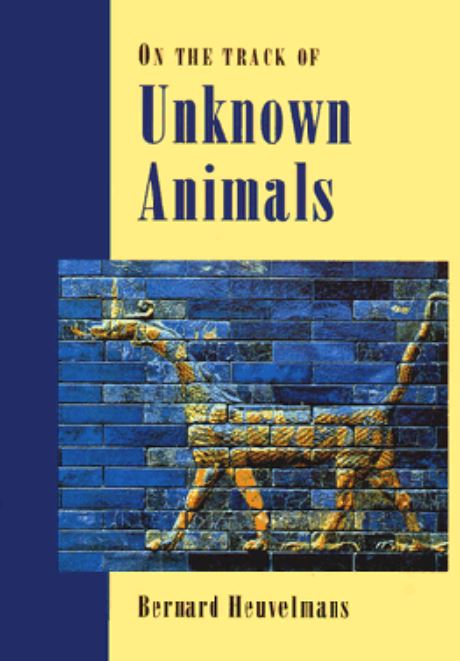
The most influential of these writings were those of so-called Father of #Cryptozoology Bernard Heuvelmans, who covered the case in his 1958 book On the Track of Unknown Animals and even featured the ameranthropoid as the frontispiece in the first edition.
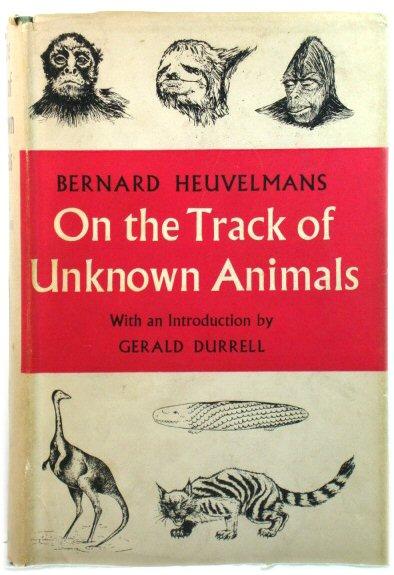
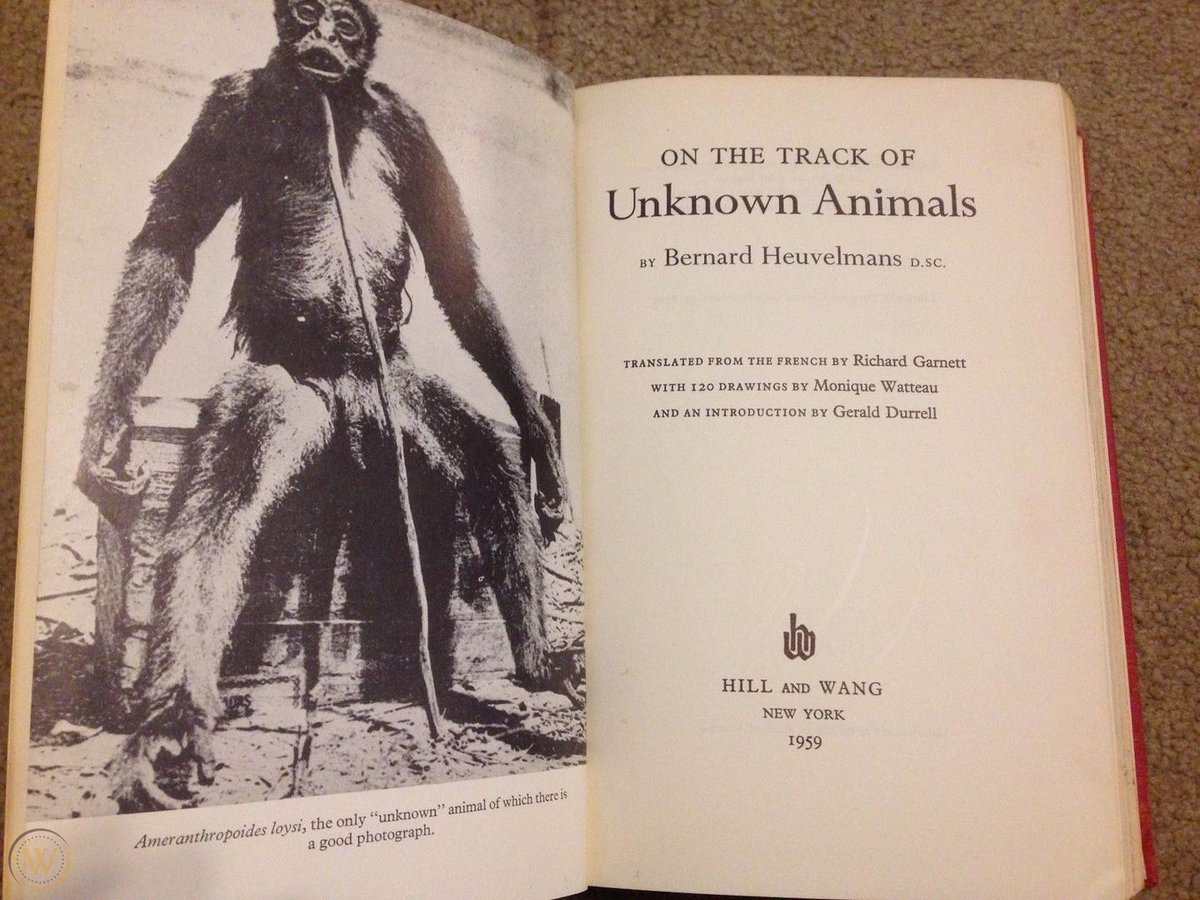
Heuvelmans combined the de Loys account with stories and sightings of bipedal-walking South American ‘apes’ to seemingly endorse the reality of the creature (though it’s hard to really know what he thought, since his writing is very baroque and he rarely made clear conclusions).
He seemingly became less happy about the case over time, since it doesn’t feature in his 1986 list of mystery animals worldwide nor appear as frontispiece in the 1995 edition of On the Track. #cryptozoology
Ivan Sanderson – friend and advisor to Heuvelmans, and a prolific writer on mystery animals himself – was, however, highly sceptical and supported the view that it was a hoax.
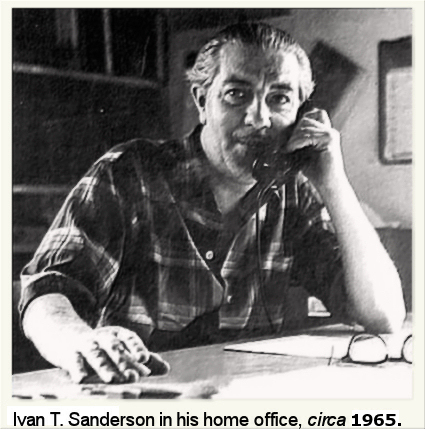

Sanderson argued that the unusual look of the animal in the photo could be due to bloating during decomposition, and also that the wooden box wasn’t 18 in high but 15.5 in, in which case the ameranthropoid was within the height of the larger spider monkey species.
The writings of Heuvelmans and his followers probably explain why the de Loys ape story became featured in the 1980 TV series Arthur C. Clarke’s Mysterious World, wherein it was featured as a terrifying spooky mystery that scared the crap out of many of its younger viewers.
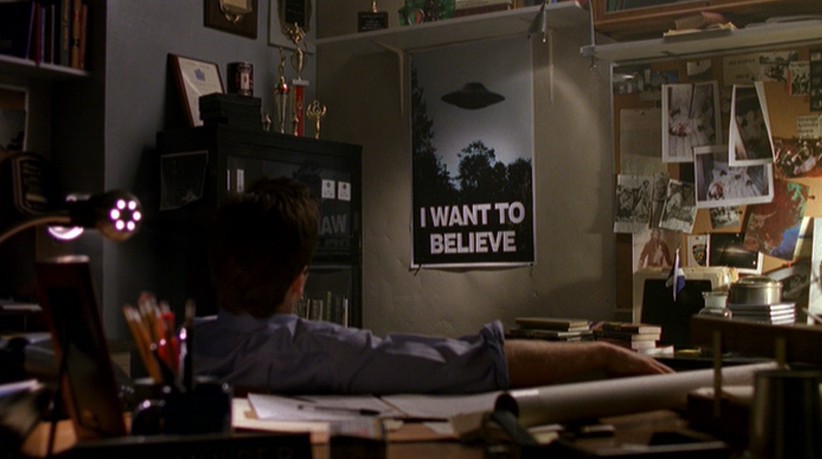
And this, in turn, probably helped establish it as a pop culture icon: a photo of de Loys ape is clearly visible on Fox Mulder’s noticeboard in The X Files… #XFiles
A minority view that the photo does depict a real unknown primate has persisted within the cryptozoological community. This was put forward in greatest detail by cryptozoologist and author Karl Shuker in his 1991 book Extraordinary Animals Worldwide, and…

… (more controversially) in his 1993 The Lost Ark: New & Rediscovered Animals of the 20th Century. I say controversially because it shouldn’t have been included in a book on new species (indeed, it's missing from the 2002 updated version, called The New Zoo).
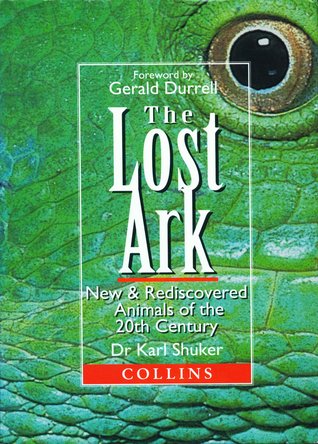
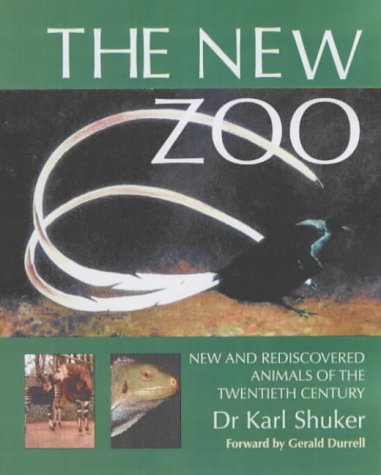
Like Heuvelmans, Shuker pointed to the fact that tropical South America is home to a list of ape-like creature accounts and pieces of art, some described as Bigfoot-like or Wildman-like, which (he said) “lends support to de Loys’s account”.
They don’t do any such thing though: ‘wildman’-type creatures are known from every place on the planet and are part of the mythology of every ethnic group, so the fact that they’re present in the Amazonian region, and depicted in art and sculpture, doesn’t mean anything special.
Furthermore, ‘wildman’ stories and sightings from the Amazon don’t clearly describe a platyrrhine with any anatomical similarity to de Loys ape, so, again, I don’t think they’re anything especially relevant.
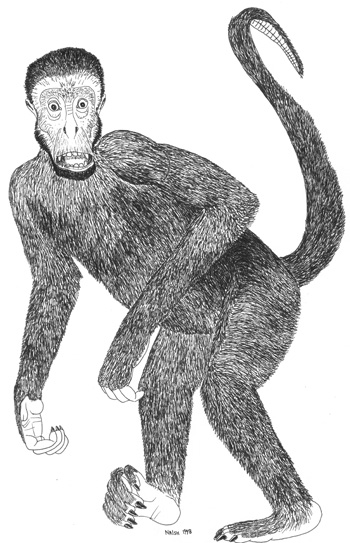
Shuker is also one of several cryptozoologists who’ve pointed to the former existence of some especially big platyrrhines in the Pleistocene of Brazil (namely Protopithecus and Caipora) as being potentially relevant to the case of De Loys’ ape...
As suggested by this reconstruction (by me, depicting Protopithecus in bipedal pose), these large primates might have looked quite daunting.
More interesting, however, is that some people say they remember seeing a photo where there are people standing on either side of the ameranthropoid. Shuker has most recently covered this story in his 2008 book Extraordinary Animals Revisited (and at his ShukerNature blog) and…
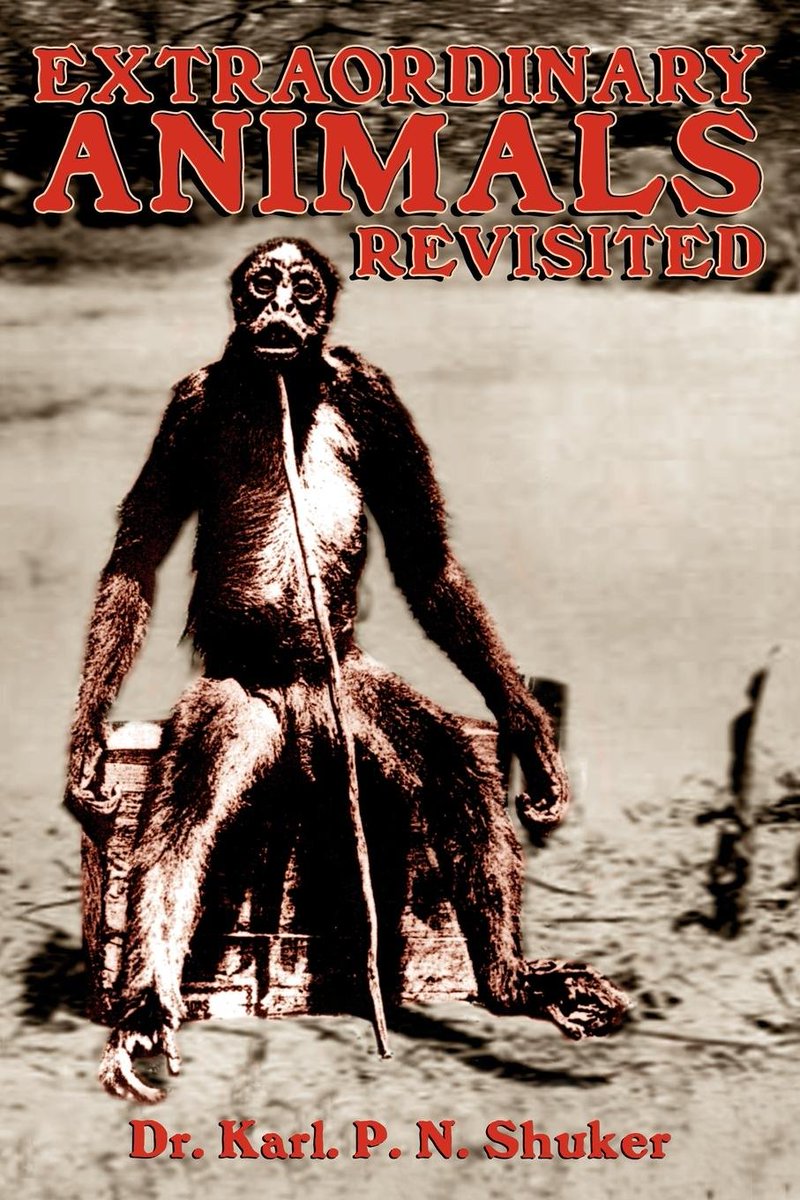
… and has put on record recollections from several correspondents who say they remember seeing such a photo. Shuker also mocked up the attached image....
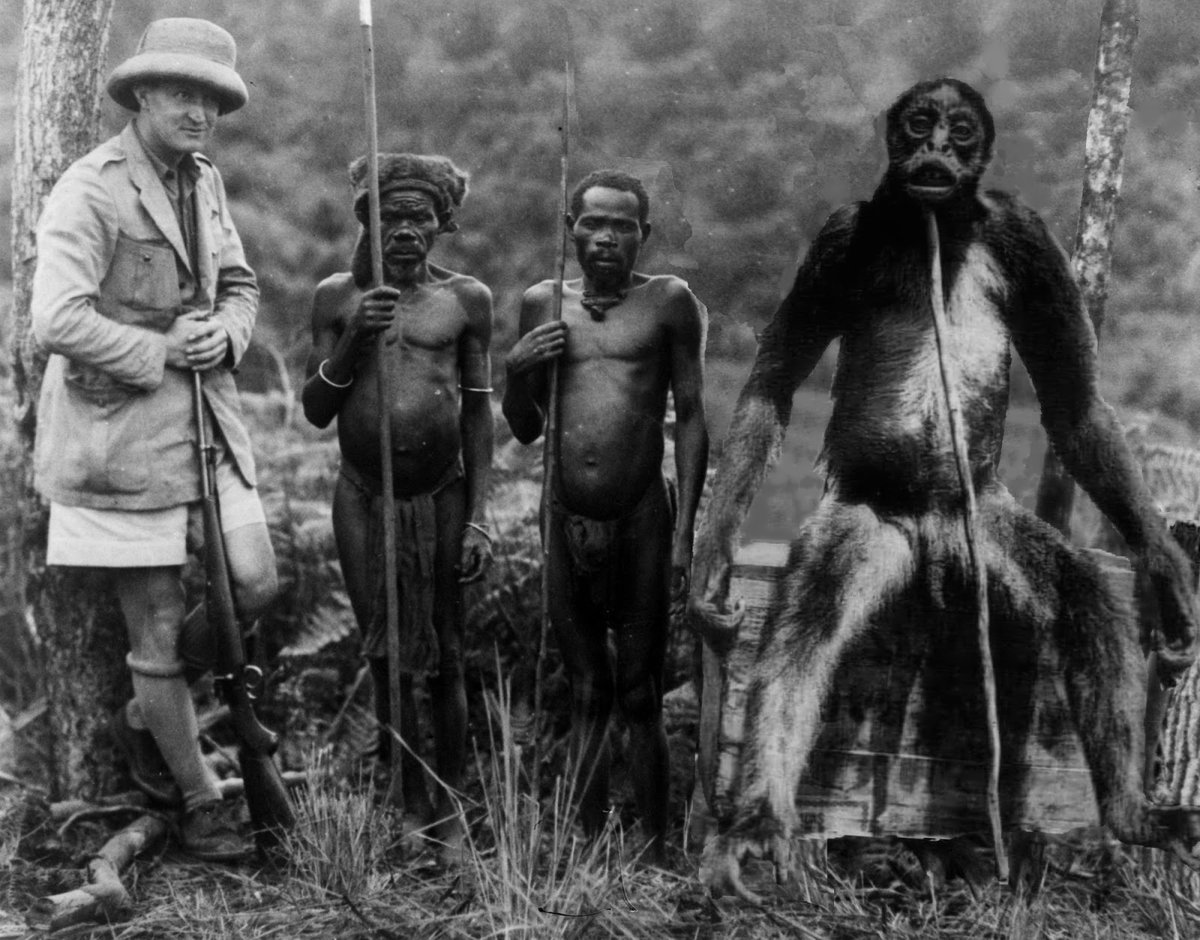
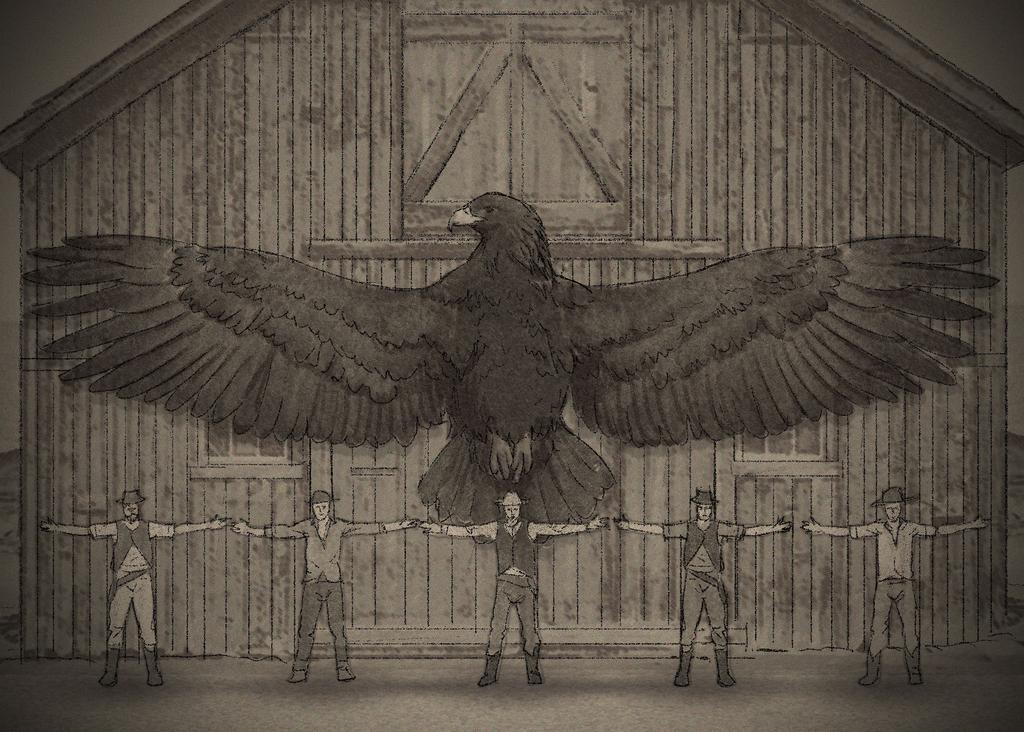
If you know your mystery animal history, this all sounds _extremely similar_ to the infamous, and also supposedly lost, Thunderbird Photo of the 1890s, a story for another time.

In a 2002 article, cryptozoologists D G Smith and Gary Mangiacopra also accepted the reality of de Loys ape and said that it deserved its own primate family: they appeared unaware of Montandon’s creation of Ameranthropoidae and proposed the new Mangiacopridae!
This doesn’t make any sense, since a family name should be based on the type genus for the family...
In our 2013 book The Cryptozoologicon, myself, @thejohnconway and @cmkosemen had fun with the idea of the ameranthropoid as a real primate. Namely, a terrestrialised, tailless descendant of Protopithecus, able to use tools. This was just an exercise in speculation though.
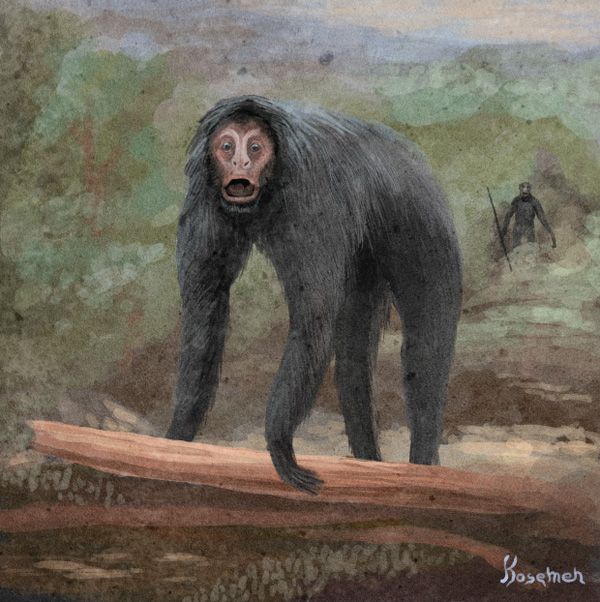

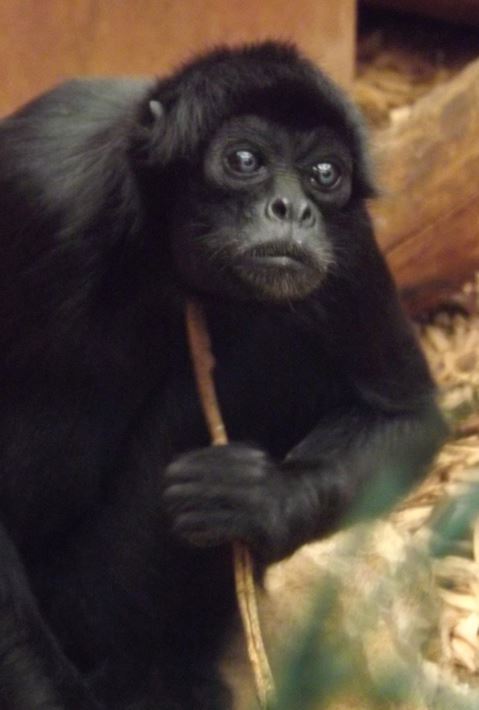
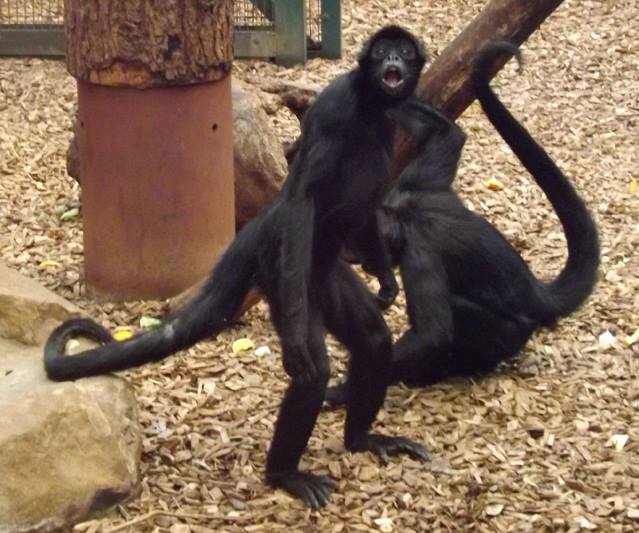
It is perhaps not widely recognised how big spider monkeys are, big specimens standing 152cm (that’s 5ft). They’re also very capable bipeds, regularly walk bipedally when on the ground, and are good at throwing objects (like branches) for several distances...
The attached photos (by me) are of captive Colombian spider monkeys...
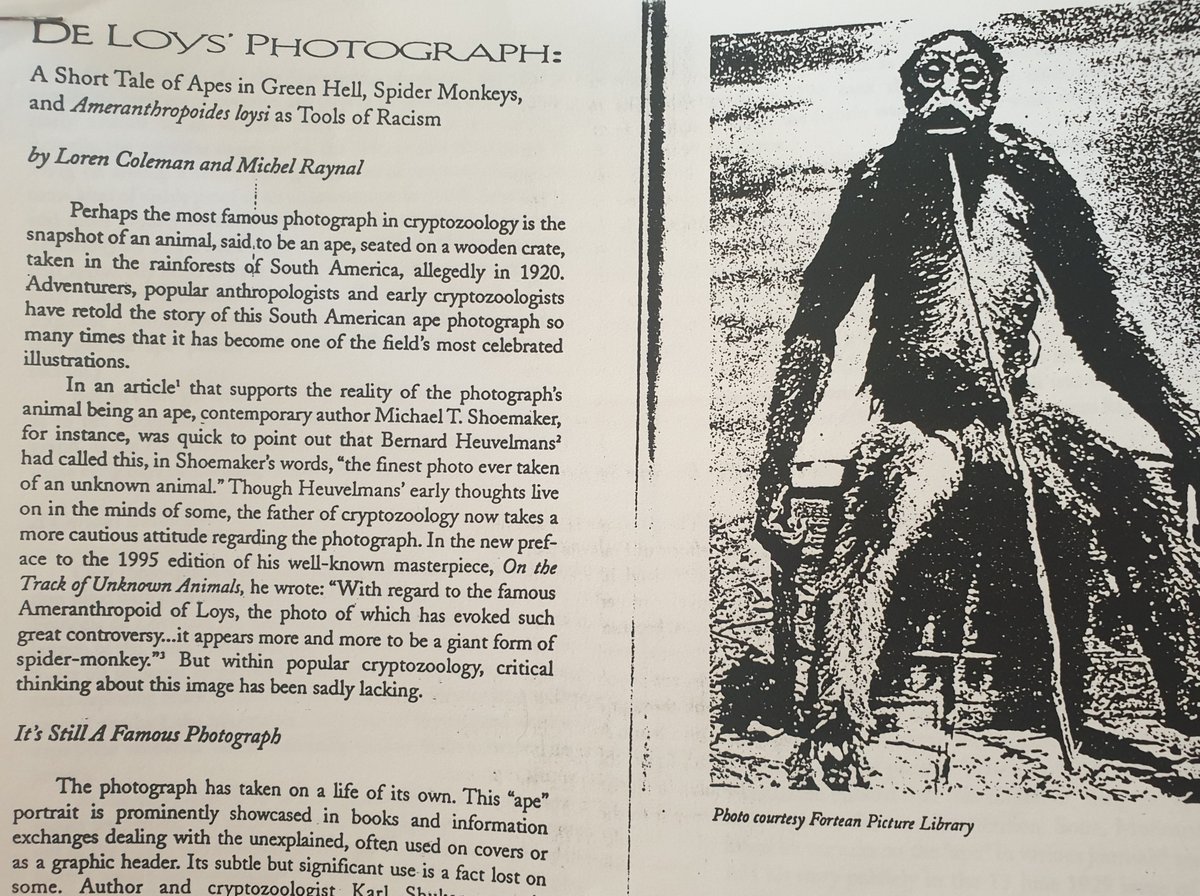
Was there another motive in creating this hoax? In 1996, cryptozoologists Loren Coleman and Michel Raynal argued (in The Anomalist magazine) that de Loys Ape had in part been ‘invented’ to play a role in a racist view of human evolution...
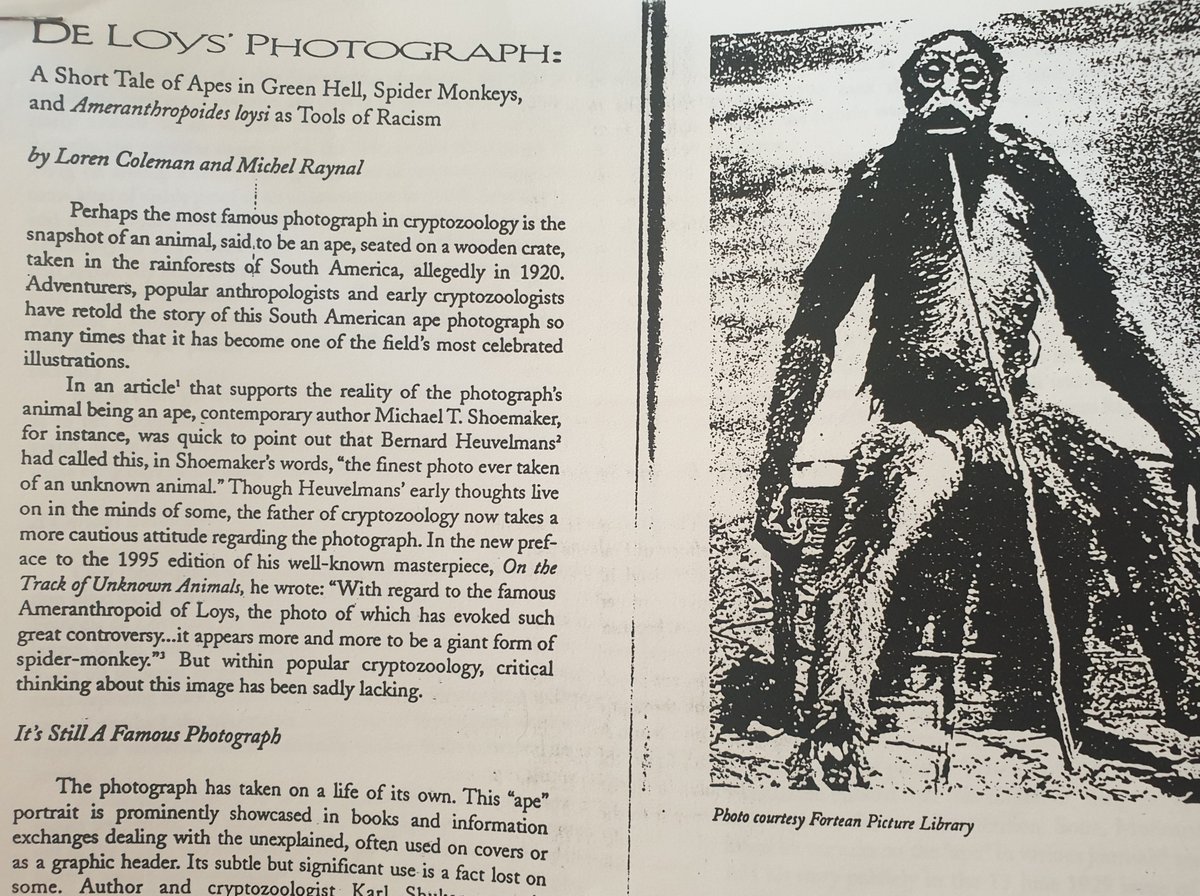
In 1996, @CryptoLoren also published an abbreviated version of the case in Fortean Times...
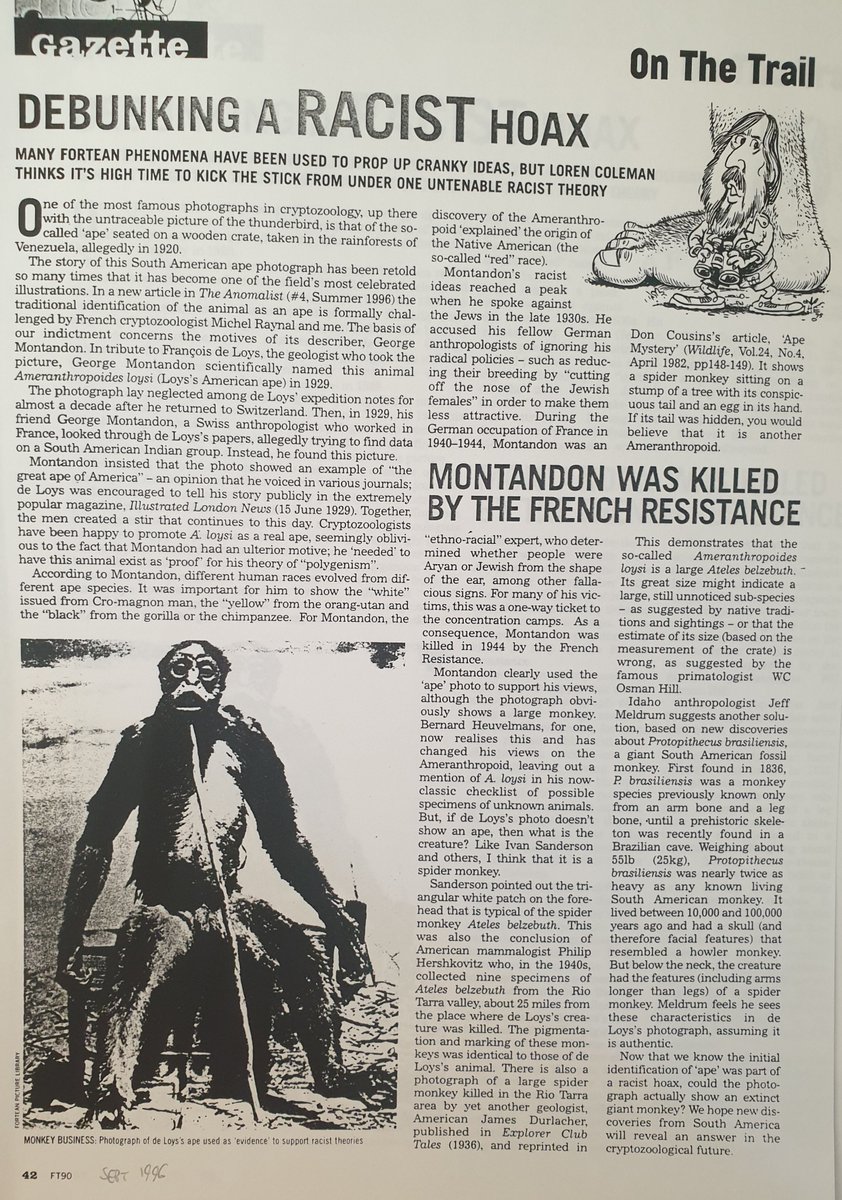
Montandon (the ameranthropoid’s namer, you’ll recall) was anti-Jewish and (prior to the discovery of de Loys ape) had already promoted a polyphyletic view of our species. This basically claimed that different peoples evolved, independently, from different non-human primates.
The one thing missing was a supposed ancestor for Amerindians, an ‘American human distribution gap’. De Loys ape – the ‘ameranthropoid’ – supposedly filled this gap and was thus used in a racist model.
Montandon was of course known for these strong racist views, and on August 3rd 1944 his house was attacked by the French Resistance. His wife was killed, and some sources say that he was too. However...
.... French author Louis-Ferdinand Celine stated that Montandon was only injured, transferred to Lariboisière Hospital, then to Karl-Weinrich-Kranhenhaus Hospital in Fulda, Germany, where he died on August 30th.
Was de Loys directly involved in Montandon’s racist, pseudoscientific use of the Venezuelan ‘ape’? Ultimately, we don’t know. In an article of November 1929, de Loys did refer to the racist idea that different groups of people had likenesses to different ape species...
.... and thus that humans were likely polyphyletic. But…
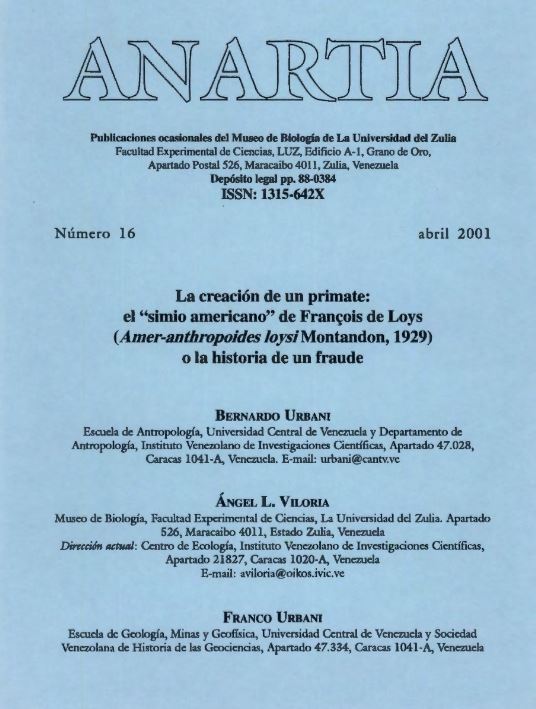
As revealed in Bernardo Urbani and Ángel Viloria’s 2008 book Ameranthropoides loysi Montandon 1929: The History of a Primatological Fraud (they also published a 2001 technical paper on the issue in the journal Anartia), there are numerous indications...

..... that de Loys had a sense of humour and they find it likely that the ‘ape’ story started out as a joke. Indeed, Urbani and Viloria point to the fact that a trained geologist would hardly photograph a supposedly remarkable animal without an unambiguous scalebar.
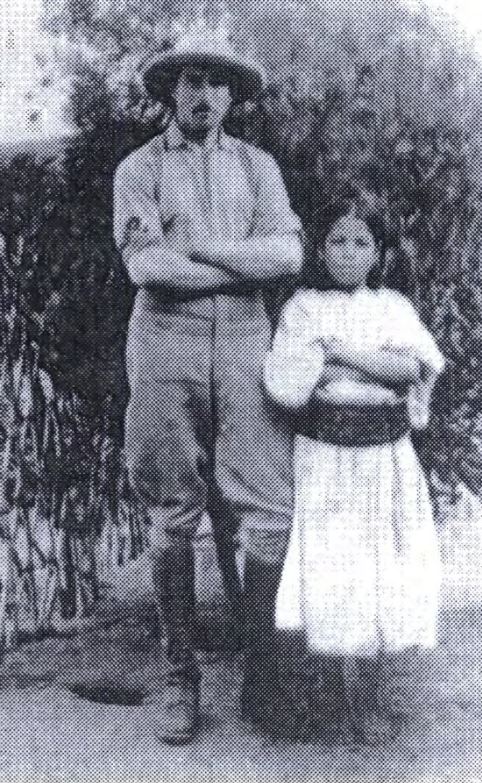
Urbani and Viloria also reveal that Venezuelan physician, academic and politician Enrique Tejera – a friend of de Loys – wrote a letter in 1962 in which he stated that the ‘ape’ was actually a pet spider monkey which de Loys had adopted and kept as a companion.
What appears to have happened is that things got out of hand once the discovery was embroiled within academic argument, and that de Loys – who became a respected petroleum geologist – was, by then, unable to back down and explain how it all started.
In the end, the view promoted by the people with the most substantial amount of experience with South American primates – that the ‘ape’ was no such thing but a known species of spider monkey...
... (most likely a Brown spider monkey; White-belled spider monkey has been considered likely as well [both forms have been considered subspecies of the same species at times]) – always did seen the most likely one, and also the least sensational.


It is important to point out, however, that the none of the cryptozoological writers who thought the ameranthropoid a new species did so with racist bias in mind, and in fact were mostly unaware of Montandon’s motivations until Coleman and Raynal drew attention to it in 1996.
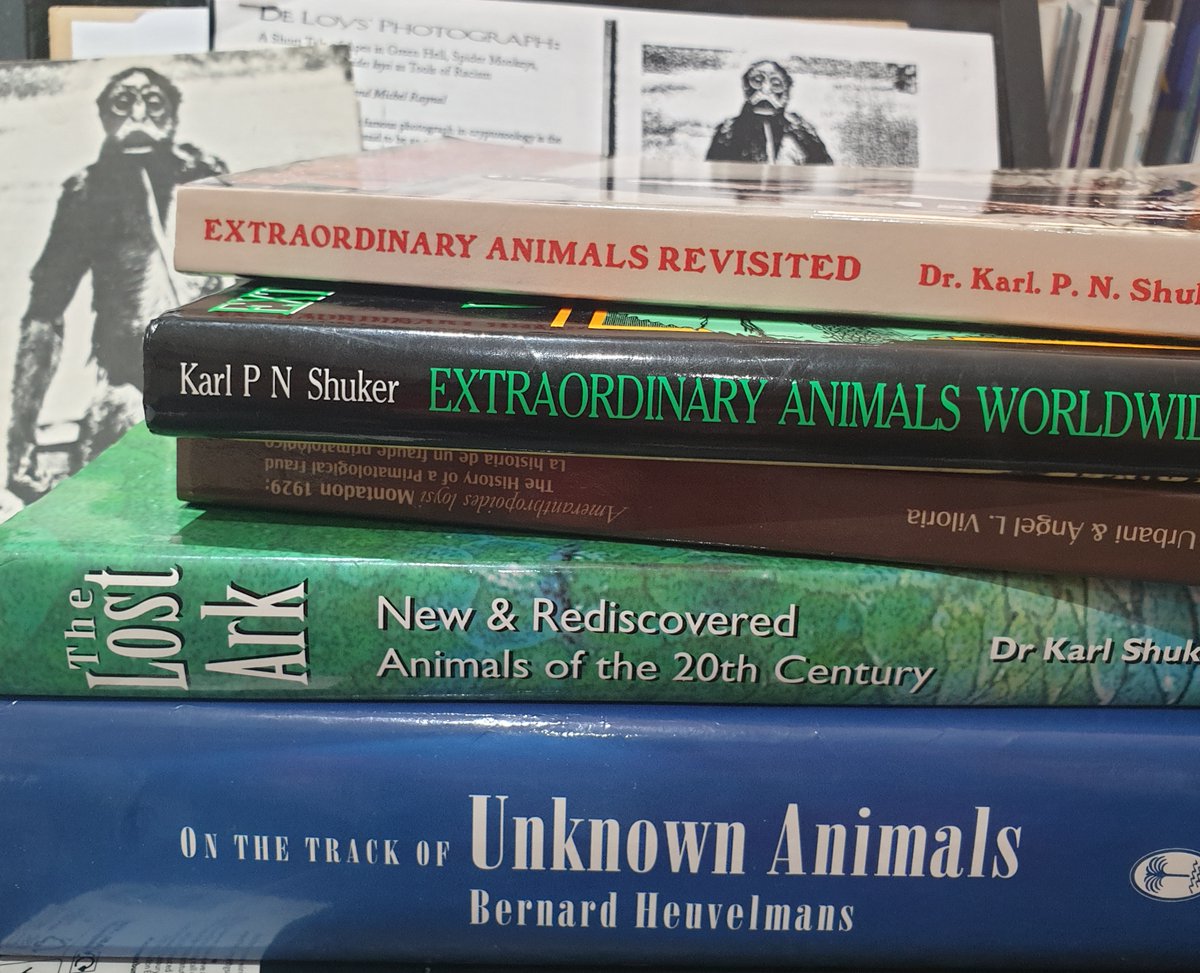
This thread is the culmination of the checking of numerous sources, including articles by @CryptoLoren & Raynal, the books of Heuvelmans, Shuker, and Urbani & Viloria. Buy their books for fuller discussion and more detail! And thanks for reading. #cryptozoology #primates #mammals
Typo early on in thread: "In reality: no such renaming is allowed under the official naming names for animals..." should say "official code for naming animals"!
Loading suggestions...