

💡What is first aid?
• Is the immediate care given
to an injured or suddenly ill
person.
• Is the immediate care given
to an injured or suddenly ill
person.
طيب ليش انا بحاجة لمعرفة هذا الموضوع 🤔؟ عشان اكون جاهز لأي حاله طارئه ممكن أواجهها .
-كيف اقوم ببدأ تقديم المساعدة ؟ لازم اكون على علم بخطورته و حاله المريض اللي قدامي و بناءً عليه ابدا بمساعده المرضى.
-كيف اقوم ببدأ تقديم المساعدة ؟ لازم اكون على علم بخطورته و حاله المريض اللي قدامي و بناءً عليه ابدا بمساعده المرضى.
❇️Initial Assessment
• Assess consciousness ABC
• Check ABC (Airway ,Breathing ,Circulation)
• Check victim's head,neck, arms, legs, chest,
and stomach for DOTS (Deformity, Open wounds, Tenderness, Swelling)
• Look for medical
• Assess consciousness ABC
• Check ABC (Airway ,Breathing ,Circulation)
• Check victim's head,neck, arms, legs, chest,
and stomach for DOTS (Deformity, Open wounds, Tenderness, Swelling)
• Look for medical
طيب بصفتي ممرضه ايش هي الاشياء اللي ممكن تواجها وايش هيه اعراضها و طرق علاجها 🤔؟
1- Bleeding(Is the escape of blood from blood vessels)
ايش انواعة ؟
❇️- Internal bleeding: a closed wound results when a blunt object does not break the skin, but tissue and blood vessels beneath the skin’s surface are crushed
ايش انواعة ؟
❇️- Internal bleeding: a closed wound results when a blunt object does not break the skin, but tissue and blood vessels beneath the skin’s surface are crushed
❇️-External bleeding:when the blood can be seen coming from an open wound(haemorrhage)there are types of external bleeding :
* Capillary bleeding:ooze slowly from the wound
* Venous bleeding: flows steadily, easier to control than the arterial, dark red
* Capillary bleeding:ooze slowly from the wound
* Venous bleeding: flows steadily, easier to control than the arterial, dark red
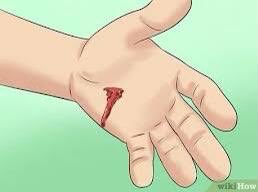
* Arterial bleeding: spurts with each heart beat, difficult to control, bright red.
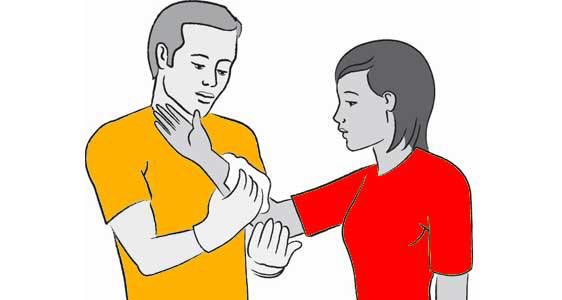
💡First Aid: External Bleeding
1.Put on gloves
2.Irrigate superficial wound with
clean water
3.Apply direct and continuous
pressure using gauze
4.Apply pressure bandage over
the gauze
5.If the bleeding continues,do
not remove the gauze،put
another gauze and continue
pressure
1.Put on gloves
2.Irrigate superficial wound with
clean water
3.Apply direct and continuous
pressure using gauze
4.Apply pressure bandage over
the gauze
5.If the bleeding continues,do
not remove the gauze،put
another gauze and continue
pressure
❇️first Aid (Internal Bleeding) :
1. Apply ice/cold pack over the injured area for 20 minutes
2. Compress the injured area with elastic bandage
3. Transfer to ER
1. Apply ice/cold pack over the injured area for 20 minutes
2. Compress the injured area with elastic bandage
3. Transfer to ER
2- Shock : Shock is a condition of profound hemodynamic and metabolic disturbance characterized by inadequate tissue perfusion (the body's inability to meet tissue demand for oxygen)
ايش انواعه مع الاسباب ؟
• Hypovolemic: fluid loss
• Cardiogenic: cardiac causes
• Septic: infection
• Anaphylactic: allergic reaction
• Neurogenic: pain
• Hypovolemic: fluid loss
• Cardiogenic: cardiac causes
• Septic: infection
• Anaphylactic: allergic reaction
• Neurogenic: pain
ايش الأعراض 🤔؟
Altered mental status
• Confusion
• Restlessness
• Pale, cold and clammy skin,
lips and nail beds
• Nausea and vomiting
• Rapid breathing
• Unresponsiveness
• Tachycardia (weak rapid
pulse)
• Hypotension
Altered mental status
• Confusion
• Restlessness
• Pale, cold and clammy skin,
lips and nail beds
• Nausea and vomiting
• Rapid breathing
• Unresponsiveness
• Tachycardia (weak rapid
pulse)
• Hypotension
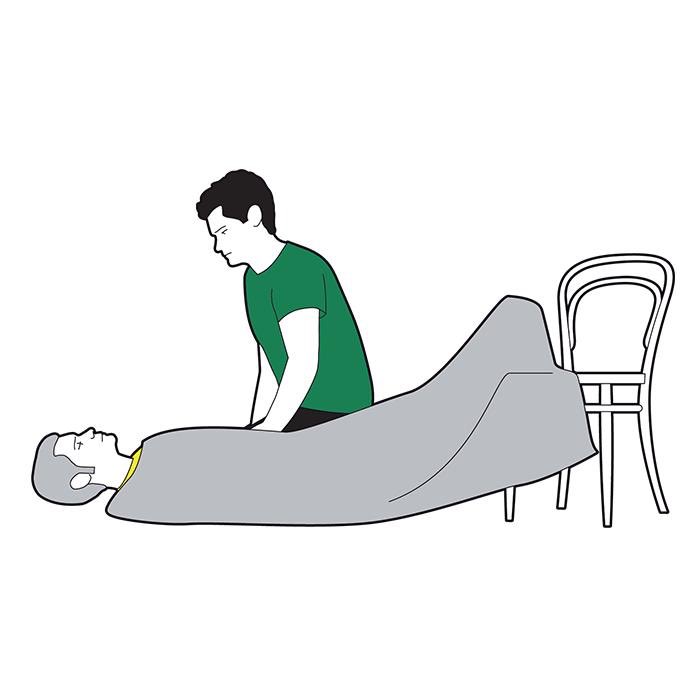
💡First Aid: (shock)
• Have the victim lie supine. If
there is no evidence of
trauma or injury, raise the
feet about 6 to 12 inches (
about 30° to 45°).
• Do not raise the feet if the
movement or the position
causes the victim any pain.
• Replace fluids
• Transfer to ER
• Have the victim lie supine. If
there is no evidence of
trauma or injury, raise the
feet about 6 to 12 inches (
about 30° to 45°).
• Do not raise the feet if the
movement or the position
causes the victim any pain.
• Replace fluids
• Transfer to ER
3- Heart Attack & Cardiac Arrest:
• A heart attack occurs when the heart muscle tissue dies because it’s blood supply is reduced or stopped due to a clot.
• The heart stops if the electrical system of the heart is affected.
• A heart attack occurs when the heart muscle tissue dies because it’s blood supply is reduced or stopped due to a clot.
• The heart stops if the electrical system of the heart is affected.
ايش هي الاعراض ؟
• Sudden acute chest pain radiating to the left arm, jaw bone, neck or back
• Shortness of breath
• Dizziness
• Sweating
• Nausea
• Unconsciousness if cardiac arrest develops
• Sudden acute chest pain radiating to the left arm, jaw bone, neck or back
• Shortness of breath
• Dizziness
• Sweating
• Nausea
• Unconsciousness if cardiac arrest develops
💡First aid:
• Confirm the diagnosis and call for help
• Check chest movement
• Call for help
• Check carotid pulse
• Start CPR if needed
• Confirm the diagnosis and call for help
• Check chest movement
• Call for help
• Check carotid pulse
• Start CPR if needed
• Deliver chest compressions:
100/1 minute(30 compressions)
• Open airway
• Give 1 breaths,watch for chest rise
• Give 1 breaths,watch for chest rise
100/1 minute(30 compressions)
• Open airway
• Give 1 breaths,watch for chest rise
• Give 1 breaths,watch for chest rise
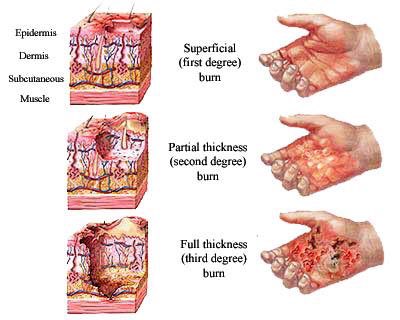
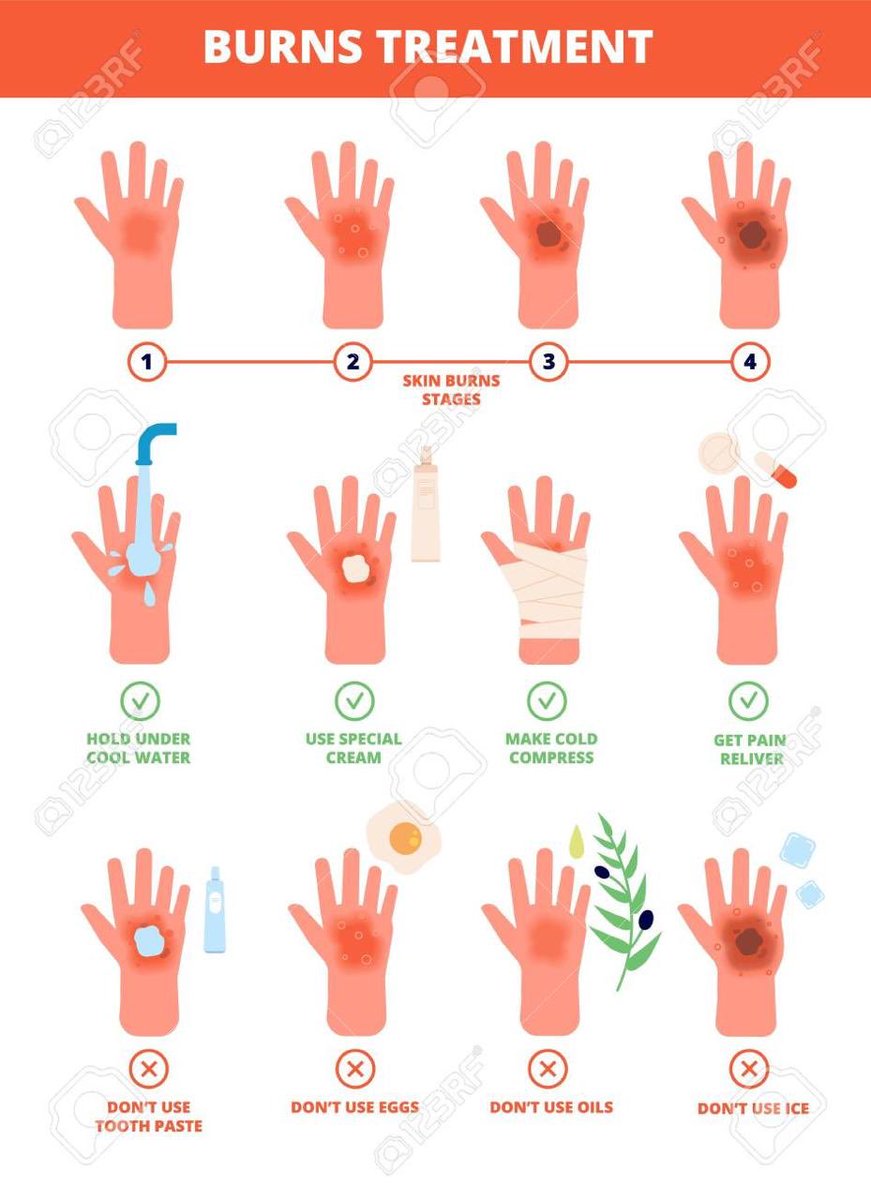
❇️4- Burn :is injuries resulting from exposure to heat, chemicals, electricity or radiation.
ايش هي أنواعه؟🤔
First degree — injury localized to the epidermis
Superficial second degree — injury to the epidermis and superficial dermis
Deep second degree — injury through the epidermis and deep into the dermis .
First degree — injury localized to the epidermis
Superficial second degree — injury to the epidermis and superficial dermis
Deep second degree — injury through the epidermis and deep into the dermis .
Third degree — full-thickness injury through the epidermis and dermis into subcutaneous fat
Fourth degree — injury through the skin and subcutaneous fat into underlying muscle or bone
Fourth degree — injury through the skin and subcutaneous fat into underlying muscle or bone
💡First Aid :
Thermal burn:
• Cool thermal burns with cold (15° to 25°C)tap
water as soon as possible and continue cooling
at least until pain is relieved
• Remove clothes in contact with the burnt area
• Don not apply ice directly to a burn; it can
produce tissue ischemia
Thermal burn:
• Cool thermal burns with cold (15° to 25°C)tap
water as soon as possible and continue cooling
at least until pain is relieved
• Remove clothes in contact with the burnt area
• Don not apply ice directly to a burn; it can
produce tissue ischemia
• Cover with gauze until transfer to ER
Burn blisters:
• Loosely cover burn blisters with a sterile
dressing but leave blisters intact
Burn blisters:
• Loosely cover burn blisters with a sterile
dressing but leave blisters intact
Chemical burn:
▪ Brush powdered chemicals off the skin ▪ Remove all contaminated clothing from the victim ▪ Removes rings, bracelet and watch ▪ Irrigate the affected area with copious amounts of water
▪ Brush powdered chemicals off the skin ▪ Remove all contaminated clothing from the victim ▪ Removes rings, bracelet and watch ▪ Irrigate the affected area with copious amounts of water
5-heat stroke :A condition marked by fever and often by unconsciousness, caused by failure of the body's temperature- regulating mechanism when exposed to excessively high temperatures.
Manifestations:
• Skin: red, flushed, hot, dry skin no diaphoresis
• Central nervous :system: dizziness, syncope, confusion, or seizures
• Skin: red, flushed, hot, dry skin no diaphoresis
• Central nervous :system: dizziness, syncope, confusion, or seizures
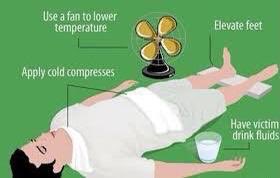
💡First Aid
• Reduce body temperature
o Remove clothing
o Immerse the victim
up to the chin in
cold water
o Use fan to cool
victim
• Assess vital signs
• Reduce body temperature
o Remove clothing
o Immerse the victim
up to the chin in
cold water
o Use fan to cool
victim
• Assess vital signs
6- Sprain and Strain:
strain: injury to a muscle or tendon caused by overuse or overstretching
Sprain: injury to ligaments surrounding a joint caused by sudden twist, wrench or fall.
strain: injury to a muscle or tendon caused by overuse or overstretching
Sprain: injury to ligaments surrounding a joint caused by sudden twist, wrench or fall.
Manifestation:
Strain: Strain:: • Sudden severe pain • Stiffness • Sore
Sprain: • Pain • Oedema • Loss of motion • Ecchymosis
Strain: Strain:: • Sudden severe pain • Stiffness • Sore
Sprain: • Pain • Oedema • Loss of motion • Ecchymosis
💡First Aid (sprain and strain)
• Sprain
1. Immobilise affected part
2. Cold compresses
• Strain
1. Rest
2. Ice compression
3. Elevate the affected part
• Sprain
1. Immobilise affected part
2. Cold compresses
• Strain
1. Rest
2. Ice compression
3. Elevate the affected part
❇️General guidelines for cold applications:
•Cool injured part with a plastic bag or damp cloth filled with a mixture of ice and water
• Limit each application of cold to periods ≤20 minutes
• Place a barrier, such as a thin towel, between the cold container and the skin
•Cool injured part with a plastic bag or damp cloth filled with a mixture of ice and water
• Limit each application of cold to periods ≤20 minutes
• Place a barrier, such as a thin towel, between the cold container and the skin
Done by:@bayan_bader9
Loading suggestions...