

Representations of Ganesha beyond India
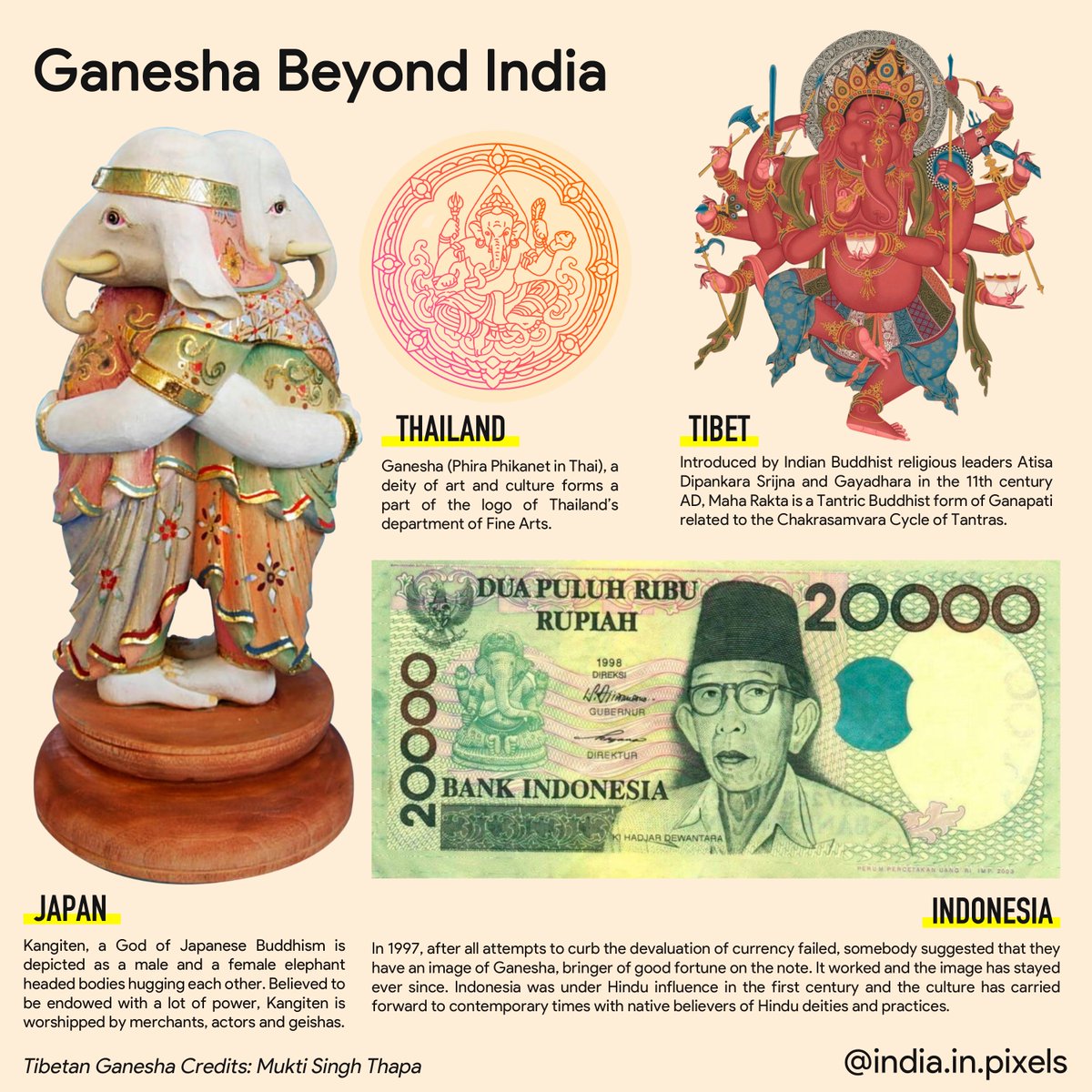
According to Adi Shankaracharya, like the Shaiva, Vaishnava and Shakta tradition in India, there also was a Ganapatya tradition. In this branch of Hinduism, people knew God through Ganesha.
After Chhatrapati Shivaji Maharaj, the Peshwas came to power in Maharashtra and were mainly responsible for the popularity of Ganesha worship as their ishta-dev. While Ganesha is mentioned in the Vedas, it was Puranic times when the deity gained popularity.
According to Devdutt Pattnaik, Ganesha unites the Shaiva and Shakta traditions. Because of Ganesha, the ugra, terrifying Kali becomes the maternal, domestic Gauri and the sanyasi Shiva becomes a father and a grihasta Bholenath. Ganesha, therefore is the God domestic life.
Ganesha’s uniqueness lies in the fact that reverence for him spreads across all castes and regions. He is one of the few Hindu Gods whose presence can be felt outside India, particularly in the countries near India such as Tibet, China, Japan and many others in Southeast Asia.
Lord Ganesha is associated with an entrepreneurial spirit and the spread of his popularity outside of India is attributed to the commercial contact between the country with its neighbours which resulted in the spread of Hinduism, Buddhism and Jainism in other Asian cultures.
The story about Indonesian note is based on an anecdote shared by @Swamy39 freepressjournal.in
Loading suggestions...