

2)
Before deep dive, lets ask a simple question with ourselves ->
Why do businesses borrow in Ist place❓
Ans - They need Capital for 1000's of business purposes but ultimate goal of all purposes is to Grow business itself.
Business growth simply means Revenue/Sales Growth.
Before deep dive, lets ask a simple question with ourselves ->
Why do businesses borrow in Ist place❓
Ans - They need Capital for 1000's of business purposes but ultimate goal of all purposes is to Grow business itself.
Business growth simply means Revenue/Sales Growth.
3)
Common sense - If a Company borrows capital but unable to grow it's Sales & Profits it should be Avoided.
There could be several reasons for this-
Bad Business environment
Govt/Regulatory hurdles
Bad Capital Allocation
Competition
Inefficient Management etc
Common sense - If a Company borrows capital but unable to grow it's Sales & Profits it should be Avoided.
There could be several reasons for this-
Bad Business environment
Govt/Regulatory hurdles
Bad Capital Allocation
Competition
Inefficient Management etc
4)
Common sense - If Company borrows money & able to considerable grow Sales & Profits it could be considered for Investment.
Time Frame is important. Debt is utilized over a period of time so Business growth should be measured over 5 to 10 yrs time-frame.
Common sense - If Company borrows money & able to considerable grow Sales & Profits it could be considered for Investment.
Time Frame is important. Debt is utilized over a period of time so Business growth should be measured over 5 to 10 yrs time-frame.
5)
📌Correlation between Debt & Sales
Is just growing Sales enough ?
NO
📌Check Debt growth & Sales growth over 5 to 10 yrs
📌Consider businesses where Sales growth has been substantially (read multiple times) higher than Debt growth.
📌Correlation between Debt & Sales
Is just growing Sales enough ?
NO
📌Check Debt growth & Sales growth over 5 to 10 yrs
📌Consider businesses where Sales growth has been substantially (read multiple times) higher than Debt growth.
6)
📌Cost of Capital
It simply means Cost of Company's fund which includes both Debt & Equity (including preferential).
If company doesn't get Return on Capital greater than Cost of Capital consistently over a period of time it could be a trap. Please avoid it.
📌Cost of Capital
It simply means Cost of Company's fund which includes both Debt & Equity (including preferential).
If company doesn't get Return on Capital greater than Cost of Capital consistently over a period of time it could be a trap. Please avoid it.
7)
📌Solvency
Avoid companies with likely Solvency issues which can be gauged from Interest Coverage Ratio & Altman Z-score.
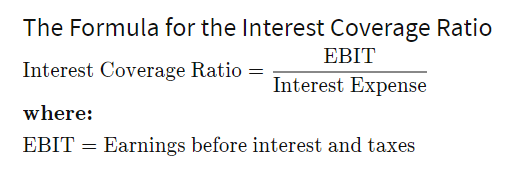
Interest Coverage Ratio determines if company is in comfortable position to pay it's Interest on Debt
ICR = EBIT/Interest. Avoid score below 3.
📌Solvency
Avoid companies with likely Solvency issues which can be gauged from Interest Coverage Ratio & Altman Z-score.
Interest Coverage Ratio determines if company is in comfortable position to pay it's Interest on Debt
ICR = EBIT/Interest. Avoid score below 3.
8)
📌Altman Z-score
Credit-strength test, accounts for profitability, leverage, liquidity, solvency and activity ratios.
Basically how to avoid likely bankrupt companies.
<1.8 is likely bankruptcy. Avoid it.
1.8 to 2.5 still not out of wood.
>2.5. I prefer this.
📌Altman Z-score
Credit-strength test, accounts for profitability, leverage, liquidity, solvency and activity ratios.
Basically how to avoid likely bankrupt companies.
<1.8 is likely bankruptcy. Avoid it.
1.8 to 2.5 still not out of wood.
>2.5. I prefer this.

9)
📌Liquidity
Current Ratio - most widely used
Quick Ratio
It's good if both >=1.
I mostly use Current Ratio because of business dynamics it makes more sense, Quick Ratio feels little too strict.
📌Liquidity
Current Ratio - most widely used
Quick Ratio
It's good if both >=1.
I mostly use Current Ratio because of business dynamics it makes more sense, Quick Ratio feels little too strict.


10)
Contingent Liabilities
In few cases Contingent Liabilities are very high. It may come to bite in future. It's good to keep an eye on it.
You may add it to Debt while calculating Debt to Equity just for safe side.
For now I would treat it as optional.
Contingent Liabilities
In few cases Contingent Liabilities are very high. It may come to bite in future. It's good to keep an eye on it.
You may add it to Debt while calculating Debt to Equity just for safe side.
For now I would treat it as optional.
11) So I would invest in a High Debt or Leveraged Company only if
~ Sales Increase > Debt Increase (Multiple times)
~ Cost of Capital (WACC) > ROCE & ROIC
~ Interest Coverage Ratio > 3
~ Altman Z-Score > 2.5
~ Current Ratio > 1
Any one criteria missing, I would STAY AWAY.
~ Sales Increase > Debt Increase (Multiple times)
~ Cost of Capital (WACC) > ROCE & ROIC
~ Interest Coverage Ratio > 3
~ Altman Z-Score > 2.5
~ Current Ratio > 1
Any one criteria missing, I would STAY AWAY.
12) Let's understand this with few examples
📌Sterlite Technologies D/E = 1.34
Avoid for me ->
~ 10yr Sales growth ÷ 10yr Debt growth < 3
~ Interest Coverage Ratio < 3
~ Altman Z-score < 2.5
📌Sterlite Technologies D/E = 1.34
Avoid for me ->
~ 10yr Sales growth ÷ 10yr Debt growth < 3
~ Interest Coverage Ratio < 3
~ Altman Z-score < 2.5

13)
📌Bharti Airtel D/E = 1.92
Avoid for me -> Failed on ALL
Did you notice -ive Sales (Yes Sales declined from what was 10yrs ago) ❓
People may give me hard time (about 2 player & future hopes) but that's OK.
I look for Strong Business then do Hope not other way round.
📌Bharti Airtel D/E = 1.92
Avoid for me -> Failed on ALL
Did you notice -ive Sales (Yes Sales declined from what was 10yrs ago) ❓
People may give me hard time (about 2 player & future hopes) but that's OK.
I look for Strong Business then do Hope not other way round.

14)
📌Deepak Nitrite
Pass on ALL Parameters.
It was debt free company 10yrs ago. Took Debt. Grew Sales by more than 3 times its Debt increase in last 10yrs.
Maintained it's ROCE/ROIC substantial above Cost of Capital.
Awesome Ratios.
Result 43.33% Stock CAGR.👏
📌Deepak Nitrite
Pass on ALL Parameters.
It was debt free company 10yrs ago. Took Debt. Grew Sales by more than 3 times its Debt increase in last 10yrs.
Maintained it's ROCE/ROIC substantial above Cost of Capital.
Awesome Ratios.
Result 43.33% Stock CAGR.👏

Correction !
~ ROCE & ROIC > Cost of Capital (WACC)
~ ROCE & ROIC > Cost of Capital (WACC)
Loading suggestions...