

Qur’anic Surah Ikhlas (No 112)
universalises correct monotheistic creed on God by providing a counter-text to two powerful earlier credal texts of Jews and Christians as well as to the pagan Arabs.
Thread>
universalises correct monotheistic creed on God by providing a counter-text to two powerful earlier credal texts of Jews and Christians as well as to the pagan Arabs.
Thread>
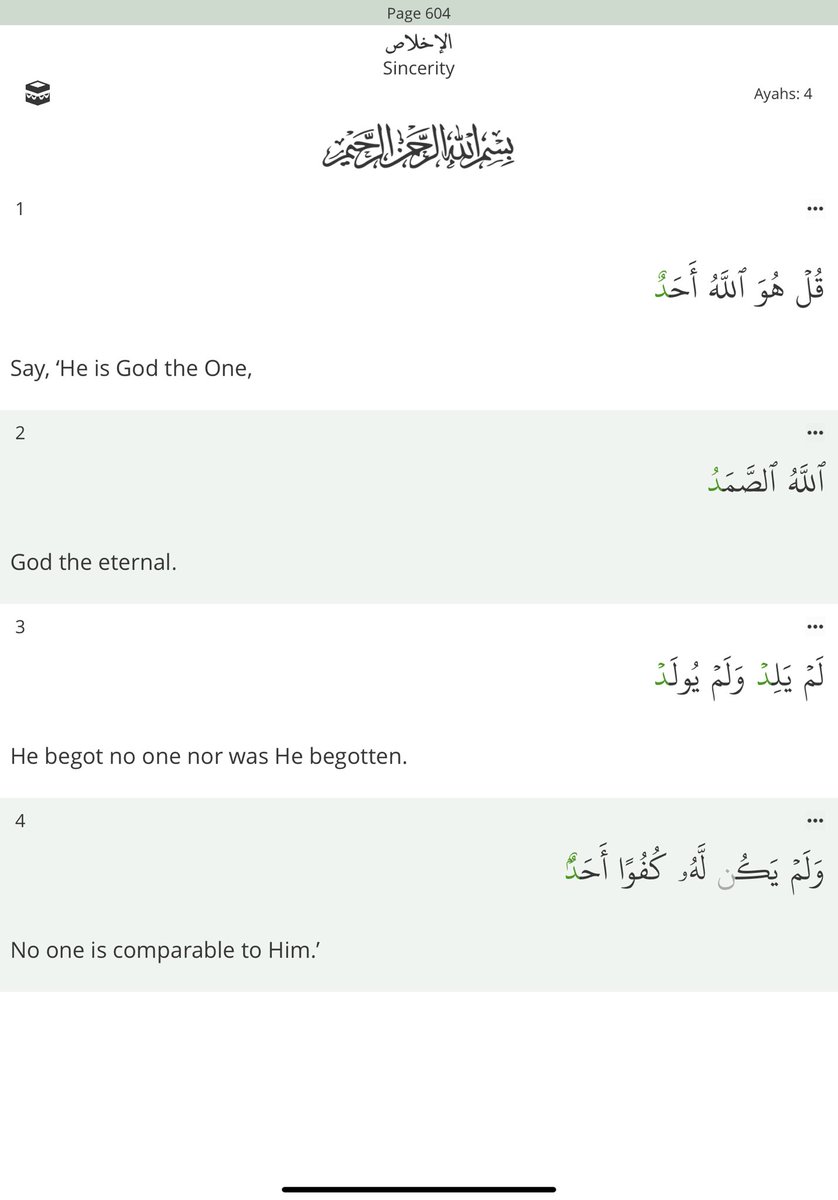
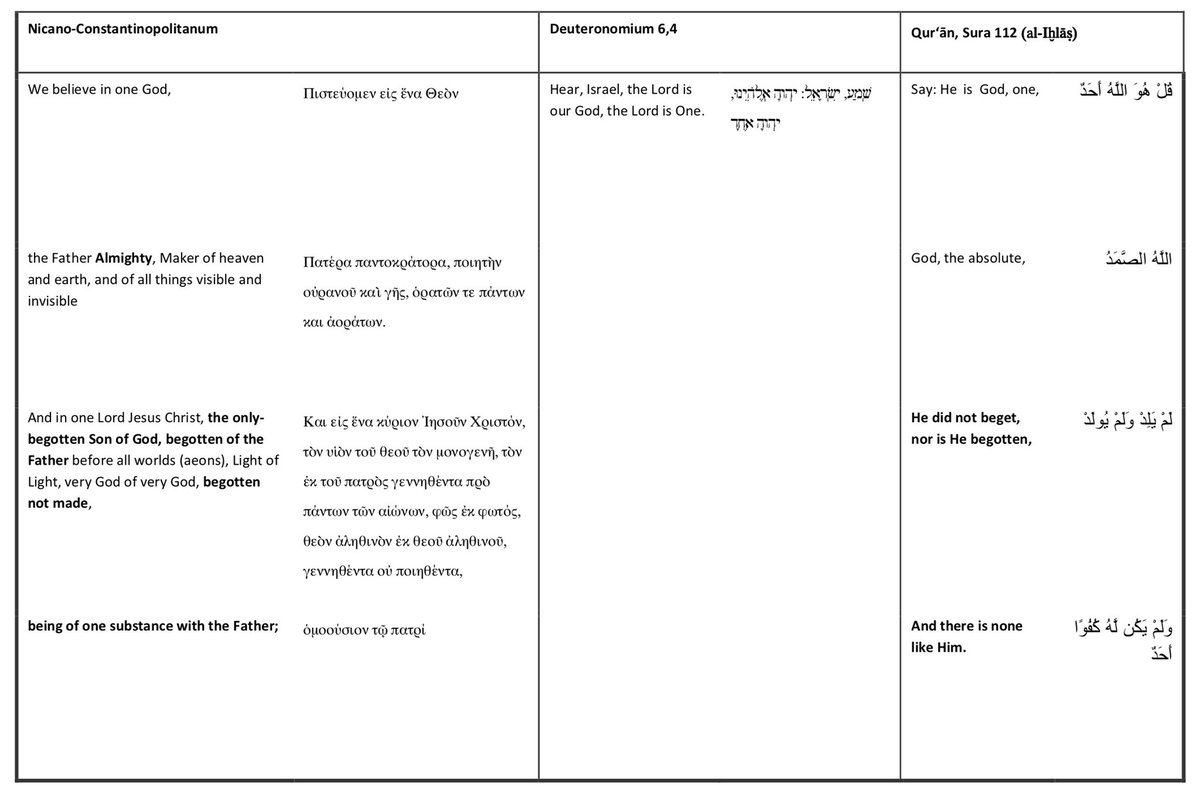
Ayah 1.
Echoing and universalising Jewish creed “Shema’ Isrā’ēl, adōnay ēlōhēnū adōnay ehad” (‘Hear Israel, the Lord, our God, is One’). From Israel to everyone: ‘Say, God, He is ahad (One)’ employing a vital exegetical correction beyond conventional grammatical norm-
Echoing and universalising Jewish creed “Shema’ Isrā’ēl, adōnay ēlōhēnū adōnay ehad” (‘Hear Israel, the Lord, our God, is One’). From Israel to everyone: ‘Say, God, He is ahad (One)’ employing a vital exegetical correction beyond conventional grammatical norm-
-an adjective ‘ahad’ instead of noun ‘wāhid’, thus silencing the Arabs too from imitating Qur’anic usage of language.
Ayah 2.
God is as-Samad (independent, self-sufficient, eternal, absolute). God’s absolute oneness is further elaborated through His aseity. The uncaused cause.
God is as-Samad (independent, self-sufficient, eternal, absolute). God’s absolute oneness is further elaborated through His aseity. The uncaused cause.
Ayah 3.
Using reverse echo of Nicene creed, rejecting the emphatic affirmation of Christ’s sonship- begotten, not made (gennêthenta, ou poiêthenta) or fatherhood alike by a double negation: lam yalid wa lam yūlad (He did not beget nor is He begotten).
Using reverse echo of Nicene creed, rejecting the emphatic affirmation of Christ’s sonship- begotten, not made (gennêthenta, ou poiêthenta) or fatherhood alike by a double negation: lam yalid wa lam yūlad (He did not beget nor is He begotten).
Ayah 4. ‘No one is comparable to Him’. Inverting the Nicene formula of Christ’s being of one substance with the Father- homoousios to patri-with an universal negation: there is no way to think of a being equal in rank with God either in substance or in nature, let alone a son.
This Surah establishes God alone is self-sufficient, which is an essential attribute of the True God. At the same time, it negates divinity of Christ and the Holy Spirit, as both are caused by the Father, and have contingent existence.
Noted from Angelika Neuwirth, Oral Tradition, 25/1 (2010): 141-156
Loading suggestions...