
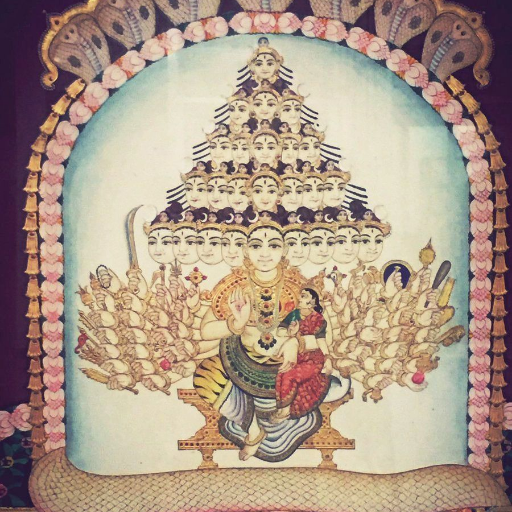
mūḍhānāṃ jyeṣṭhamallāste yeṣāṃ svātmā'pi naśyati |
मूढानां ज्येष्ठमल्लास्ते येषां स्वात्माऽपि नश्यति |
“mūḍhānāṃ jyeṣṭhamallāḥ” 🙂
The champion wrestlers among the fools are those whose own selves are destroyed [in their conception of मुक्ति].
-भगवान्-सद्योज्योति
मूढानां ज्येष्ठमल्लास्ते येषां स्वात्माऽपि नश्यति |
“mūḍhānāṃ jyeṣṭhamallāḥ” 🙂
The champion wrestlers among the fools are those whose own selves are destroyed [in their conception of मुक्ति].
-भगवान्-सद्योज्योति
Now, destruction of the ātmā is not limited to its literal meaning - the destruction of the self, the subject, the entity that knows & acts. The materialist schools believe in this.
It is also a figurative reference to any system that effectively “kills off” the ātmā. How?
It is also a figurative reference to any system that effectively “kills off” the ātmā. How?
भगवान्-रामकण्ठ comments:
ज्ञातुर्ज्ञेयस्य वा ज्ञप्तेरभावात् सर्ववादिनाम्। आत्मनाशसमो मोक्षो ज्ञत्वव्यक्तौ परत्र तु॥
What does this mean? Let us go through some basic jargon before we translate this.
ज्ञातुर्ज्ञेयस्य वा ज्ञप्तेरभावात् सर्ववादिनाम्। आत्मनाशसमो मोक्षो ज्ञत्वव्यक्तौ परत्र तु॥
What does this mean? Let us go through some basic jargon before we translate this.
In every act of knowing an object, there are 3 basic elements:
1. The knower/cognizer (ज्ञातृ), one who knows
2. The known (ज्ञेय), an object of knowledge/cognition
3. The knowledge/cognition (ज्ञान/ज्ञाप्ति)
This itself is not difficult to understand, right?
1. The knower/cognizer (ज्ञातृ), one who knows
2. The known (ज्ञेय), an object of knowledge/cognition
3. The knowledge/cognition (ज्ञान/ज्ञाप्ति)
This itself is not difficult to understand, right?
Killing off No.1:
Now, there are some systems which kill off the ज्ञातृ in their conception of the highest end. This is literally the “destruction of the self” (आत्मनाश) that we discussed above.++
Now, there are some systems which kill off the ज्ञातृ in their conception of the highest end. This is literally the “destruction of the self” (आत्मनाश) that we discussed above.++
These systems kill off the knower, cognizer in one way or another. The चार्वाक-s & बौद्ध-s both reject the existence of the आत्मा. The बौद्ध-s are अनात्मवादी-s, who reject the existence of any permanent cognizer such as an आत्मा.
Killing off No.2:
Now, there are others who deny the existence of any ज्ञेय, any object of cognition in the highest state conceivable in their system.
Now, there are others who deny the existence of any ज्ञेय, any object of cognition in the highest state conceivable in their system.
An example would be the योगचार-बौद्ध-s, who affirm the existence of cognitions but deny that any objects of cognition actually exist.
Being unable to cognize nothing
Killing off No.3:
There are still others like the वैशेषिक-s who deny that any ज्ञान/ज्ञाप्ति (cognition) happens in the highest state of the soul.
There are still others like the वैशेषिक-s who deny that any ज्ञान/ज्ञाप्ति (cognition) happens in the highest state of the soul.
ज्ञातुर्ज्ञेयस्य वा ज्ञप्तेरभावात् सर्ववादिनाम्। आत्मनाशसमो मोक्षो ज्ञत्वव्यक्तौ परत्र तु॥
Now, let us translate this:
Now, let us translate this:
Of ज्ञातृ (ज्ञातुः), of ज्ञेय (ज्ञेयस्य), or of ज्ञाप्ति (ज्ञाप्तेः), from [their] absence (अभावात्), for all the exponents (सर्ववादिनाम्) outside [our own doctrine of] the manifestation of [all] ज्ञान, their मोक्ष is same as the destruction of the self (आत्मनाशसमः)
A key emphasis of the सिद्धान्त is that it emphasises on the nature of soul as knower & actor. Liberation is where these powers are freed from any limitations & made fully manifest in the soul; not suffer further reduction.
If one cannot know any real objects, what use is that power of knowing? If one does not have even this power of knowing, how can he be a knower, an aspect so critical to the definition of a conscious entity?
Thus, those whose conceptions of मुक्ति involve the denial of 1 or more of the 3 elements (ज्ञातृ, ज्ञेय & ज्ञाप्ति); they are indeed fooling themselves & are indeed the champions among fools, says भगवान्-सद्योज्योति.
Loading suggestions...