

Even after repeated plunder of the region and barbarians’ rule for centuries, Mathura or the region of Braj continued to assert its Hindu identity and retained its native culture, as can be gauged from these excerpts which are from F.S. Growse’s Mathura - A District Memoir

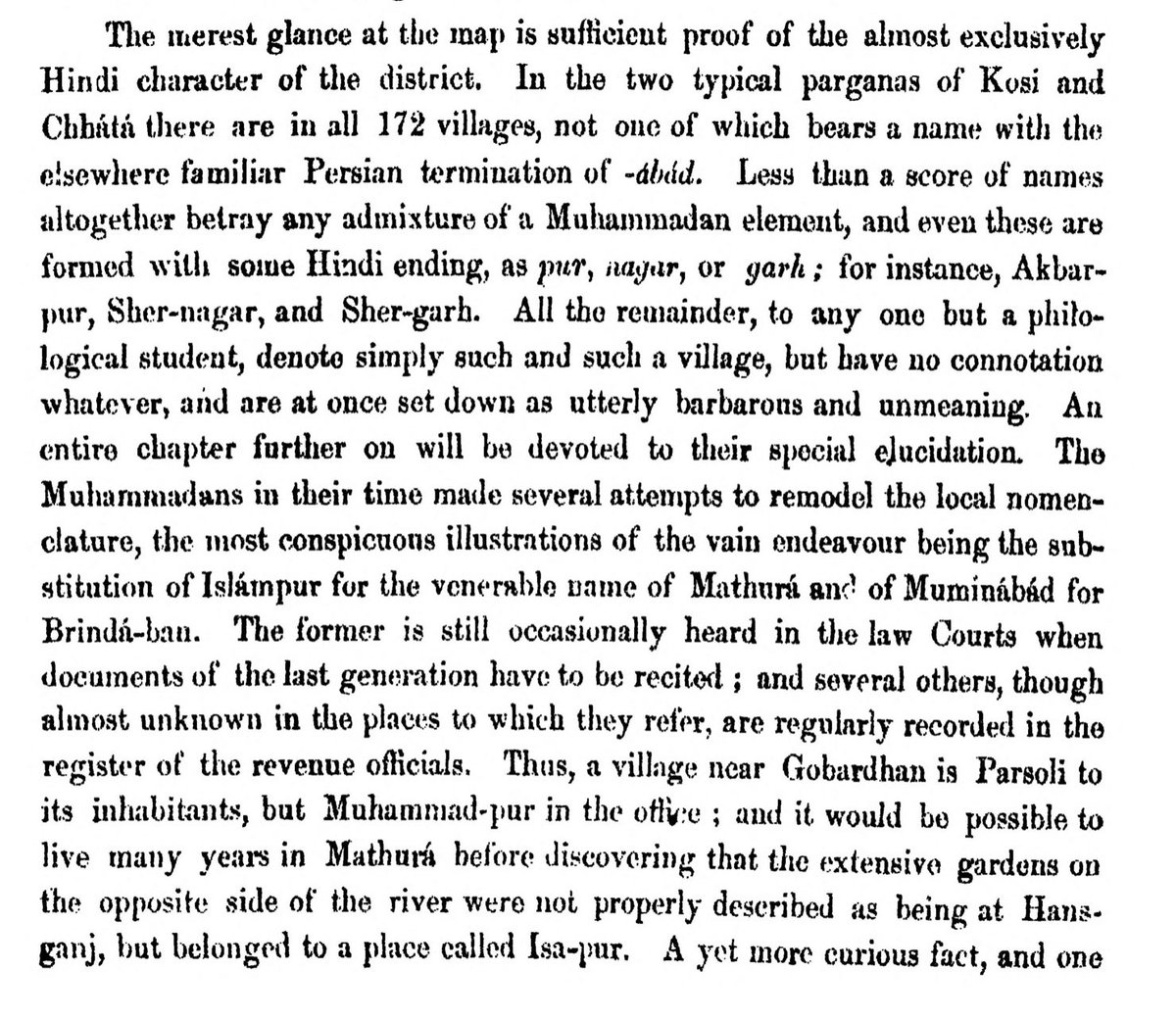
written in late 19th cent’
“As might be expected from the almost total absence of the Muhammadan element in the population, the language of the people, as distinct from that of the official classes is purely Hindi. In ordinary speech water is ‘jal’;land is ‘dharti’;father ‘pita’”
“As might be expected from the almost total absence of the Muhammadan element in the population, the language of the people, as distinct from that of the official classes is purely Hindi. In ordinary speech water is ‘jal’;land is ‘dharti’;father ‘pita’”
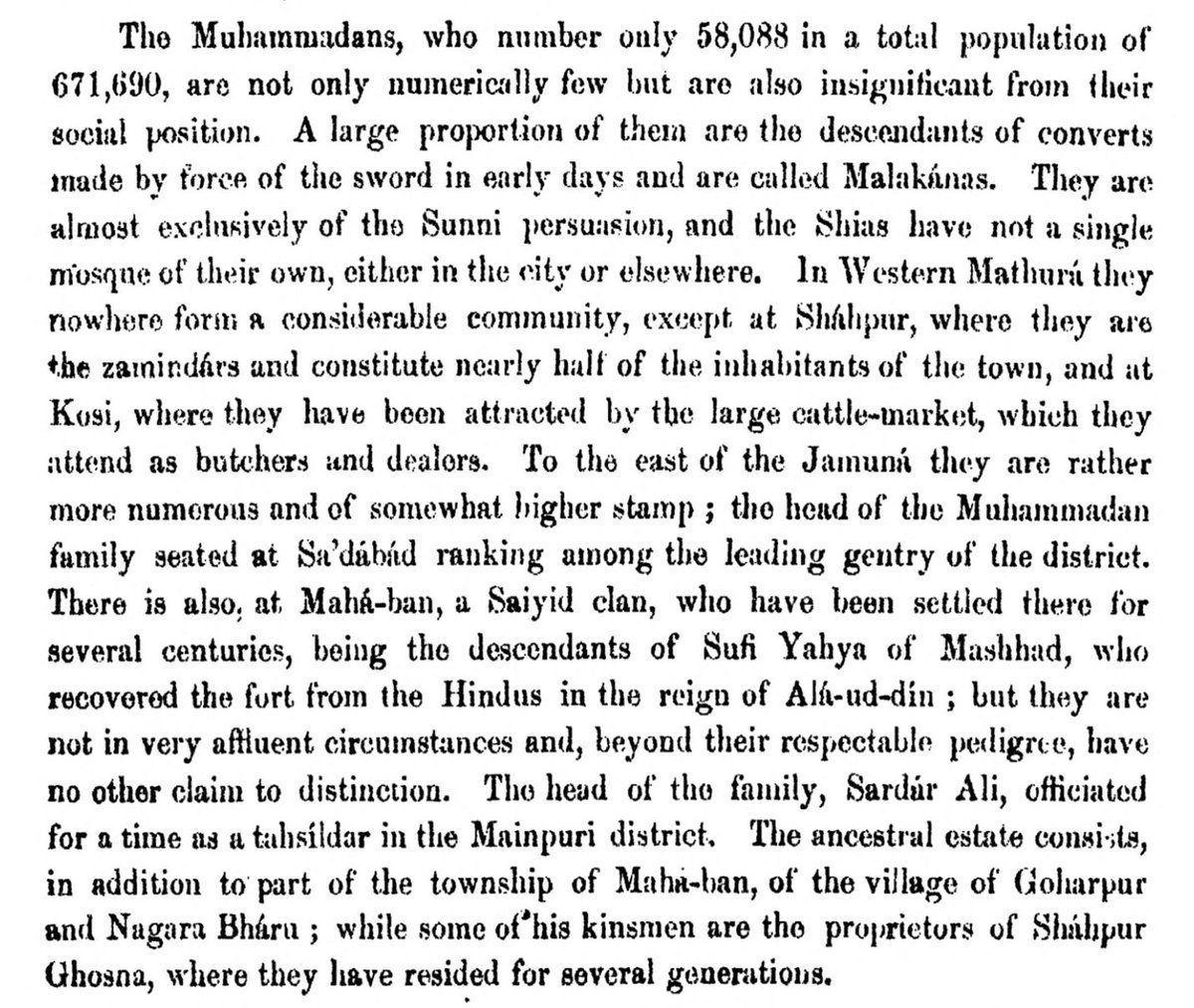
In late 19th century, Muhammadans numbered a mere 8% of the total population of Mathura district.
“A large proportion of them are the descendants of converts...exclusively of the Sunni persuasion...”
“A large proportion of them are the descendants of converts...exclusively of the Sunni persuasion...”
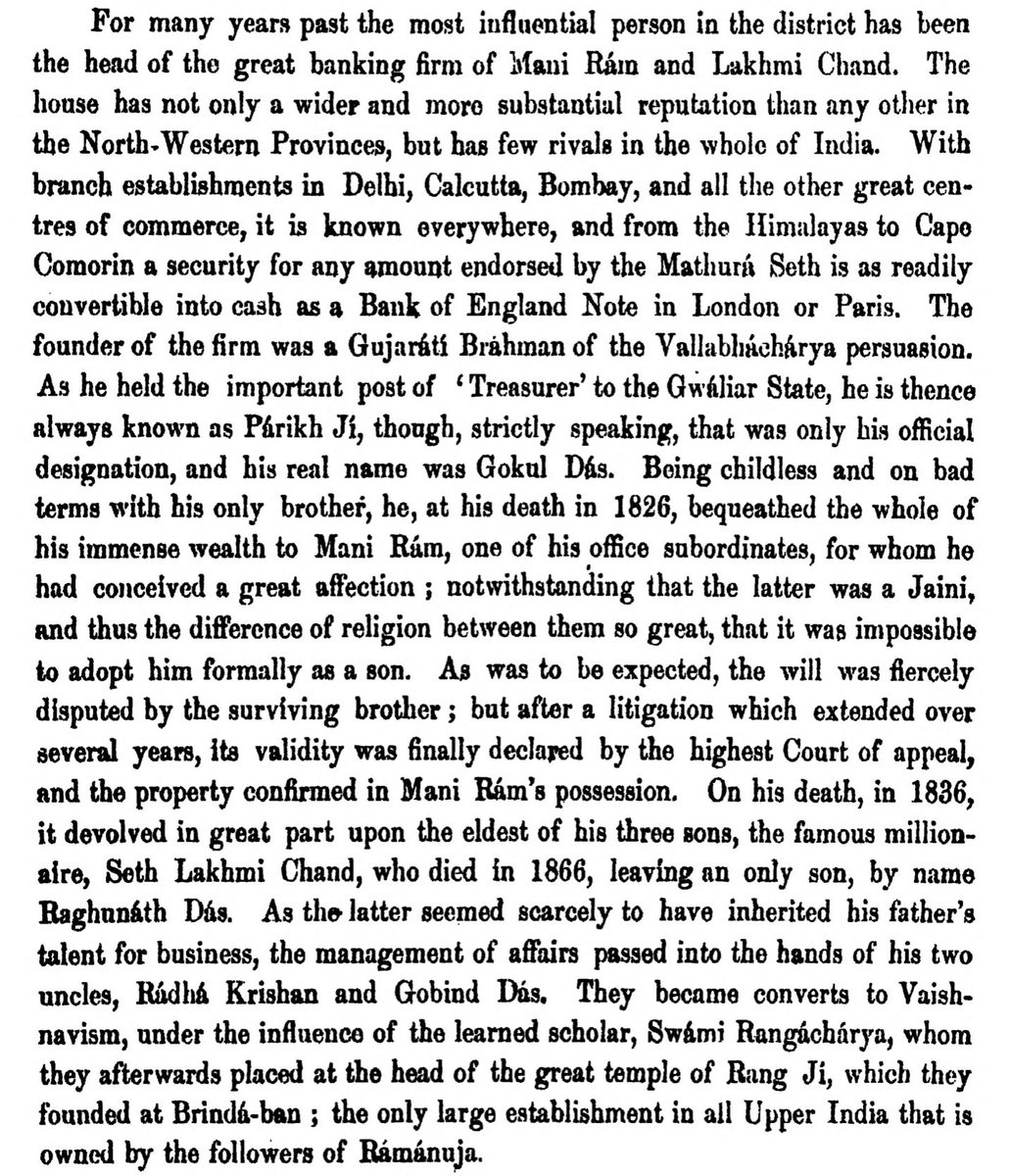
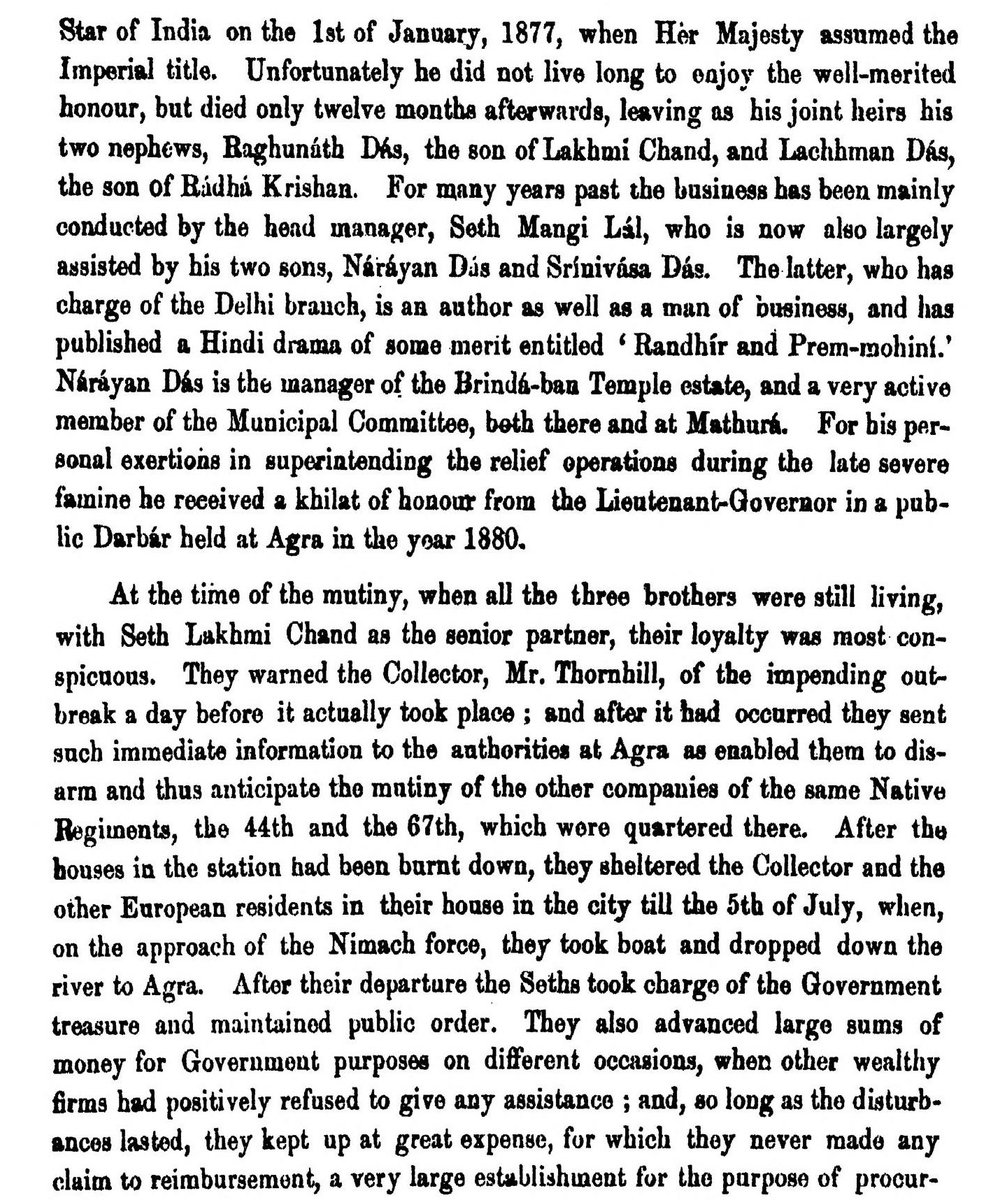
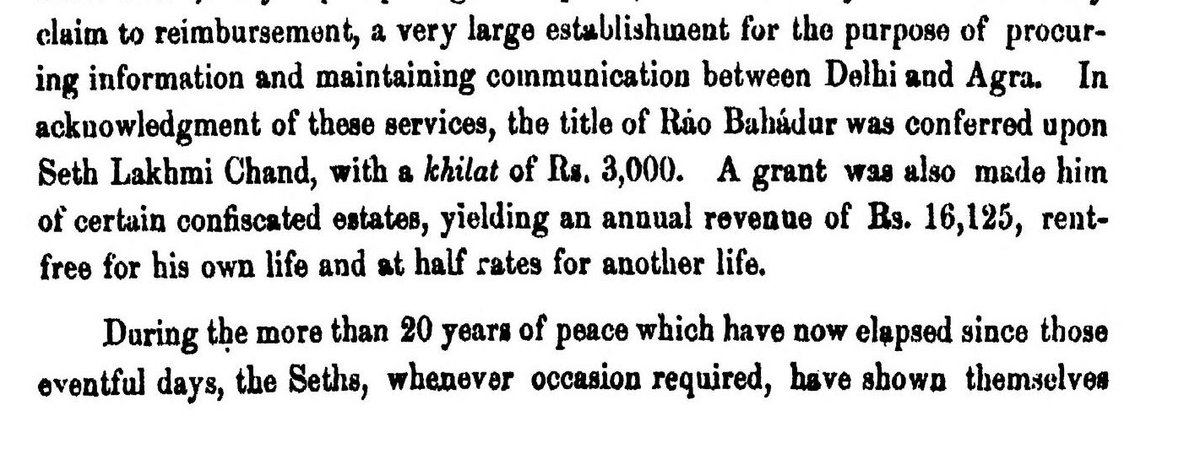
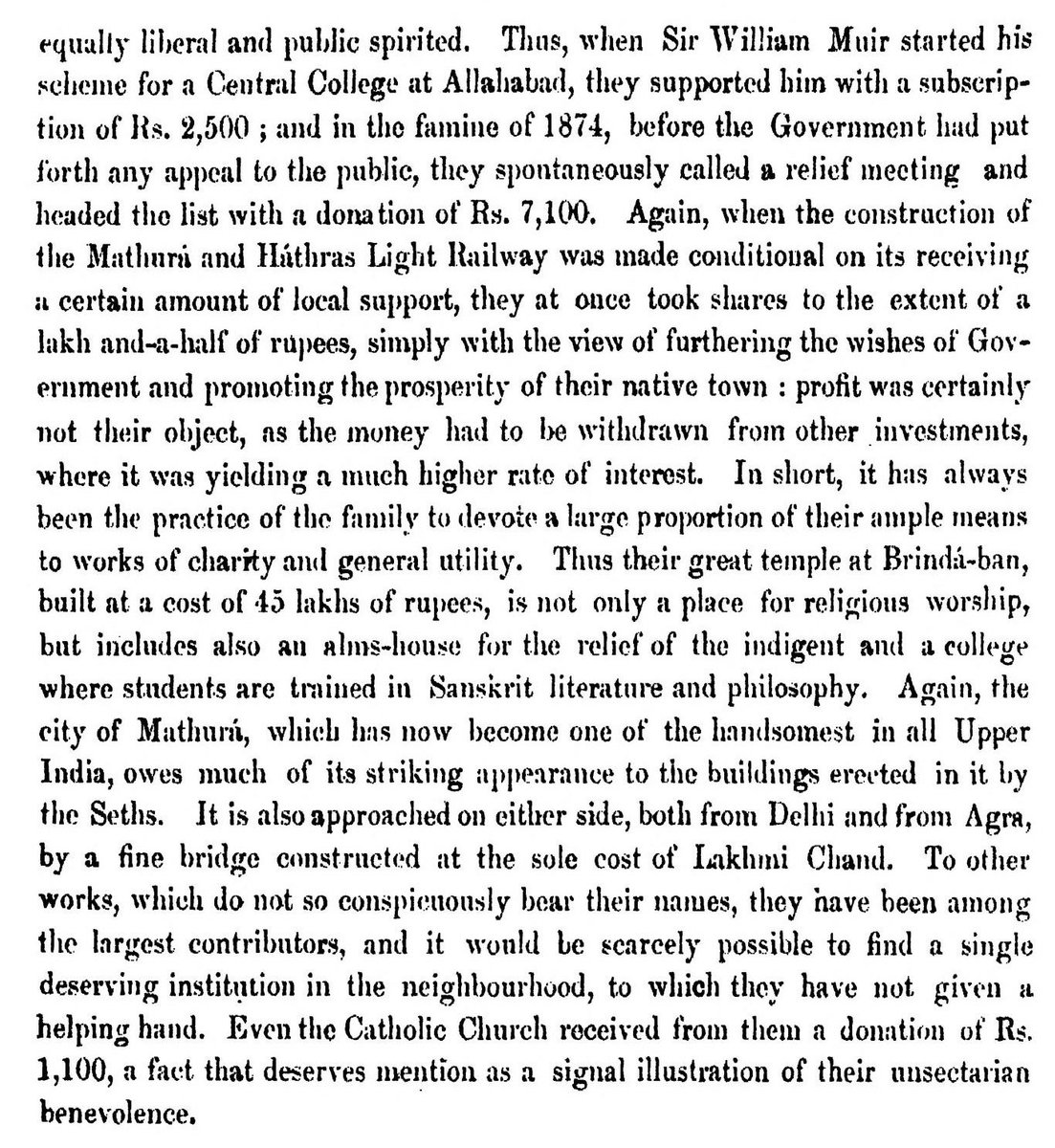
An interesting account of the famous Mathura Seths and also about a very wealthy Gujarati Brahmin of Mathura.
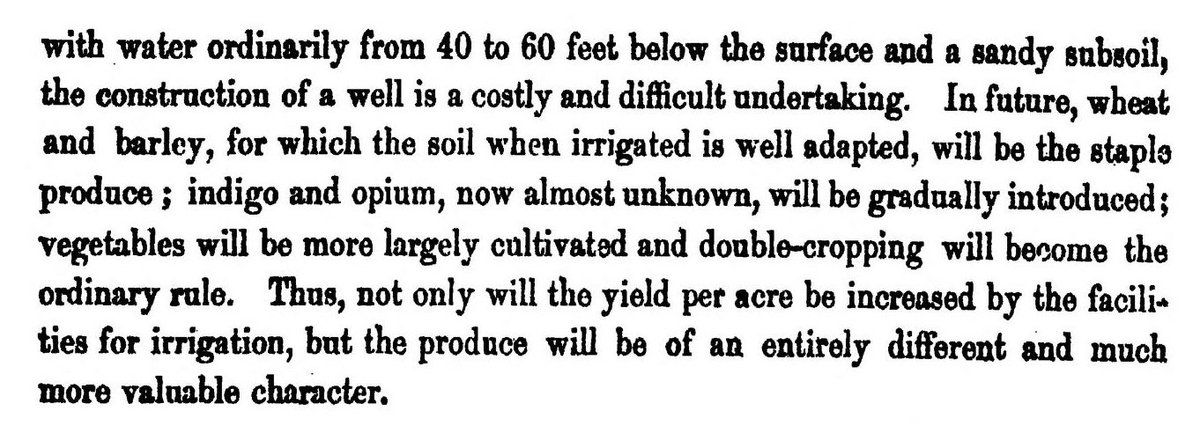
Bajra & jowar wr the principal crops grown in the region as they required no artificial irrigation. With the introduction of the Agra canal, it was hoped by the colonial auth’ that opium & indigo hitherto unknown would gain acceptance & wheat, barley will be the staple produce.

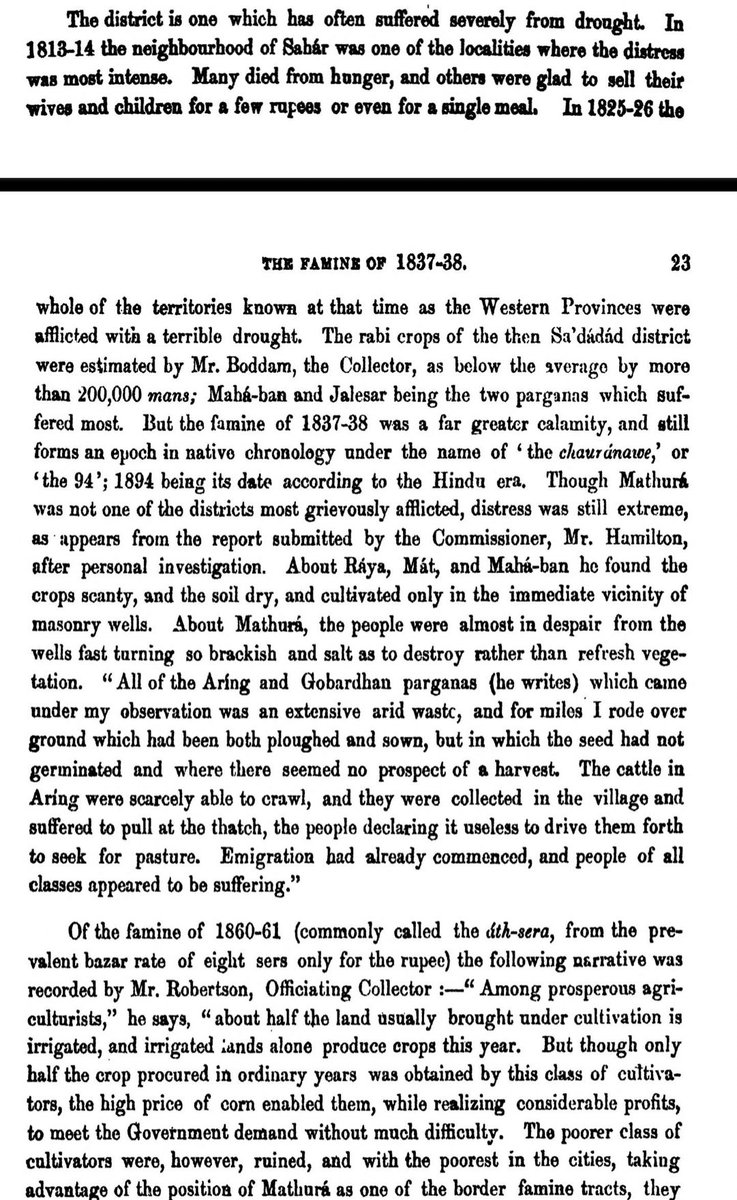
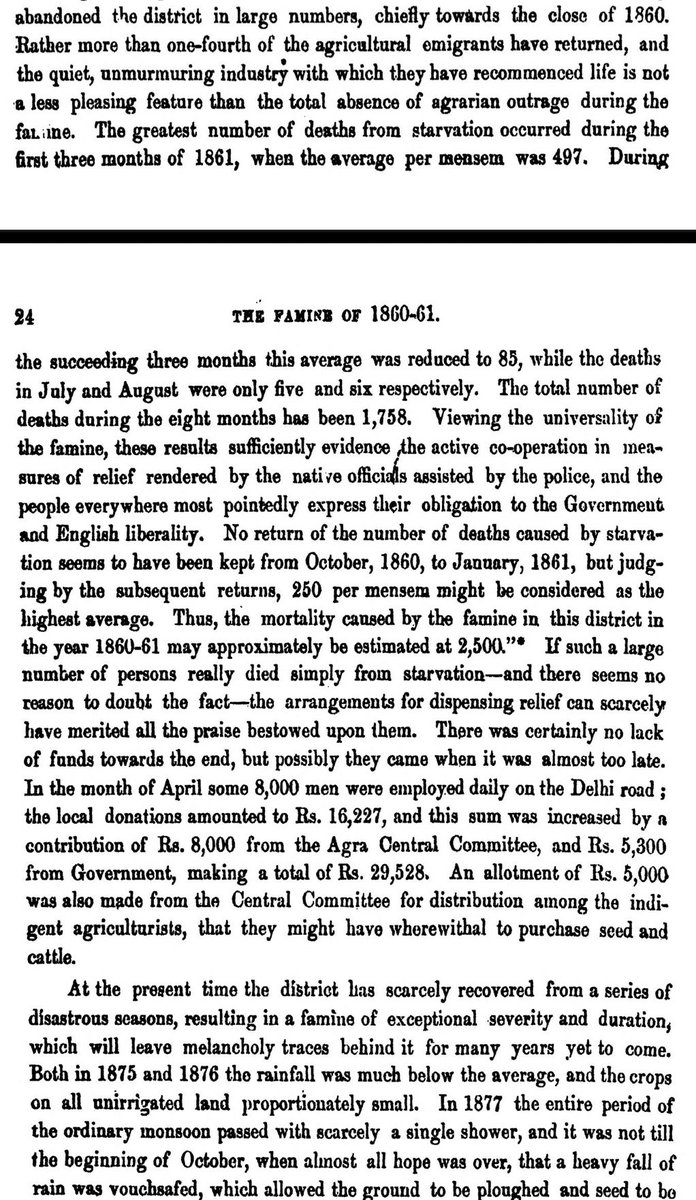
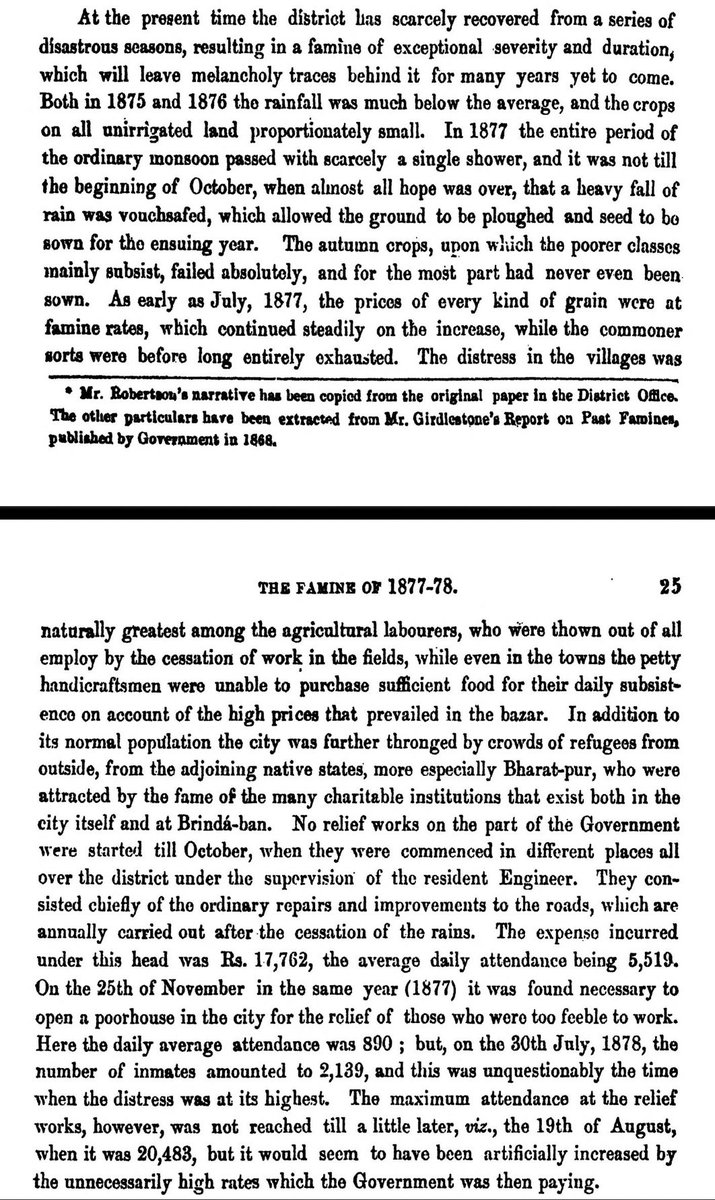
Droughts and famines were a regular occurrence in the district with the one which struck in the 1860s being particularly severe, recording a high mortality.
On that fanatic Mogul and which event made him change the name of Mathura.
It’s another matter that this change could never be imposed on the local populace which continued to use the ancient name of Mathura.
It’s another matter that this change could never be imposed on the local populace which continued to use the ancient name of Mathura.

On the ancient route (known as GT road) & what a fine avenue of overarching boughs it made once, on the numerous black bucks which came to heavily populate this region after the mutiny as the people who had earlier hunted the species were driven out, & fertile fields of sugarcane


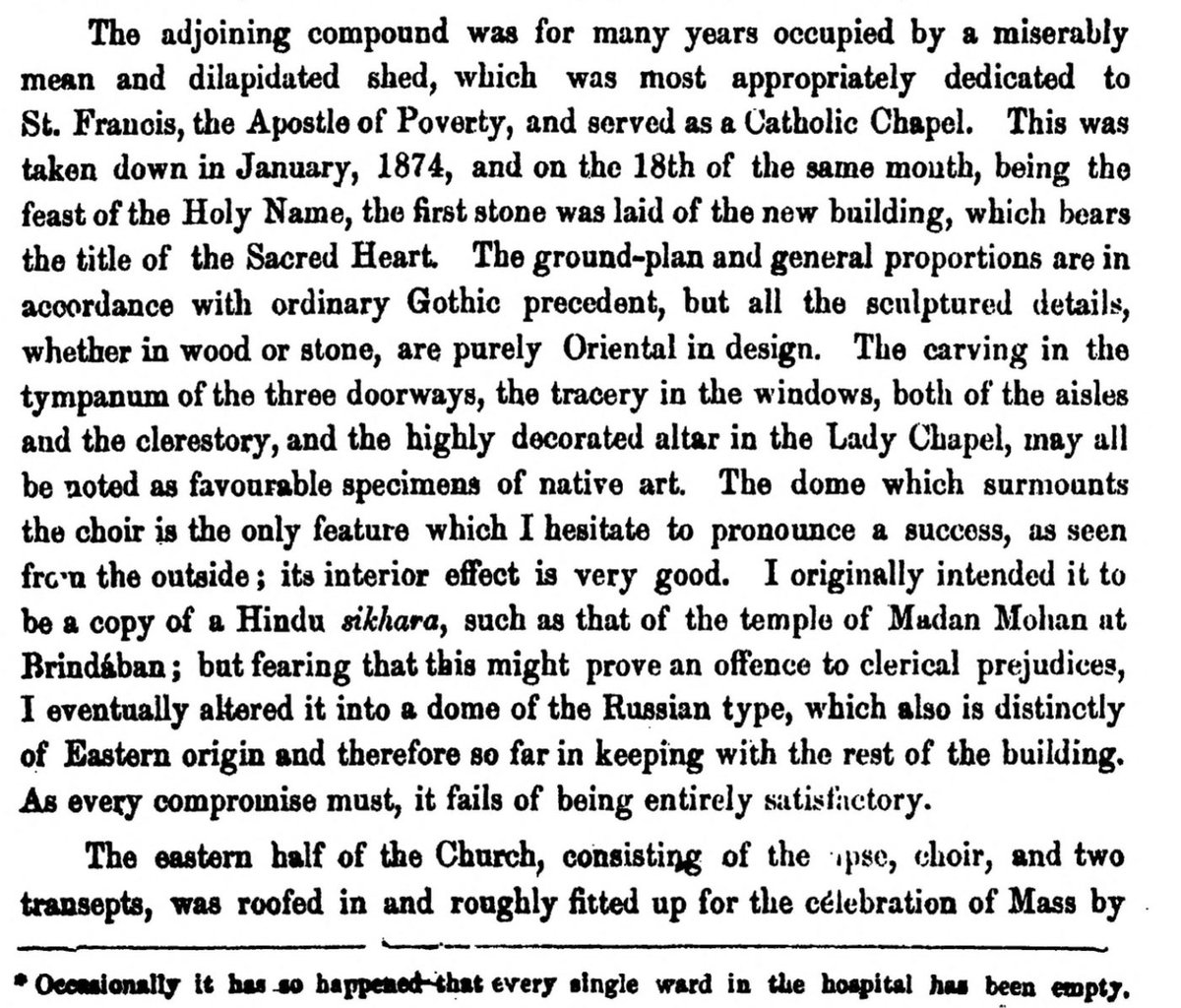
They had initially wanted the catholic chapel to have a shikhara like the Hindu temples particularly like the shikhara of the Madan Mohan temple but fearing it might offend the clergy the plan was dropped.
Amazing.
Amazing.
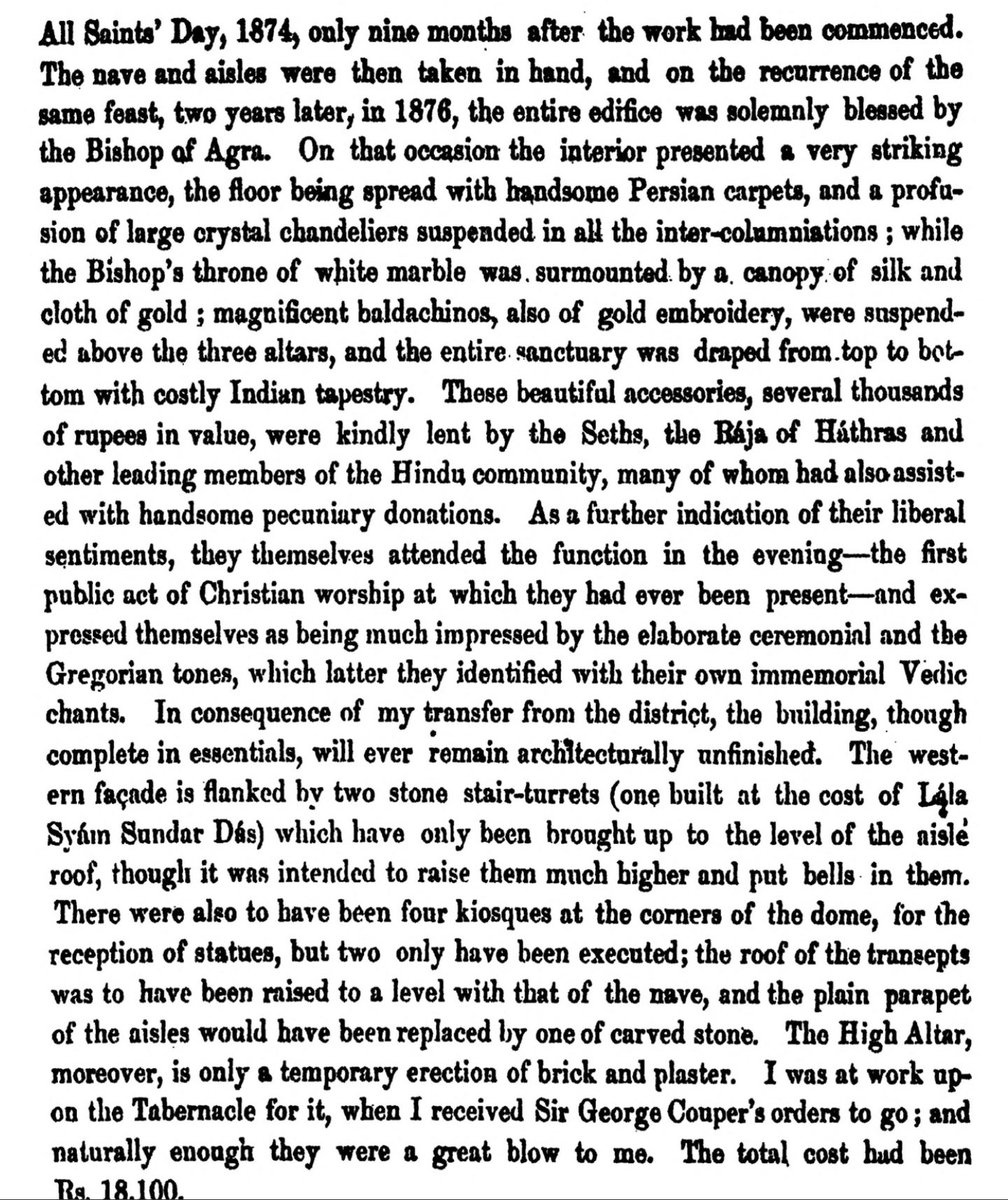
Church inauguration, presence of the elites who had also contributed towards its construction and their liberal sentiments.
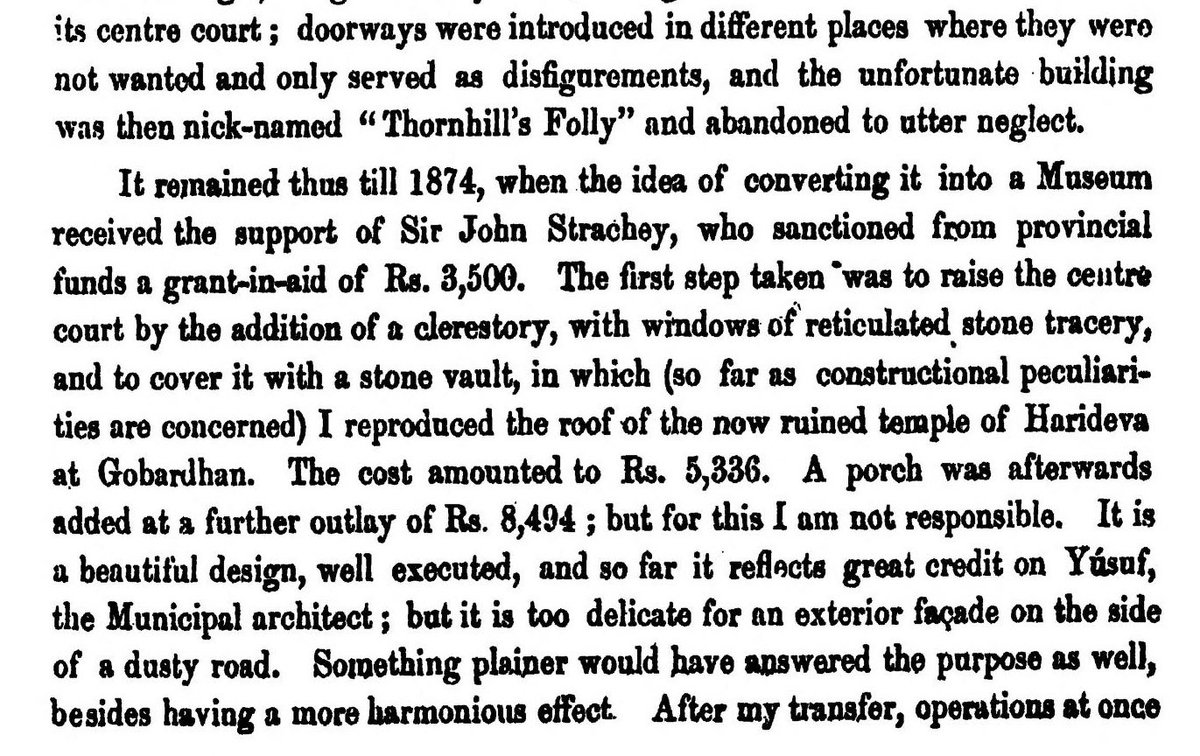
The Tehsildar’s offices were sought to be converted into a museum. During its redesigning Growse shared a picture of the vaulted roof of Harideva temple as a model to replicate.
So it seems in the late 19th century the temple although in much ruins had its roof still intact.
So it seems in the late 19th century the temple although in much ruins had its roof still intact.
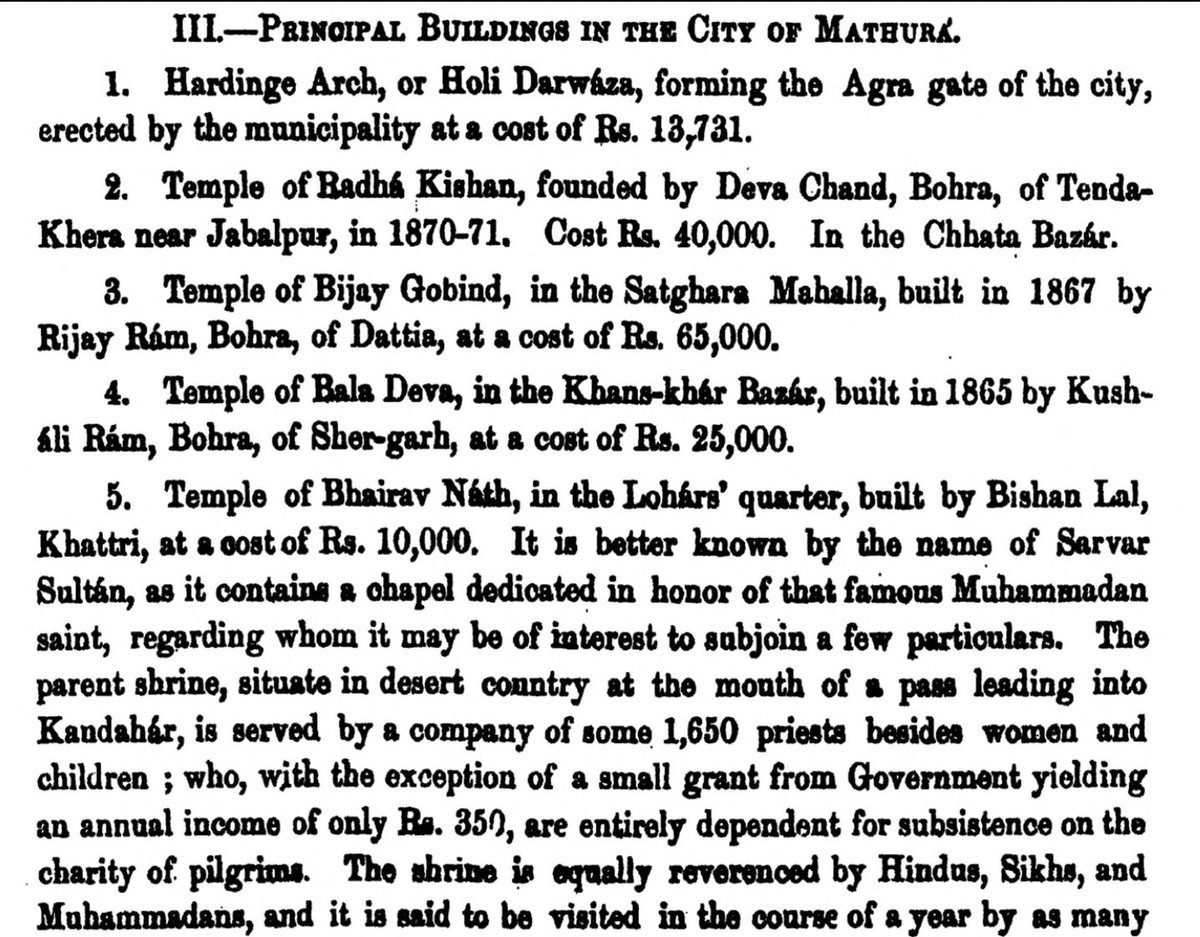
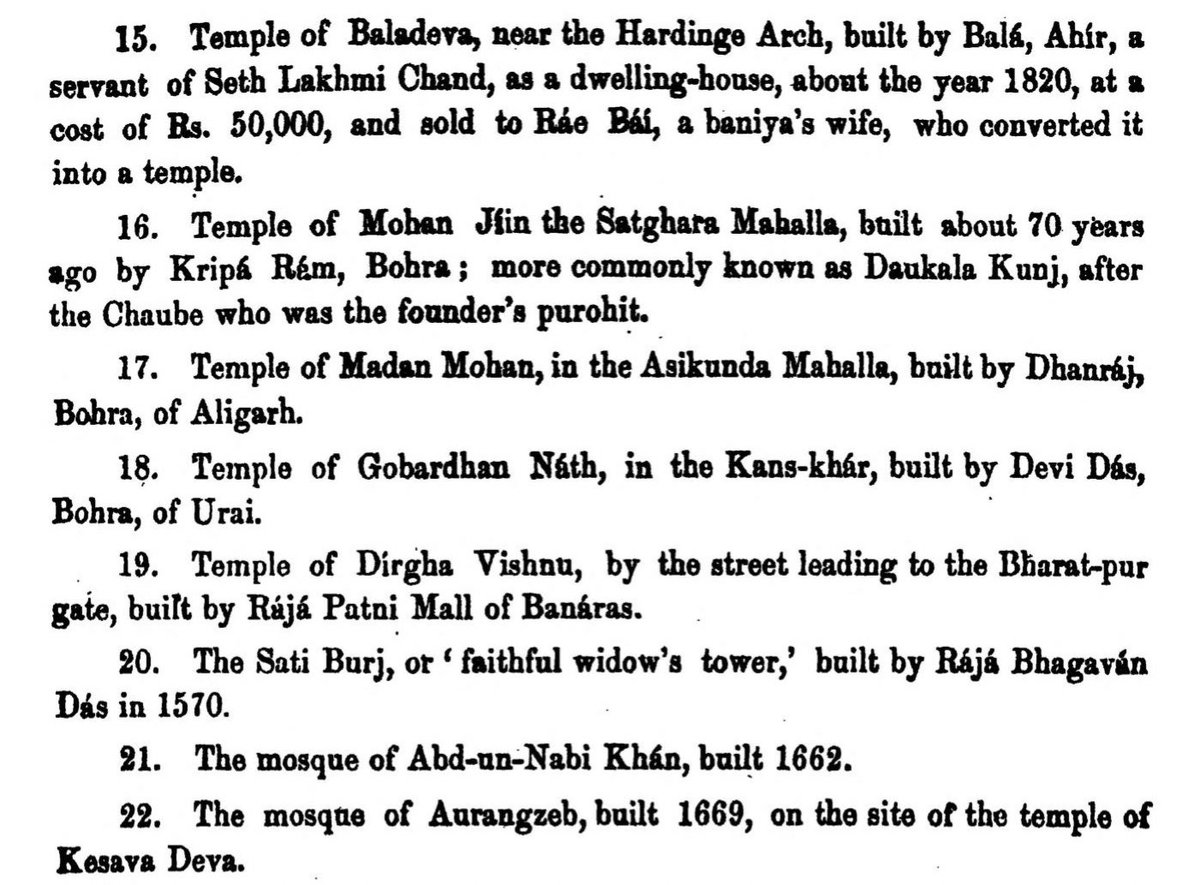
Some of the principal buildings of Mathura during that time.
Do read the information shared on the temple of Bhairav Nath.
Do read the information shared on the temple of Bhairav Nath.

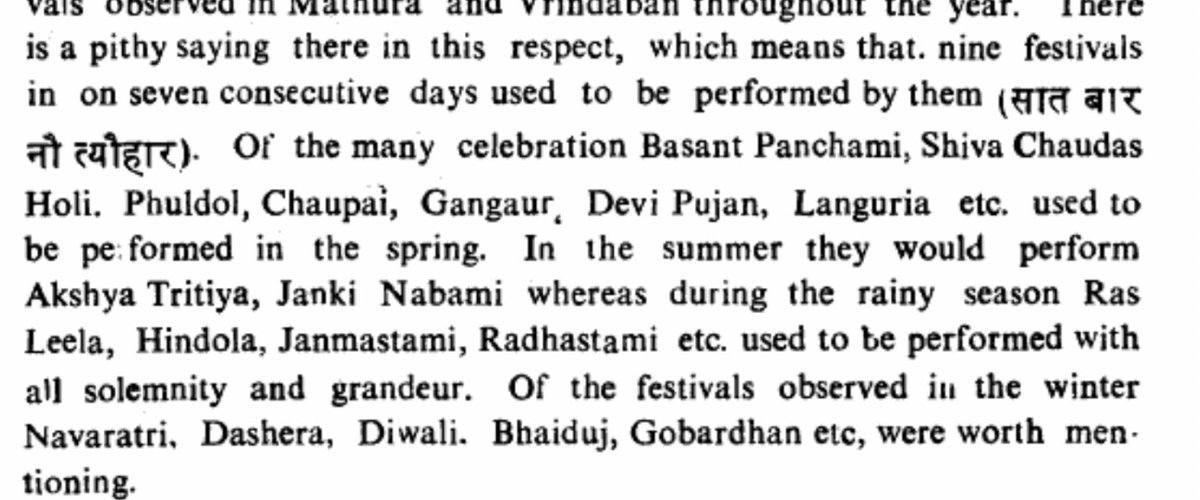
Now we come to the festivals which used to be celebrated in Braj during this time.
Navratri and Ram Navami in Chaitra maas.
In Baisakh - Narasinh lila on Narasinh jayanti
On Baisakh full moon night there used to be the ritual of perambulation of Mathura known as Banbihar
Navratri and Ram Navami in Chaitra maas.
In Baisakh - Narasinh lila on Narasinh jayanti
On Baisakh full moon night there used to be the ritual of perambulation of Mathura known as Banbihar
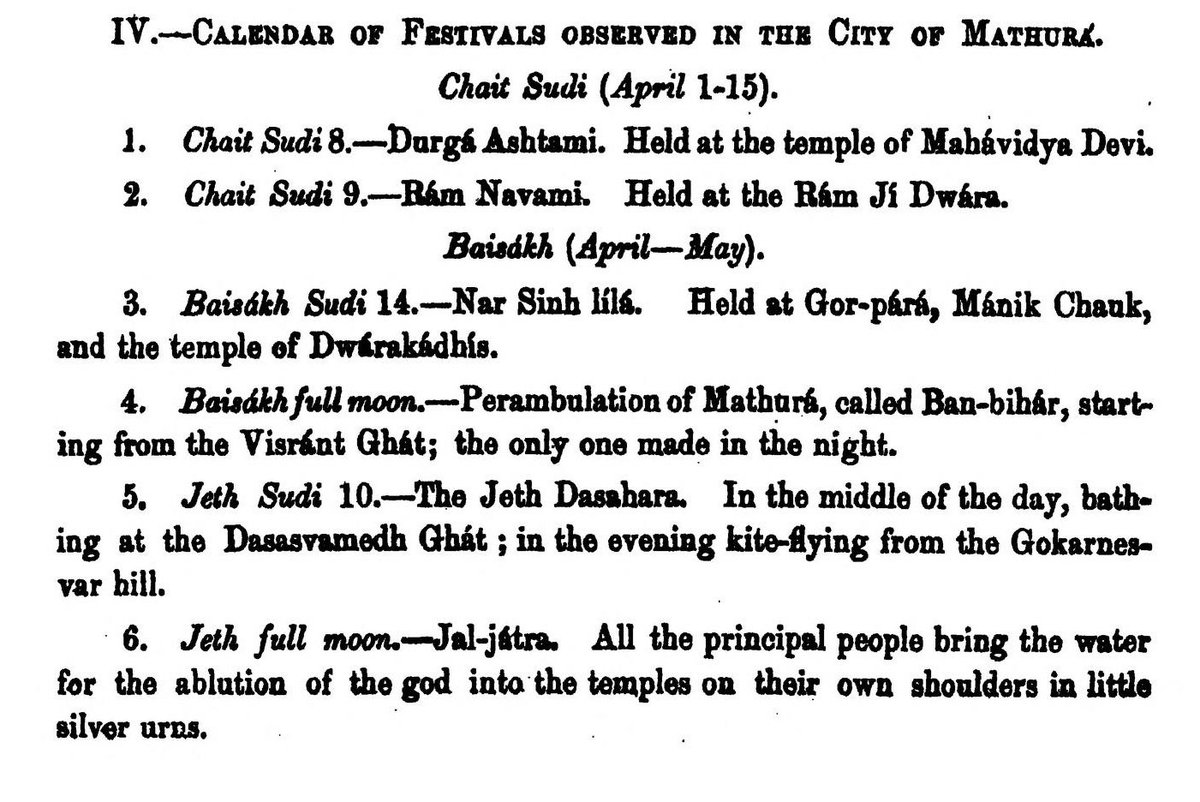
During Jyeshtha maas, Jyeshtha Dasahara used to be celebrated with ritual bathing at the Dashashwamedha ghat and kite flying in the evening on the Gokarneshvar hill.
This month also saw the celebration of Jal yatra. People used to carry water in silver urns to the temples for
This month also saw the celebration of Jal yatra. People used to carry water in silver urns to the temples for
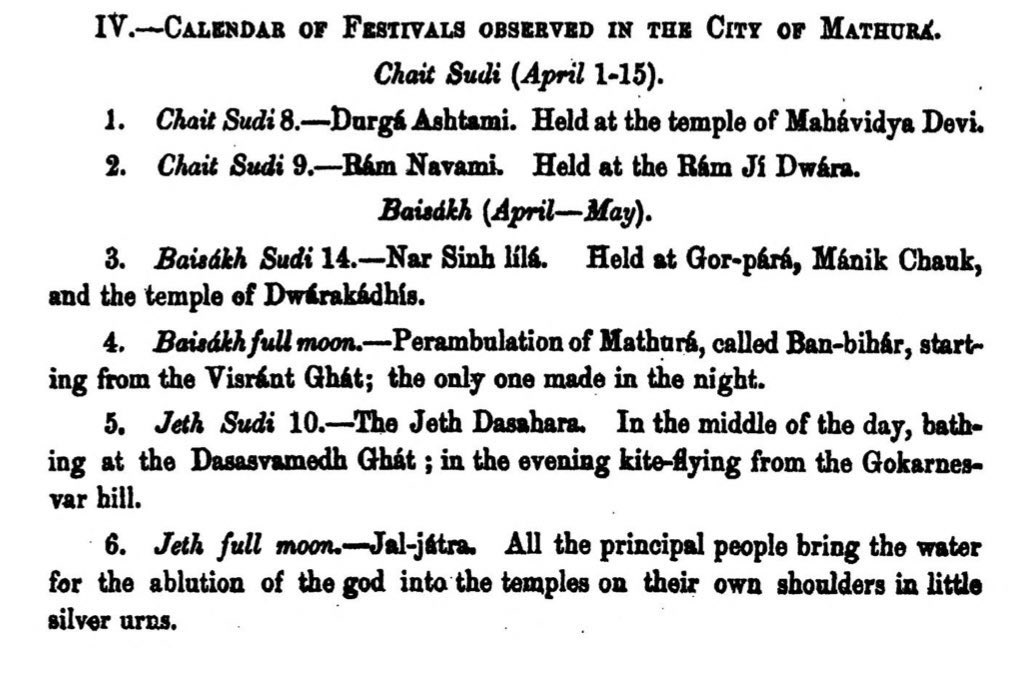
the ablution of the gods.
In Ashadh.
Rath yatra, Perambulation of Mathura and Vrindavan known as the Jugal Jodi ki parikrama and Guru Purnima on the full moon.
In Shravan.
Teej was celebrated with a mela and rounds of wrestling matches.
Panch teertha mela with a pilgrimage to
In Ashadh.
Rath yatra, Perambulation of Mathura and Vrindavan known as the Jugal Jodi ki parikrama and Guru Purnima on the full moon.
In Shravan.
Teej was celebrated with a mela and rounds of wrestling matches.
Panch teertha mela with a pilgrimage to

many of the sacred spots.
Perambulation of Mathura and the celebration of Pavitra dharan or offering of mouli
Shravani Purnima was celebrated as Rakshabandhan
Perambulation of Mathura and the celebration of Pavitra dharan or offering of mouli
Shravani Purnima was celebrated as Rakshabandhan
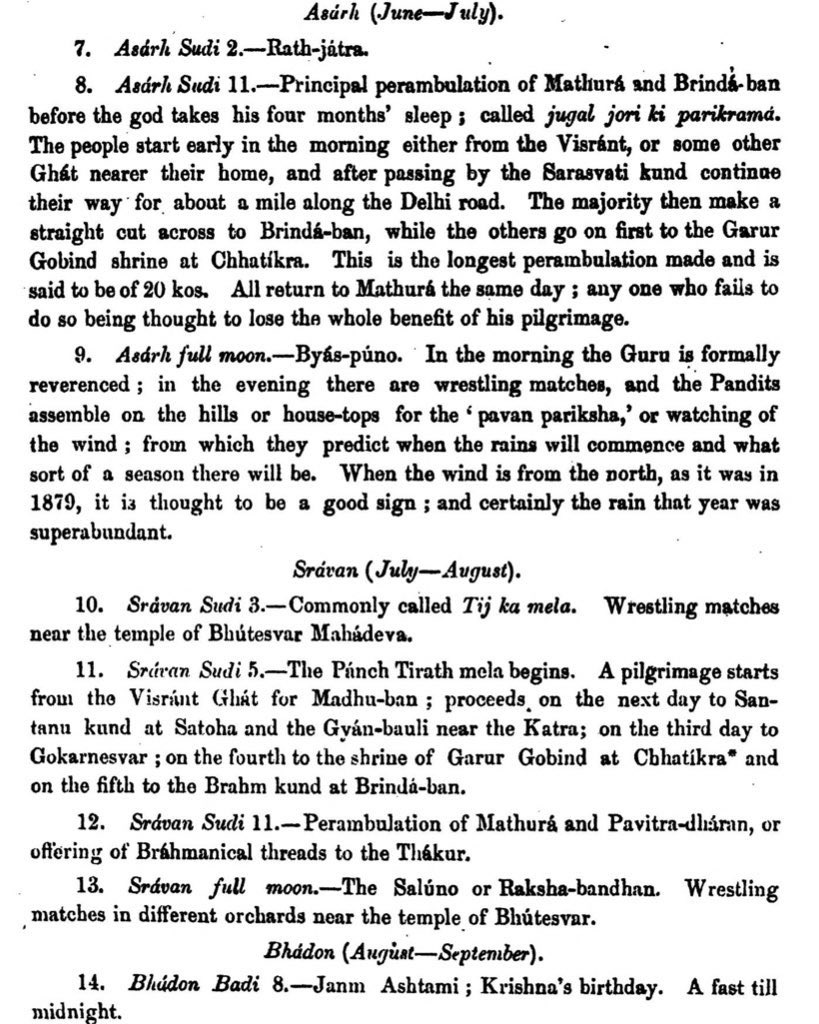
In Bhadon भादों apart from Krishna Janmashtami, a special pilgrimage to the various bans/ vans of Braj was undertaken. Anant Chaudas was celebrated. While during the months of Shravan and Bhadon a festival of Pairaki (swimming and water sports) used to be held. It also involved a

display of fireworks at dusk, besides singing and dancing in the streets of Braj.
During the month of Kuvar, apart from Ram leela, which concluded with the festival of Dasahara and Bharat Milap, other festivals included a yatra of the sacred places, festivities involving the
During the month of Kuvar, apart from Ram leela, which concluded with the festival of Dasahara and Bharat Milap, other festivals included a yatra of the sacred places, festivities involving the
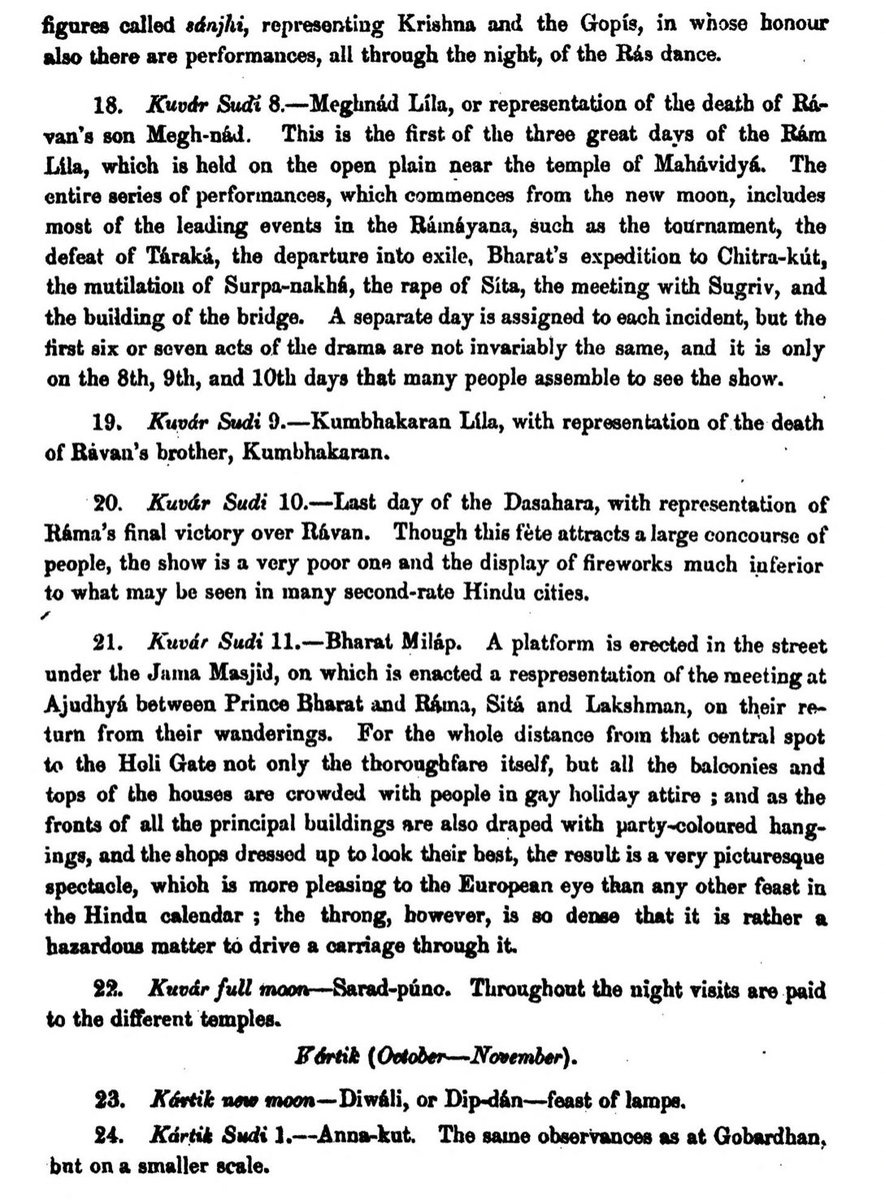
making of sanjhi with pewter, and Sharad poornima during which visits were paid to the various temples at night.
Kartik festivals, besides Diwali, included Annakoot, Gocharan, Akshay Navami, Kansa vadh mela, Devotthan Ekadashi.
Magh festival was Basant Panchami (this seems to
Kartik festivals, besides Diwali, included Annakoot, Gocharan, Akshay Navami, Kansa vadh mela, Devotthan Ekadashi.
Magh festival was Basant Panchami (this seems to
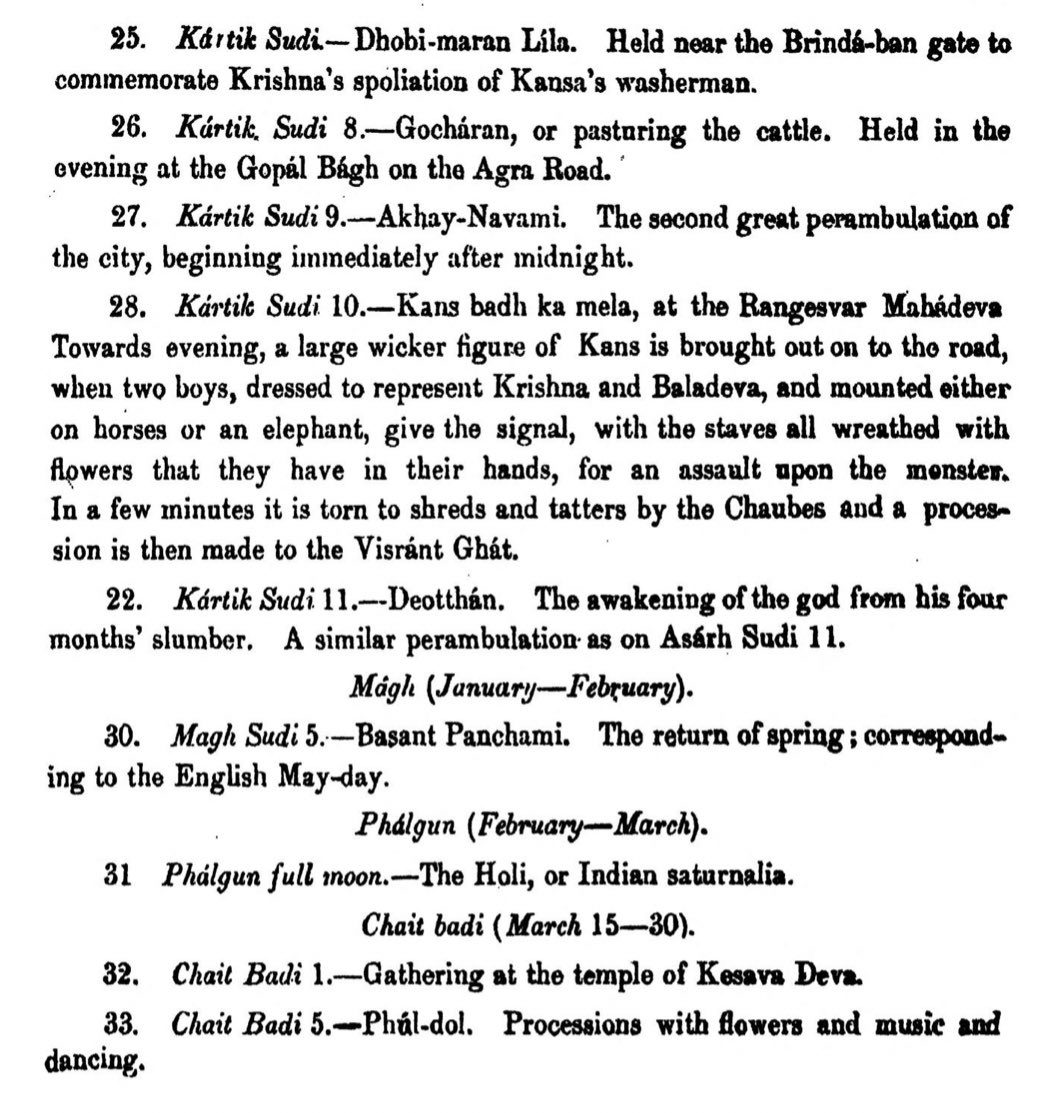
have missed Makar Sankranti which was also prevalent)
Phalgun festival included Holi,
Chaitra festivals included celebrations at Keshav Dev and Phool dol, a procession with flowers, music and dancing.
What is referred to as Phool dol was perhaps this festival ..
Phalgun festival included Holi,
Chaitra festivals included celebrations at Keshav Dev and Phool dol, a procession with flowers, music and dancing.
What is referred to as Phool dol was perhaps this festival ..
Growse’s memoir also misses out on some of the other festivals which were celebrated by the people of Braj in the 19th century, as well as throughout the medieval ages. These are mentioned in other records & include akshay tritiya, Shivratri, sharadiya navratri, among others
Loading suggestions...