
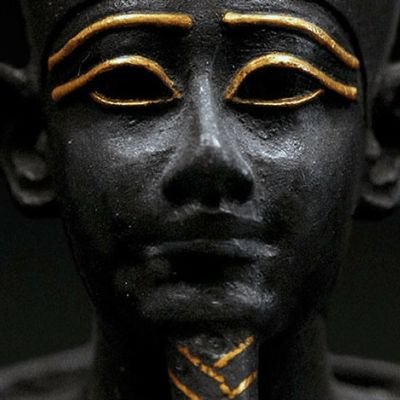
Today is the third day of Kwanzaa and is devoted to the principle of the KiSwahili term Ujima which means "collective responsibility." The philosophy of Ujima was deified in the Kushite-Kemetic system as the ntchrt Nebt-Het.
Ujima is key because many African Descendants believe that coming together means just our physical bodies coming together, as many do during the "holiday season."
While this is good, the real importance of coming together is to perform Ujima (collective responsibility), which means to fulfill our responsibilities to the community and recognize our brothers/sisters' problems are our problems.
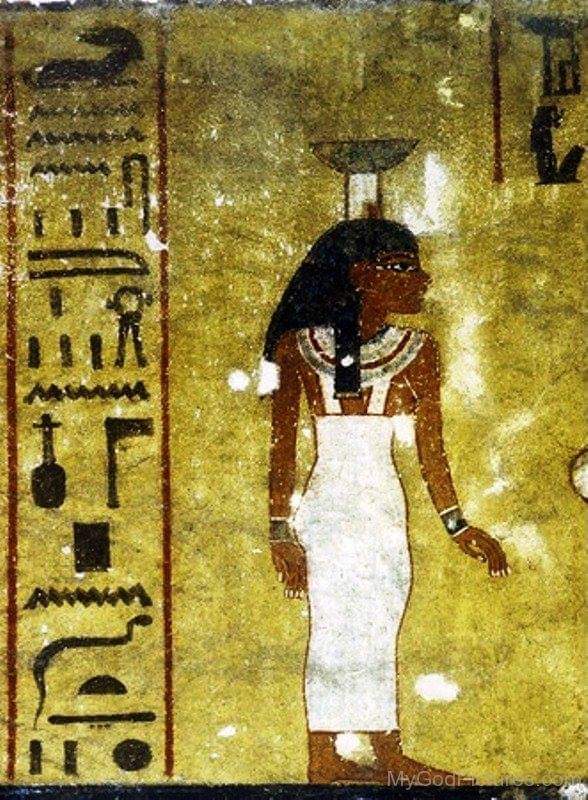
This concept of Ujima was deified in the Ancient Nile as Nebt-Het (she is Obba in the Orisha system). Nebt-Het is the sister of Auset (Isis) and wife of Set. Her devotion was to aiding that which is righteous above all.
Her name means "Lady-Lord of the House" because her devotion to aid is regarded as that which upholds the house. Thus, her symbol is the hieroglyph for house with a bowl atop it.
Thus, when her sister Auset's husband was assassinated by her own husband Set, Nebt-Het put righteousness above her own personal life (husband) and decided to perform Ujima (collective responsibility) by traveling the world to help her sister find the missing fragments of…
...Ausar's scattered body.
As a result, she divorced Set and instead pursued Ujima by taking on the collective responsibility of her sister Auset. Thus Ujima always requires a sort of sacrifice of an unrighteous part of our lives in order to pursue the righteous.
As a result, she divorced Set and instead pursued Ujima by taking on the collective responsibility of her sister Auset. Thus Ujima always requires a sort of sacrifice of an unrighteous part of our lives in order to pursue the righteous.
Nebt-Het's devotion to Ujima was rewarded. After Ausar was resurrected and impregnated Auset with Heru and Heru grew up to defeat and imprison Set, Ausar then wedded Nebt-Het as his second wife.
It is protocol in Africa when a man's brother is killed or imprisoned (like Set was), that he marry his brother's widow to protect her. Thus, after Heru imprisoned Set, Ausar married and then impregnated Nebt-Het to give birth to Anup (Anubis).
Anup is one of the most important ntchr who weighs the balance of the scales of Ma'at. Anup is also featured as the embalmer in reenactments of Ausar's "mummification" ritual. Anup was the reward for Nebt-Het's practice of Ujima.
Many today don't perform such acts of Ujima which is why we were failing.
However, the new era has arrived and the African race is realizing again the divine powers of collective responsibility which our ancestors deified into Obba in the Orisha system and Nebt-Het in the Kushite-Kemetic system.
Loading suggestions...