

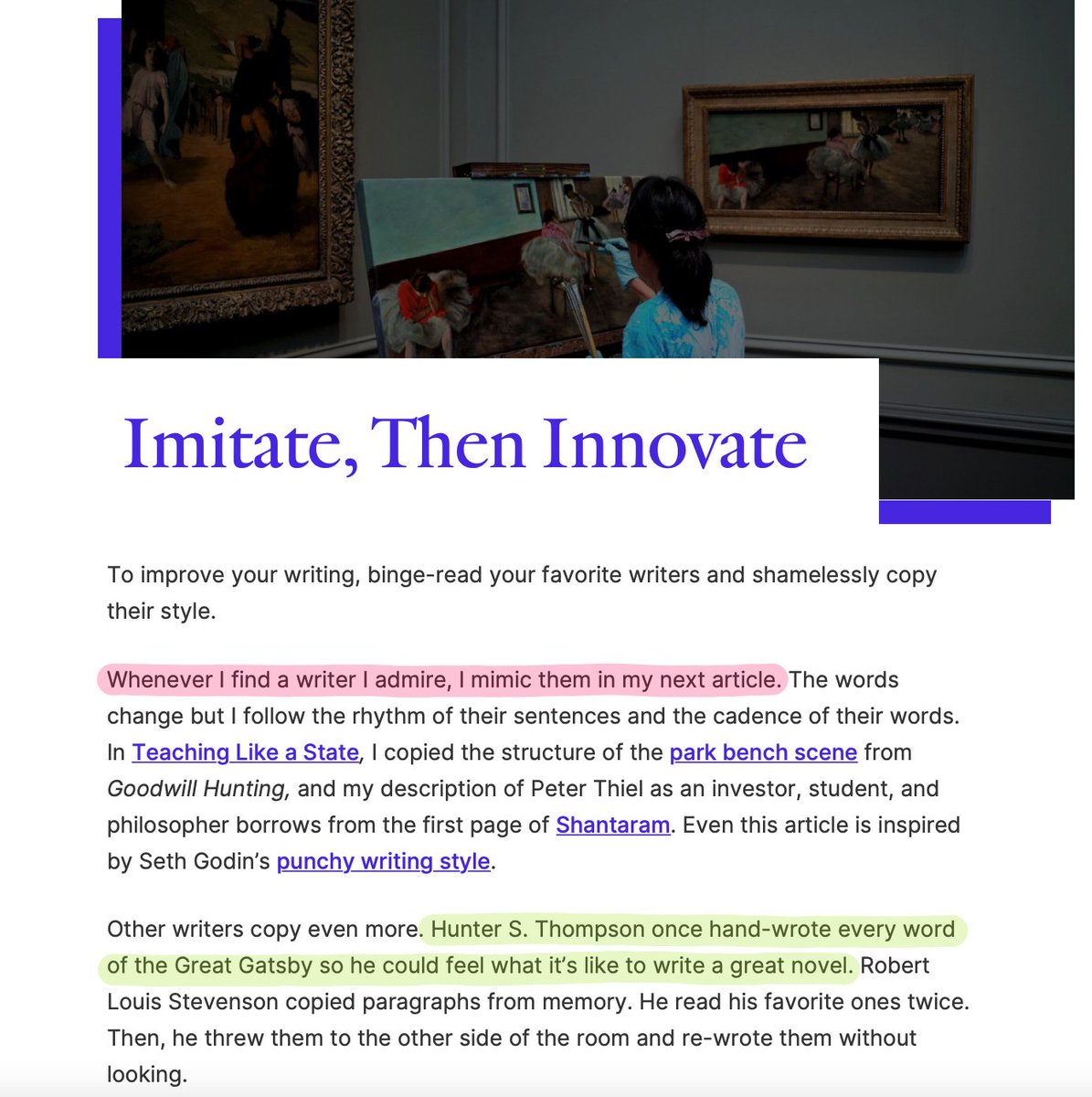
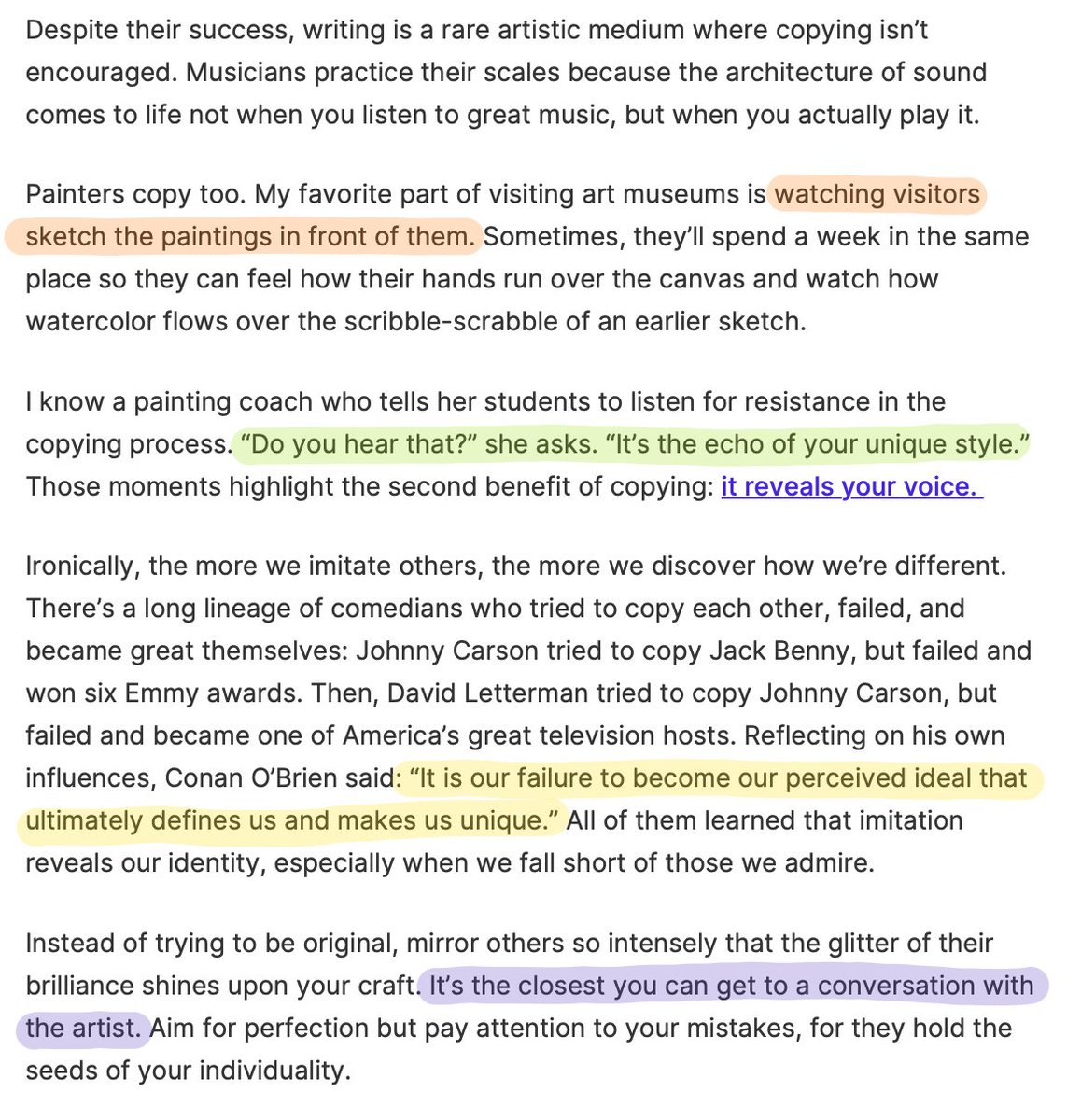
Three words to improve any skill: Imitate, then innovate.
Find your favorite creators, copy their style, and you'll eventually develop your own.
Here's my mini-essay.
Find your favorite creators, copy their style, and you'll eventually develop your own.
Here's my mini-essay.
This article is from my 50 Days of Writing email series.
It's a series of 50 emails about every aspect of online writing, from finding new ideas to, to editing your writing, to attracting an audience.
Sign up below.
ageofleverage.com
It's a series of 50 emails about every aspect of online writing, from finding new ideas to, to editing your writing, to attracting an audience.
Sign up below.
ageofleverage.com
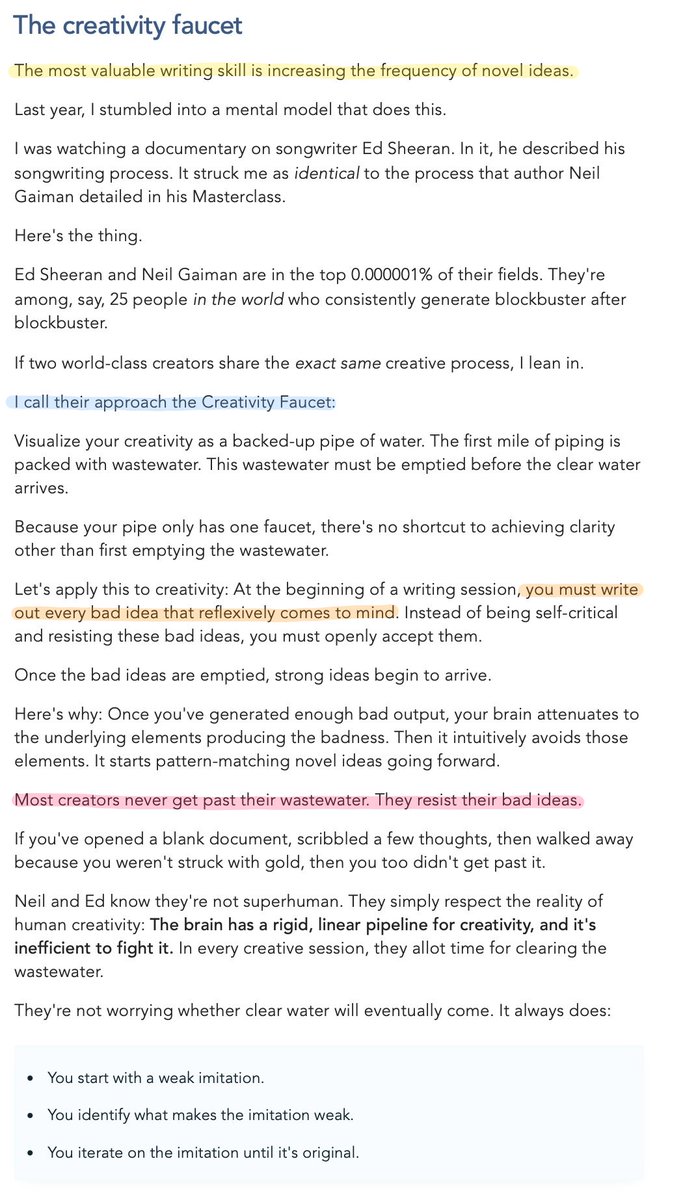
This is a wonderful mini-essay from @julian.
Start with a weak imitation of somebody you admire, identify what makes your imitation weak, and iterate on the imitation until it's original.
Start with a weak imitation of somebody you admire, identify what makes your imitation weak, and iterate on the imitation until it's original.

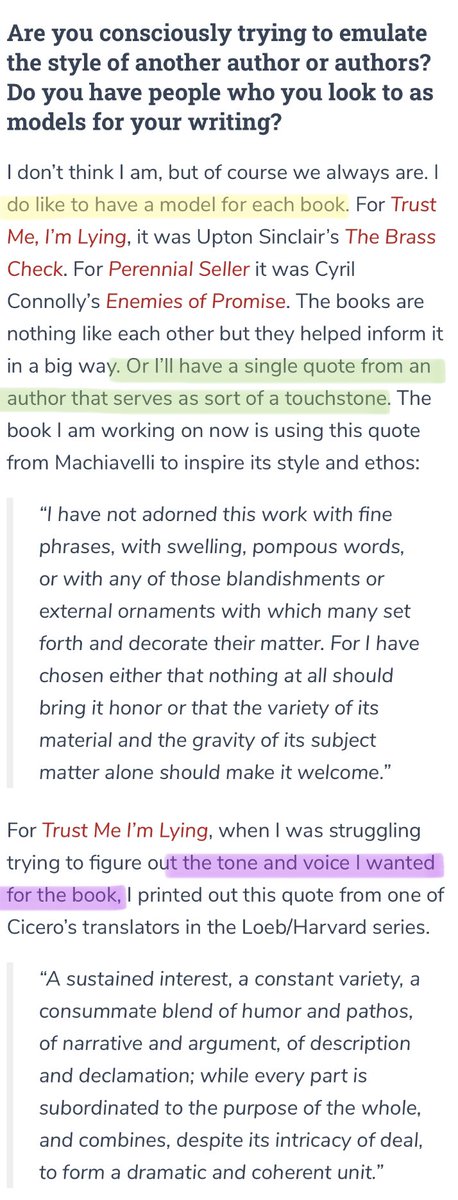
Ryan Holiday imitates books when he writes and uses quotes as a touchstone to guide his style.
Imitate, then innovate.
Imitate, then innovate.

This is a lovely collection of quotes from @AliAbdaal.
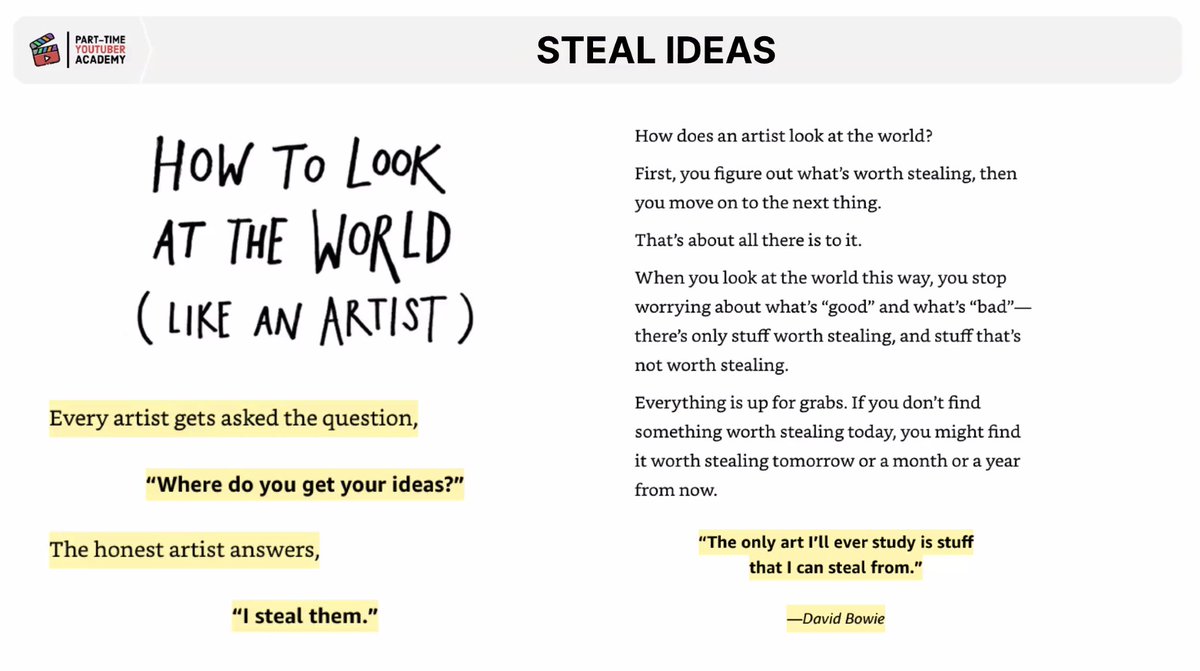
1) "The only art I'll ever study is stuff that I can steal from." — David Bowie
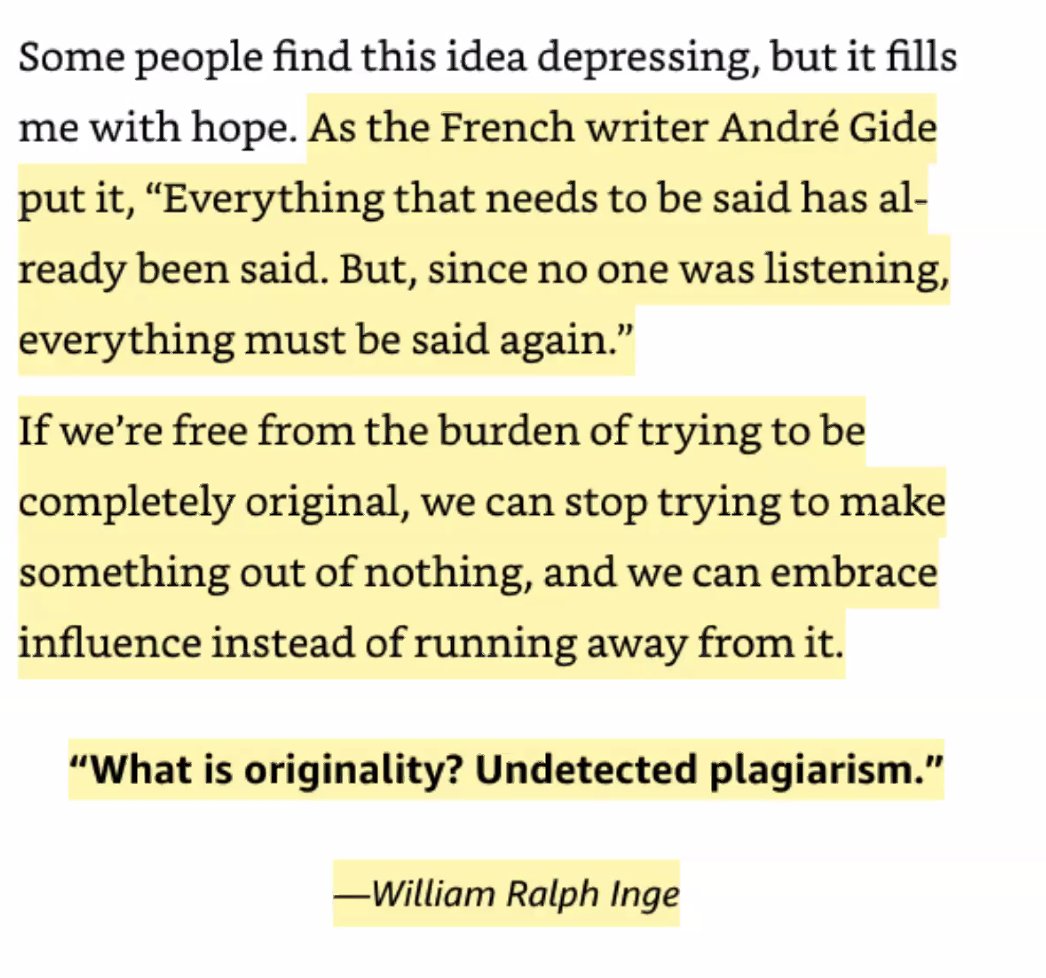
2) "If we're free from the burden of trying to make something completely original... we can embrace influence instead of running away from it."
1) "The only art I'll ever study is stuff that I can steal from." — David Bowie
2) "If we're free from the burden of trying to make something completely original... we can embrace influence instead of running away from it."
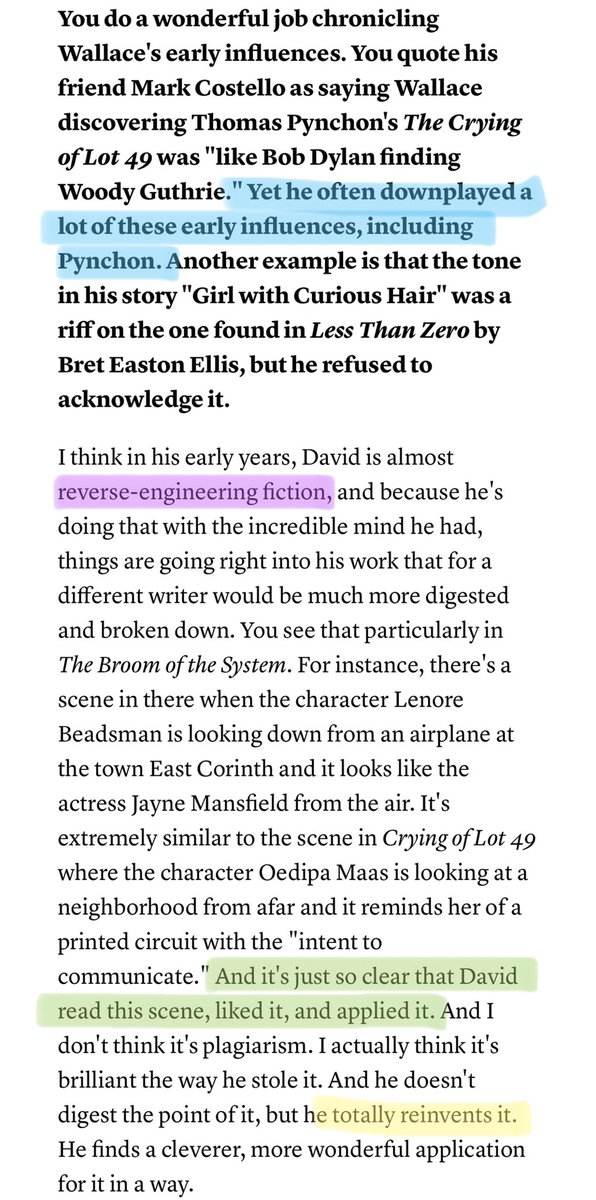
Even David Foster Wallace, one of the best writers of the 20th century, borrowed scenes from writers he admired and repurposed them in his own work. Then, he made them better.
Here’s an interview with his biographer.
Here’s an interview with his biographer.
Ira Glass called this "The Taste Gap."
He talks about how people who do creative work get into it because they have good taste. That's another way of saying they're inspired by people they want to imitate. But turning imitation into excellence takes time.
He talks about how people who do creative work get into it because they have good taste. That's another way of saying they're inspired by people they want to imitate. But turning imitation into excellence takes time.
“No man who bothers about originality will ever be original: whereas if you simply try to tell the truth (without caring how often it has been told before) you will, nine times out of ten, become original without ever having noticed it.”
— C.S. Lewis
— C.S. Lewis


Musicians do the same thing.
They’ll identify the attributes of a song they like: things like BPMs, the chest-thumping bass, and the harmony in e Minor.
Then, they recreate the song on their own. But once they do, they find ways to make it their own.
They’ll identify the attributes of a song they like: things like BPMs, the chest-thumping bass, and the harmony in e Minor.
Then, they recreate the song on their own. But once they do, they find ways to make it their own.

Even the greats follow this "Imitate, Then Innovate" framework.
Quentin Tarantino famously recreates scenes from his favorite movies. Hunter S. Thompson hand-wrote every word of The Great Gatsby so he could feel what it was like to write a great novel.
youtube.com
Quentin Tarantino famously recreates scenes from his favorite movies. Hunter S. Thompson hand-wrote every word of The Great Gatsby so he could feel what it was like to write a great novel.
youtube.com

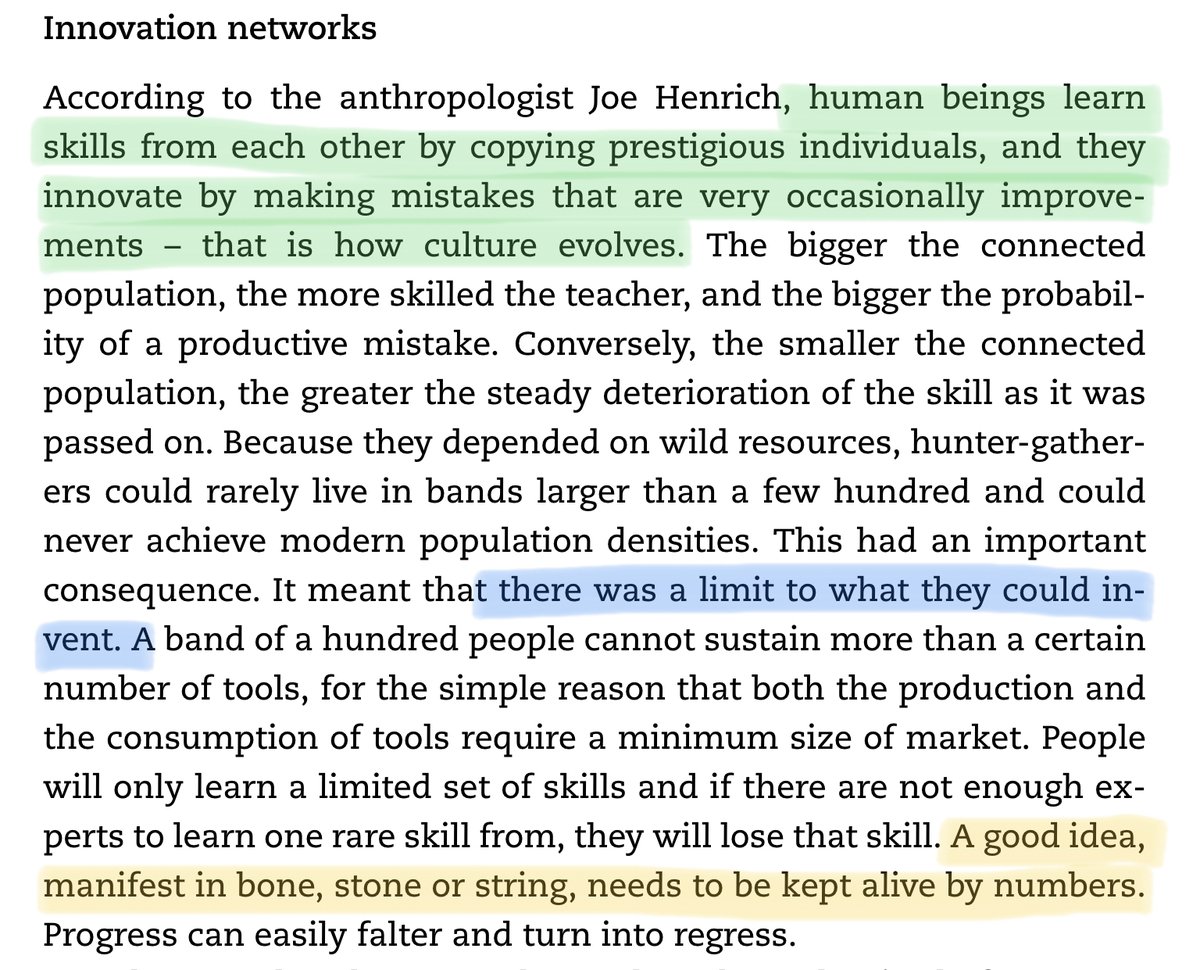
Humanity progresses when people try to copy prestigious role models — but make mistakes in doing so, which sometimes leads to progress.
(h/t @AmaanIrfan25)
(h/t @AmaanIrfan25)
“Start copying what you love. Copy copy copy copy. At the end of the copy you will find yourself.” ― Yohji Yamamoto
(h/t @zackkanter)
(h/t @zackkanter)
Imitation drives human learning.
People have known this for centuries, as shown by the history of English. In the time of Shakespeare, the word "ape" had two meanings: "primate" and "to imitate."
People have known this for centuries, as shown by the history of English. In the time of Shakespeare, the word "ape" had two meanings: "primate" and "to imitate."
Kobe Bryant improved his skills by imitating the greats and adopting their moves.
Talking about his game, he once said: “There isn’t a move that’s a new move. There’s nothing that hasn’t been done before. I seriously have stolen all of these moves from all these great players."
Talking about his game, he once said: “There isn’t a move that’s a new move. There’s nothing that hasn’t been done before. I seriously have stolen all of these moves from all these great players."
Loading suggestions...