

If you tell me the 15-minute chart shows a bearish divergence, I'll probably tell you I don't give a shit. This thread will teach you why.
Understanding timeframes is crucial in trading and technical analysis.
I'll teach you what they are, how they work and their use.
Understanding timeframes is crucial in trading and technical analysis.
I'll teach you what they are, how they work and their use.
Usual disclaimer, this thread is simply my personal understanding of timeframes and their use, not a globally agreed-upon thing.
This information does not constitute financial advice. You know the drill. Let's get into it.
This information does not constitute financial advice. You know the drill. Let's get into it.
Some abbreviations
LTF = Lower timeframe
HTF = Higher timeframe
S/R = Support & Resistance
PA = Price Action
LTF = Lower timeframe
HTF = Higher timeframe
S/R = Support & Resistance
PA = Price Action
Timeframes refer to how much time a single candlestick represents on a chart. There are timeframes all the way from a single second to multiple years.
The 1-hour timeframe consists of 4 15-minute candles, or 60 1-minute candles.
This is why if you're trading the 4h chart, you don't care much about a 1-minute bearish divergence. The movements on much lower timeframes take place much faster than on higher timeframes.
This is why if you're trading the 4h chart, you don't care much about a 1-minute bearish divergence. The movements on much lower timeframes take place much faster than on higher timeframes.
This means the bearish divergence on the 1 minute might play out, reverse and completely be dalai-lamad before the 4h candle even closes.
This is also why I personally prefer to wait for candle closes to trade. LTF PA above a HTF level is just a fakeout if the HTF candle closes below the level.
Closes constitute confirmation.
Closes constitute confirmation.
This means that a weekly level can see price violate the level quite uncomfortably deep during the week, as long as it closes above.
This is why many traders get shaken out at HTF levels, as happened in September 2020.
This is why many traders get shaken out at HTF levels, as happened in September 2020.
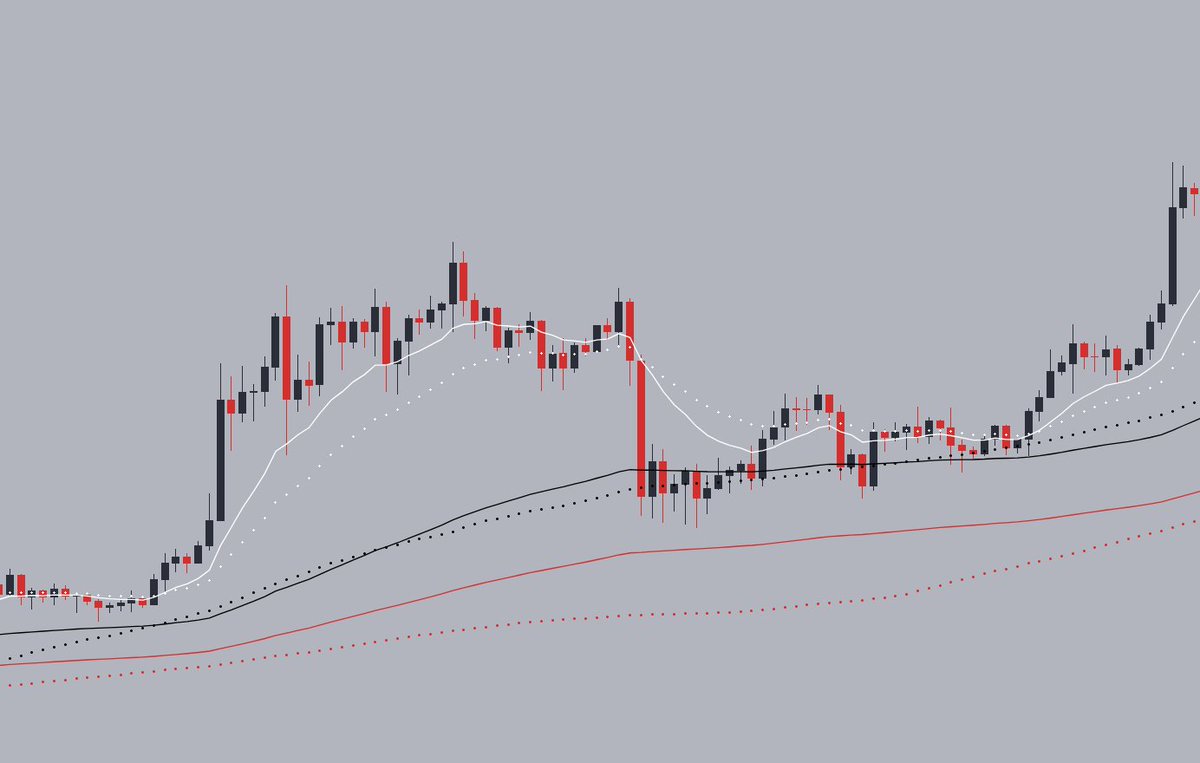
Conclusion: if you trade high timeframes, you better bring your steel hands and diamond balls.
So, which timeframe is more important? This naturally depends on your trading style, but in any case, the higher timeframes are considered to be the stronger ones.
In other words, HTF S/R levels are generally respected across all timeframes, whereas a LTF level will likely be completely ignored on the higher timeframes.
Regardless of your style, I recommend mapping out the HTF levels. Start with monthly, then weekly and daily levels.
Regardless of your style, I recommend mapping out the HTF levels. Start with monthly, then weekly and daily levels.
These will be the most important levels that many will have marked out. There will be low-timeframe volatility around the HTF levels, which often allows for great scalps.
I also recommend monitoring lower-timeframe PA around your level to get an idea of what the close will be like. For example, if the 1h chart looks like a dog's dinner a few hours before daily close, it will probably affect the daily candle.
You have to find which timeframe works for you. If you are generally impatient, lower timeframes will work better for you. If you're patient and risk-averse, trade the higher timeframes.
Or, if you're truly a chad, trade HTF and also scalp around the levels.
Or, if you're truly a chad, trade HTF and also scalp around the levels.
Most important of all, do NOT let ugly looking lower timeframes shake you out of high timeframe positions. This happens all the time, don't be that guy.
Long story short:
- Map out HTF levels
- Watch LTF PA around HTF levels
- Find a timeframe that works for you.
- Don't let lower timeframes affect your high timeframe thesis.
- Map out HTF levels
- Watch LTF PA around HTF levels
- Find a timeframe that works for you.
- Don't let lower timeframes affect your high timeframe thesis.
I hope this helps. If you have any questions, do not hesitate to ask.
If you need an exchange, join me on FTX. I got you a 5% discount on fees :)
#a=cryptojellenl" target="_blank" rel="noopener" onclick="event.stopPropagation()">ftx.com
If you need an exchange, join me on FTX. I got you a 5% discount on fees :)
#a=cryptojellenl" target="_blank" rel="noopener" onclick="event.stopPropagation()">ftx.com
Loading suggestions...