

-=[Contradictions in AUTHENTIC Narrations]
Don’t contradictions in authentic narrations suggest an issue with the hadith system?
Here are some of the forms of contradictions and why these actually give us greater faith in the system.
Don’t contradictions in authentic narrations suggest an issue with the hadith system?
Here are some of the forms of contradictions and why these actually give us greater faith in the system.
[1- Opinions of Companions]
Sometimes two companions differ in regards to a specific matter. One example is Anas stating that the Prophet ﷺ was in Makkah for 10 years, while Ibn Abbas said that he was there for 13 years.
Sometimes two companions differ in regards to a specific matter. One example is Anas stating that the Prophet ﷺ was in Makkah for 10 years, while Ibn Abbas said that he was there for 13 years.
![[1- Opinions of Companions]
Sometimes two companions differ in regards to a specific matter. One ex...](https://pbs.twimg.com/media/EwcCT3rWEAEKdk9.png)
![[1- Opinions of Companions]
Sometimes two companions differ in regards to a specific matter. One ex...](https://pbs.twimg.com/media/EwcCVK4XMAAeTxg.png)
Both attributions are authentic, however, Anas and Ibn Abbas simply disagreed in the same way our parents would disagree with dates that occurred in the distant past. The issue isn’t with attribution. It is with their perception or in this case, their calculations.
While some may assume that this is a point against the system, the reality is the opposite. Realistically, companions will differ in their opinions. One should be more worried if all the attributions to companions showed complete uniformity since that isn’t realistic.
[2- Contradictions due to Incorrect Attributions]
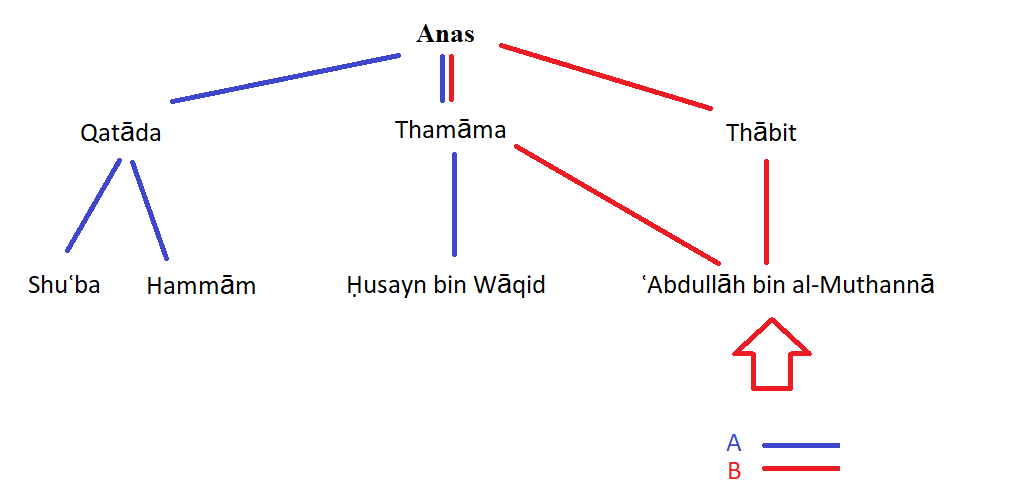
In a report in which Anas boasts about the Khazrajī companions that memorized the Qurʾān, he lists four Khazrajīs that memorized it fully during the time of the Prophet ﷺ: Ubay, Muʿāḏ, Abū Zayd, and Zayd bin Thābit (Set A).
In a report in which Anas boasts about the Khazrajī companions that memorized the Qurʾān, he lists four Khazrajīs that memorized it fully during the time of the Prophet ﷺ: Ubay, Muʿāḏ, Abū Zayd, and Zayd bin Thābit (Set A).
However, another list that is attributed to Anas includes the four as Abū al-Dardāʾ, Muʿāḏ, Abū Zayd, and Zayd bin Thābit (Set B).
Ubay, here, is now Abū al-Dardāʾ.
Doesn’t the existence of two lists prove that narrations were not preserved and that the system has failed?
Ubay, here, is now Abū al-Dardāʾ.
Doesn’t the existence of two lists prove that narrations were not preserved and that the system has failed?
Not at all and the answer is simple. Set A is the correct one and Abū al-Dardāʾ was incorrectly included due to an error by one of the narrators. We wouldn’t be able to come to this conclusion without the isnād system which allowed us to pinpoint the origin of the error.
[3- Abrogation]
The concept of abrogation doesn’t only exist in the Qurʾān, such as the position of the Qibla (Q2:144-145) or the rulings on the consumption of alcohol (Q2:219, Q4:43, Q5:90), but can be found in prophetic narrations as well.
The concept of abrogation doesn’t only exist in the Qurʾān, such as the position of the Qibla (Q2:144-145) or the rulings on the consumption of alcohol (Q2:219, Q4:43, Q5:90), but can be found in prophetic narrations as well.
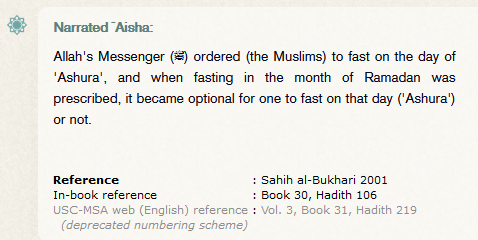
There are only a few authentic clear-cut examples of this occurring. One example is that the Prophet ﷺ ordered the Muslims to fast ʿĀshūrāʾ, but then the ruling was abrogated after the Muslims were ordered to fast the month of Ramadan.

This isn't proof against the system.
Once again, narrations aren’t discarded simply because they aren’t acted upon or because they conflict with standard practices, and theories of political entities controlling narrations would only make sense if complete uniformity existed.
Once again, narrations aren’t discarded simply because they aren’t acted upon or because they conflict with standard practices, and theories of political entities controlling narrations would only make sense if complete uniformity existed.
[Why were these reports recorded?]
There may be many reasons and it all depends on a case-by-case basis.
In cases of authentic attribution to companions, compilers generally saw no issue in providing you their differences of opinions.
There may be many reasons and it all depends on a case-by-case basis.
In cases of authentic attribution to companions, compilers generally saw no issue in providing you their differences of opinions.
As for incorrect attributions, these are generally included in compilations because they don't affect the general meaning of the report to a large degree. Sometimes the author wants you to be aware of variant wordings and differences between the narrators.
As for abrogated reports, authors do generally include them in the same section of the reports that abrogate them. The author does not intend to confuse you, so you will have to read complete chapters instead of relying on search engines for reports.
[Other]
Other forms of reports seem to fall under the category of contradictions but aren’t at all. Much of these are actually reconcilable.
Scholars as early as al-Shafiʿī, Ibn Qutayba, and al-Ṭaḥāwī have authored works in order to reconcile what looks like a contradiction.
Other forms of reports seem to fall under the category of contradictions but aren’t at all. Much of these are actually reconcilable.
Scholars as early as al-Shafiʿī, Ibn Qutayba, and al-Ṭaḥāwī have authored works in order to reconcile what looks like a contradiction.
It is also recommended to refer to commentaries that are dedicated to canonical texts, like Ibn Ḥajar’s commentary on al-Bukhārī or al-Nawawī’s commentary on Muslim for explanations of specific narrations that appear problematic.
Hope you found the above beneficial إن شاء الله.
Hope you found the above beneficial إن شاء الله.
Loading suggestions...