
Environment
Environmental Conservation
Conservation
Forestry
Water Source Protection
Sediment Erosion Protection
Sediment Collapse Protection
Coastal Erosion Protection

68% of Japan is covered in forests, and of this 49% is officially protected and can not be logged or cut. All protected forests belong to one or more of 17 nationally recognized classes, each with a different purpose, management strategy, and use. This thread will list them all.

1. Water Source And Recharge Protection Forest (Kochi) stabilizes the flow & charge of waters that protects and conserves basins, rivers, mitigates floods and droughts.
2. Sediment Erosion Protection Forest (Kanagawa) stops soil runoff and protects downhill and downstream areas.
2. Sediment Erosion Protection Forest (Kanagawa) stops soil runoff and protects downhill and downstream areas.


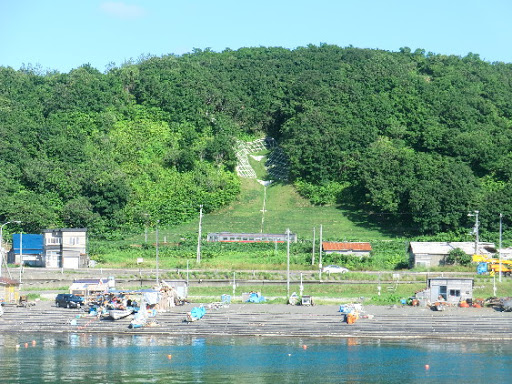
3. Sediment Collapse Protection Forest (Hokkaido) protects roads, railways etc., from damage by binding soil with roots.
4. Flying Sand and Coastal Erosion Protection Forest (Fukui) protects sandy beaches from erosion and protects inland areas from sand damage and shifting dunes.
4. Flying Sand and Coastal Erosion Protection Forest (Fukui) protects sandy beaches from erosion and protects inland areas from sand damage and shifting dunes.

5. Wind Protection Forest (Hokkaido) forms a barrier to resist the wind and reduce or disturb its energy to reduce damages.
6. Flood Protection Forest (Miyagi) prevents and reduces flood damage of embankments etc. and tree trunks can be used to reduce turbulence in emergencies.
6. Flood Protection Forest (Miyagi) prevents and reduces flood damage of embankments etc. and tree trunks can be used to reduce turbulence in emergencies.


7. Tidal Wave Protection Forest (Okinawa) helps prevent damages from salt water spray, storm surges and tsunami waves.
8. Drought Protection Forest (Fukui) prevents droughts, protects local water sources, helps mitigate floods.
8. Drought Protection Forest (Fukui) prevents droughts, protects local water sources, helps mitigate floods.


9. Drift Snow Protection Forest (Hokkaido) stops snow from drifting onto railway tracks, roads, towns and villages.
10. Fog protection Forest (Hokkaido) creates turbulence in airflow to prevent fog movement and trap fog particles to prevent damages due to limited visibility etc.
10. Fog protection Forest (Hokkaido) creates turbulence in airflow to prevent fog movement and trap fog particles to prevent damages due to limited visibility etc.


11. Avalanche Protection Forest (Toyama) prevents buildup of snow, weakens the momentum of avalanches and used to control avalanche direction away from populated areas.
12. Rockfall Protection Forest (Gifu) where the roots bind hillsides together to prevent rocks falling below.
12. Rockfall Protection Forest (Gifu) where the roots bind hillsides together to prevent rocks falling below.


13. Fire Protection Forest (Hyogo) of fire resistant trees or a fireproof zone as a barrier against flames or spread.
14. Fish Protection Forest (Kyoto) supports the habitat & reproduction of fish by projecting the shadow of the forest on water, nutrients, preventing pollution.
14. Fish Protection Forest (Kyoto) supports the habitat & reproduction of fish by projecting the shadow of the forest on water, nutrients, preventing pollution.


15. Navigational Aid Forest (Nagasaki) to serve as a visual aid & help boats safely navigate archipelagos, reefs.
16. Human Health Forest (Gunma) to provide recreation that promotes healthy activities or suitable for “forest bathing”, or filters soot and promotes a cleaner air.
16. Human Health Forest (Gunma) to provide recreation that promotes healthy activities or suitable for “forest bathing”, or filters soot and promotes a cleaner air.


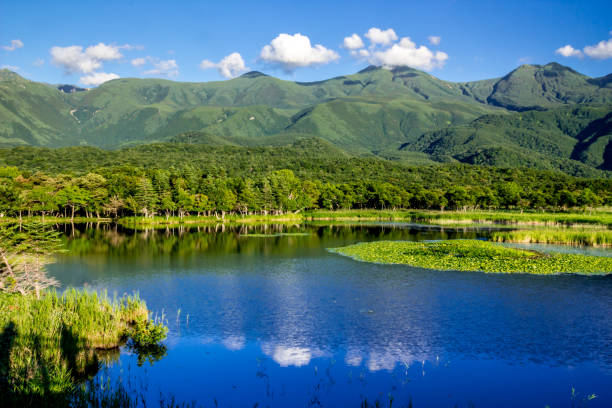
17. Scenic Forest (Yamaguchi) to protect iconic or quaint landscapes and scenery with cultural, historic or aesthetic values.
Note: (bracketed are example prefectures where this type of protected forests exits, most pref. have 6-10 types each)
Note: (bracketed are example prefectures where this type of protected forests exits, most pref. have 6-10 types each)

In addition to the protected forest classes, there are also privately owned voluntarily protected forests, national parks, geological parks containing forests, local unique classes etc. that exists outside the 17 official classes.
Loading suggestions...