
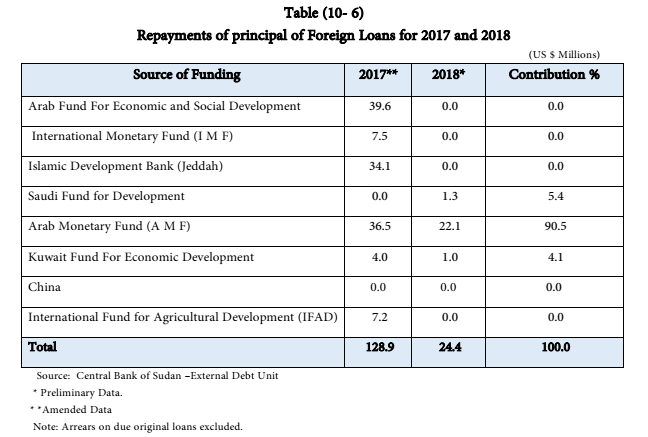
The old regime of Omar al Bashir let arrears and penalty payments mount up. Sudan owes money to Western, Gulf and Asian countries, IFIs and commercial banks, only repaying creditors who still offered credit. Here's what they paid back in 2018, from cbos.gov.sd
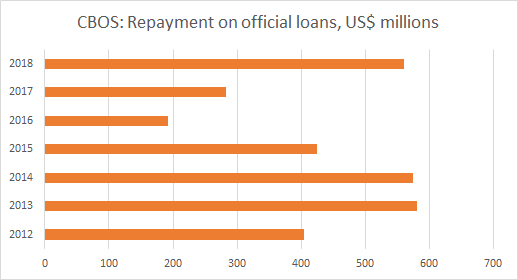
From 2012-18, the central bank says that repayments averaged about 400 million US dollars
The IMF also keeps tabs on Sudan's debts, but uses different methods. A key metric is debt service to exports ratio - how much export earnings are needed to pay debt. The IMF says that this ratio has been lower than most middle and low income countries - Sudan's been paying less.
IMF projections suggest that debt service to shoot up over the next two years - this is from their 2020 Debt Sustainability Analysis
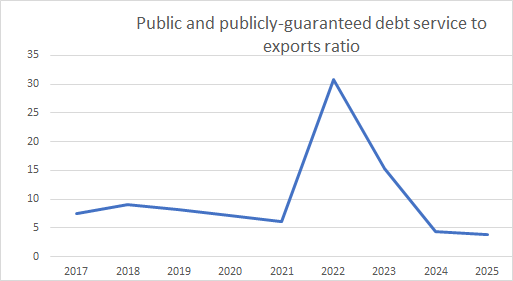
The big spike in debt service is coming because Sudan needs to pay back big short-term cash loans to Saudi Arabia and the UAE. The IMF thinks that the debt service to export ratio will go down sharply after these loans are repaid 'under the SMP scenario'

'The SMP scenario' means successful implementation of the reforms, which are getting off to a bumpy start (inflation is going up and the Sudanese pound is losing value). Successful reform means that Sudan will qualify for debt relief, and the 50-70 billion dollar debt will shrink
But if you ask the finance minister or European creditors if debt service will actually go down, they can't answer. It depends on the reforms, and then depends on negotiations with different creditors and cartels of creditors.
Debt relief will allow Sudan to participate in the global financial system, they say - it will be able to borrow more money. But will it be able to pay less? That depends, they say.
It's a huge question for Sudan, and for the people who actually earn that money. Nearly all of Sudan's export earnings come from crops and livestock, gold and oil - in that order. Here's the Central Bank's account of formal commodity exports (US$ '000s)
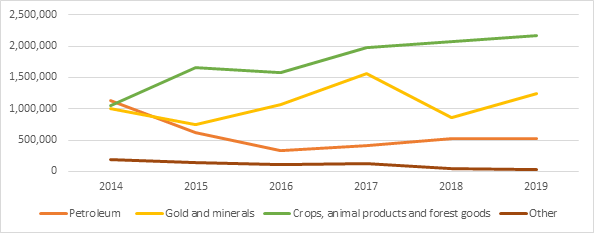
If Sudan's debt repayments go up, farmers, herders and miners will need to foot the bill, at least until Sudan develops other exports. Will repayments increase? Genuine question @dropthedebt @brettonwoodspr @IMFNews @CADTM_int @StillSUDAN
Loading suggestions...