

1/ goooooood morning, #MedTwitter, and happy #12LeadThursday-on-a-Friday! Remember to approach every ECG systematically, and let’s get started!
What do you see in the 12-lead below?
What do you see in the 12-lead below?
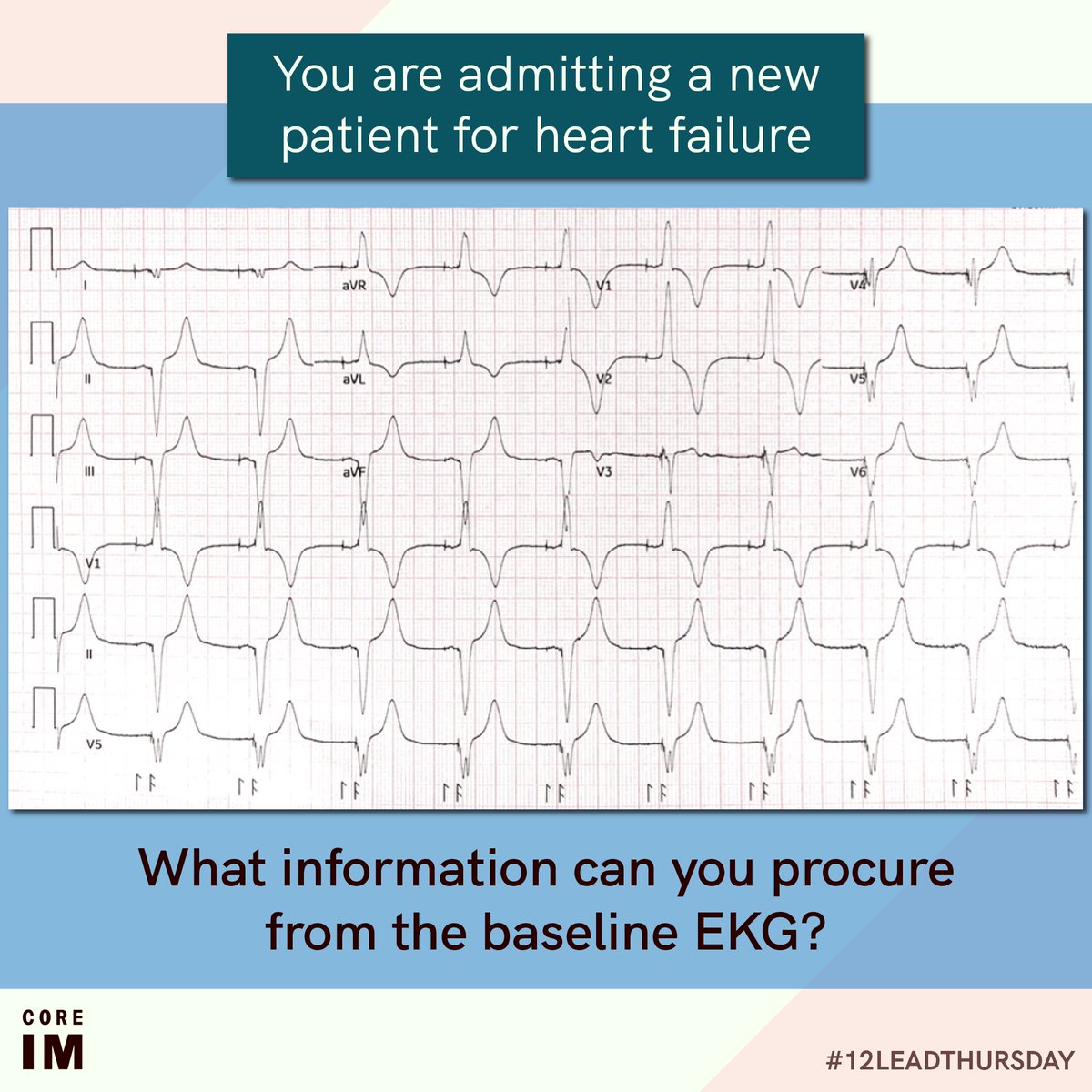
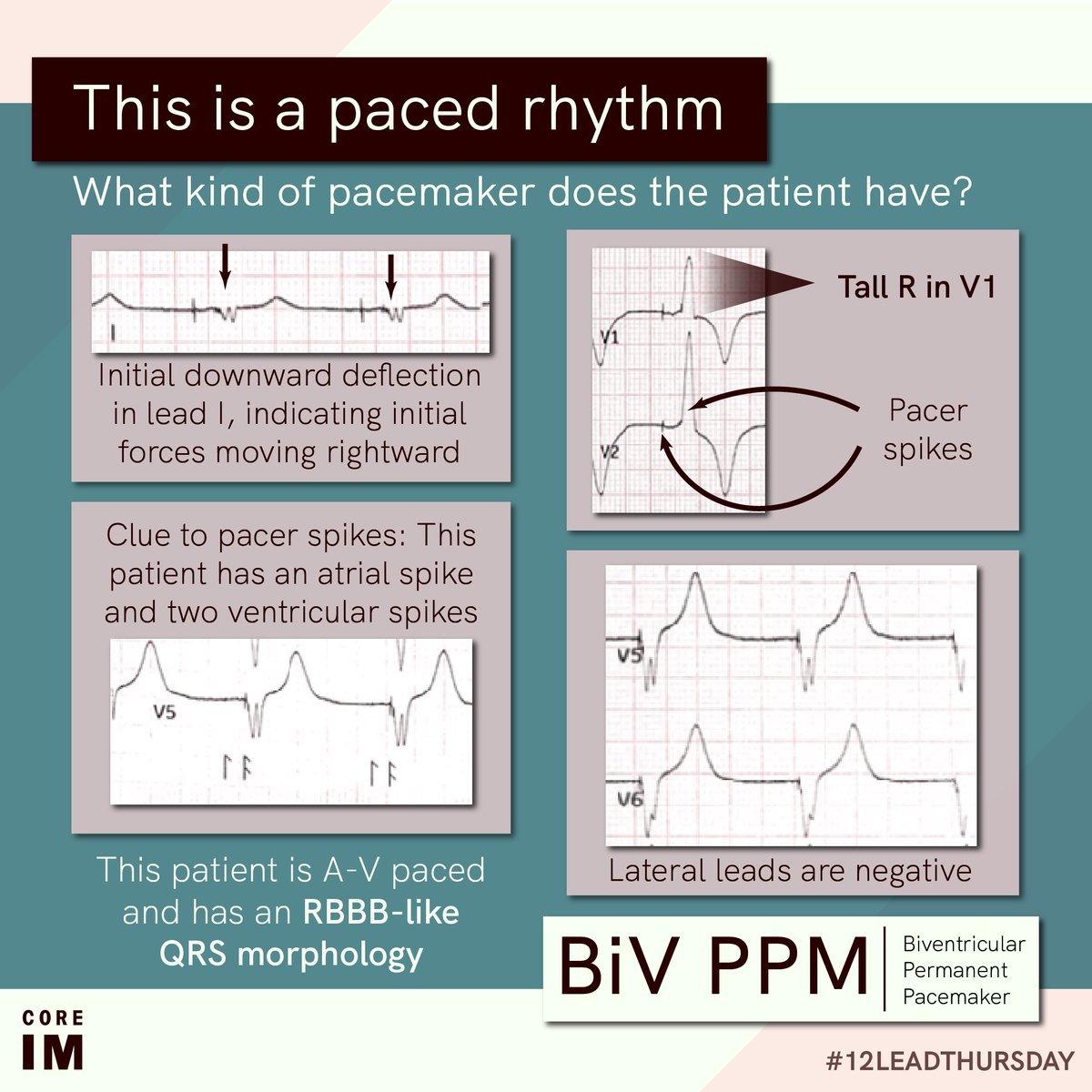
2/ Look closely - you’ll see we’ve got 3 pacer spikes for each beat: 1 atrial spike and 2 ventricular spikes. This, plus the RBBB morphology and negative lateral leads tells us this patient has a BiV PPM. Next Q: how would the EKG from a single-lead PPM differ?
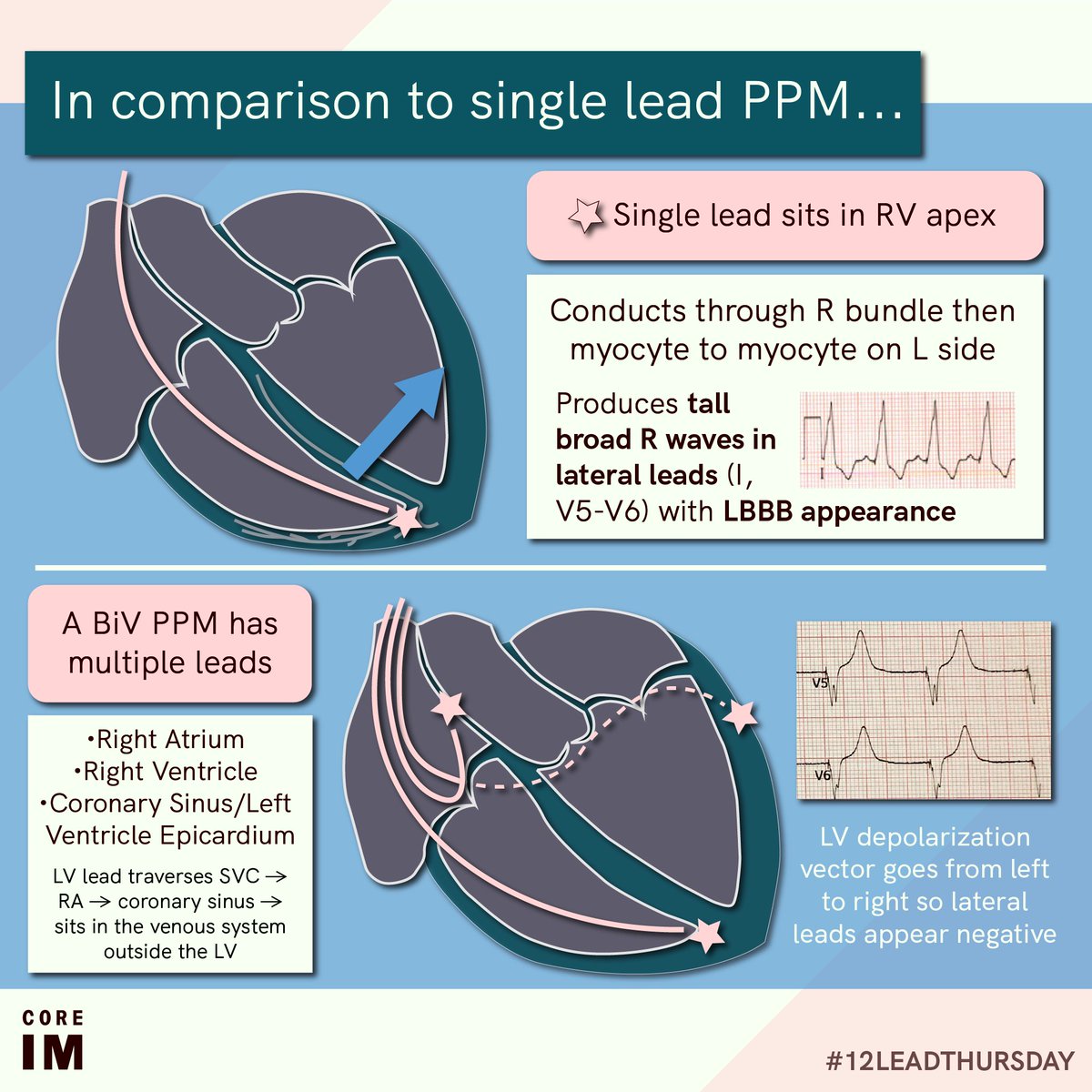
3/ Understanding how the leads are set up helps you imagine the EKG: with a single lead in the RV apex, these PPMs use the RBB and give the appearance of a LBBB with tall, broad QRS complexes in the lateral leads.
Next Q: is there any other way to determine the PPM type?
Next Q: is there any other way to determine the PPM type?
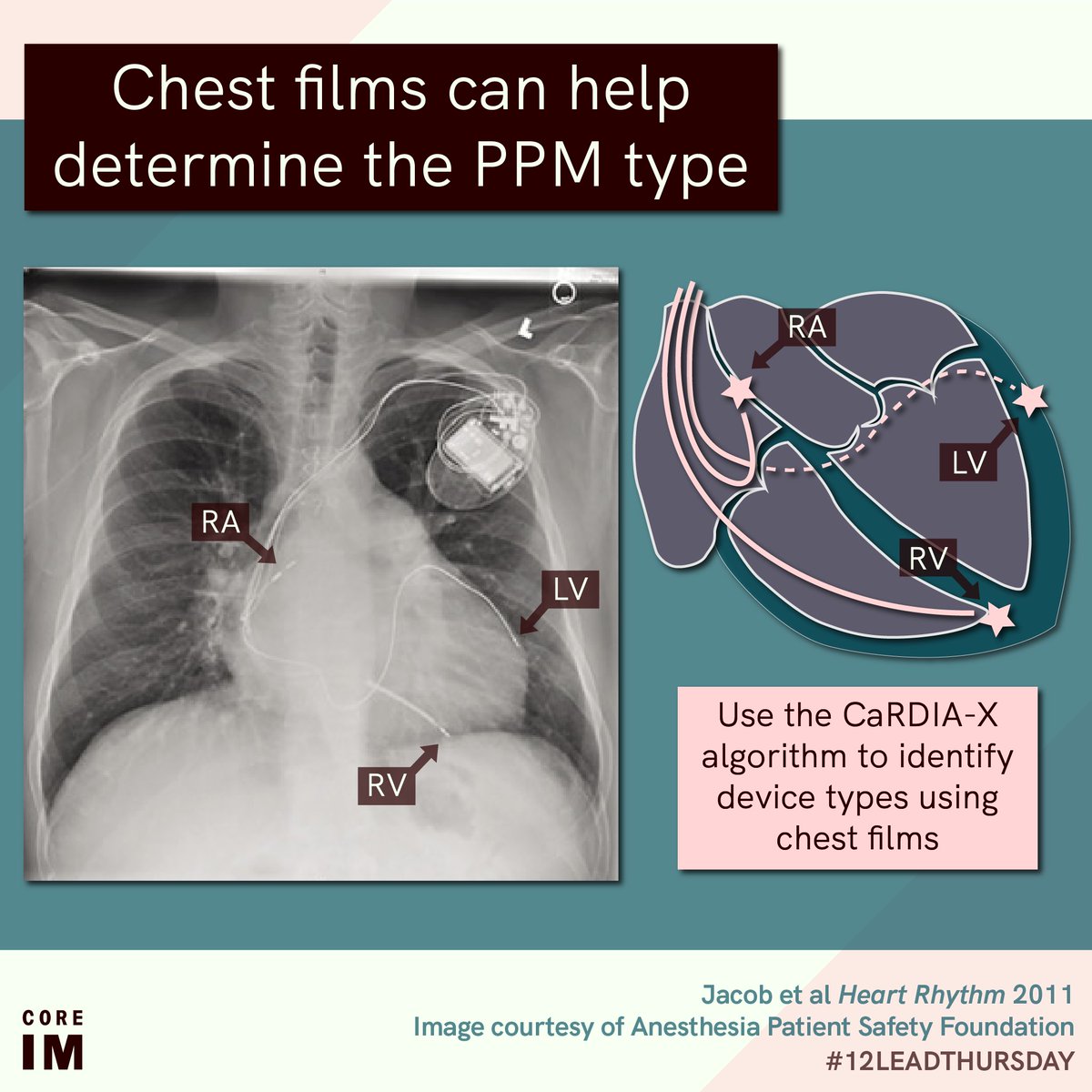
4/ Roentgenograms can be useful - there’s even an app now that can “read” the CXR and suggest what kind of PPM they have! @IdPacemaker pacemakerid.com
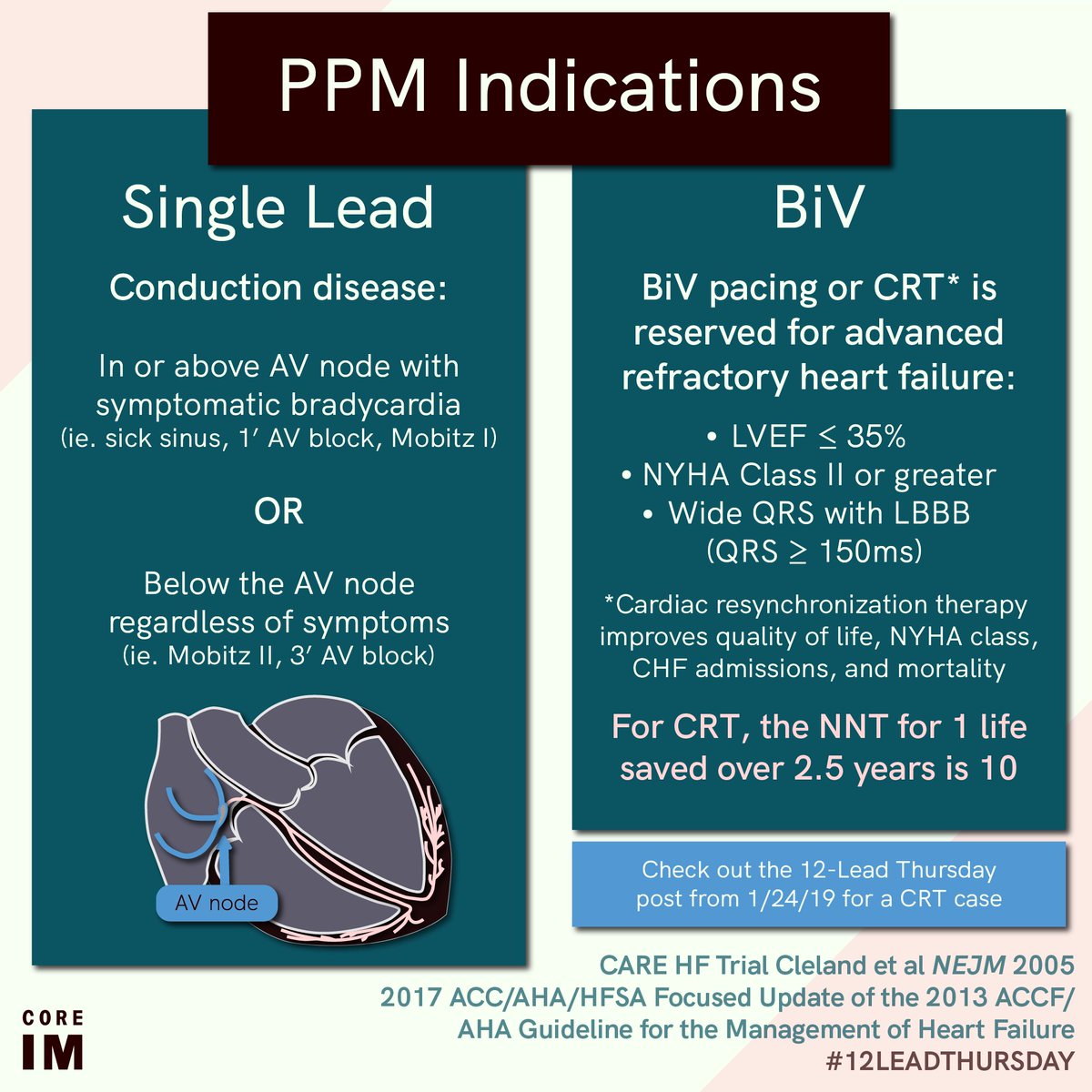
Next Q: what are the indications for BiV PPM?
Next Q: what are the indications for BiV PPM?
5/ Single lead PPMs are placed for conduction disease generally, while BiV PPMs are reserved for folks with advanced, refractory HFrEF and a LBBB.
6/ Thats it for today. You can find this post and more on our website: coreimpodcast.com
Credit where credit is due: Graphics by @RahulM_MD
Content by @KelseyGrossman and @gregorykatz
Credit where credit is due: Graphics by @RahulM_MD
Content by @KelseyGrossman and @gregorykatz
7/ To recap: ECGs and CXRs can tell us what kind of PPM a patient has, which in turn can clue us in as to what kind of cardiac history they have.
/fin
/fin
Loading suggestions...