

Differential Diagnosis of Corpus Callosum Lesions: Beyond the Typical Butterfly Pattern – bit.ly
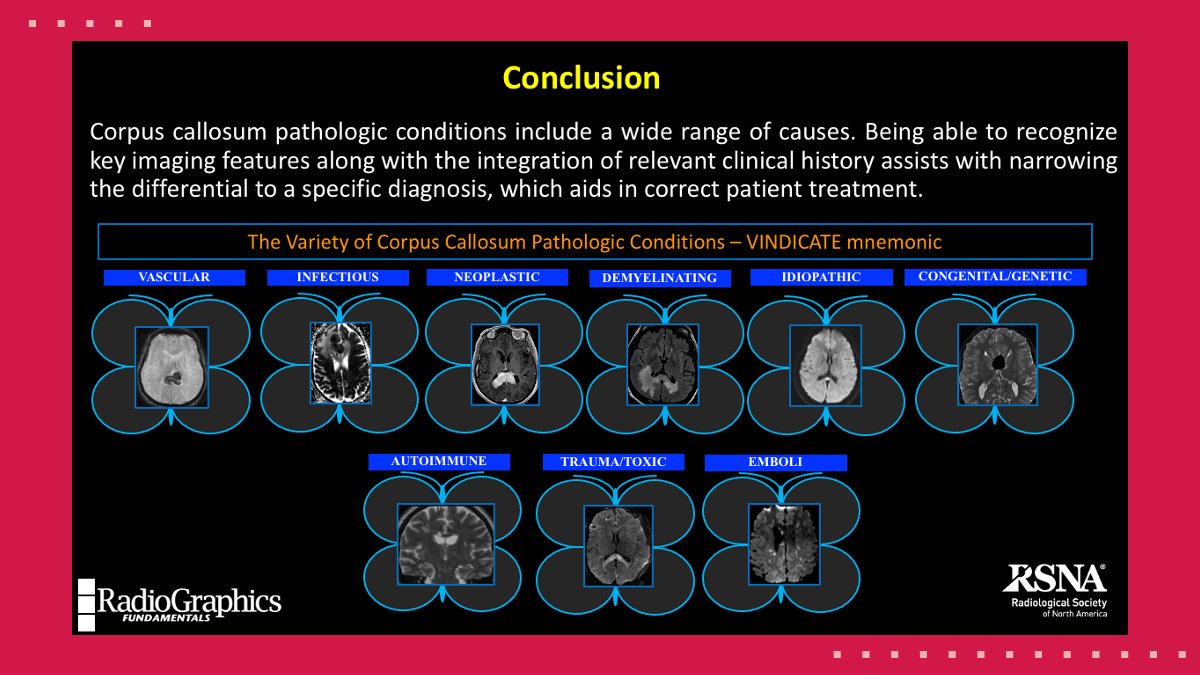
Check out this #RGFundamentals presentation from @YiYangMD and colleagues illustrating the wide range of pathologies that may affect the corpus callosum.
#RGphx 🧵
Check out this #RGFundamentals presentation from @YiYangMD and colleagues illustrating the wide range of pathologies that may affect the corpus callosum.
#RGphx 🧵
More than 2 dozen cases of corpus callosum pathology are presented, organized using an adapted VINDICATE mnemonic.
#RGphx
#RGphx
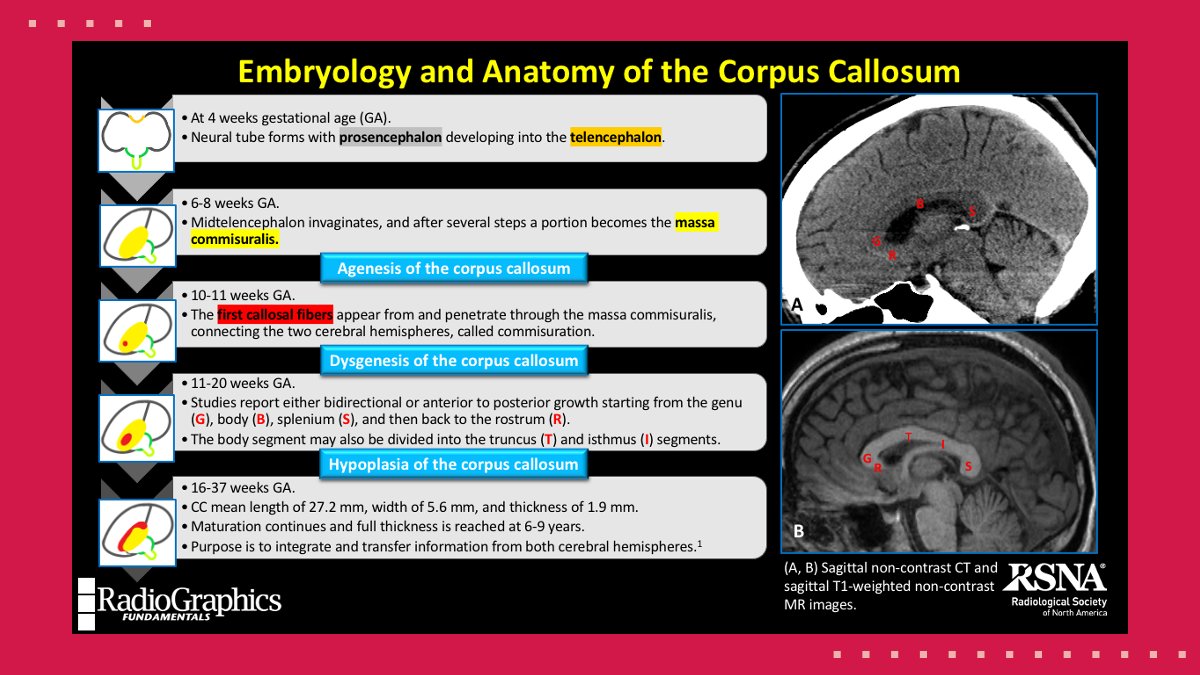
Let’s start with some embryology and anatomy.
#RGphx
#RGphx
Most of the corpus callosum is supplied by anterior cerebral artery branches; however, the splenium is supplied by the posterior pericallosal artery, a branch of the posterior cerebral artery.
#RGphx
#RGphx

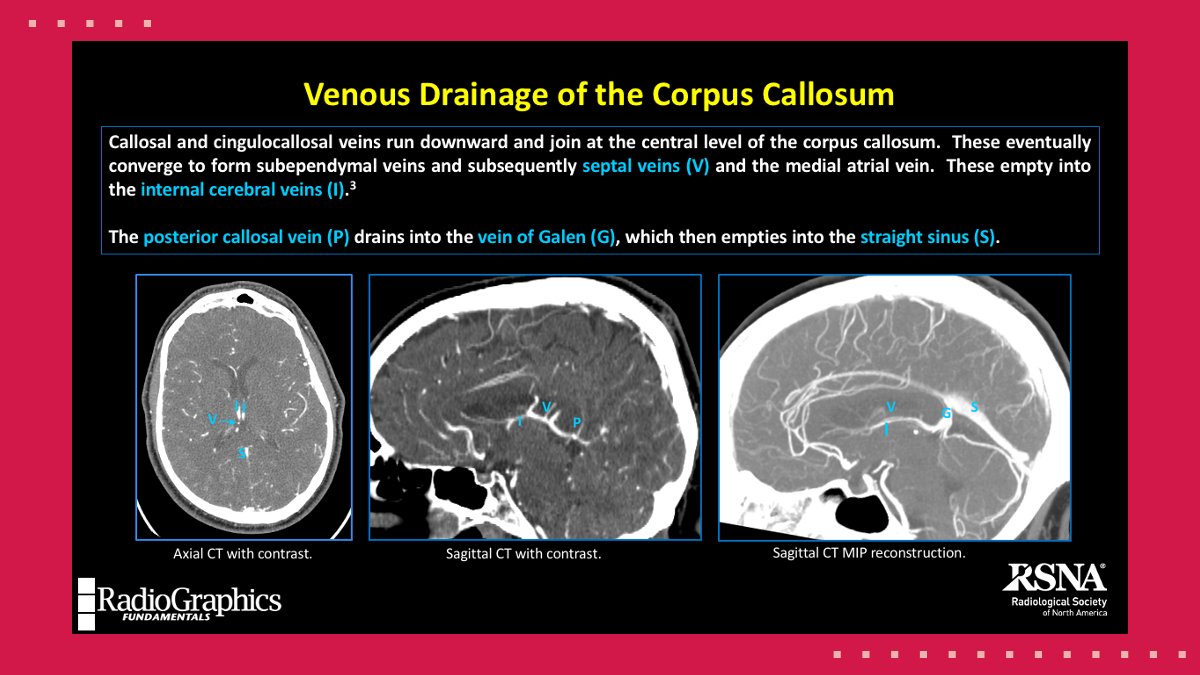
Venous drainage of the corpus callosum occurs via the deep cerebral venous system.
#RGphx
#RGphx
This modified VINDICATE mnemonic provides a useful framework for approaching lesions of the corpus callosum.
#RGphx
#RGphx

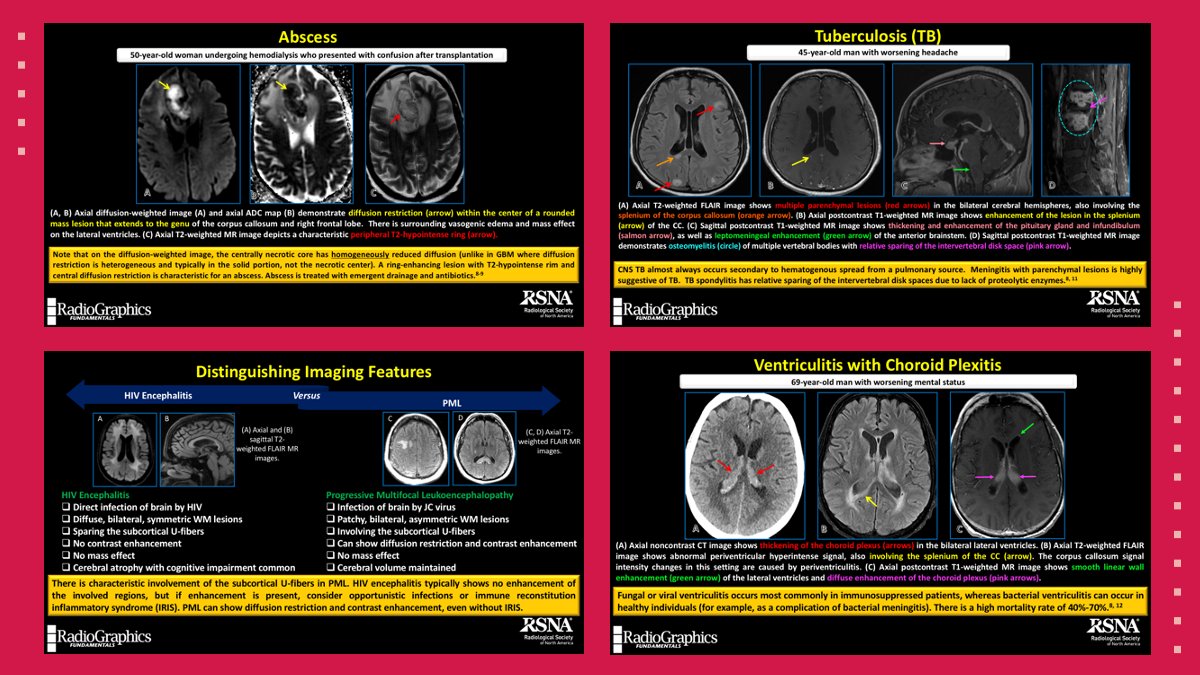
A variety of infectious etiologies can affect the corpus callosum, including pyogenic abscess, tuberculosis, and HIV.
#RGphx
#RGphx
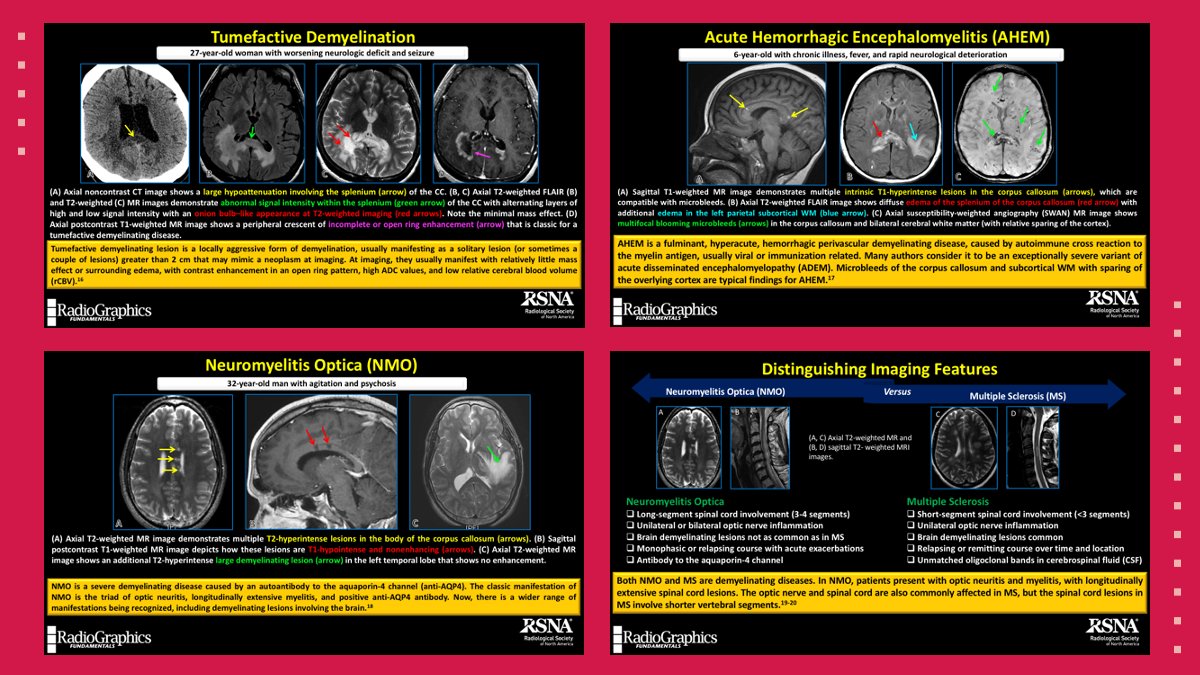
Demyelinating diseases may also affect the corpus callosum. Careful attention to spinal cord (long vs short segment) and optic nerve (bilateral or unilateral) involvement can help differentiate between NMO and MS.
#RGphx
#RGphx
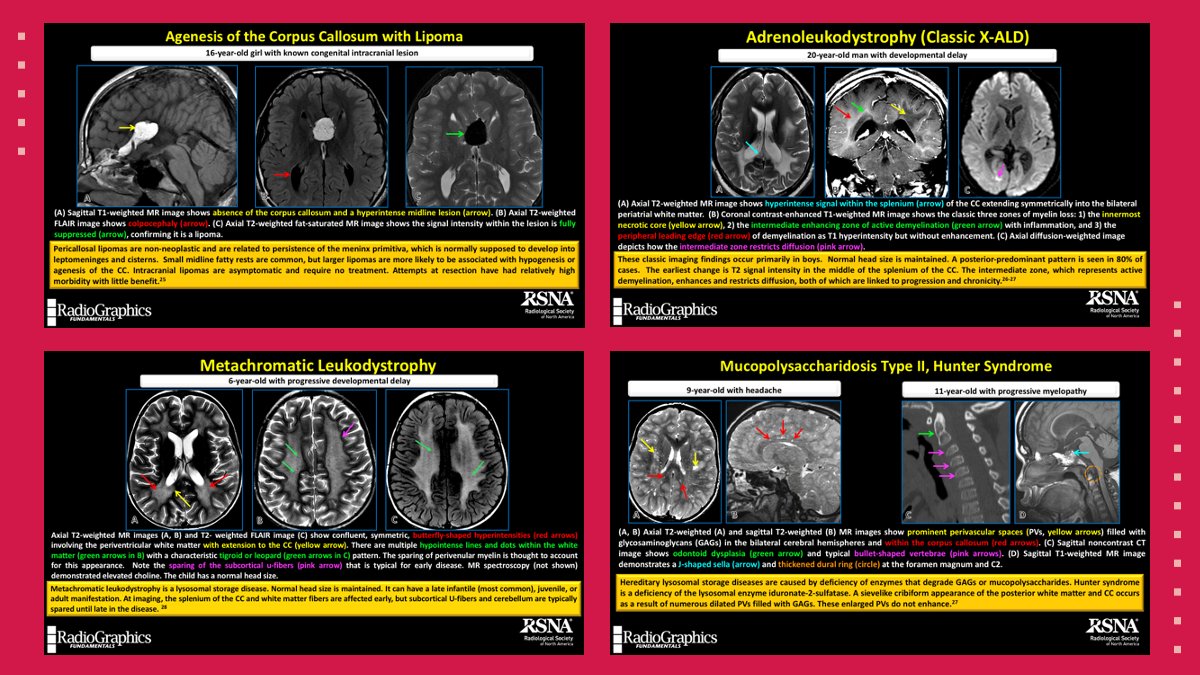
Congenital and genetic pathologies involving the corpus callosum include agenesis with lipoma, certain leukodystrophies, and Hunter syndrome.
#RGphx
#RGphx
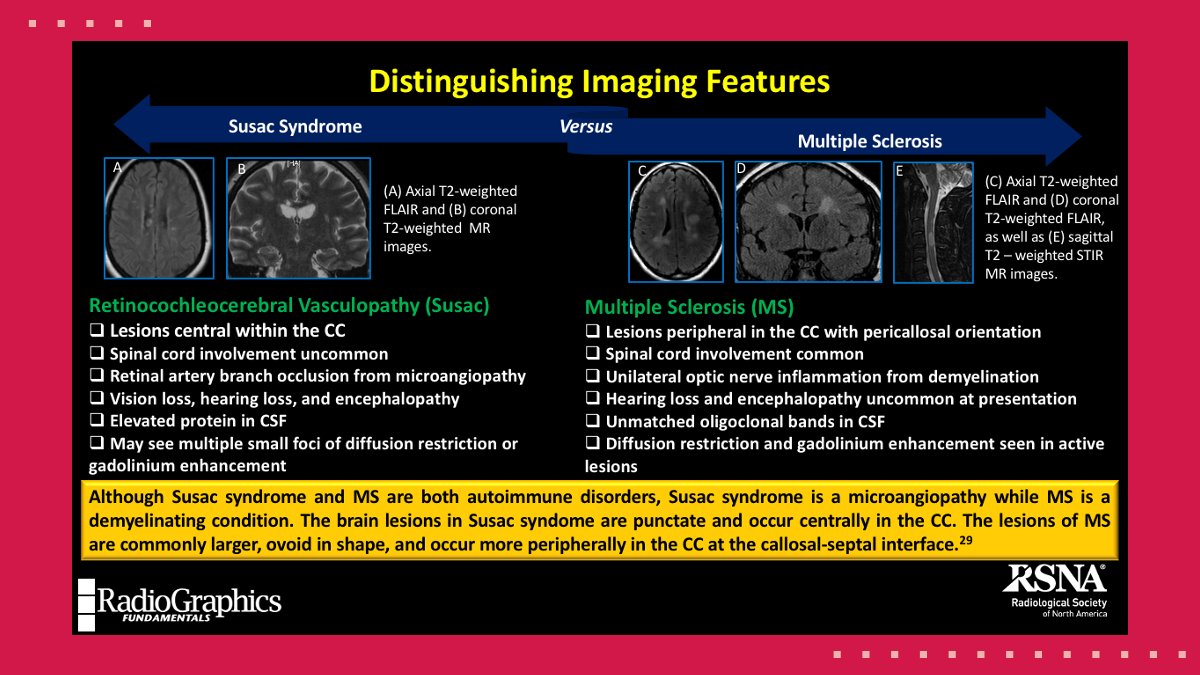
Attention to lesion location within the corpus callosum and correlation with clinical features of vision loss and hearing loss aids differentiation of Susac syndrome from MS.
#RGphx
#RGphx
Loading suggestions...