

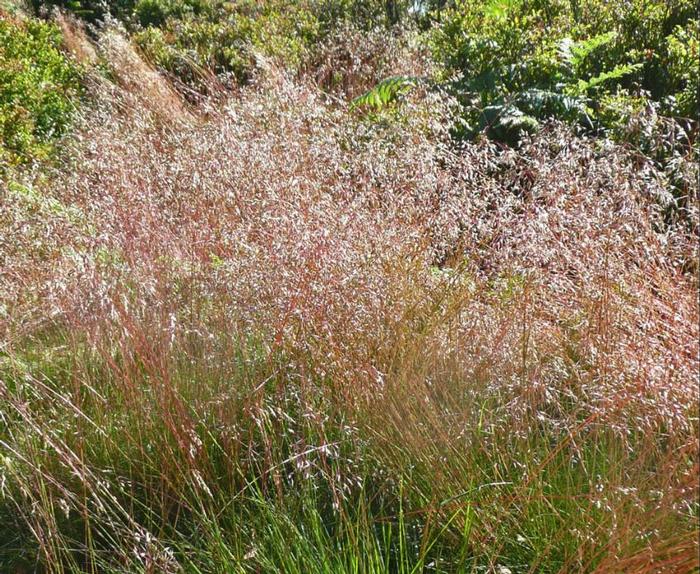
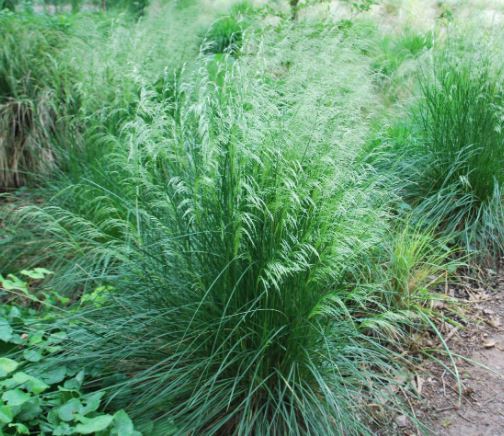
An important genus with 2 dramatically different common species is Deschampsia. The spikelets are all similar and all bisexual. The panicle is open and spreading with long branches. This will take you to Key I in Stace.
We start with an easy one: are the lemmas big (more than 6mm long, left) or not (less than 6mm, right). They are less (right)
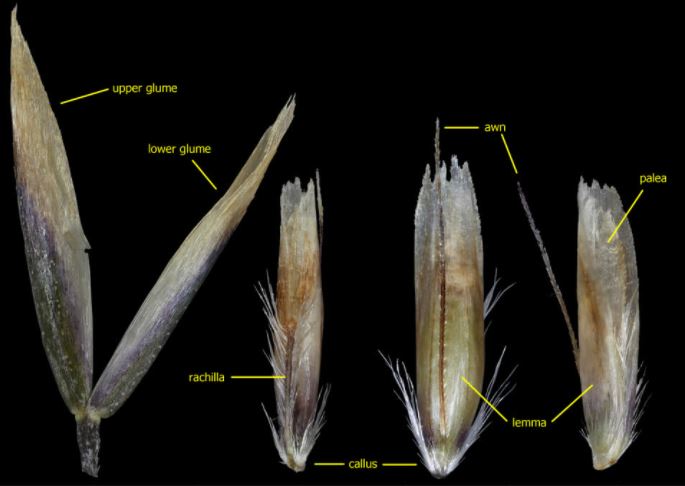
Another easy one: are they easily uprooted annuals or firmly rooted perennials? They are dense tussocks with lots of non-flowering shoots, so it's the latter. Next are the awns club-shaped (left) or not (right). Look very closeley (X10 or X20 ideally). No, definitely not clubbed.
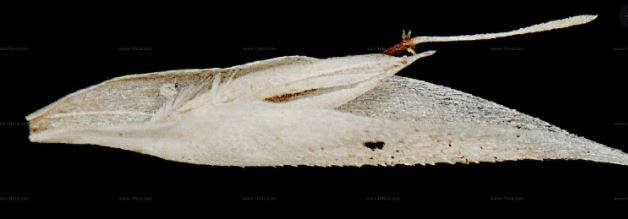
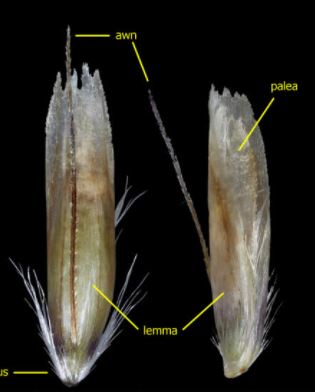
Are the glumes hairy along the midrib (left, this is where Holcus keys out) or glabrous (right)? Our glumes are glabrous (right), so on we go.
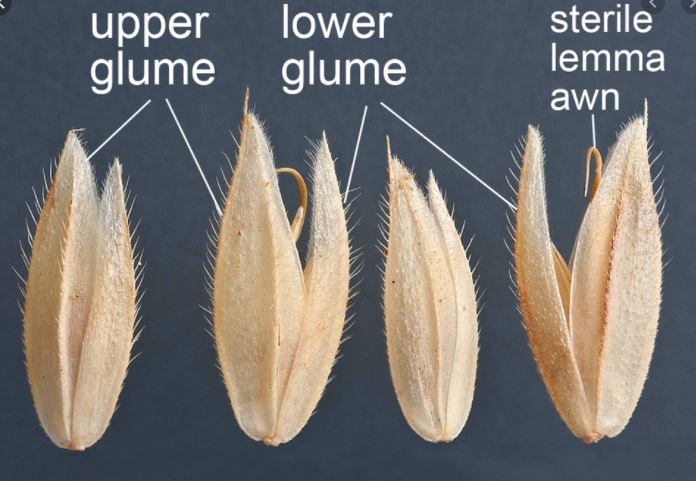
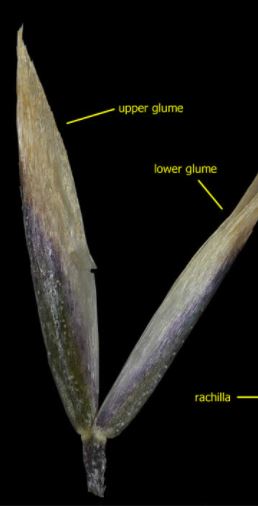
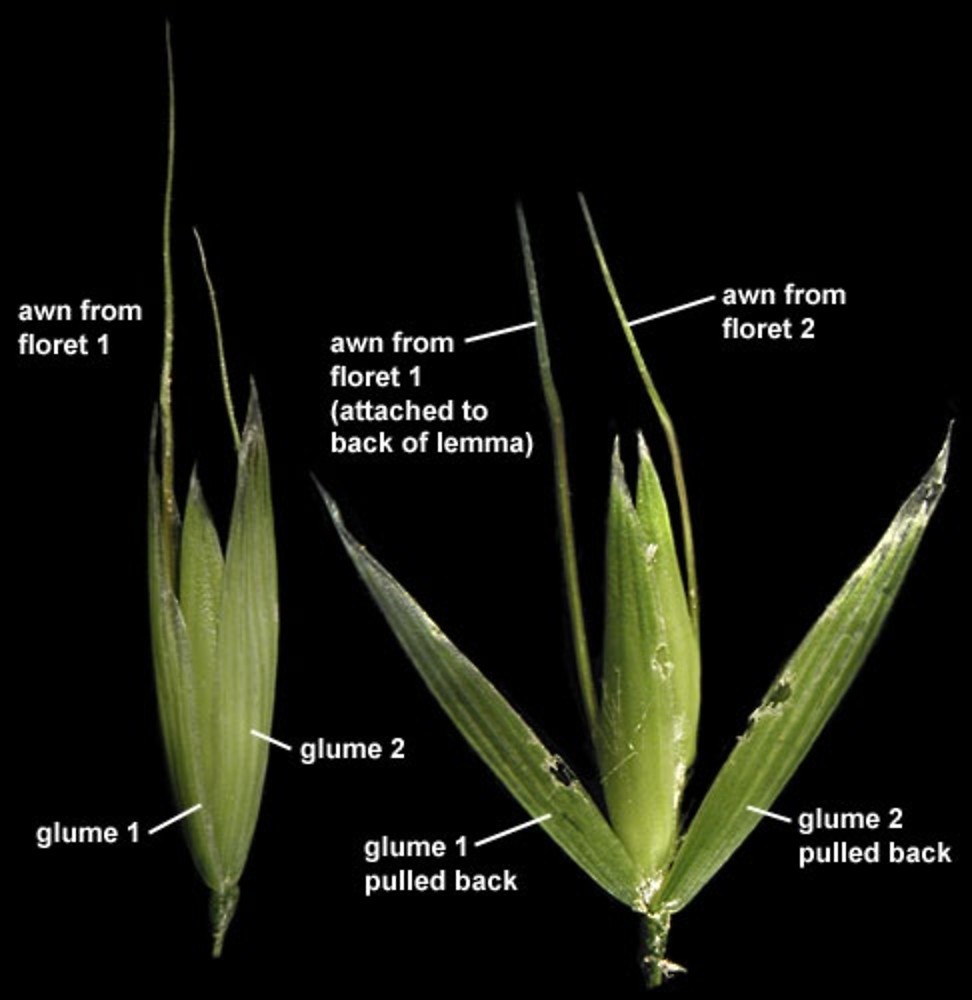
Now measure the upper glume and the spikelet length. Is the upper glume distinctly shorter than the spikelet (left), or nearly as long or longer (right, i.e. hiding the spikelet)? The glumes are long (right), so on we go.
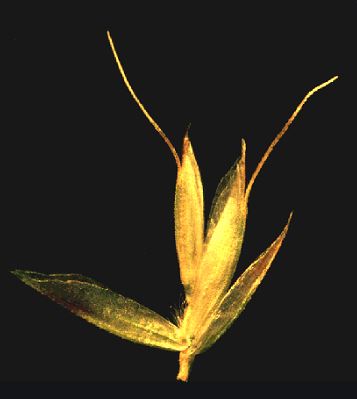
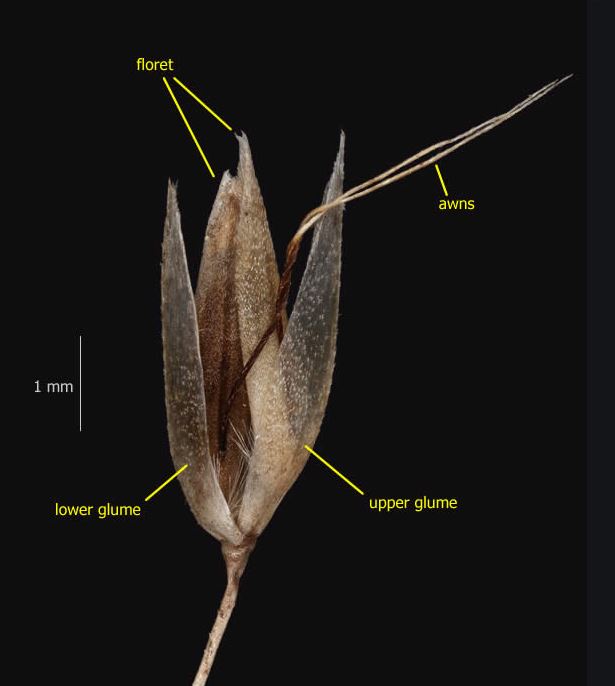
It is at this point that you may discover something that you find rather disquieting. Your favourite 3 Deschampsia species are now in 3 separate genera. The plants with broad, sharp-edged leaves (>1mm wide, even rolled up) are Deschampsia (left). Ours has narrower leaves (right)
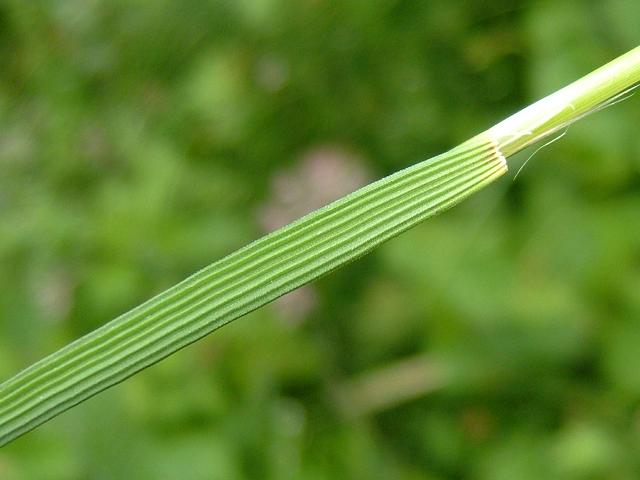
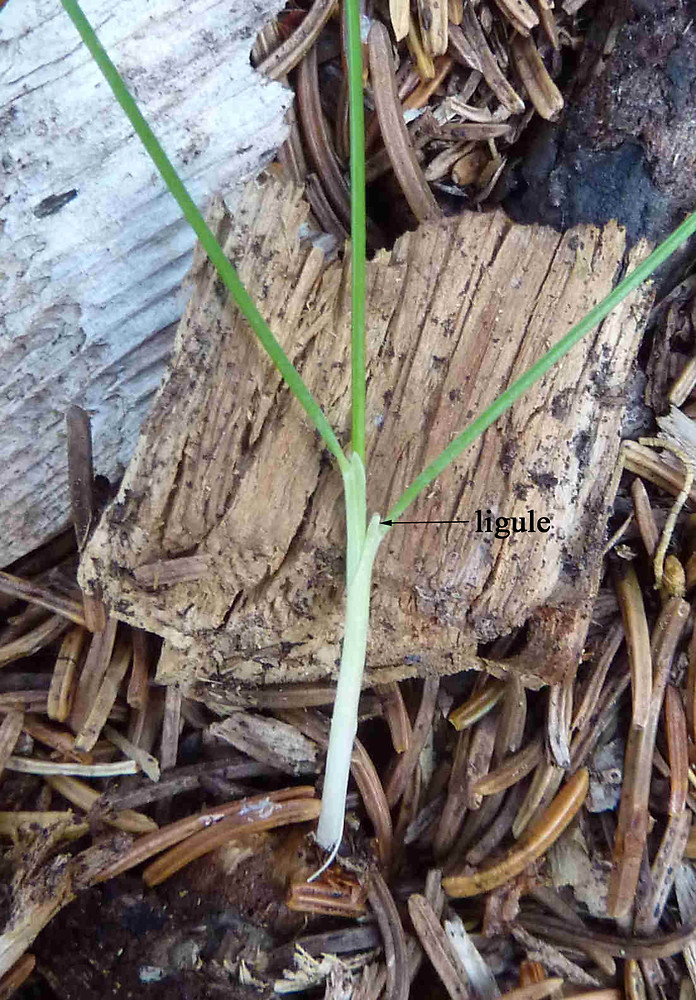
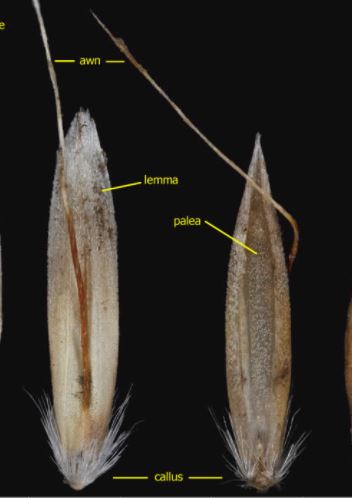
Finally, measure the width of the lemma. Big lemmas (>3mm) are Avenella (left, D. flexuosa as was) and narrow lemmas (<= 3mm) are Aristavena (right, D. setacea as was). At least you don't need to key the speicies any more !
Loading suggestions...