

Are you someone who's starting out to invest?
Are you someone who has probably been investing but at some point realized what is the point of doing it?
Let's try and break things down.
This is a thread on Savings, Inflation, Risk, Return, Equity and everything in between 👇
Are you someone who has probably been investing but at some point realized what is the point of doing it?
Let's try and break things down.
This is a thread on Savings, Inflation, Risk, Return, Equity and everything in between 👇
Let's first start with the concept of Savings.
Maybe you're in a job, run a business or may have just completed an internship.
What gets credited in your account is your 'Income'.
Whatever amount goes out in 'spending' is your 'Expenses'. (1/n)
Maybe you're in a job, run a business or may have just completed an internship.
What gets credited in your account is your 'Income'.
Whatever amount goes out in 'spending' is your 'Expenses'. (1/n)
Excess of your 'Income' over your 'Expenses' is Savings.
With me till here?
If you're someone who's Indian - pat your back because you're part of a country that has one of the highest Saving rate in the world!
Yes! We are great as a country when it comes to saving rate (2/n)
With me till here?
If you're someone who's Indian - pat your back because you're part of a country that has one of the highest Saving rate in the world!
Yes! We are great as a country when it comes to saving rate (2/n)
The second dimension to this equation is 'Inflation'.
What the ___ is inflation?
CPI, WPI, Basket of goods, fuel, vegetables and what not.
Often you would have heard terms like these been juggled around confusing the ____ out of you. (3/n)
What the ___ is inflation?
CPI, WPI, Basket of goods, fuel, vegetables and what not.
Often you would have heard terms like these been juggled around confusing the ____ out of you. (3/n)
Think of inflation as something that is not in your control and something that makes things expensive every year.
Say a pack of milk costs 100 rupees today.
After a year there is a 99% chance it will cost you 106 rupees.
What's the inflation?
6 rupees! (4/n)
Say a pack of milk costs 100 rupees today.
After a year there is a 99% chance it will cost you 106 rupees.
What's the inflation?
6 rupees! (4/n)
Why is this 6 and not 5 and not 7 is a topic for another thread.
But you get the drift, right?
As a society we always talk about things getting expensive, food becoming dearer or petrol prices inching higher. (5/n)
But you get the drift, right?
As a society we always talk about things getting expensive, food becoming dearer or petrol prices inching higher. (5/n)
But conversations around increasing incomes are rare (Like this thread, thanks).
So, we've understood savings and inflation.
Where do we invest our savings is very important to assess whether we will have the capability to beat inflation. (6/n)
So, we've understood savings and inflation.
Where do we invest our savings is very important to assess whether we will have the capability to beat inflation. (6/n)
As per a RBI report published a few years back, Indians parked close to 90% of their savings in real estate and gold.
These are the two asset classes that haven't necessarily beaten inflation year on year.
What about financial assets? (7/n)
These are the two asset classes that haven't necessarily beaten inflation year on year.
What about financial assets? (7/n)
LIC policies, ULIPs, Chit Funds, Bank Deposits, Equities.
That is the order of preference when it comes to Indians choosing to invest in Financial Assets.
Has equity as an asset class outperformed all the other asset classes? Yes.
Will it continue to do so? Let's see. (8/n)
That is the order of preference when it comes to Indians choosing to invest in Financial Assets.
Has equity as an asset class outperformed all the other asset classes? Yes.
Will it continue to do so? Let's see. (8/n)
Allow me to introduce to you a concept of Risk and Returns.
This is a graph that has been shown to us since a very young age. (9/n)
This is a graph that has been shown to us since a very young age. (9/n)

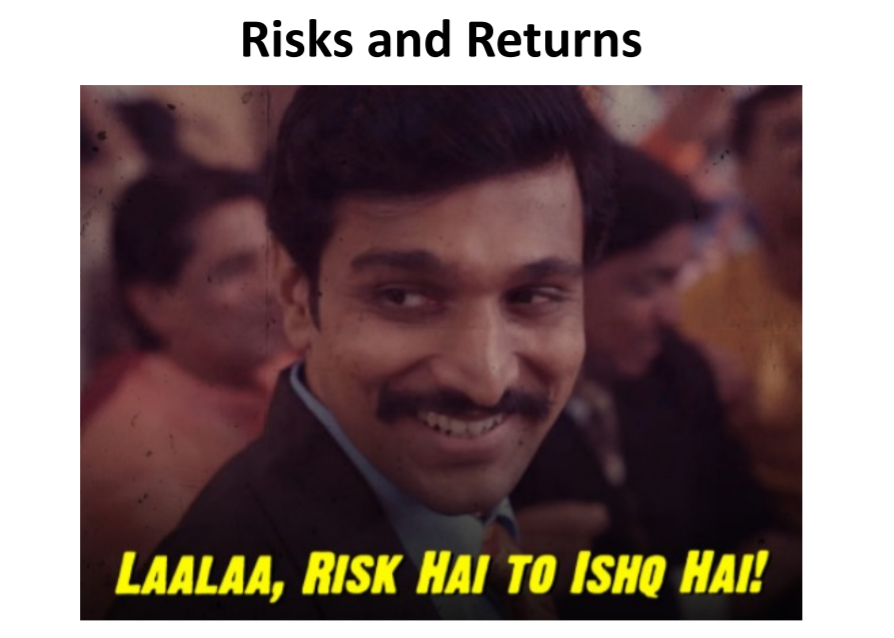
But in the Indian context, we often go like this. (10/n)
Howard Marks, in a presentation for the CFA Society in India moderated by @Sanjay__Bakshi had a very lucid explanation for the Risk Return tradeoff.
His point was simple.
If taking on higher risks generated higher returns, why are they even risky in the first place? (11/n)
His point was simple.
If taking on higher risks generated higher returns, why are they even risky in the first place? (11/n)
So how to look at the Risk-Return trade-off?
Well, higher the risk, higher is the range of returns. When you're at the highest end of the risk spectrum, your payoff can also be negative. (12/n)
Well, higher the risk, higher is the range of returns. When you're at the highest end of the risk spectrum, your payoff can also be negative. (12/n)
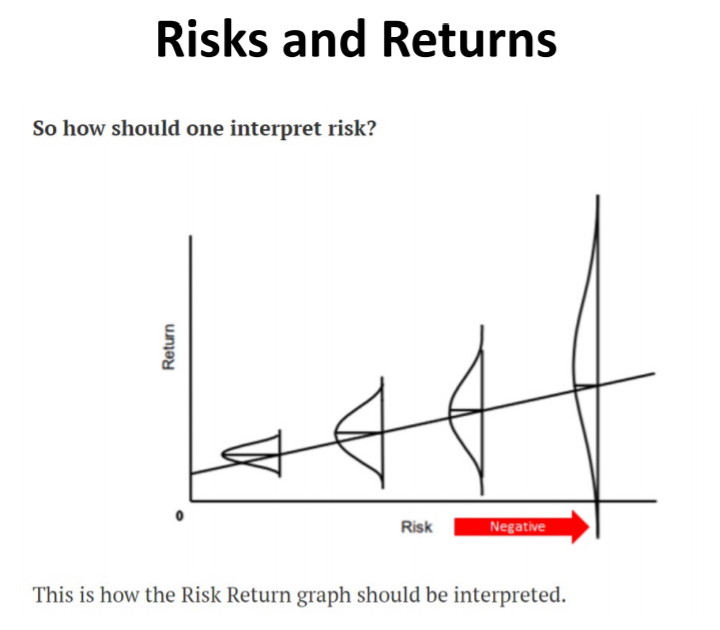
Real Estate could somewhere be at the extreme left whereas equities could be somewhere towards the right and cryptocurrencies maybe at the extreme right.
As an investor one should try and assess the Risk Adjusted Returns over just Returns. (13/n)
As an investor one should try and assess the Risk Adjusted Returns over just Returns. (13/n)
So, we've covered savings, inflation, Risks and Returns.
Time for *Drumrolls*
Equities!
Before you get into equities, it is important to assess and understand what is your time-frame.
(14/n)
Time for *Drumrolls*
Equities!
Before you get into equities, it is important to assess and understand what is your time-frame.
(14/n)
But before that, you must be thinking - Why is @mehrotra_saket taking the effort to write all this?
Well, I am on a mission.
Inspired by @shivsharma_5 this mission has 3 objectives. (15/n)
Well, I am on a mission.
Inspired by @shivsharma_5 this mission has 3 objectives. (15/n)
1. All Indians should have basic understanding of personal finance and investing principles
2. Indians should benefit from wealth creation from stock markets
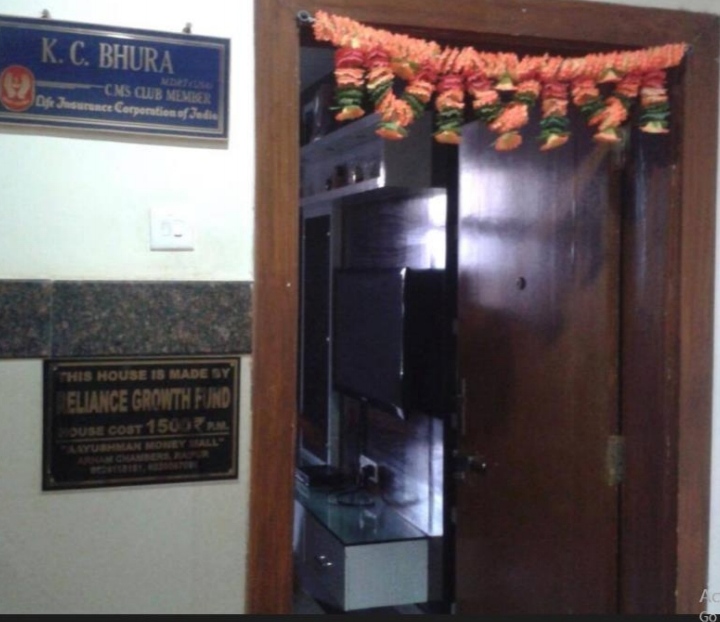
3. Atleast 100 Indians are able to have something like this outside their house in 10 years. (16/n)
2. Indians should benefit from wealth creation from stock markets
3. Atleast 100 Indians are able to have something like this outside their house in 10 years. (16/n)
Back to Equities.
Understanding three objectives are key.
1. Your Characteristic
2. Your Timeframe
3. Passive vs. Active (17/n)
Understanding three objectives are key.
1. Your Characteristic
2. Your Timeframe
3. Passive vs. Active (17/n)
Let's start with the first one.
Are you an investor or a trader?
Typically an investor thinks long term, reads financials, understands business models and typically holds companies for long term. (18/n)
Are you an investor or a trader?
Typically an investor thinks long term, reads financials, understands business models and typically holds companies for long term. (18/n)
On the other hand, a trader thinks short term, looks for changes in prices in a short span of time and takes advantage to make gains.
Typically he would be interested in 'technical analysis' whereas the investor is interested in 'fundamental analysis'. (19/n)
Typically he would be interested in 'technical analysis' whereas the investor is interested in 'fundamental analysis'. (19/n)
In India, Technical Analysis (TA) is actually very popular compared to Fundamental Analysis (FA).
Today if you go online and search about a stock, there is a 90% chance you will get more TA videos than FA.
(20/n)
Today if you go online and search about a stock, there is a 90% chance you will get more TA videos than FA.
(20/n)
2. Timeframe
Knowing the timeframe is key.
Today everyone is excited about equities.
Why?
It has been a great year!
(21/n)
Knowing the timeframe is key.
Today everyone is excited about equities.
Why?
It has been a great year!
(21/n)
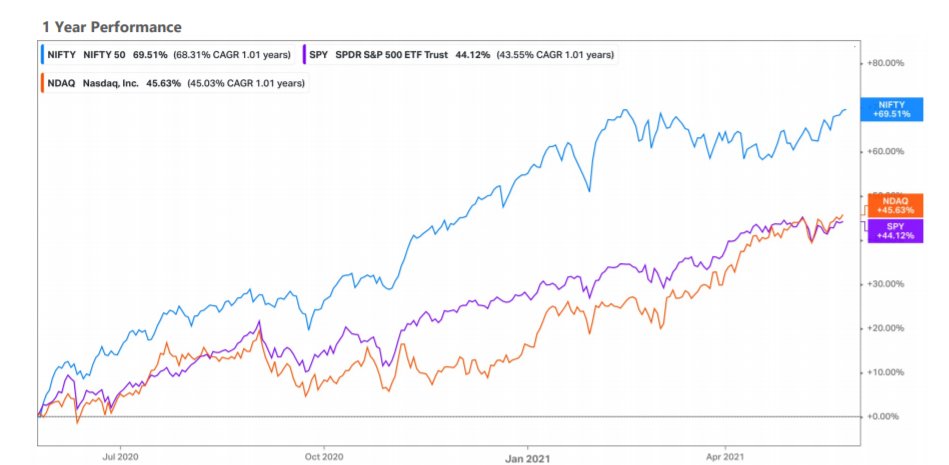
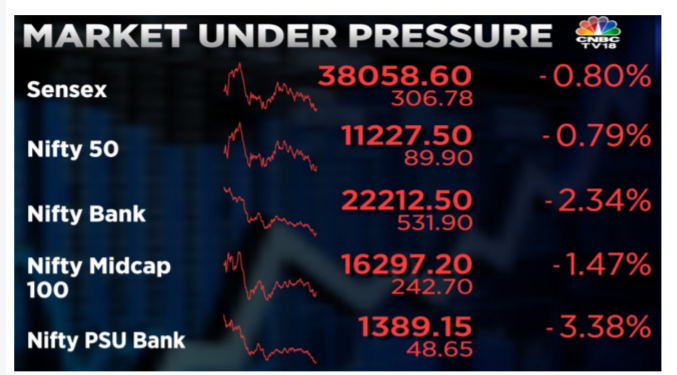
But do remember, it is not always like this! (22/n)
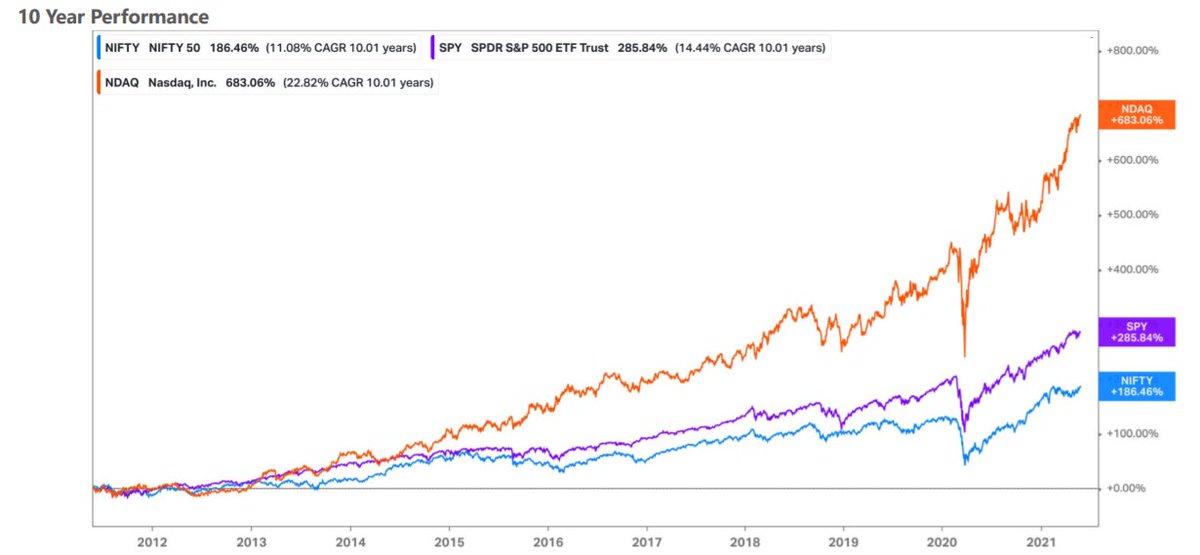
Now, let's look at a 10-year return of the benchmark Indices in India and US (23/n)
3. Passive vs. Active
If you've managed to read till here, you might be thinking - all this sounds great - where do I start!
The way to think about investing in equities is to start with Mutual Funds and 'graduate' to picking individual stocks. (24/n)
If you've managed to read till here, you might be thinking - all this sounds great - where do I start!
The way to think about investing in equities is to start with Mutual Funds and 'graduate' to picking individual stocks. (24/n)
Typically Mutual Funds are a great way to start but they are also the most expensive way to invest.
There is fund manager fees, admin costs etc. typically captured by a fund's expense ratio.
But don't feel bad about this. (25/n)
There is fund manager fees, admin costs etc. typically captured by a fund's expense ratio.
But don't feel bad about this. (25/n)
You may go to a forest and maybe pick the best apple from a tree. But the chances of you doing that are probably 1% or 100% based on your level of competence.
But, there is a 99% chance that you would probably be getting your apples from a fruit seller. (26/n)
But, there is a 99% chance that you would probably be getting your apples from a fruit seller. (26/n)
The fruit seller ensures you get Vitamins, Minerals and Nutrients and may charge a 'convenience fee' from you.
That is the way to look at stocks - the choice of going from mutual funds to investing in stocks. (27/n)
That is the way to look at stocks - the choice of going from mutual funds to investing in stocks. (27/n)
Every Sunday, I do a weekly deep dive for the premium members of Beta to Alpha.
If you're interested in knowing more about the benefits, do check out the following link. (28/Fin.)
betatoalpha.substack.com
If you're interested in knowing more about the benefits, do check out the following link. (28/Fin.)
betatoalpha.substack.com
If you liked reading this thread, you will love reading my other threads too. Here's the assortment below ⬇️
You can retweet this to maximize reach and help me in my three point mission as shared above 👇
Loading suggestions...