

A thread on how Rajratan Global Wire ltd, a small company in a niche segment, can be a perfect proxy play to the ‘Tyre industry’. 🧵👇
(1/n)
(1/n)
Let us first understand the business of the company. Company makes just two products:
1. Tyre bead wire
2. High carbon steel wire.
It derives major revenue from ‘Tyre bead wire’ which accounts for 89% of total capacity and 91% of revenues. (2/n)
1. Tyre bead wire
2. High carbon steel wire.
It derives major revenue from ‘Tyre bead wire’ which accounts for 89% of total capacity and 91% of revenues. (2/n)
For the uninitiated, Tyre bead wire is the soul of every tyre. It is core to the safety of tyre use; it holds the tyre to the rim, enhancing product safety. The product is mature and its application has been unchanged for more than five decades. (3/n)
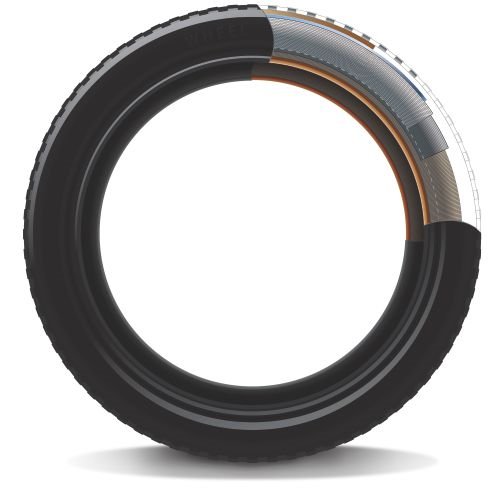
Tyre bead wire is used in all types of tyres for automobile, earth moving equipment, aircraft, cycles, passenger vehicles, two-wheelers, three-wheelers and truck bus radials. (4/n)
The other product, i.e High carbon steel wire plays a vital role in industries like automobile, construction and engineering. (5/n)
Rajratan is the second largest bead wire manufacturer in Asia (excluding China), the largest manufacturer in India and the only manufacturer in Thailand. (5/n)
The company has manufactures its products in two countries: India and Thailand.
Both these places are of key importance and perfectly suit the company’s requirements. (6/n)
Both these places are of key importance and perfectly suit the company’s requirements. (6/n)
Why Thailand?
Rajratan Thai Wire Co. Ltd, the subsidiary of the main co, enjoys a tax benefit on the profits reported on all the production in excess of 22,000 TPA – for a period of 8 years subject to a ceiling of the amount invested by the company above 22,000 TPA. (7/n)
Rajratan Thai Wire Co. Ltd, the subsidiary of the main co, enjoys a tax benefit on the profits reported on all the production in excess of 22,000 TPA – for a period of 8 years subject to a ceiling of the amount invested by the company above 22,000 TPA. (7/n)
This 8 years tax period will come to an end in 2025.
Also, Thailand is the hub for tyre manufactures around the world. (8/n)
Also, Thailand is the hub for tyre manufactures around the world. (8/n)
Some of the largest Chinese tyre brands have commissioned larger and more sophisticated manufacturing facilities in Thailand than even within their own country. (9/n)
Why India?
India enjoys a large captive and growing demand of our downstream product (tyres) at a time when automobile penetration is lower than the global average.
(10/n)
India enjoys a large captive and growing demand of our downstream product (tyres) at a time when automobile penetration is lower than the global average.
(10/n)
Looking at the increase in the number of tyre manufacturers in Thailand, the company is expanding its capacity to seize the opportunity. (11/n)
To put the numbers in perspective,
The company doubled its capacity in India from 36000 TPA to 72000 TPA from 2018-19 to 2020-21. (12/n)
The company doubled its capacity in India from 36000 TPA to 72000 TPA from 2018-19 to 2020-21. (12/n)
For Thailand the number went from 26000 TPA to 40000 TPA.
The current capacity is 112000 TPA (72000+40000). This will again be increased to 120000 TPA by FY22-23. (13/n)
The current capacity is 112000 TPA (72000+40000). This will again be increased to 120000 TPA by FY22-23. (13/n)
Let us now focus on the moat factor.
The company doubled capacity in its Indian operations at a project cost that was 60% of the global benchmark for an equivalent greenfield capacity. Which means a new entrant would have to pay more to set up the same facility. (14/n)
The company doubled capacity in its Indian operations at a project cost that was 60% of the global benchmark for an equivalent greenfield capacity. Which means a new entrant would have to pay more to set up the same facility. (14/n)
On customer side, it enjoys healthy relationship. Customers of five years or more accounted for 83% of our revenues in FY 2020-21. This means the customers are sticky. It enjoys product and process approvals from these customers, a high entry barrier for industry entrants. (15/n)
Some of the marquee customers (16/n)

The customers are sticky as the company customizes the products as per their needs. It sell to make, which makes it possible to customize its B2B product to the complete needs of its customers. (17/n)
Also, as the world is seeking alternative supplier options away from China with the objective to de-risk a single country risk, it will enhance business sustainability. (18/n)
The company’s approach of growth is clear. It wants to grow at a calculated risk. Company wants to expand only when nearly 80% of the long-term debt related to a previous expansion has been covered.
That’s conservative aggression. (19/n)
That’s conservative aggression. (19/n)
According to the company, the expansion in FY 2021-22 should generate an attractive upside in FY 2022-23 and FY 2022-23.
Also, interesting tailwinds here are factors like tyre manufacturers expanding their capacities. (20/n)
Also, interesting tailwinds here are factors like tyre manufacturers expanding their capacities. (20/n)
Bridgestone announced the creation of aviation tyre capacity; Continental completed the construction of a factory; Goodyear intends to expand tyre capacity. Chinese tyre companies in Thailand announced expansion plans. (21/n)
As there is a better visibility of growth and Rajratan is perfectly placed in the niche segment, it can be a perfect proxy to play for trye industry. (21/n)
All the numbers and other facts are taken from Annual Report of the company which is rich source of information available free of cost.
This thread just summarizes few important points and is not a replacement to AR.
Thank you for reading (22/22)
This thread just summarizes few important points and is not a replacement to AR.
Thank you for reading (22/22)
Loading suggestions...