

(1/) It can be difficult to remember all the different breathing patterns🫁 associated with brainstem 🧠 injury! Here are my rules of thumb when attempting to localize a breathing pattern. #tweetorial #neurotwitter #MedEd #Neurology #Medstudent

(2/) Major Caveat: like all of neurology, these rules have exceptions and nuances. Think of it more like a way to ballpark ⚾️ an injury within the brainstem. A quick google search can result in all sorts of useful pictures 📸!

(3/) Higher level injuries (Cortex, Thalami, or Midbrain) tend to result in patterns with faster breathing 🌬️. Compare this to injuries to the Medulla which can result in ataxic breathing or even respiratory arrest ☠️. High = Hyperventilation.

(4/) Similarly, higher level injuries tend to result in more organized breathing. For instance Cheyne-Stokes is hyperventilation cycling compared to the irregular😵💫breathing pattern of Ataxic Breathing.

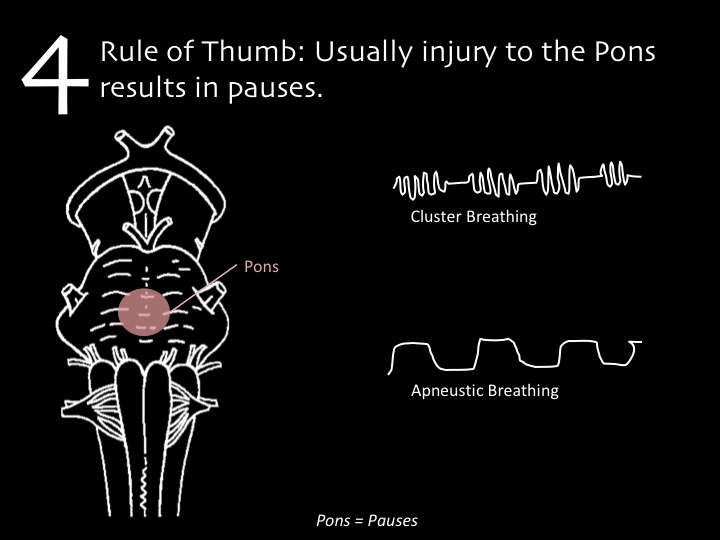
(5/) Finally, injury to the Pons usually results in pauses. Both Apneustic Breathing (deep breath with pausing) and Cluster Breathing (shallow breaths with pausing) can both result from injuries to the pons. Remember Pons = Pauses. 🤭
(6/) and that is how I organize breathing patterns in my head. Plum and Posner's Diagnosis of Stupor and Coma 📘 is a good resource to learn more about these breathing patterns!
(7/) How do you remember brainstem breathing patterns? 🤔 What tricks do you use to keep track of those pesky pregnant pauses on pneumography? ✍️
Loading suggestions...