
#HistoryKeThread: Glimpses Of The Northern Agîkûyû
——
British-Canadian William Scoresby Routledge visited East Africa in 1902 and spent about a year living among the Agîkûyû.
——
British-Canadian William Scoresby Routledge visited East Africa in 1902 and spent about a year living among the Agîkûyû.

He would make a return to central Kenya in 1904, this time accompanied by his wife, Katherine.
Thanks to Routledge’s early 1900 photos, we get visual glimpses of the way of life of his host community.
Thanks to Routledge’s early 1900 photos, we get visual glimpses of the way of life of his host community.
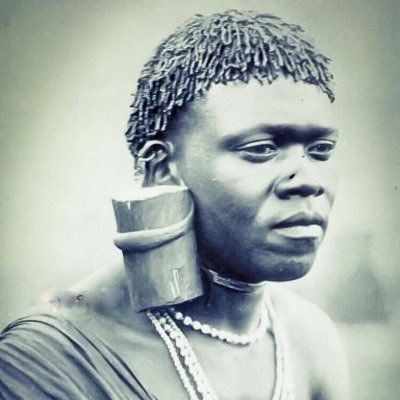
For example, this iconic photo of Karûri wa Gakure of Metumi, which is the area we now know to be Murang’a county today, was taken by Routledge.

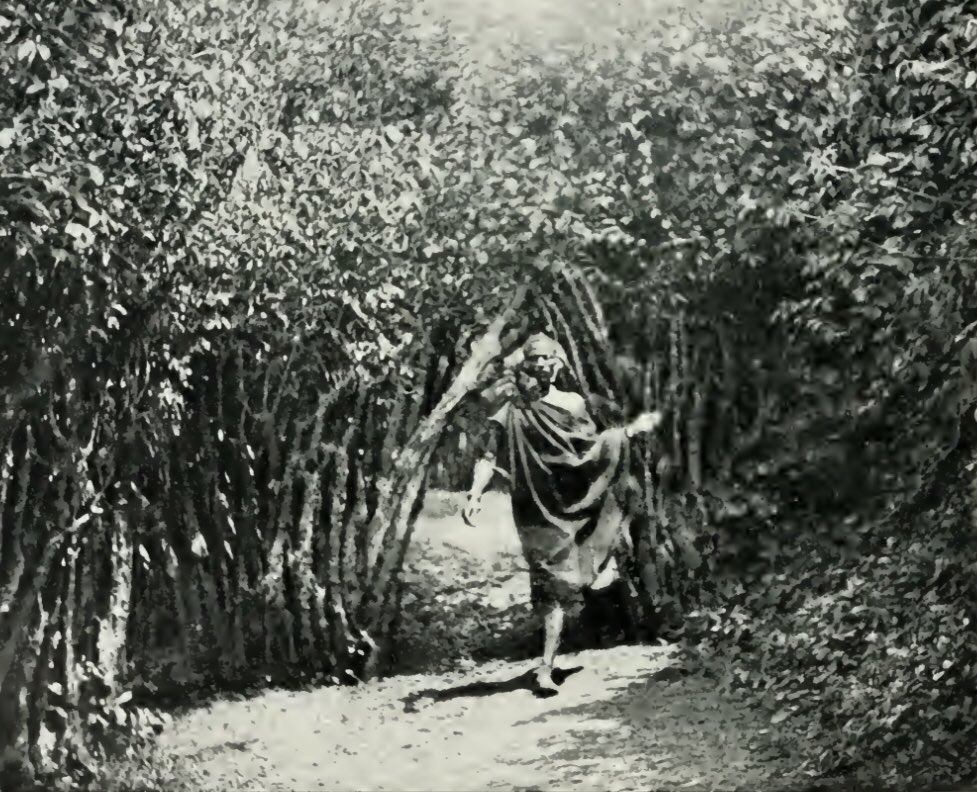
In both the first and second visits, the Routledge expedition was mostly stationed in and around Fort Hall - as the British called Metumi, as well as southern parts of present-day Nyeri county, from where this frontage of Njamba or Chief Wambûgû’s homestead was taken.
During the expeditions, Routledge’s Swahili assistants gradually mastered gîkûyû language. A few Agîkûyû youth also learnt Kiswahili from the coastals. The latter were co-opted to menial tasks such as gun-bearing, or to serve as both interpreters and local community intercessors.
In order to maintain cordial relations with the host community in routine talks, Routledge as leader of the expedition made sure that nothing was left to misinterpretation.
“Pains were especially taken to guard against misunderstandings as a possible source of error, all information being re-stated by us, and subjected to correction”, Routledge later wrote.
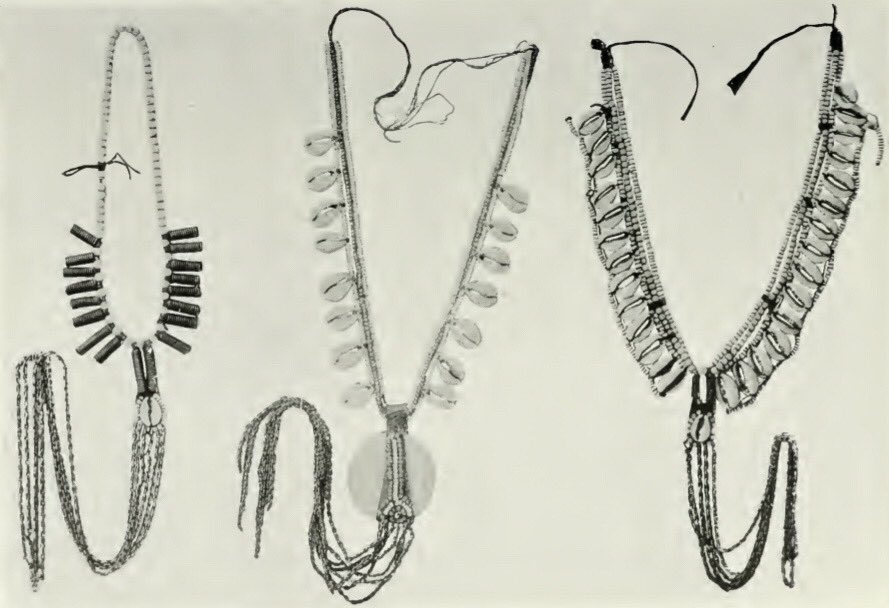
Well received by Agîkûyû women was Routledge’s wife, who spent a great deal of time learning about their ornaments.
These pictures of traditional necklaces were taken by the Routledges.
These pictures of traditional necklaces were taken by the Routledges.

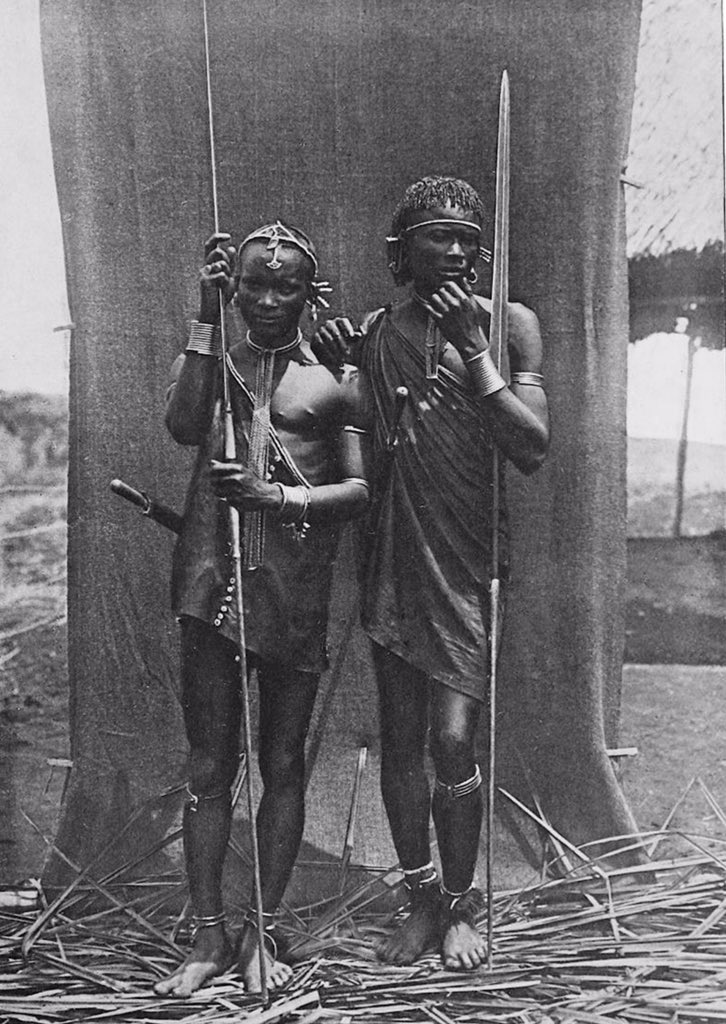
Routledge described some weapons employed by the Agîkûyû in combat.
Wrote he:
Wrote he:
“The Kikuyu bow is in appearance a poor weapon; a round stick tapered at both extremities and kept permanently strung….still, in the dense cover, it does all that is required of it, and is the true weapon of the people”.

Describing the “njûgûma” (club) in its native name, he noted that it could be “hurled with accuracy of up to 30 yards”.
The njûgûma’s handle, he observed, “transfixes the object….it is deadly”.
The njûgûma’s handle, he observed, “transfixes the object….it is deadly”.
Routledge, who made the visit as a member of the Royal Geographical Society, further noted that out of all the weapons, the sword was the one that the Agîkûyû were most proficient in.
To thwart infiltration by the enemy, the community sunk in the hidden scrub war pits featuring sharp, fire-hardened bamboo skewers.

Routledge was intrigued by what he observed as a “peculiar habit” of children and young adults of the northern Agîkûyû “to place one finger between the teeth when thinking….”
Something else that stirred up his interest was in their host community’s expertise in iron smelting and overall metallurgy.
On a previous post, we shared an account of Routledge’s observations on how the Agîkûyû Aturi (iron smiths) forged weapons like spears.
“The Kikuyu spear is a good instance of the skill of the Kikuyu smith…it poises so delightfully that merely to hold a good spear makes one feel bloodthirsty”, Routledge wrote.
The iron was first obtained from iron sand, which young adults (pictured) washed as pictured to extract ore.

He also took photos of various members of the community engaged in iron work. For example in this photo, a mûturi is pictured in the early stages of making iron chain from iron wire.

In this other photo, a man is involved in the final step of making the chain.

All images in this post are by William Routledge.
Read also:
@SokoMad Or these dreads for that matter?
Loading suggestions...