
📜 Tears of Hafiza Zaibūnissa💧
"Oh Waterfall... for whose sake are you weeping?
In whose sorrowful memories have you wrinkled your brows?
What pain was it that impelled you like myself to spend the whole night,
Striking your head against stones and to shed tears?"
"Oh Waterfall... for whose sake are you weeping?
In whose sorrowful memories have you wrinkled your brows?
What pain was it that impelled you like myself to spend the whole night,
Striking your head against stones and to shed tears?"

"Even from the grave of Majnū, the voice comes to my ears:
'Oh Laila, there is no rest for the victim of love even in the grave!'
I have spent all my life, and I have won nothing but sorrow, repentance and the tears of an unfulfilled desire..."
— From Zaibūnissa's Diwān-E-Maqfi
'Oh Laila, there is no rest for the victim of love even in the grave!'
I have spent all my life, and I have won nothing but sorrow, repentance and the tears of an unfulfilled desire..."
— From Zaibūnissa's Diwān-E-Maqfi

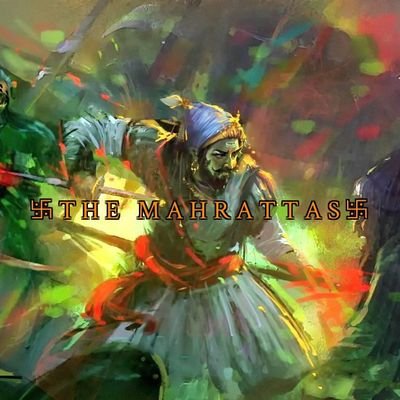
Delhi Badshah Alamgir Aurangzeb's daughter Hafiza Zaibūnissa was known as an inamorata of Chattrapati Shivaji Maharaja.
As late as *1772*, the hearsay of the highest echelons of the decrepit Mughal Darbar asserted Zaibunissa's salacity for Chattrapati Shivaji Maharaja as a FACT.
As late as *1772*, the hearsay of the highest echelons of the decrepit Mughal Darbar asserted Zaibunissa's salacity for Chattrapati Shivaji Maharaja as a FACT.

Lieutenant Colonel Alexander Down, EICo. Bengal Wing's contemporary present in India during Battle of Panipat III (1761) and many other events, researched and published his Orientalist magnum opus on Mughal History of Indosthan through London in *1772* recording this known fact.

As far as Bangāl, it was well known as a fact even in the 18th Century CE, near a century after death of Chattrapati Shivaji Maharaja that princess Zaibūnissa was an inamorata of the Founder of the Mahratta Empire, due to his virtuous, manly, spirited countenance and personality.


Zaibūnissa's reputation as a lifelong chaste virgin was then subjected to slander by Muslim authors who concocted pornographic affairs of her with a character named Aqīl Kahn, son of some governor of Lahore. The improbability of this vulgar accusation is heightened by the fact...

...that she was nursing her father, the tyrant Aurangzeb who was ill during Lahore visit. Yet Muhammadan character-assassins would have found it better to slander her chastity with a Muslim figure than allow popularisation of her scandalous lust for a Hindu Mahratta Emperor.


The royal lady scholar of Cooch-Behar, Maharani Sunity Devee published the complete detailed record of the lore as known across North India about Mughal princess Zaibūnissa and Chattrapati Shivaji Maharaja in one of her many epic books, "The Beautiful Mogul Princesses".

The mainstream knowledge of the lore in history was cut-short when infamous Anti-Deccan British Imperialist author Sir Jadunath Sarkar outright abused Chattrapati Shivaji Maharaja as a repulsive "rugged and illiterate Deccani" who could never win a North Indian princess' heart.


British Knighted Sir Jadunath Sarkar was fundamentally lying when he said the historical romance was a fictional claim of some Bangāli writer Bhudev Mukherji.
Sir Jadunath Sarkar carefully hid the fact that Lt. Alexander Dow had recorded this historical event in *1772* itself.
Sir Jadunath Sarkar carefully hid the fact that Lt. Alexander Dow had recorded this historical event in *1772* itself.

After blatantly refusing to entertain veiled references to the romance in contemporary Royal Poets' works like Kaviraj Bhushan, etc. or Diwan-E-Maqfi of Zaibūnissa itself, Jadunath who also lacked access to vast majority of Maratha sources dismissed the entire lore completely.

Due to pettiness and romantic nature of the event as put forward by British knighted scholar Sir Jadunath Sarkar in his "Studies in Mughal India", most historians in academia also did not much entertain the romance, thus burying poor Zaibūnissa's legacy and love in the dirt.

Further confusion was done by Marathi scholars, who confused Zaibūnissa's salacity for Chattrapati Shivaji Maharaja which was simultaneous with younger princess Zīnatunissa's salacity for Dharmavīra Chattrapati Shambhuji Maharaja, which is extremely well recorded in Maratha...

... sources.
After Chattrapati Shambhuji Maharaja's pre-emptive rejection of conversion to Islam even after his marriage to Aurangzeb's daughter Zīnatunissa, he was tortured to martyrdom.
Zīnatunissa however accepted her status as an allusive wife of Dharmavīra and...
After Chattrapati Shambhuji Maharaja's pre-emptive rejection of conversion to Islam even after his marriage to Aurangzeb's daughter Zīnatunissa, he was tortured to martyrdom.
Zīnatunissa however accepted her status as an allusive wife of Dharmavīra and...

...and took highest possible care, with secure dignity equal to that afforded by Mughal royalty, of Maharani Yesubai Bhonsale and Hindupati Padshah Chattrapati Shahu Maharaja as her own family when they were royal prisoners of Mughals during 27 Years War of Hindu Liberation.

Thereby it should now be clear that Hafiza Zaibūnissa and Zīnatūnissa were separate daughters of Aurangzeb and both were separate inamoratas of Chattrapati Shivaji Maharaja and Chattrapati Shambhuji Maharaja respectively.

Sources:
• The Mughal Harem, K. S. Lal
• Royal Mughal Ladies & Their Contributions, S. Mukherjee
• The Beautiful Mogul Princesses, S. Devee
• Dīwān-E-Maqfi of Hafiza Zebūnissa, trans. by M. Lal & J. D. Westbrook
• A History of Indosthan Vol. III, by A. Dow (1772)
• The Mughal Harem, K. S. Lal
• Royal Mughal Ladies & Their Contributions, S. Mukherjee
• The Beautiful Mogul Princesses, S. Devee
• Dīwān-E-Maqfi of Hafiza Zebūnissa, trans. by M. Lal & J. D. Westbrook
• A History of Indosthan Vol. III, by A. Dow (1772)


Loading suggestions...