

The Immortal Dholavira
Dholavira received the UNESCO world heritage site tag recently. This ancient city is one of the most remarkable urban settlements in the world. The city was at its peak around 6000 years ago and was discovered in 1968 by J. P. Joshi. (1/7)
#Thread
Dholavira received the UNESCO world heritage site tag recently. This ancient city is one of the most remarkable urban settlements in the world. The city was at its peak around 6000 years ago and was discovered in 1968 by J. P. Joshi. (1/7)
#Thread
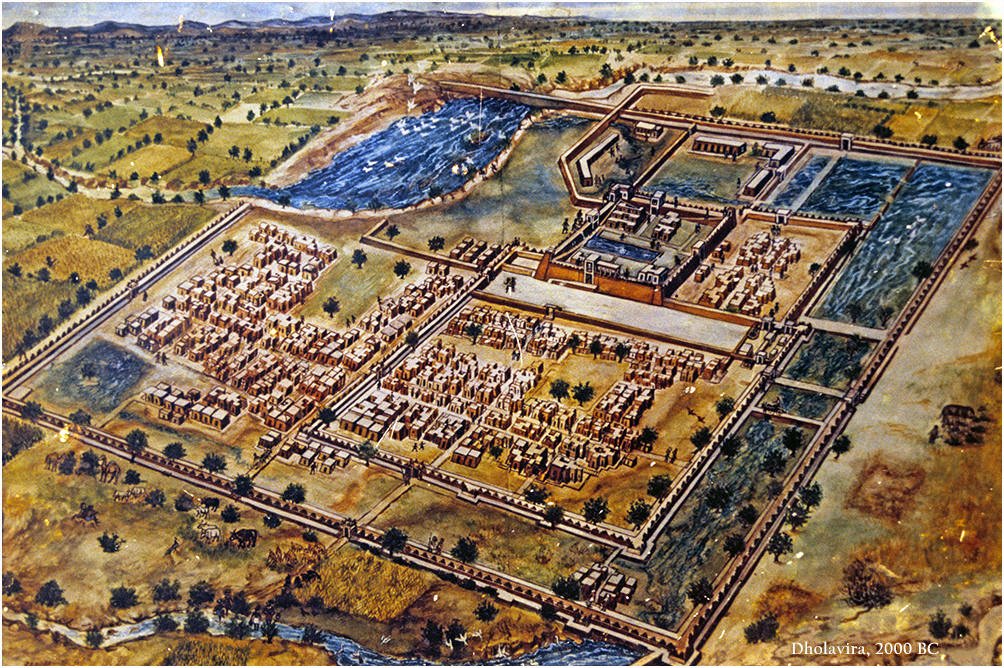
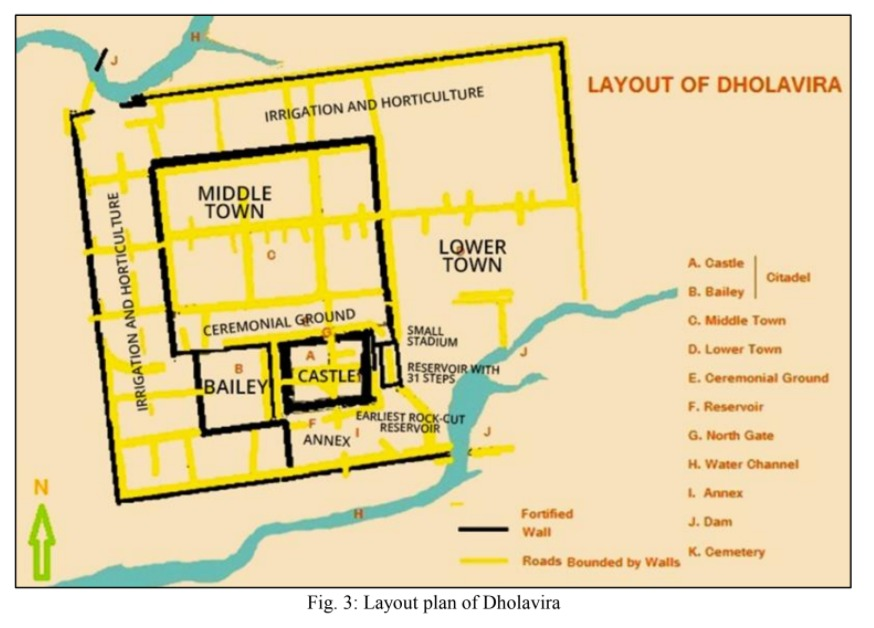
After Mohen-jo-Daro, Ganweriwala, Harappa in Pakistan & Rakhigarhi in India, Dholavira is the 5th largest metropolis of Saraswati Civilization. Harappan town-planning is usually based on a duality acropolis (upper & lower town) while Dholavira’s is divided into three parts. (2/7)
An acropolis consisting of castle & bailey, middle town (including a ceremonial ground) and the lower town. The city of Dholavira in its fullest form was a precisely proportionate whole, with a mathematical precision and perhaps with astronomically established
orientation. (3/7)
orientation. (3/7)
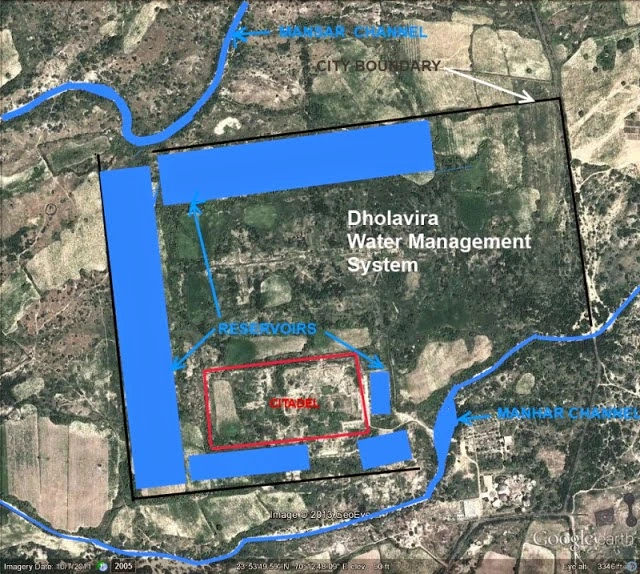
One of the unique features of Dholavira is the sophisticated water management & hydraulic engineering. The city had massive reservoirs which are one of the earliest in world. The people of Dholavira created 16 reservoirs which have taken advantage of slope of the ground. (4/7)
The most significant discoveries at Dholavira was made in one of the side rooms of the northern gateway of the city, & is generally known as the Dholavira Signboard. The 'Signboard' has arranged & set pieces of the mineral gypsum to form ten large symbols on a wooden board. (5/7)
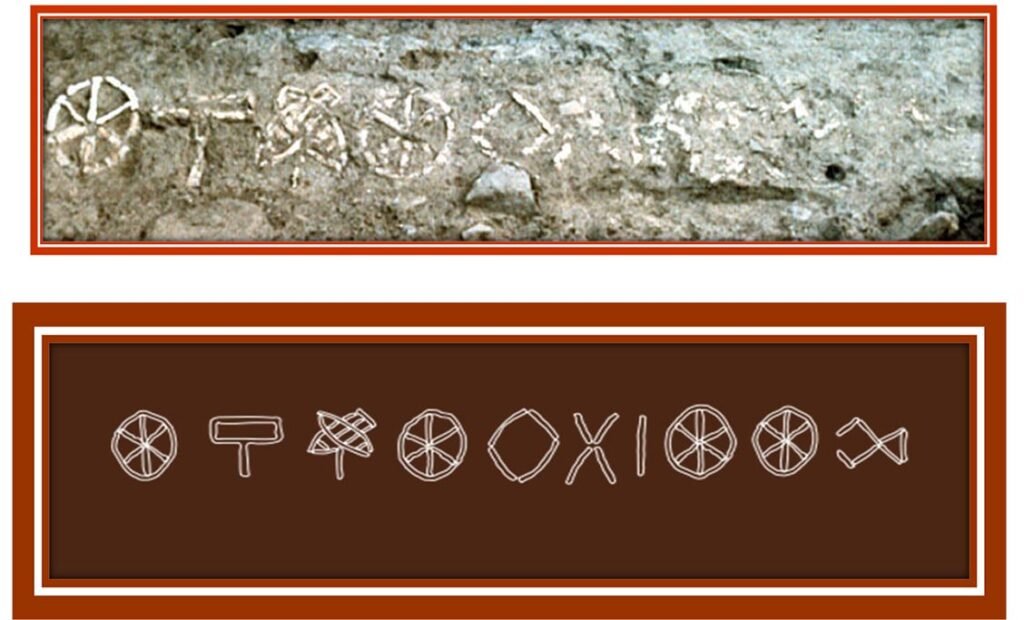
This signboard is actually one of the longest Indus inscriptions known. However until the Indus script is deciphered, what the sign is saying still remains a mystery. (6/7)
Sources: "Ancient Civilisation Study through Dholavira Archaeological Site in Kutch District: A study"
(GRDJE / CONFERENCE / ERICE - 2019 / 021),
"New Insights into Harappan Town-Planning, Proportions and Units" by Michel Danino
(GRDJE / CONFERENCE / ERICE - 2019 / 021),
"New Insights into Harappan Town-Planning, Proportions and Units" by Michel Danino
Connect with CLiO on Instagram.
Link: instagram.com
Link: instagram.com
Loading suggestions...