
History
Art
Culture
Archaeology
Afghanistan
Cultural Heritage
Cultural Preservation
Artifacts
Heritage Protection

‼️THREAD OF AFGHAN ANTIQUITIES AT RISK‼️
Afghan heritage is currently under threat of looting and illicit traffic. Help us protect the identity & history of Afghan people by sharing this thread.
Categories of Afghan objects at risk⬇️
–images depict examples, not stolen objects–
Afghan heritage is currently under threat of looting and illicit traffic. Help us protect the identity & history of Afghan people by sharing this thread.
Categories of Afghan objects at risk⬇️
–images depict examples, not stolen objects–
🔹PRE-ISLAMIC PERIOD🔹
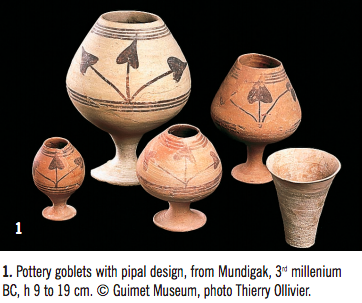
Pottery goblets with pipal design, from Mundigak, 3rd millenium BC, 9–19 cm.
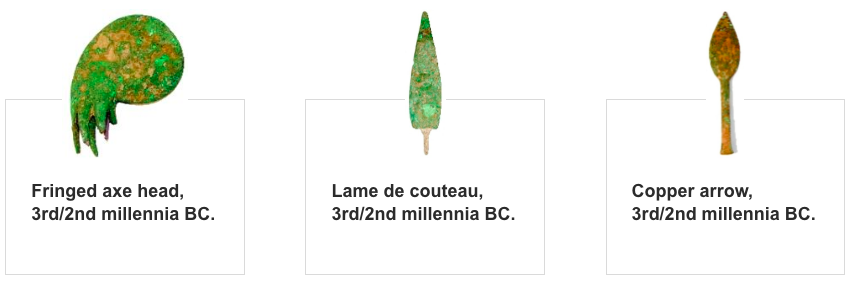
Early metal artefacts (flat blades, arrowheads, axe heads and blades) of varying shapes.
Cosmetic jars of metal, sometimes with three legs, and in the shape of an animal.
Pottery goblets with pipal design, from Mundigak, 3rd millenium BC, 9–19 cm.
Early metal artefacts (flat blades, arrowheads, axe heads and blades) of varying shapes.
Cosmetic jars of metal, sometimes with three legs, and in the shape of an animal.

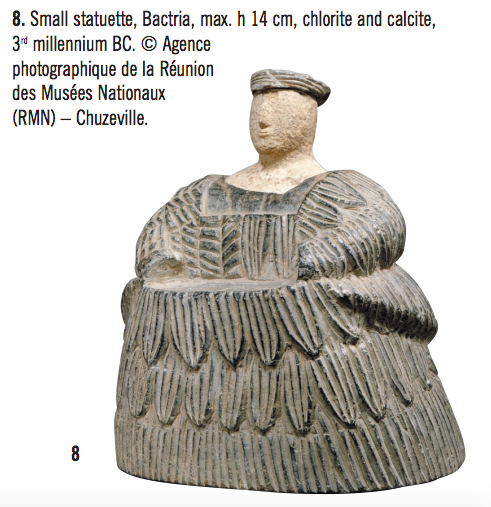
Bactrian statuettes made of chlorite and calcite
(usually with an exceedingly small head and elaborate dress). They are said to come from a very broad area covering northern Afghanistan, but also eastern Iran, and southern Turkmenistan.
Size: maximum 14 cm high.
(usually with an exceedingly small head and elaborate dress). They are said to come from a very broad area covering northern Afghanistan, but also eastern Iran, and southern Turkmenistan.
Size: maximum 14 cm high.
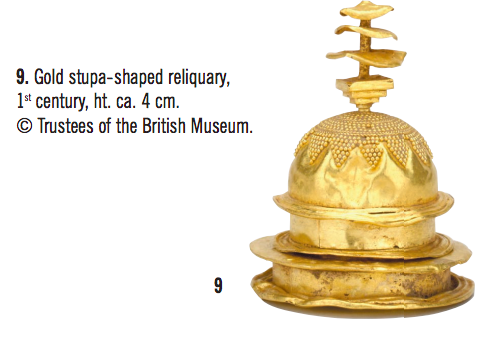
Reliquaries: Containers, most often in the form of pellet-shaped boxes with lids or miniature stupas. Usually made from stone (often steatite) though many are made of bronze or precious metals (gold or silver). Size: 2 to 50 cm high.
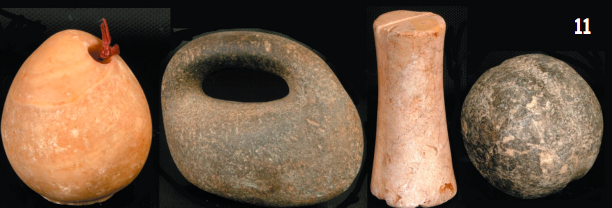
Stone batons (scepters): Finely worked stone rods or poles, they are sometimes carved at one end in the shape of a horse’s hoof. Size: 50 cm to nearly 2 meters long.
Image: Polished stone sceptres, ca. 3rd/2nd millennia BC. © Crown.
Image: Polished stone sceptres, ca. 3rd/2nd millennia BC. © Crown.

Stone weights: Made from hard granite-like stone and limestone, they are of several types: teardrop, ‘handbag’, ball-shapes sometimes with a small ring. Size: from ca. 20 cm to 30 cm high.
Image: Granite and limestone, from 20 cm to 30 cm, ca.
3rd/2nd millennia BC. © Crown.
Image: Granite and limestone, from 20 cm to 30 cm, ca.
3rd/2nd millennia BC. © Crown.
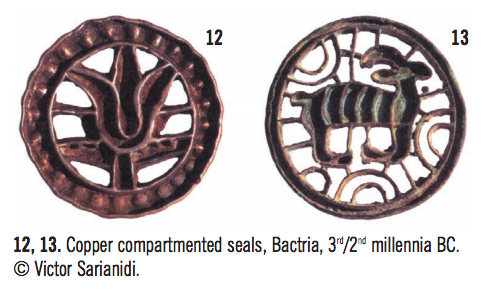
Seals: In metal and hardstone, shell, bone and other materials. The commonest of these are ‘compartmented seals’, usually round, 2 or 3 cm in diameter and bearing images in deep relief of geometric figures, swastikas, birds or animals. Size: 2 or 3 cm in diameter.
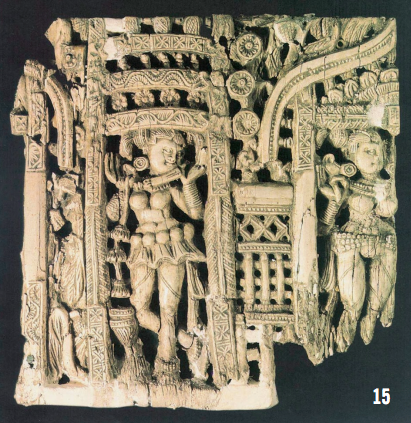
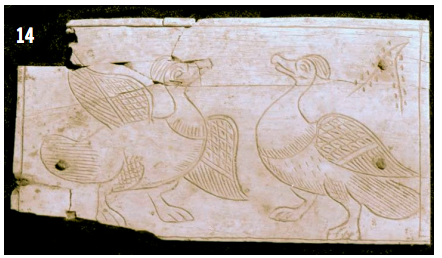
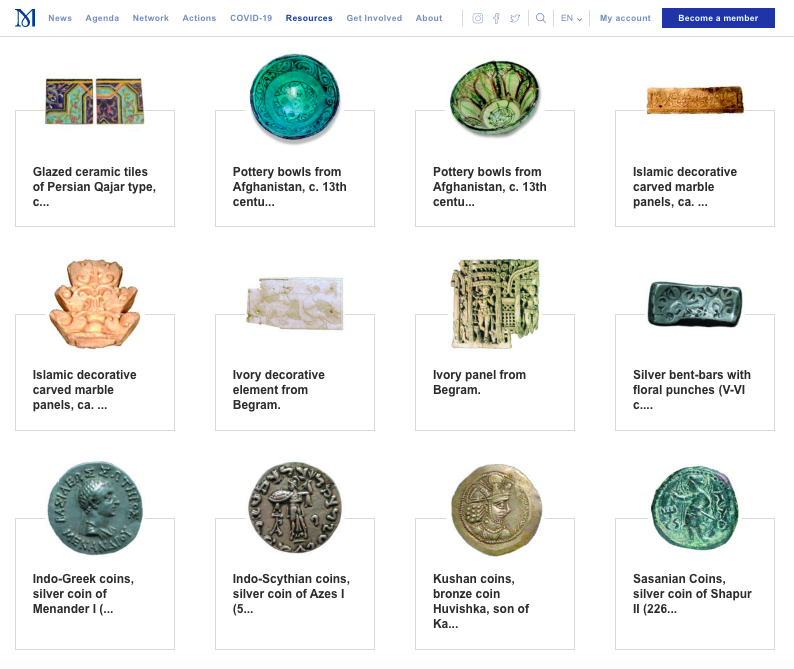
Ivory panels with carved decoration. Originally affixed as decoration to wooden luxury goods such as a jewel box.
Images:
14. Ivory decorative element from Begram. © Kabul Museum.
15. Ivory panel from Begram.© Dominique Dubois.
Images:
14. Ivory decorative element from Begram. © Kabul Museum.
15. Ivory panel from Begram.© Dominique Dubois.
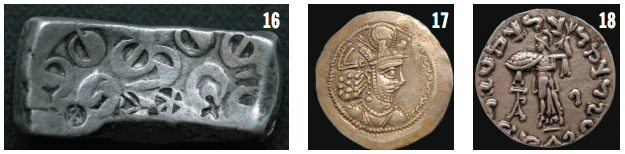
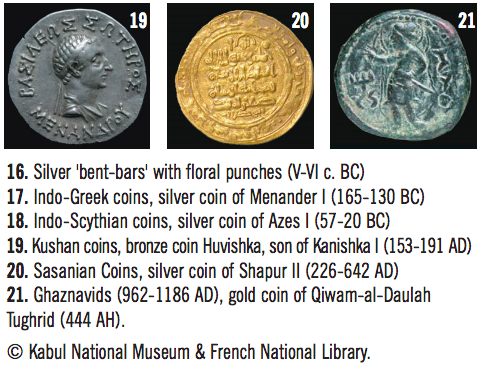
Coins: Antique coins, of bronze, silver and gold, are hand stamped. Pre-Islamic coins usually include the portraits of the king on one side and the divinities on the reverse. Islamic examples are decorated only with Arabic script.
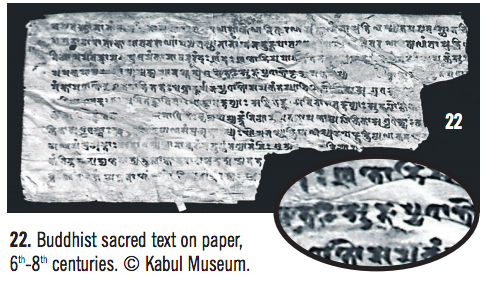
Manuscripts: Ancient manuscripts written usually in Indic scripts or occasionally Bactrian. Usually of palm leaf paper, birch bark or vellum.
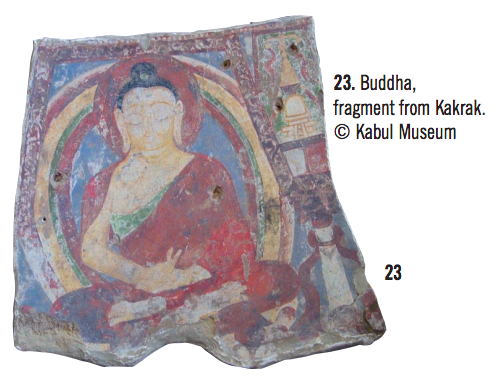
Fragments of wall paintings: Wall painting fragments have mostly thin pigment in primary colors. The figures are usually outlined in black. The paintings have a white base on a ground of clay mixed with small stones and vegetal matter. Subjects vary but are often Buddha figures.
Buddhist sculpture
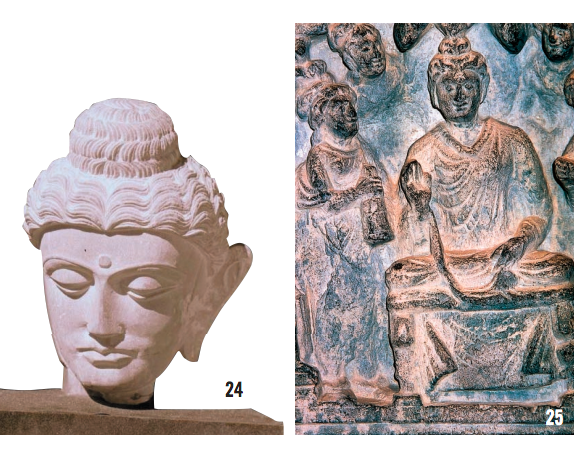
Stone heads and reliefs: the schist reliefs in the Gandhara style sometimes have narrative subjects.
24. Stone head. © Guimet Museum
25. The life of the Buddha, schist from Hadda, 1st-3rd centuries, h. 78 cm, w. 36 cm. © Guimet Museum
Photos: Thierry Ollivier
Stone heads and reliefs: the schist reliefs in the Gandhara style sometimes have narrative subjects.
24. Stone head. © Guimet Museum
25. The life of the Buddha, schist from Hadda, 1st-3rd centuries, h. 78 cm, w. 36 cm. © Guimet Museum
Photos: Thierry Ollivier
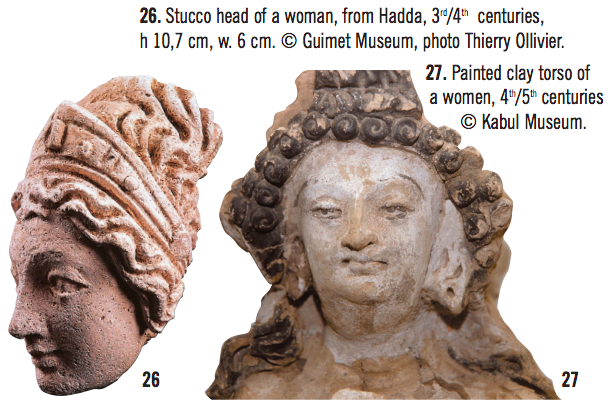
B/ Stucco: with strong reminiscences from Hellenism in the elegant definition of the Buddhist types.
C/ Painted clay: fragments of sculpture in stone (usually schist but sometimes limestone), stucco, and clay. Often single images, usually a Buddha or Bodhisattva.
C/ Painted clay: fragments of sculpture in stone (usually schist but sometimes limestone), stucco, and clay. Often single images, usually a Buddha or Bodhisattva.
🔸ISLAMIC PERIOD🔸
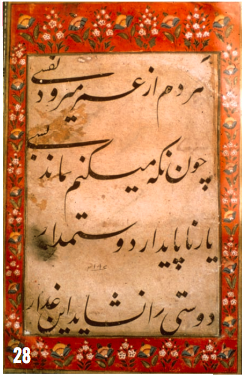
Manuscripts: Singly or sewed together as books. Ornamental calligraphy usually in Persian OR Arabic, decorated with floral designs in colour & gilding. Occasionally illustrations in full colour or drawings of single figures.
Page of a manuscript ©Kabul Museum
Manuscripts: Singly or sewed together as books. Ornamental calligraphy usually in Persian OR Arabic, decorated with floral designs in colour & gilding. Occasionally illustrations in full colour or drawings of single figures.
Page of a manuscript ©Kabul Museum
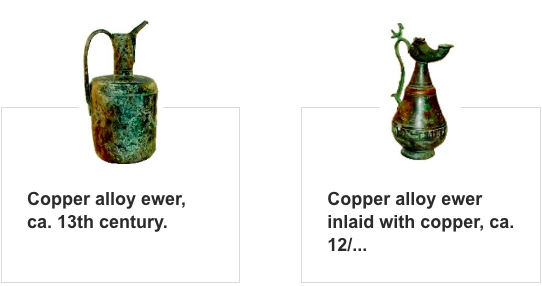
Metalwork: The great bronze products inlaid with gold and silver are rarely seen on the market, but lesser quality copper alloy objects in many shapes are common. They are decorated with incised motifs, sometimes inlaid in brass.
Copper alloy ewers, 12/13th centuries © Crown.
Copper alloy ewers, 12/13th centuries © Crown.
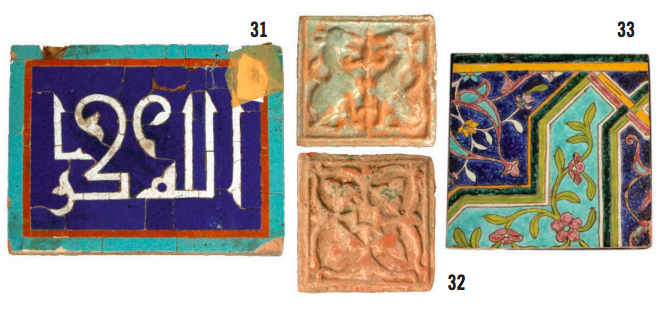
Tiles: Moulded and glazed ceramic tiles, mostly square but some polygonal, molded in relief with animals or vegetal décor, or inscriptions.
31 Ceramic tile, c. 17th century AD.
32 Ceramic tile, ca. 11th century.
33 Ceramic tiles of Persian Qajar type, ca. 19th century.
© Crown.
31 Ceramic tile, c. 17th century AD.
32 Ceramic tile, ca. 11th century.
33 Ceramic tiles of Persian Qajar type, ca. 19th century.
© Crown.
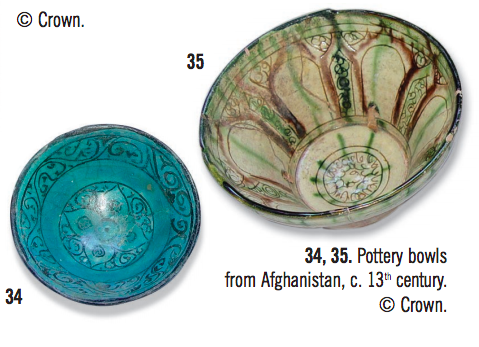
Pottery / Ceramics: They include the green and yellow ‘Bamyan’ bowls with sgraffiato (incised) decoration.
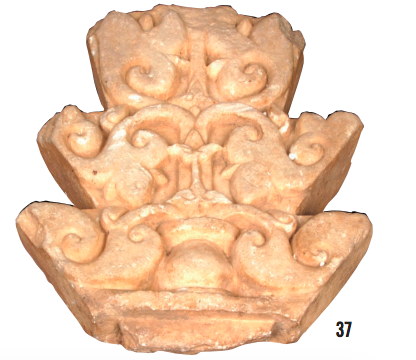
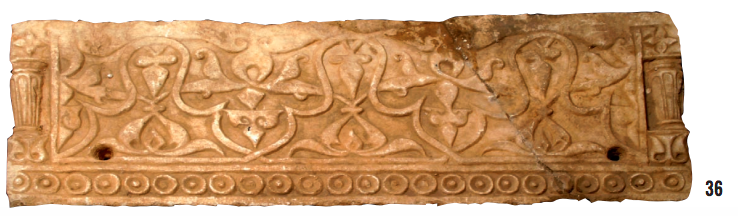
Architectural elements: Pieces of superbly worked stone, usually flat white marble panels carved with Islamic inscriptions or decorative motifs. Often associated w/ architectural fragments dating to every period.
36, 37. Carved marble panels, ca. 12th century. © Crown
36, 37. Carved marble panels, ca. 12th century. © Crown
Find more information about the Afghan antiquities at risk in the #ICOMRedList Database:
ℹ️ icom.museum
ℹ️ icom.museum
Loading suggestions...