
Economy
Economics
Economic Development
Environmental Issues
Agriculture
Environment
Food Industry
Food and Agriculture
NGOs
Dairy Industry

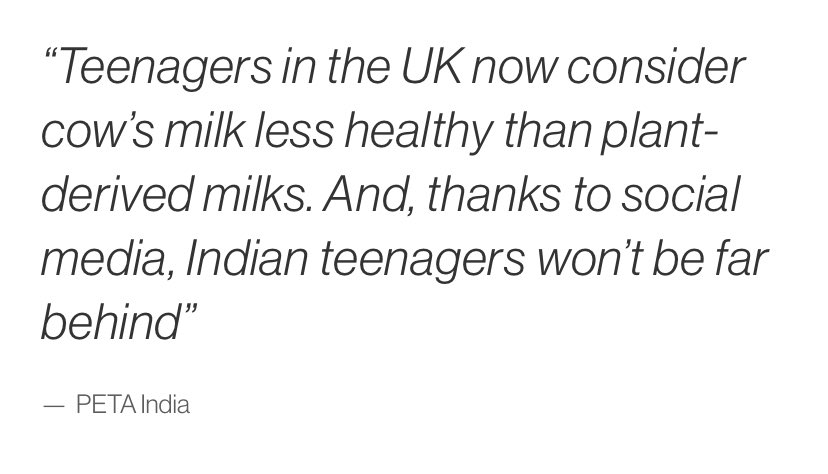
India is the world’s largest producer of milk, employing 70M people. The dairy industry grew 12%/yr (‘15-20). Output will reach 270 MMT by ‘25 with a $10bn investment.
So @peta wants India to switch to imports + environmentally unfriendly water-intensive plant-based alternatives
So @peta wants India to switch to imports + environmentally unfriendly water-intensive plant-based alternatives
It’s a $225 billion industry that sustaind millions of rural Indians, that a foreign NGO aims to disrupt - with a social media blitz and an aggressive campaign against the likes of Amul.
The biggest beneficiaries include California, which is the largest producer of almond milk.
The biggest beneficiaries include California, which is the largest producer of almond milk.
Not to forget, every child on the mid day meal scheme gets 200 ml of milk, an important source of protein which they may not get at home.
On the production side, communities like the Yadavs will suffer most from a broad switch to non-dairy milks. Is this what @PetaIndia wants?
On the production side, communities like the Yadavs will suffer most from a broad switch to non-dairy milks. Is this what @PetaIndia wants?
Will @PetaIndia pay for the livelihoods of 70M dairy farmers (that is, not from the profits of Western corporates which will export plant-based milk to India)?
If not, it can be argued that the so-called NGO aims to impoverish many of India’s community groups? Hint: SC/ST act?
If not, it can be argued that the so-called NGO aims to impoverish many of India’s community groups? Hint: SC/ST act?
Almost all major Life Cycle Assessments comparing dairy milk with plant-based alternatives have used US or European energy inputs into factoring in the carbon footprint. Even then, cumulative energy demand and risk to global warming is higher for plant milks.

Also, the protein content of most plant milks (except soy) is less than a third of dairy milk. In some cases, it is zero. With regards to soya, the jury is still out on the potential negative health impacts of consuming large quantities of that processed milk.
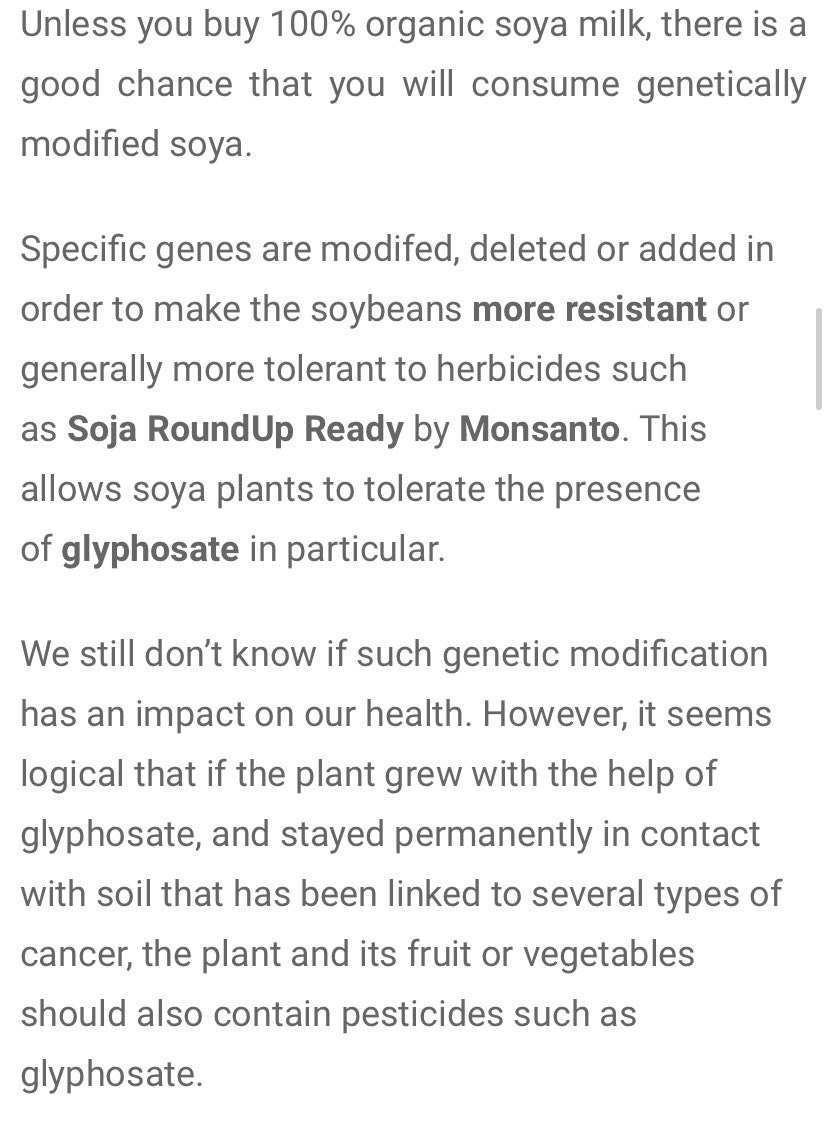
Who benefits from India producing more soy, most of which is genetically modified? The American giant, Monsanto. And who carries the risk of a range of health issues arising from high GM soy consumption? Indians.
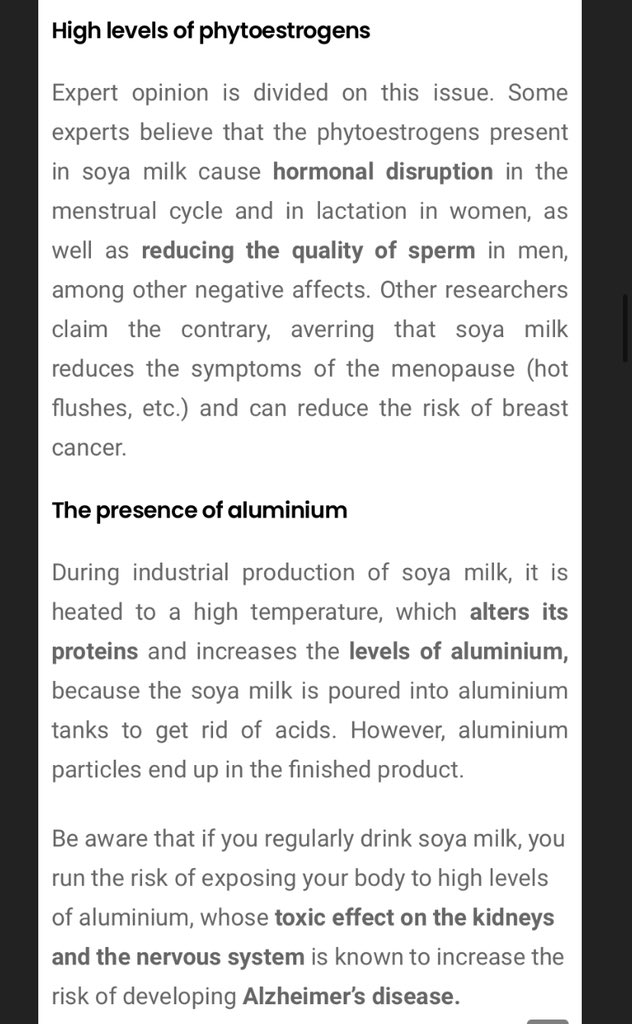
For those who wonder who benefits from higher soya consumption, just remember the US spent $34.4 million trying to convince Afghans to consume more of the product. And they failed. publicsource.org
Loading suggestions...