

The Suez Canal is fascinating—both its history and its importance to the global economy.
I went down the rabbit hole...
Here are some fascinating facts on the Suez Canal:
I went down the rabbit hole...
Here are some fascinating facts on the Suez Canal:

The Suez Canal is a 120-mile man-made waterway linking the Mediterranean Sea to the Red Sea.
It enables a more direct route for shipping from Asia to the North Atlantic—reducing the journey from Asia to Europe by ~3,700 miles by avoiding the journey around Africa.
It enables a more direct route for shipping from Asia to the North Atlantic—reducing the journey from Asia to Europe by ~3,700 miles by avoiding the journey around Africa.

The Suez Canal was officially opened in November 1869, but the idea had been around for centuries, dating back to Ancient Egyptian times.
The Egyptian Pharaoh Senusret III is believed to have built a canal connecting the Red Sea and the Nile River as early as 1850 B.C.
The Egyptian Pharaoh Senusret III is believed to have built a canal connecting the Red Sea and the Nile River as early as 1850 B.C.
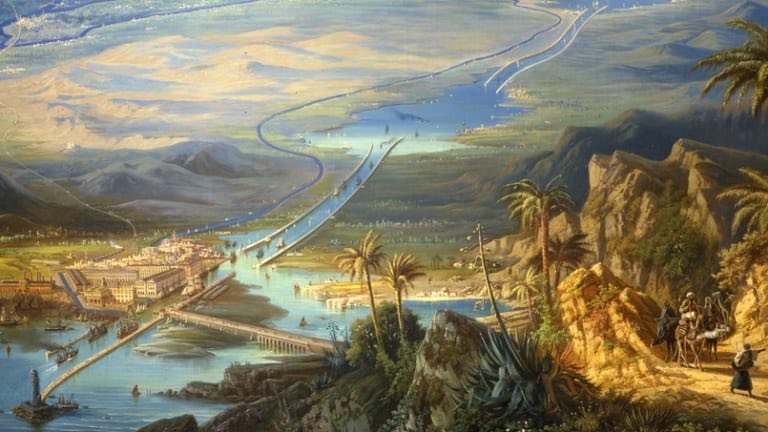
Napoleon wanted to build the canal in 1798, shortly after conquering Egypt.
His ambitions were halted when his surveyors concluded—incorrectly—that an altitude difference between the Mediterranean Sea and the Red Sea would lead to catastrophic flooding if the canal were built.
His ambitions were halted when his surveyors concluded—incorrectly—that an altitude difference between the Mediterranean Sea and the Red Sea would lead to catastrophic flooding if the canal were built.

Linant de Bellefonds—a French engineer and explorer—can be credited with reviving the idea.
In the 1830s, he disproved the altitude differential conclusion of Napoleon's surveyors, meaning the canal could be built without requiring huge technological and engineering feats.
In the 1830s, he disproved the altitude differential conclusion of Napoleon's surveyors, meaning the canal could be built without requiring huge technological and engineering feats.
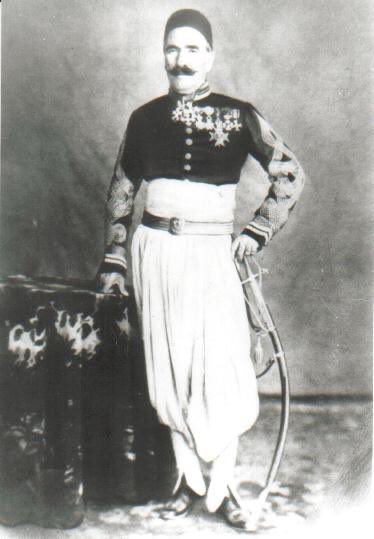
A French diplomat named Ferdinand de Lesseps was granted permission by the Ottoman leader of Egypt to form a company to create the waterway.
The Suez Canal Company was founded in 1858 and granted a 99-year lease on the waterway and surrounding area.
Construction began in 1859.
The Suez Canal Company was founded in 1858 and granted a 99-year lease on the waterway and surrounding area.
Construction began in 1859.

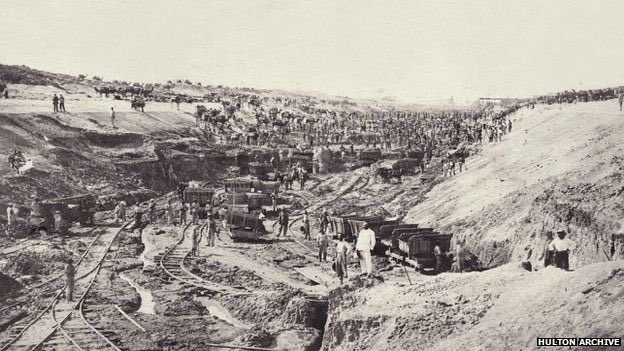
The construction of the canal took 10 years and approximately 1.5 million workers, many of whom were forced laborers.
Tragically, tens of thousands died during its construction from a variety of diseases and accidents.
It was completed and opened in November 1869.
Tragically, tens of thousands died during its construction from a variety of diseases and accidents.
It was completed and opened in November 1869.
The British government was vehemently opposed to the Suez Canal, viewing it as a French power grab in the arena of global trade.
But in 1875, they changed tune, seizing on an opportunity to acquire a 44% stake in the canal from the economically-strained Egyptian government.
But in 1875, they changed tune, seizing on an opportunity to acquire a 44% stake in the canal from the economically-strained Egyptian government.
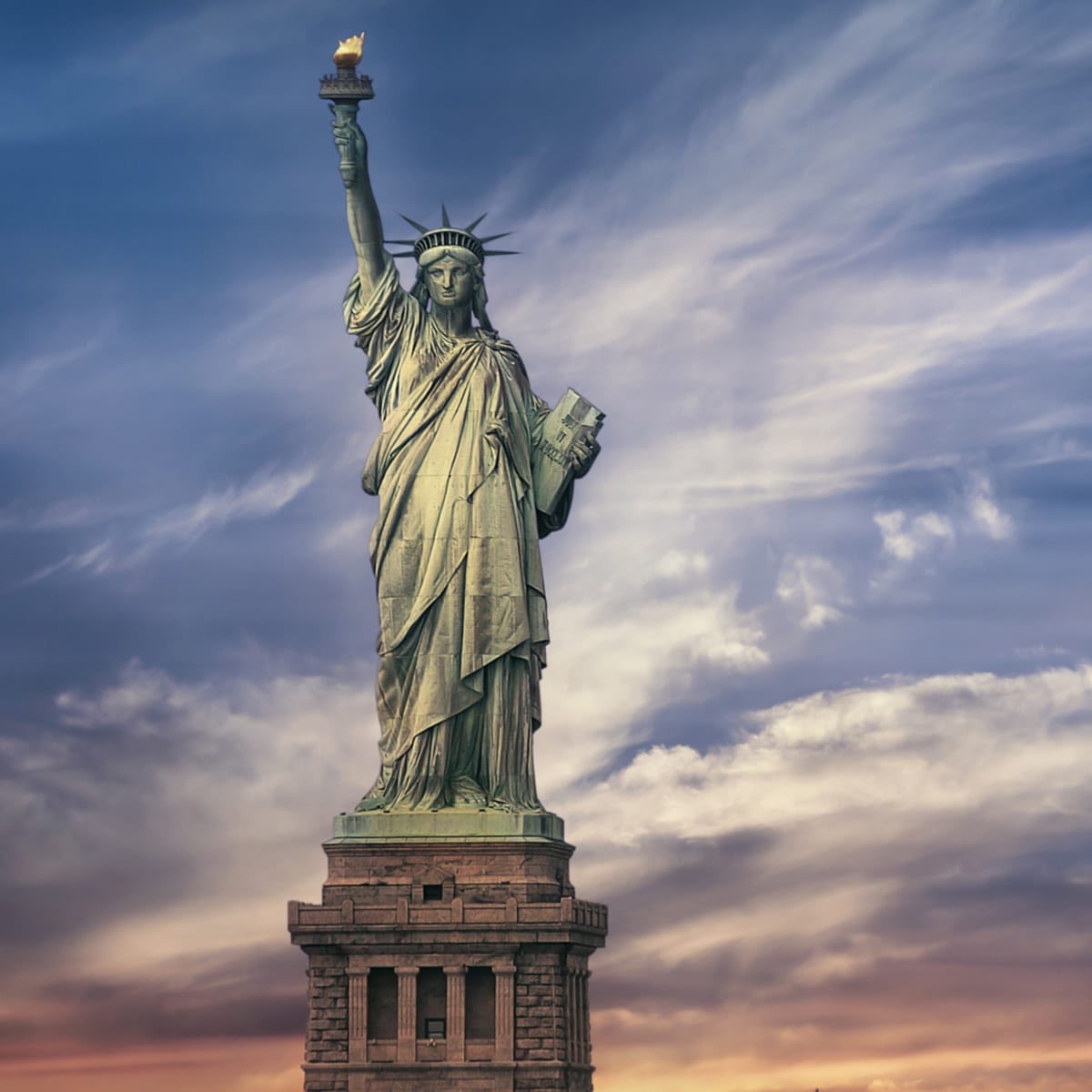
The Statue of Liberty was originally intended to be placed at the opening of the Suez Canal.
French sculptor Frédéric-Auguste Bartholdi was rejected on his proposal for a large, torch-carrying sculpture at the Suez Canal.
He shopped it around and it landed in New York in 1886.
French sculptor Frédéric-Auguste Bartholdi was rejected on his proposal for a large, torch-carrying sculpture at the Suez Canal.
He shopped it around and it landed in New York in 1886.
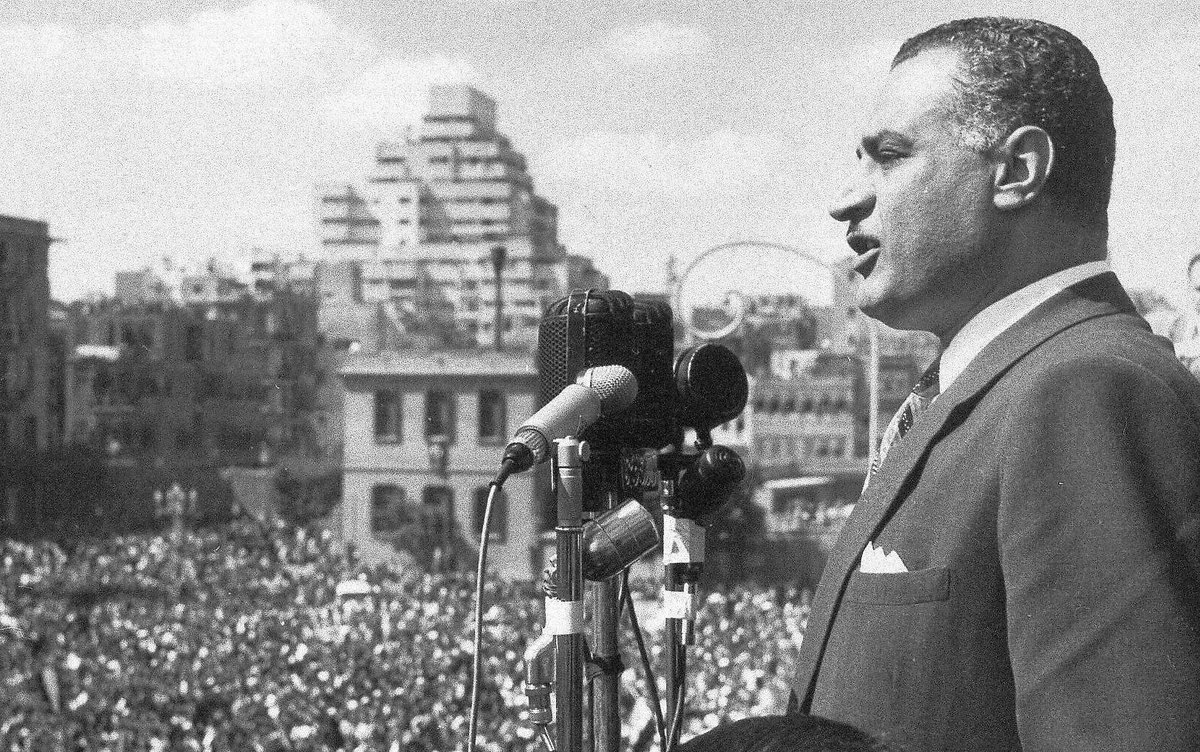
The Suez Canal was nationalized by the Egyptian President Gamal Abdel Nasser in 1956, leading to an international crisis (the "Suez Crisis").
A combined British, Israeli and French force attempted to regain control, but were retreated after U.S. condemnation and Soviet threats.
A combined British, Israeli and French force attempted to regain control, but were retreated after U.S. condemnation and Soviet threats.
Today, the Suez Canal is owned and operated by the Suez Canal Authority, an Egyptian state-owned authority.
In 2020, the Suez Canal saw 19,000 ships and 1.2 billion tonnes of cargo pass through the waterway.
It is a conduit for ~12% of all global trade.
In 2020, the Suez Canal saw 19,000 ships and 1.2 billion tonnes of cargo pass through the waterway.
It is a conduit for ~12% of all global trade.
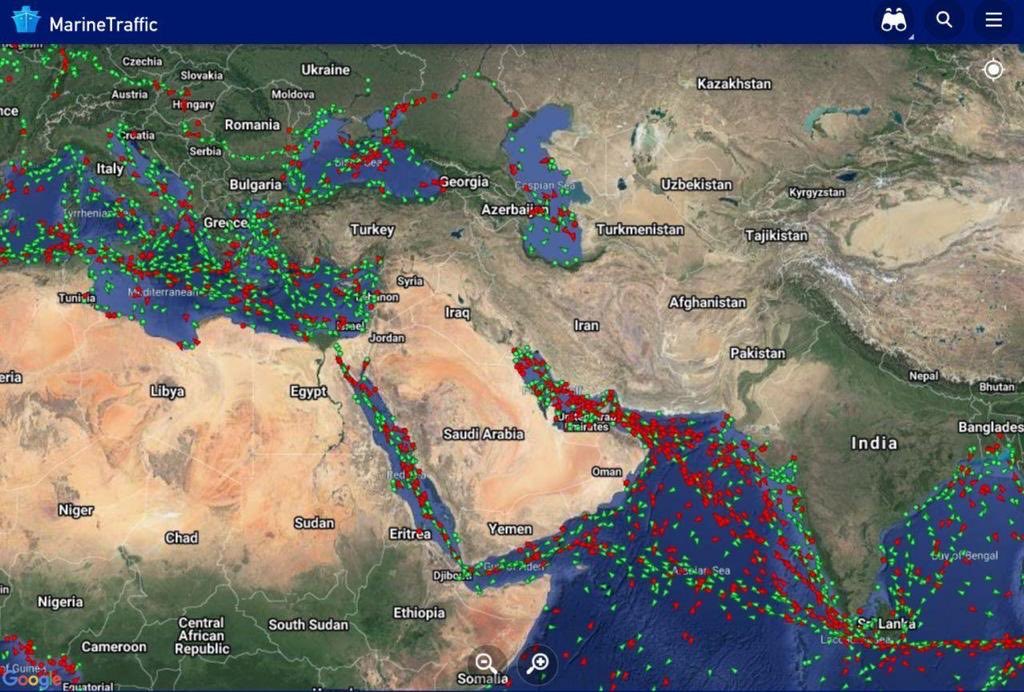
When the Ever Given--a 20,000 container ship--got stuck in the Suez Canal in March, the impact on global trade was dramatic.
Allianz estimated the blockage cost global trade between $6-10 billion per week.
Here's what it looked like on satellite imagery from @MarineTraffic.
Allianz estimated the blockage cost global trade between $6-10 billion per week.
Here's what it looked like on satellite imagery from @MarineTraffic.
The Ever Given situation captured public attention and put the Suez Canal into the mainstream cultural spotlight.
It even inspired a new videogame, which is soon to be released…
It even inspired a new videogame, which is soon to be released…
Ok, that’s enough rabbit hole for today. I hope you found this as interesting as I did!
Sources:
history.com
history.com
britannica.com
bbc.com
Sources:
history.com
history.com
britannica.com
bbc.com
Follow me @SahilBloom for more curiosity-inducing threads on business, history, and everything in between.
You can find all of my threads in the meta-thread below.
You can find all of my threads in the meta-thread below.
Loading suggestions...