
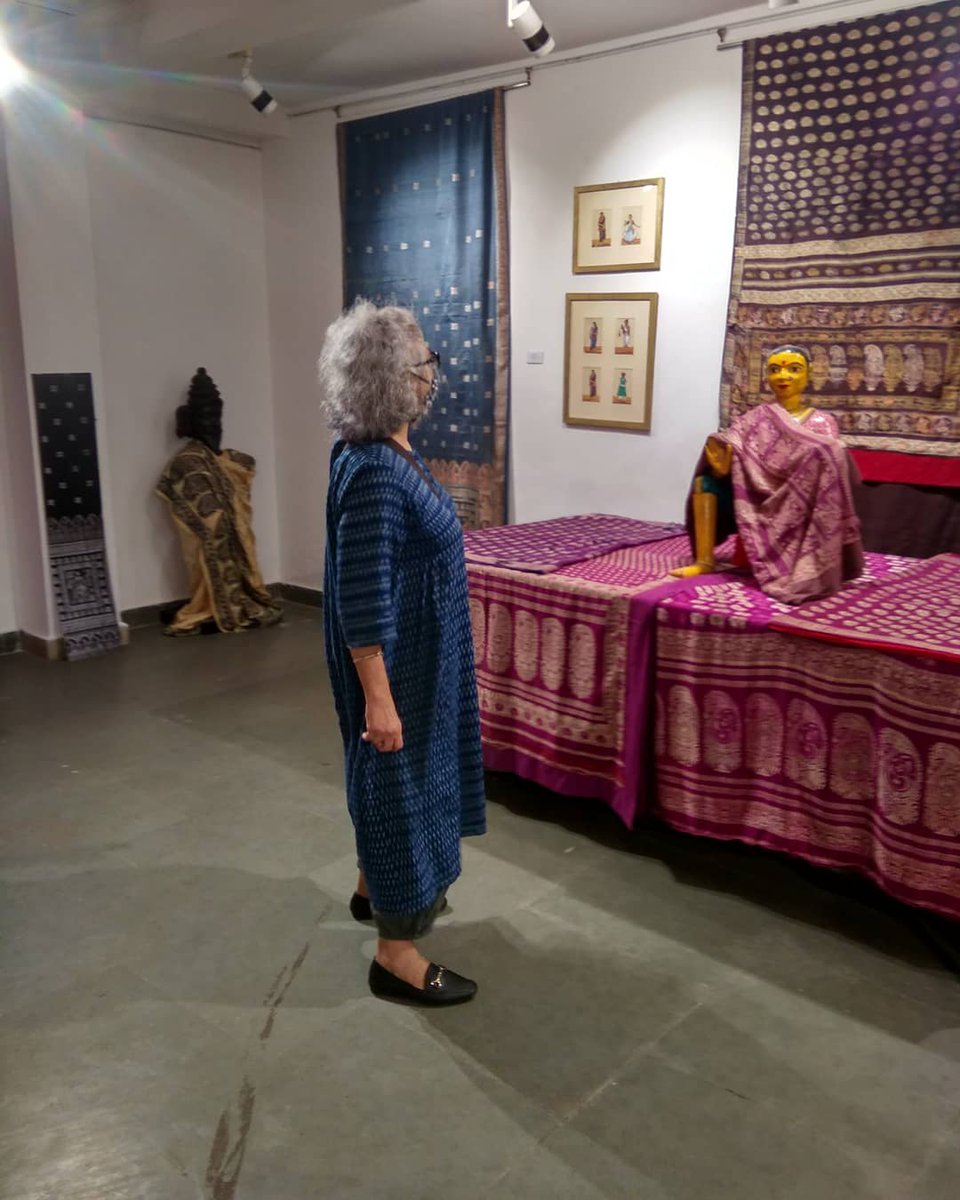
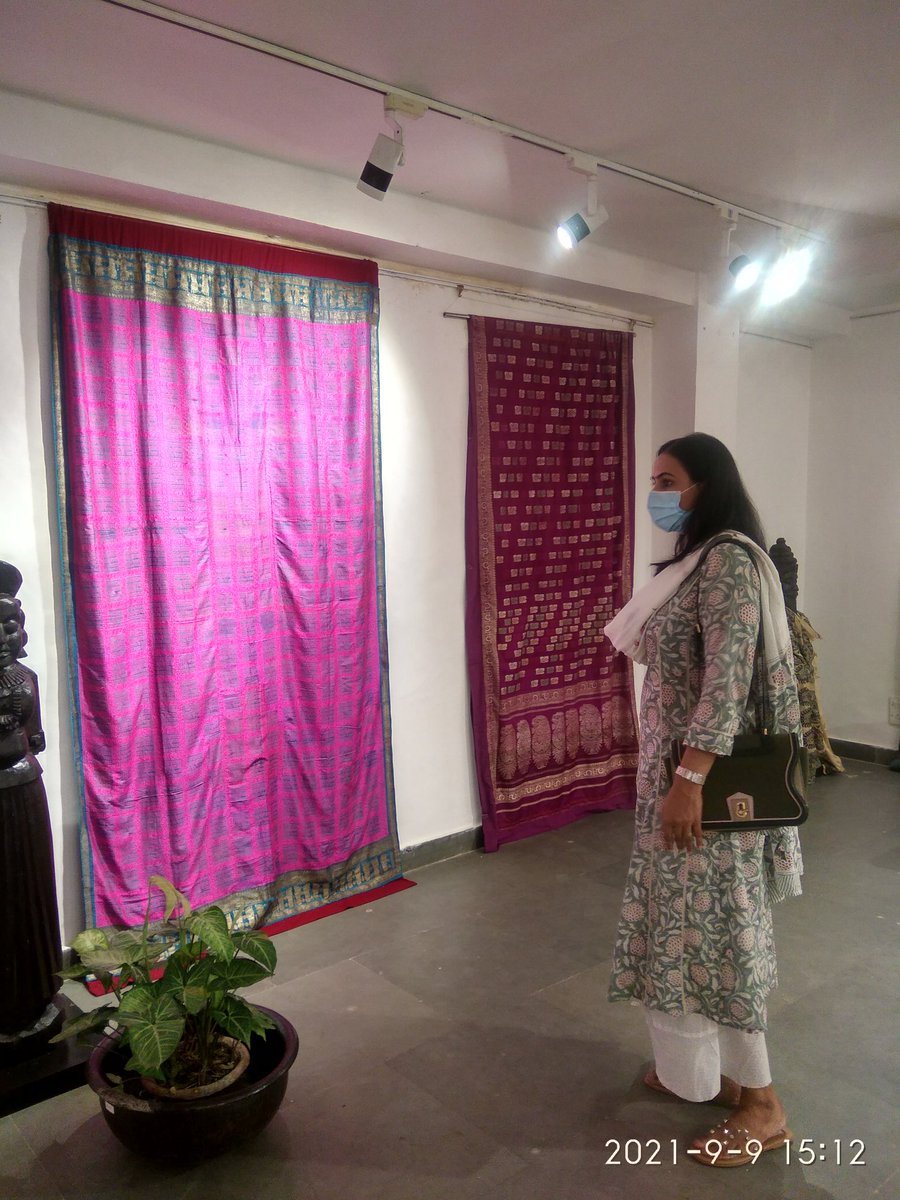
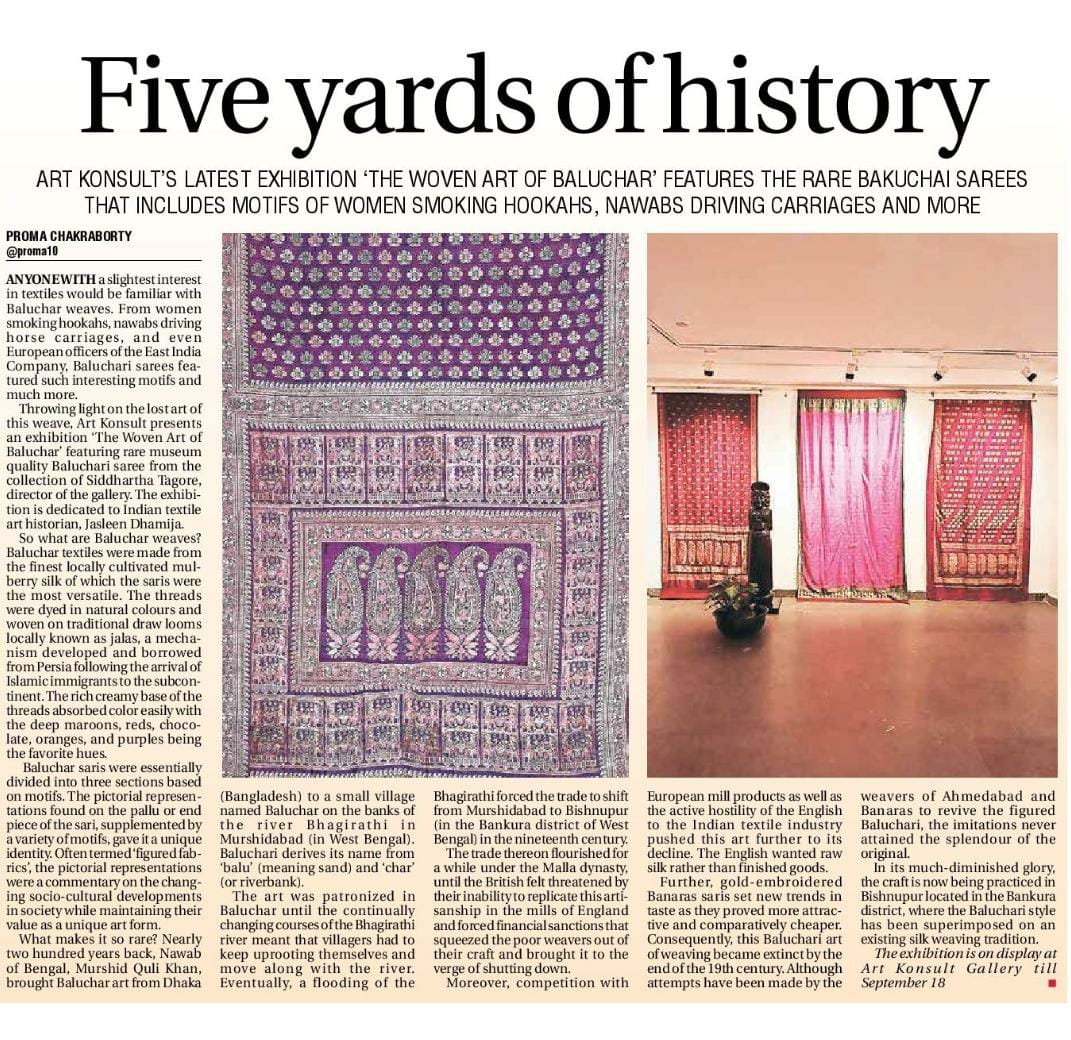
Today the Delhi based Art Gallery #Artkonsult wrapped up their much appreciated Textile show THE WOVEN ART OF BALUCHAR which is researched and executed by @Arthistorian18 (Gaurav Kumar) here are some details
Read this thread ..
Dating back Nearly two hundred years,
1/17
Read this thread ..
Dating back Nearly two hundred years,
1/17

Nawab of Bengal, Murshid Quli Khan, brought Baluchar art from Dhaka (Bangladesh) to a small village named Baluchar on the banks of the river Bhagirathi in Murshidabad (West Bengal). Baluchari derives its name from ‘balu’ (meaning sand) and ‘char’ (or riverbank).
2/17
2/17
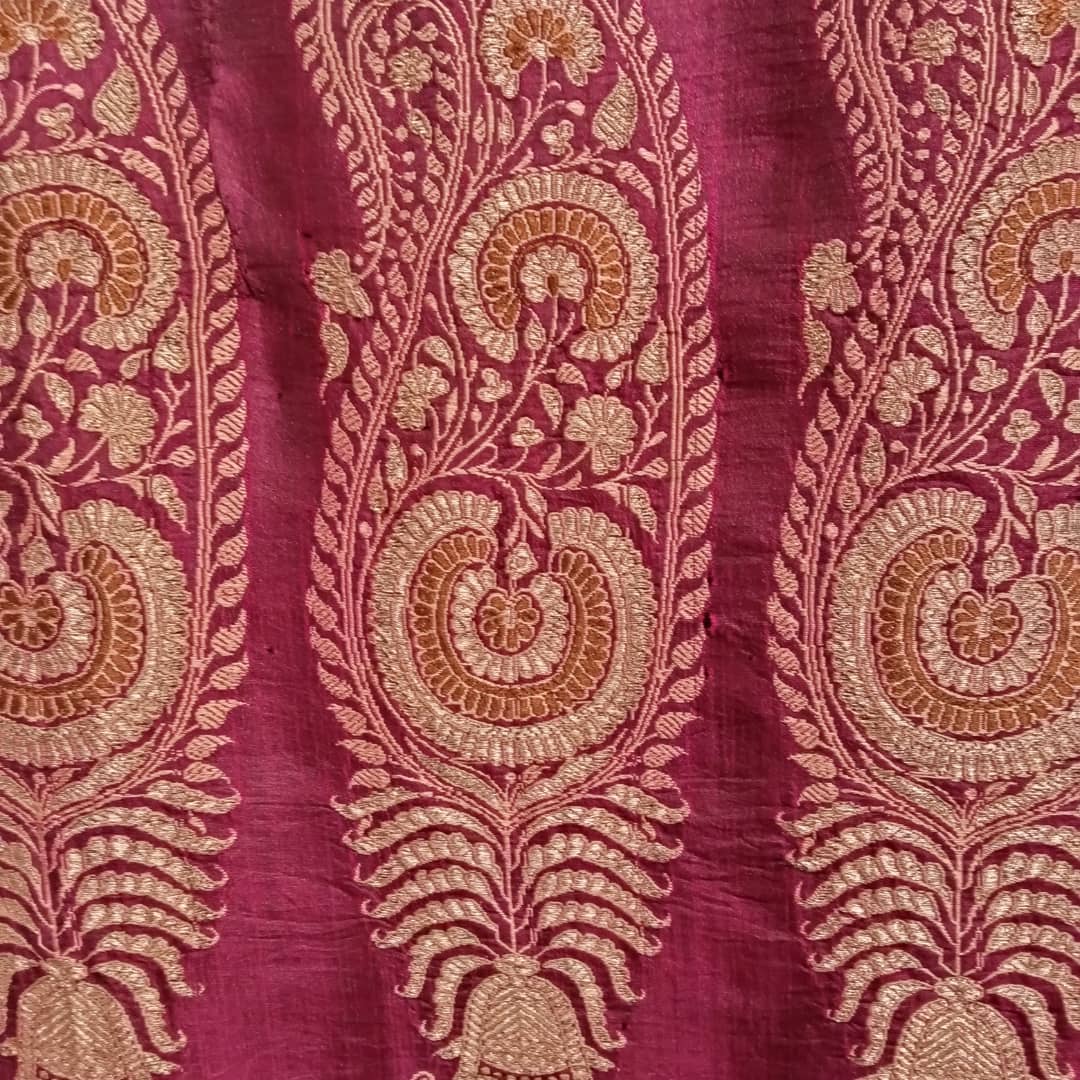
Baluchari weaving had themes that revolved around the lives of the nawabs and featured women smoking hookahs, nawabs driving horse carriages.
The romantic notions of Indian culture adopted by Europeans and the effect of the Indian elite mirroring foreign practices as a part
3/17
The romantic notions of Indian culture adopted by Europeans and the effect of the Indian elite mirroring foreign practices as a part
3/17
of their lifestyle came to be documented in various art forms. These stark changes became important themes in growing formalized artistic practices of the company school,kalighat painting.
common themes transcended the realm of art, craft, and architecture and it was from
4/17
common themes transcended the realm of art, craft, and architecture and it was from
4/17
within this artistic pool that themes and motifs of the Baluchar textiles were drawn from. Baluchar art was patronized in Baluchar until the continually changing courses of the Bhagirathi river meant that villagers had to keep uprooting themselves and move along with the
5/17
5/17
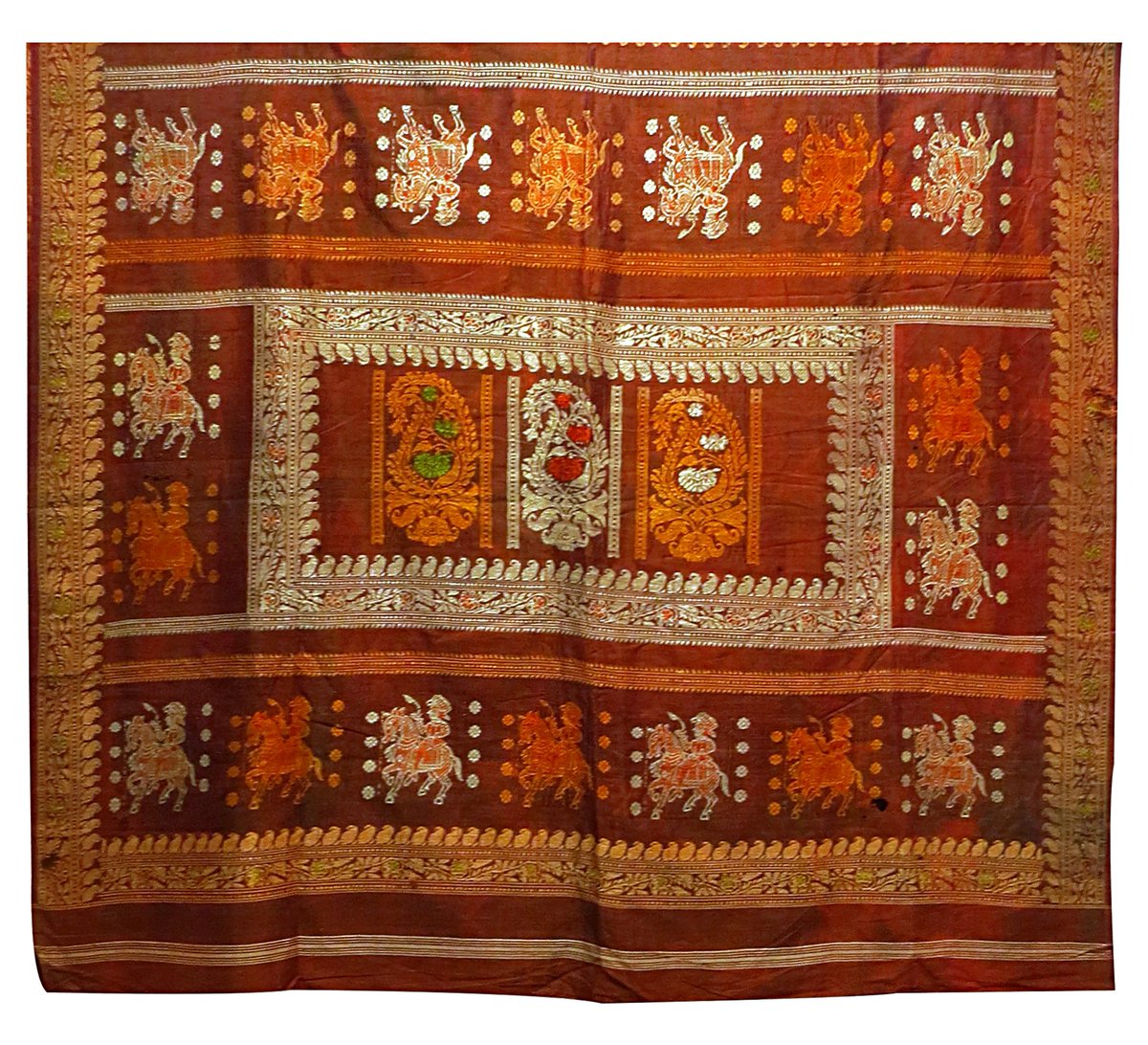
river. Eventually, a flooding of the Bhagirathi forced the trade to shift from Murshidabad to Bishnupur(in the Bankura district of West Bengal)in the nineteenth century. The trade then flourished for a while under the Malla dynasty there,until the British felt threatened by
6/17
6/17
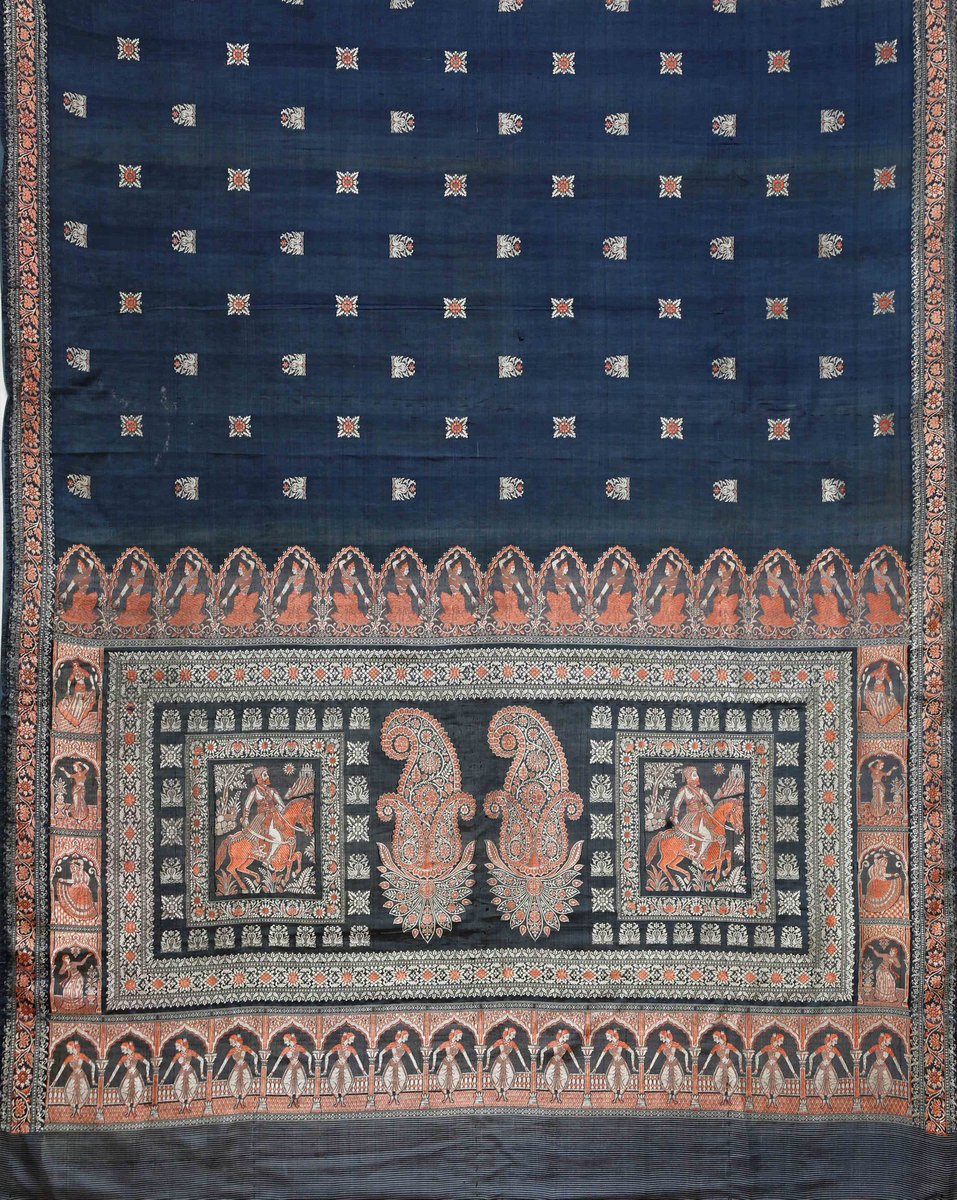
their inability to replicate this artisanship in the mills of England and forced financial sanctions that squeezed the poor weavers out of their craft and brought it to the verge of shutting down.
Baluchar textiles were made from the finest locally cultivated mulberry silk
7/17
Baluchar textiles were made from the finest locally cultivated mulberry silk
7/17
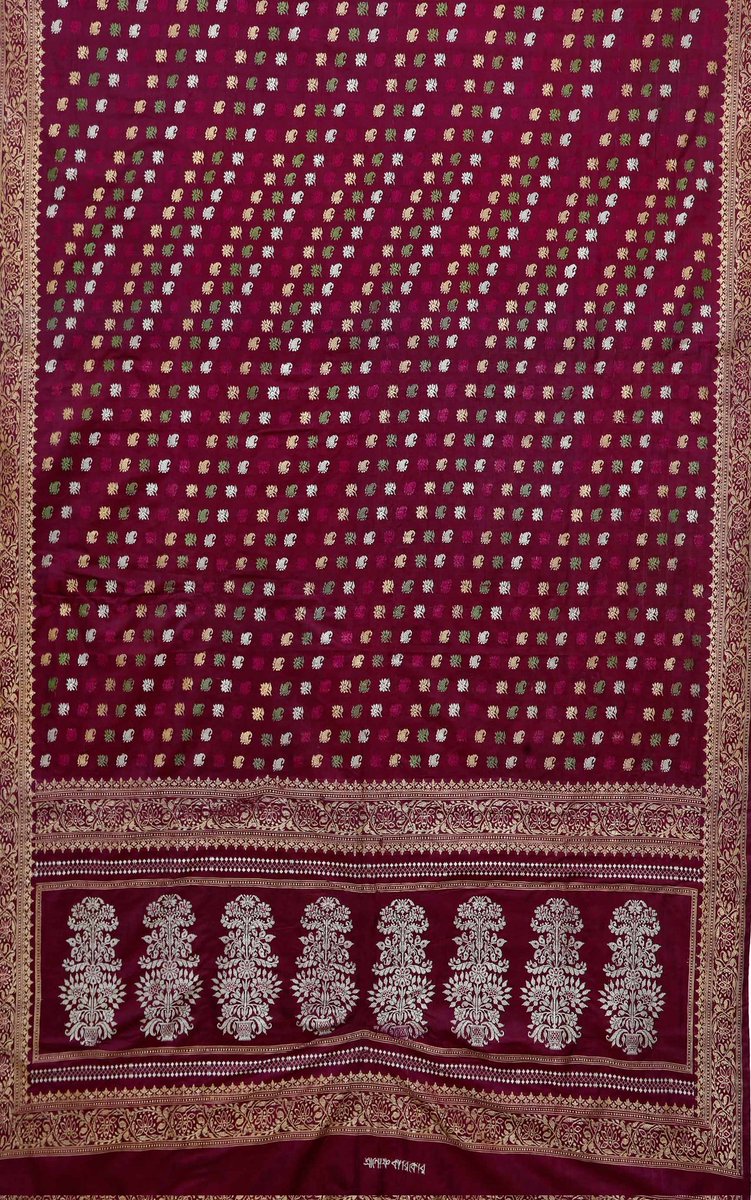
of which the saris were the most versatile. The threads were dyed in natural colours and woven on traditional draw looms locally known as jalas, a mechanism developed and borrowed from Persia following the arrival of Islamic immigrants to the subcontinent. The rich Creamy
8/ 17
8/ 17
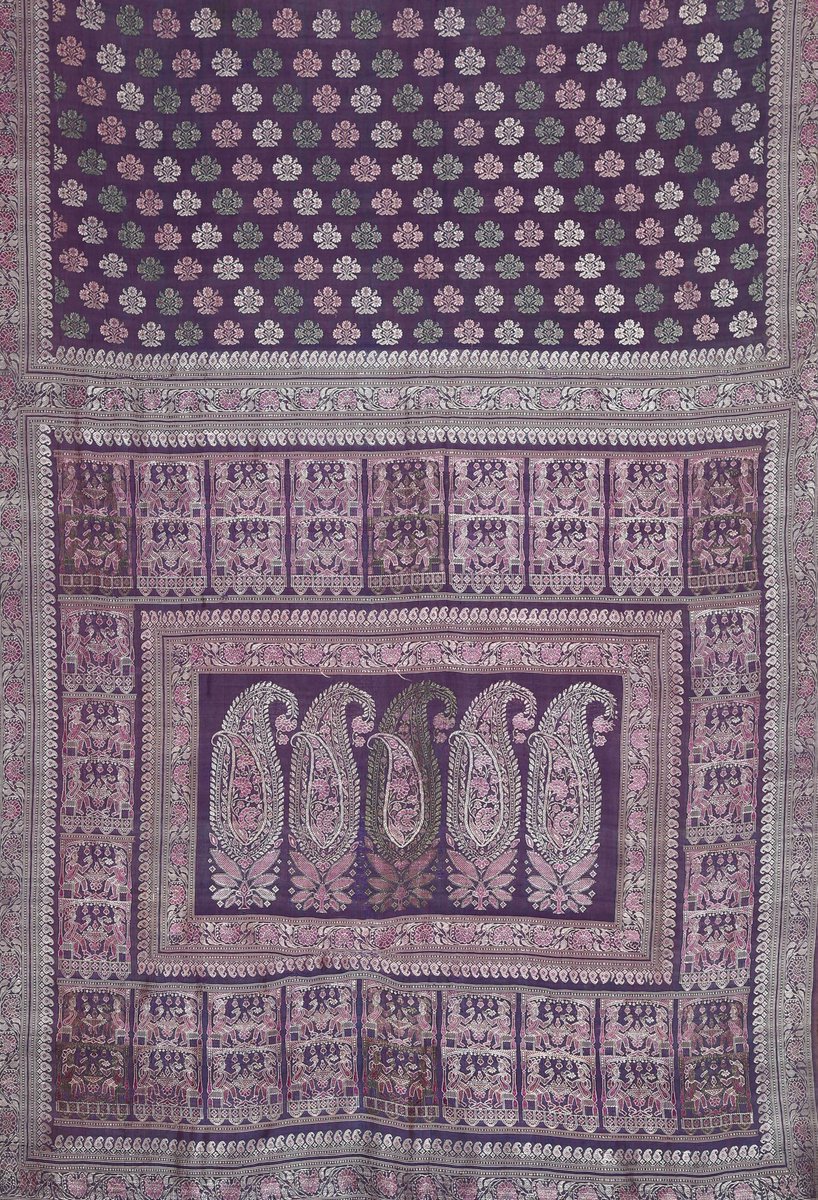
base of the threads absorbed color easily with the deep maroons, reds, chocolate, oranges, and purples being the favorite hues.
Baluchar saris were essentially divided into three sections based on motifs.
These were the end piece or pallu; the zamin or field
9/17
Baluchar saris were essentially divided into three sections based on motifs.
These were the end piece or pallu; the zamin or field
9/17
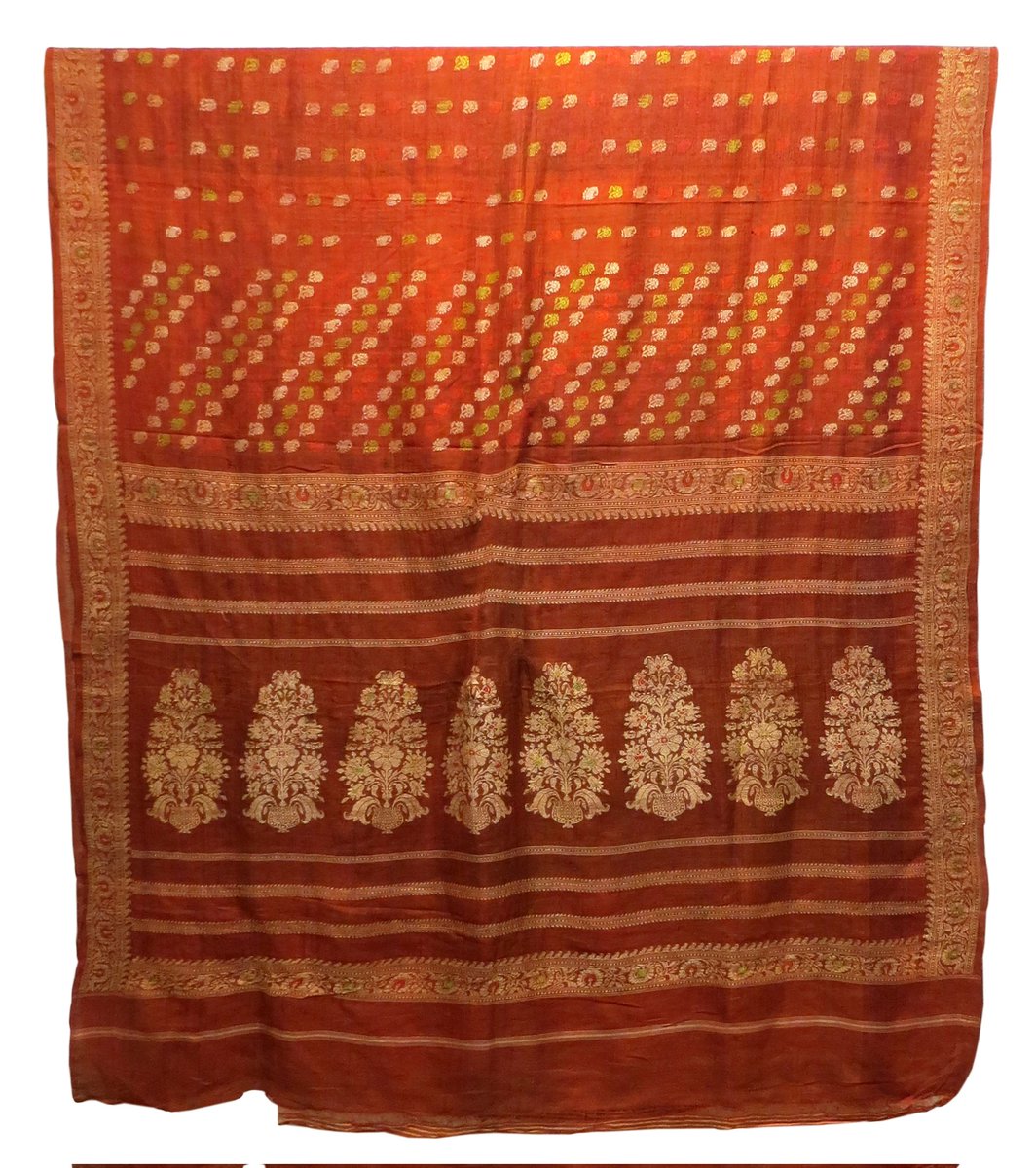
of the sari, the borders framing the sari, and one border between the zamin and the pallu. By analyzing the motifs on different sections of the sari, the distinct division of designs can be segmented into figurative, floral, and faunal as well as geometric or decorative.
10/17
10/17
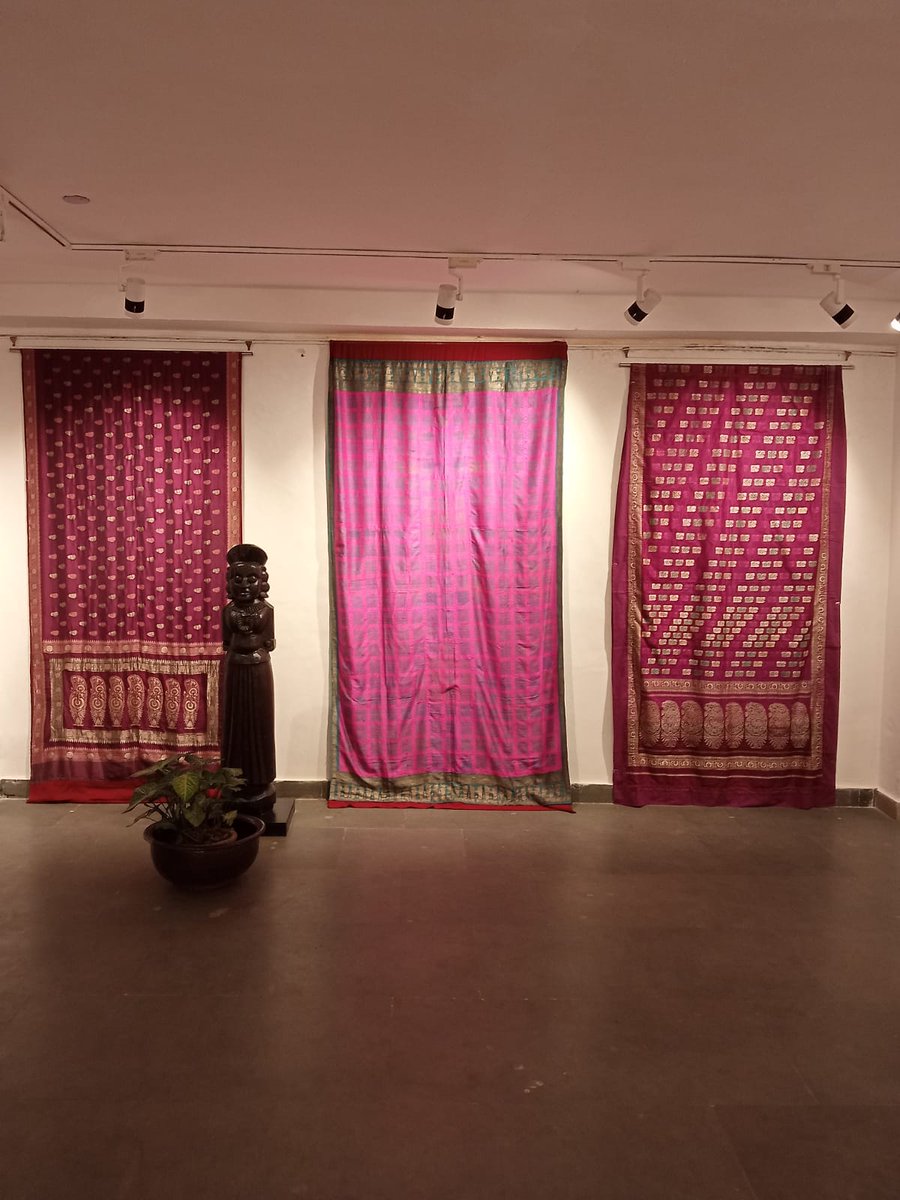
A single sari often contained a combination of these elements.
The pictorial representations found on the pallu or end piece of the sari, supplemented by a variety of motifs, gave it a unique identity. Often termed ‘figured fabrics’, the pictorial representations were a
11/17
The pictorial representations found on the pallu or end piece of the sari, supplemented by a variety of motifs, gave it a unique identity. Often termed ‘figured fabrics’, the pictorial representations were a
11/17
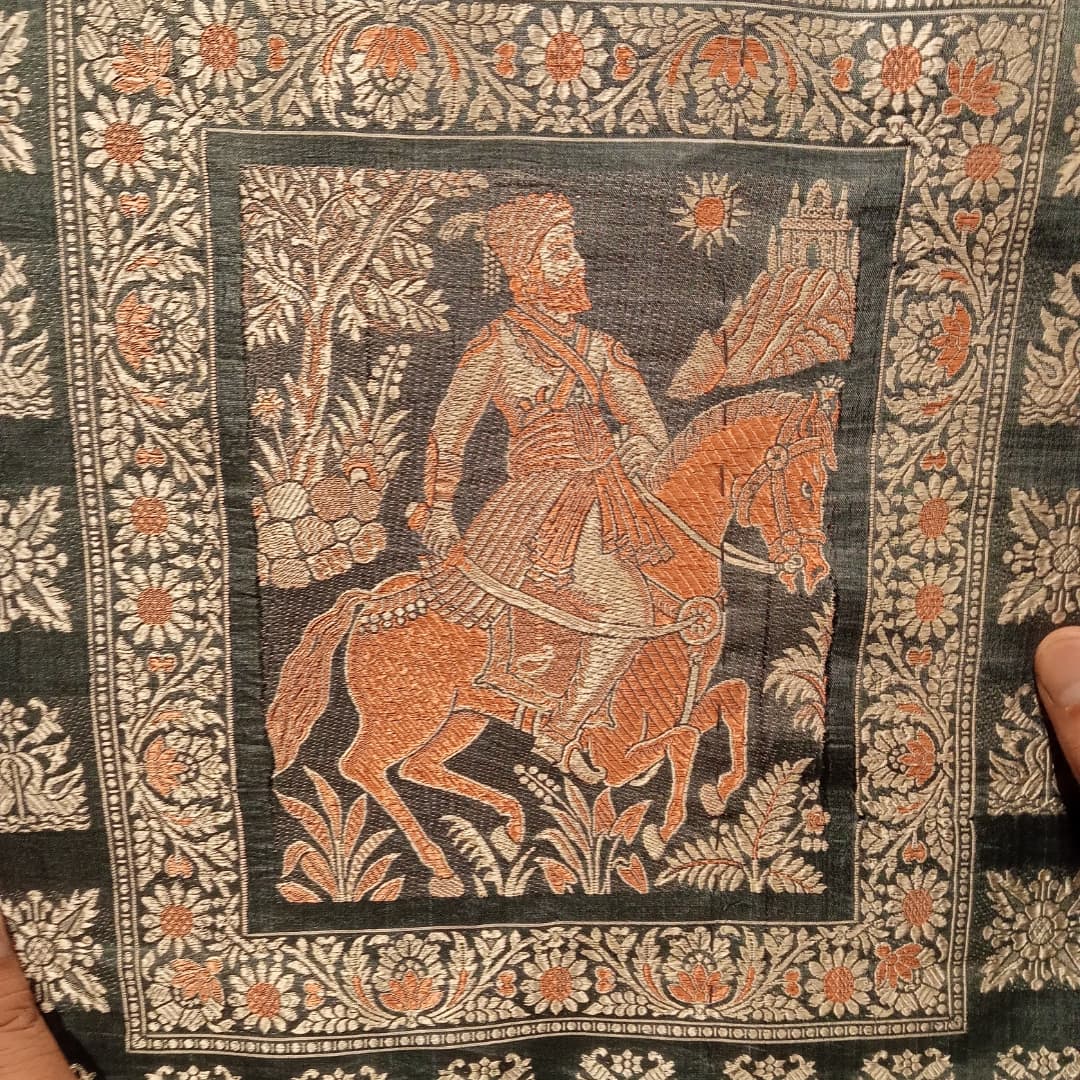
commentary on the changing socio-cultural developments in society while maintaining their value as a unique art form.
Moreover, competition with European mill products as well as the active hostility of the English to the Indian textile industry pushed this art further to
12/17
Moreover, competition with European mill products as well as the active hostility of the English to the Indian textile industry pushed this art further to
12/17
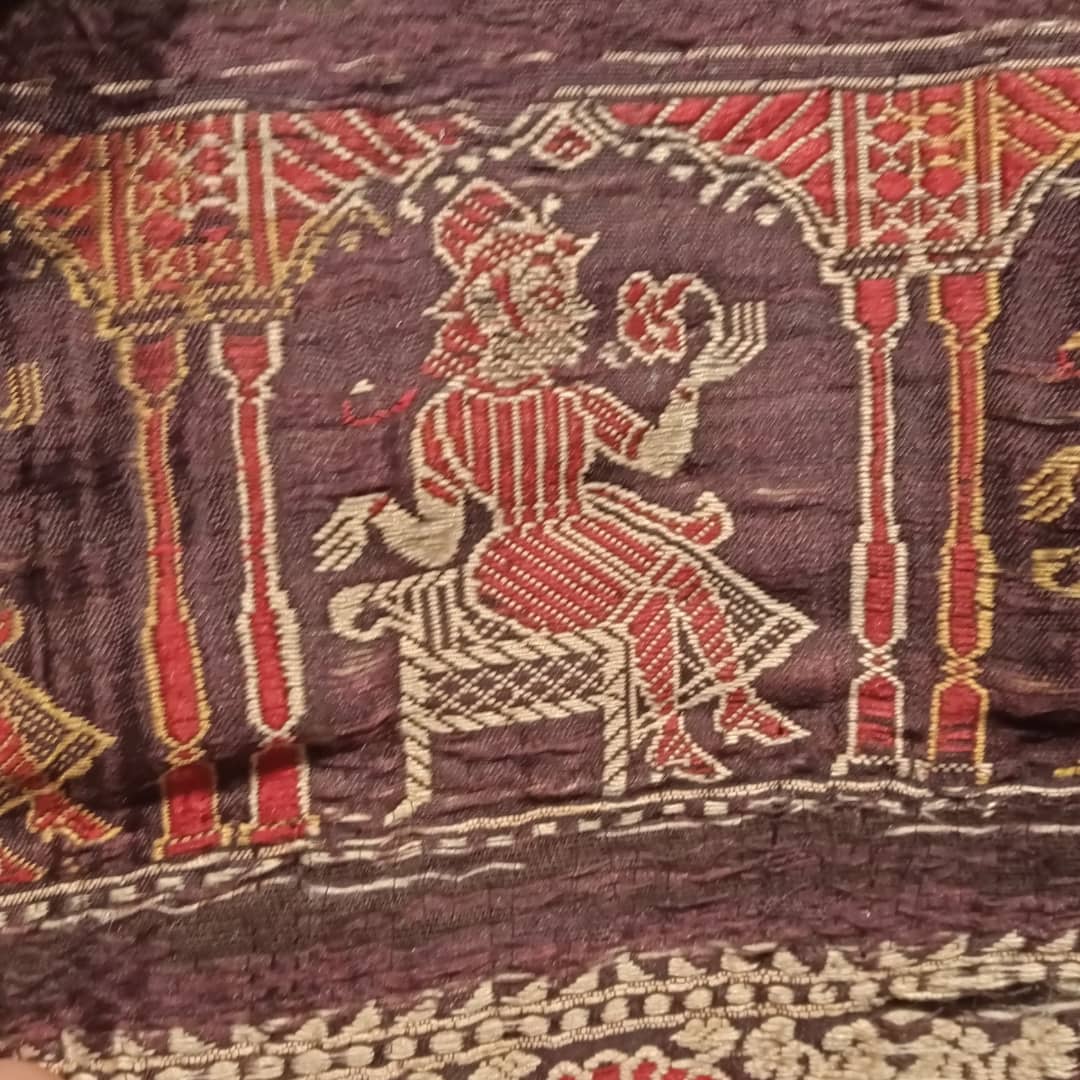
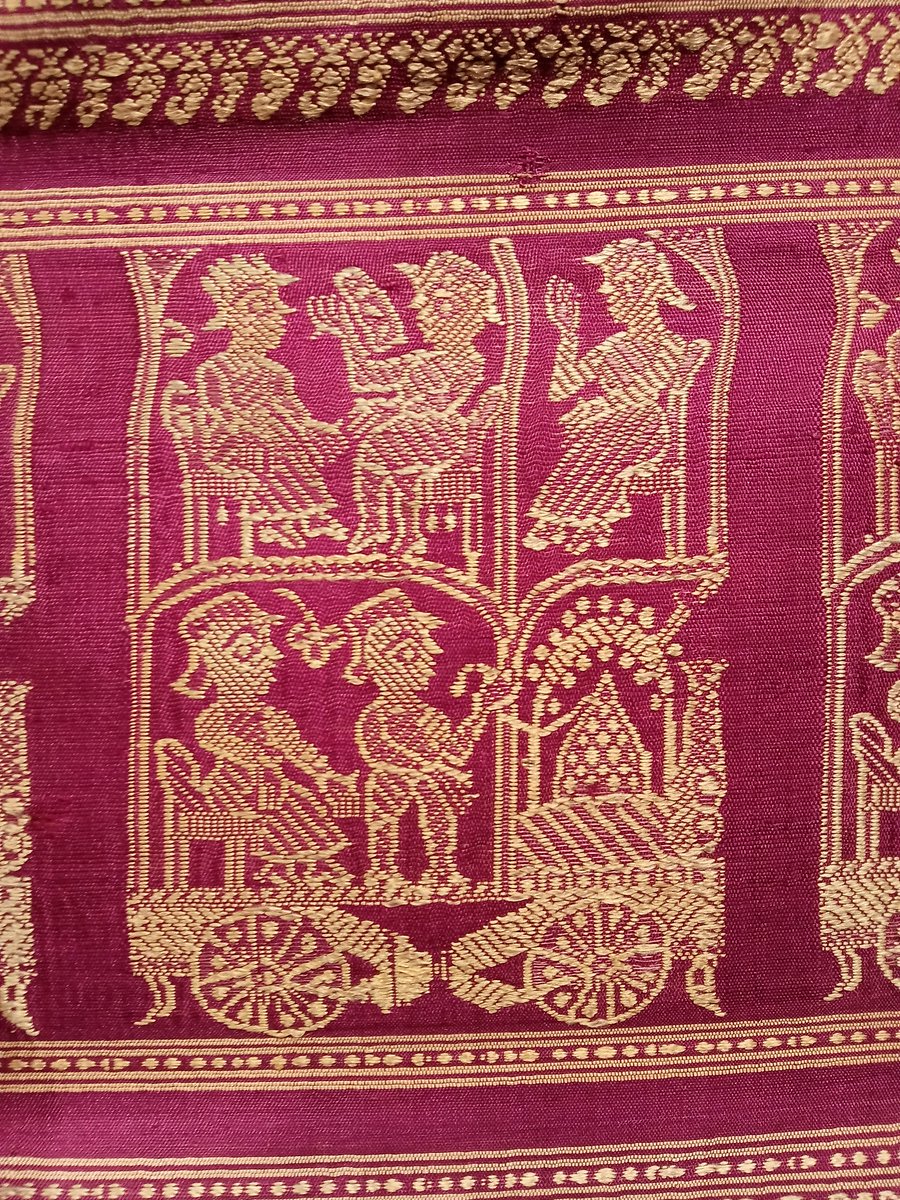
it's decline. The reason for the decline of Baluchars in Murshidabad in the early 20th century is often attributed to the passing of Dubraj Das, and the revival of baluchari weaving in the mid 20th century was brought about by the artist Subho Tagore,the first Director of
13/17
13/17
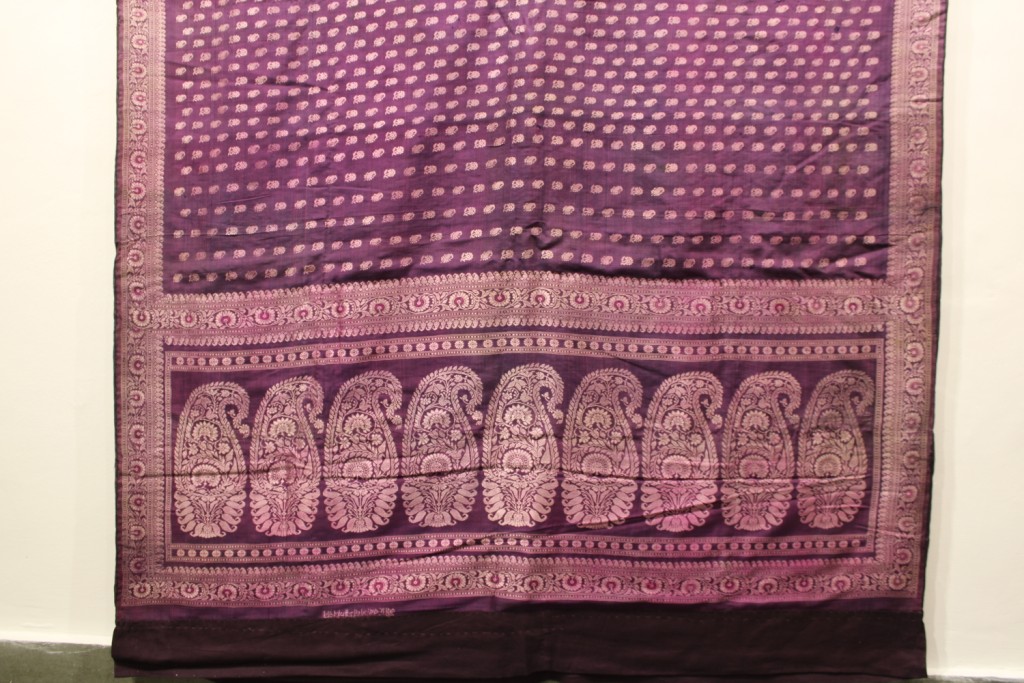
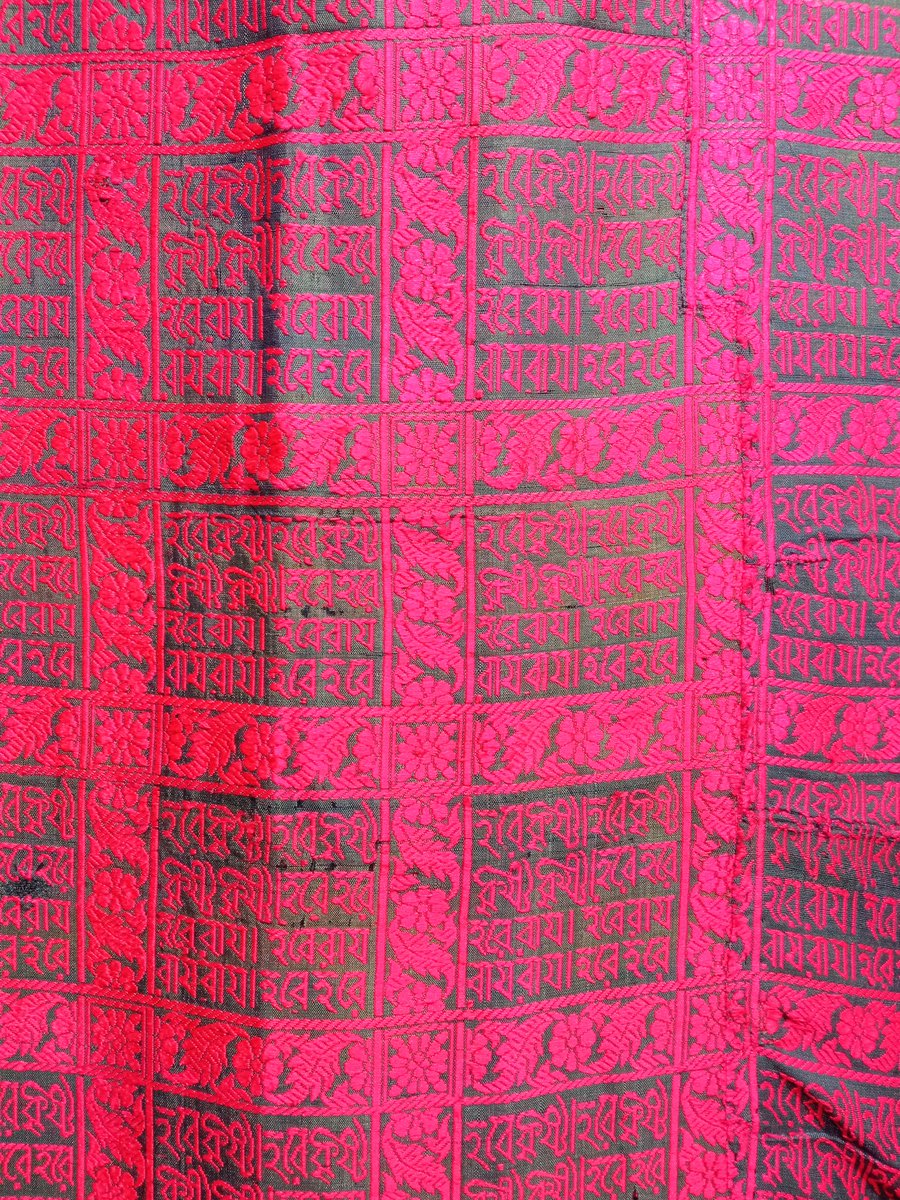
the Regional Design Centre in Calcutta of the All India Handicrafts Board, who helped develop the technique of jacquard weaving that greatly simplified the process and reduced the time it took to weave a saree. This new era of baluchari weaving featured motifs from epics
14/17
14/17
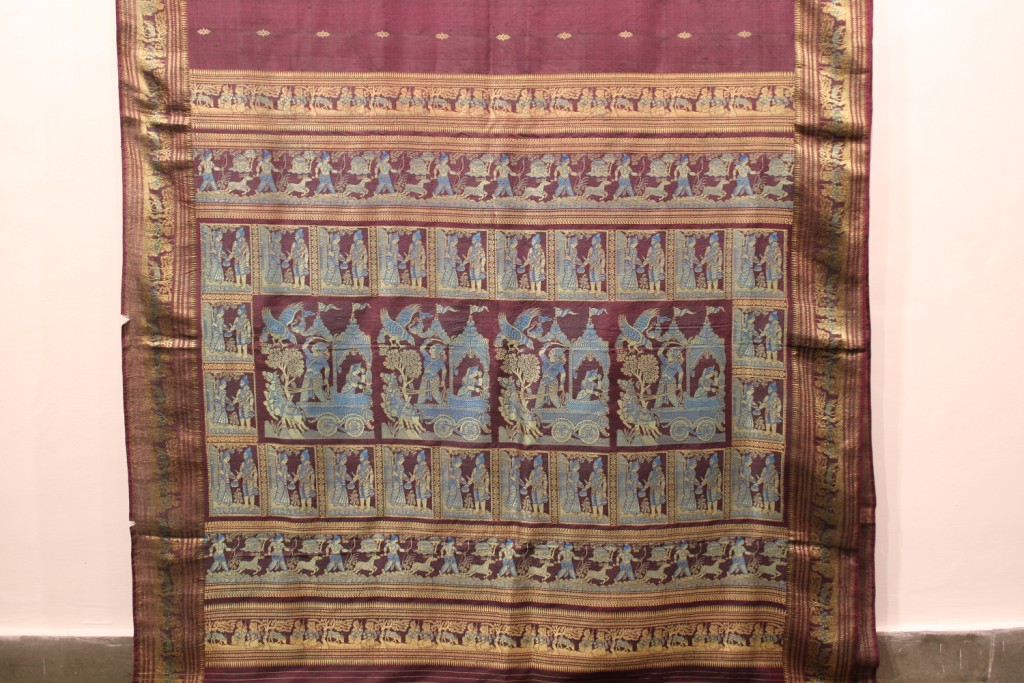
and religious texts (Vaishnava Imagery) and is continued to this day by the weavers of Bishnupur. The intricately carved terracotta temples of Bishnupur provide ample inspiration for the weavers who reproduce whole epics on the pallu of the sari.The ground colors range...
15/17
15/17
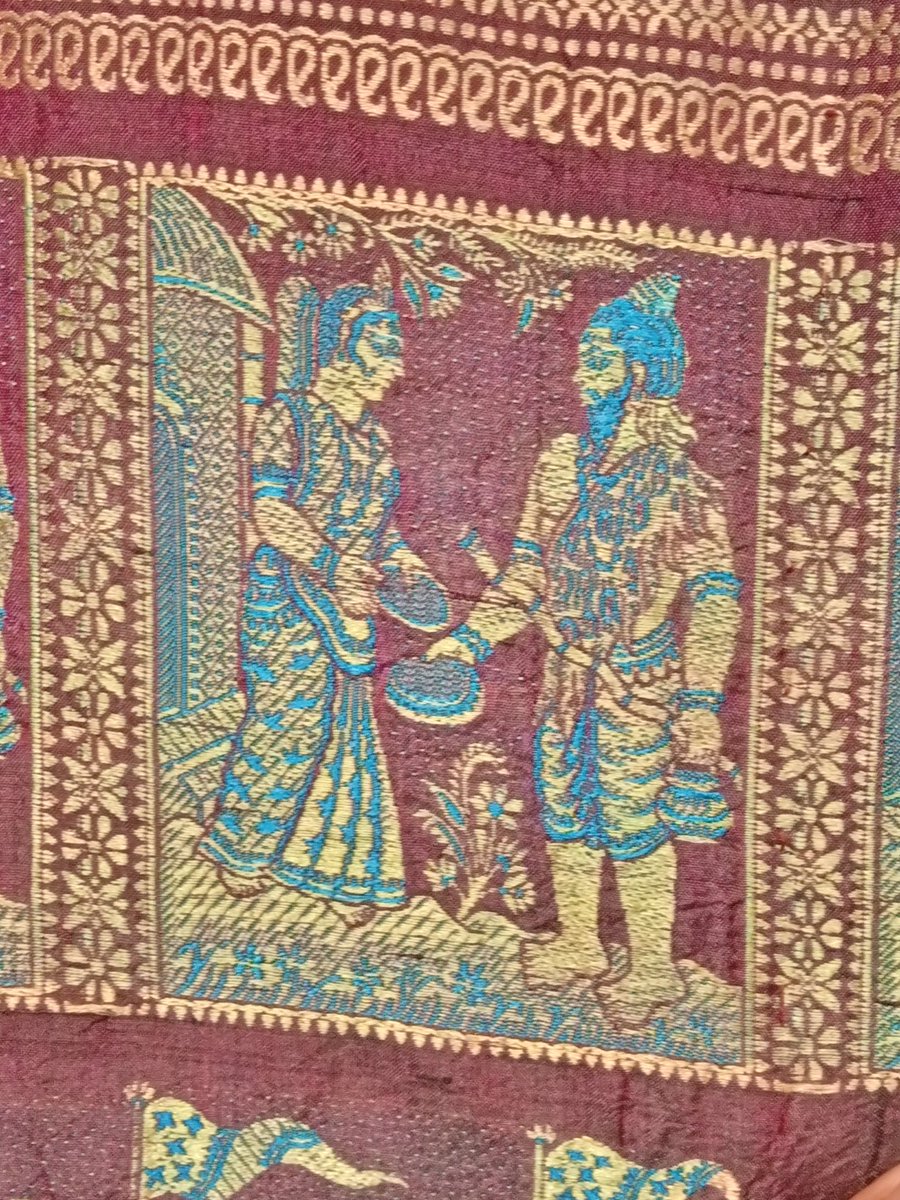
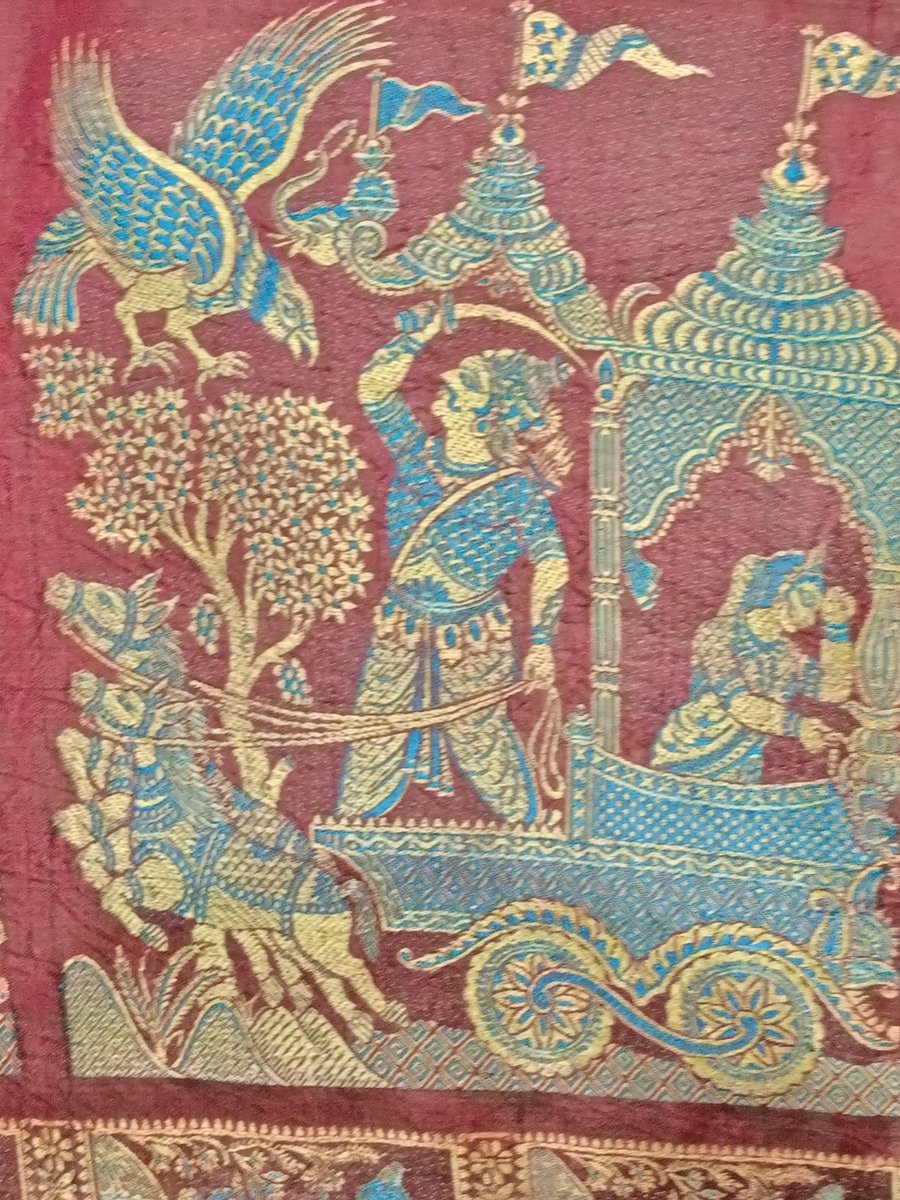
from beige to resplendent blues and reds with contrast borders, all on fine mulberry silk. While the present-day Baluchari may not be as grand as its ancestor, it still has a unique appeal, making the wearer stand out in a crowd.
16/17
16/17
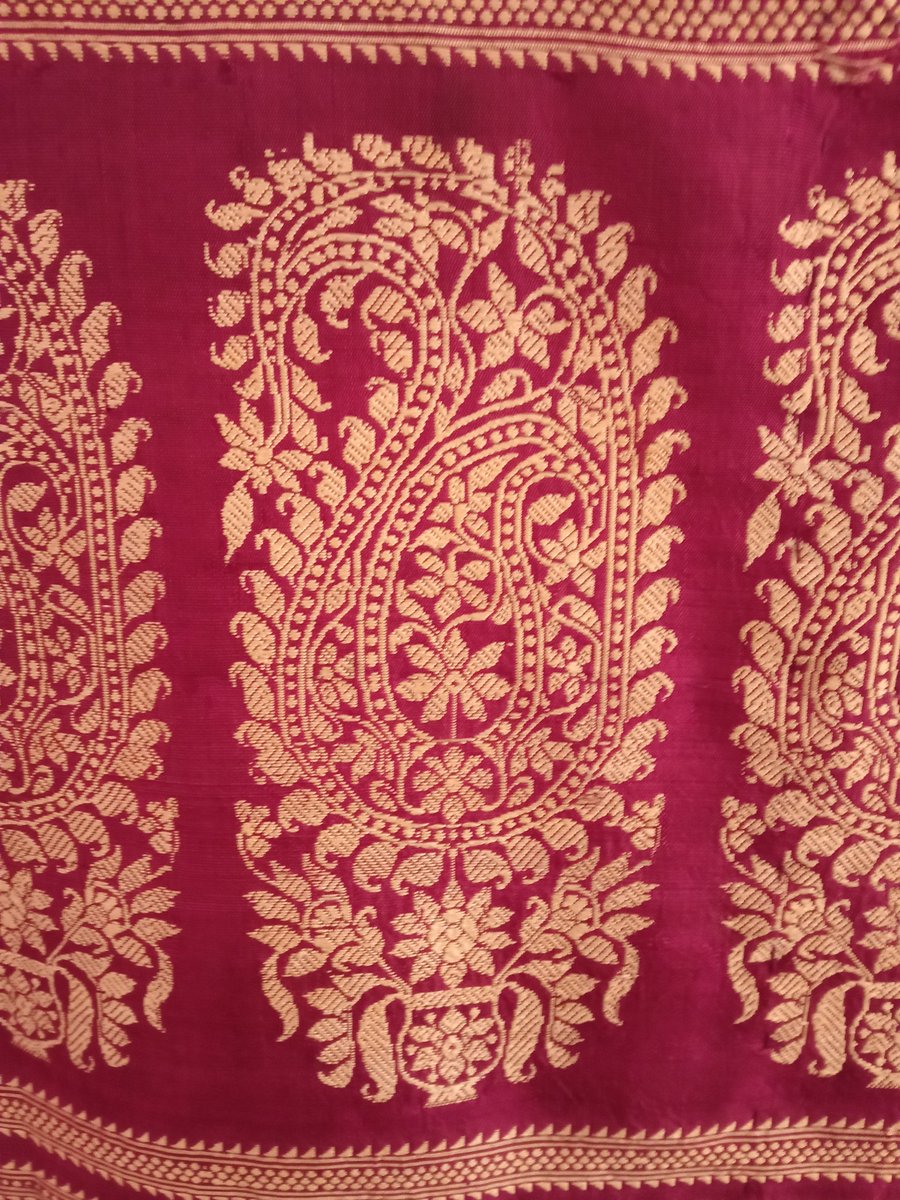
This exhibition is dedicated to JASLEEN DHAMIJA for her contribution to the history of textiles and costumes, she has written many books on Textiles especially on Baluchari and she is the only authoritative of Baluchari saree.
17/17
17/17

Loading suggestions...