

A conceptual illustration of the Indian magnetic compass used by Hindu mariners in the 1-2nd centuries CE. The Indian compass was called the "matsyayantra" (fish-machine) as it consisted of an iron fish floating in a vessel of oil, pointing towards north.

The matsya-yantra was likely an independent invention of the magnetic compass in India, the physical principles of magnetism were well know to the Hindus centuries before.

For example, Kalidasa in his ~ 4th century Kumarasambhava makes a pun by using the principles of magnetism.
“As a magnet draws iron to it,
with the beauty of Umā you must try
to attract Śiva’s mind which
now is motionless in trance.” (KS 2.59)
“As a magnet draws iron to it,
with the beauty of Umā you must try
to attract Śiva’s mind which
now is motionless in trance.” (KS 2.59)

The word used for "magnet" here is अयस्कान्त which means literally "lover of iron"
However, the existence of magnetism was known to the Hindus at least 800 years before Kalidasa lived.
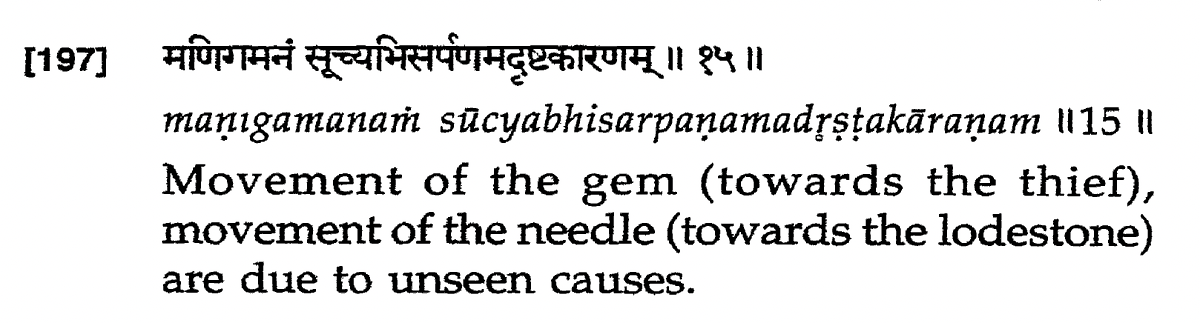
Maharishi Kanada in ~500 BCE (one of the first physicists in the world) describes an unseen force (adṛṣta) that attracts needles to loadstones (magnetite).
Maharishi Kanada in ~500 BCE (one of the first physicists in the world) describes an unseen force (adṛṣta) that attracts needles to loadstones (magnetite).
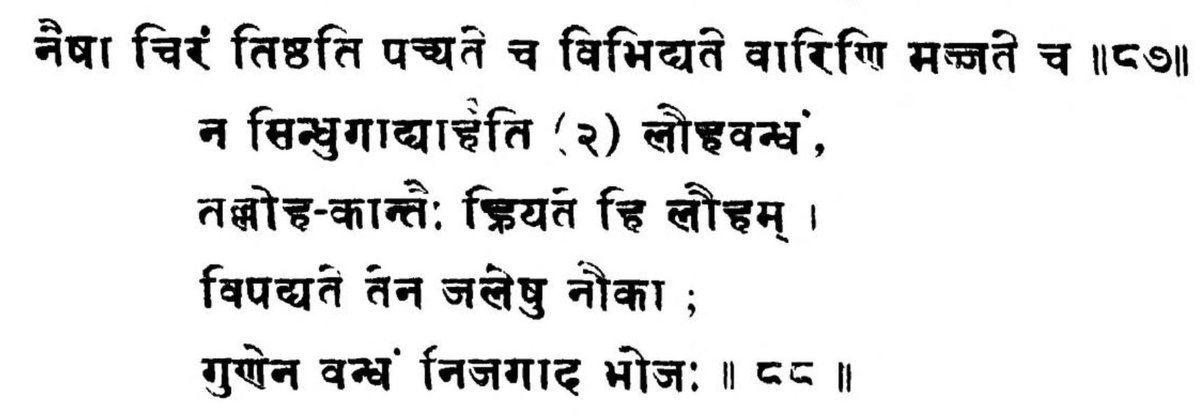
It is also very well known that Maharaja Bhoja specifically said that iron shouldn't be used in holding or joining planks of bottoms of sea-going vessels.
The reason was simple, for fear the iron on the ship's bottom may attract magnetic rocks on the ocean floor.
The reason was simple, for fear the iron on the ship's bottom may attract magnetic rocks on the ocean floor.
Bhoja says this in his Yukti-kalpatru. He says the iron at the bottom of the ship will attract other iron and because of this the ship may fall apart in the water (विपद्यते तेन जलेषु नौका)
See this thread for more information on Indian mariners and navigation, plus shipbuilding
Loading suggestions...