
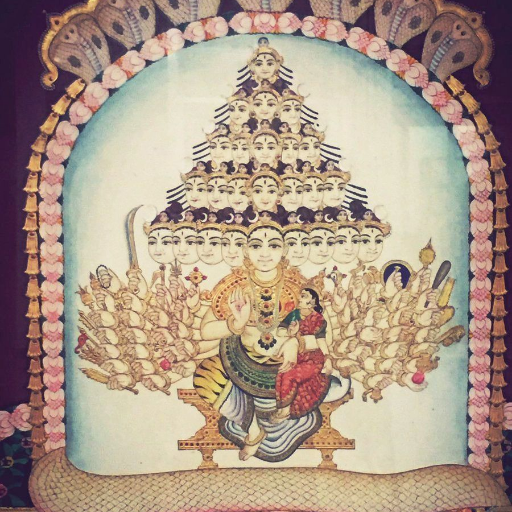
1. Nature of Mokṣa - Realization of our eternal & innate equality with Paramaśiva - omnipotent, omniscient & omnipresent.
Individuality is fully retained in this mukti, which is not achieved by knowledge but by action. Or rather, a specific action called initiation.+
Individuality is fully retained in this mukti, which is not achieved by knowledge but by action. Or rather, a specific action called initiation.+
Nature of world:
First things first: We have 3 reals in Siddhānta ontology, which are named slightly differently in texts- I prefer: Śiva, Paśu & Pāśa.
First things first: We have 3 reals in Siddhānta ontology, which are named slightly differently in texts- I prefer: Śiva, Paśu & Pāśa.
Śiva (Souls whose innate Śivatva is fully manifest) - Infinite in number
The Śiva whose Śivatva has eternally been manifest / unobscured is *the* Śiva - Paramaśiva.
Paśu (bound souls) - Infinite in number; real natures obscured by Mala
Pāśa (bonds) - Three: Mala, Karma & Māyā
The Śiva whose Śivatva has eternally been manifest / unobscured is *the* Śiva - Paramaśiva.
Paśu (bound souls) - Infinite in number; real natures obscured by Mala
Pāśa (bonds) - Three: Mala, Karma & Māyā
If you use classic formulation: Pati, Paśu & Pāśa, Pati refers to Paramaśiva alone. But this ignores the class of Śivas. So, some texts make it a tetrad by adding Śiva separately.
The Pāśas are three broad categories of insentient reals
Mala: Substance that beginninglessly obscures a soul’s true power of knowledge & action.
Karma: A dynamic stream of acts & ripening fruits of acts that we are caught in beginninglessly as well.
What is Māyā?++
Mala: Substance that beginninglessly obscures a soul’s true power of knowledge & action.
Karma: A dynamic stream of acts & ripening fruits of acts that we are caught in beginninglessly as well.
What is Māyā?++
Māyā is NOT illusion but the grand & ultimate raw material that makes the following four “items”:
1. Tanu (body)
2. Karaṇa (Instruments of cognition & action)
3. Bhuvana (World)
4. Bhoga (Objects of cognition & action)
1. Tanu (body)
2. Karaṇa (Instruments of cognition & action)
3. Bhuvana (World)
4. Bhoga (Objects of cognition & action)
The world is real because the very real individualised hold of the very real Mala on each of us matures because of its association with our very real Karma, which requires very real items 1-4 above (this includes the world), supplied by Māyā.
Loading suggestions...