

Woodblock-printed "tarshes" - small amuletic prayer scrolls - are known from Fatimid Egypt and elsewhere in the Middle East between the 10th & 13th centuries. But this haunting 13th-14th century block-print of a young Nubian ibex may be a unique survival.
metmuseum.org
metmuseum.org
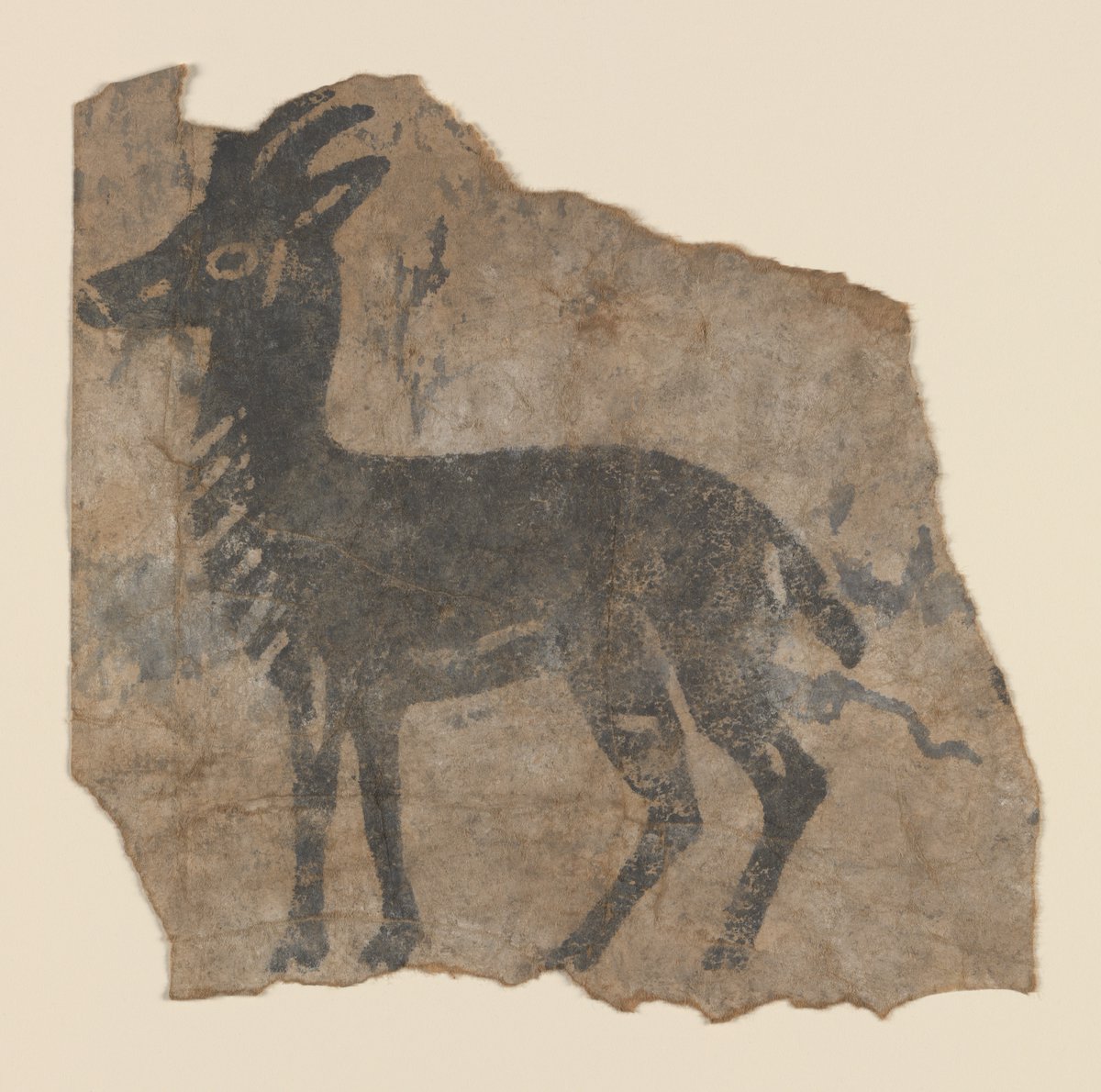
The treatment of the eye suggests that this is a Nubian ibex, since that species has brown eyes, whereas the sand gazelle’s eyes are black. Its horns curve slightly, but are not as large & rounded as those of an adult Nubian ibex, which indicates that the animal is a juvenile. 2/
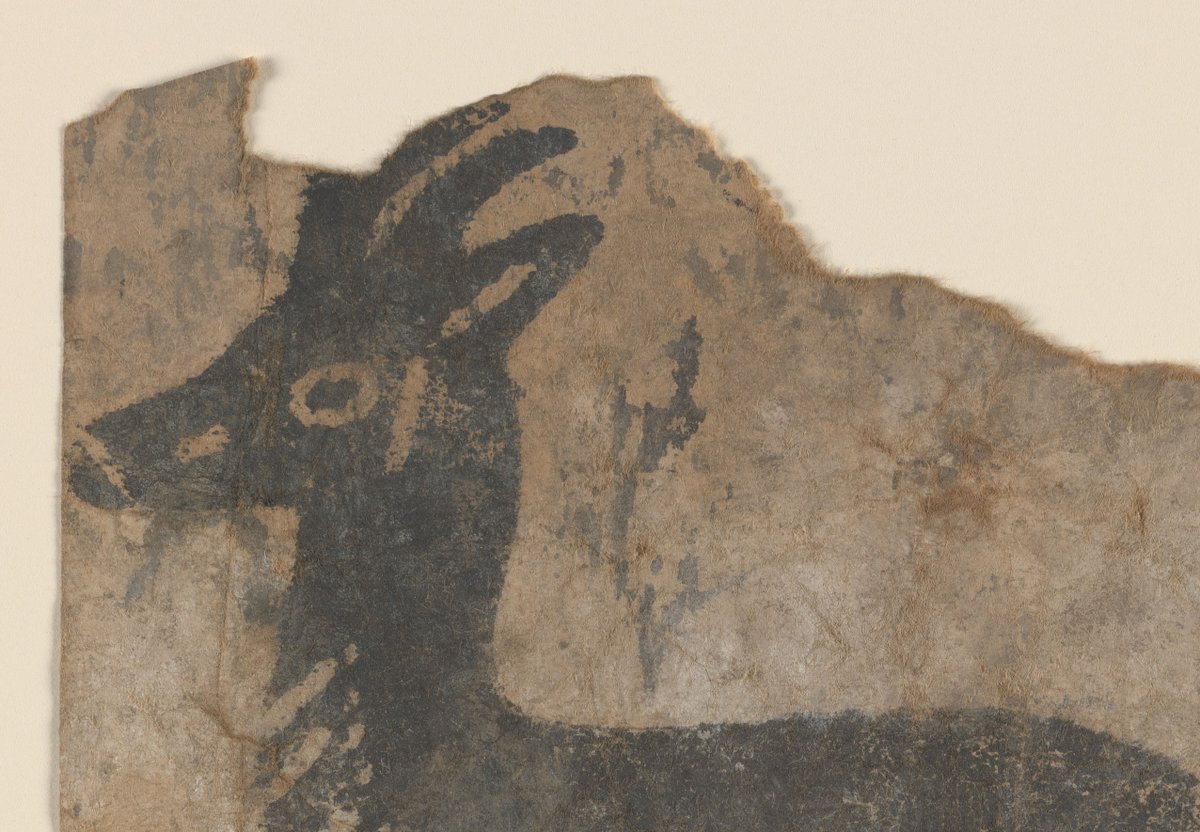
The fragment is surprisingly large - 18.8 cm, or about seven and a half inches across - which means it certainly doesn't come from any form of amuletic scroll, but was clearly made for an entirely different purpose - unfortunately just what purpose is to date still unknown. 3/
This unique Fatimid woodblock-printed fragment was sold on auction in France at Le Chesnay Enchères, Versailles, on 21 November 2015, Lot 5. If anyone has access to a copy of this catalogue, I'd love to read the auctioneer's original description. 4/
Thanks to the kindness of @HankoWil (and not for the first time either), no sooner asked than answered! Here is the 2015 auction catalogue description.

The hypothesis advanced in the auction description - in the absence of more data unprovable, but not implausible - is that this may be a kind of sample or maquette for an image to be stamped on to textiles, or perhaps copied on to ceramic. 6/
Loading suggestions...