

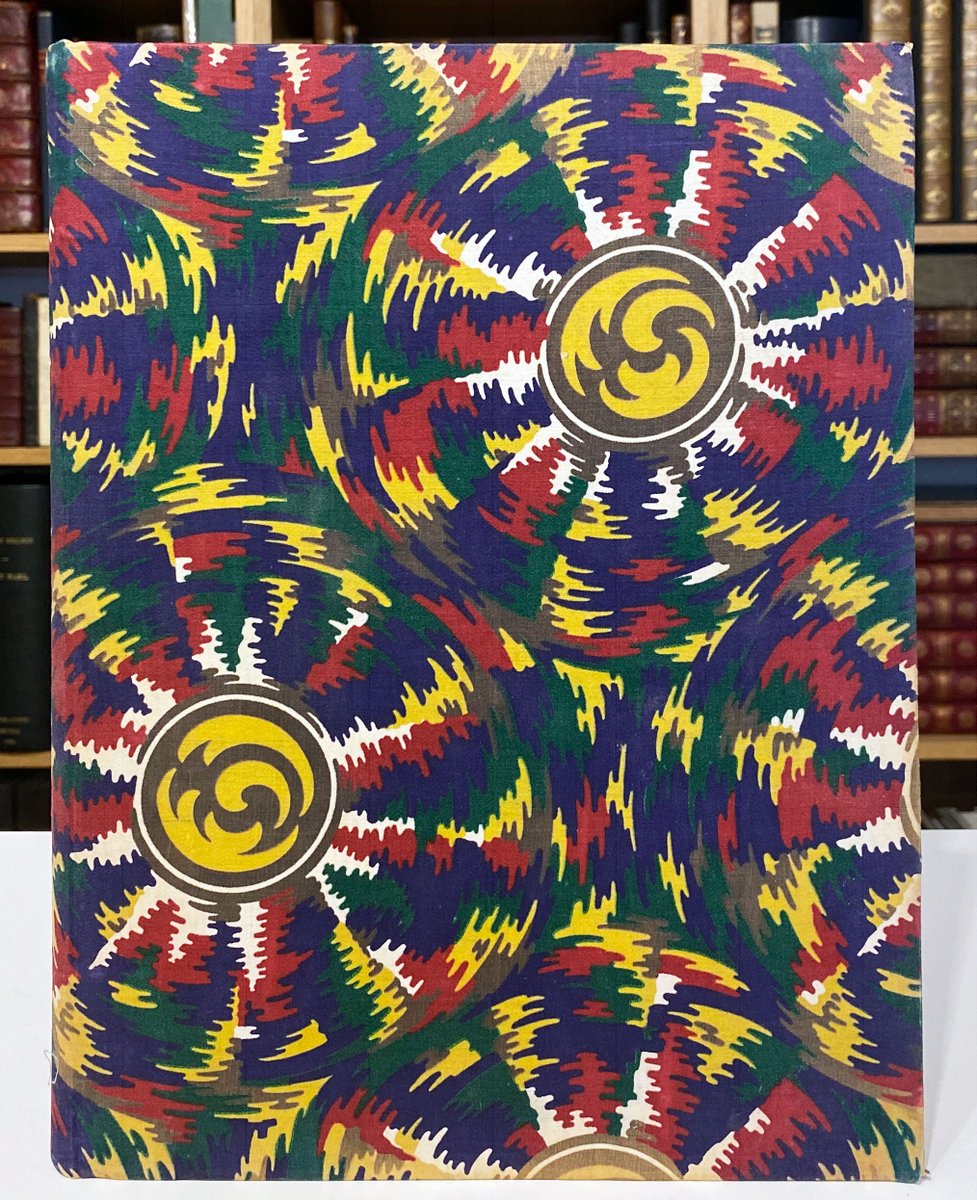
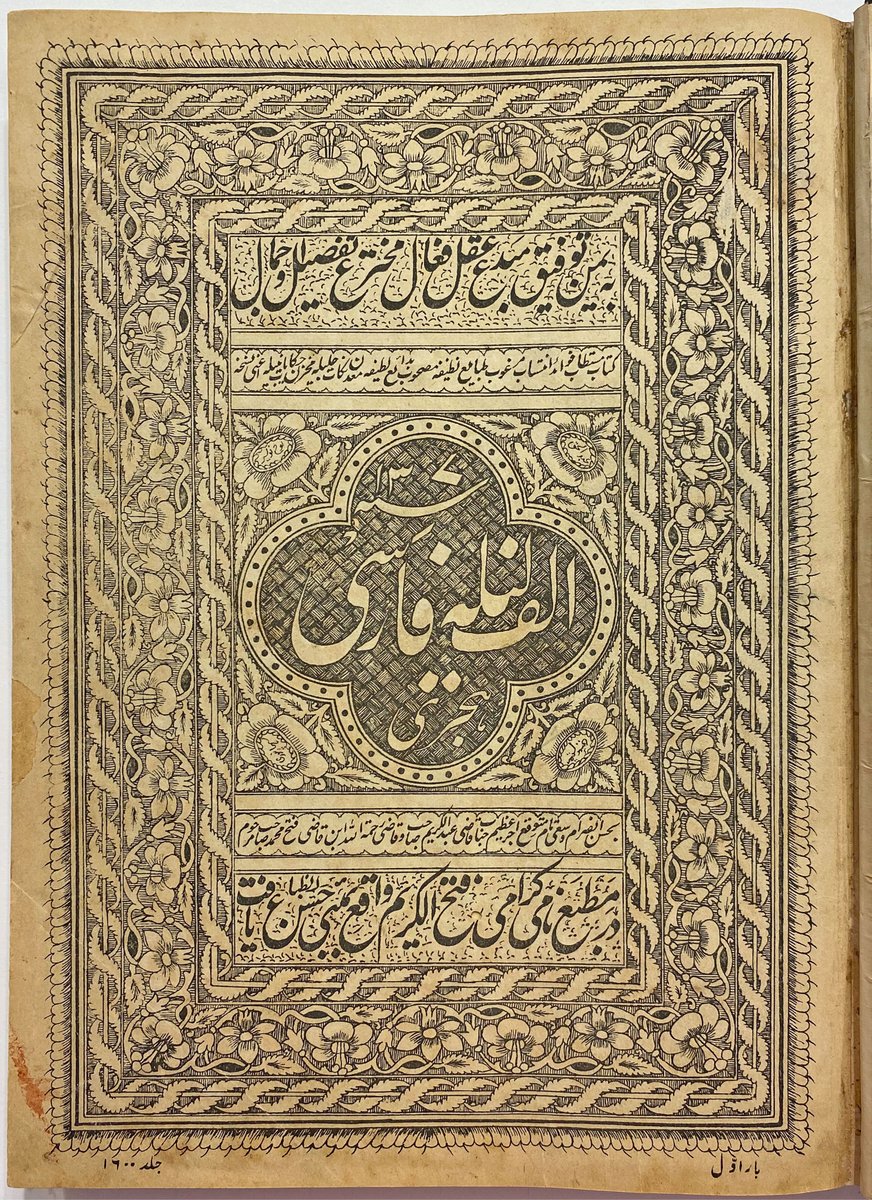
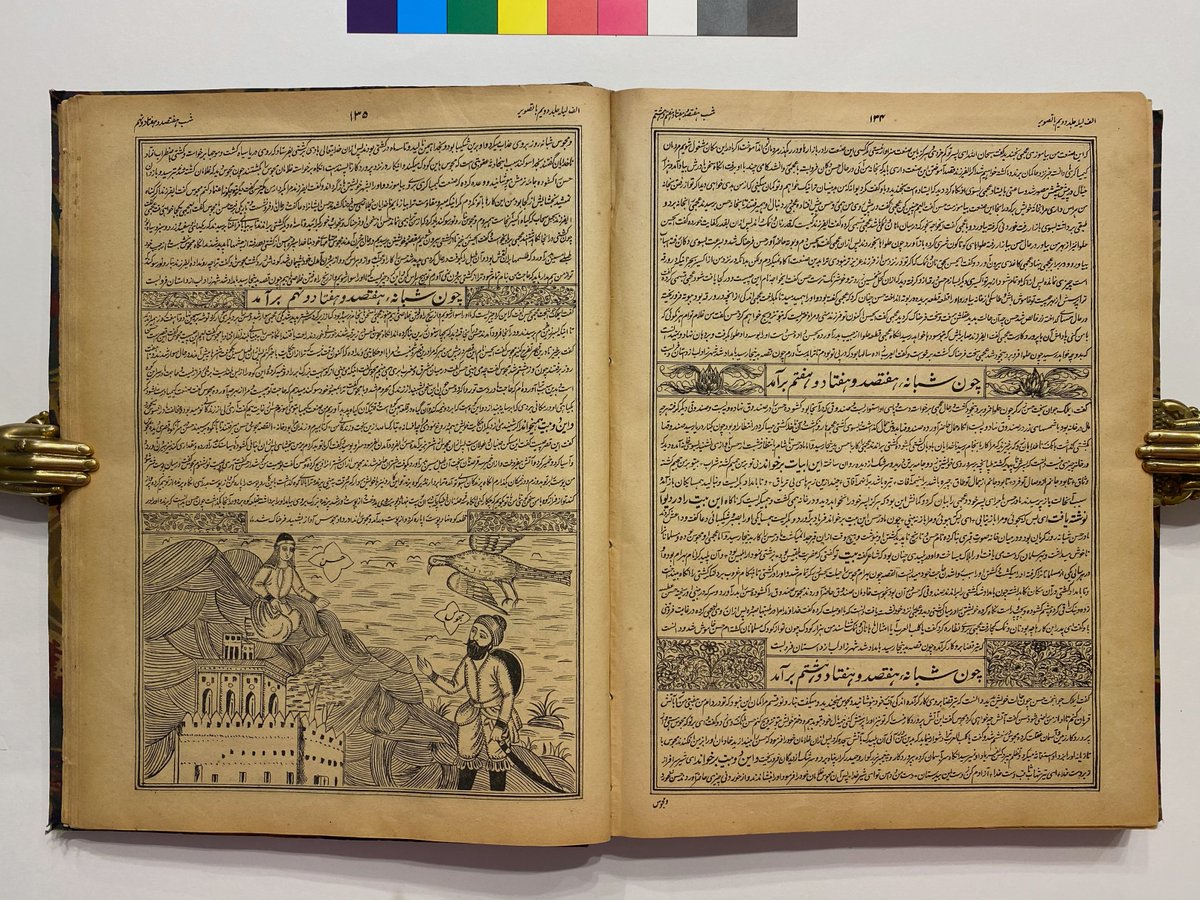
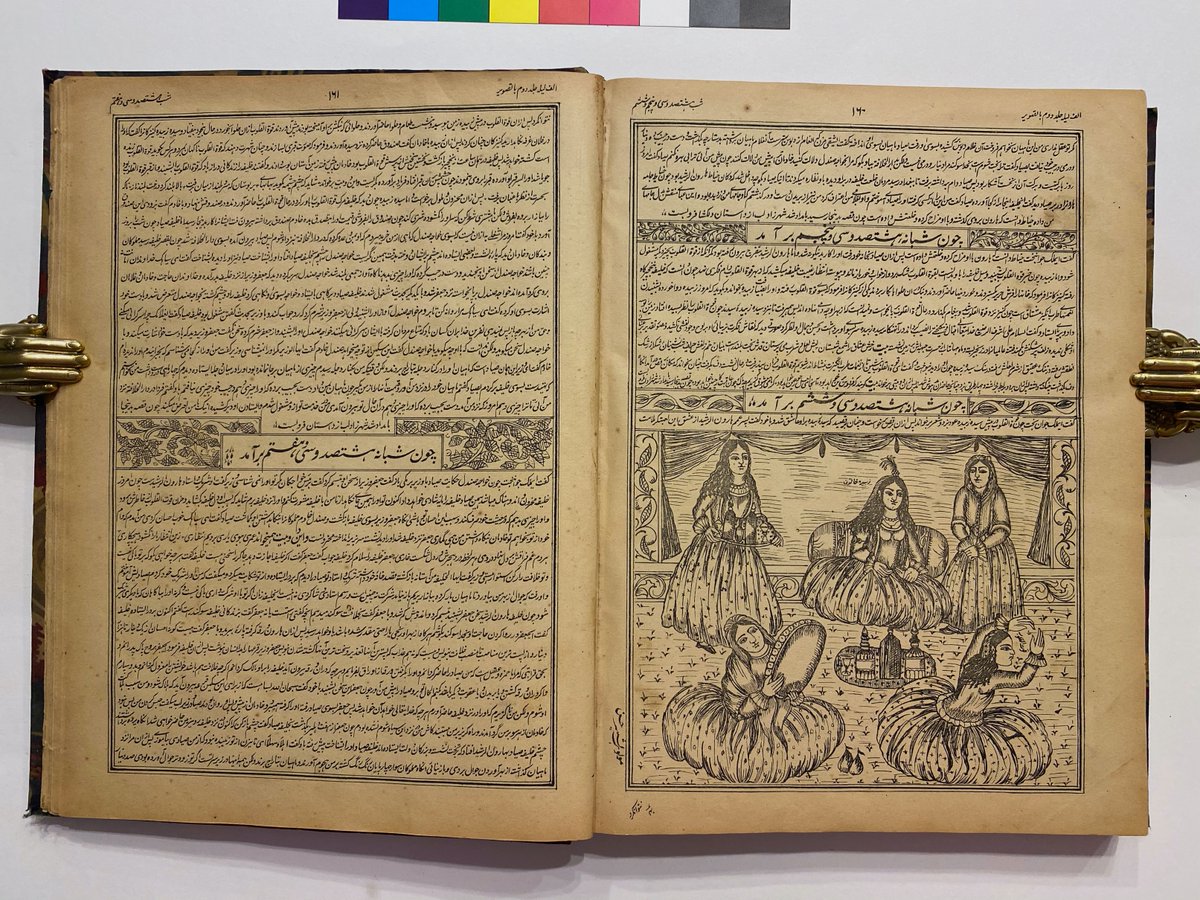
This lithographed Farsi edition of the One Thousand and One Nights - Alf leila wa leila bi farsi - was printed by Fath al-Karim in Bombay in 1890-91. The binding is quite extraordinary: a proto-Modernist Russian trade cloth of the type produced for export to Central Asia. 1/
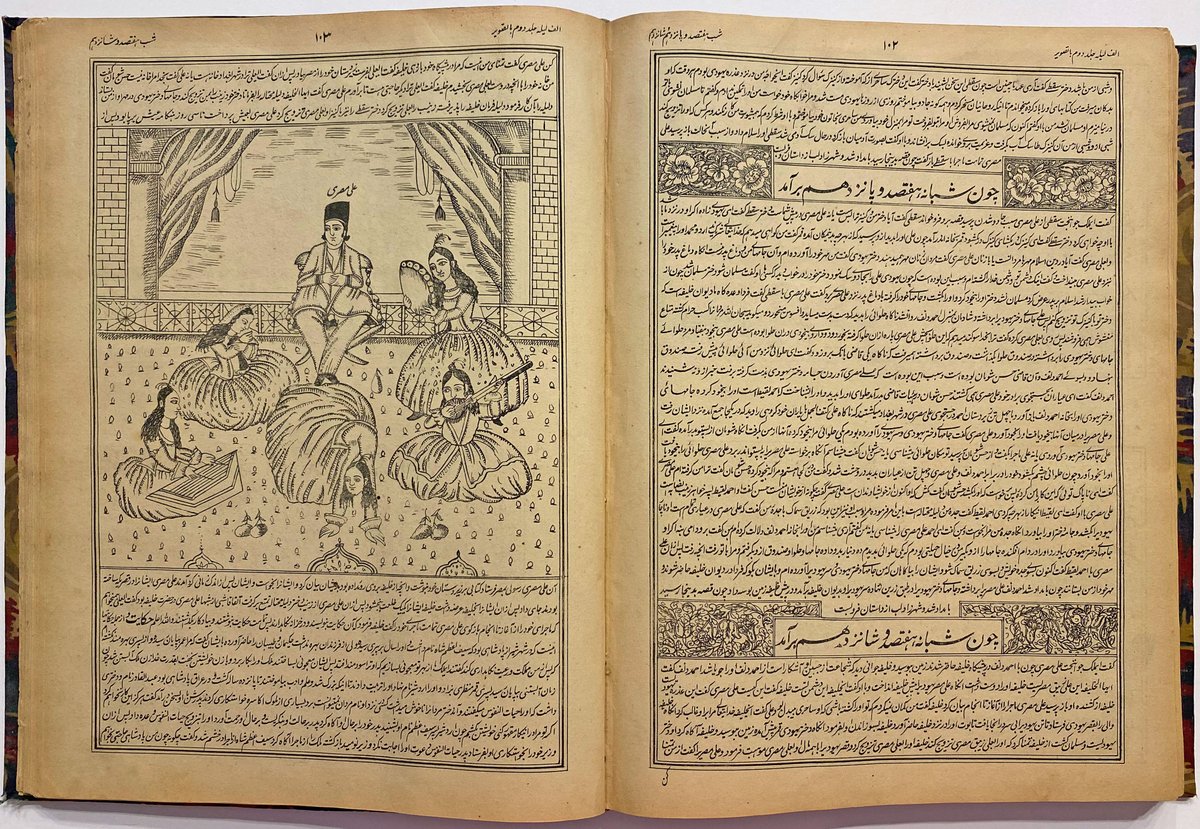
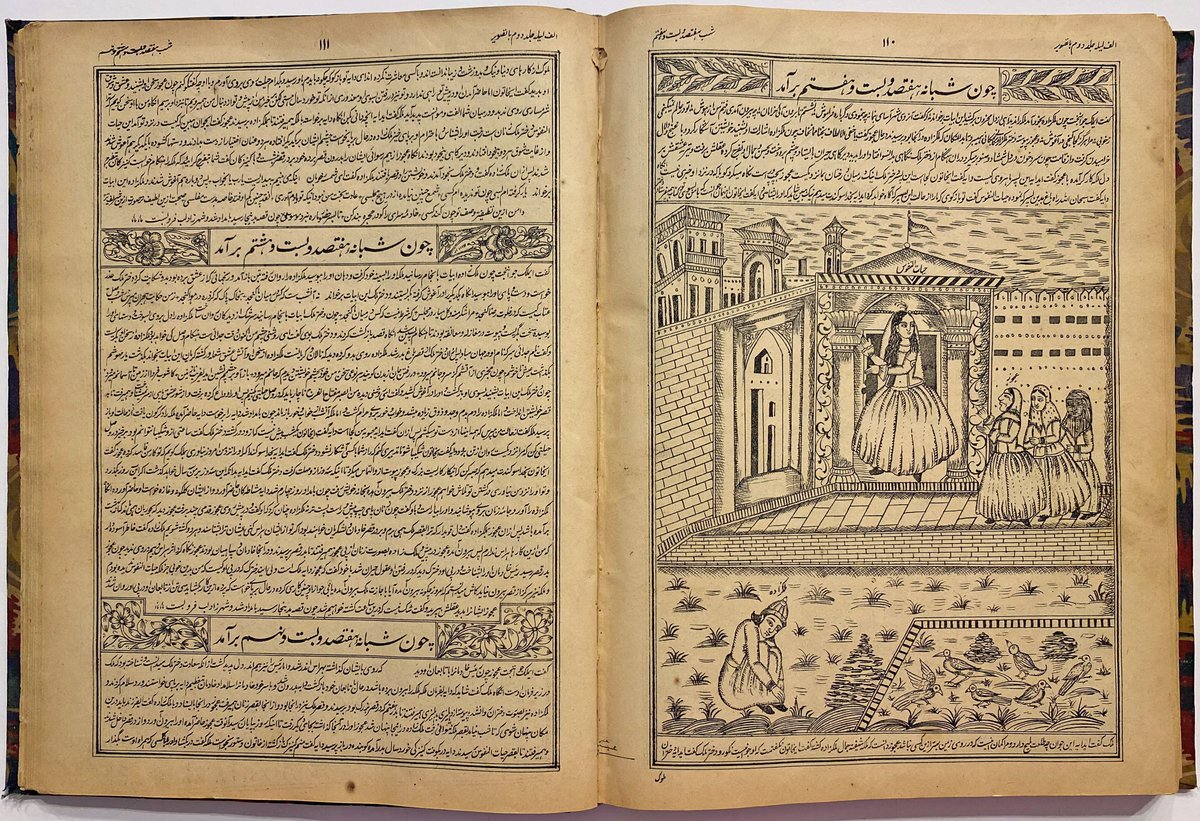
Since the Farsi of this edition would have been perfectly intelligible to any Tajik speaker, the book was likely bound like this in Tajikistan, or amongst the Tajik-speaking populace of Uzbekistan, principally concentrated in Bukhara and Samarkand. 2/
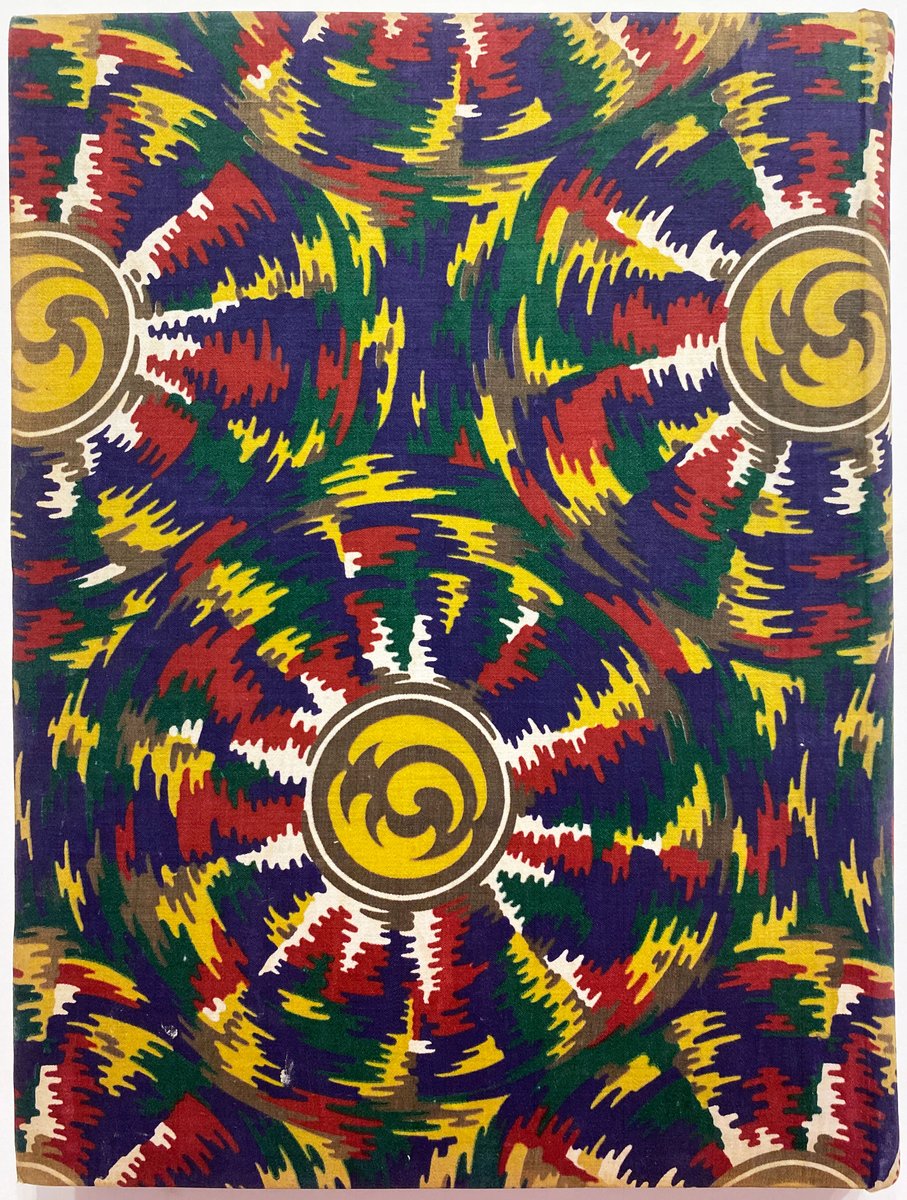
The binding is a proto-Modernist Soviet printed cotton trade cloth, circa 1924, produced in Russia for export to Central Asia. It was designed by Lyubov Nikolaevna Silich (1906-1992, later a celebrated designer for the theatre, and manufactured by one of the Ivanovo factories. 3/
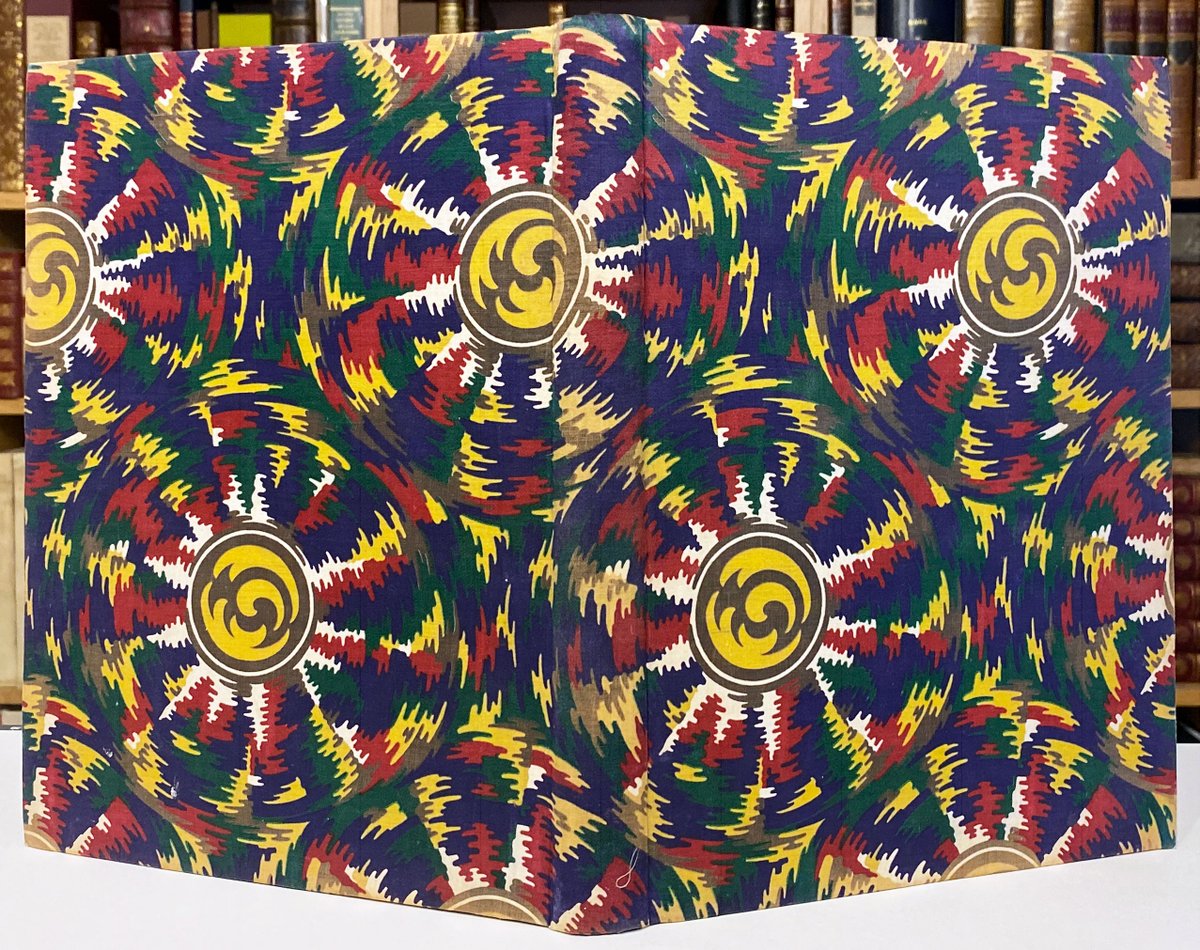
The pattern is an example of Soviet 'thematic' or 'agitprop' fabric – the whirling machine wheels symbolise power & productivity. This style of cloth did not prove popular in Soviet Central Asia and from around 1930 it was abandoned in favour of traditional paisleys & florals. 4/
The Fath al-Karim printing house, owned by the philanthropist Kazi Abdul Karim Porbandari, was known for its promotion of book production in Arabic, Persian, Hindu, Malay and other languages, and donated a number of books in 1897 to start Bombay's Karimi library. 5/
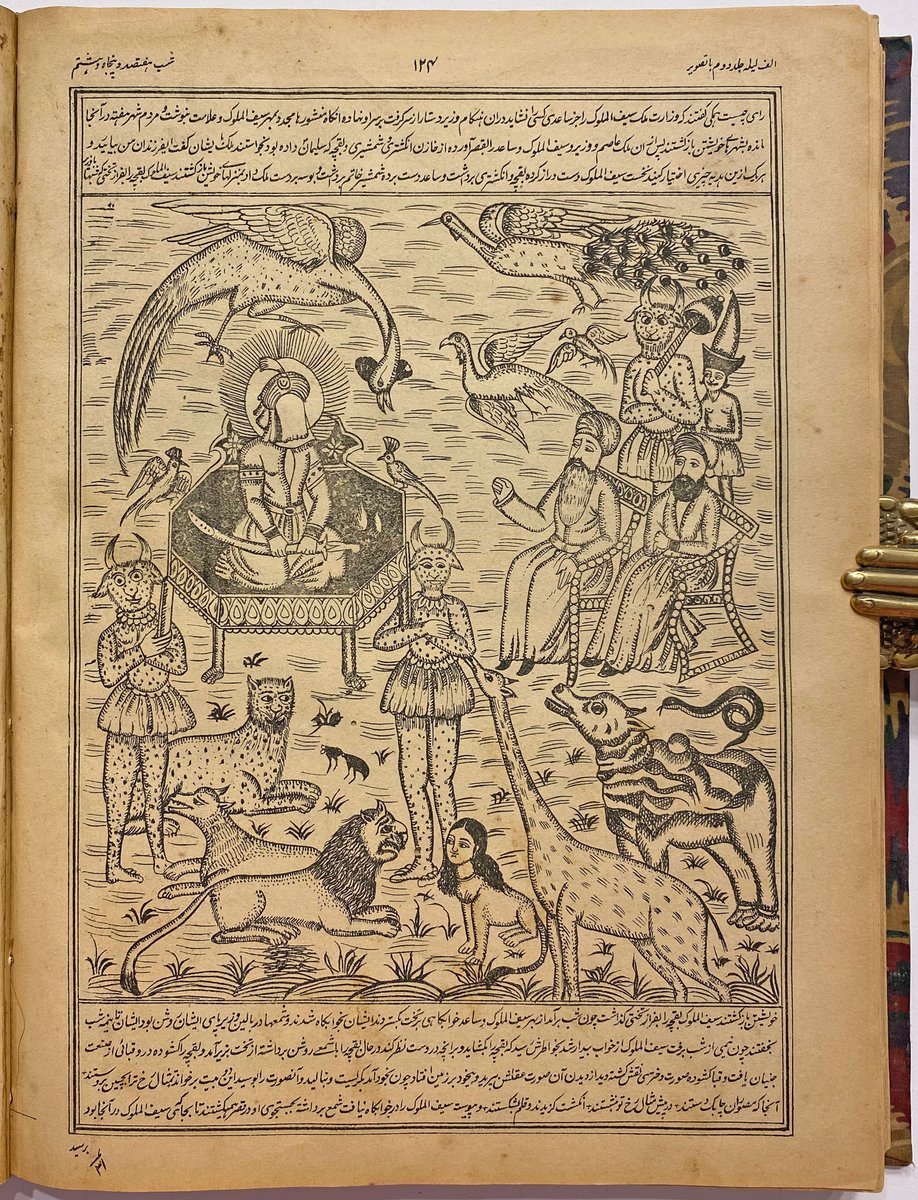
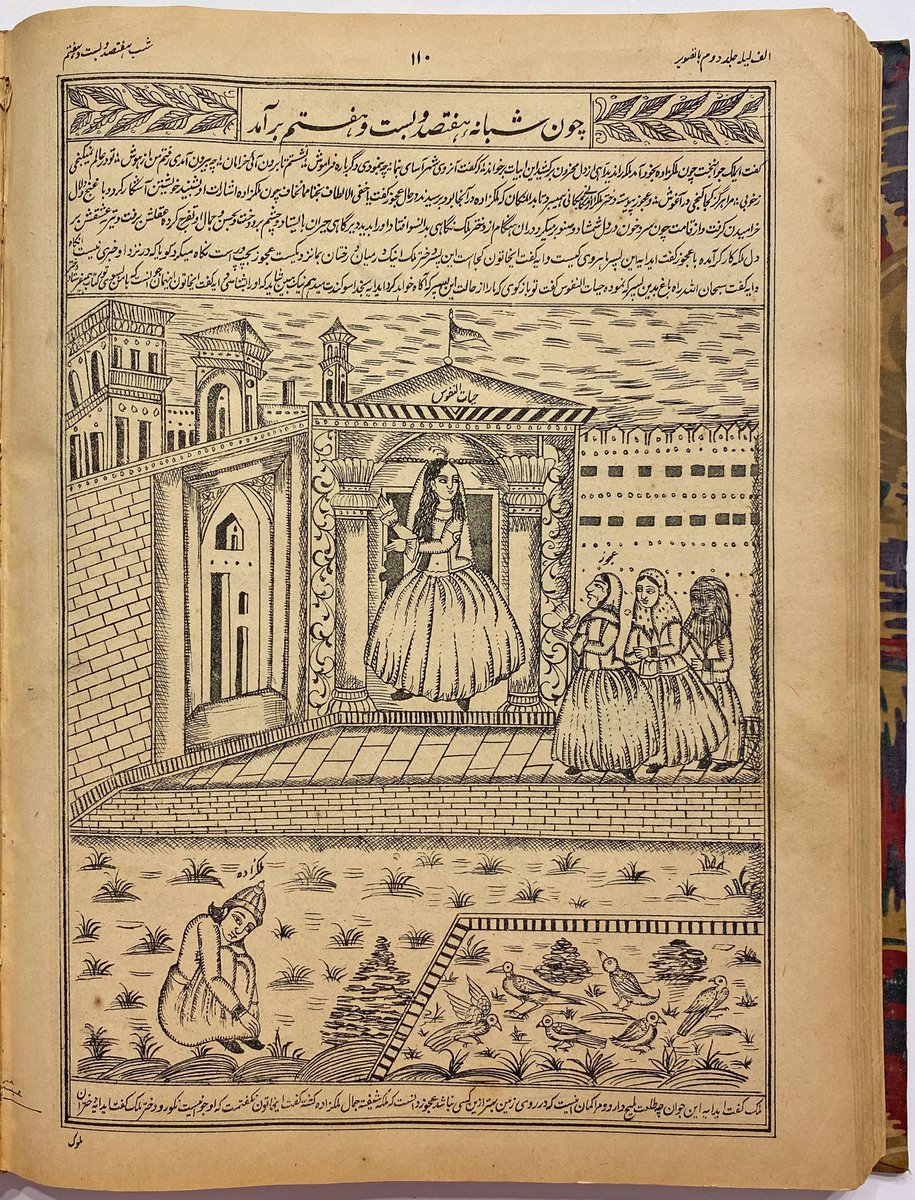
The text of this edition was printed in Arabic and Hindi versions at the same time. It is possible that this specific edition was used as a pattern for Arifdjanov's 1914 Tashkent imprint, due to the similarities in some illustrations and composition. 6/
Loading suggestions...