

#HRV: INTRO (Part 2)
The previous post laid the groundwork for the divergent views of HRV.
Here, I will briefly talk about the historical stages of HRV research. This will begin to reveal why HRV is such a complex topic
The previous post laid the groundwork for the divergent views of HRV.
Here, I will briefly talk about the historical stages of HRV research. This will begin to reveal why HRV is such a complex topic
# HRV publications have grown rapidly over the past few decades.
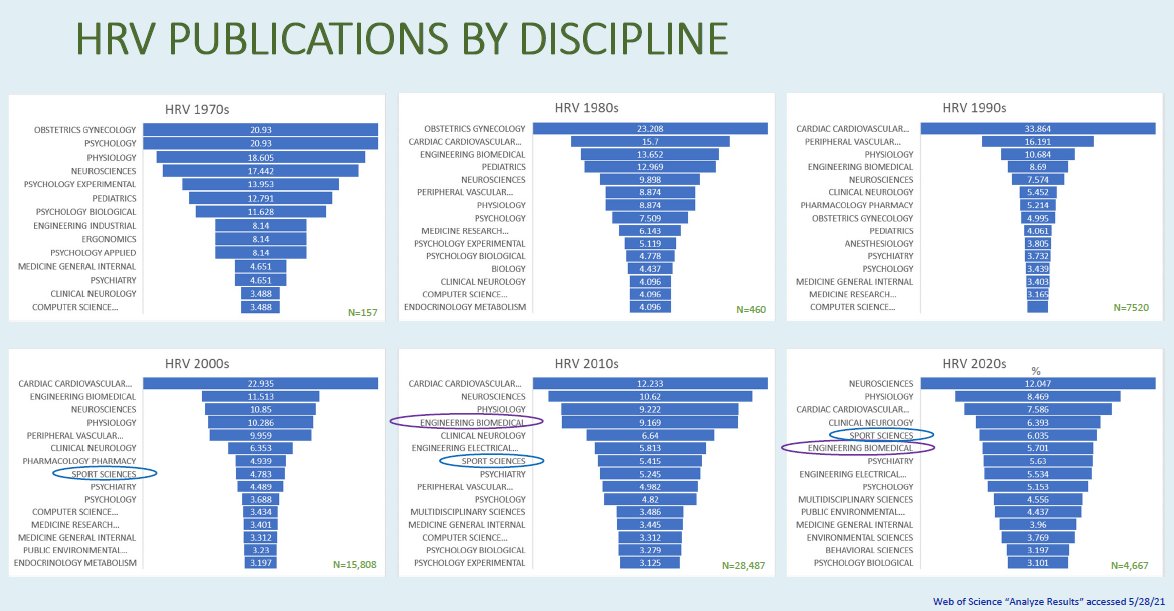
If we look at the publications by discipline, we can partly see the trends. The following figure shows in descending order specialties with greater # of publications - divided by decade.
If we look at the publications by discipline, we can partly see the trends. The following figure shows in descending order specialties with greater # of publications - divided by decade.
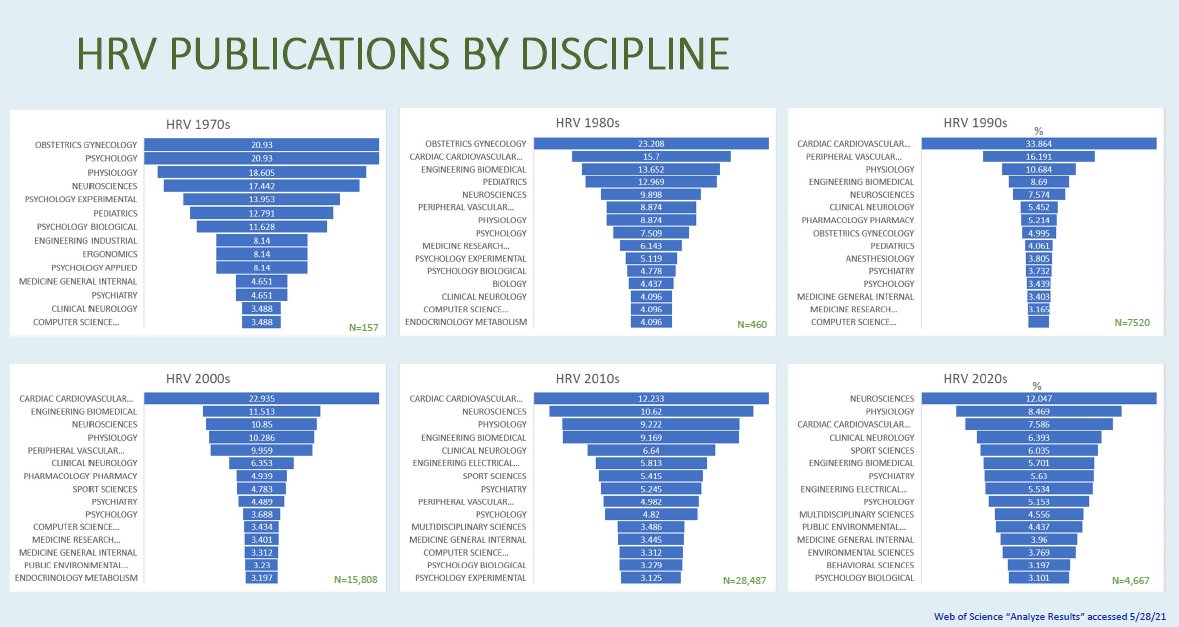
Ob-gyn led the charge in HRV publications in the 1970-1980s. Why?
Fetal heart rate monitoring was found to be a useful tool for identifying high-risk neonates. By the 1990s, it became standard of practice and thus % of pubs by Ob-gyn declined dramatically.
Fetal heart rate monitoring was found to be a useful tool for identifying high-risk neonates. By the 1990s, it became standard of practice and thus % of pubs by Ob-gyn declined dramatically.
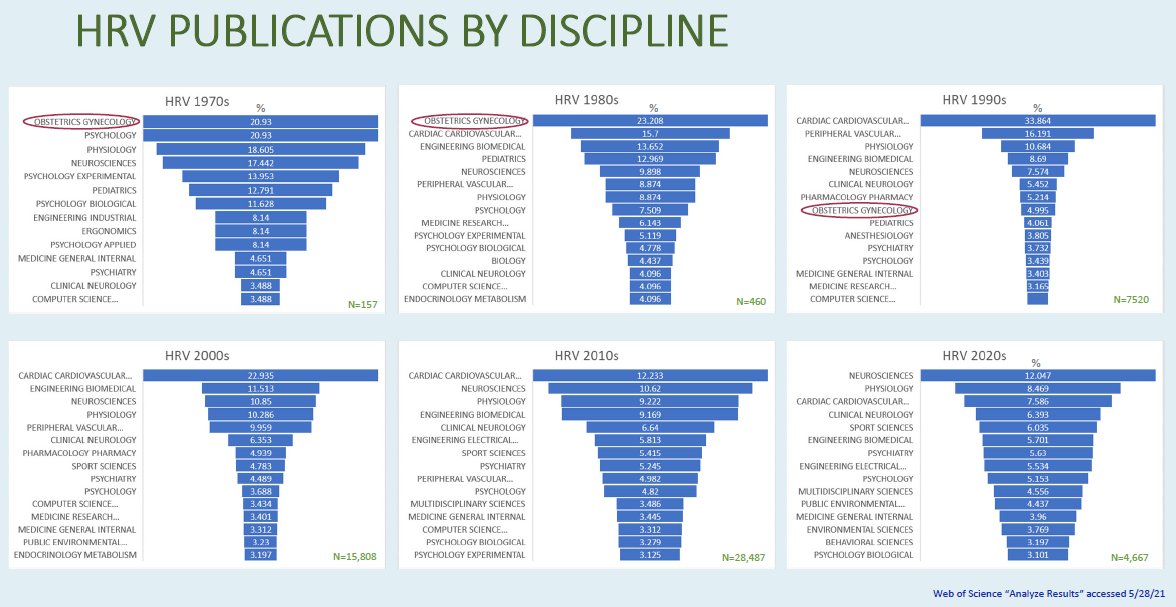
Cardiovascular research dominated in the 1990s and 2000s. This was the golden age of cardiac catheterization and large clinical RCTs (many of which incorporated HRV as a secondary measure).
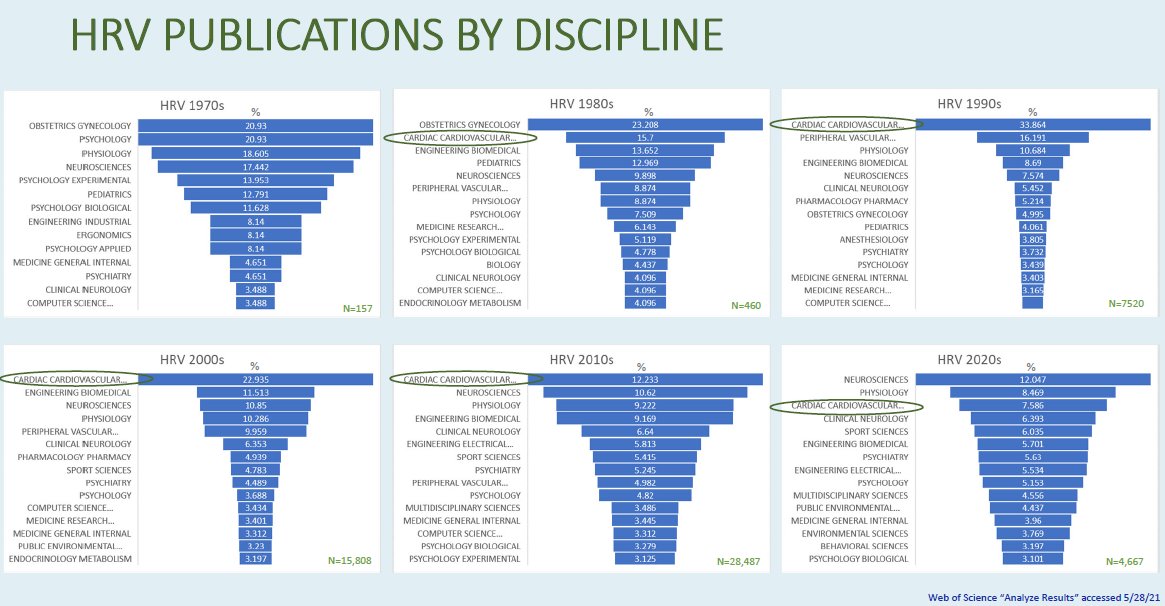
Neuroscience was actively involved in HRV from the start. Initially, it was about diabetic neuropathy, reinnervation of transplanted heart, or other autonomic nervous system problems. But w/ major advances in neuroimaging and neuroscience, it took the lead in 2020s.
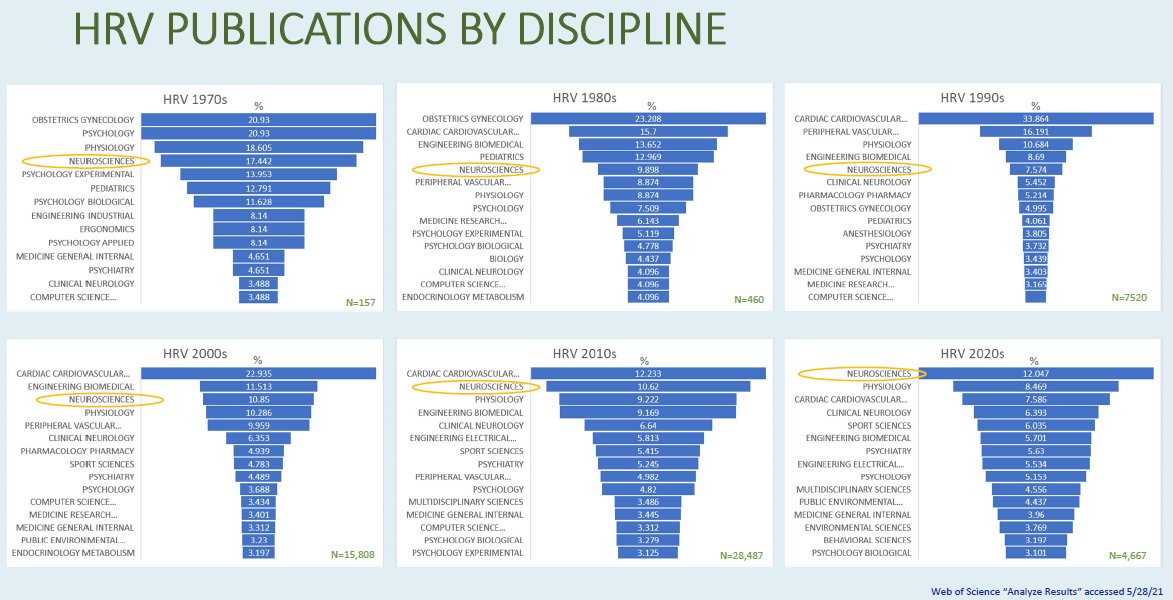
Sport Science and Biomedical Engineering began to play prominently in the 2010s-2020s, directly attributable to wearable technology.
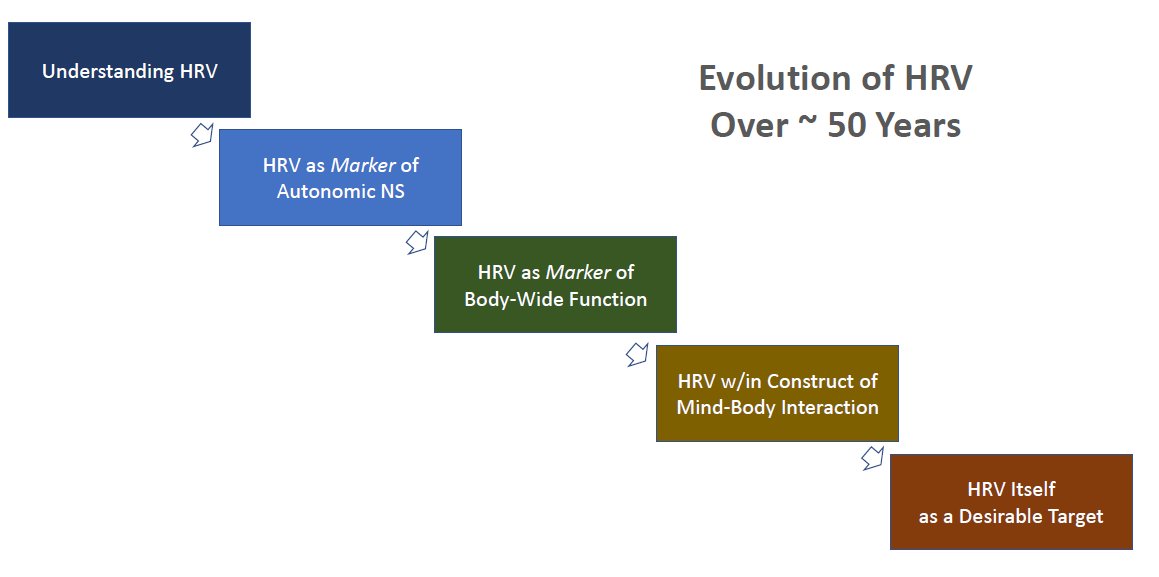
We can see that HRV research has gone through some major evolution - greatly driven by changes in prevailing scientific paradigms/tools.
This graph shows how I interpret HRV's evolution over past 50 years. It will provide the framework for following set of tweetorials.
This graph shows how I interpret HRV's evolution over past 50 years. It will provide the framework for following set of tweetorials.
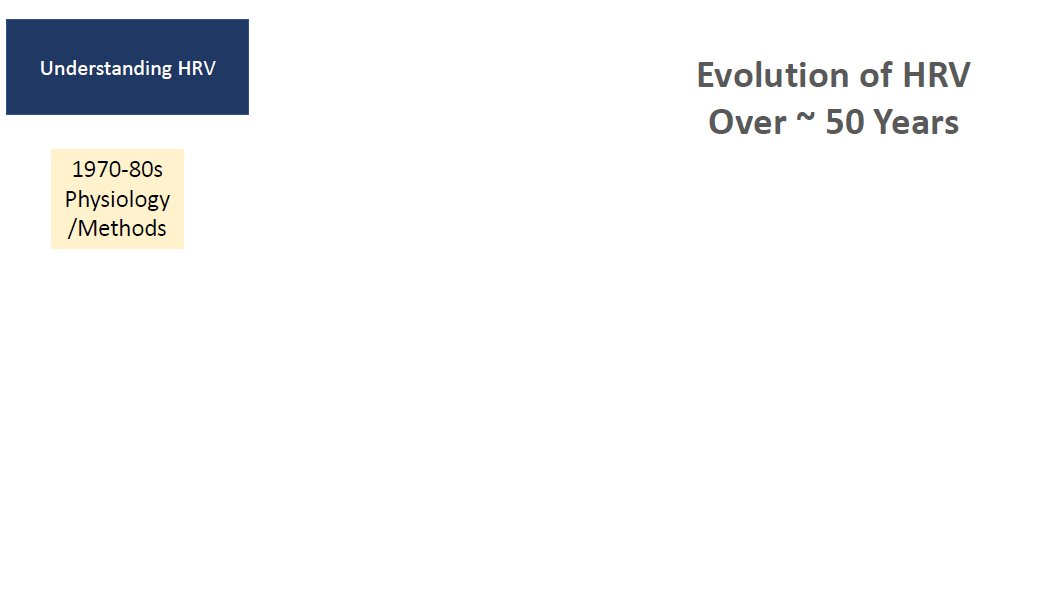
For the next Tweetorial, we will focus on the 1st stage "Understanding HRV". This occurred in 1970's and 1980s' where the focus was largely on HRV Physiology and Methodology.
Loading suggestions...