

The answer was overwhelmingly yes, so here we go. $SOS contract breakdown for those who need it 👇
2/ You can take a look at the contract code here: #code" target="_blank" rel="noopener" onclick="event.stopPropagation()">etherscan.io
The file of interest is OpenDAO.sol, which can be found here: #code#F1#L1" target="_blank" rel="noopener" onclick="event.stopPropagation()">etherscan.io
You can see that this contract imports the ERC20 standard, which includes all of default functionality (transfers etc)
The file of interest is OpenDAO.sol, which can be found here: #code#F1#L1" target="_blank" rel="noopener" onclick="event.stopPropagation()">etherscan.io
You can see that this contract imports the ERC20 standard, which includes all of default functionality (transfers etc)
3/ The top half of that file are all public constants, which of course are no threat. They just provide information.
What we need to investigate is the method everybody will be using: Claim.
What we need to investigate is the method everybody will be using: Claim.
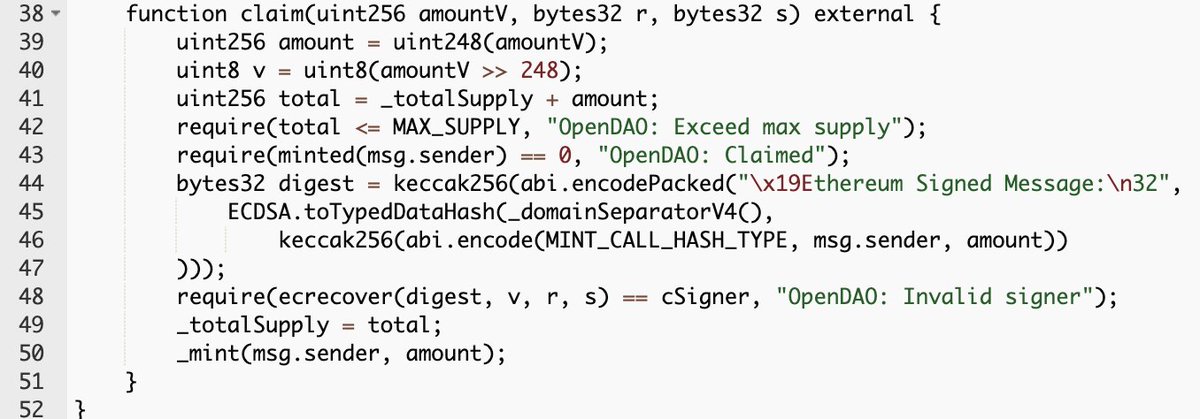
4/ The first 5 lines ensure that your mint would not cause $sos to exceed the total supply, and prevents double minting. The contract verifies a signature, updates the supply to include your newly minted tokens, and calls a private _mint function. So let's take a look at _mint.
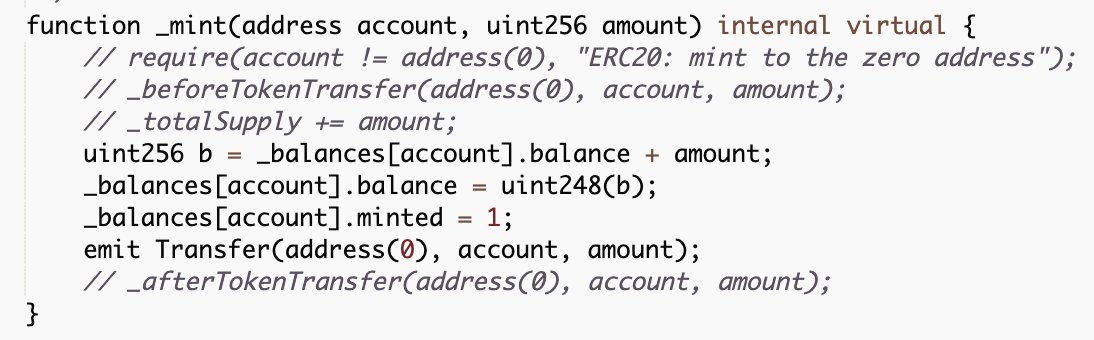
5/ This is the standard @OpenZeppelin mint function, so nothing to be afraid of here. It updates internal mappings to reflect your new balance, and emits a transfer event from the zero address to you, which is recorded on chain. That's what you see in metamask, etherscan, etc.
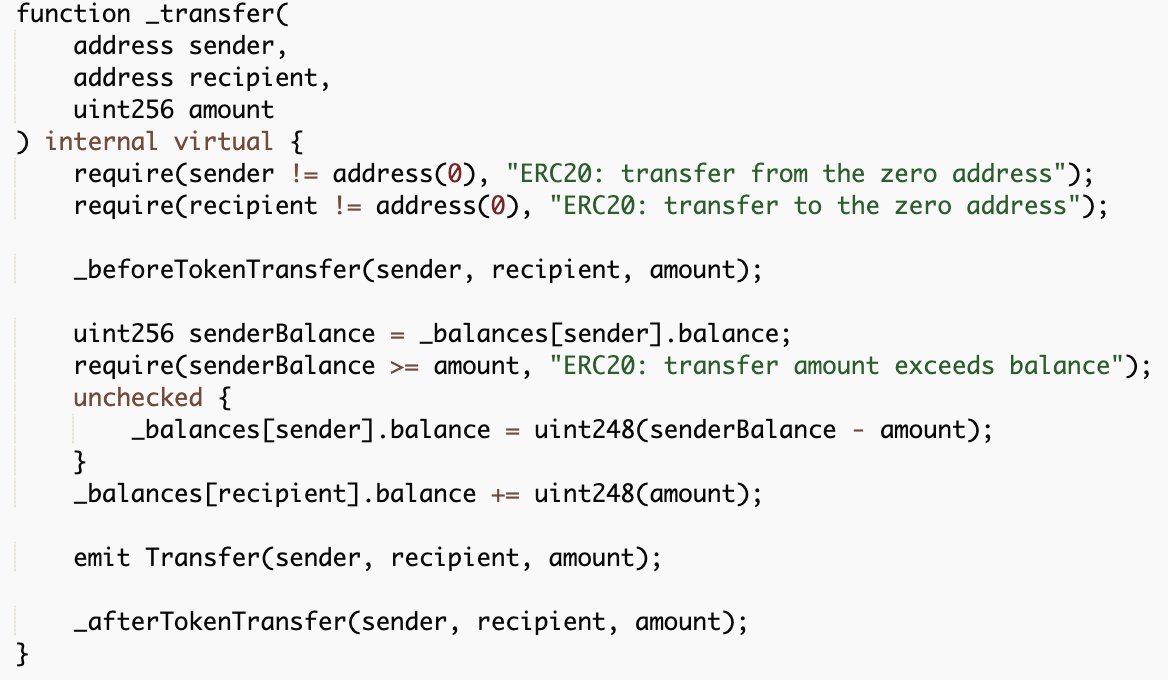
6/ That covers minting. If you trade or send tokens to another address, you'll also be using the _transfer function. The contract uses the default ERC20 _transfer function (same for _beforeTokenTransfer and _afterTokenTransfer, which are called from _transfer).
7/ tl;dr? $sos is safe to claim and trade. There's nothing out of the ordinary buried in the contract.
You can take a look at @OpenZeppelin standard contracts here: openzeppelin.com
*This is not an endorsement of $sos as a store of value, merely as a safe interaction.
You can take a look at @OpenZeppelin standard contracts here: openzeppelin.com
*This is not an endorsement of $sos as a store of value, merely as a safe interaction.

Loading suggestions...