

Blockchain is a technology here to stay.
It provides a majority of the foundation of Web 3, enables cryptocurrencies, DeFi, NFTs, and a multi-billion dollar industry.
But what is it?
A thread. ↓
It provides a majority of the foundation of Web 3, enables cryptocurrencies, DeFi, NFTs, and a multi-billion dollar industry.
But what is it?
A thread. ↓
1. Foreword
This thread is a high-level overview to give you an intro to blockchain technology.
It doesn't go too much into detail, so you should be able to follow along nicely.
This thread is a high-level overview to give you an intro to blockchain technology.
It doesn't go too much into detail, so you should be able to follow along nicely.
2. Client-Server Architecture
Before we dive into blockchain technology, we should take a look at how most of the internet works.
We need this to understand the fundamental differences between a traditional model and the change blockchain technology brings.
Before we dive into blockchain technology, we should take a look at how most of the internet works.
We need this to understand the fundamental differences between a traditional model and the change blockchain technology brings.
Client-server architecture mainly powers the internet.
For each service offered, its data is stored and owned by one entity and distributed to many clients.
It is stored in databases and returned to the users on request with or without further processing.
For each service offered, its data is stored and owned by one entity and distributed to many clients.
It is stored in databases and returned to the users on request with or without further processing.
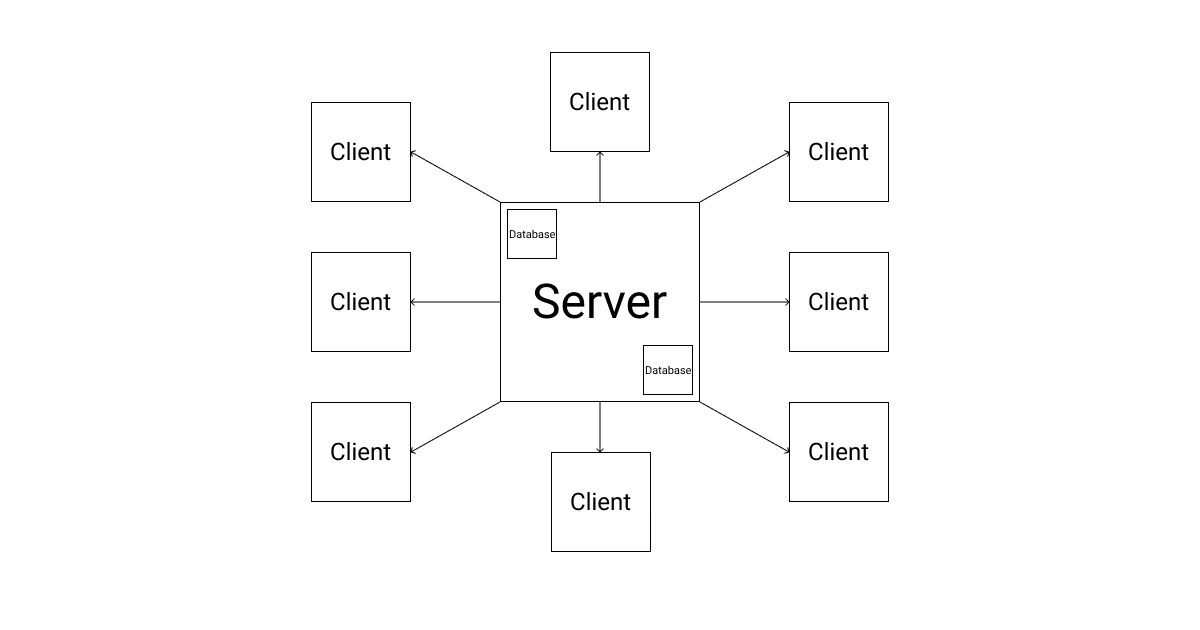
The server decides what is true.
Information that is stored once can still be modified.
No one can stop a website owner from modifying information within their database(s) or deleting it from their records.
Information that is stored once can still be modified.
No one can stop a website owner from modifying information within their database(s) or deleting it from their records.
If Twitter decides that one of your tweets shouldn't exist for some reason, they can delete it if they wish to (and so can you).
The same holds true for all other social networks and everything else.
If you think one of your blog posts underperforms, you can delete it.
The same holds true for all other social networks and everything else.
If you think one of your blog posts underperforms, you can delete it.
Users always only get to see what the servers let them see, and we trust the owners of the websites/services we use that they won't act against us.
We actually have no choice other than to find someone else who we trust more when we are in doubt.
We actually have no choice other than to find someone else who we trust more when we are in doubt.
The same holds true for banks.
Although they are regulated and legally obliged to act in your favor, you still need to trust them with your finances and have faith in their IT systems.
You basically have no other choice.
Although they are regulated and legally obliged to act in your favor, you still need to trust them with your finances and have faith in their IT systems.
You basically have no other choice.
If you try to transfer money from your bank account to one at another bank, it's still up to them to decide (within the bounds law forces on them) when to send the transaction.
Some banks make excessive use of deadlines and delay your transactions to even out their balance sheets, for example.
3. Blockchain Technology
Blockchain technology itself is nothing entirely new.
It combines existing technologies creating something new and exciting, tackling particular problems while being broadly applicable.
Blockchain technology itself is nothing entirely new.
It combines existing technologies creating something new and exciting, tackling particular problems while being broadly applicable.
Generally speaking, you deal with a peer-to-peer network where a client does not talk to a central server but to many other clients.
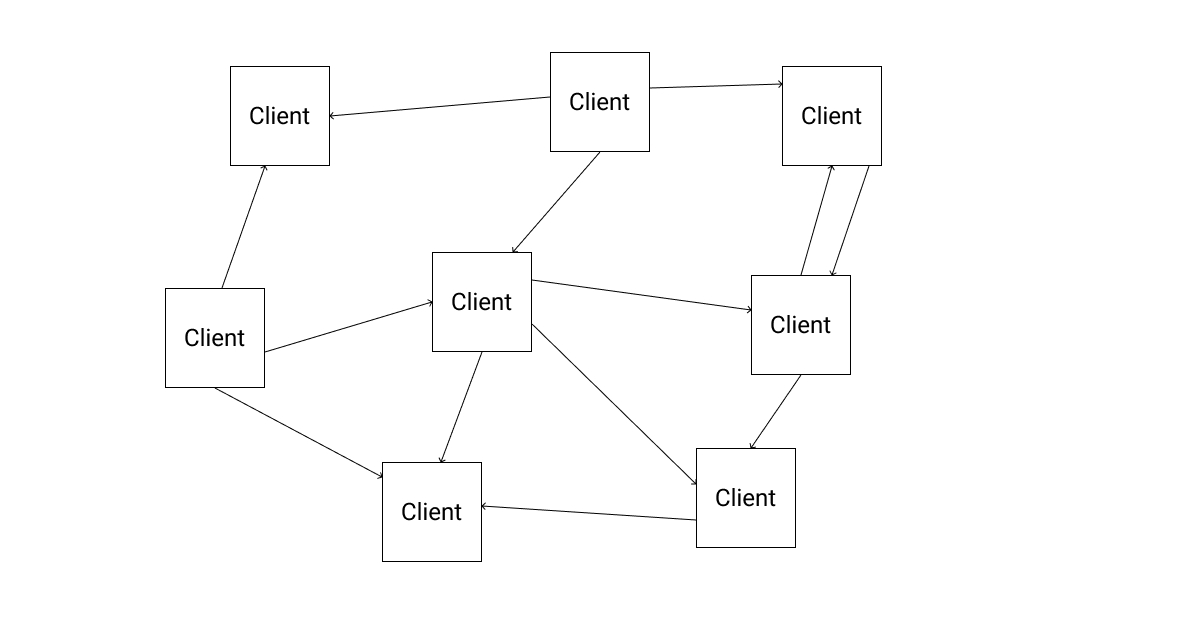
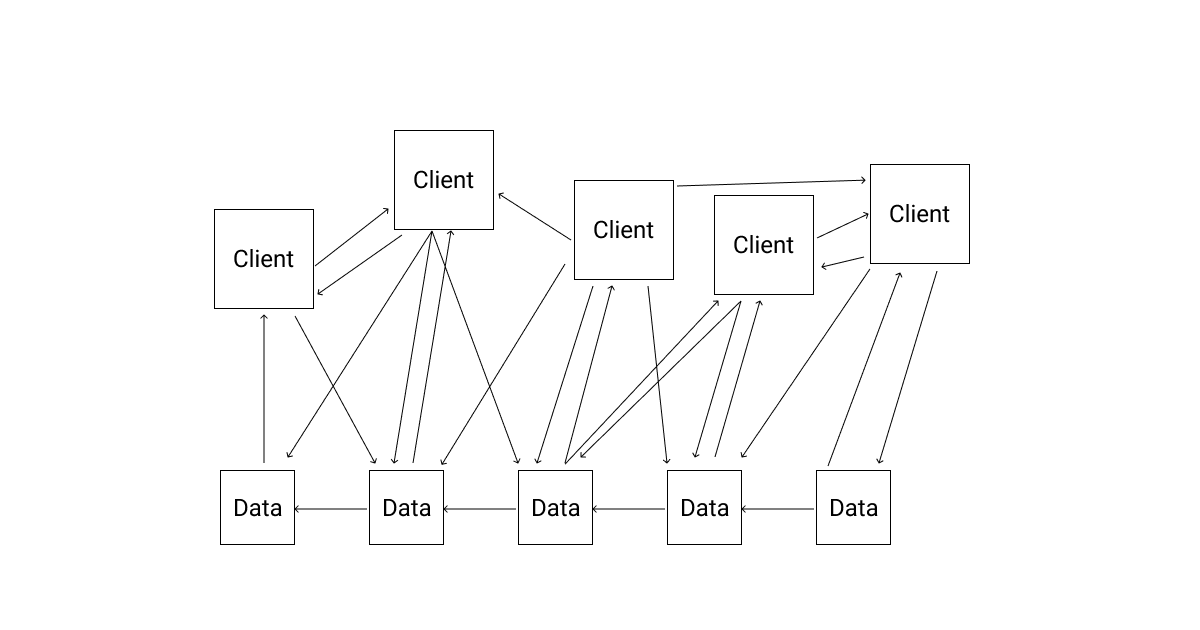
This peer-to-peer network comes with a distributed database.
Data is shared among all clients of the network.
The data forms a chain where each block points at its predecessor in some form.
Data is shared among all clients of the network.
The data forms a chain where each block points at its predecessor in some form.
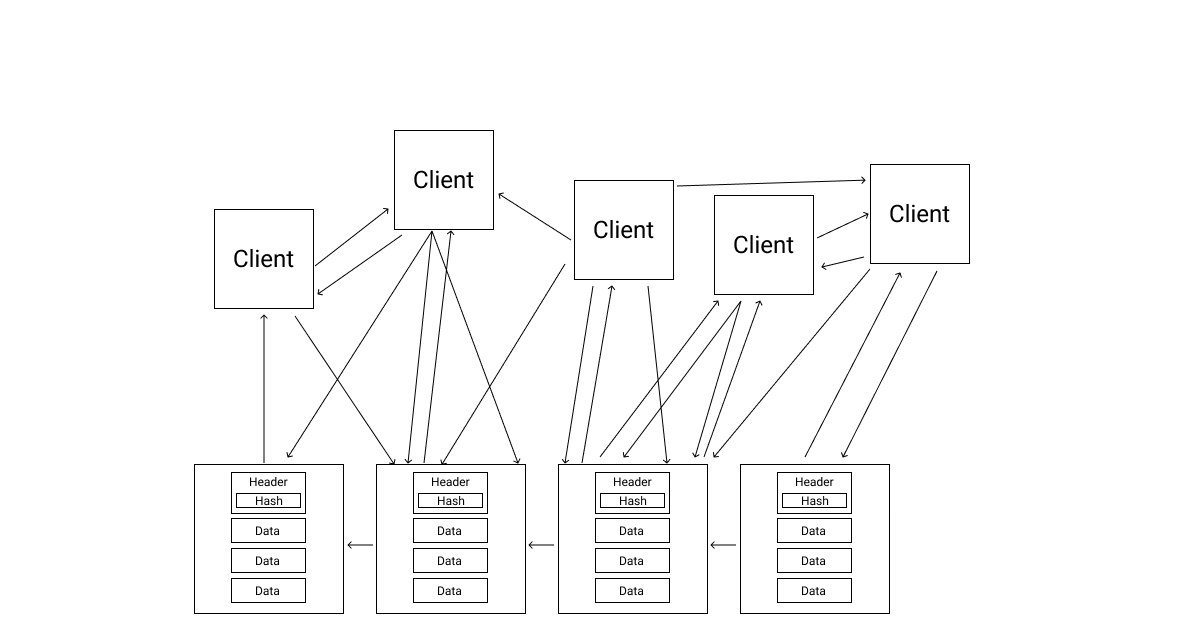
Placing individual entries into the chain would be inefficient, which is why multiple entries are batched into blocks.
This means that each block contains several data entries (thus the name of the technology).
This means that each block contains several data entries (thus the name of the technology).

To establish trust between all clients, or in other words, make sure that no one changes the chain and sends a fake one to your client, blocks contain a cryptographic reference.
This reference often takes the content of the current and the previous block into account so that the correctness of a block and the chain can be verified.
The process of appending a new block to the chain is either called mining or forging, depending on the implementation.
The process of appending a new block to the chain is either called mining or forging, depending on the implementation.
The chain itself is designed to be immutable.
Entries can't be changed and simply be deleted again.
There is always a new entry - like an event log that states what happened when - publicly available.
Entries can't be changed and simply be deleted again.
There is always a new entry - like an event log that states what happened when - publicly available.
4. Mining / Forging
As you already learned, mining or forging is the process of appending a new block to the chain.
As you already learned, mining or forging is the process of appending a new block to the chain.
There are multiple protocols that deal with verifying blocks on a blockchain.
Two of those are:
- Proof-Of-Work
- Proof-Of-Stake
Two of those are:
- Proof-Of-Work
- Proof-Of-Stake
-> Proof-Of-Work is the protocol used by Bitcoin and Ethereum
Miners have to guess random numbers that generate a defined result combined with the previous block content.
Miners have to guess random numbers that generate a defined result combined with the previous block content.
This process is so compute-intensive that only the combined power of many miners can generate a result in approximately 10 minutes on average.
One computer alone would take way more time to find just one result (~1 year).
One computer alone would take way more time to find just one result (~1 year).
Although this protocol costs a lot of energy and resources, it is pretty safe because attackers always have to compete with the whole network, and it's not guaranteed when a miner finds the correct answer to the problem at hand.
Attacking a blockchain would mean constantly outperforming everyone else, which is nearly impossible.
Only governments have the spending power to finance such an attack.
Only governments have the spending power to finance such an attack.
-> Proof-Of-Stake is another protocol that is not as compute-intensive and thus not as energy-intensive as Proof-Of-Work.
Based on some criteria, a random validator node is selected to verify the next block and append it to the chain.
Based on some criteria, a random validator node is selected to verify the next block and append it to the chain.
That node doesn't have to make complex calculations and thus doesn't need that much energy and so many resources.
You could say that this is an environment-friendly alternative with a lot of potential.
You could say that this is an environment-friendly alternative with a lot of potential.
Stake, in this case, means money locked away.
This money is a safety deposit.
A validator can't access it as long as it wants to participate. And usually, this is no small sum.
This money is a safety deposit.
A validator can't access it as long as it wants to participate. And usually, this is no small sum.
If a validator now tries to act against the network, it might trigger a massive drop in the blockchain's native currency's price.
This directly also attacks its own stake, which is, as you learned, locked away.
This directly also attacks its own stake, which is, as you learned, locked away.
Because validators are relatively randomly chosen to validate the next block, a malicious one would have to coordinate a massive attack to gain more from the attack than their stake at risk.
This is nearly impossible.
This is nearly impossible.
5. What A Blockchain Offers
The general idea of a blockchain is to provide a publicly available, decentralized database.
Everyone can participate and work with the network.
The general idea of a blockchain is to provide a publicly available, decentralized database.
Everyone can participate and work with the network.
The implementation itself establishes trust because manipulation is very difficult or even impossible.
No one can easily take control of a blockchain and change everything to their advantage.
Small-scale manipulation can be spotted and negated by the network itself.
No one can easily take control of a blockchain and change everything to their advantage.
Small-scale manipulation can be spotted and negated by the network itself.
Users no longer have to trust a central entity to manage something for them. The network does it.
And there is much more to a blockchain than only cryptocurrencies.
You can build a whole social network on a blockchain where no censorship is possible, for example.
And there is much more to a blockchain than only cryptocurrencies.
You can build a whole social network on a blockchain where no censorship is possible, for example.
Each entry ever made is persistent.
No chance to delete a statement or modify it after pushing it out. Every modification is transparent.
There is also no chance to let users vanish only because you want it to happen.
No chance to delete a statement or modify it after pushing it out. Every modification is transparent.
There is also no chance to let users vanish only because you want it to happen.
There are already a few experimentations out there playing around with the concept of a social network.
But to be fair, none of those has yet managed to become pretty popular.
The concept itself, though, is already fascinating.
But to be fair, none of those has yet managed to become pretty popular.
The concept itself, though, is already fascinating.
It shows that theoretically, such a concept could indeed be implemented based on a blockchain.
And depending on the right entrepreneurs to come, it might become a reality sooner or later.
And depending on the right entrepreneurs to come, it might become a reality sooner or later.
6. Thread end
That's it for this thread.
I hope you found something useful for you in it.
If you enjoyed reading this thread, consider dropping a like, retweet the first tweet, and follow me (@oliverjumpertz) for more content like this. 💛
That's it for this thread.
I hope you found something useful for you in it.
If you enjoyed reading this thread, consider dropping a like, retweet the first tweet, and follow me (@oliverjumpertz) for more content like this. 💛
Loading suggestions...