

1/6
A young man is admitted to the hospital with malaise and fever. You examine his hands and find these tender nodules.
This should generate a hypothesis.
(Heart sounds in this thread best heard with headphones or a decent computer speaker)
A young man is admitted to the hospital with malaise and fever. You examine his hands and find these tender nodules.
This should generate a hypothesis.
(Heart sounds in this thread best heard with headphones or a decent computer speaker)

2/6
With your hypothesis in mind, you listen to the patient's heart. You anticipate what you might hear.
"The ears can't hear what the mind doesn't know."
With your hypothesis in mind, you listen to the patient's heart. You anticipate what you might hear.
"The ears can't hear what the mind doesn't know."

3/6
Based on the holosystolic murmur at the apex that you anticipated you would hear, you diagnose the patient with mitral valve endocarditis. Two days later, his heart sounds change. Take a listen.
An additional diagnosis has now been made.
Based on the holosystolic murmur at the apex that you anticipated you would hear, you diagnose the patient with mitral valve endocarditis. Two days later, his heart sounds change. Take a listen.
An additional diagnosis has now been made.

4/6
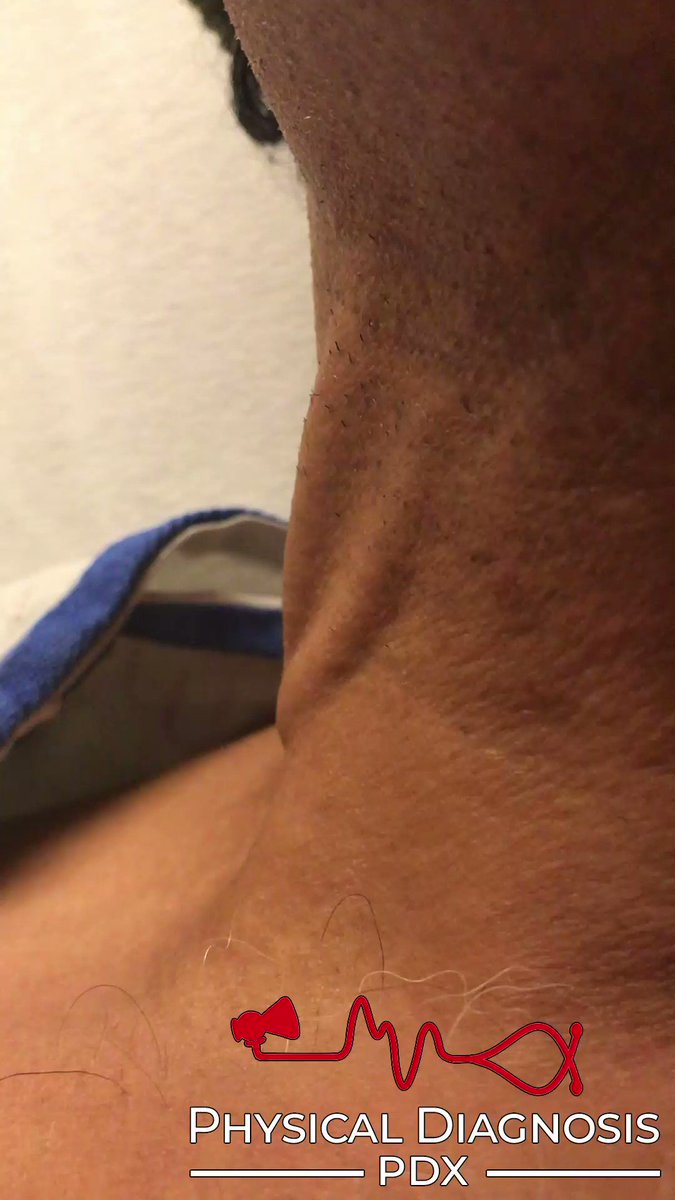
Two days later, you know longer hear the pericardial friction rub. In fact, his heart sounds are difficult to hear at all. He develops hypotension and pre-syncope and his neck looks like this:
This should generate a hypothesis.
Two days later, you know longer hear the pericardial friction rub. In fact, his heart sounds are difficult to hear at all. He develops hypotension and pre-syncope and his neck looks like this:
This should generate a hypothesis.
5/6
You confirm your hypothesis with a bedside maneuver (video features a different patient with the same diagnosis):
You confirm your hypothesis with a bedside maneuver (video features a different patient with the same diagnosis):

6/6
You have diagnosed infective endocarditis of the mitral valve with pericardial involvement, evolving to pericardial effusion with cardiac tamponade. All with your eyes and ears.
pdxpdx.com
You have diagnosed infective endocarditis of the mitral valve with pericardial involvement, evolving to pericardial effusion with cardiac tamponade. All with your eyes and ears.
pdxpdx.com
Loading suggestions...