
Business
Economics
Fashion
India
Industry
China
Europe
Profitability
Industry growth
kitchenware
Global Market
North America
Household Lifestyle
Crockery

Kitchenware is becoming a “fashion quotient & an approach to showcase household’s lifestyle”!
Value migration is happening from steel to opal-ware in the crockery segment.
A 🧵on opalware industry, growth drivers, profit pool breakup & cap. expansion by Borosil & La Opala
1/n
Value migration is happening from steel to opal-ware in the crockery segment.
A 🧵on opalware industry, growth drivers, profit pool breakup & cap. expansion by Borosil & La Opala
1/n

Global opalware industry is dominated by North America & Europe due to high purchasing power & no. of restaurants.
Currently, countries like China & India are well poised to see fast industry growth because of increasing per capita income rising & discretionary spending
2/n
Currently, countries like China & India are well poised to see fast industry growth because of increasing per capita income rising & discretionary spending
2/n


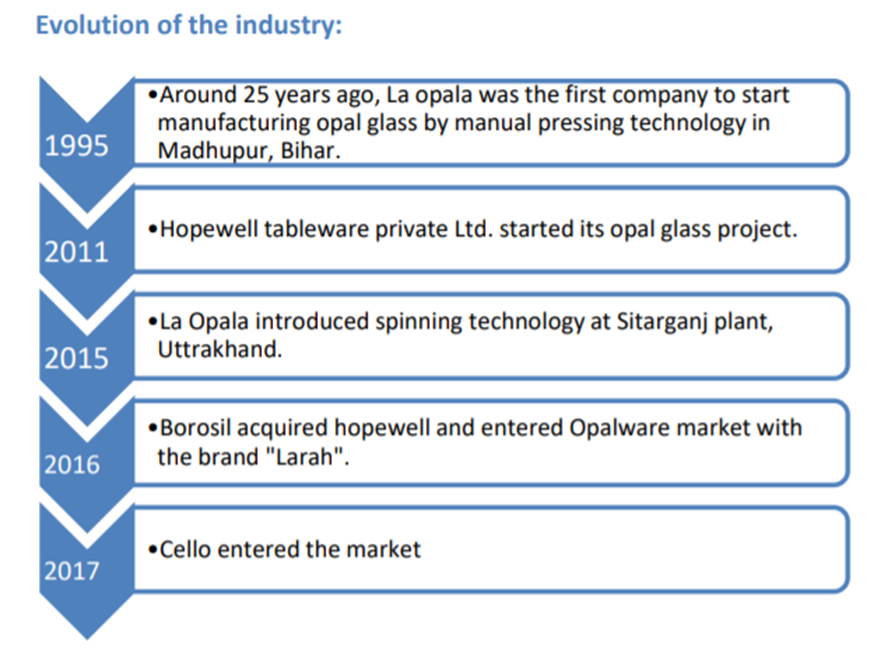
This is how the Indian opal ware industry has evolved:
From La Opala being the 1st & only player in the industry to other players like Borosil & cello entering the market!
3/n
From La Opala being the 1st & only player in the industry to other players like Borosil & cello entering the market!
3/n
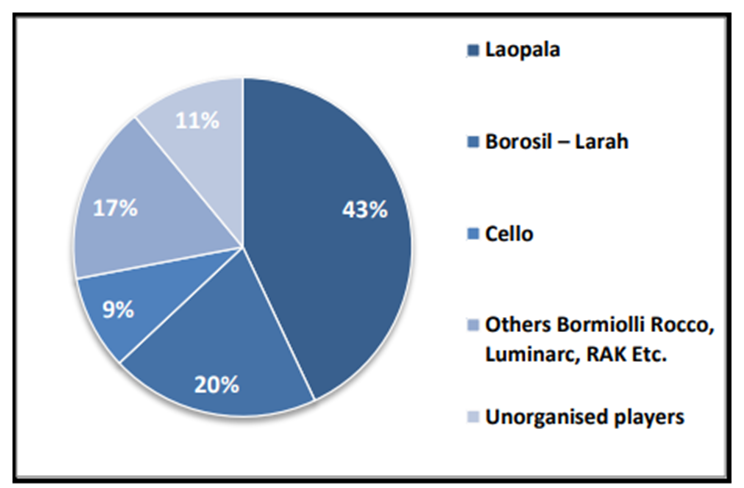
Indian Opalware industry is of ~1200crs & La Opala has the highest share of 43%.
In India, Mid premium segment (~500crs) is catered by La Opala, Borosil Ltd & Cello (Treo may also enter), and high premium segment (~100crs) is catered by international co's like Corelle
4/n
In India, Mid premium segment (~500crs) is catered by La Opala, Borosil Ltd & Cello (Treo may also enter), and high premium segment (~100crs) is catered by international co's like Corelle
4/n
Profit pool breakup-
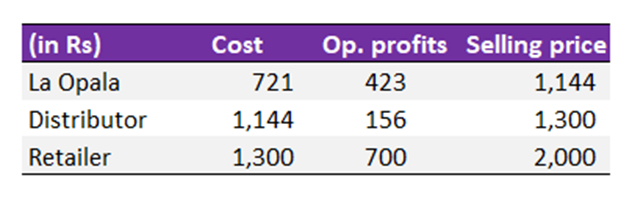
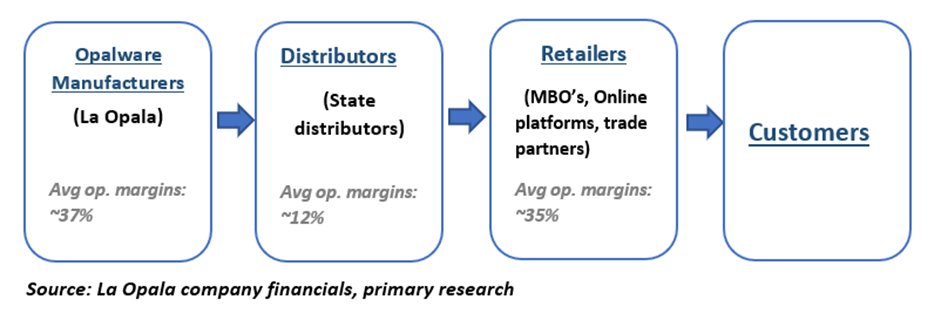
Op. profit margin of each party in value chain: Manufacturers like La Opala earn- 37%; Distributors~12%; Retailers~35%
Opalware producers & retailers equally have high share in industry's profit pool
E.g: In a crockery set of Rs2k, each party earns-👇
5/n
Op. profit margin of each party in value chain: Manufacturers like La Opala earn- 37%; Distributors~12%; Retailers~35%
Opalware producers & retailers equally have high share in industry's profit pool
E.g: In a crockery set of Rs2k, each party earns-👇
5/n
Industry growth drivers:
Currently, Opalware’s penetration is at ~5% which is v.less compared to other countries & this might reach ~10% in the next decade.
This indicates a higher opportunity size (Target addressable market) driven by:
(Contd👇)
6/n
Currently, Opalware’s penetration is at ~5% which is v.less compared to other countries & this might reach ~10% in the next decade.
This indicates a higher opportunity size (Target addressable market) driven by:
(Contd👇)
6/n
(i)Premiumization- Crockery is becoming an approach to portray lifestyle & higher discretionary spending by Millennials will drive growth
(ii)Due to home-dining trend after covid, people are focusing more on using better dinnerware
(iii) Higher use of crockery for gifting
7/n
(ii)Due to home-dining trend after covid, people are focusing more on using better dinnerware
(iii) Higher use of crockery for gifting
7/n
(iv) Increase in microwave penetration (~5% currently compared to global avg of ~90%) will lead to higher opalware penetration, as it is one of few materials which is microwave friendly
(v) Urbanization, nuclearization with increasing purchasing power will also drive growth
8/n
(v) Urbanization, nuclearization with increasing purchasing power will also drive growth
8/n
Why would one switch to Opalware?
-Opal ware is 100% microwave & dishwasher safe whereas steel, melamine & bone china aren't
-Has aesthetic look (good designs) which steel doesn't has
-It's 100% chip resistant, lightweight, cheaper & more durable than Bone china
9/n
-Opal ware is 100% microwave & dishwasher safe whereas steel, melamine & bone china aren't
-Has aesthetic look (good designs) which steel doesn't has
-It's 100% chip resistant, lightweight, cheaper & more durable than Bone china
9/n
Price comparison:
A steel dinner set of 20pc costs ~800Rs whereas a similar opal-based one costs ~1100Rs
So definitely, opal-based crockery is expensive than steel but this is why people would want to shift to opal ware, to showcase the increase in their standard of living
10/n
A steel dinner set of 20pc costs ~800Rs whereas a similar opal-based one costs ~1100Rs
So definitely, opal-based crockery is expensive than steel but this is why people would want to shift to opal ware, to showcase the increase in their standard of living
10/n
Key characteristics:
-Substitutes available within industry (new co's like Cello & Treo have entered)
-Price sensitive market with low customer switching costs
-Customers usually switch among brands if they get a better price/design & not to the unbranded Chinese products
11/n
-Substitutes available within industry (new co's like Cello & Treo have entered)
-Price sensitive market with low customer switching costs
-Customers usually switch among brands if they get a better price/design & not to the unbranded Chinese products
11/n
Co's are seeing high demand in industry. La Opala saw the highest ever in qtrly sales in Q2FY22 (92crs). Similarly, Borosil’s sales from opalware segment in Q2FY22 came at 67crs (+141% YoY)
Due to the high demand, co's are expanding & announcing new capacities aggressively
12/n
Due to the high demand, co's are expanding & announcing new capacities aggressively
12/n
Recently, Borosil announced to double its opal glass manufacturing capacity from 42 to 84 tons/day by incurring 175crs & management expects to generate 400crs of revenue from this capacity expansion
13/n
13/n
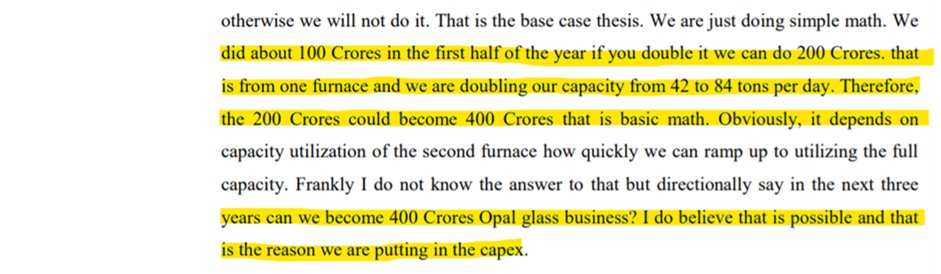
New players are entering & existing players are expanding, but does that mean profit pool will be impacted?
No! Currently, the opalware market in India is v.small & players entering the market will in fact expand the market instead of eating up each other’s share or profits
14/n
No! Currently, the opalware market in India is v.small & players entering the market will in fact expand the market instead of eating up each other’s share or profits
14/n
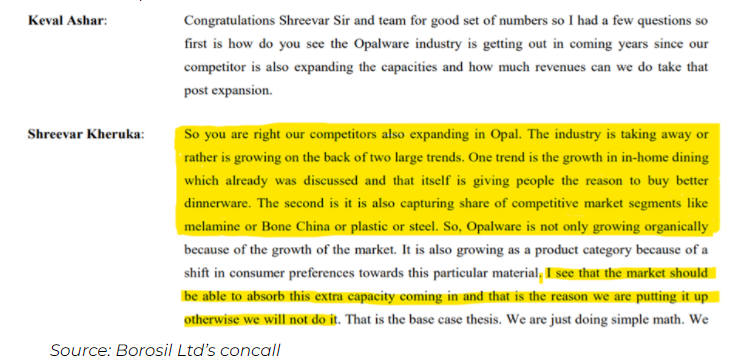
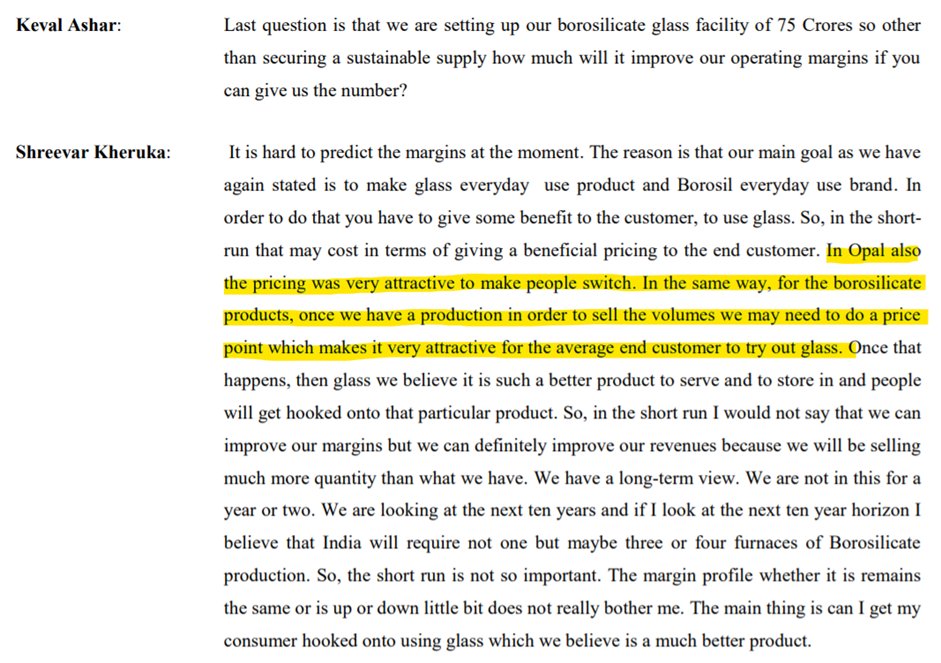
Customer loyalty is not strongly present with any brand- Larah-Borosil or Diva-La Opala
Look at Borosil Ltd’s mngt commentary- how the focus currently is to keep the prices at lower end to make people switch from other brands to Larah (Borosil’s Opalware brand)
15/n
Look at Borosil Ltd’s mngt commentary- how the focus currently is to keep the prices at lower end to make people switch from other brands to Larah (Borosil’s Opalware brand)
15/n
Borosil Ltd being the market leader in the majority of the segments it operates in; has been following the same strategy in the opal ware segment too & is gaining market share from La Opala for 5 years- increased its share from 17% in FY17 to ~25% today!
16/n
16/n

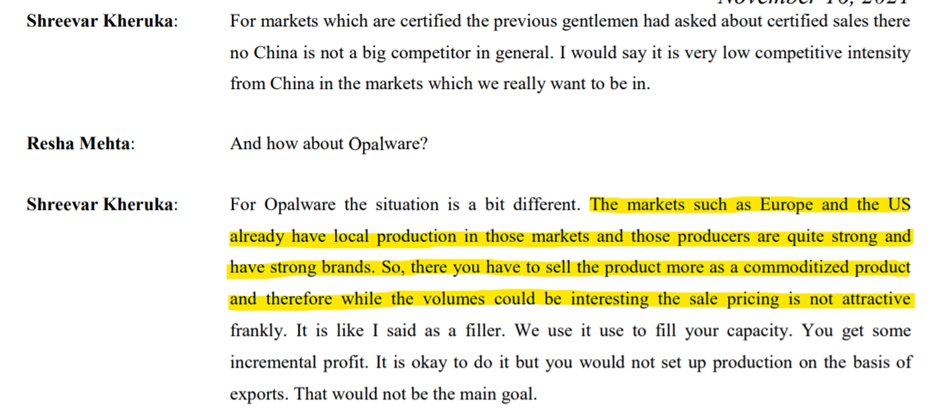
Export opportunities aren't attractive due to stronger brand positioning of local players in Europe & US
This leads to inability of Indian players to charge higher prices in international markets. So, the focus of Indian players will be on domestic market itself.
17/n
This leads to inability of Indian players to charge higher prices in international markets. So, the focus of Indian players will be on domestic market itself.
17/n
Key Risk:
In July'17, govt had imposed definitive anti-dumping duties on opal glassware imports from China & UAE for 5 years
In case, it is revoked or there's no extension, it can lead to increase in cheap Chinese imports, which can adversely impact the organized players
18/n
In July'17, govt had imposed definitive anti-dumping duties on opal glassware imports from China & UAE for 5 years
In case, it is revoked or there's no extension, it can lead to increase in cheap Chinese imports, which can adversely impact the organized players
18/n
Loading suggestions...