

The Cryptocurrency Iceberg, explained.
This thread in designed to break down the barriers of entry for every crypto participant, starting at Tier One, which are the most common topics, all the way down to Tier Five, which are some of the most complex topics in crypto.
This thread in designed to break down the barriers of entry for every crypto participant, starting at Tier One, which are the most common topics, all the way down to Tier Five, which are some of the most complex topics in crypto.

TIER ONE: Topics that most beginners are familiar with
Blockchain - A digitally distributed, decentralized, public ledger that exists across a network.
Ledger - An immutable database that stores a series of blocks of transactions after being confirmed by the network
Blockchain - A digitally distributed, decentralized, public ledger that exists across a network.
Ledger - An immutable database that stores a series of blocks of transactions after being confirmed by the network
Bitcoin - The first iteration of digital currency created by Satoshi Nakamoto
Ethereum - A generalized platform aiming to go beyond just digital currency through the use of smart contracts and dApps.
Ethereum - A generalized platform aiming to go beyond just digital currency through the use of smart contracts and dApps.
Alt L1's - Layer 1 protocols taking alternative approaches toward solving the scalability trilemma
Memecoins - Cryptocurrency that originates from an internet meme or has some other humorous characteristic. (Doge, Shiba Inu)
Memecoins - Cryptocurrency that originates from an internet meme or has some other humorous characteristic. (Doge, Shiba Inu)
TIER TWO: Topics most crypto native’s are familiar with
Smart contracts - Programs that run when predetermined conditions are met, used to automate the execution of an agreement
dApps - Apps that offer similar functions of normal apps, but run on a peer to peer network
Smart contracts - Programs that run when predetermined conditions are met, used to automate the execution of an agreement
dApps - Apps that offer similar functions of normal apps, but run on a peer to peer network


Gas - On $ETH, gas is used to describe a unit of measurement for the amount of computational power needed for executing specific operations on the network
Gas Limit - The maximum amount of gas you're willing to spend on a particular transaction
Gas Limit - The maximum amount of gas you're willing to spend on a particular transaction

CEX’s - Exchanges that act as a trusted intermediary for the buying and selling of cryptocurrency (custodial)
DEX’s - A type of cryptocurrency exchange which allows for direct peer-to-peer cryptocurrency transactions to take place online (non-custodial)
DEX’s - A type of cryptocurrency exchange which allows for direct peer-to-peer cryptocurrency transactions to take place online (non-custodial)

Consensus Mechanisms - A fault-tolerant mechanism used to reach an agreement on a single state of the network among distributed nodes.
These are protocols that make sure all nodes are synchronized with each other & agree on transactions, which are then added to the blockchain
These are protocols that make sure all nodes are synchronized with each other & agree on transactions, which are then added to the blockchain

PoW - Proof of work (PoW) is a consensus mechanism that requires members of a network, called miners, to expend effort solving an arbitrary mathematical puzzle to verify transactions and add blocks to the blockchain

PoS - Proof of stake (PoS) is a type of consensus mechanism used by blockchain networks to achieve distributed consensus.
It requires users to stake their crypto to become a validator in the network. Validators are responsible for the same thing as miners in Proof of Work
It requires users to stake their crypto to become a validator in the network. Validators are responsible for the same thing as miners in Proof of Work

Blocks - Data structures within a blockchain, where transaction data in a cryptocurrency blockchain are permanently recorded
Miners - A computer or group of computers responsible for adding new transactions or verifying blocks created by other miners.
Miners - A computer or group of computers responsible for adding new transactions or verifying blocks created by other miners.


TIER THREE: Topics only the most seasoned of crypto investors are familiar with
DeFi - Decentralized finance offers financial instruments without relying on intermediaries such as brokerages, exchanges, or banks. Instead, it uses smart contracts on a blockchain.
DeFi - Decentralized finance offers financial instruments without relying on intermediaries such as brokerages, exchanges, or banks. Instead, it uses smart contracts on a blockchain.

NFTs - A non-fungible-token is a non-interchangeable unit of data stored on a blockchain that can be sold or traded. Types of NFT data units can be associated with digital files such as photos, videos, and audio.

Metaverse - The Metaverse is a massively complex and interoperable network of real time rendered 3D virtual worlds which can be experienced synchronously and persistently by an unlimited amount of users.

Scalability Trilemma - The blockchain scalability trilemma, coined by Vitalik Buterin, states that trade-offs are inevitable between three components: decentralization, security, and scalability.
You can have one or two, but not all three.
You can have one or two, but not all three.

Difficulty - Difficulty is one of the most important aspects of Proof of Work mining. It is derived using the network hash rate and determines the speed at which miners are able to validate an encrypted block.

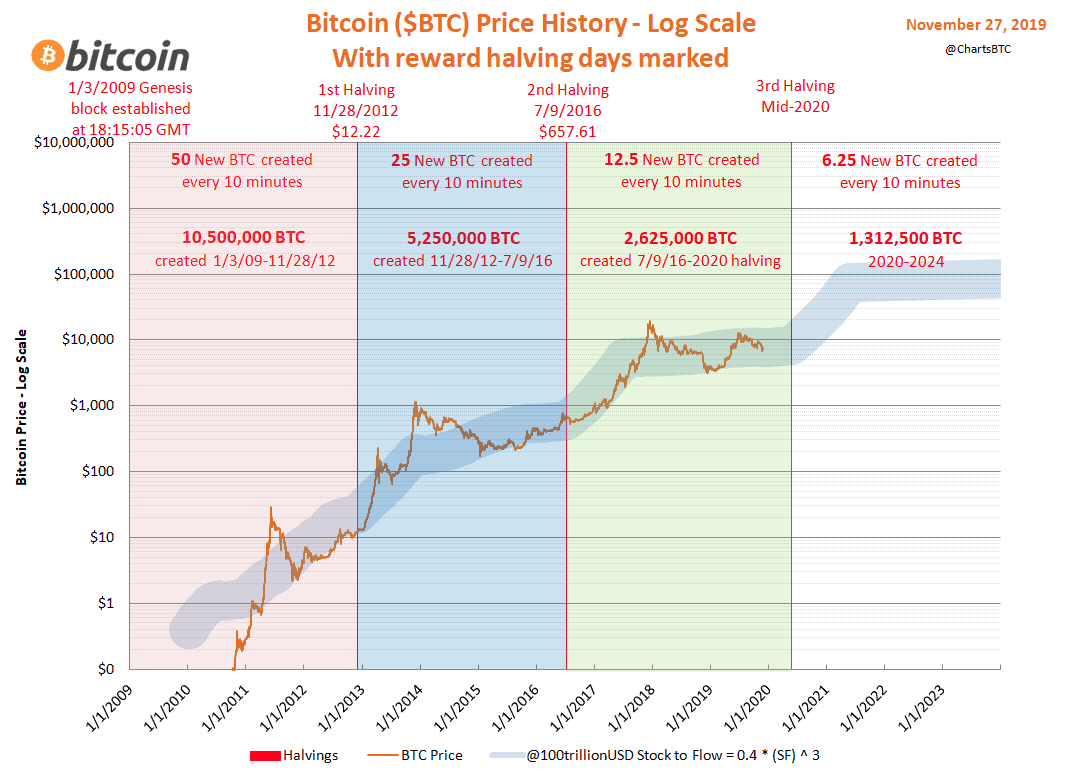
Bitcoin Halving - Every 4 years, $BTC undergoes a "halving" event, which cuts the amount of $BTC coming into supply in half via block rewards to miners, and aims to tighten the issuance of supply until all 21m $BTC is mined.
Layer 2s - Layer 2 refers to a secondary framework or protocol built on top of an existing blockchain system.
The main goal of these protocols is to solve the transaction speed and scaling difficulties being faced by the major cryptocurrency networks.
The main goal of these protocols is to solve the transaction speed and scaling difficulties being faced by the major cryptocurrency networks.

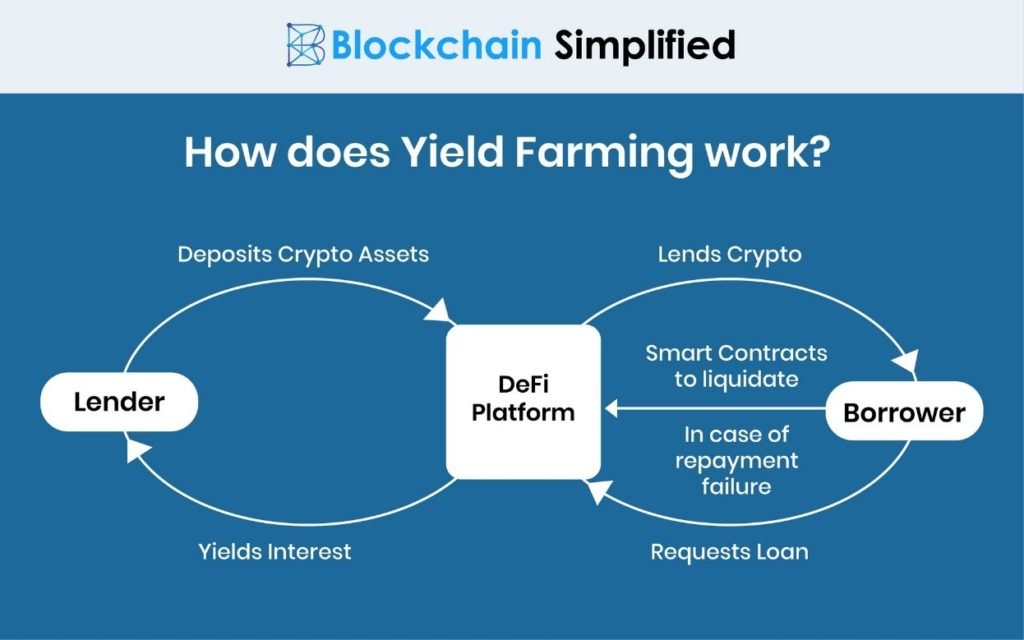
Yield Farming - The crypto equivalent of earning APY on deposits with banks.
At its core, yield farming is a process in which liquidity providers lock up their assets in a liquidity pool, & receive incentives in the form of trading fees or emissions of a governance token
At its core, yield farming is a process in which liquidity providers lock up their assets in a liquidity pool, & receive incentives in the form of trading fees or emissions of a governance token
AMMs - An AMM (Automated Market Maker) is the underlying protocol that powers DEX's
AMMs allow assets to be traded permissionlessly through the use of liquidity pools, instead of a traditional market of buyers and sellers.
AMMs allow assets to be traded permissionlessly through the use of liquidity pools, instead of a traditional market of buyers and sellers.
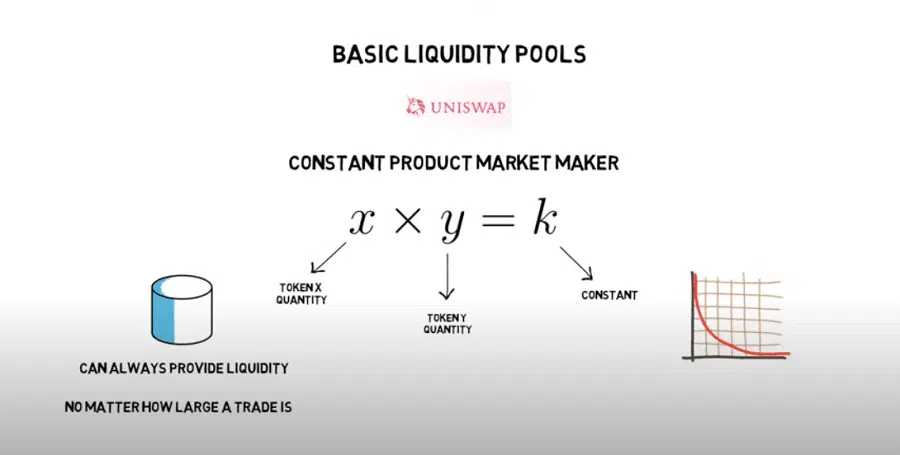
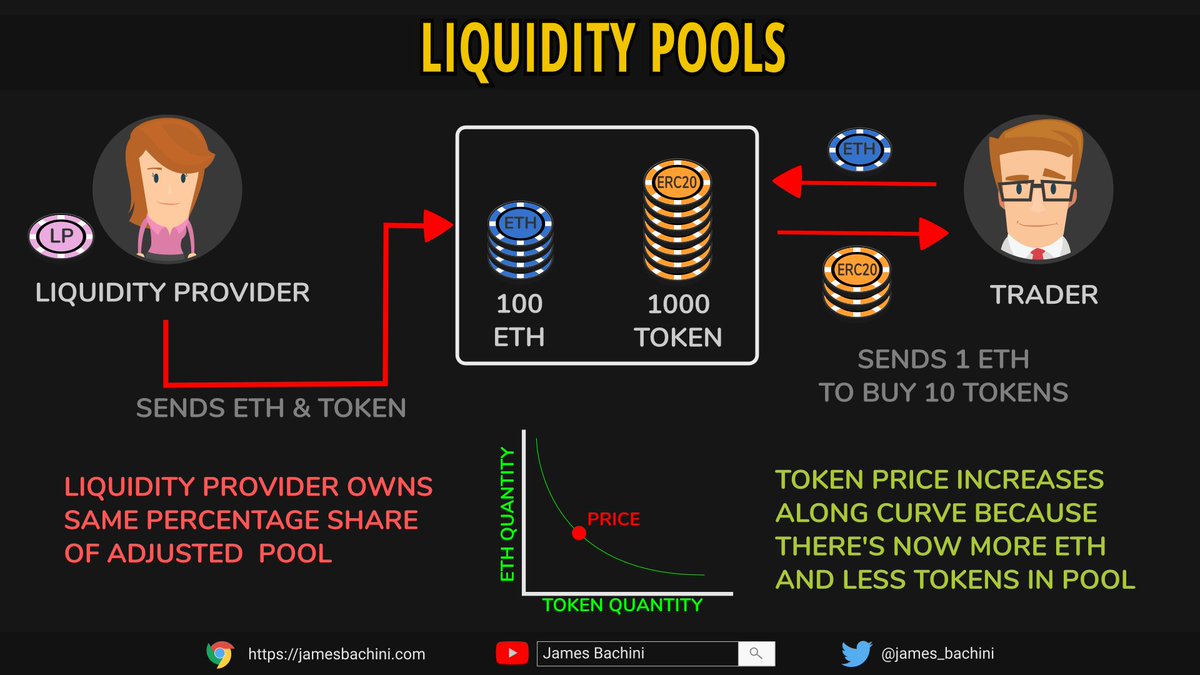
Liquidity Pool - A liquidity pool is a crowdsourced pool of cryptocurrencies or tokens locked in a smart contract that facilitate trades on decentralized exchanges
Trading with liquidity pool protocols like Uniswap requires no buyer and seller matching for orders to go through.
Trading with liquidity pool protocols like Uniswap requires no buyer and seller matching for orders to go through.
Lending/Borrowing - Crypto lending is similar to the concept of traditional lending.
Crypto lenders are able to lend out their idle assets to borrowers, who in turn pay out interest on the lender assets.
Crypto lenders are able to lend out their idle assets to borrowers, who in turn pay out interest on the lender assets.

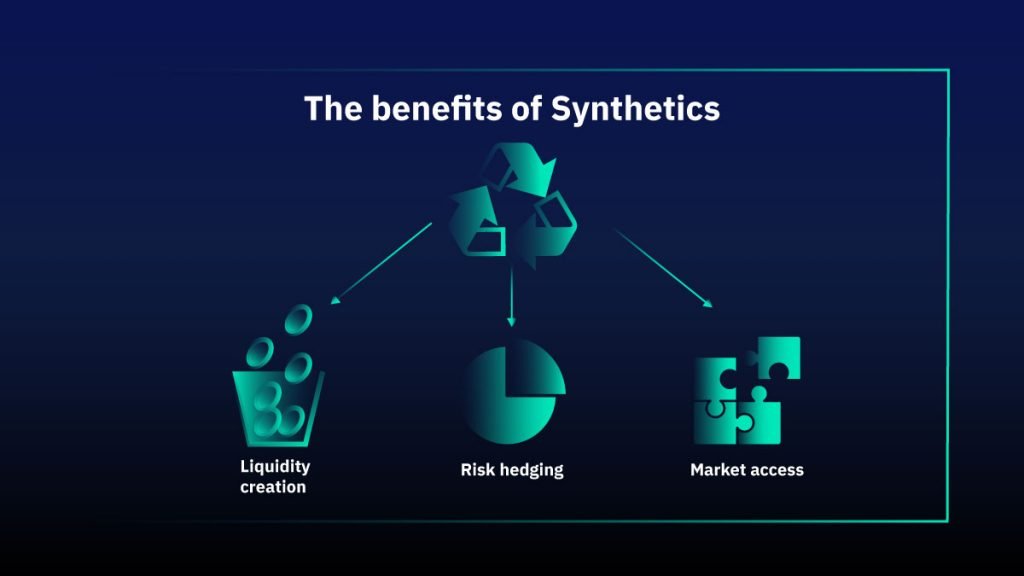
Synthetics - Synthetic assets are essentially tokenized derivatives. In TradFi, derivatives are representations of stocks or bonds that a trader does not own but wants to buy or sell.
Synthetics assets allow investors to tokenize and trade anything on the blockchain.
Synthetics assets allow investors to tokenize and trade anything on the blockchain.
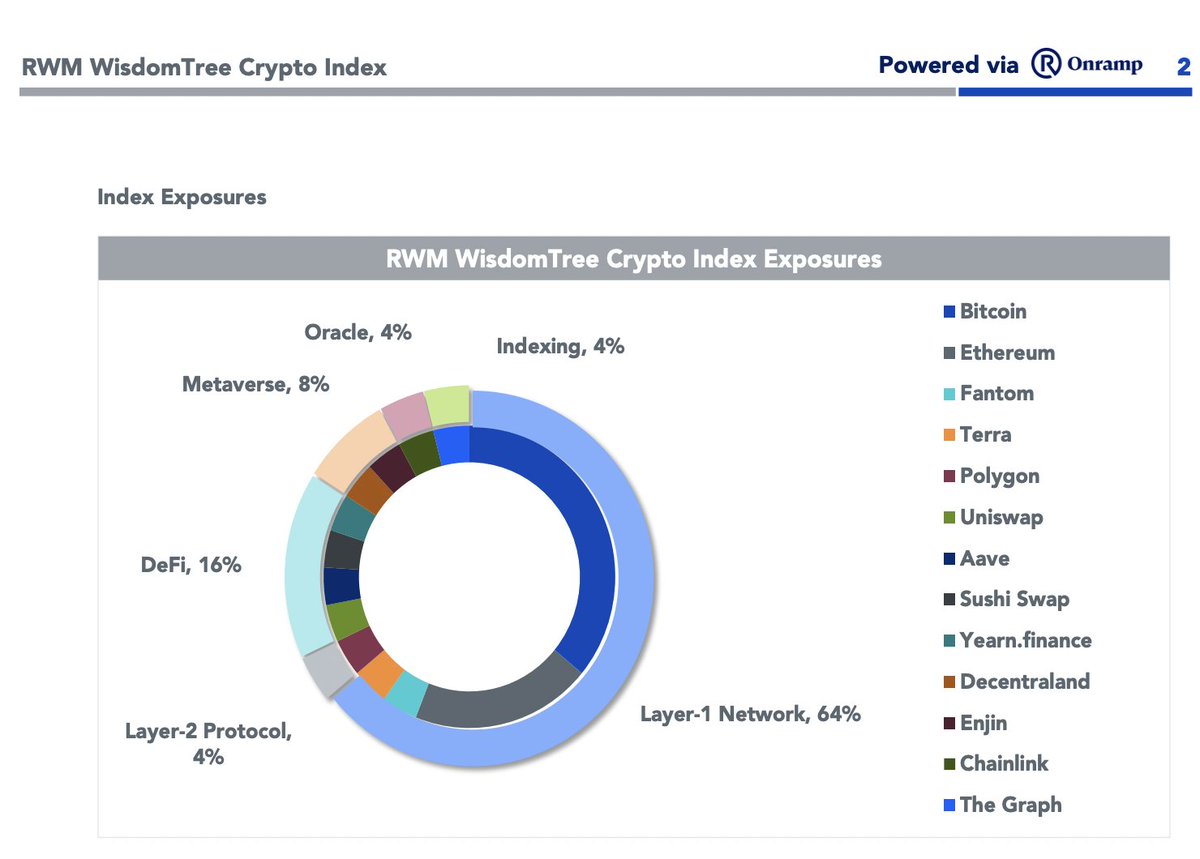
Indexes - A crypto index is a way of gaining exposure to a basket of different crypto assets. Each index is composed of a variety of different crypto assets.
These indexes allow investors to gain exposure to a wide variety of tokens without having to buy each one individually.
These indexes allow investors to gain exposure to a wide variety of tokens without having to buy each one individually.
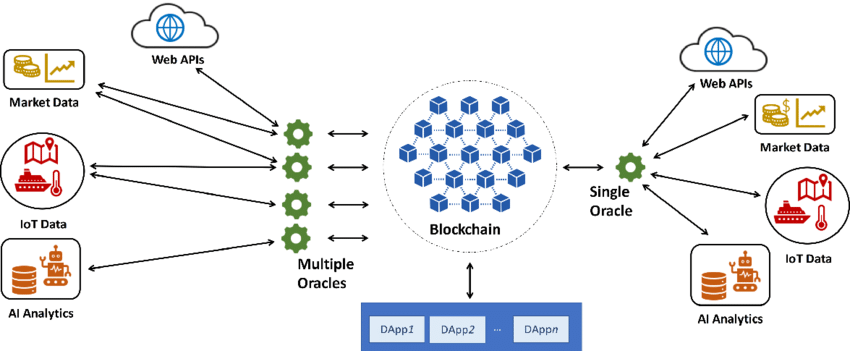
Oracles - Blockchain oracles are entities that connect blockchains to external systems, thereby enabling smart contracts to execute based upon inputs and outputs from the real world.
Governance - In the absence of a central authority, decentralized networks rely on governance structures for their projects.
Blockchain governance typically employs mechanisms to make decisions on project direction, on-going updates, and to make sure everything runs efficiently
Blockchain governance typically employs mechanisms to make decisions on project direction, on-going updates, and to make sure everything runs efficiently

Stablecoins - Cryptocurrencies where the price is designed to be pegged to a cryptocurrency, fiat money, or exchange-traded commodities.

Algo Stablecoins - An algorithmic stablecoin is designed to achieve price stability & circulating supply of an asset.
In other words, algo stablecoins use an algorithm which can issue more coins when its price increases and buy them off the market when the price decreases.
In other words, algo stablecoins use an algorithm which can issue more coins when its price increases and buy them off the market when the price decreases.

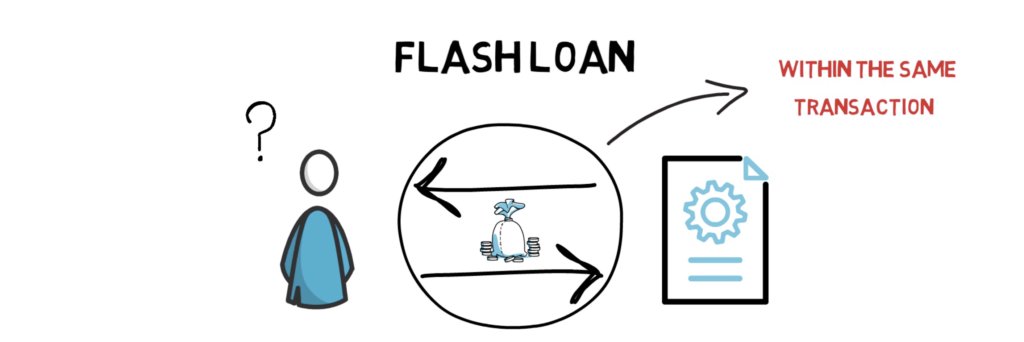
Flash Loans - A flash loan is a new sort of undercollateralized lending.
Flash loans enable users to take out near instant crypto loans without having to provide collateral in return.
Flash loans enable users to take out near instant crypto loans without having to provide collateral in return.
Arbitrage - Crypto arbitrage is a type of trading strategy where investors capitalize on slight price discrepancies of a digital asset across multiple markets or exchanges.
Ex. Buying an asset on one exchange and selling it instantly on an exchange where price is higher
Ex. Buying an asset on one exchange and selling it instantly on an exchange where price is higher

Rebase - A rebasing token is an elastic supply smart contract that works by expanding or contracting a token's supply due to change in a token's price.
Creator Tokens - Creator tokens are social tokens that allows creators, influencers, athletes, musicians and more to launch their own cryptocurrencies to monetize and multiply their audience.

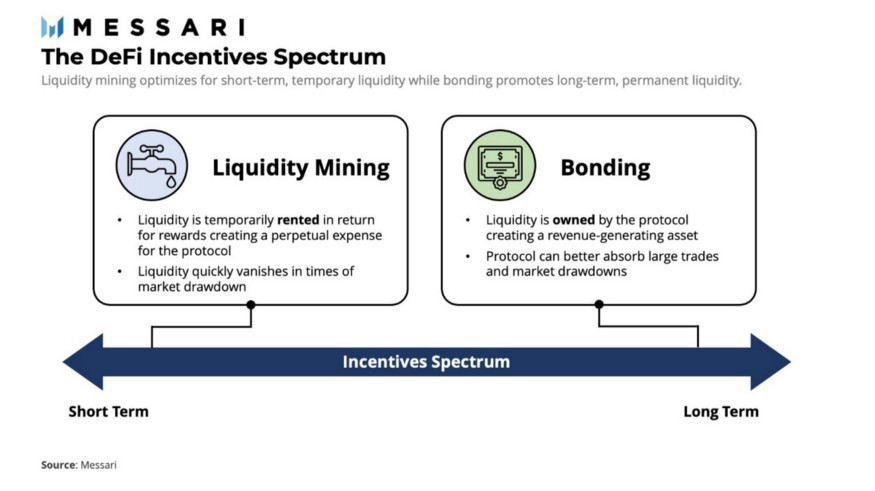
Protocol Owned Liquidity - PoL is a new approach toward providing liquidity pioneered by Olympus DAO.
Instead of relying on incentives for LPs, the protocol sells discounted tokens to buyers who in exchange provide another token which then forms part of the protocol's treasury.
Instead of relying on incentives for LPs, the protocol sells discounted tokens to buyers who in exchange provide another token which then forms part of the protocol's treasury.
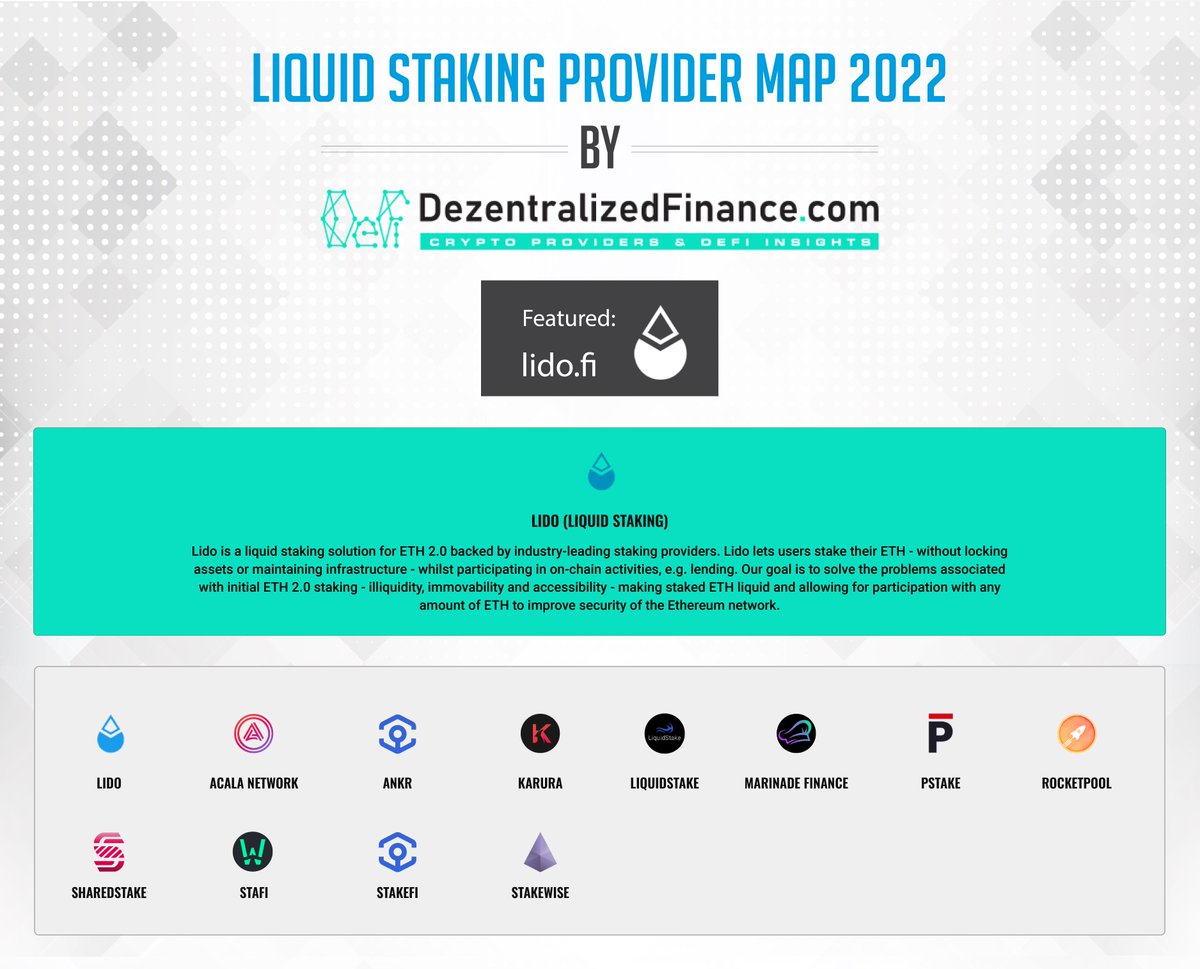
Liquid Staking - Liquid staking allows holders of tokens to stake their assets & receive a derivative or liquid representation of that asset that can be used in dApps.
Using liquid staking, ETH 2.0 stakers are able to simultaneously stake their Ethereum while remaining liquid
Using liquid staking, ETH 2.0 stakers are able to simultaneously stake their Ethereum while remaining liquid
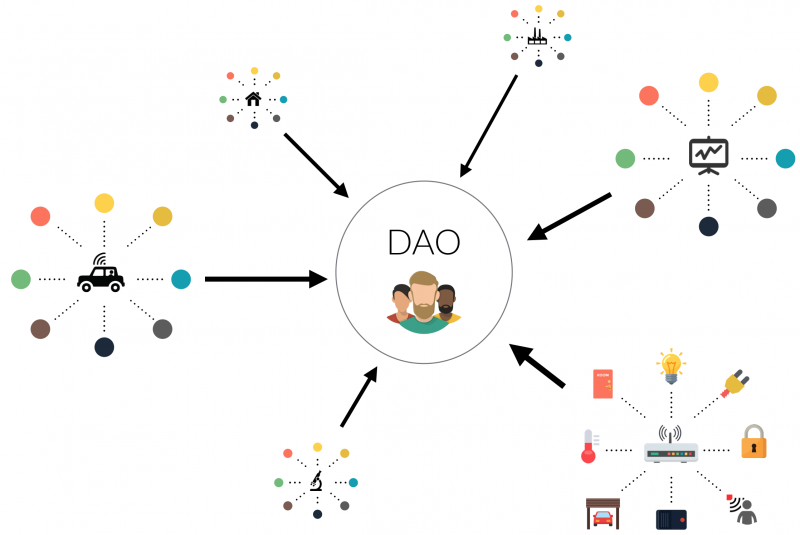
DAOs - A decentralized autonomous organization is an organization represented by rules encoded as a computer program that is transparent, controlled by the organizations members and not influenced by a central government.

Interoperability - Blockchain interoperability refers to the ability of different blockchain networks to exchange and leverage data between one another to move unique types of digital assets between the networks' respective blockchains.

IPFS - The InterPlanetary File System is a protocol and peer to peer network for storing and sharing data in a distributed file system.
IPFS uses content addressing to uniquely identify each file in a global namespace connecting all computing devices.
IPFS uses content addressing to uniquely identify each file in a global namespace connecting all computing devices.

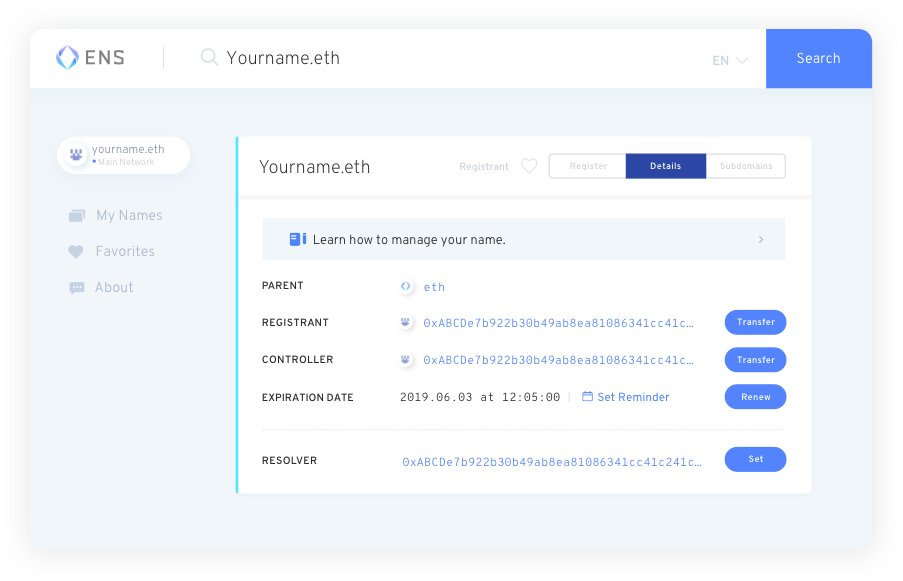
ENS - The Ethereum Name Service is a name lookup service built on $ETH that allows crypto users to translate their machine-readable addresses to human-readable addresses.
You can think of it as a nickname generator for public Ethereum addresses.
You can think of it as a nickname generator for public Ethereum addresses.
TIER FOUR: We're now diving deep into the rabbit hole
EVM - The Ethereum Virtual Machine (EVM) is the software platform that developers can use to create dApps on ETH.
The EVM is where all ETH accounts and smart contracts live, as well as the entire state history of Ethereum.
EVM - The Ethereum Virtual Machine (EVM) is the software platform that developers can use to create dApps on ETH.
The EVM is where all ETH accounts and smart contracts live, as well as the entire state history of Ethereum.

Mempool - In blockchain terminology, a mempool is a waiting area for the transactions that haven't been added to a block and are still unconfirmed.
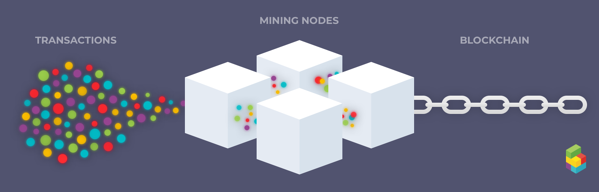
Generalized Frontrunners - A generalized front runner is a bot on Ethereum that constantly scans the mempool for profitable transactions.
Generalized front runners participate in Priority Gas Auctions (PGAs) with other bots in order to obtain priority of their txs in a block.
Generalized front runners participate in Priority Gas Auctions (PGAs) with other bots in order to obtain priority of their txs in a block.
Byzantine General's Problem - The Byzantine General's problem refers to the ability of a server to inconsistently appear both failed and functioning, presenting different symptoms to different observers.
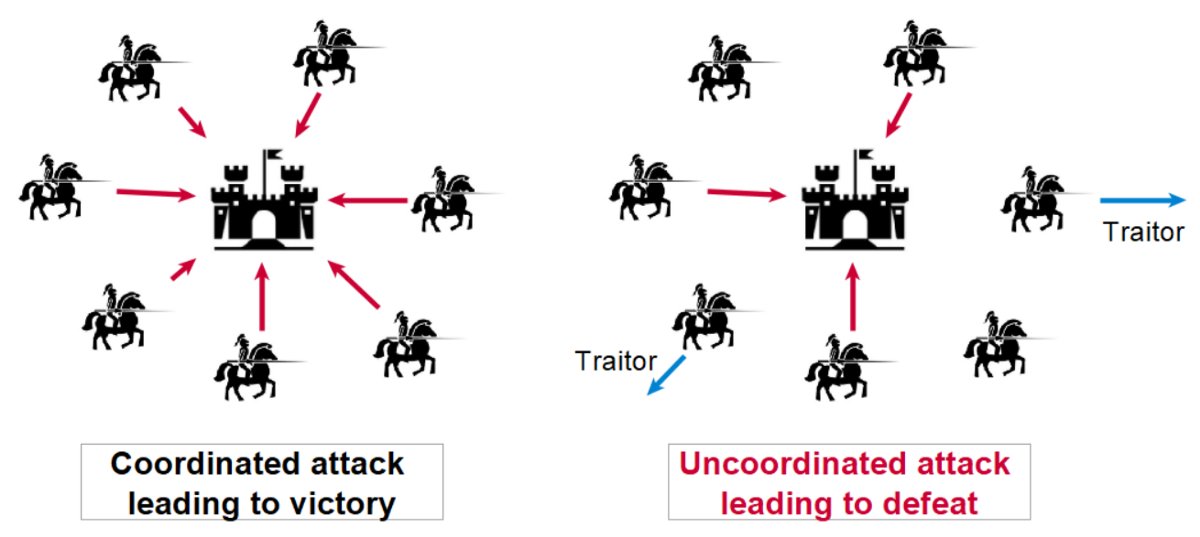
Sybil Attack - A Sybil attack is a type of attack on a computer in which an attacker subverts the service's reputation system by creating a large number of pseudonymous identities and using them to gain a disproportionally large influence.

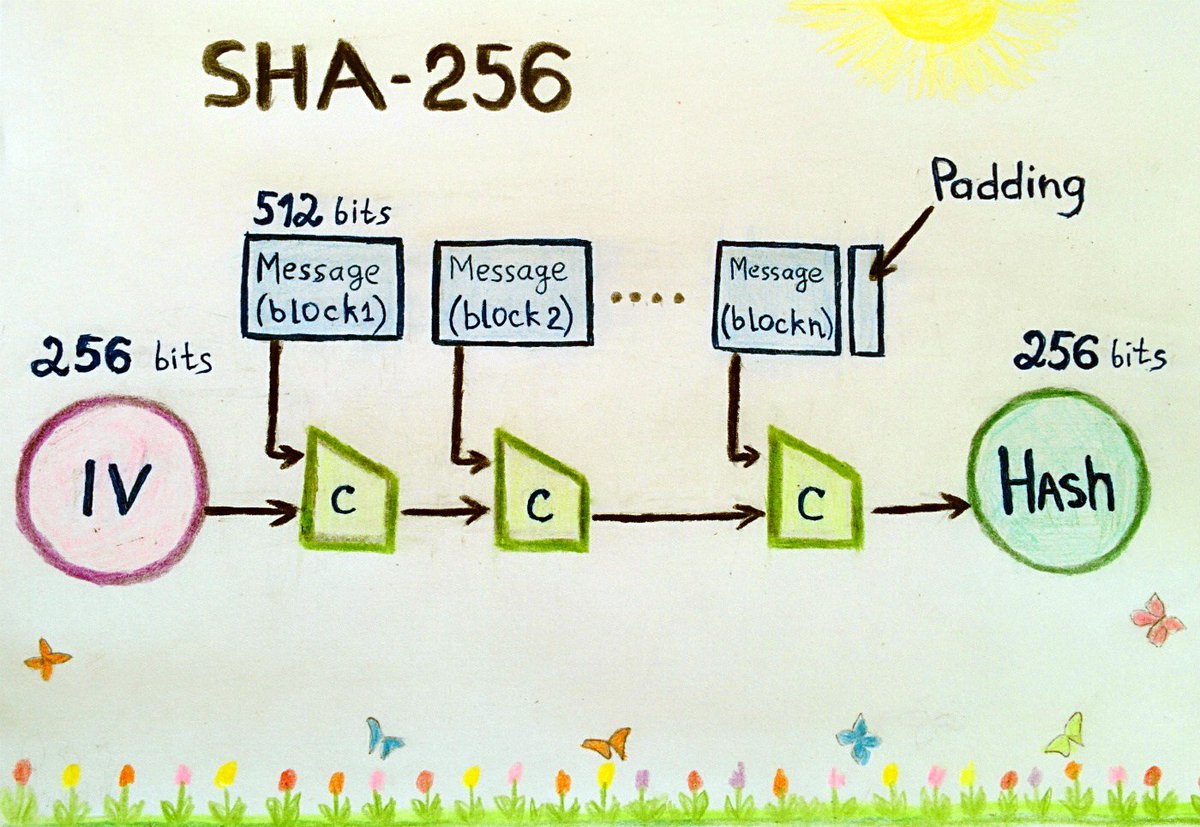
SHA-265 - SHA-256 stands for Secure Hashing Algorithm 256-bit and is used for cryptographic security.
Cryptographic hash algorithms produce irreversible and unique hashes. The larger the number of possible hashes, the smaller the chance that two values will create the same hash.
Cryptographic hash algorithms produce irreversible and unique hashes. The larger the number of possible hashes, the smaller the chance that two values will create the same hash.
Full Nodes - Full nodes are nodes that download and check that every transaction in a blockchain is valid.
This requires a lot of resources and hundreds of gigabytes of disk space, but are the most secure nodes as they can't be tricked into accepting blocks that have invalid txs
This requires a lot of resources and hundreds of gigabytes of disk space, but are the most secure nodes as they can't be tricked into accepting blocks that have invalid txs
Light Clients - If your computer doesn't have enough resources to run a full node, then you can run a light client.
A light client doesn't download or validate any transactions, they only validate the block header, and assume that the block only contains valid txs.
A light client doesn't download or validate any transactions, they only validate the block header, and assume that the block only contains valid txs.
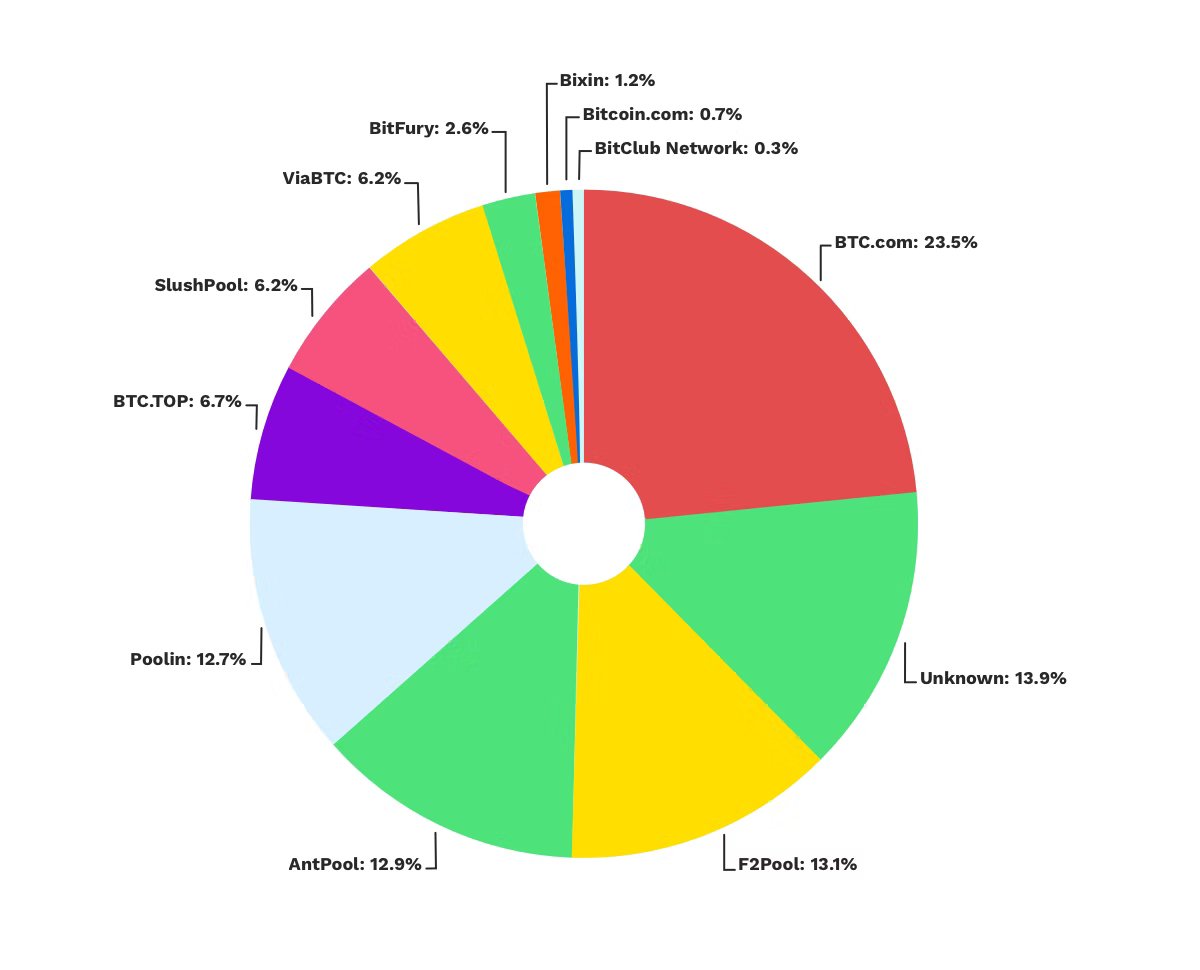
Mining Pools - In the context of cryptocurrency mining, a mining pool is the pooling of resources by miners, who share their processing power over a network, to split the reward equally, according to the amount of work they contributed to the probability of finding a block
Metcalf's Law - Metcalf's law states that a network's value is proportional to the square of the number of nodes in a network.
For example, if a network has 10 nodes, its inherent value is 100 (10x10=100).
For example, if a network has 10 nodes, its inherent value is 100 (10x10=100).

Lindy Effect - the Lindy Effect is a theorized phenomenon by which the future life expectancy of some non-perishable things, like a technology or an age, is proportional to their current age.

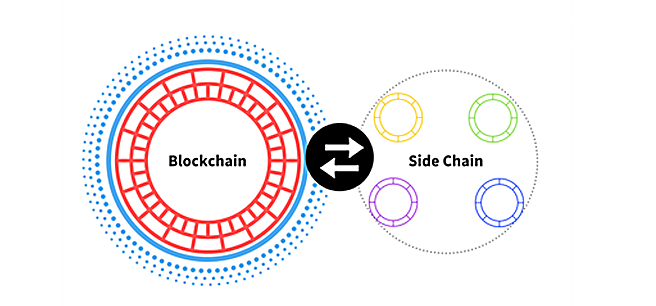
Sidechain - A sidechain is a separate blockchain that is attached to its parent blockchain using a two way peg.
The two way peg enables interchangeability of assets at a predetermined rate between the parent blockchain and the sidechain.
The two way peg enables interchangeability of assets at a predetermined rate between the parent blockchain and the sidechain.
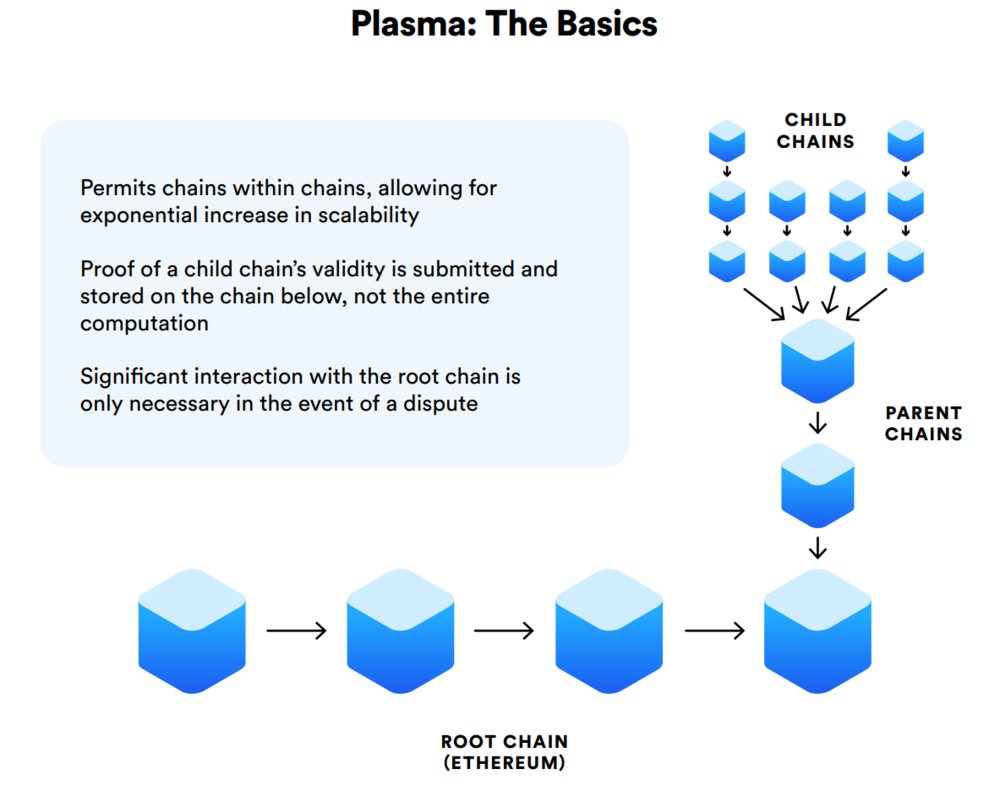
Plasma - Plasma is an Ethereum layer 2 scaling solution. It is a framework that allows the creation of "child" blockchains that use the main $ETH chain as a trust and arbitration layer.
Optimistic Rollups - Optimistic rollups use a smart contract to relay transaction data from the main $ETH chain to a layer 2 network, where a sequencer can bundle up multiple txs into a batch then submit that batch back to the main chain via a single tx.

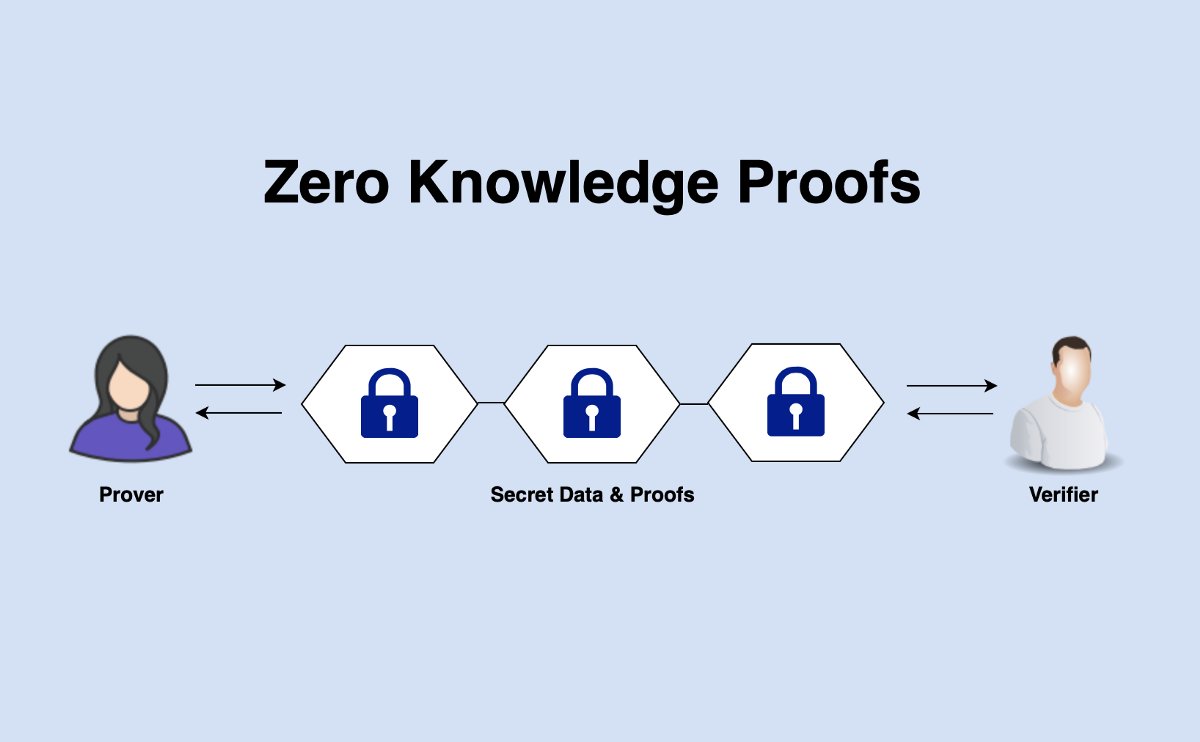
Zero-knowledge proof - In cryptography, a ZKP is a method by which one party can prove to another party that a given statement is true while the prover avoids conveying any additional information apart from the fact that the statement is indeed true.
ZK Rollups - ZK Rollups are another kind of $ETH scaling solution that takes txs off of the $ETH chain.
ZK rollups generate cryptographic proofs that prove validity of transactions. Each batch of txs contains its own validity proof which is submitted to the main chain.
ZK rollups generate cryptographic proofs that prove validity of transactions. Each batch of txs contains its own validity proof which is submitted to the main chain.
Keepers - Keepers are a class of externally owned accounts that are incentivized to perform an action in a DeFi protocol.
Keepers receive a reward in the form of a flat fee or a percentage of the incented action. (Ex. A keeper receives a fee for liquidating collateralized debt)
Keepers receive a reward in the form of a flat fee or a percentage of the incented action. (Ex. A keeper receives a fee for liquidating collateralized debt)
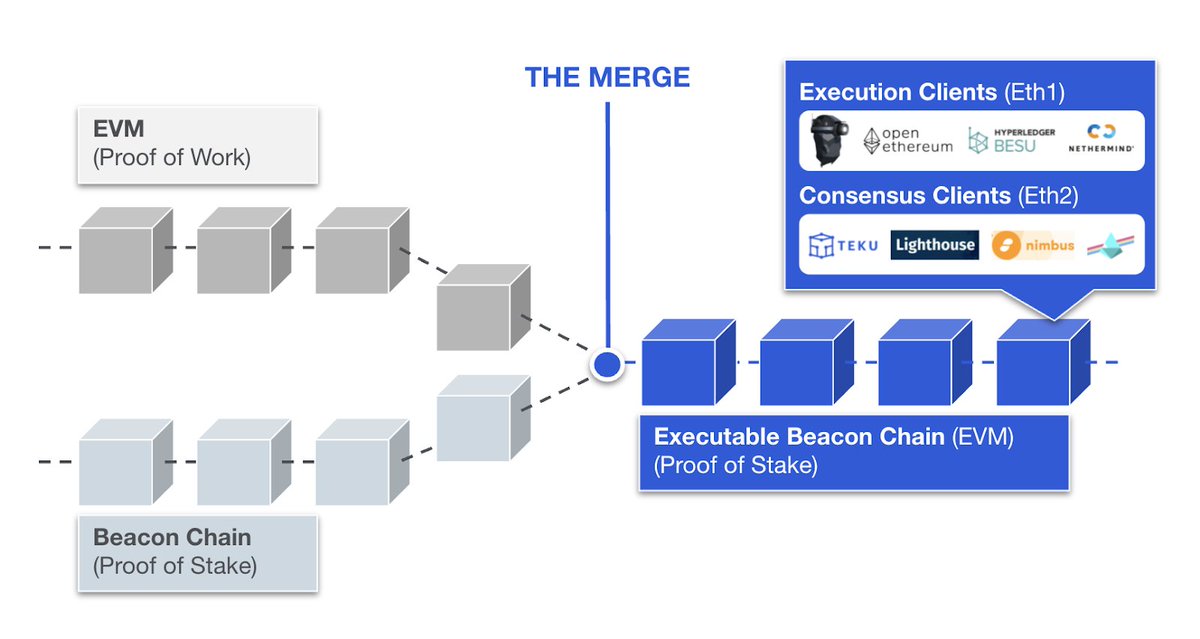
Beacon Chain - The beacon chain is an upgraded version of $ETH that will eventually replace the legacy $ETH blockchain currently in use.
Its purpose is to introduce a new consensus model known as PoS & coordinate an expanded network of shards & stakers.
Its purpose is to introduce a new consensus model known as PoS & coordinate an expanded network of shards & stakers.

The Merge - The merge is the term being used for what will happen when Ethereum's mainnet, which runs on PoW, integrates with the Beacon chain, which is a PoS chain.
TIER FIVE: Only the most esoteric of crypto knowledge
MEV - Maximal Extractable Value (MEV) refers to the measure of profit a miner can make through their ability to arbitrarily include, exclude, or re-order transactions within the blocks they produce.
MEV - Maximal Extractable Value (MEV) refers to the measure of profit a miner can make through their ability to arbitrarily include, exclude, or re-order transactions within the blocks they produce.

Sharding - Sharding refers to splitting the entire Ethereum network into multiple portions called "shards".
Each shard would contain its own independent state, massively reducing network congestion and increasing transaction throughput for Ethereum.
Each shard would contain its own independent state, massively reducing network congestion and increasing transaction throughput for Ethereum.
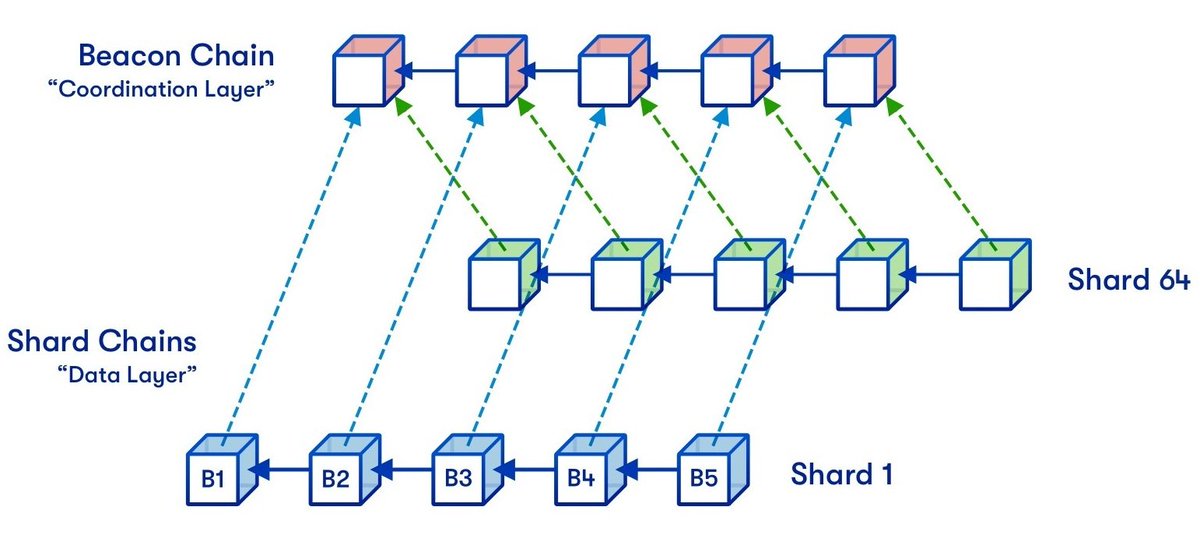
Data Availability Proofs - Data availability proofs are a new technology that allows clients to check with very high probability that all data for a block has been published, by only downloading a very small piece of that block.
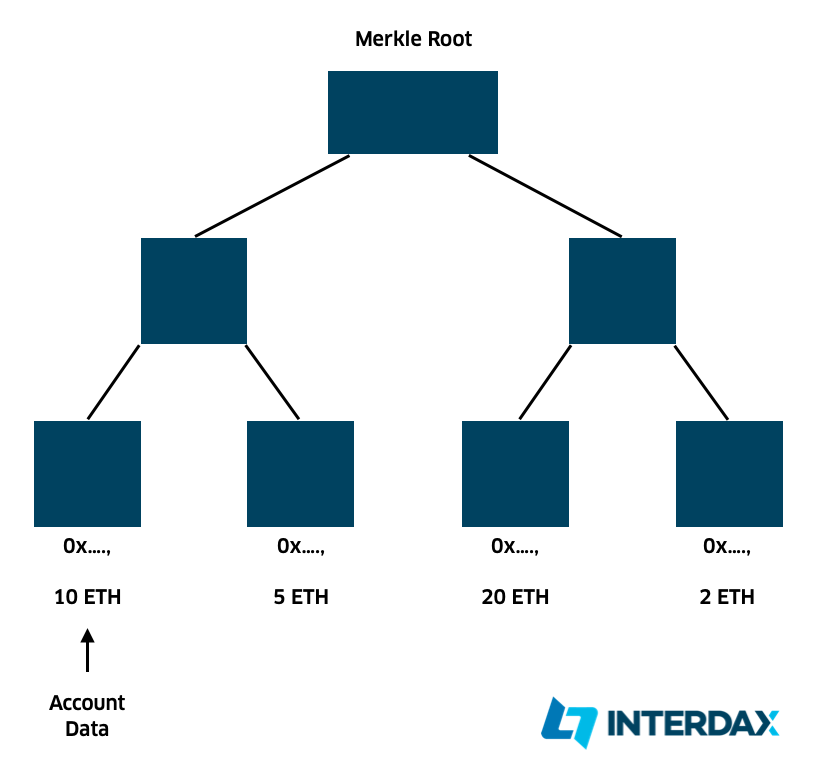
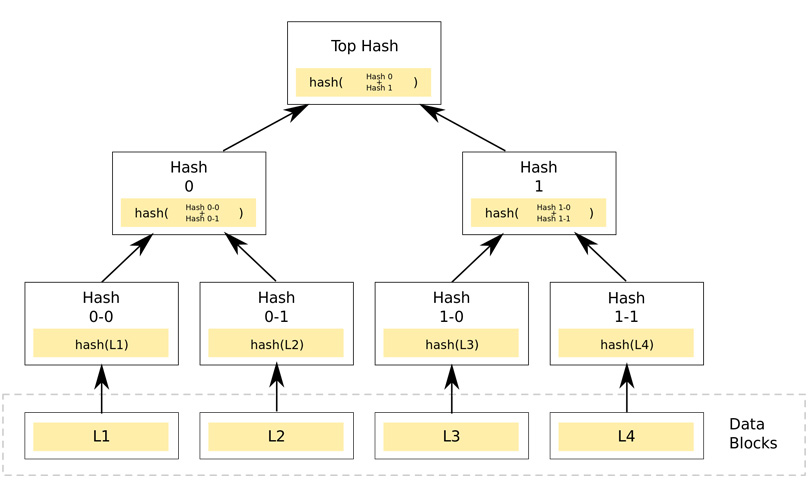
Merkle Trees - A Merkle tree is a fundamental part of blockchain technology.
It is a mathematical data structure composed of hashes of different blocks of data, and which serves as a summary of all the transactions within a block.
It is a mathematical data structure composed of hashes of different blocks of data, and which serves as a summary of all the transactions within a block.
Well that wraps up this thread from pastry.🧁
If you made it this far, you are now a cryptocurrency expert.
I hope you guys enjoyed my cryptocurrency iceberg.
If you made it this far, you are now a cryptocurrency expert.
I hope you guys enjoyed my cryptocurrency iceberg.
Loading suggestions...