

In 1973, George Lucas pitched Fox a “space western” and the studio offered $500k. Lucas took a lower $150k fee in exchange for certain rights.
The film was Star Wars and that negotiation has netted him $10B. It's considered the best Hollywood film deal ever.
Here’s the story🧵
The film was Star Wars and that negotiation has netted him $10B. It's considered the best Hollywood film deal ever.
Here’s the story🧵
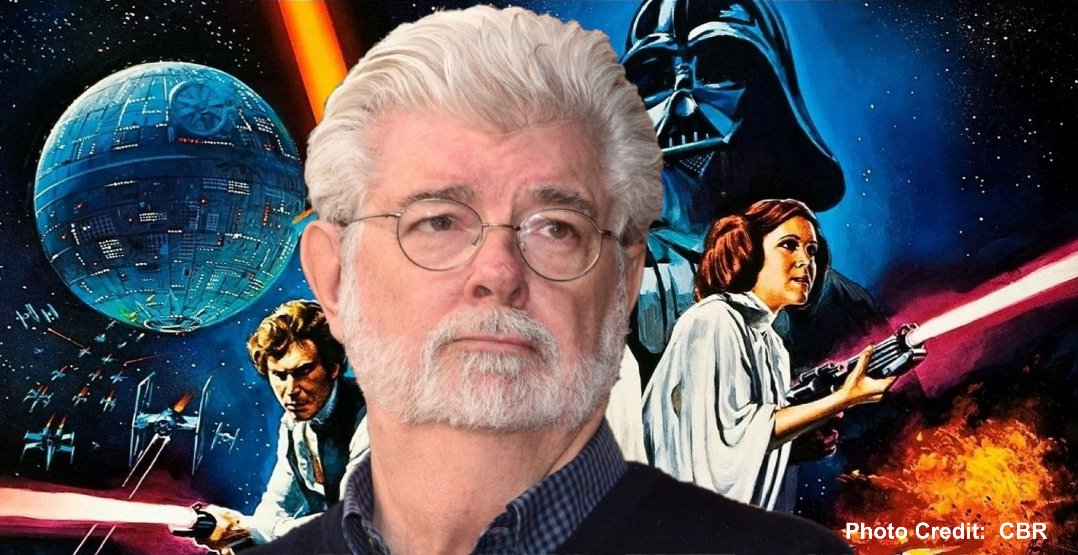
Lucas graduated from USC in 1967 and co-founded production firm American Zoetrope w/ Francis Ford Coppola.
In 1971, he released his first film: THX 1138, a dystopian sci-fi film that was an extension of his film school project. (One year later, Coppola released The Godfather).
In 1971, he released his first film: THX 1138, a dystopian sci-fi film that was an extension of his film school project. (One year later, Coppola released The Godfather).
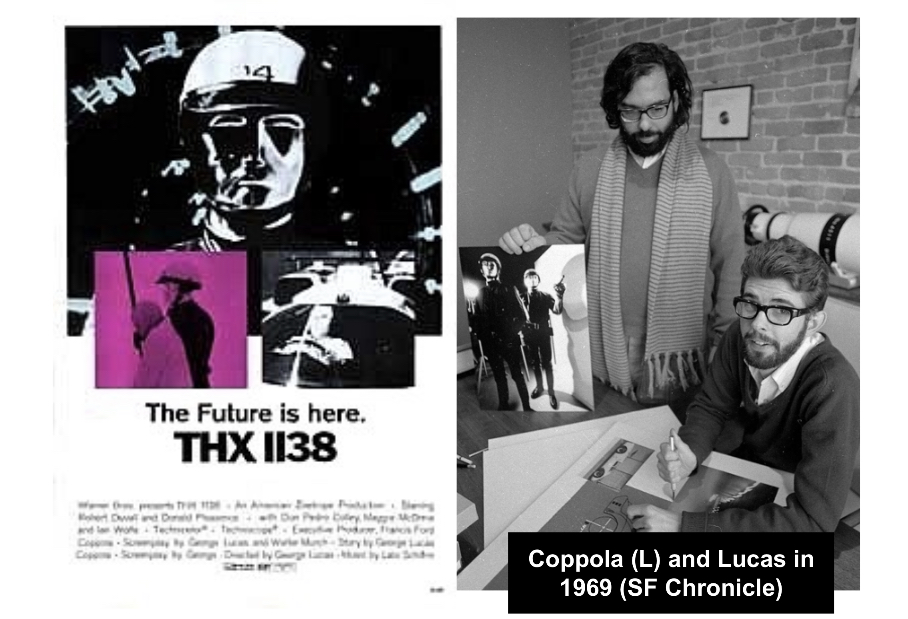
With one film under his belt, Lucas launched his own production firm (LucasFilms) and secured a deal for his next 2 projects:
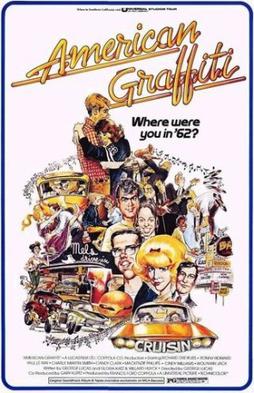
◻️American Graffiti, a coming-of-age tale based on his youth in 1960s California
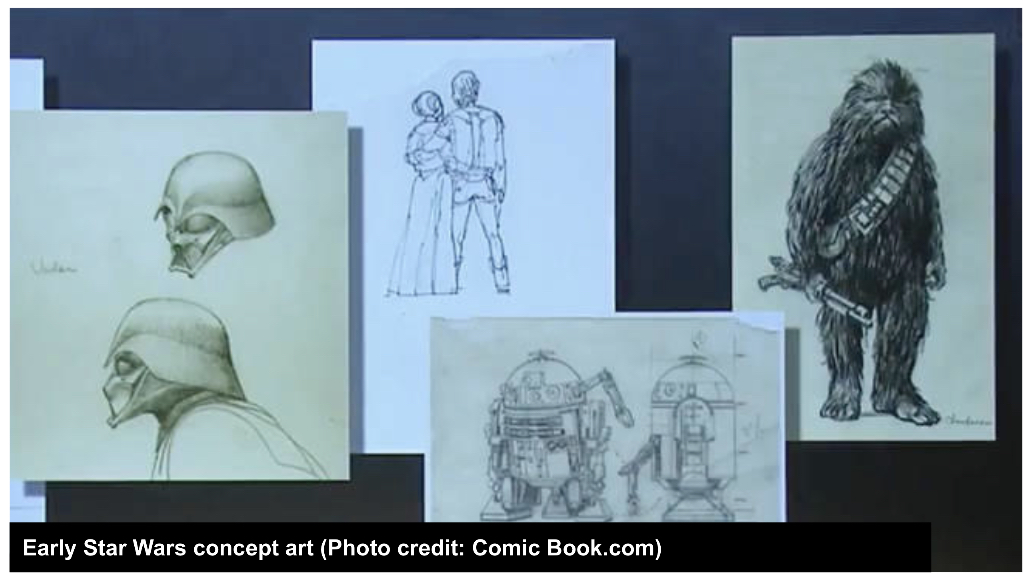
◻️A 9-part epic space western adventure (yes, it was a 9-part pitch!)
◻️American Graffiti, a coming-of-age tale based on his youth in 1960s California
◻️A 9-part epic space western adventure (yes, it was a 9-part pitch!)
Universal ultimately made American Graffiti, paying Lucas $150k to write, direct and produce the film.
Before American Graffiti came out in 1973, Universal had the option to produce the “9-part space adventure”...
...but it passed on the project.
Before American Graffiti came out in 1973, Universal had the option to produce the “9-part space adventure”...
...but it passed on the project.
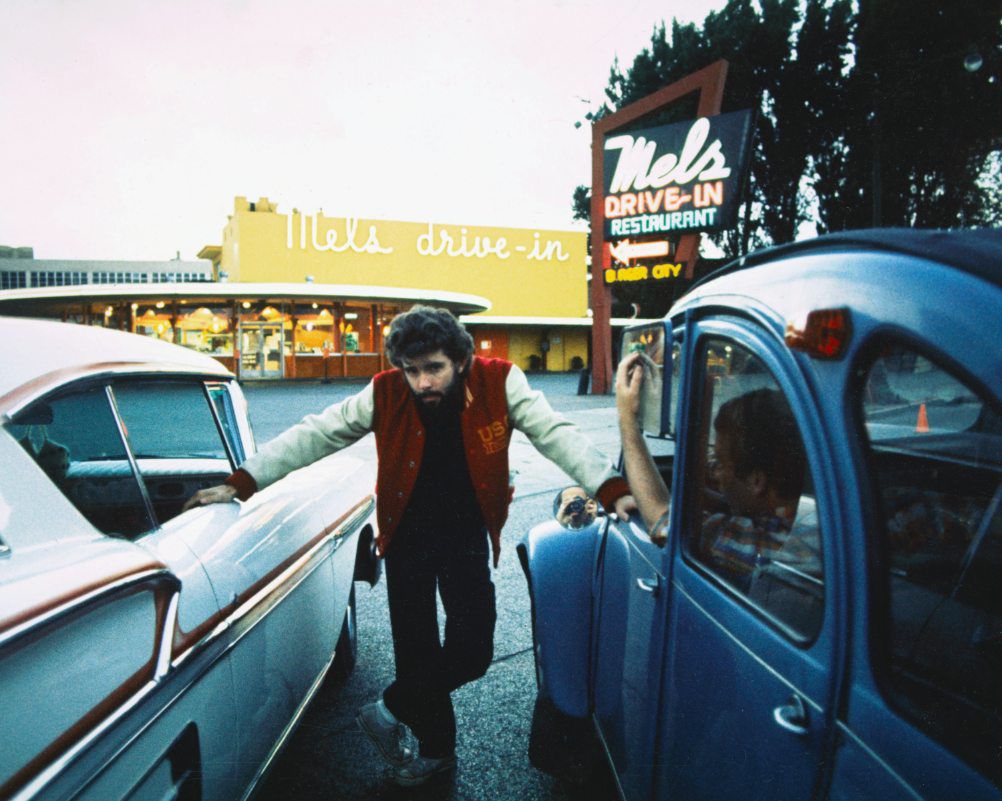
In hindsight, Universal guffed but Lucas’ ask was huge.
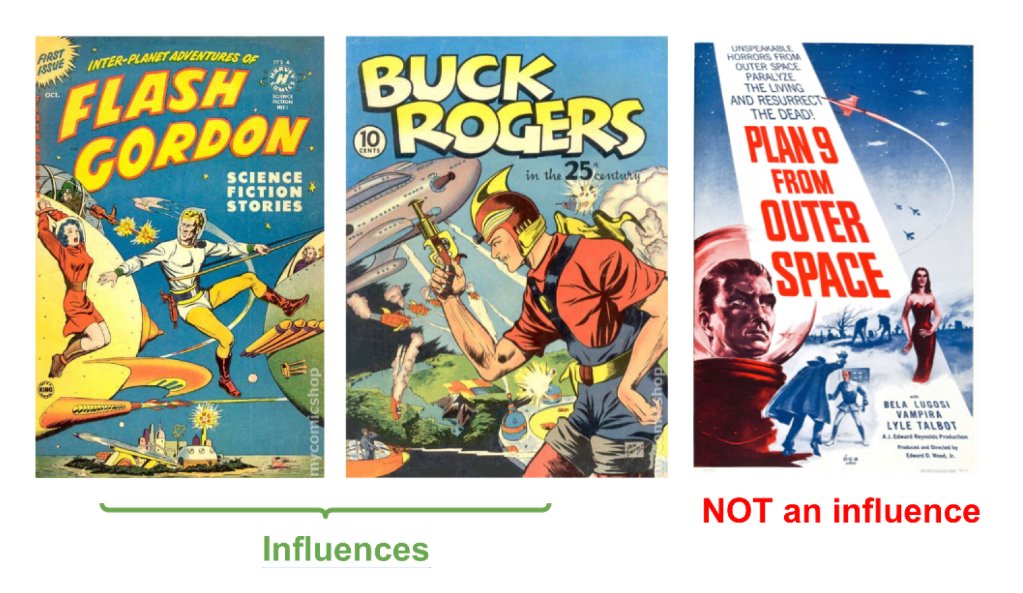
Inspired by serialized space westerns like Buck Rogers and Flash Gordon, he was set on a multi-film commitment.
Sci-fi was also a shaky genre: 1959’s “Plan 9 From Outer Space” by Ed Wood was considered the worst film ever.
Inspired by serialized space westerns like Buck Rogers and Flash Gordon, he was set on a multi-film commitment.
Sci-fi was also a shaky genre: 1959’s “Plan 9 From Outer Space” by Ed Wood was considered the worst film ever.
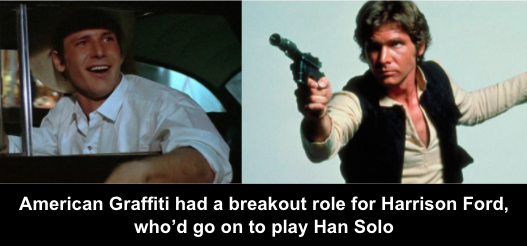
American Graffiti went on to be a smash. It made $140m on a $777k budget.
Based on this success, Lucas commanded a higher directing fee. Fox offered him $500k to do his “space western.”
Lucas didn’t want the raise. He was fine staying at a $150k fee but wanted sequel rights.
Based on this success, Lucas commanded a higher directing fee. Fox offered him $500k to do his “space western.”
Lucas didn’t want the raise. He was fine staying at a $150k fee but wanted sequel rights.
Very few sequels were made then and the deal looked great to Fox producer Alan Ladd Jr.
For Lucas, it was never about the money. His OG vision for the space epic was multiple films. The sequel rights afforded him full creative control to follow through on his vision.
For Lucas, it was never about the money. His OG vision for the space epic was multiple films. The sequel rights afforded him full creative control to follow through on his vision.
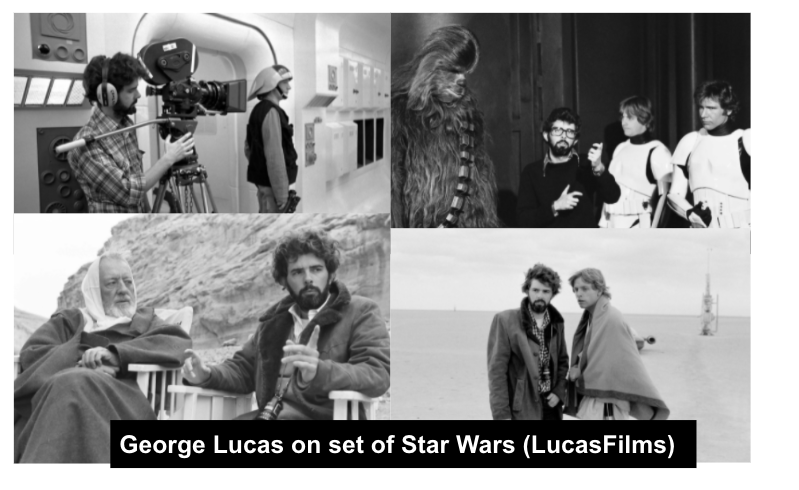
Star Wars came out in 1977 and made $775m on a budget of $11m. It became the biggest movie ever.
Lucas’ negotiation paid off but Fox still had merchandising rights. It was not considered an important revenue stream at the time. But 40m+ Star Wars toys sold in 1978 (worth $100m).
Lucas’ negotiation paid off but Fox still had merchandising rights. It was not considered an important revenue stream at the time. But 40m+ Star Wars toys sold in 1978 (worth $100m).

With Empire Strikes Back in the works, Lucas negotiated hard for merchandising incl. TV, music and toys.
Flush from Star Wars, Lucas self-financed the sequel so Fox had no choice b/c he could walk. Fox kept distribution and video rentals for 7yrs, but the rest reverted to Lucas.
Flush from Star Wars, Lucas self-financed the sequel so Fox had no choice b/c he could walk. Fox kept distribution and video rentals for 7yrs, but the rest reverted to Lucas.
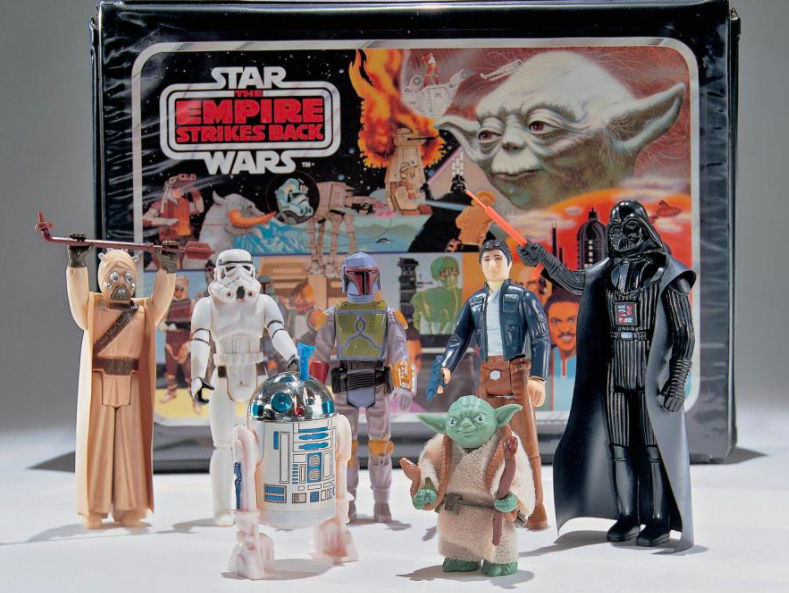
Fully in control of his Star Wars empire, Lucas would go on to make 5 more franchise films (or 2 more if you want to pretend the prequels don't exist).
Combined, the 6 films made $4.3B:
Combined, the 6 films made $4.3B:
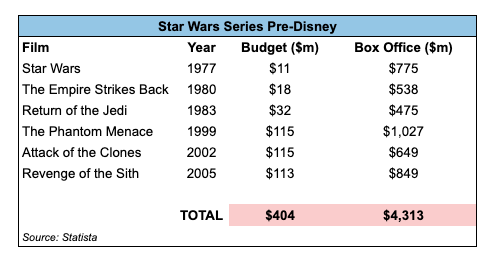
Of course, the box office was only part of the haul.
After the first Star Wars, Lucas owned 100% of the franchise and over the next 35 years sold:
◻️$12B worth of toys
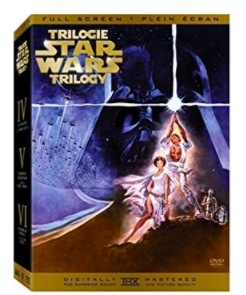
◻️$4B of DVDs and home video
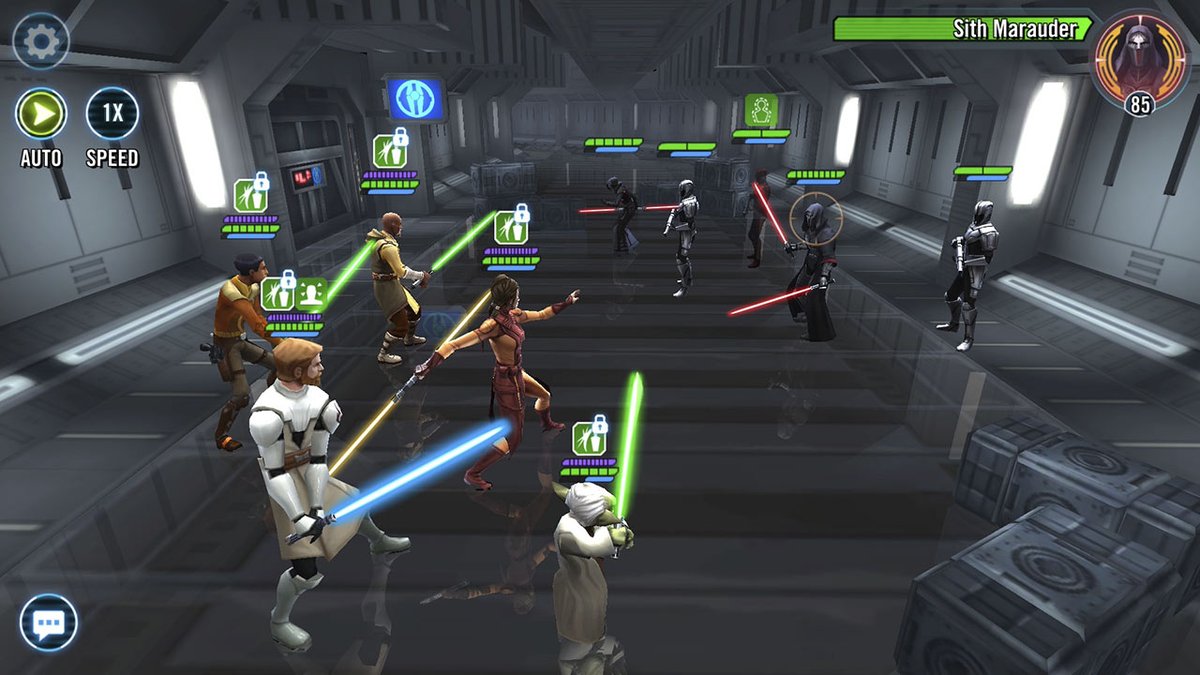
◻️$3B of video games
◻️$2B of books / comics
After the first Star Wars, Lucas owned 100% of the franchise and over the next 35 years sold:
◻️$12B worth of toys
◻️$4B of DVDs and home video
◻️$3B of video games
◻️$2B of books / comics
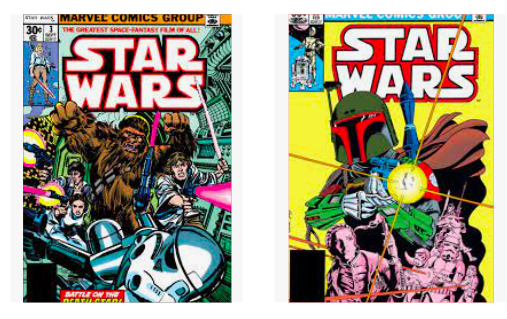
By the end of the 2000s, Lucas was planning to complete the final 3 films of his “9-part” space epic.
It would be a decade-long commitment, though. Nearing his 70s, Lucas was ready to move on and — in full control of Star Wars — sold LucasFilms to Disney for $4B in 2012.
It would be a decade-long commitment, though. Nearing his 70s, Lucas was ready to move on and — in full control of Star Wars — sold LucasFilms to Disney for $4B in 2012.
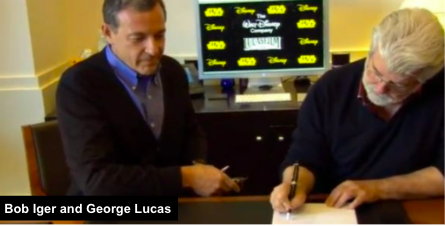
It was a 50-50 cash/stock deal. The latter was 37m shares at a price of ~$50 (~2% of $DIS).
He was the 2nd largest DIS shareholder: Steve Jobs got 137m shares (7% of DIS) when Disney bought Pixar in 2006 for $7.4B.
Jobs passed in 2011 and Laurene Powell Jobs sold down to 4%.
He was the 2nd largest DIS shareholder: Steve Jobs got 137m shares (7% of DIS) when Disney bought Pixar in 2006 for $7.4B.
Jobs passed in 2011 and Laurene Powell Jobs sold down to 4%.
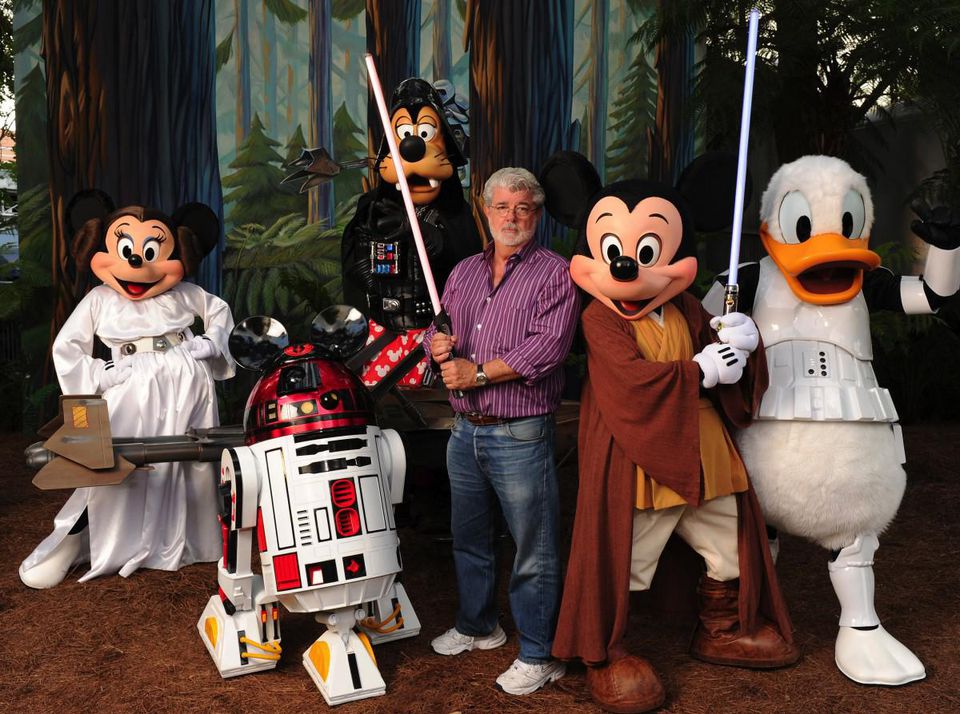
It’s believed that Lucas has kept most of the Disney shares, which has since tripled in value (making his $DIS stake ~$6B).
Add it all up and Lucas’ net worth is $10B, making that 1973 Star Wars salary deferment of $350k ($500k minus $150k) the greatest Hollywood deal ever.
Add it all up and Lucas’ net worth is $10B, making that 1973 Star Wars salary deferment of $350k ($500k minus $150k) the greatest Hollywood deal ever.
If you enjoyed that, I write threads breaking down tech and business 1-2x a week.
Def follow @TrungTPhan to catch them in your feed.
Here's a one you might like:
Def follow @TrungTPhan to catch them in your feed.
Here's a one you might like:
Also, check out my Saturday Substack for interesting nuggets on business, tech, media and memes: trungphan.substack.com

Sources
IP Leaders: blog.ipleaders.in
Inc: inc.com
Celeb Net Worth: celebritynetworth.com
BI:businessinsider.com
Deadline: deadline.com
IP Leaders: blog.ipleaders.in
Inc: inc.com
Celeb Net Worth: celebritynetworth.com
BI:businessinsider.com
Deadline: deadline.com
deadline.com/2015/12/star-w…

businessinsider.com/how-star-wars-…
The ingenious path George Lucas took to making billions off of 'Star Wars'
He made some very smart moves along the way.

inc.com/jeff-haden/43-…
43 Years Ago, 'Star Wars' Creator George Lucas Made a $4 Billion Decision--Even Though It Had Nothing to Do With Money
What did the 'Star Wars' creator really want? Creative control.
blog.ipleaders.in/george-lucas-m…
celebritynetworth.com/articles/billi…
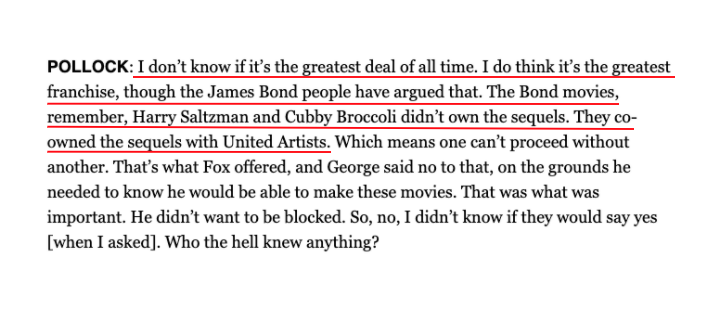
The other Hollywood deal that may be in the running for "greatest ever" is the Brocolli family and the Bond series.
Tom Pollock was Lucas' lawyer for the Star Wars deal. Here's his take:
Tom Pollock was Lucas' lawyer for the Star Wars deal. Here's his take:
The original Stars Wars treatment was too much like a space opera. The version we know now was heavily influenced by Joseph Campbell's "Hero's Journey".
Here's a scene-by-scene breakdown of the film following Campbell's template:
Here's a scene-by-scene breakdown of the film following Campbell's template:
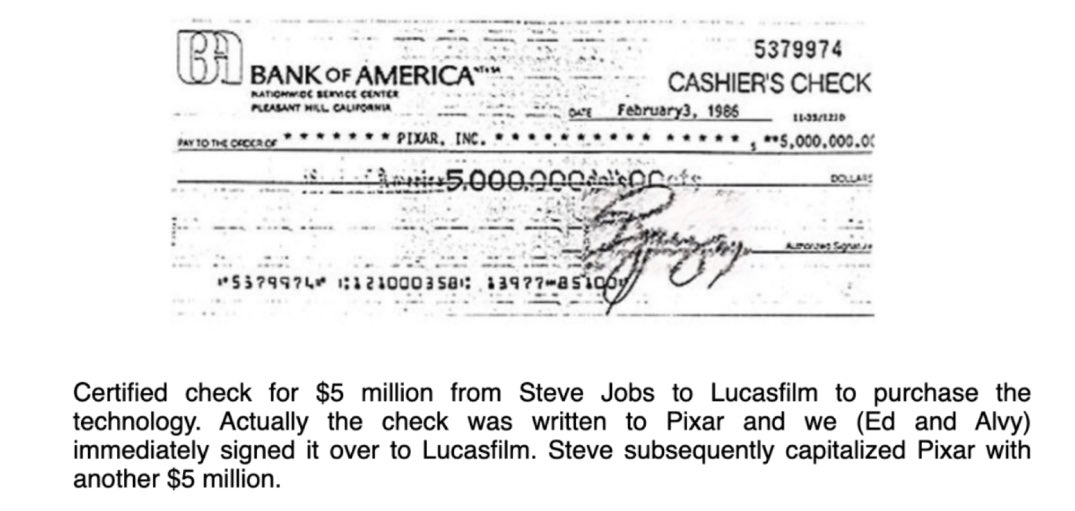
One more note: Steve Jobs bought Pixar from George Lucas back in 1986 for $5m before selling to Disney for $7.4B in 2006.
Here is the original check from Pixar’s “founding documents” archive:
Here is the original check from Pixar’s “founding documents” archive:
Loading suggestions...