
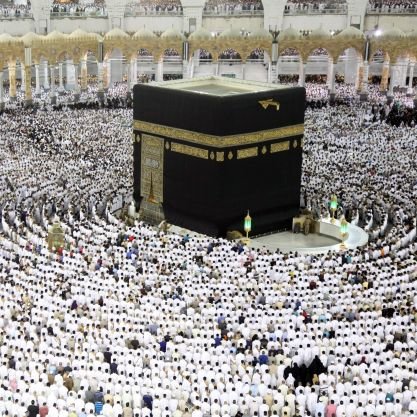
A mega (🧵) on Allāh being above Part 1 (1st - 3rd century)
This will be a chronological order of ʾaʾimma or ṣaḥābah who have argued and re-iterated via the nuṣūṣ that Allāh is indeed above His throne
This thread will be spread in seperate parts given the long list of names
This will be a chronological order of ʾaʾimma or ṣaḥābah who have argued and re-iterated via the nuṣūṣ that Allāh is indeed above His throne
This thread will be spread in seperate parts given the long list of names
(said to be 30AH) Humaid bin Thawr (companion and famous poet) رضي الله عنه

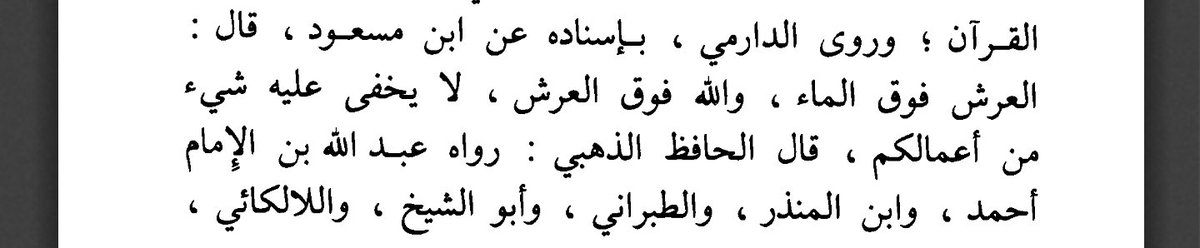
(32 AH) ʿAbd Allāh ibn Masʽūd رضي الله عنه
The Throne is above the water, and Allāh is above that, (and) nothing, in regards to deeds, is hidden from Him
The Throne is above the water, and Allāh is above that, (and) nothing, in regards to deeds, is hidden from Him
(58AH) ʿĀʾishah رضي الله عنها:
"But Allāh knew from above His throne that i didn't like to 'end' him"
"But Allāh knew from above His throne that i didn't like to 'end' him"

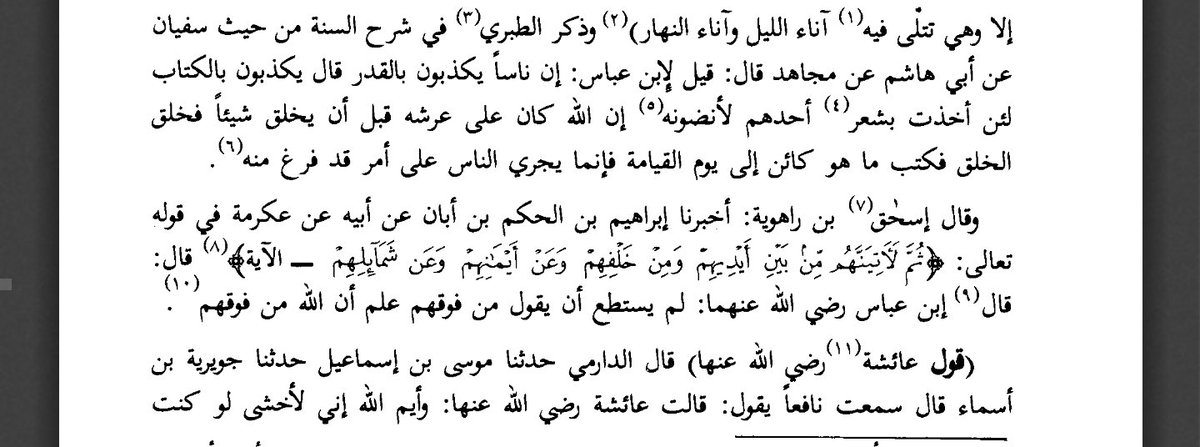
(68 AH) ʿAbd Allāh Ibn-ʿAbbās رضي الله عنه:
"For truly Allāh , the Mighty and Majestic, was above His Throne before He created anything, He (then) proceeded to create"
"For truly Allāh , the Mighty and Majestic, was above His Throne before He created anything, He (then) proceeded to create"
2st century (105 AH) Ad-Dahhak in regards to His saying "There is no secret counsel of three except that He is the fourth of them" said:
"He is above the throne, and His knowledge is with them" (i.e. nothing escapes his knowledge)
"He is above the throne, and His knowledge is with them" (i.e. nothing escapes his knowledge)

(143 AH) Sulayman at-Taymī:
"If i were to be asked: 'Where's Allāh?', then i'd say above the heavens"
"If i were to be asked: 'Where's Allāh?', then i'd say above the heavens"

(150 AH) Muqatil bin Hayyan:
"He is the first, before all and He is the Last, after all, and 'outwards', above all, and 'inwards', closest to all, and his nearness is via His knowledge and He is above the Throne"
"He is the first, before all and He is the Last, after all, and 'outwards', above all, and 'inwards', closest to all, and his nearness is via His knowledge and He is above the Throne"

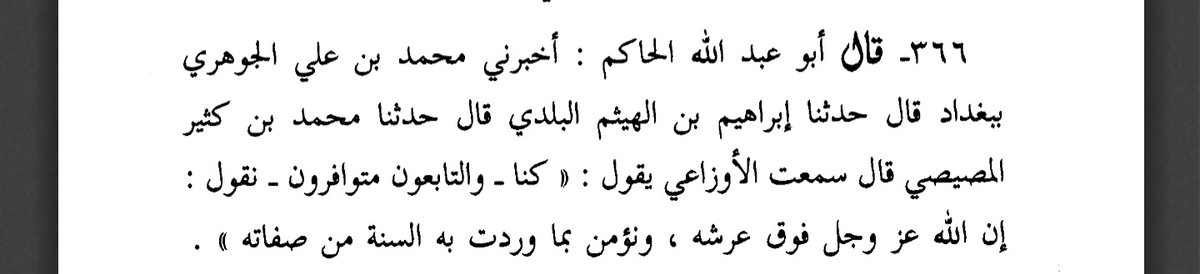
(157 AH) Imām Al-Awzāʻī:
We used to say, when the tābi‘īn were ample, that Allāh is above his throne and we believe in that which is present in the Sunnah in regards to His attributes
We used to say, when the tābi‘īn were ample, that Allāh is above his throne and we believe in that which is present in the Sunnah in regards to His attributes
(179 AH) Imām Mālik:
"Allāh is above the heaven, and His knowledge is in every place, nothing escapes It"
This narration can be found in many books, including the creedal work of the mālikī scholars like
For example, Abū ʿUmar al-Ṭalamankī :"الله في السماء وعلمه في كل مكان"
"Allāh is above the heaven, and His knowledge is in every place, nothing escapes It"
This narration can be found in many books, including the creedal work of the mālikī scholars like
For example, Abū ʿUmar al-Ṭalamankī :"الله في السماء وعلمه في كل مكان"

(179 AH) Hammad Bin Zyad:
They (jahmiyyah) are spreading around (the idea) of no 'Deity' being above the heaven"
They (jahmiyyah) are spreading around (the idea) of no 'Deity' being above the heaven"

(181 AH) ʿAbd Allāh ibn al-Mubārak:
"We do not say like the Jahmiyyah that He is here on the earth"
He was then asked:
"How are we to know Our lord?"
To which he replied: "He is above the heavens, on his Throne"
"We do not say like the Jahmiyyah that He is here on the earth"
He was then asked:
"How are we to know Our lord?"
To which he replied: "He is above the heavens, on his Throne"

(198 AH) Abdur-Rahman bin Mahdi:
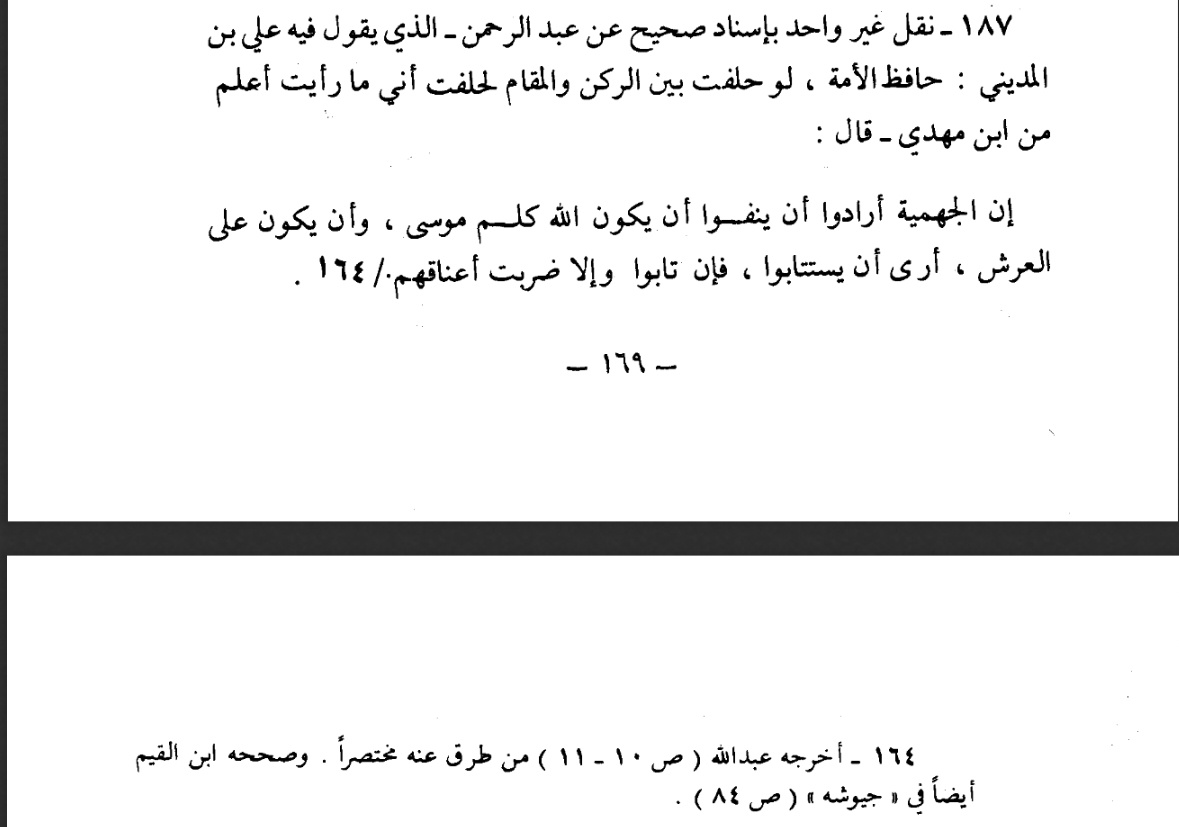
"Jahm's ilk wish to say: 'Allāh did not speak to Musa' and, 'There is nothing above the heaven' and that 'Allāh is not above His throne'
(Therefore) I believe their repentance is needed, so they either repent or are to be struck"
"Jahm's ilk wish to say: 'Allāh did not speak to Musa' and, 'There is nothing above the heaven' and that 'Allāh is not above His throne'
(Therefore) I believe their repentance is needed, so they either repent or are to be struck"
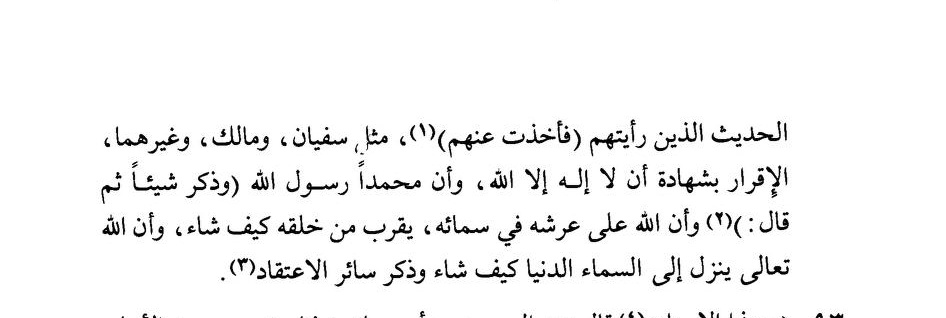
3rd century Imām Shāfiʿī (204 AH) mentions the belief of a few among the salaf, including 'Sufyān' and 'Mālik', to then proceed and say that their belief is that Allāh is above his throne, seperate but close to His creation, and He descends however He wills
(208 AH) Said bin amir Ad-Dabi: The Jahmiyyah are worse in speech than the Jews and Christians, for the jews, christians and people of religion (atleast) are in agreement that Allāh is over the Throne, and (yet) they (Jahmiyyah) said: "There is nothing above the Throne"

(212 AH) Muhammad bin yusuf Al- Firyabi:
"Whosoever says that Allāh is not above His Throne and (or) that Allāh didn't speak to Musa (عَلَيْهِ ٱلسَّلَامُ), he is a disbeliever"
"Whosoever says that Allāh is not above His Throne and (or) that Allāh didn't speak to Musa (عَلَيْهِ ٱلسَّلَامُ), he is a disbeliever"

(228 AH) Muhammad bin Musab Al-Abid said:
"Whoever claims that You (Allah) do not speak and is not seen in the hereafter, then he is a disbeliever in ur Face (and) doesn't know U. I bare witness that U are above the Throne, above the Seven Heavens, not like the heretics say"
"Whoever claims that You (Allah) do not speak and is not seen in the hereafter, then he is a disbeliever in ur Face (and) doesn't know U. I bare witness that U are above the Throne, above the Seven Heavens, not like the heretics say"


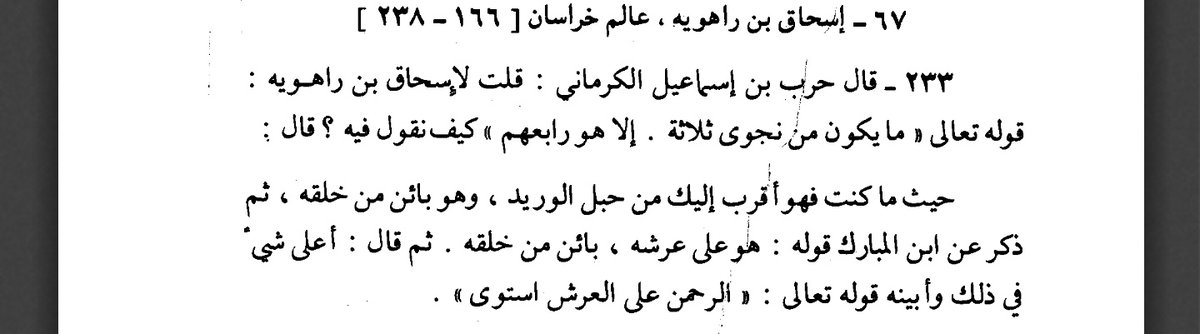
(237 AH) Isḥāq bin Rāhwayh was asked about Allāh being present as the '4th' witness among 3, and after citing ʿAbd Allāh ibn al-Mubārak he then concluded with:
"The most clear thing in that is the Almighty's saying: 'The Most Compassionate rose over the Throne'"
"The most clear thing in that is the Almighty's saying: 'The Most Compassionate rose over the Throne'"
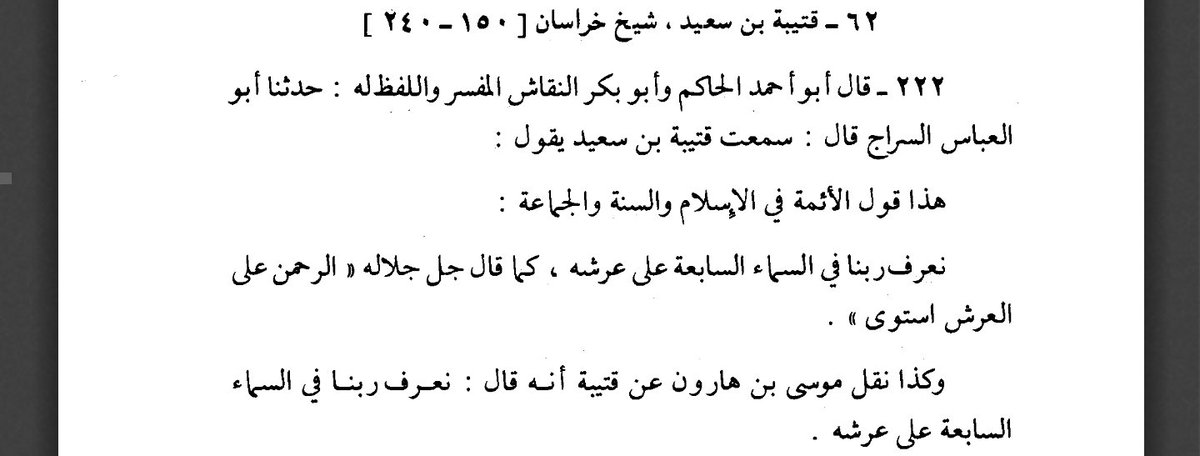
(240 AH) Qutaybah bin Sa'id:
This is the saying of the ʾaʾimma of ʾislām, sunnah and jamāʻah: And we know Allāh to be above the seventh Heaven, above His throne (just) as He said: 'The Most Compassionate rose over the Throne.'(20:5)
(Similarly Musa bin Harun narrated the same)
This is the saying of the ʾaʾimma of ʾislām, sunnah and jamāʻah: And we know Allāh to be above the seventh Heaven, above His throne (just) as He said: 'The Most Compassionate rose over the Throne.'(20:5)
(Similarly Musa bin Harun narrated the same)
(241 AH) Aḥmad ibn Ḥanbal was asked about ibn al-Mubārak's statement: 'We know our Lord to above the seventh heaven, with a distinction (hadd)'
Imām Aḥmad thus answered: 'That's how it is' i.e. that's how we ought to understand it
Imām Aḥmad thus answered: 'That's how it is' i.e. that's how we ought to understand it

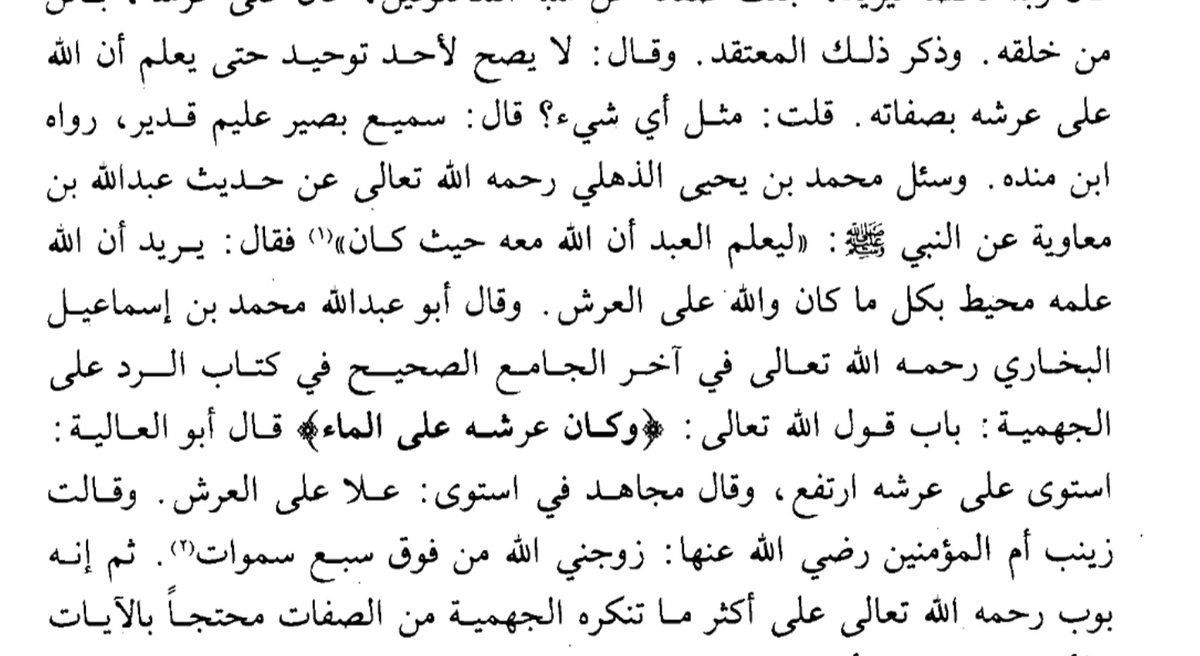
(258 AH) ad-Dhuhali was asked about the Ḥādīth of ʿAbd Allāh bin Muʿāwiya who reported the Prophet ﷺ saying: "Let the Slave know that Allāh is with him wherever he is"
He said: "He means that Allāh's ʿIlm knowledge encompasses everything there is, and Allāh is over the Throne"
He said: "He means that Allāh's ʿIlm knowledge encompasses everything there is, and Allāh is over the Throne"
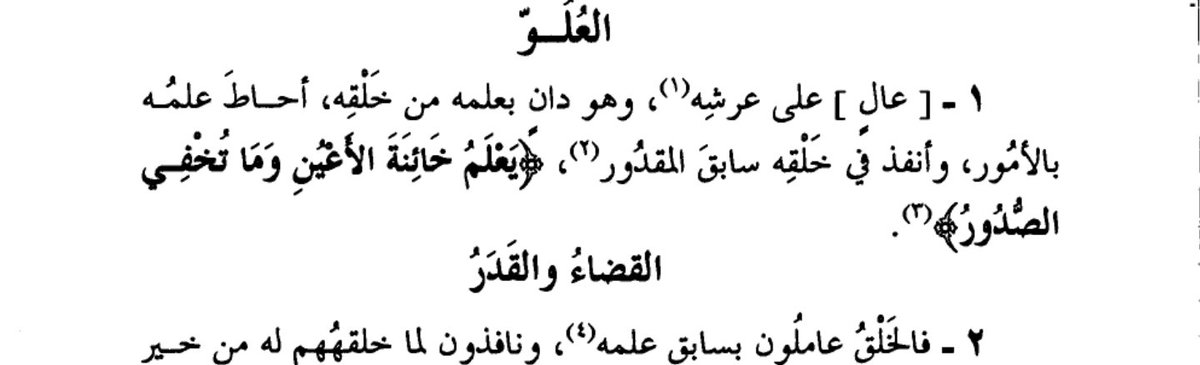
(264 AH) Al - Muzani (Shāfiʿī):
"He is High above His Throne, and He is close by His creation via his His Knowledge, (and) his Knowledge covers all affairs"
"He is High above His Throne, and He is close by His creation via his His Knowledge, (and) his Knowledge covers all affairs"
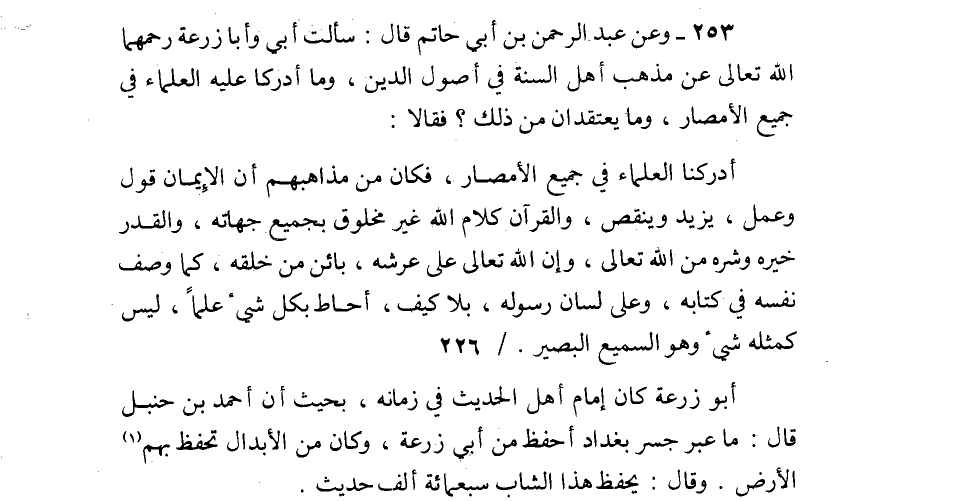
(264 AH) Abu zurah ar-Razi & Abu hatim ar-Razi (277 AH):
Ibn Abi Hatim Ar-Razi (son of the latter) said:
"i asked my father and Abu Zurah concerning the fundamentals of ahl as-sunnah wa l-jamāʻah and what maḏhab the scholars of the lands were upon
Ibn Abi Hatim Ar-Razi (son of the latter) said:
"i asked my father and Abu Zurah concerning the fundamentals of ahl as-sunnah wa l-jamāʻah and what maḏhab the scholars of the lands were upon
They said: We have reached the scholars from the land of Hijaz, iraq, sham and yemen, and their maḏhab was that Allāh is above His throne as He described and as the Prophet ﷺ uttered without (requesting us to know) the 'how', and He covers everything with His knowledge
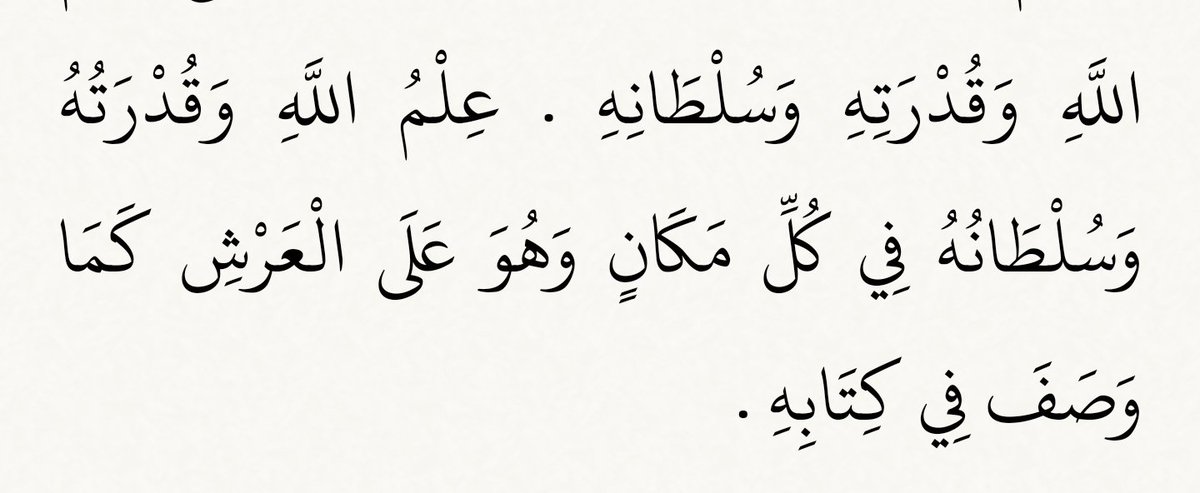
(279 AH) Abu Isa at-Tirmidhī : Allāh’s Knowledge, Ability, and His sovereignty is everywhere, and He is above the Throne as He described Himself"
Loading suggestions...