

Liverpool’s 2020/21 financial results covered a season when they finished third in the Premier League and reached the quarter-finals of the Champions League. Period also included 2019/20 league title win. Finances adversely impacted by the pandemic. Some thoughts follow #LFC
#LFC reduced pre-tax loss from £46m to £5m, driven by operating expenses falling £37m (6%). Revenue overall was slightly lower at £487m, but profit from player sales increased £12m to £39m. Loss after tax narrowed from £39m to £10m.
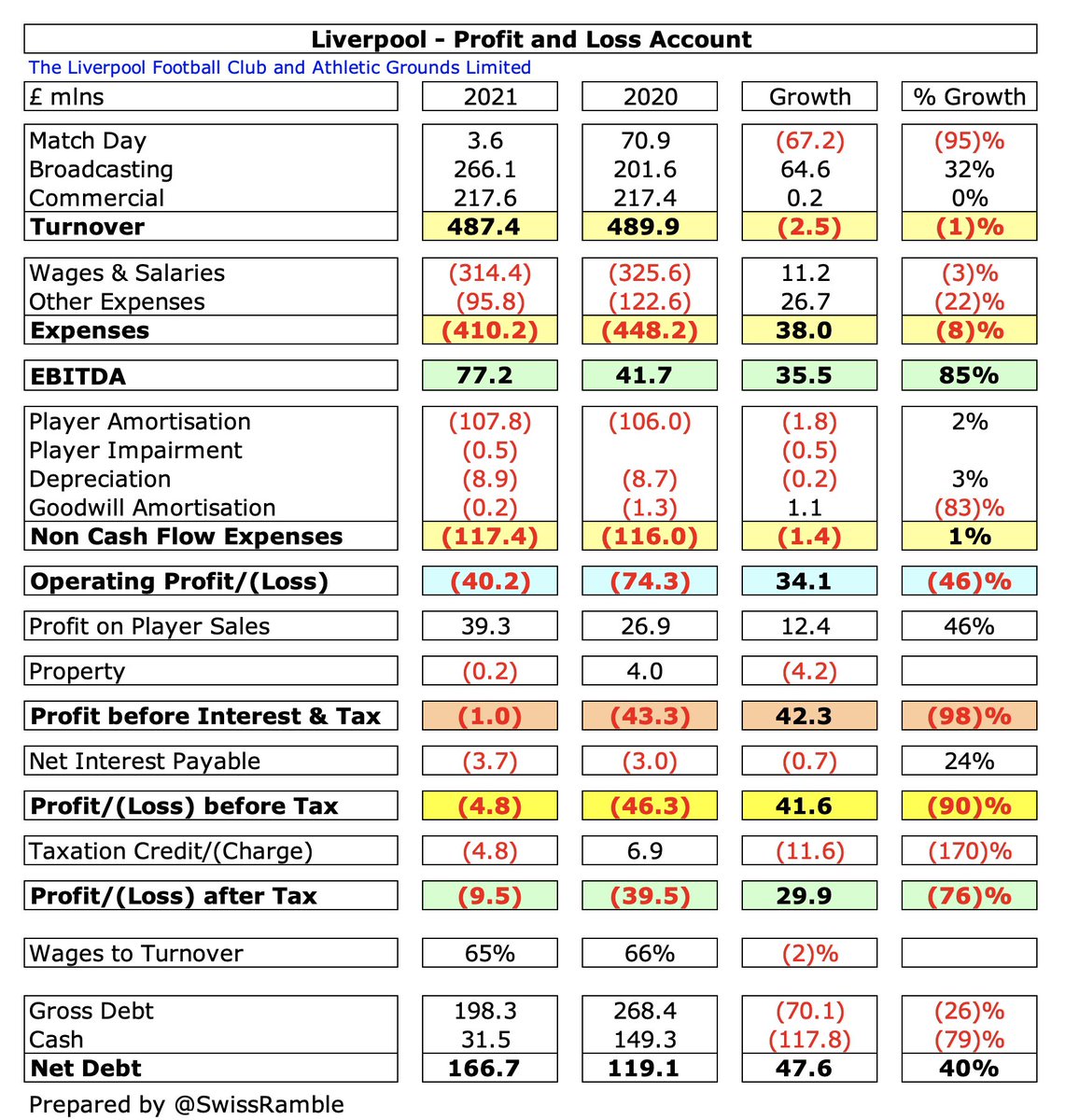
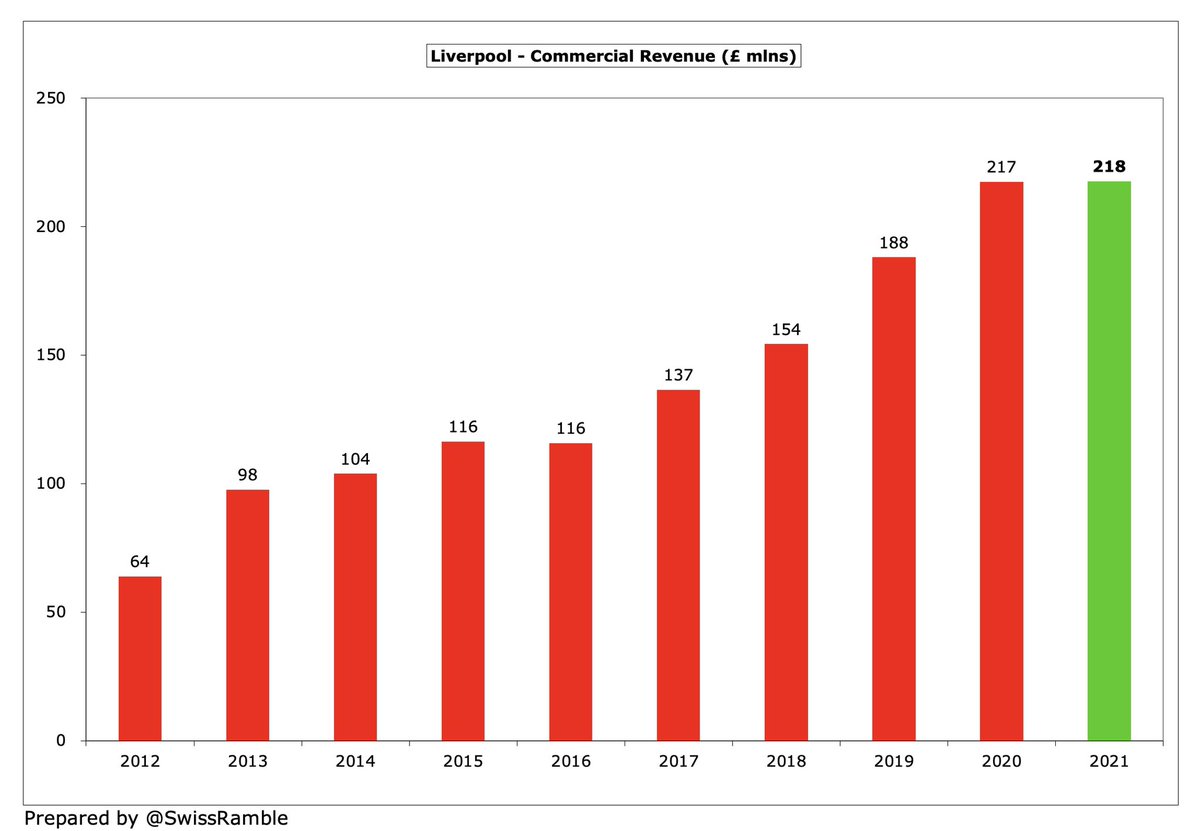
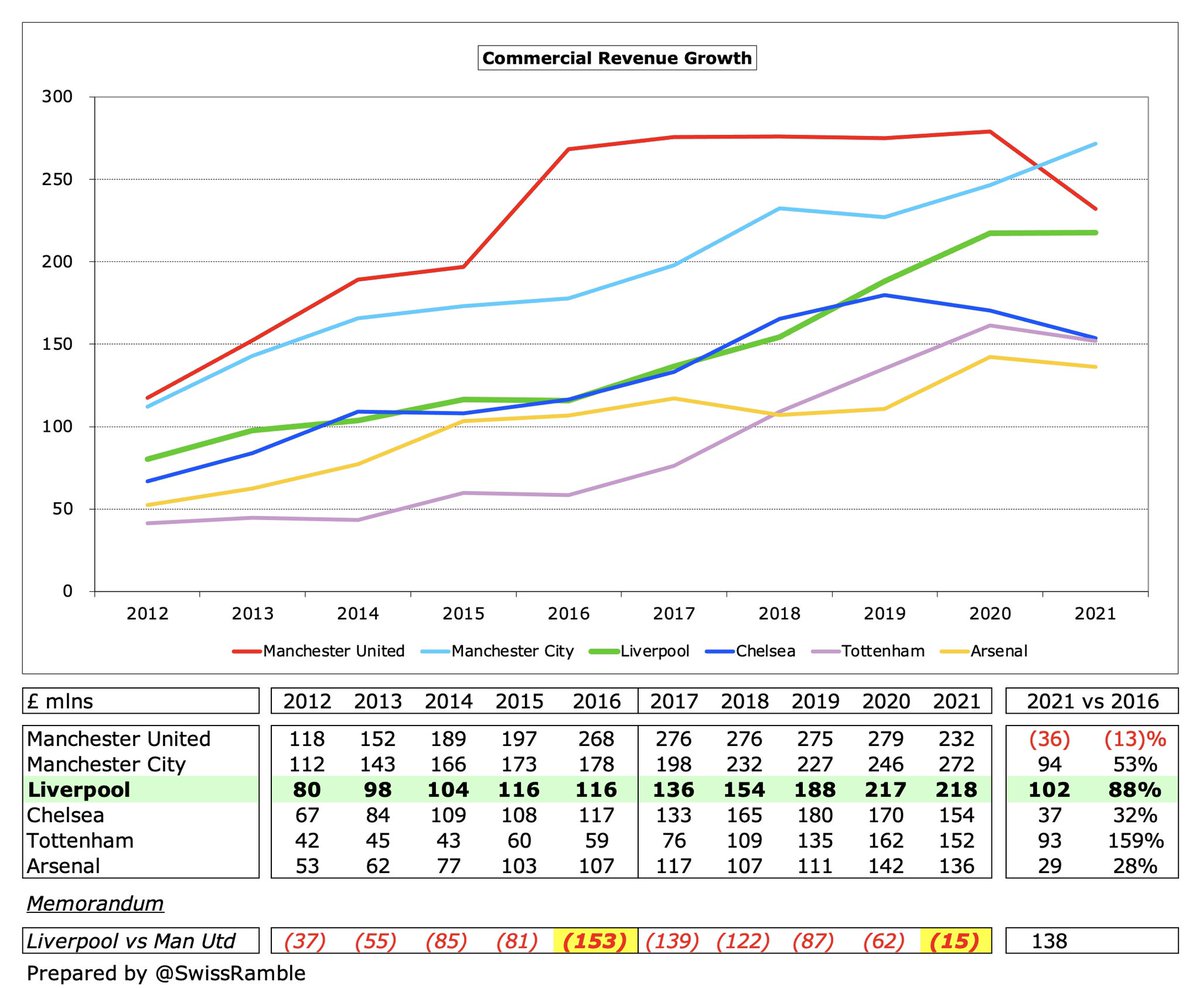
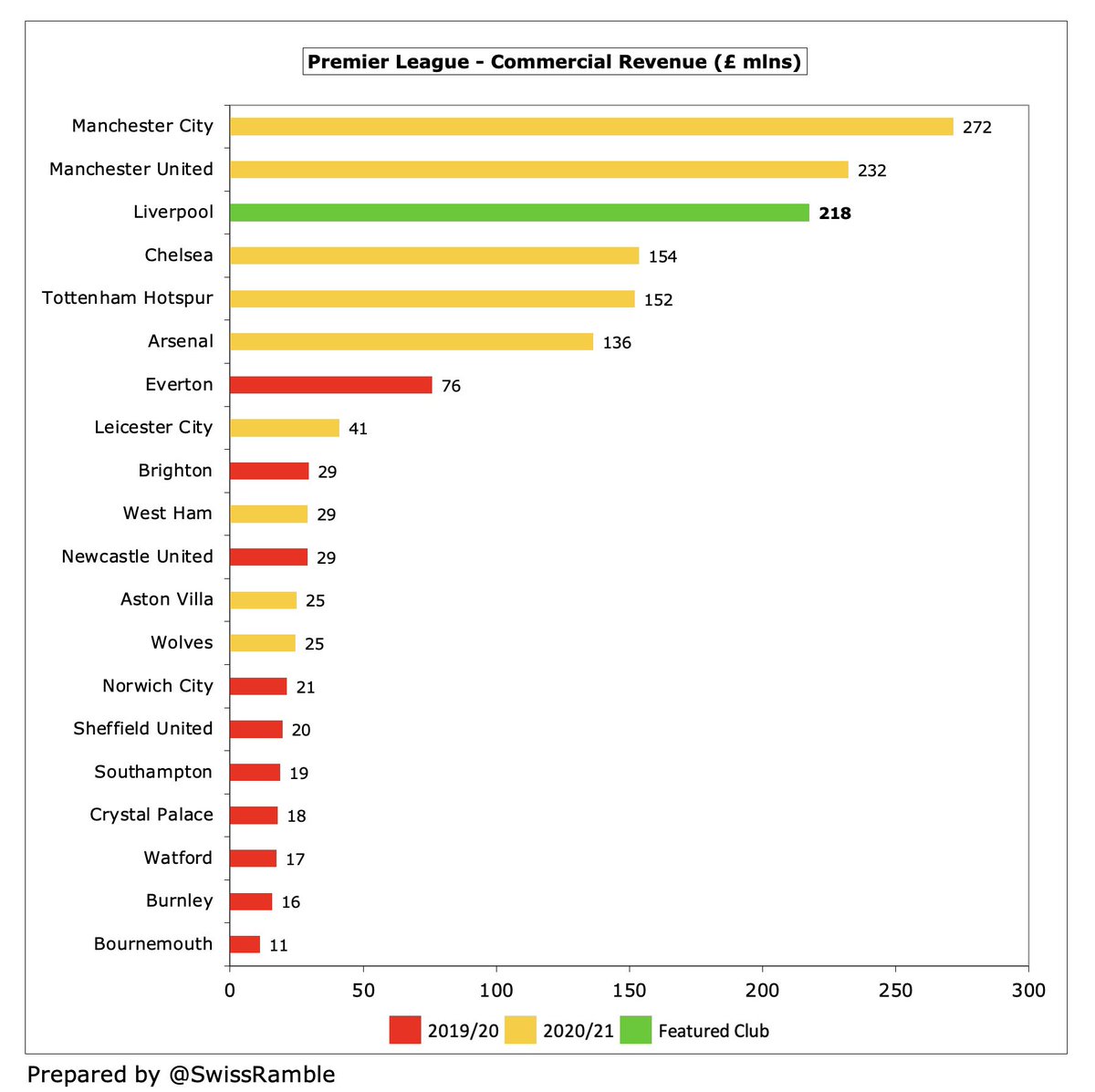
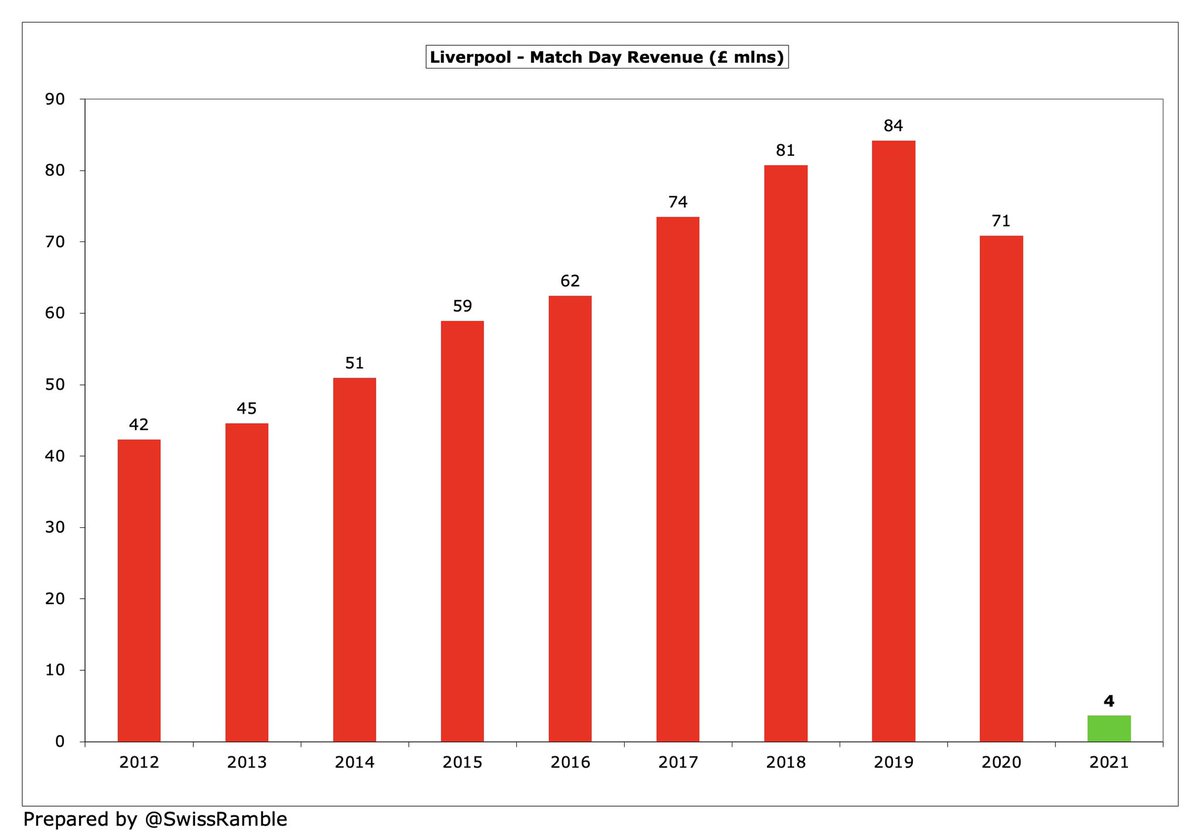
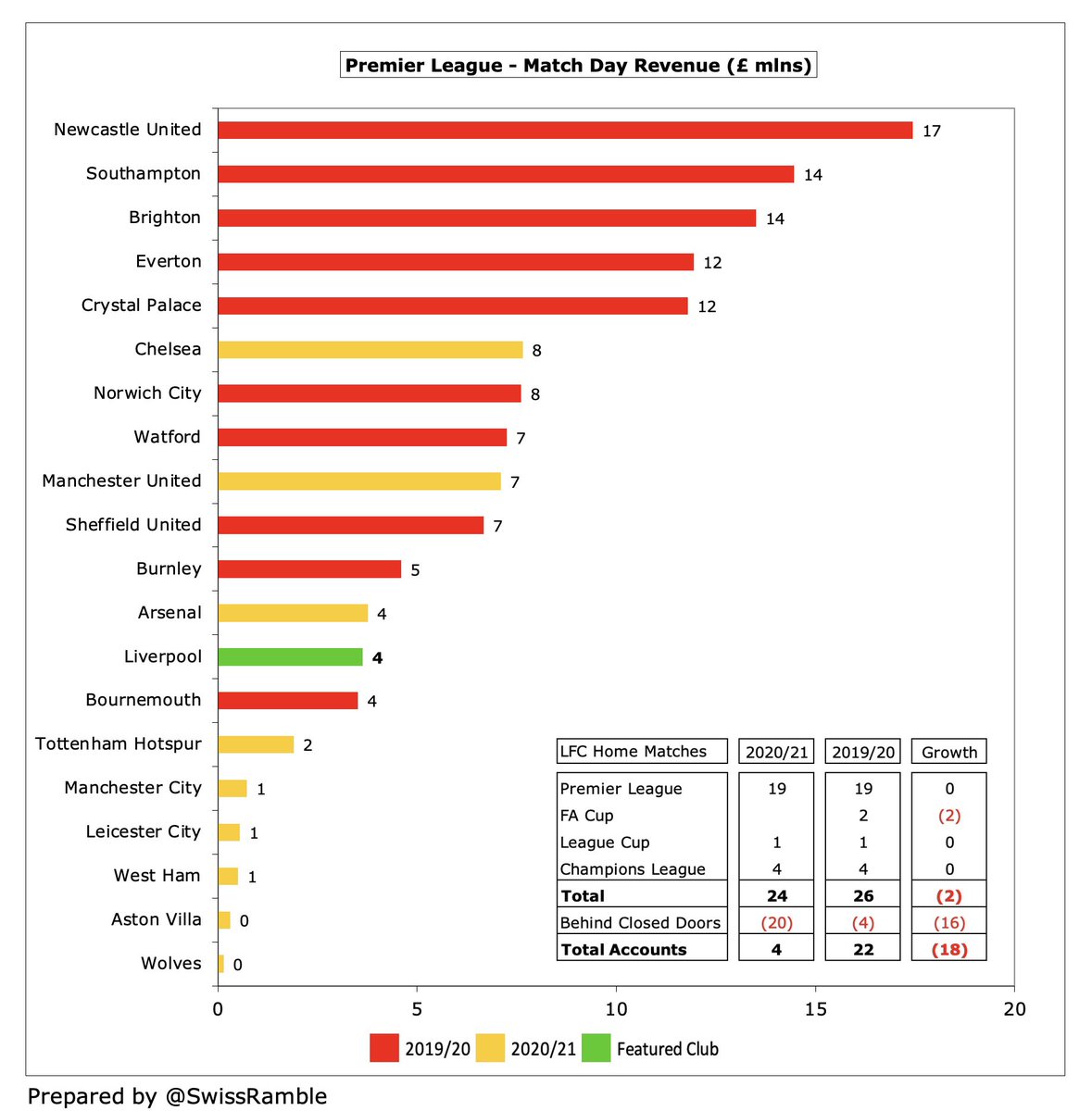
#LFC broadcasting revenue rose £64m (32%) from £202m to £266m, mainly due to deferred money from 2019/20, which offset COVID driven reduction in match day, down £67m (95%) to just £4m. Commercial was flat at £218m, as sponsorship growth offset losses caused by the pandemic.

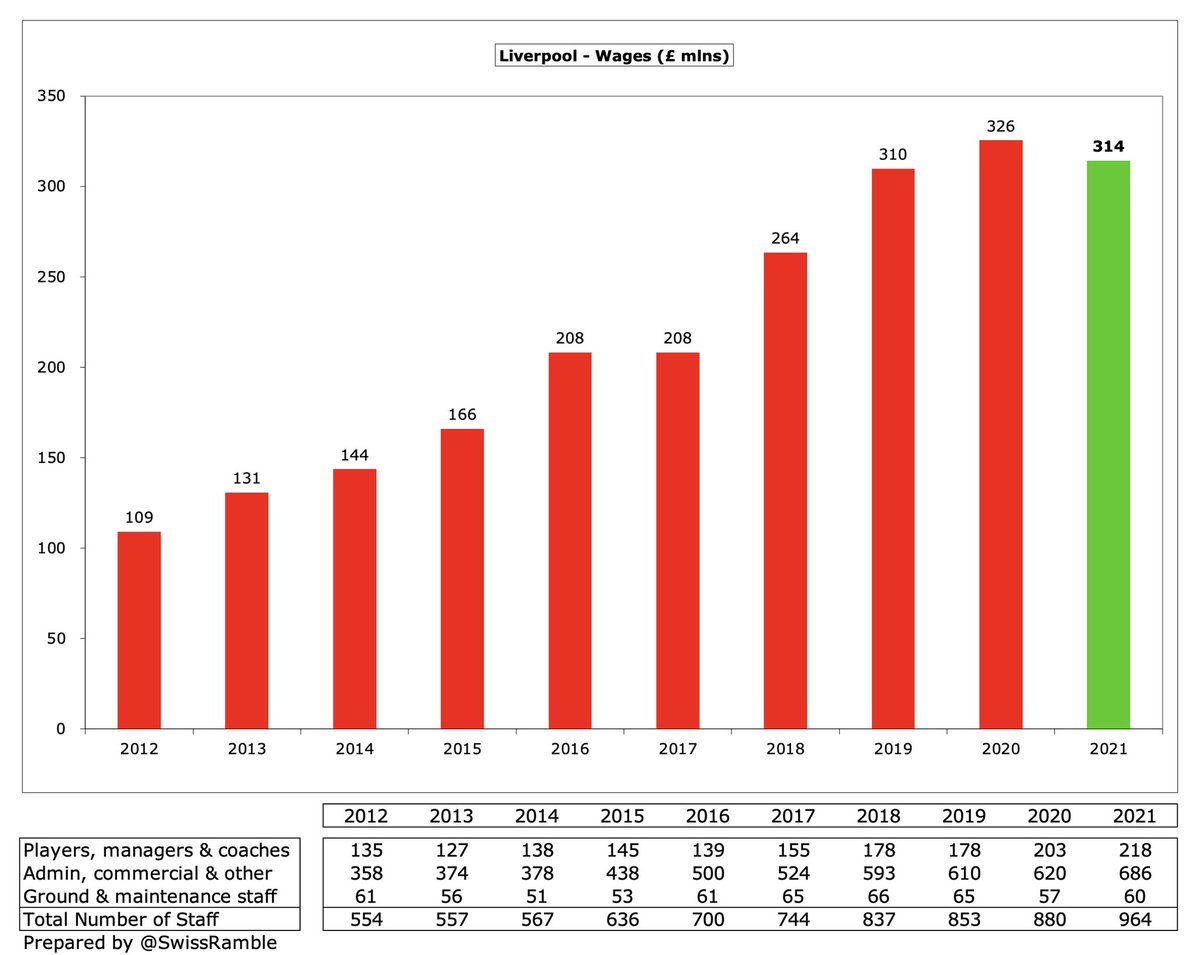
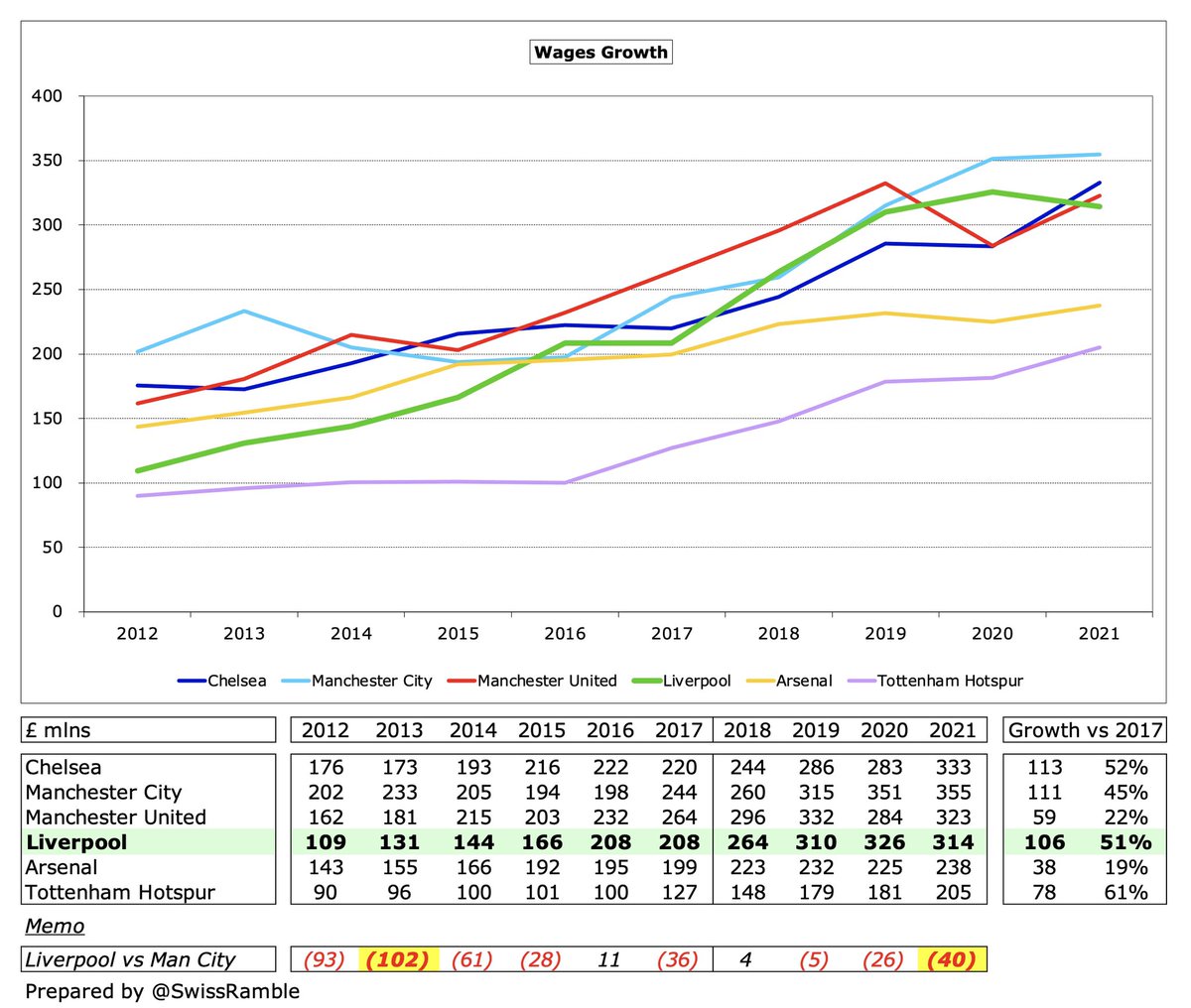
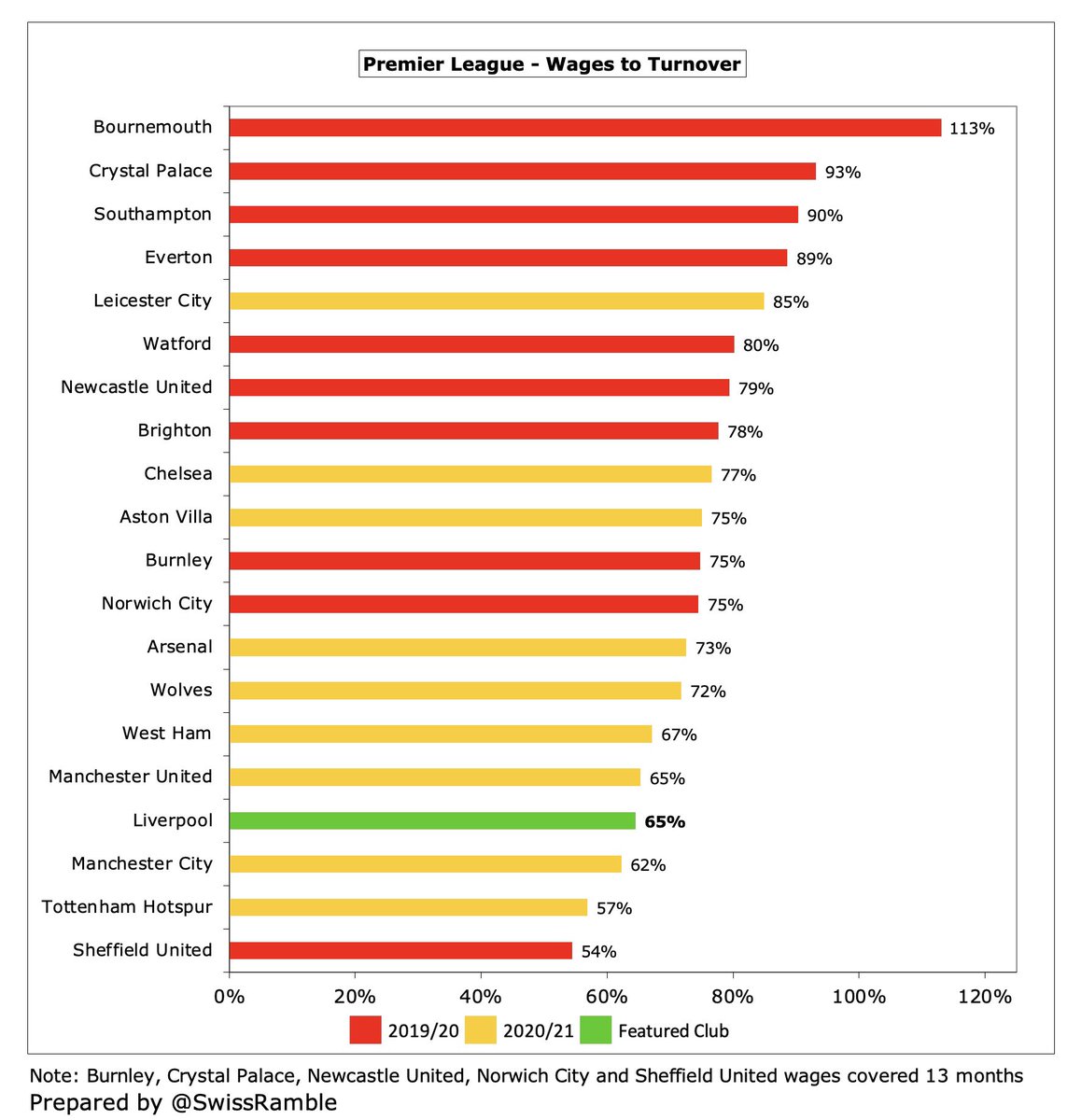
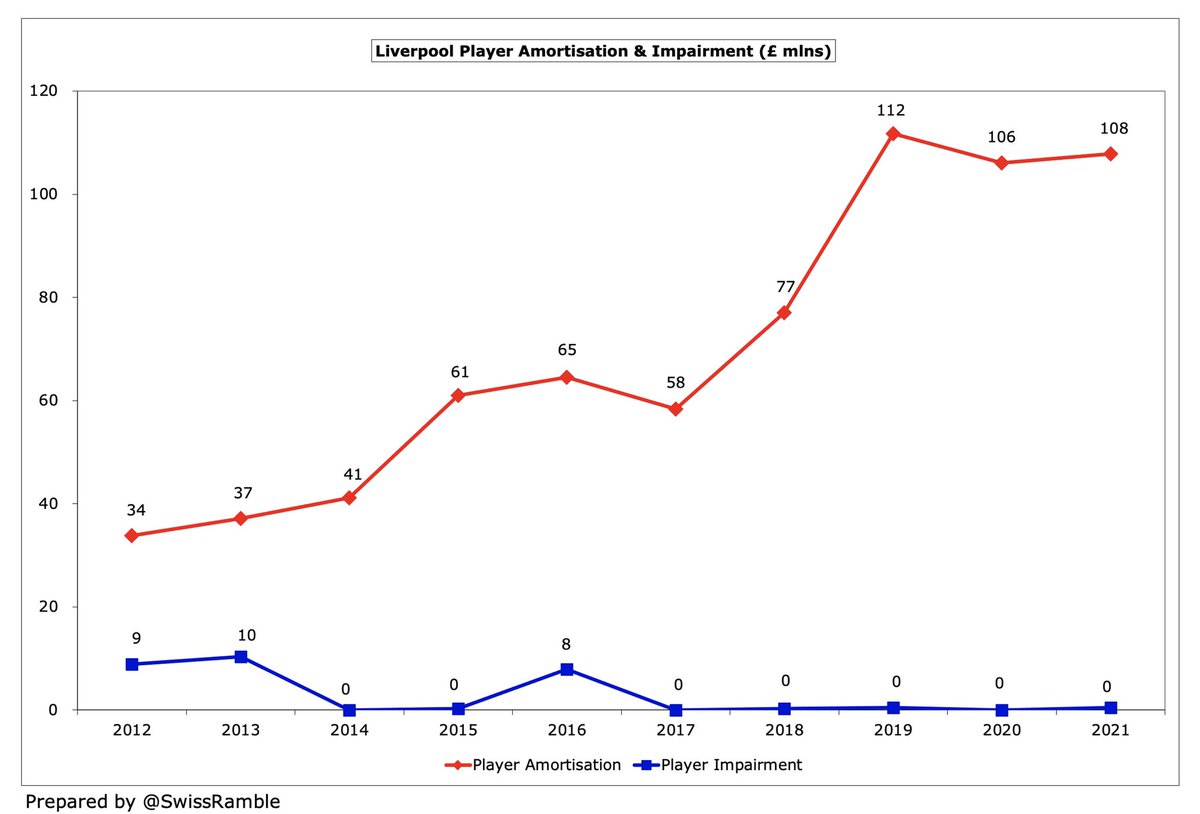
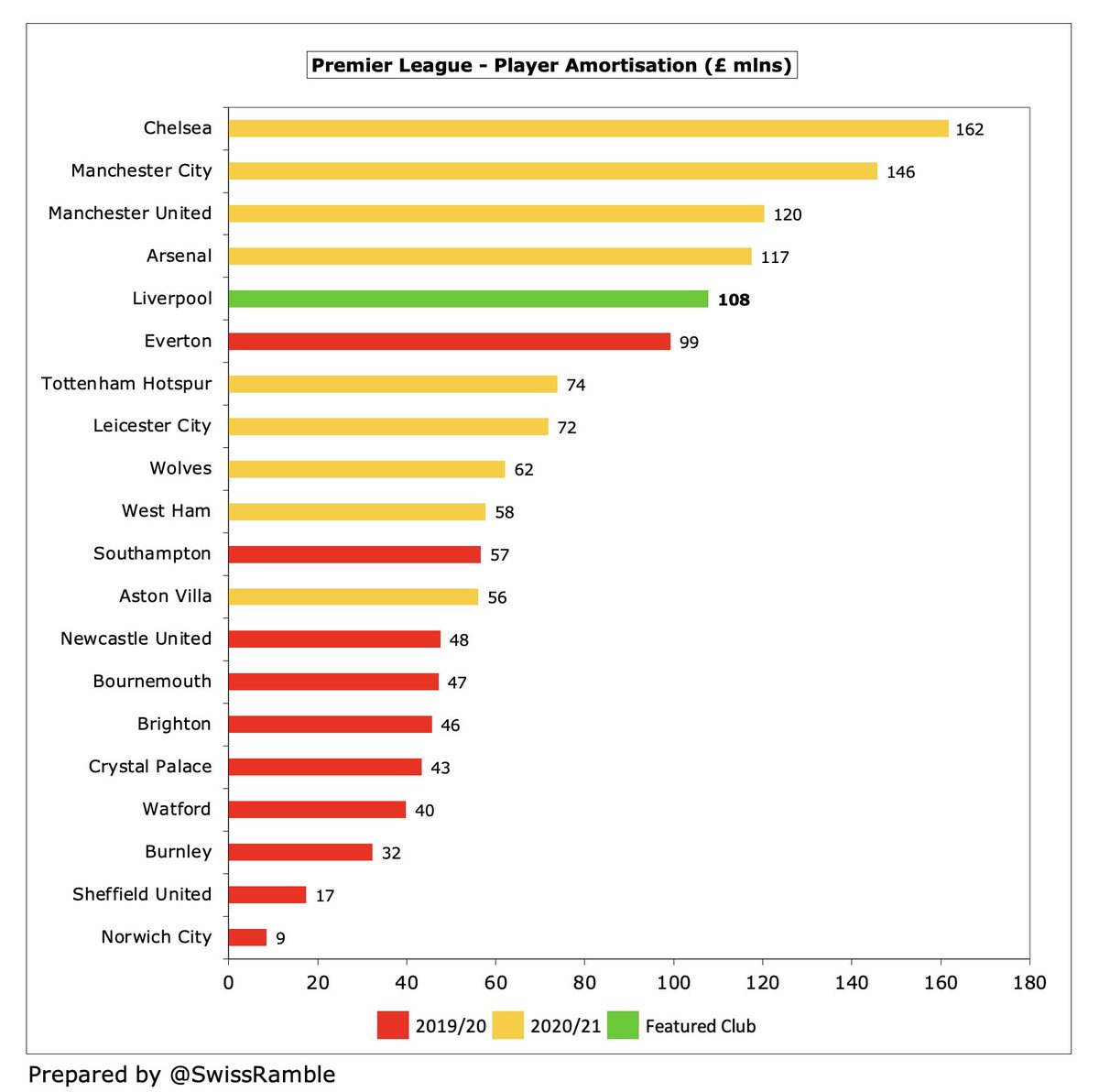
#LFC wage bill fell £11m (3%) to £314m, while other expenses were cut £27m (22%) mainly due to reduced cost of staging games. Player amortisation rose £2m (2%) to £108m, while net interest payable was up £1m to £4m. No repeat of prior year £4m property gain from sale of Melwood.

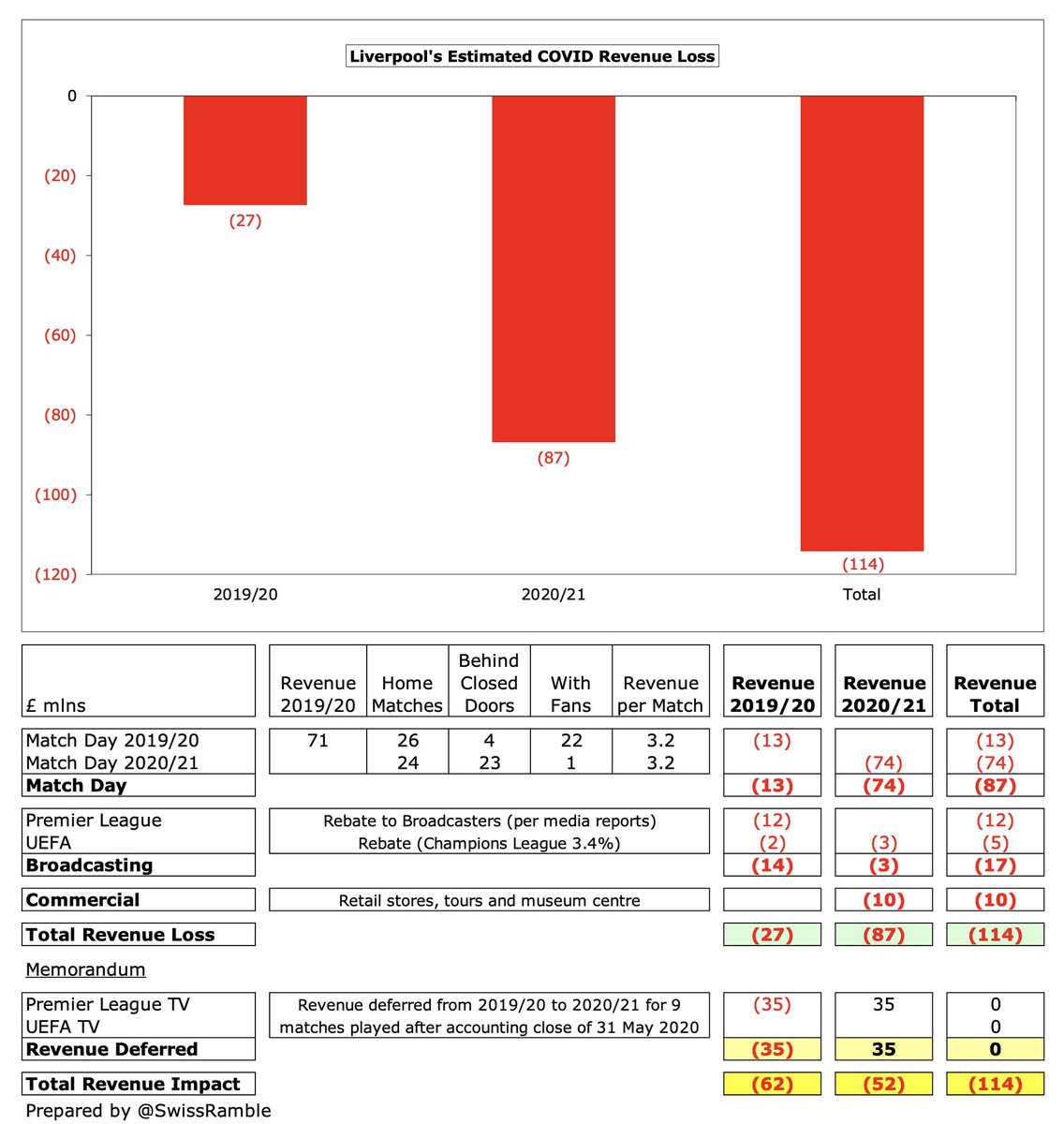
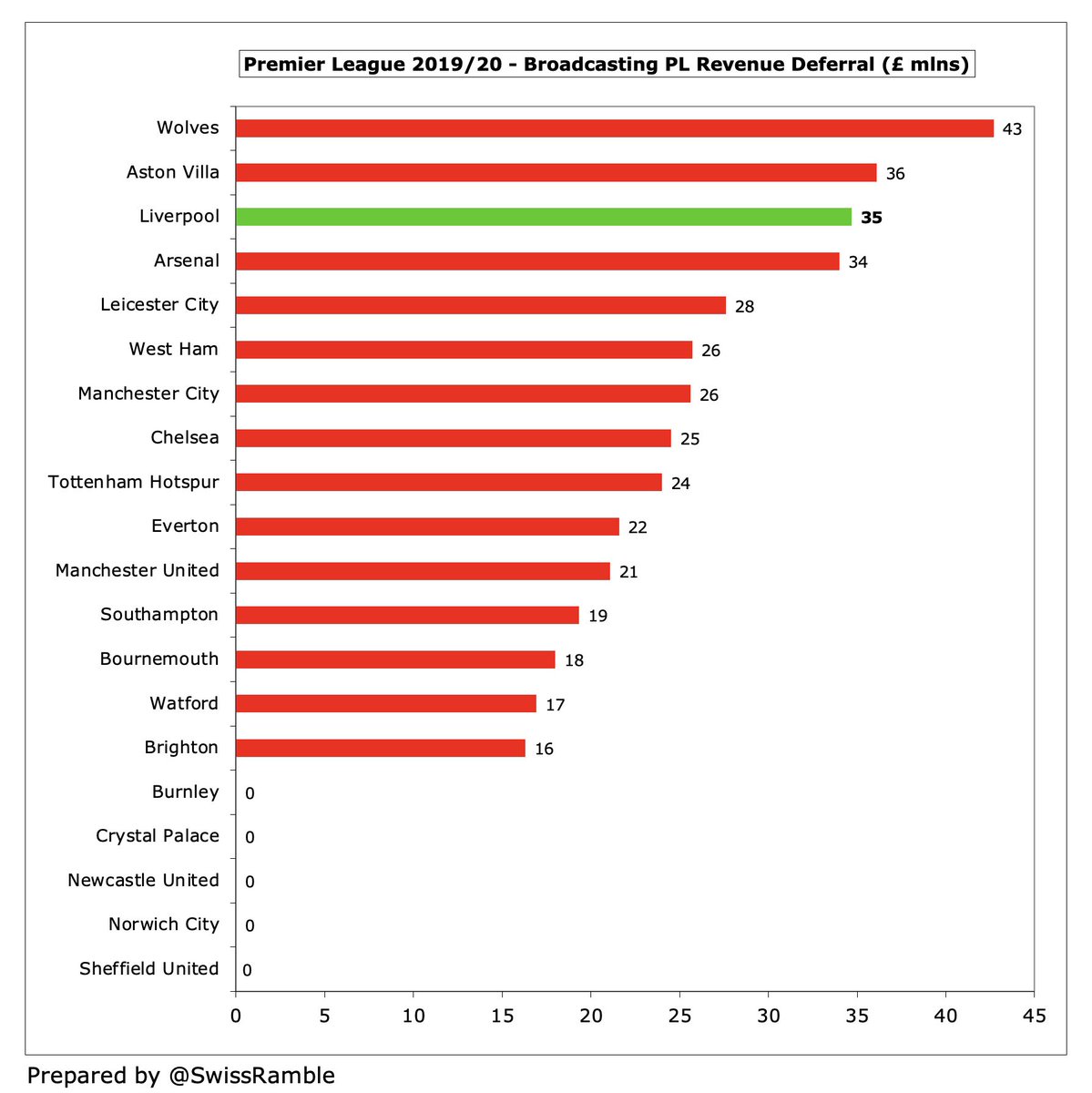
#LFC revenue was significantly impacted by COVID. I estimate the loss as £87m in 2020/21 (match day £74m, commercial £10m and broadcasting £3m), which would make £114m lost over the last 2 years. Partly offset by £35m of TV money deferred from prior year accounts to 2020/21.
While #LFC managed to restrict losses in 2020/21, other European clubs have suffered hugely, partly due to COVID, but also because they make large operating losses, e.g. Barcelona £422m, Inter £215m, Juventus £184m & Roma £163m. Porto, Bayern Munich & Real Madrid were profitable.


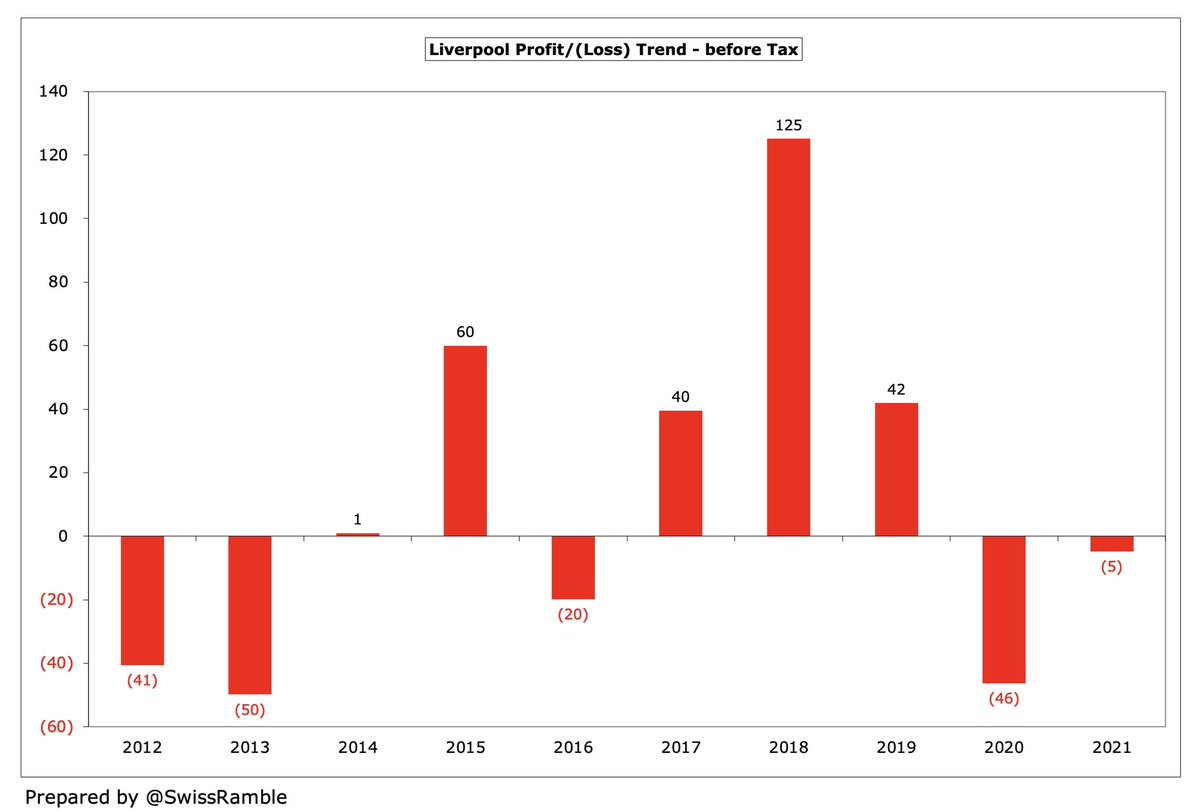
#LFC have lost a total of £51m in the last two years, having made £207m profits in the preceding three years. That included a huge £125m profit in 2018, which is the third highest ever profit in the Premier League, plus £42m in 2019 and £40m in 2017.

In recent years #LFC have also benefited from the absence of exceptional charges, which had increased their costs by £113m in the 10 years up to 2016, mainly stadium development £61m and sacked managers £47m.

#LFC have become increasingly reliant on profit from player sales, generating an impressive £370m from this activity since 2015, in stark contrast to the losses they made in each of the 3 preceding years. This season will include the sales of Wilson, Shaqiri, Grujic and Awoniyi.


#LFC revenue has now fallen £46m (9%) from the £533m peak pre-pandemic two years ago to £487m, as the COVID-driven £81m reduction in match day has been partly offset by £30m increase in commercial. I estimate a club record £540-560m for this season.


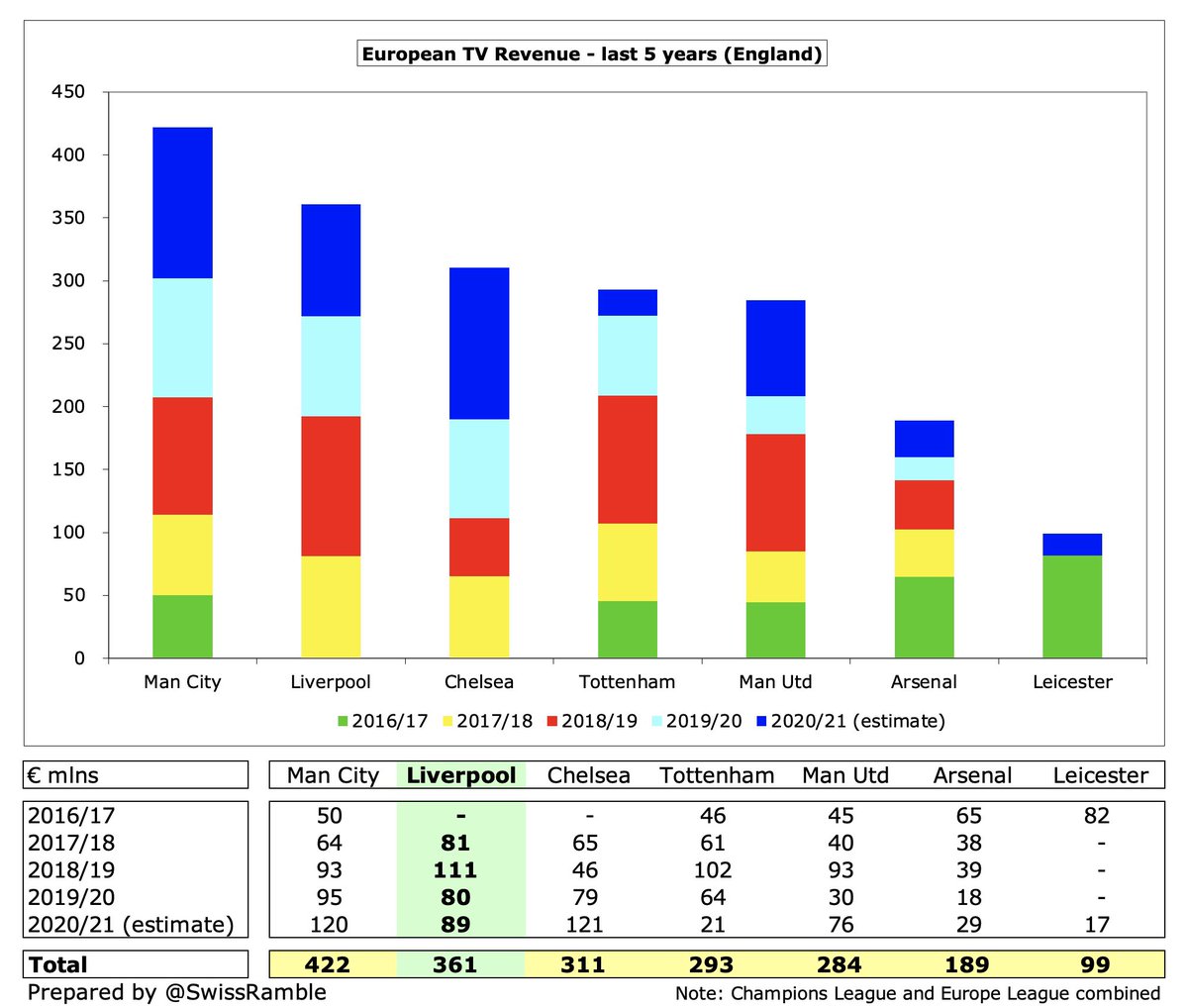
#LFC climbed two places to 5th in the 2019/20 Deloitte Money League, which ranks clubs globally by revenue. This is the first time they have been in the top five since 2002, though still a long way behind Barcelona and Real Madrid, both £627m, and Bayern Munich £556m.


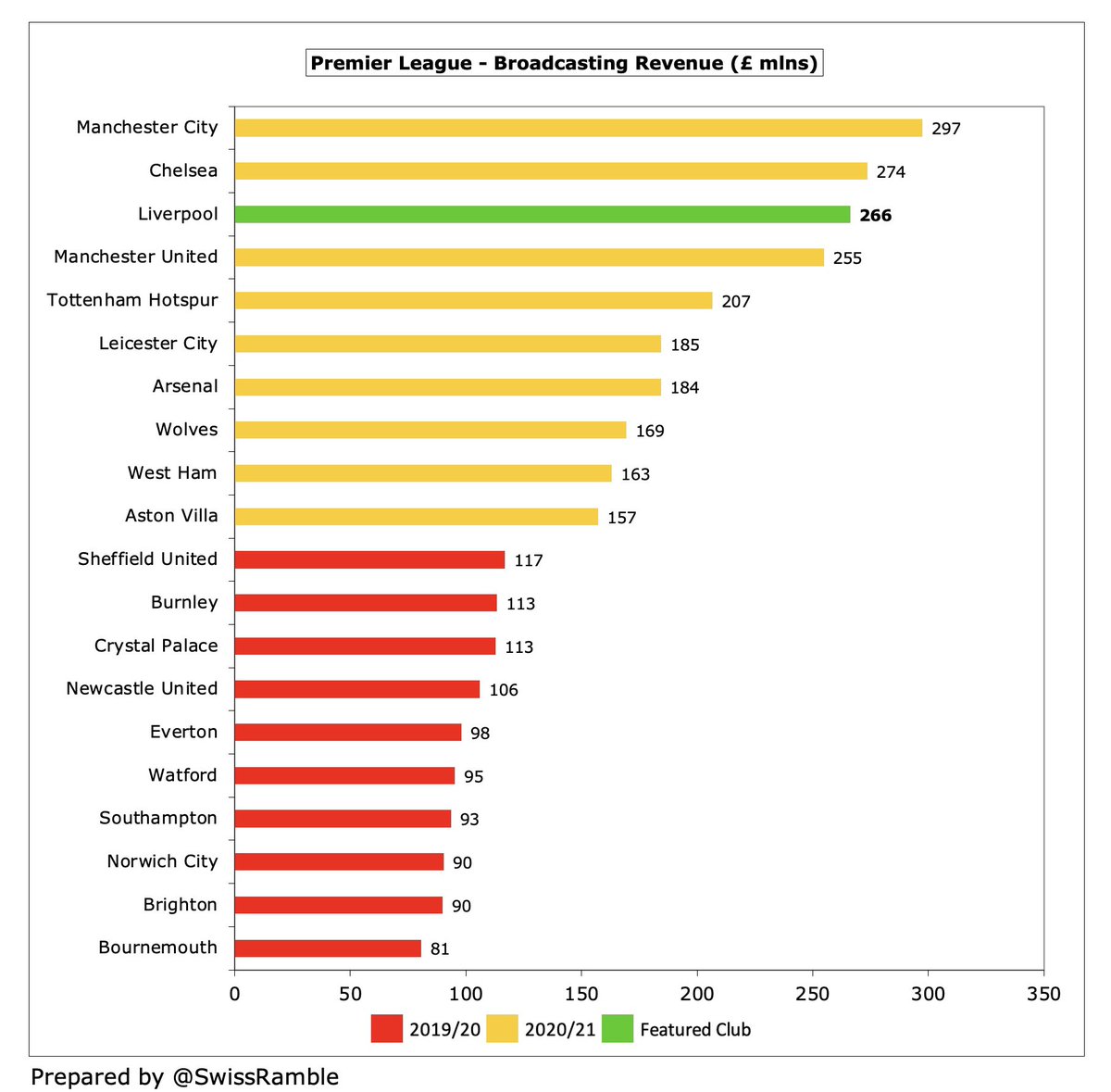
As 2019/20 season was extended, £35m revenue was booked in 2020/21 accounts. driving £70m year-on-year growth (reduction in 1st year plus increase in 2nd year). Clubs like #LFC with May year-end had largest revenue deferrals, while those with a July close had nothing deferred.




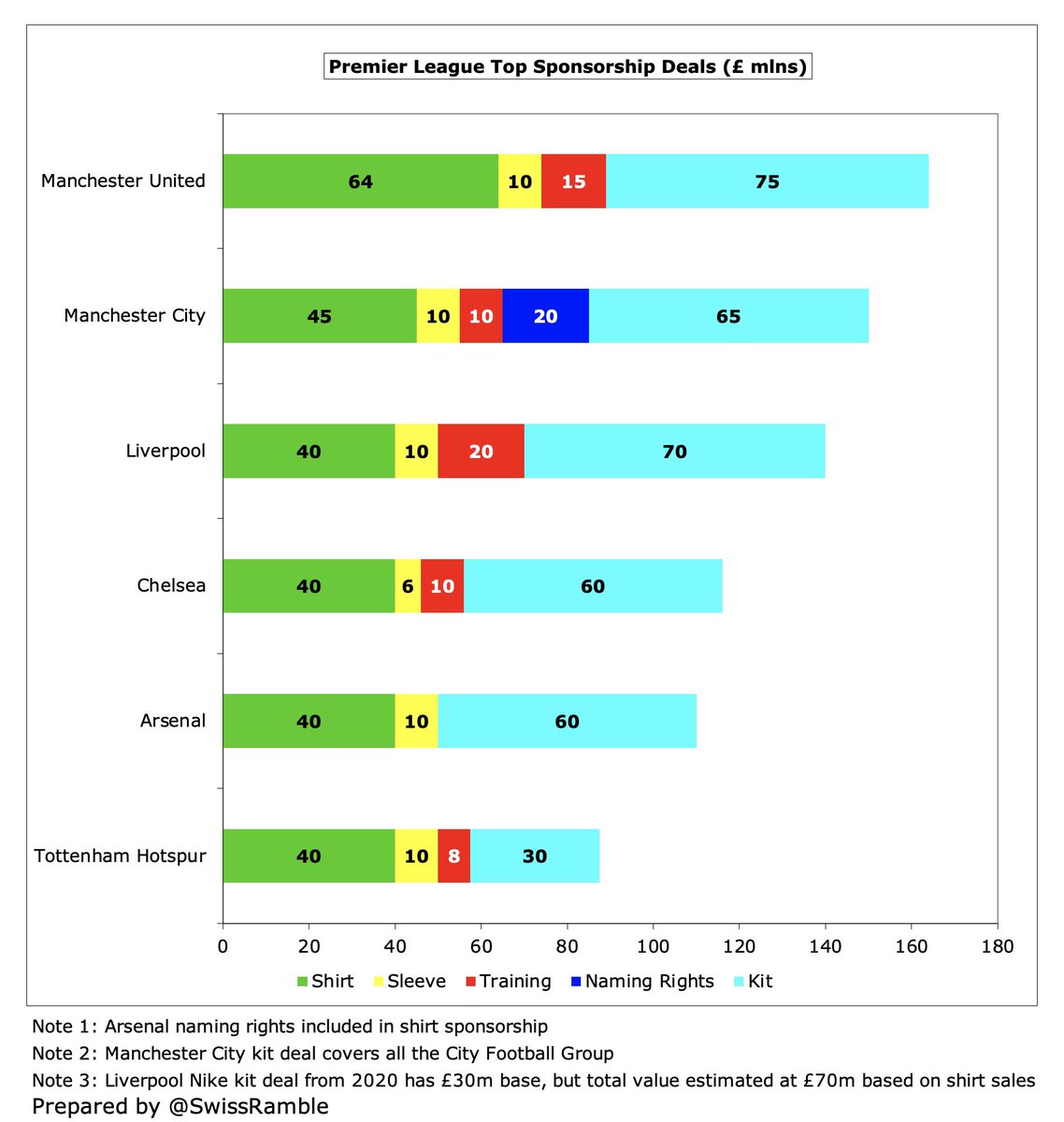
#LFC Nike kit deal replaced New Balance in 2020/21: lower £30m base, but 20% merchandising royalty takes it to estimated £70m. Standard Chartered shirt sponsorship £40m. AXA training kit £20m expanded to include training centre. Expedia replaced Western Union as sleeve sponsor.

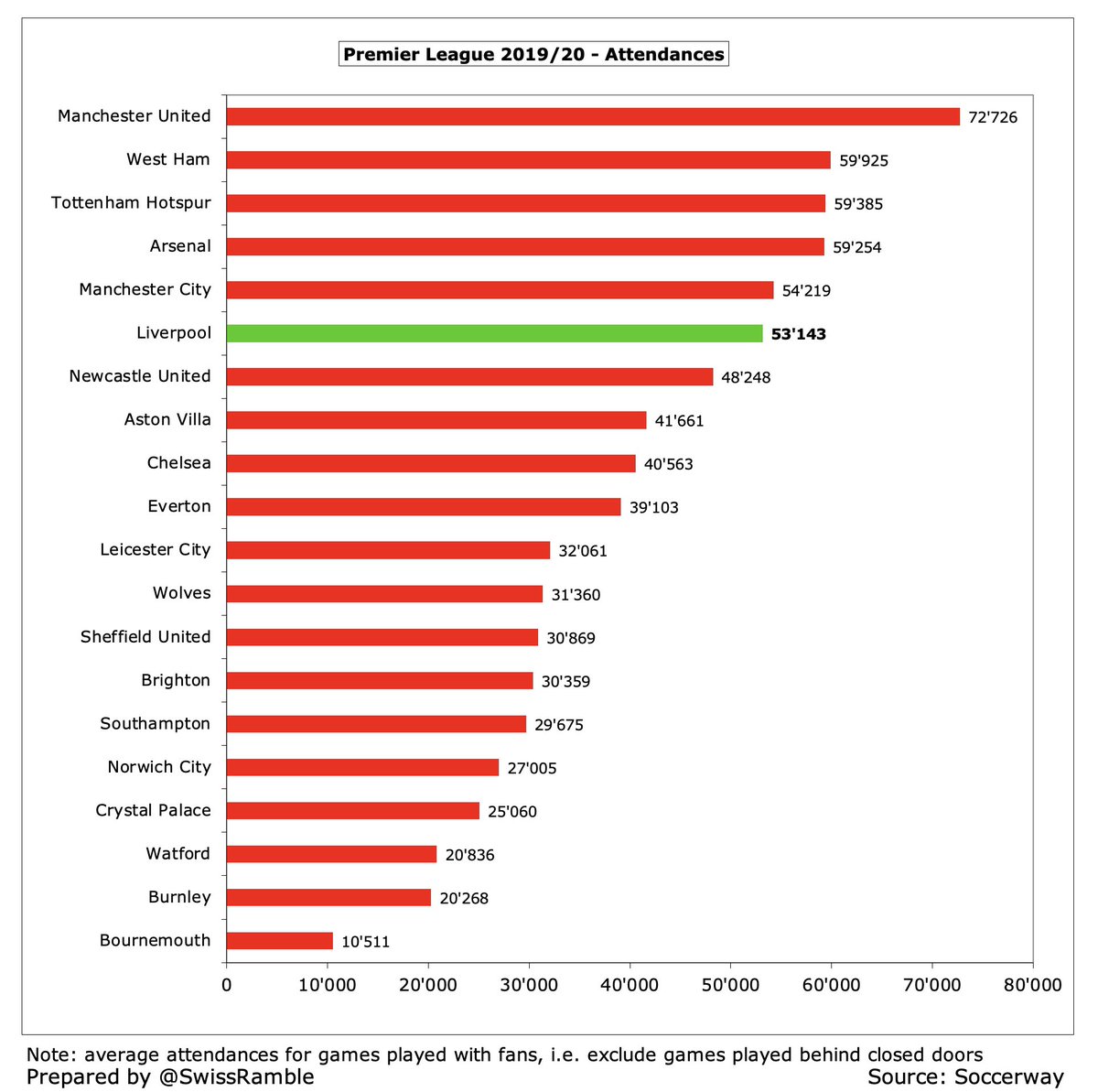
#LFC 2019/20 average attendance of 53,143 (for games played with fans), was 6th highest in the Premier League. Anfield Road expansion will increase capacity to 61,000 for 2023/24 at an estimated cost of £80m. Ticket prices frozen in 2021/22 for sixth consecutive season.


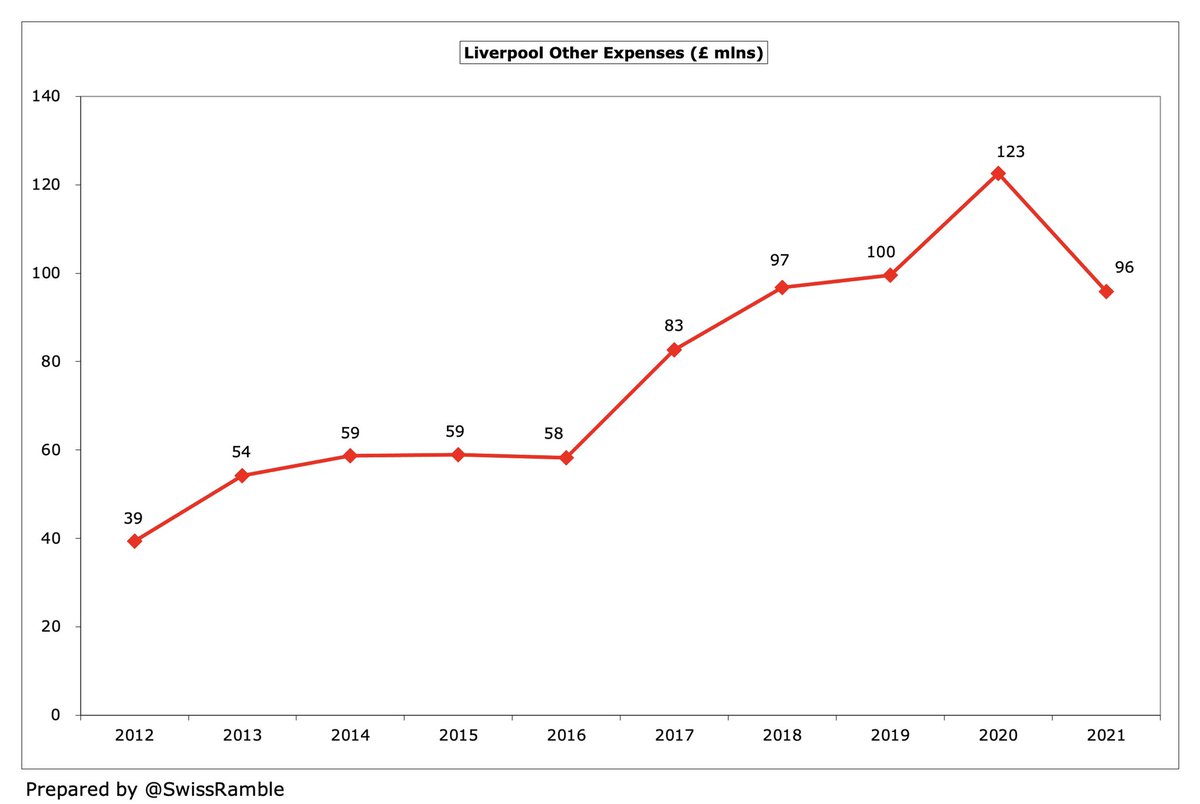
#LFC other expenses fell £27m (22%) from £123m to £96m, mainly due to reduced match day costs, as games were played behind closed doors. Up from £58m in 2016. Club said that costs associated with European Super League have been fully charged to FSG.

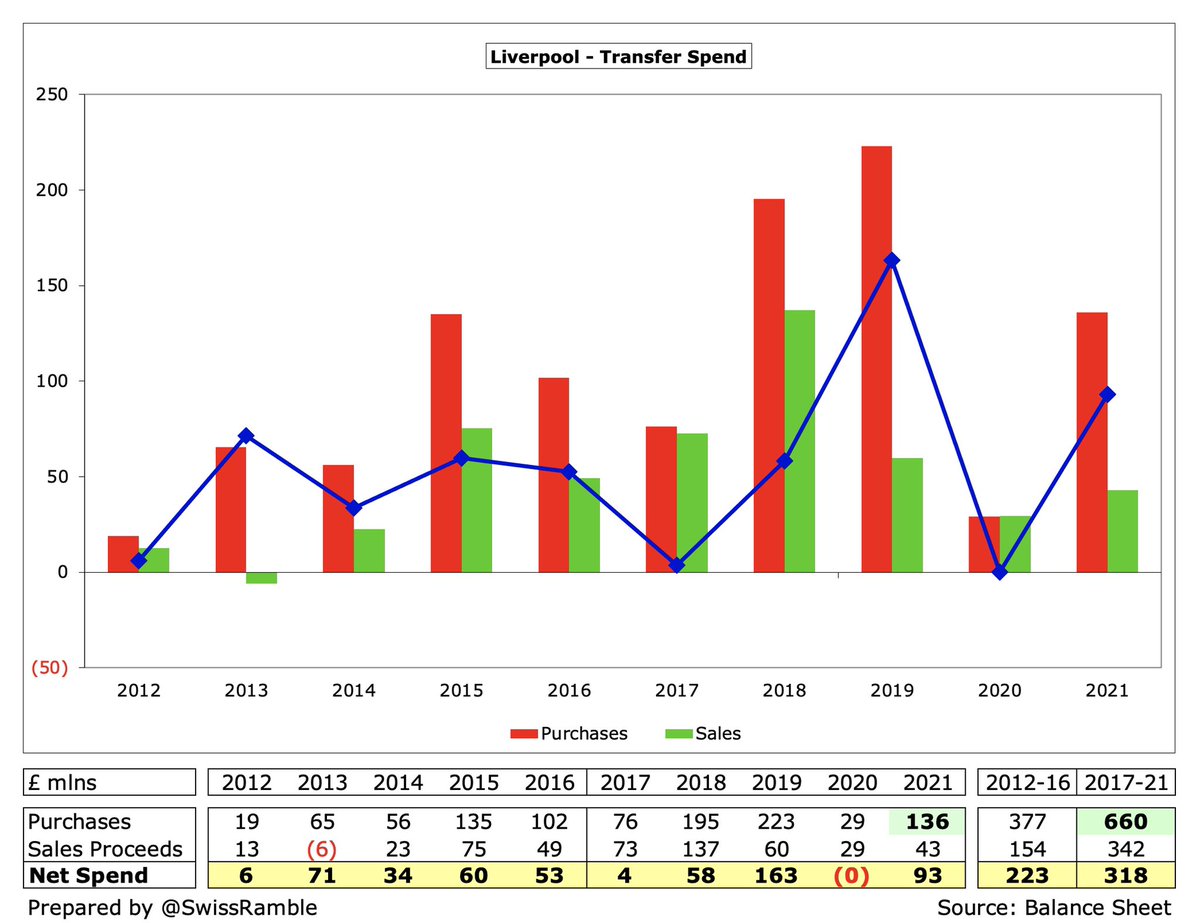
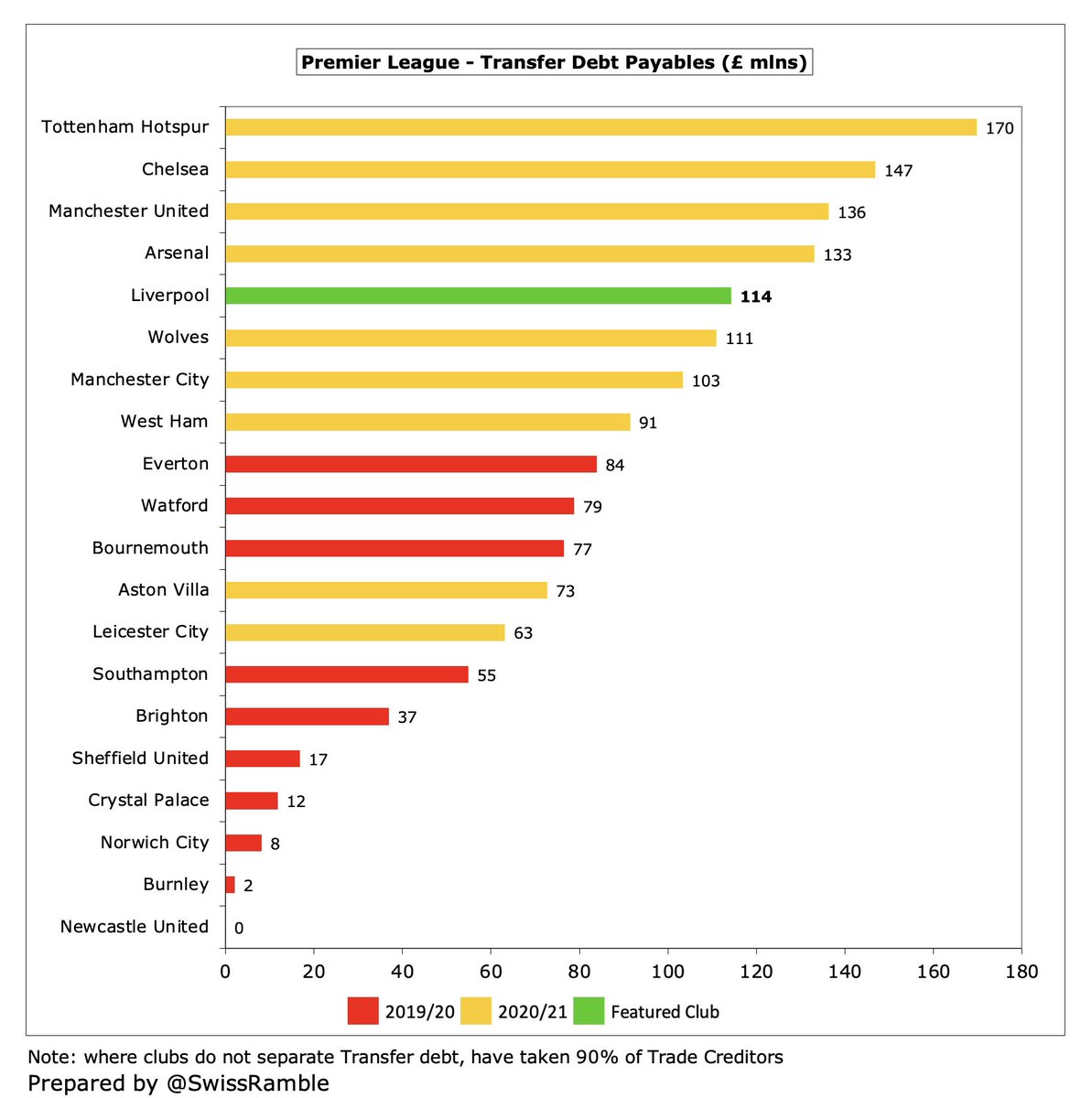
#LFC have spent a lot of money in the transfer market with a £660m outlay in the last 5 years, but only £318m net spend. Klopp said, “Our transfers have to hit the ground running, because we can’t make a £40-50m signing and say that if they are not playing, that is not important”


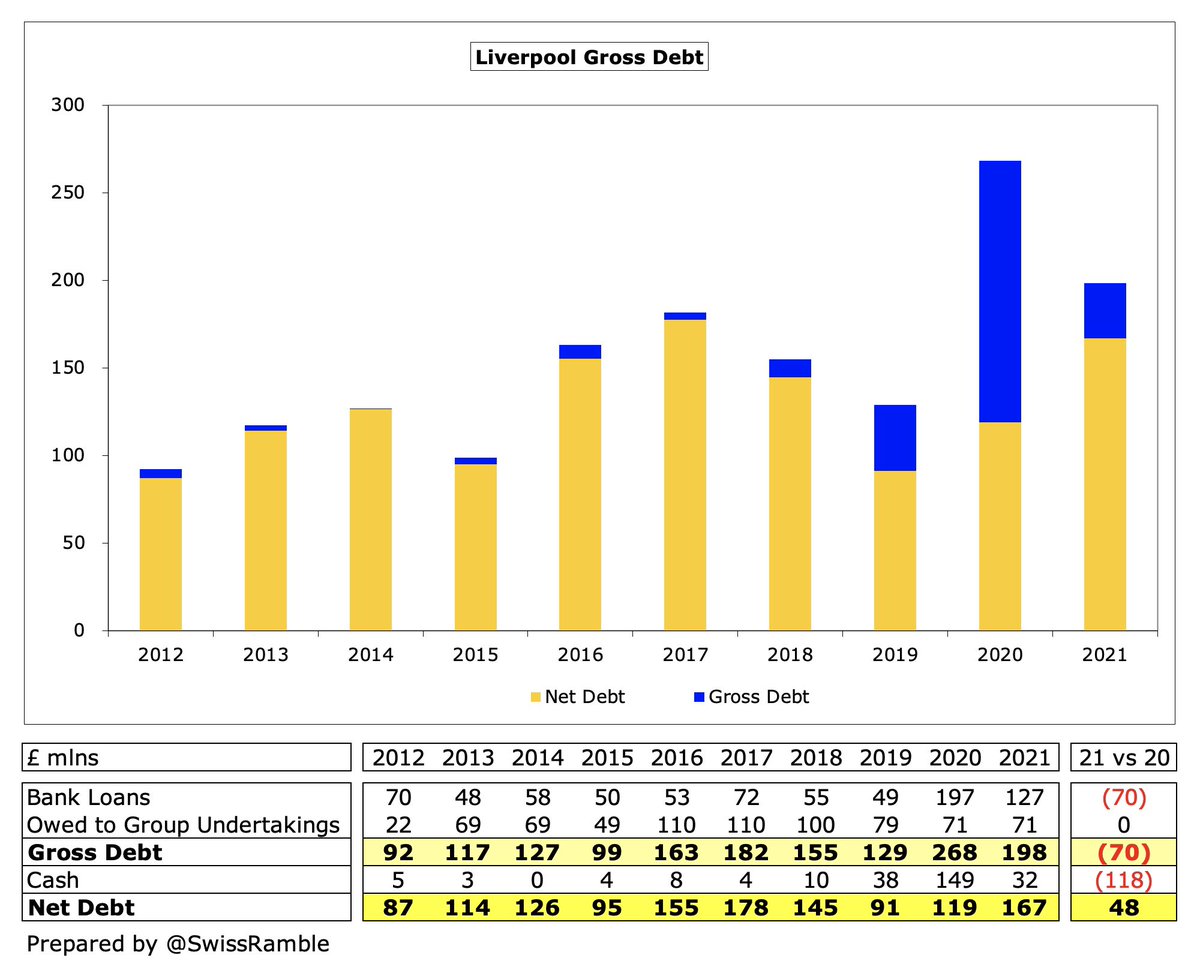
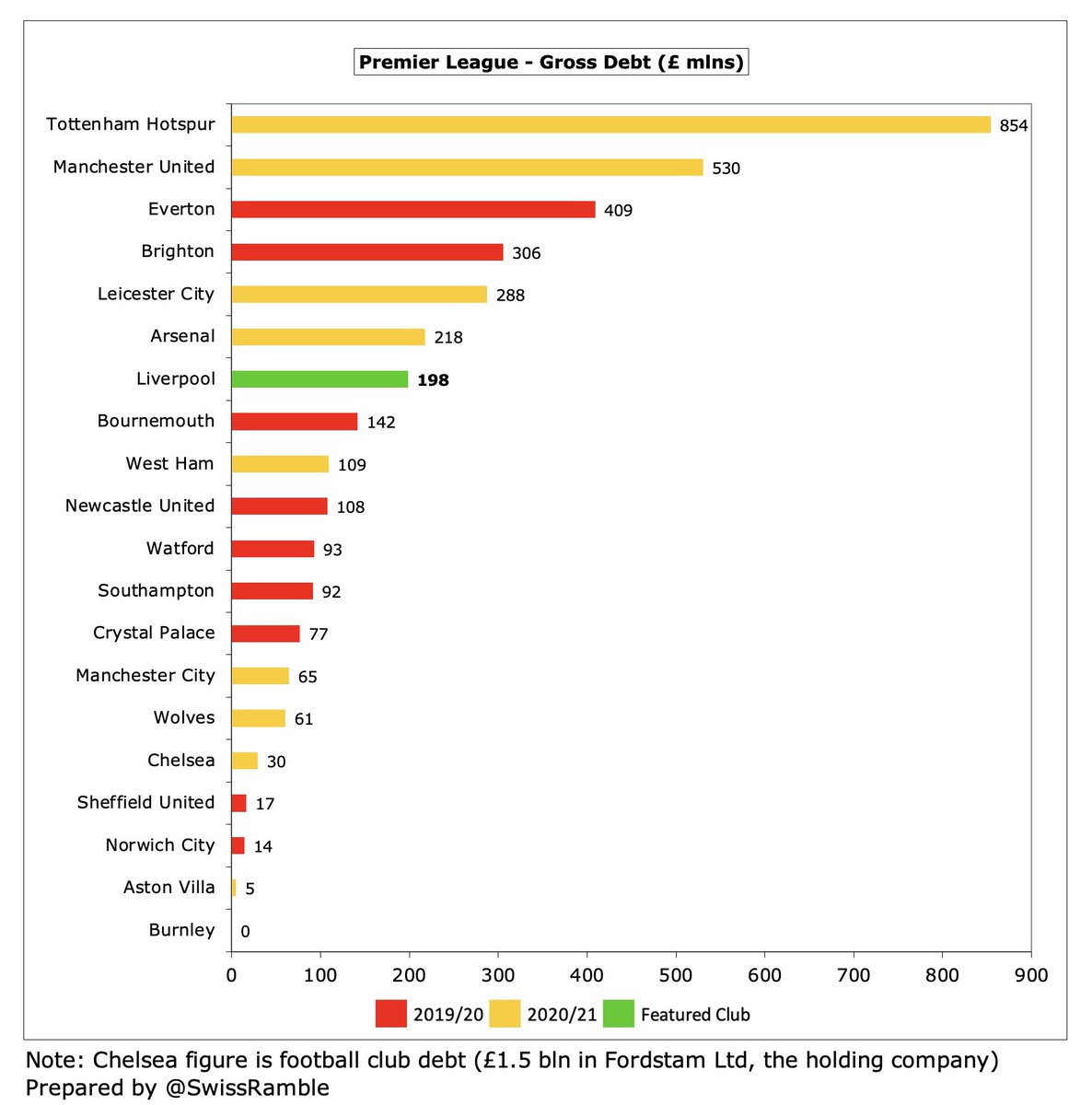
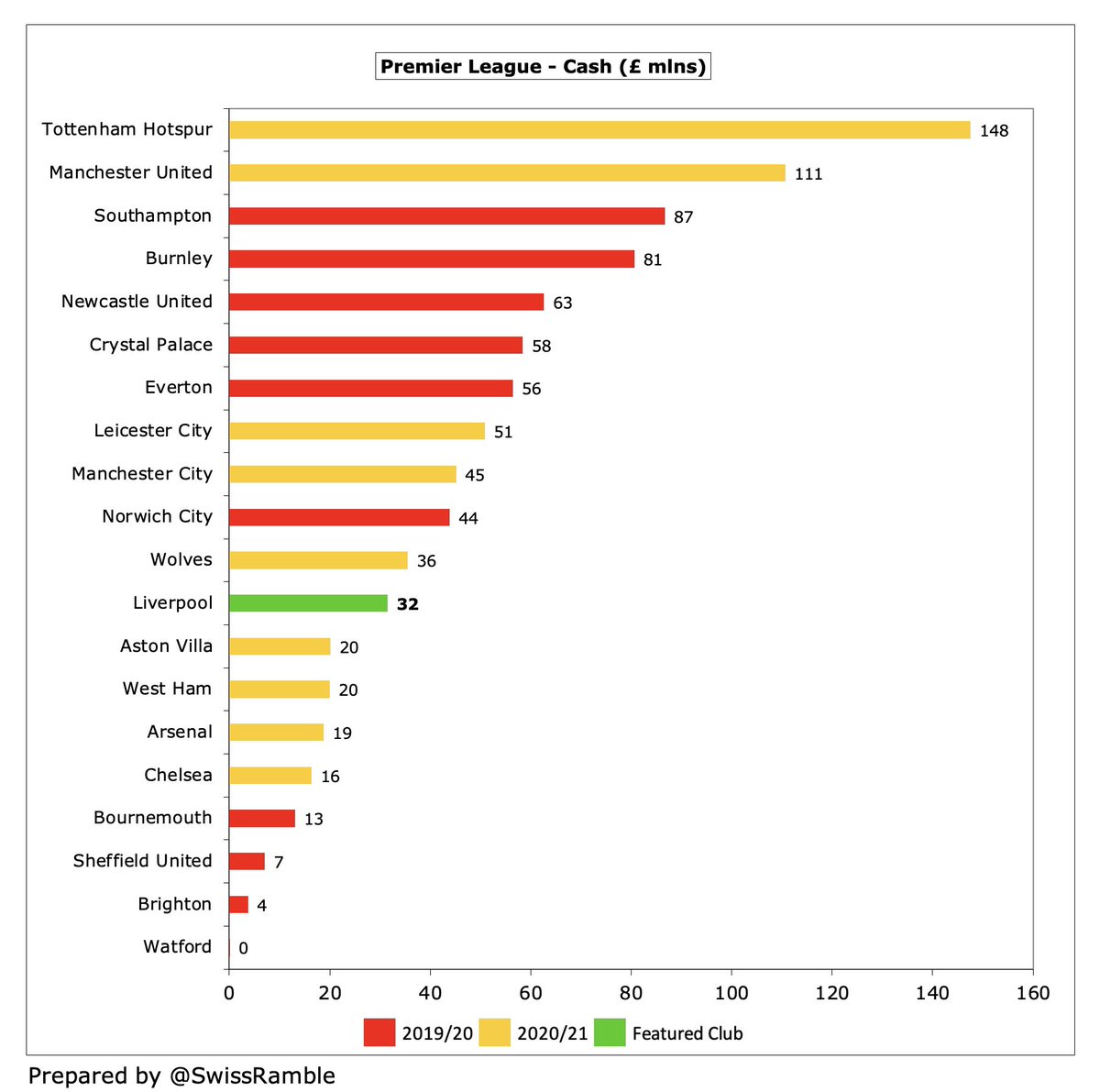
#LFC gross debt fell £70m from £268m to £198m, as the bank loan decreased from £197m to £127m, while the owner’s loan (to fund stadium expansion) was unchanged at £71m. Net debt increased from £119m to £167m, as cash dropped from £149m to £32m.
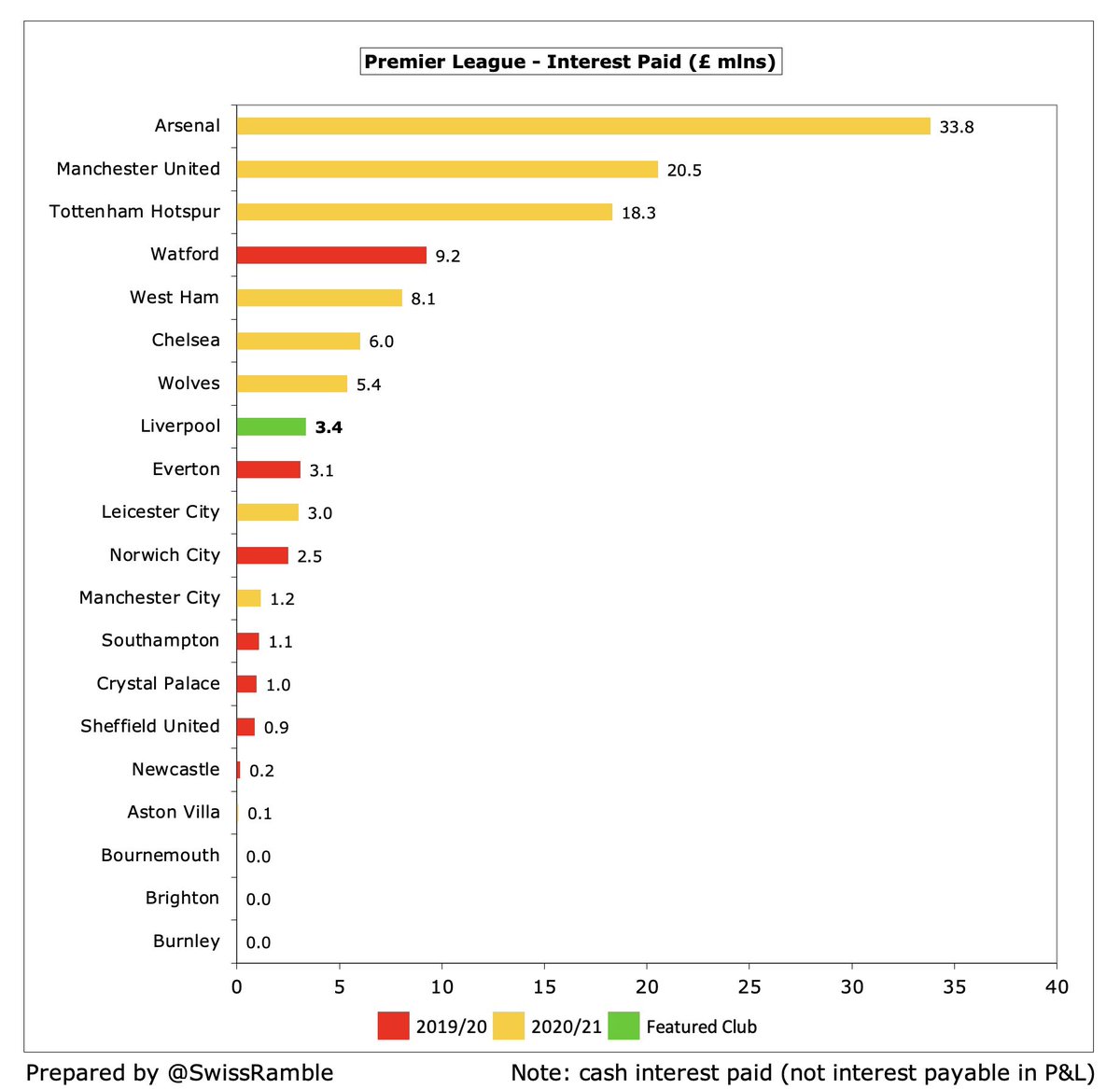

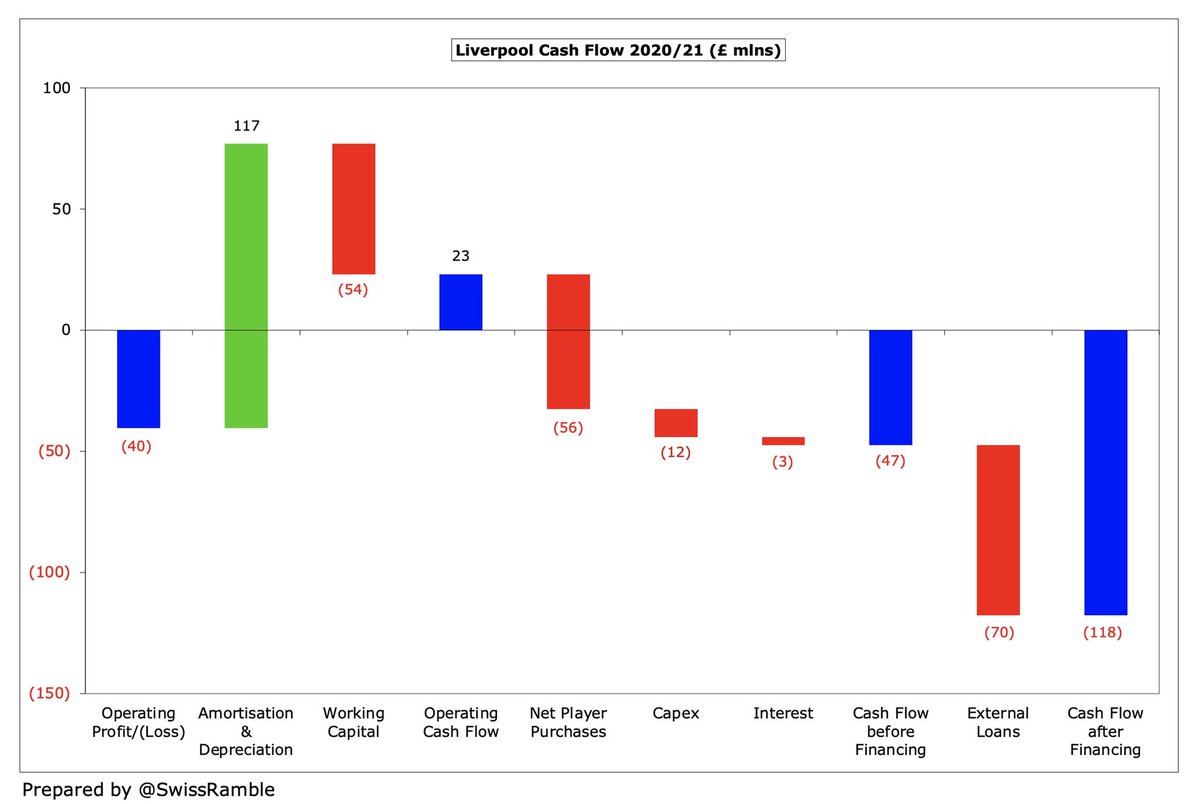
#LFC £40m operating loss became £23m cash flow after adding back £117m amortisation/depreciation, offset by £54m working capital movements. Spent £56m on players (purchases £90m, sales £35m), £12m on capex, £3m interest payments and £70m bank loan repayment.

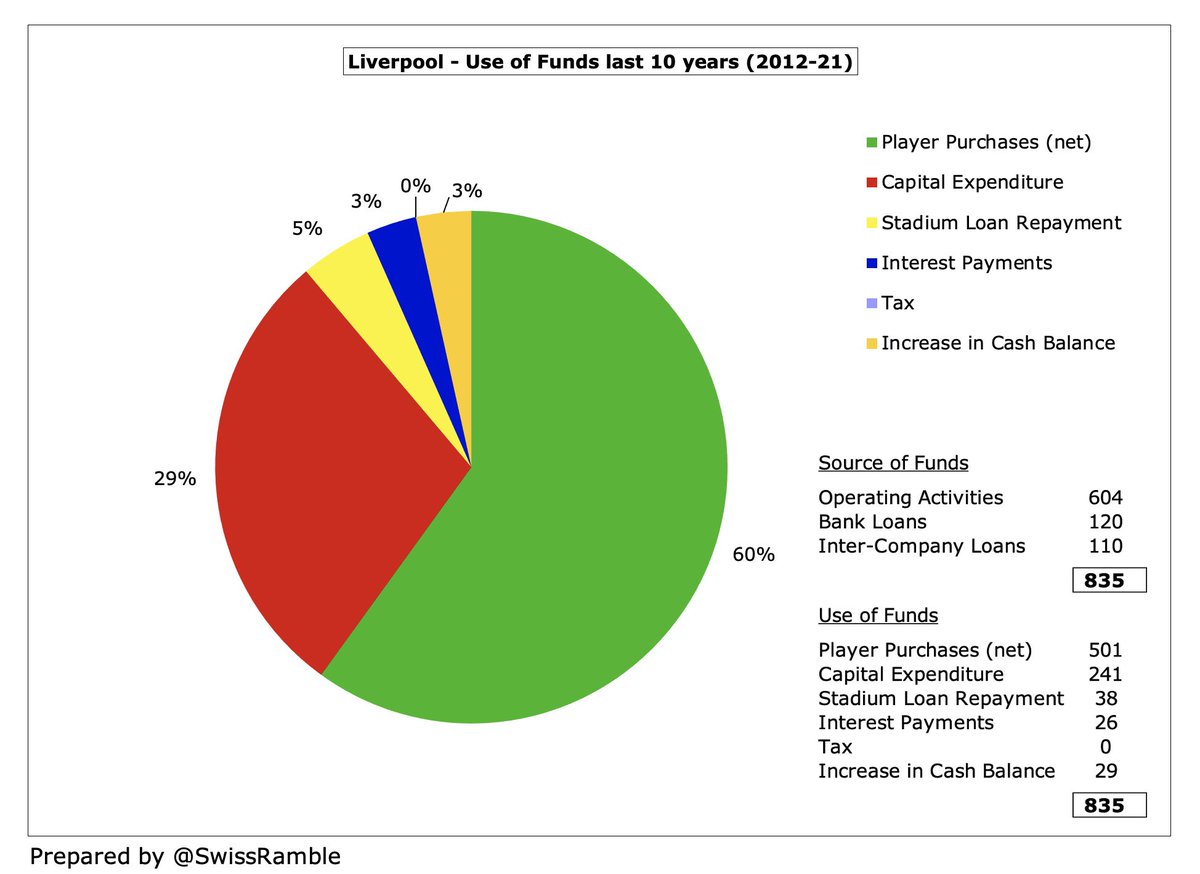
In the last 10 years #LFC had £835m available cash: £604m from operations, £120m from bank loans and £110m from owner loans. They spent half a billion on players (net), infrastructure (stadium & training ground) £241m, stadium loan repayment £38m and interest payments £26m.


Despite making losses in the last two years, #LFC have absolutely no problems with FFP, as they are still profitable over the 3-year monitoring period (with 2020 and 2021 averaged), even before the allowable deductions and adjustment for COVID impact.


FSG have sold 10% of their company to Red Bird Capital, which should help strengthen the #LFC balance sheet, cover COVID losses and fund Anfield expansion. This might facilitate some transfer spending, but is unlikely to go towards a massive “war chest”.
#LFC success on the pitch, both domestically and in the Champions League, has driven significant revenue growth, but they have been badly impacted by the pandemic. The sustainable strategy requires continued good performance on the pitch, so judicious transfer spend is required.
The #LFC business model was neatly summarised by Jürgen Klopp, “It’s not, as we say in Germany, that we swim in money. It’s a wealthy club, but the policy is clear: we spend what we earn. If we earn more, we can spend more; if we earn less, we spend less.”
The approach was reiterated by Andy Hughes, #LFC managing director, “It is imperative that we continue to live within our means and operate within football’s regulations and financial fair play. But we’ll continue to reinvest on and off the pitch to compete at the highest levels”
Loading suggestions...