

Procrastination is a habit –a deeply ingrained pattern of behavior.
This means that you probably can't break it overnight.
Thread (1/12)
This means that you probably can't break it overnight.
Thread (1/12)
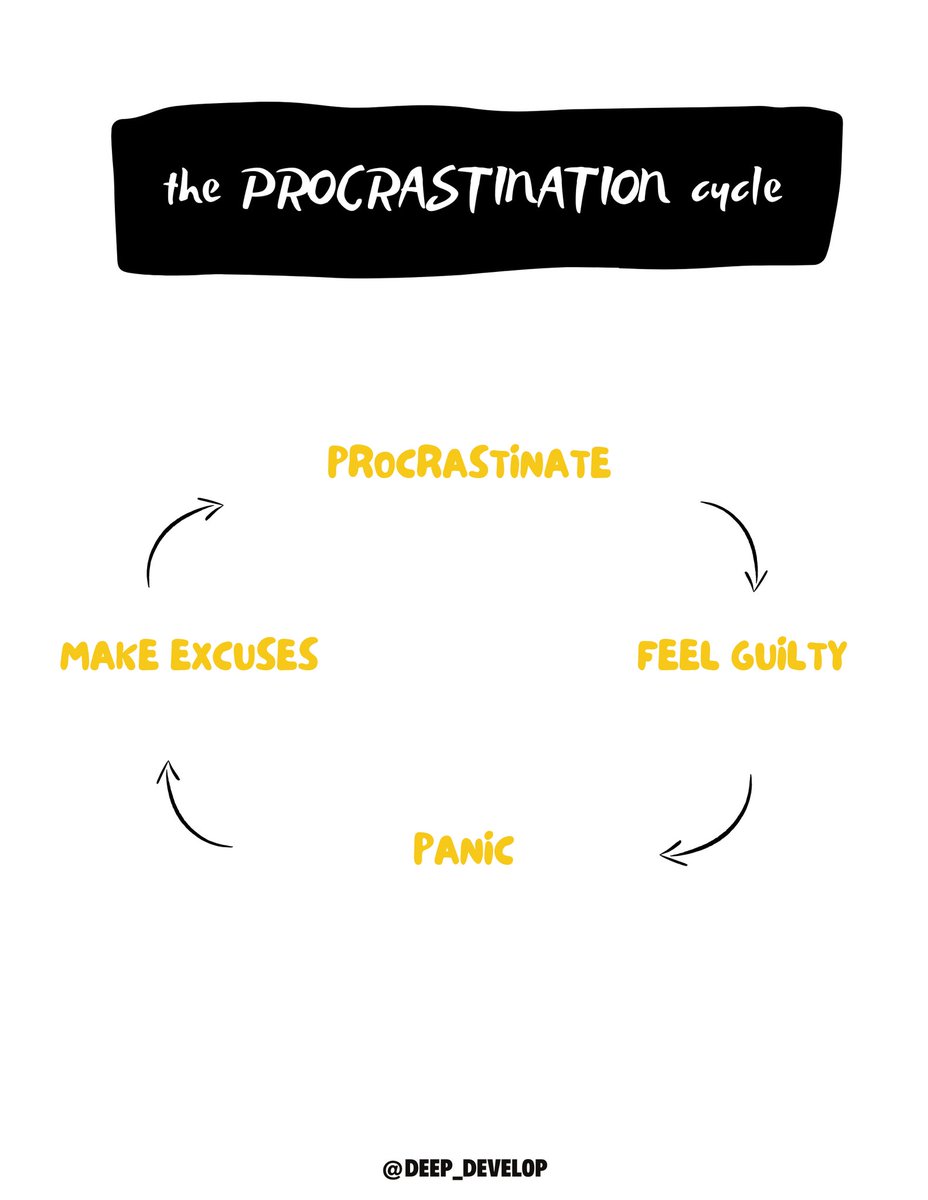
Habits only stop being #habits when you avoid practicing them, so try as many of the strategies, below, as possible to give yourself the best possible chance of succeeding.
(2/12)
(2/12)
1. Forgive yourself for procrastinating in the past.
Studies show that self-forgiveness can help you to feel more positive about yourself and reduce the likelihood of procrastination in the future.
(3/12)
Studies show that self-forgiveness can help you to feel more positive about yourself and reduce the likelihood of procrastination in the future.
(3/12)
2. Commit to the task.
Focus on doing, not avoiding. Write down the tasks that you need to complete, and specify a time for doing them. This will help you to proactively tackle your work.
(4/12)
Focus on doing, not avoiding. Write down the tasks that you need to complete, and specify a time for doing them. This will help you to proactively tackle your work.
(4/12)
3. Promise yourself a reward.
If you complete a difficult task on time, reward yourself with a treat, such as a slice of cake or a coffee from your favorite coffee shop. And make sure you notice how good it feels to finish things!
(5/12)
If you complete a difficult task on time, reward yourself with a treat, such as a slice of cake or a coffee from your favorite coffee shop. And make sure you notice how good it feels to finish things!
(5/12)
4. Ask someone to check up on you.
Peer pressure works! This is the principle behind self-help groups. If you don't have anyone to ask, an online tool such as Procraster can help you to self-monitor.
(6/12)
Peer pressure works! This is the principle behind self-help groups. If you don't have anyone to ask, an online tool such as Procraster can help you to self-monitor.
(6/12)
5. Act as you go.
Tackle tasks as soon as they arise, rather than letting them build up over another day.
(7/12)
Tackle tasks as soon as they arise, rather than letting them build up over another day.
(7/12)
6. Rephrase your internal dialog.
The phrases "need to" and "have to," for example, imply that you have no choice in what you do. This can make you feel disempowered and might even result in self-sabotage.
(8/12)
The phrases "need to" and "have to," for example, imply that you have no choice in what you do. This can make you feel disempowered and might even result in self-sabotage.
(8/12)
7. Minimize distractions.
Turn off your email and social media, and avoid sitting anywhere near a television while you work!
(9/12)
Turn off your email and social media, and avoid sitting anywhere near a television while you work!
(9/12)
8. Aim to "eat an elephant beetle" first thing, every day!
Get those tasks that you find least pleasant out of the way early. This will give you the rest of the day to concentrate on work that you find more enjoyable
(10/12)
Get those tasks that you find least pleasant out of the way early. This will give you the rest of the day to concentrate on work that you find more enjoyable
(10/12)
Tip:
An alternative approach is to embrace "the art of delay."
Research shows that "active #procrastination" –that is, deliberately delaying getting started on something so you can focus on other urgent tasks– can make you...
(11/12)
An alternative approach is to embrace "the art of delay."
Research shows that "active #procrastination" –that is, deliberately delaying getting started on something so you can focus on other urgent tasks– can make you...
(11/12)
... feel more challenged and motivated to get things done.
This strategy can work particularly well if you are someone who thrives under pressure.
(12/12)
This strategy can work particularly well if you are someone who thrives under pressure.
(12/12)
Loading suggestions...